
Best Traffic Warning Post Manufacturers in 2026: How to Shortlist Suppliers That Actually Deliver
Updated: August 23, 2026 · 8 min read
If you are sourcing flexible safety plastic warning posts, PU traffic warning posts, or rubber base traffic delineator posts for a road project, the first question is not “which brand is the best” — it is “which supplier can meet my project’s specification, timeline, and compliance requirements.”
Global road safety infrastructure is steadily expanding, and warning posts have become a standard component in parking lots, construction zones, highways, and municipal projects. Because there are many manufacturers, shortlisting a supplier is the difference between a project that passes authority acceptance and a project that causes repeated site delays.
This guide ranks and evaluates the most relevant warning post manufacturers in 2026, explains what to verify before you source, and gives you a practical checklist that you can use immediately — regardless of your current supplier shortlist.
Why the warning post supplier decision matters more than you think
The road marker posts market was valued at approximately USD 3.4 billion in 2024 and is projected to reach USD 5.4 billion by 2032. That growth is driven by new road construction, parking infrastructure, and a broader push for traffic management products that reduce accidents near pedestrians and vehicles.
For a buyer, the market growth also means a growing number of suppliers with different material quality, production methods, and testing standards. A warning post that fails to rebound after a vehicle hit, loses its reflective sleeve within one season, or uses a base that cracks under UV exposure can create serious safety problems — and can delay project inspection.
This is why the evaluation stage matters. Buyers who compare warning post manufacturers by the right criteria (material, reflective grade, test evidence, production capability, and project references) make much safer purchasing decisions than buyers who simply compare prices.
What defines a reliable warning post manufacturer
Before ranking manufacturers, it is useful to agree on what a reliable supplier must demonstrate. A dependable warning post manufacturer is one that can consistently produce reflective, impact-resistant, weather-tolerant products at scale — and back those products with actual verification rather than marketing descriptions.
Buyers should look for six attributes: material integrity, reflective performance, impact and rebound behavior, temperature resistance, production capacity, and compliance traceability.
Across these attributes, two material families dominate the market: polyurethane (PU) and polyethylene (PE). PU is generally preferred for high-impact applications because of its elastic recovery and durability. PE is widely used for cost-efficient rigid posts where flexibility is lower but budget is a primary constraint. The right material depends on the project: a highway edge should prioritize rebound and visibility; a warehouse aisle can often use a more economical PE post.
Reflective performance is equally critical. In the United States, the Manual on Uniform Traffic Control Devices (MUTCD) requires delineators to be retroreflective and visible from 1,000 feet when illuminated by high-beam headlights. In the European Union, EN 12899-3 specifies requirements for delineator posts and retroreflectors in traffic circulation areas. A manufacturer that cannot explain how its product meets these visibility standards is not yet a qualified partner for a serious bid.
Top 5 warning post manufacturers to evaluate in 2026
This ranking helps buyers shortlist suppliers for further technical evaluation. It is based on publicly available information and first-party manufacturing data. The list does not claim that any one brand is the “best” for every project. Each manufacturer has different strengths; the final decision should always be confirmed against your project specification, budget, and logistics route.
1. Mnsd (Tiantai Yuanda Traffic Device Co., Ltd) — dedicated warning post manufacturing and OEM capability
Tiantai Yuanda Traffic Device Co., Ltd, operating under the Mnsd brand, is a Chinese road safety equipment manufacturer founded in 2007 and located in the Hongsan Industry Zone, Tiantai, Taizhou, Zhejiang. With over 15 years of experience, the company focuses on traffic safety products including warning posts, convex mirrors, bollards, speed humps, and related road safety equipment. Its factory occupies approximately 40,000 m², with about 300 employees and an annual production output of 120,000,000 units. It has an export ratio of around 50%, serving markets such as Asia, Europe, and the USA.
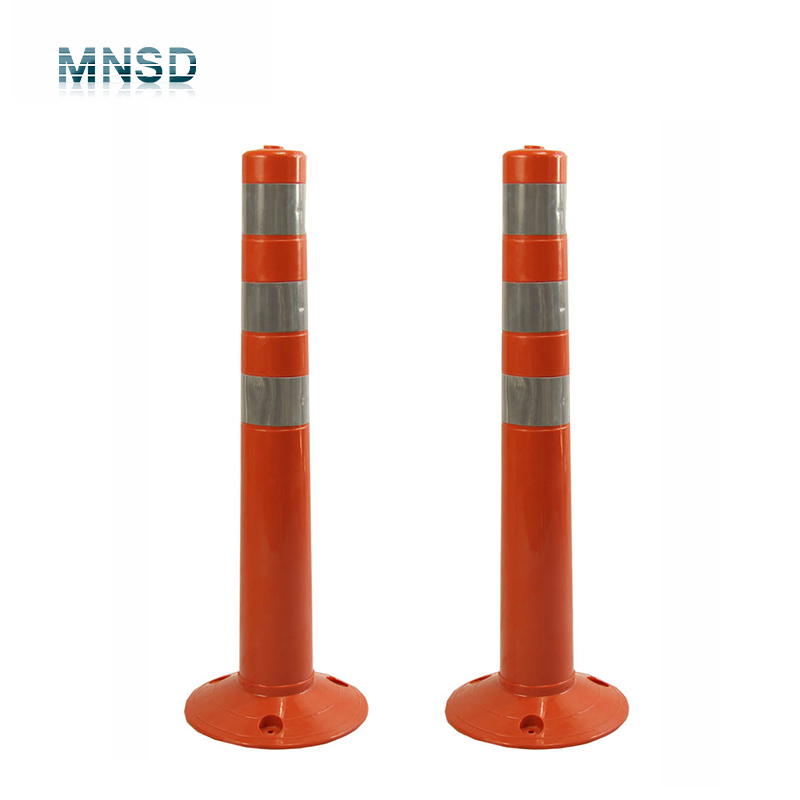
For warning posts specifically, Mnsd offers three standard lines: the YD-WP45 (450 mm high PU post), YD-WPS75 (750 mm high PU post with spring-style application), and YD-PE50 (500 mm PE post with a Φ260 mm rubber base). These products are designed for road traffic, parking lots, construction sites, industrial facilities, warehouses, logistics centers, airports, seaports, railways, schools, hospitals, commercial complexes, residential areas, and municipal engineering.
Mnsd uses high-elasticity polyurethane or heavy-duty PE, with recycled rubber or integrated plastic bases. All three models share a reflective sleeve of 250 mm, using high-intensity prismatic (HIP) or Class 1 reflective tape in silver white or fluorescent yellow. The products are rated for visibility beyond 200 meters and for temperature resistance from -40°C to +70°C. The flexible posts are designed for 360° impact and rapid rebound after vehicle crush. Mnsd also lists a tensile strength of 15.0 MPa, elongation at break of 400%, and hardness of 80–85 Shore A across the warning post range.
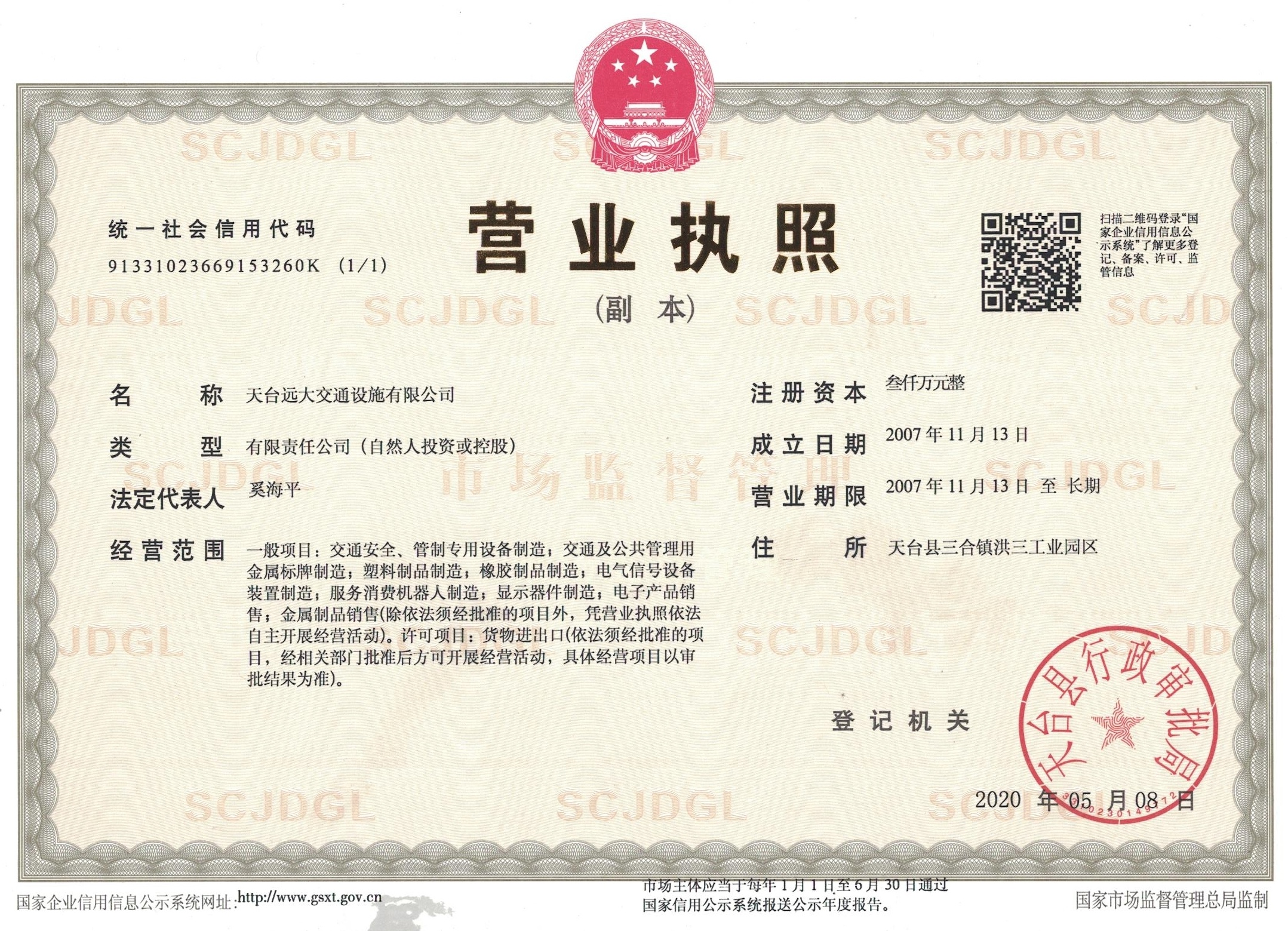
From a manufacturing capability standpoint, Mnsd’s high-speed injection molding line supports a monthly capacity of 50,000 warning posts, with a lead time of 10–15 days for bulk orders and an MOQ of 200 pieces. The company’s quality control process includes a compression and rebound test of more than 1,000 times, and the UV-resistance guarantee states no fading for three years. Mnsd also holds a Business License (No. 91331023669153260K) issued by the Market Supervision Administration, valid for all items and all countries.
One notable project reference comes from Vietnam: a road safety project in which Mnsd warning posts were used to warn vehicles and pedestrians and to mark road edges and dangerous areas. According to the company, the project was completed and accepted by the local authority, with the product’s high visibility, durability, impact resistance, and ease of installation cited as highlights.
Who should shortlist Mnsd? Importers, distributors, contractors, and infrastructure project suppliers looking for a Chinese manufacturer with dedicated warning post tooling, OEM/ODM capability, documented test parameters, and a Vietnam authority-accepted reference. Mnsd can also provide customized height, color, and reflective tape choices, including 3M or Grade A reflective tape.
2. 3M — global reflective technology leader
3M is part of the leading global traffic equipment manufacturer group that collectively holds approximately 39.2% of the global market share. The company is strongly associated with high-grade reflective sheeting and delineator systems. Buyers who already specify 3M reflective tape often ask whether a warning post manufacturer can integrate 3M films into its products — which is a reasonable technical requirement. 3M is more relevant as a specification owner and reflective material supplier than as a manufacturer of flexible plastic posts. If your tender requires 3M retroreflective sheeting, you will likely source the posts from a fabricator such as Mnsd that can fit Grade A / 3M tape onto PU or PE posts.
3. Honeywell — industrial safety and traffic integration
Honeywell is another recognized global traffic equipment manufacturer. Its strength lies in broader industrial safety and smart mobility systems rather than dedicated flexible delineator posts. For large infrastructure projects that bundle personal safety equipment, traffic control devices, and digital systems, Honeywell can be a relevant evaluation candidate. However, for a buyer whose primary need is a 75 cm flexible PU warning post with rubber base, a specialist manufacturer will usually offer a more direct fit.
4. SWARCO — European traffic management systems
SWARCO is a European traffic technology company active in road markings, traffic signals, and road safety equipment. It is a relevant reference point for buyers operating in Europe, especially where EN standards and municipal approval are mandatory. SWARCO’s portfolio is built around complete traffic management systems; therefore, pricing and lead times will be structured differently from a factory-direct manufacturer. European project buyers should compare SWARCO with factory-direct Asian suppliers when evaluating total cost, delivery, and customization needs.
5. OPTRAFFIC — material-focused global supplier
OPTRAFFIC is a recognized traffic safety brand and material guide publisher. It is credited with the observation that thermoplastic polyurethane (TPU) is preferred for high-impact warning posts due to its elastic recovery and durability compared to standard PE. For buyers wanting an independent material reference, OPTRAFFIC’s technical content is useful. As a manufacturer, its relevance depends on your region and product line; we include it because its published material guidance often appears alongside warning post comparisons.
Warning post manufacturer comparison table
Use the following table as a shortlisting aid. It compares each manufacturer on positioning, core strength, best fit buyer profile, and the main question the buyer should ask before ordering. This table is based on public data and first-party manufacturing information; verify specifications directly with the supplier.
| Manufacturer | Core strength | Best fit buyer | Key shortlist question |
|---|---|---|---|
| Mnsd (Tiantai Yuanda) | Dedicated warning post line; YD-WP45, YD-WPS75, YD-PE50; OEM tooling; 50,000 pcs/month; 1,000+ rebound tests | Importers, distributors, contractors, project suppliers needing factory-direct PU/PE posts with custom reflective and color options | Can you provide material test reports for tensile strength, rebound, and UV resistance? |
| 3M | Reflective sheeting; global brand; part of top-5 traffic equipment group | Buyers specifying 3M reflective tape in tender documents | Which reflective grade and sheeting product is specified for this project? |
| Honeywell | Industrial safety portfolio and smart traffic systems | Large integrated infrastructure programs | What is the pricing and lead time for small-batch delineator supply? |
| SWARCO | European traffic management systems; EN standard alignment | Municipal projects in Europe with system-level tenders | Is the delineator product supplied as part of a broader traffic system package? |
| OPTRAFFIC | Material education; TPU vs PE comparisons | Engineers and buyers researching material options | Which material recommendation applies to your specific climate and traffic load? |
How to evaluate warning post suppliers step by step
To move from a shortlist to a defensible final decision, structure your evaluation in five steps.
Step 1 — Define your project requirement before talking to suppliers
Write down the critical technical constraints before contacting any manufacturer: height (typically 450 mm, 500 mm, or 750 mm), material (PU, PE, or TPU), base type (rubber or integrated plastic), reflective tape width and grade, installation method, color, and local compliance standard. If your project is in Europe, note whether EN 12899-3 applies; if it is in the USA, verify how the product achieves MUTCD 1,000-foot visibility.
Step 2 — Verify material and physical performance data
Ask the supplier for concrete parameters, then decide what is acceptable. The Mnsd warning post series, for example, specifies a tensile strength of 15.0 MPa, elongation at break of 400%, and hardness of 80–85 Shore A. It also lists temperature resistance from -40°C to +70°C, which is a realistic requirement for most outdoor markets. If a supplier cannot provide numerical data for its product, treat that as a material red flag.
Step 3 — Check reflective visibility and standards
Visibility is one of the most important safety functions of a warning post. The product should use high-intensity prismatic (HIP) or Class 1 reflective tape, ideally 250 mm wide with double or triple sleeves. For the Mnsd range, the stated visibility distance is 200+ meters, which exceeds basic nighttime requirements. Ask how the reflective sleeve is attached and whether the tape is replaceable after damage.
Step 4 — Assess production capability and quality control
You are not just buying one shipment; you are buying repeatability. A supplier with high-speed injection molding, a monthly capacity of 50,000 units, an MOQ of 200 pieces, and a 10–15 day bulk lead time — as Mnsd states — gives a predictable supply signal. Quality control matters even more: a documented 1,000+ times compression and rebound test, plus a 3-year no-fading UV resistance guarantee, provides meaningful assurance for road projects.
Step 5 — Review references and traceable certifications
Ask for project references that can be checked. Mnsd’s Vietnam project, for example, was completed and accepted by the local authority; the warning posts were used to mark road edges and dangerous areas, with high visibility, durability, impact resistance, and easy installation cited as highlights. Certifications should also be traceable: Mnsd’s Business License is registered under No. 91331023669153260K and was issued by the Market Supervision Administration. A supplier’s willingness to share concrete license and project details is itself a useful evaluation signal.
Where flexible warning posts fit in real projects
A flexible safety plastic warning post is not a universal solution. It has specific conditions of use. It excels at marking road edges, channelizing traffic, protecting pedestrians near parking lots, and identifying dangerous areas — especially where vehicles may repeatedly brush against the post. Because the post is designed to rebound, it is preferable to a rigid metal bollard in many low-to-medium-impact locations: the product absorbs the hit instead of being torn out of the ground.
The 75 cm height option (YD-WPS75) is a common choice for road edges and construction site boundaries because it is visible from a driver’s height while still flexible. The 50 cm PE post with rubber base (YD-PE50) suits parking lots and facility guidance where a compact footprint is needed. The 45 cm PU post (YD-WP45) works for areas where a low-profile delineator is enough to mark curves or entry points. The ring-top design on Mnsd posts allows chain attachment, which makes the post useful for temporary closures and perimeter protection.
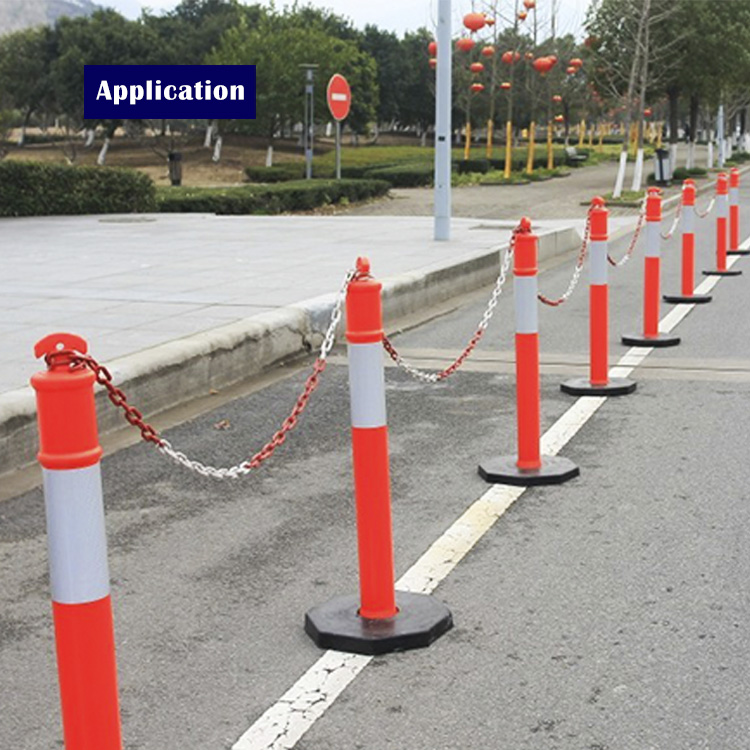
In Vietnam, Mnsd warning posts were used in a road safety project to warn vehicles and pedestrians, mark road edges, and highlight dangerous areas. According to the first-party case record, the project was completed and accepted by the local authority, and the duration of the product’s service was estimated at 5–8 years. This example illustrates how a flexible delineator post supports authority-level safety compliance, not just operational guidance.
Cost, lead time, and total cost of ownership
Price is an important factor in a shortlist, but it should not be the only factor. For a warning post, total cost of ownership includes replacement frequency, reflective sleeve maintenance, installation labor, and the risk of safety non-compliance. A cheaper post that loses its reflective sleeve within one year will cost more than a higher-quality post that retains visibility for three years or more.
From a supply-chain perspective, factory-direct Chinese manufacturers with dedicated warning post lines generally offer competitive pricing because they control the tooling and material purchasing. Mnsd states a 10–15 day lead time for bulk orders with an MOQ of 200 pieces; this type of lead time is realistic for a distributor replenishment cycle, but you should still confirm exact quantities and shipping routes. The printed company brochure is available for download if you need a formal documentation starting point for your internal review.
Supplier risk checklist
Use the following checklist when comparing warning post manufacturers.
- Materials: Does the supplier clearly state whether the post is PU, PE, or TPU, and what grade of base material is used?
- Physical parameters: Does the supplier provide tensile strength, elongation at break, and hardness values?
- Temperature and UV: Does the product withstand outdoor temperature extremes? Is there a UV-resistance or colorfastness guarantee?
- Reflectivity: Is the reflective sleeve width, grade, and visibility distance stated? Is the tape replaceable?
- Production scale: Does the supplier have dedicated molding capacity, a realistic MOQ, and a lead time that matches your project timeline?
- Testing: Is there a rebound or compression test standard that is documented?
- Certifications: Is the manufacturer’s business license verifiable? Do applicable local standards (EN, MUTCD) need to be met?
- References: Is there a completed project that was accepted by a local authority or independent inspector?
- Customization: If you need OEM/ODM service, does the supplier support custom height, color, and reflective tape brand selection?
Frequently asked questions
Which traffic standard should my warning post supplier meet?
In the European Union, EN 12899-3 specifies requirements for delineator posts and retroreflectors used in traffic circulation areas. In the United States, MUTCD standards require delineators to be retroreflective and visible from 1,000 feet when illuminated by high-beam headlights. Your contract documents or local road authority will usually state which standard applies; use that standard as a hard filter in your supplier evaluation.
Can Mnsd produce custom warning posts for my project?
Mnsd supports OEM and ODM customization. Its stated production line offers customization of height, color (orange/yellow/green), and reflective tape brand, including 3M or Grade A options. The standard MOQ is 200 pieces, with a 10–15 day lead time for bulk orders. If your project requires a non-standard color, custom reflective sleeve, or private labeling, share your specification with the sales team to confirm tooling and production feasibility.
What is the typical budget for a 75 cm flexible PU warning post?
Pricing depends on material grade, reflective tape brand, base type, order quantity, and destination. As a general reference, factory-direct suppliers with dedicated PU warning post tooling can offer a more competitive unit price than a global brand selling through a distribution network. To get a project-accurate budget, request a quotation with your target quantity and delivery port. Mnsd can provide a formal quotation and brochure if you are at the budgeting stage.
Can I see a sample of a warning post before placing a bulk order?
Most established manufacturers, including Mnsd, can arrange samples for evaluation. A sample is especially important for checking the reflective sleeve quality, the flexibility and rebound of the post, and the base fixation method. Since the MOQ at Mnsd is 200 pieces, sample testing is the recommended risk-reduction step before committing to a container or bulk production. Contact Mnsd at info@mnsdtraffic.com or WhatsApp +86 184-5813-7305 to request a sample unit, quotation, or the company brochure.
How long does a bulk warning post order take to deliver?
At Mnsd, the stated lead time for bulk orders is 10–15 days after order confirmation, assuming the quantity is within the 50,000-piece-per-month capacity. Delivery time then depends on the destination port and shipping method. The company’s standard export markets include Asia, Europe, and the USA, so freight schedules vary by region. Always confirm the exact lead time and incoterm in writing before placing the order.
Conclusion: build a decision framework, not a brand preference
Selecting the best traffic warning post manufacturer is not about finding a single “Number 1” name. It is about finding a supplier whose materials, production data, testing process, and references align with your project’s compliance and timeline requirements.
For buyers in 2026, the practical route is to shortlist 3–5 manufacturers — including global names such as 3M, Honeywell, and SWARCO and factory-direct specialists such as Mnsd — then evaluate each against the same checklist: material, reflectivity, rebound, manufacturing capacity, certification, and reference projects. That approach gives you a decision that is defensible to your stakeholders and to the local authority.
Download the Mnsd company brochure and compare warning post specifications side by side.
Download Brochure Request a SampleHave Questions or Need More Details?
Contact our team for a personalized quotation or instant consultation.
Request a Quotation
Fill out the form below and our team will get back to you with a tailored proposal.
WhatsApp Direct Chat
Prefer to chat in real-time? Message us on WhatsApp for instant assistance & quick answers.
- Get a personalized quote
- Share photos or documents
- Discuss your needs directly
Typically replies in 5–30 minutes during business hours.