Convex Mirrors Compared: Polycarbonate, Acrylic, and Glass
Convex Mirrors Compared: Polycarbonate, Acrylic, and Glass
Choosing a convex mirror for a warehouse, factory, parking garage, or road intersection involves more than selecting a reflecting surface. Material, mounting style, environmental resistance, and supplier capability all affect total cost and long-term safety. Polycarbonate (PC), acrylic, and glass are the most common mirror materials, and each has distinct strengths and trade-offs. This guide compares these materials for industrial buyers and references Mnsd, the brand of Tiantai Yuanda Traffic Device Co., Ltd., as a manufacturer example for outdoor polycarbonate mirrors.
Why Material Choice Matters in Convex Mirror Procurement
At the decision stage, buyers often receive quotes that look similar on price. The real difference appears after installation. Outdoor mirrors must withstand UV radiation, rain, dust, wind, and accidental impact. If the mirror surface becomes scratched, the image becomes blurred and the intended blind spot coverage is compromised. If a mirror shatters, the site loses visibility until replacement, and glass shards can create a secondary safety hazard.
This is especially important for roadside and loading-dock environments, where mirrors are exposed to both weather and vehicle movement. A mirror that appears economical at the quote stage can generate unexpected replacement, cleaning, and downtime costs over its service life. In decision-focused procurement, material performance should be evaluated together with unit price.
Surface scratching is a known risk for polycarbonate mirrors. Tiantai Yuanda Traffic Device Co., Ltd. addresses this by applying a specialized anti-scratch hard coating to the PC mirror surface and by using protective PE film during assembly and transit. This type of production-level control is a useful factor to verify when comparing suppliers.
Industry Background: Convex Mirrors in Traffic and Safety
The convex mirror market continues to be driven by road safety and industrial applications. According to Dataintelo, the global convex mirror market was valued at approximately USD 1.04 billion in 2025 and is projected to reach USD 1.73 billion by 2034. Asia Pacific dominated the market with a revenue share of 42.5% in 2025. Traffic and safety applications account for the largest share of the industry, at 38.2% of the market.
These figures help explain why buyers are now moving beyond simple price comparisons. In a market of this scale, product standardization, material consistency, and supplier reliability become decisive considerations. For a buyer preparing a large order, the cost of choosing the wrong material is multiplied across every installation point.
How Convex Mirrors Solve Blind Spot Problems
Compared to electronic monitoring systems, this product has distinct advantages including a passive safety design, no power requirement, a wide viewing angle, lower upfront cost, minimal maintenance, and suitability for a wide range of applications. These characteristics make convex mirrors a practical first-line solution for sites that need immediate blind spot visibility without complex infrastructure.
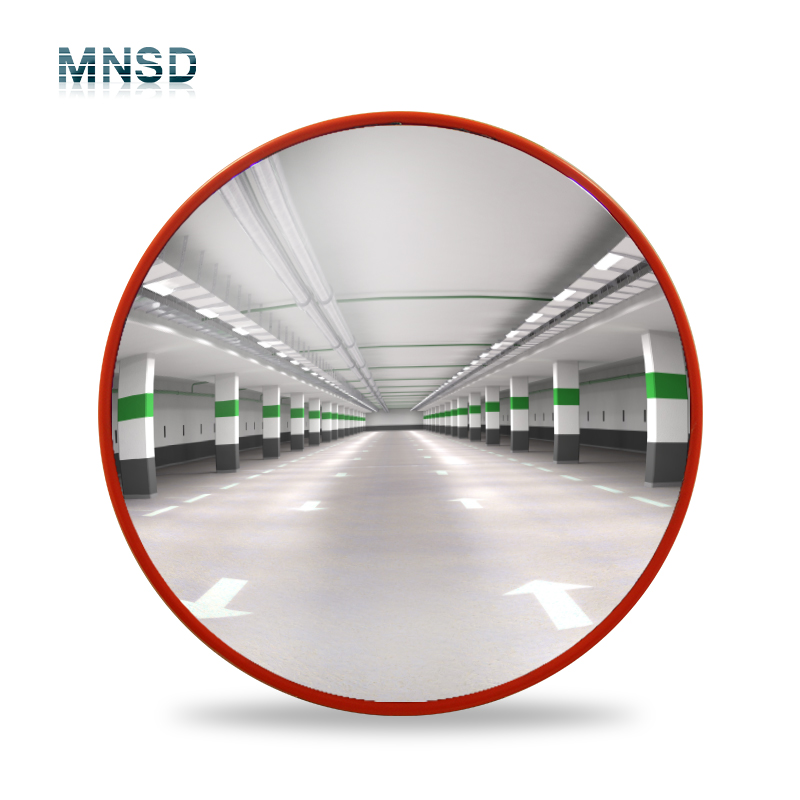
Outdoor polycarbonate convex mirrors typically provide a 180-degree viewing angle and a visual range of 20 to 25 meters. This means one mirror can cover an intersection, a corridor, or a loading dock entrance when positioned correctly. The passive design also means there is no software to update, no camera to align, and no power connection to maintain.
For comparison, electronic monitoring can deliver advanced analytics and recording, but it comes with higher installation cost, ongoing electrical consumption, and more complex maintenance. Convex mirrors complement electronic systems in many sites, or they can be deployed independently where the core need is simple visibility.
Convex Mirror Materials at a Glance
The main materials used for convex traffic and safety mirrors are polycarbonate, acrylic, and glass. Each offers a different balance of impact resistance, weather durability, cost, and optical clarity. The table below summarizes typical characteristics based on common industry practice.
| Evaluation Factor | Polycarbonate (PC) | Acrylic | Glass |
|---|---|---|---|
| Impact resistance | High; shatter-resistant | Moderate; can crack or break | Low; breaks into shards |
| Outdoor and UV resistance | High; suits prolonged sun exposure | Moderate; may yellow or become brittle | High; but mounting and frame must be considered |
| Weight | Light | Light | Heavy |
| Cost position | Mid-to-higher | Lower | Mid |
| Typical use | Outdoor roads, loading docks, warehouses | Indoor facilities on a budget | Indoor short-range only |
| Surface scratching risk | Needs hard coating | Medium | Low |
For outdoor and high-impact areas, polycarbonate is generally the stronger candidate. It is lightweight, tough, and less likely to create dangerous fragments. For controlled indoor environments where cost is the main constraint, acrylic can be a practical choice. Glass is less common in new industrial installations because of weight and shatter risk.
Convex Mirrors vs. Electronic Monitoring: A Compact Comparison
| Evaluation Factor | Convex Mirror | Electronic Monitoring |
|---|---|---|
| Viewing | Wide angle; typical 180-degree coverage | Depends on camera type and number |
| Power requirement | None | Required |
| Upfront cost | Lower | Higher |
| Maintenance | Minimal; occasional cleaning | Regular checks for electronics and connectivity |
| Deployment | Fast; passive installation | Needs mounting, cabling, and configuration |
Step-by-Step: Choosing the Right Convex Mirror
To turn this comparison into a purchasing decision, follow this practical sequence.
- Define the installation environment. Confirm whether the mirror will be placed indoors or outdoors. Outdoor locations require UV-resistant, weatherproof construction. Indoor sites may allow more material options.
- Identify the blind spot coverage needed. Map the intersection, corridor, loading dock, or driveway. Determine whether a half dome, full dome, or flat mirror will cover the approach path.
- Select the material. For high-impact or outdoor locations, prioritize polycarbonate. For budget-sensitive and controlled indoor areas, acrylic can be considered. Glass is generally reserved for niche indoor uses.
- Choose the mounting method. Wall-mounted mirrors work well for vertical surfaces, while pole-mounted mirrors are common for roadways and open intersections. Confirm that the bracket design allows the required viewing angle adjustment.
- Check protective features. Look for weatherproof hoods, high-visibility trim, or swivel brackets where the application needs extra visibility or rain protection. These features should be verified with the supplier for each product configuration.
- Review the supplier's manufacturing and quality controls. Confirm that the factory can provide consistent PC surface quality, anti-scratch treatment, and protective packaging. Mnsd, for example, uses anti-scratch hard coating and PE film protection as part of its PC mirror production process.
- Request a sample or specification sheet before scaling. A small sample order helps you verify real-world optical quality, mounting hardware compatibility, and overall construction before committing to a larger volume.
Use Cases Across Industrial and Commercial Environments
Convex mirrors are used in a wide range of locations where blind spots create risk. Common applications include:
- Road traffic and highway ramps
- Residential quarters and community intersections
- Parking garages and multi-level car parks
- Factories and warehouses
- Logistics parks and loading docks
- Shopping malls, supermarkets, schools, and hospitals
- Gas stations and construction sites
- Office parks, ports, bus stations, and industrial zones
- Rural roads and other vehicle-pedestrian mixing points
The right material makes these installations safer and more durable. Outdoor sites exposed to sun and weather benefit from polycarbonate construction, while indoor sites with lower impact risk can use more economical material options.
Supplier Capability: OEM/ODM and Quality Control
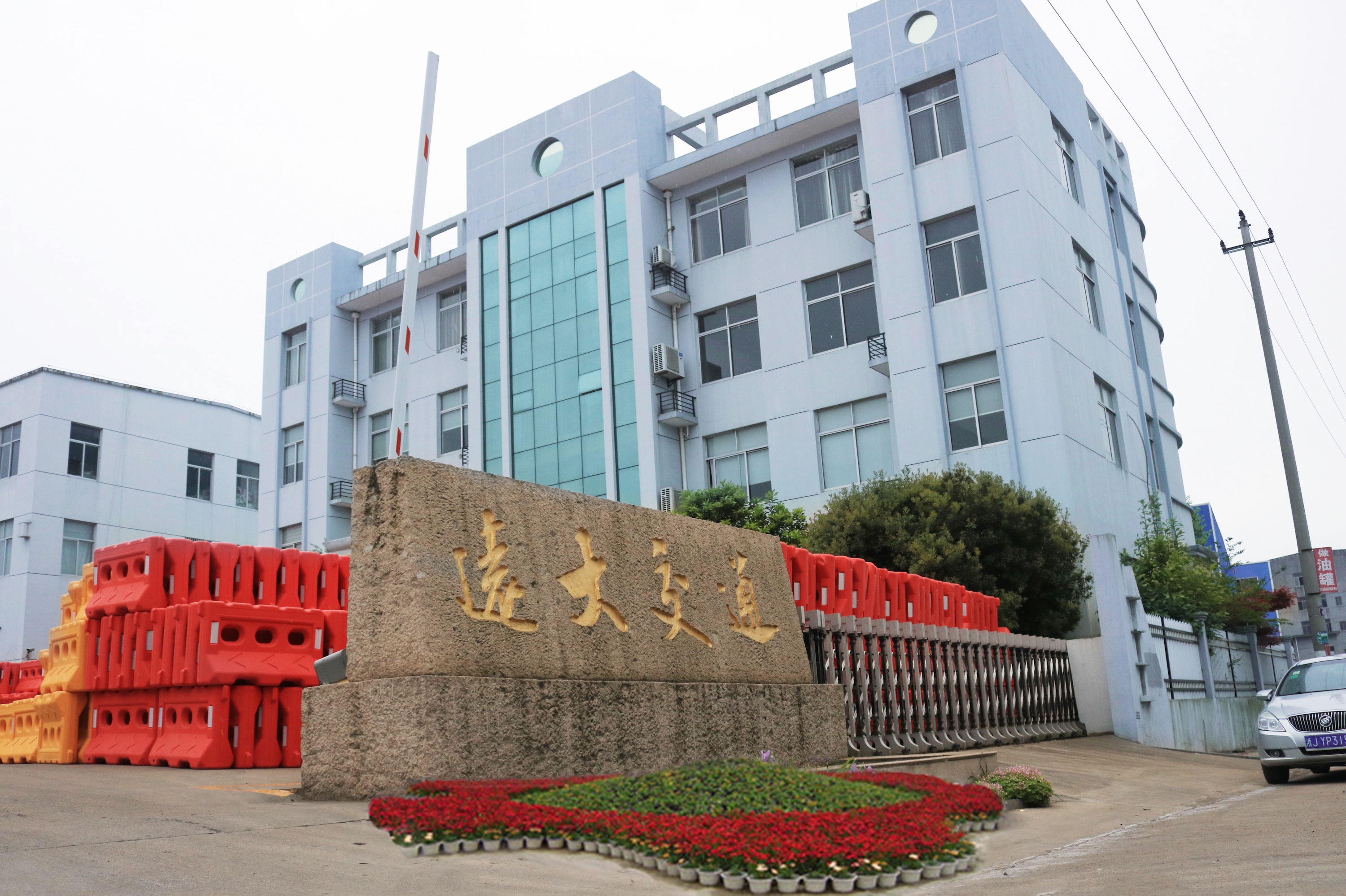
Mnsd is the brand of Tiantai Yuanda Traffic Device Co., Ltd., a Chinese manufacturer based in Tiantai, Zhejiang. The company operates a 40,000 square meter factory and reports an annual output capacity of 120,000,000 units. Its product range includes convex mirrors, warning posts, rising bollards, speed humps, and traffic lights. The company employs a 15-person R&D team and exports about 50% of its output to markets including Asia, Europe, and the USA.
For industrial buyers, these capacity details matter because convex mirror orders often involve multiple sites and long-term replenishment. A supplier with stable production capacity and export experience can support consistent delivery and quality. In addition, OEM and ODM customization services are available from Mnsd, allowing buyers to coordinate product specifications with project requirements rather than reshaping the project around a standard item.
FAQ
Do convex mirrors need special certification for export?
Certification requirements depend on the destination market and application. For vehicle-mounted mirrors, regulations such as FMVSS No. 111 apply in the USA. For fixed industrial convex mirrors, buyers should verify material, safety, and marking requirements with the manufacturer. Mnsd can provide compliance documentation and configuration support as part of its OEM/ODM service process.
Can Mnsd customize convex mirrors for a specific project?
Yes. Mnsd is the brand of Tiantai Yuanda Traffic Device Co., Ltd., which offers OEM and ODM customization services. Customers can work with the factory on mirror size, mounting configuration, and other project-specific details. This is useful for buyers who need consistency across multiple sites or who require a non-standard setup.
How does a convex mirror compare with an electronic monitoring system on cost?
Compared to electronic monitoring systems, this product has distinct advantages: lower upfront cost, zero energy consumption, minimal maintenance, and no power requirement. Convex mirrors are often selected as a fast and economical blind spot solution, either independently or as a complement to cameras.
Is it possible to request a sample before a bulk purchase?
Sample validation before bulk purchase is a common and recommended practice in safety product procurement. Buyers should contact Mnsd directly to confirm sample availability, specifications, and shipping arrangements. The best next step is to request a sample or quote to evaluate the mirror in the actual installation environment.
How soon can I get a quotation or production lead time?
Lead time depends on product configuration, customization level, and order quantity. Contact Mnsd with your requirements and target schedule to obtain an accurate production and delivery timeline. Direct inquiry helps avoid assumptions and ensures the project plan is based on supplier-specific data.
Conclusion and Next Step
Material selection is the core of any convex mirror buying decision. Polycarbonate offers impact resistance and weather durability for outdoor and industrial environments; acrylic offers a lower-cost option for controlled indoor spaces; glass is less common for new installations because of weight and shatter risk. Pairing the right material with the correct mounting method and a capable supplier reduces both safety risk and lifecycle cost.
For buyers who need a reliable outdoor polycarbonate mirror, Mnsd provides manufacturer-level support with OEM/ODM customization and export experience. The quickest way to verify fit is to request a sample or quote and review the product against your specific site conditions.
Download the Mnsd product brochure to review the company’s road safety product range and manufacturing background.
Download Brochure