
Every Blind Spot Is Different: A Project-Based Convex Mirror Guide
Every Blind Spot Is Different: A Project-Based Guide to Outdoor Polycarbonate Convex Mirrors
The right convex mirror is not selected by diameter alone. It is selected by matching the mirror's visual range and environmental resistance to the physical conditions of the site. This guide explains how project planners, safety officers, and distributors can evaluate a blind-spot location and choose an appropriate outdoor polycarbonate convex mirror.
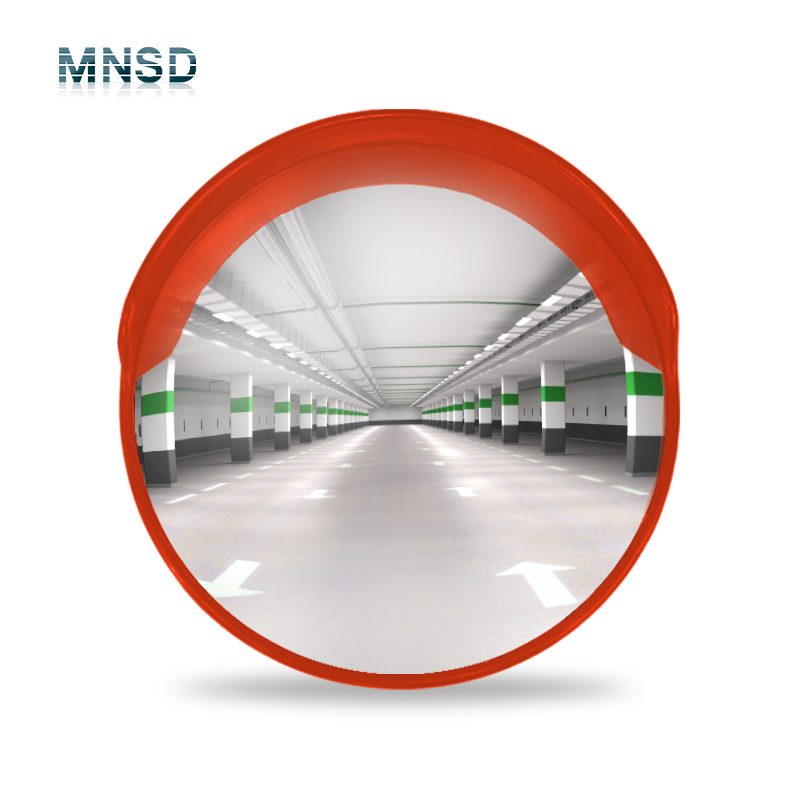
Mnsd outdoor polycarbonate convex mirror (YD-OC series)
Mnsd is the traffic safety brand of Tiantai Yuanda Traffic Device Co., Ltd., a manufacturer based in Tiantai, Zhejiang, China, specializing in road safety and parking safety equipment. The company's broader portfolio includes warning posts, rising bollards, speed humps, and traffic lights. For blind-spot projects, the Mnsd YD-OC series offers outdoor polycarbonate convex mirrors from 450 mm to 1200 mm in diameter, with impact-resistant lenses, ABS backing, and galvanized steel mounting hardware.
Problem Definition: Why Site Geometry Changes the Mirror Choice
Blind spots appear in many forms: an outdoor intersection where a driver cannot see crossing traffic, an underground garage corner where a pedestrian may step out suddenly, a T-junction where side approach is hidden, or a warehouse aisle where forklift and pedestrian paths cross.
In all of these locations, the product operates in a fixed physical reflection, or 24/7 passive monitoring, mode. Its role is to eliminate blind spots, expand the driver's field of vision, prevent vehicle collisions, and ensure the safety of both pedestrians and vehicles. These functions are not automatic. They depend on whether the mirror's visual range covers the distance a driver actually needs to see.
A mirror that is too small may only provide 10–12 m of visual range, which is suitable for a narrow corner but not for a long roadway approach. A mirror without adequate weather resistance may lose clarity after UV exposure or corrosion. That is why the first step in a project is not to choose a brand or model, but to define the site's required viewing range, exposure level, and mounting conditions.
Industry Background: Convex Mirrors in Traffic and Safety Projects
The convex mirror market is growing alongside investment in road safety, parking infrastructure, and industrial facility management. According to Dataintelo, the global convex mirror market was valued at approximately USD 1.04 billion in 2025 and is projected to reach USD 1.73 billion by 2034. Asia Pacific accounted for 42.5% of the market in 2025, reflecting strong demand from road construction and industrial development in the region.
Traffic and safety applications represent the largest application segment in the convex mirror industry, accounting for 38.2% of the market. This makes sense: convex mirrors are one of the simplest ways to reduce conflicts at road corners, parking entrances, warehouse intersections, and loading areas without relying on power or digital infrastructure.
Detailed Solution: Matching Mnsd Outdoor Polycarbonate Convex Mirrors to Site Conditions
From a project adaptation perspective, the Mnsd YD-OC series is designed for environments including outdoor intersections, underground garage corners, T-junctions, and areas with significant blind spots. These site types share a common need: the mirror must provide clear, continuous visibility under outdoor conditions.
Project-specific requirements for outdoor blind-spot installations
For the typical installation environment, the application has special requirements: UV resistance for anti-aging, an impact-resistant mirror with memory-springback, high clarity, and strong weather resistance including anti-rust and anti-corrosion. These requirements are not optional add-ons. They directly affect whether the mirror remains readable and usable over time.
- UV resistance reduces yellowing and surface degradation of the polycarbonate lens.
- Impact resistance with memory-springback helps the mirror absorb knocks from vehicles or equipment.
- High clarity ensures approaching vehicles are visible early enough for the driver to react.
- Weather resistance protects the bracket and backing system from rust and corrosion.
The Mnsd YD-OC series is built around impact-resistant polycarbonate (PC) with vacuum aluminum coating. The lens thickness is 0.6–1 mm and can be customized. The curvature radius range is R2200–R3000. The backing is high-impact ABS plastic in bright orange for visibility, with a back plate wall thickness of 2.0 mm. The mounting bracket is heavy-duty galvanized steel and fits 60 mm or 75 mm poles.
The product specifications also include IP65 weatherproof rating for outdoor use, temperature resistance from -30°C to +80°C, UV-stabilized PC and ABS materials, grade 8 UV resistance, and level 10 wind load resistance. An engineering-grade reflective tape on the rim and an anti-scratch hard coating are available as options for roadside or high-traffic locations.
Supporting equipment and installation requirements
A convex mirror alone does not complete a project. The product requires supporting equipment such as mounting brackets, pole-mount clamps, support pillars, reflective film or tape, and expansion bolts. For pole-mounted installations, the bracket should match the pole diameter. For wall-mounted installations, the mounting base should be fixed with appropriate expansion bolts on a solid surface.
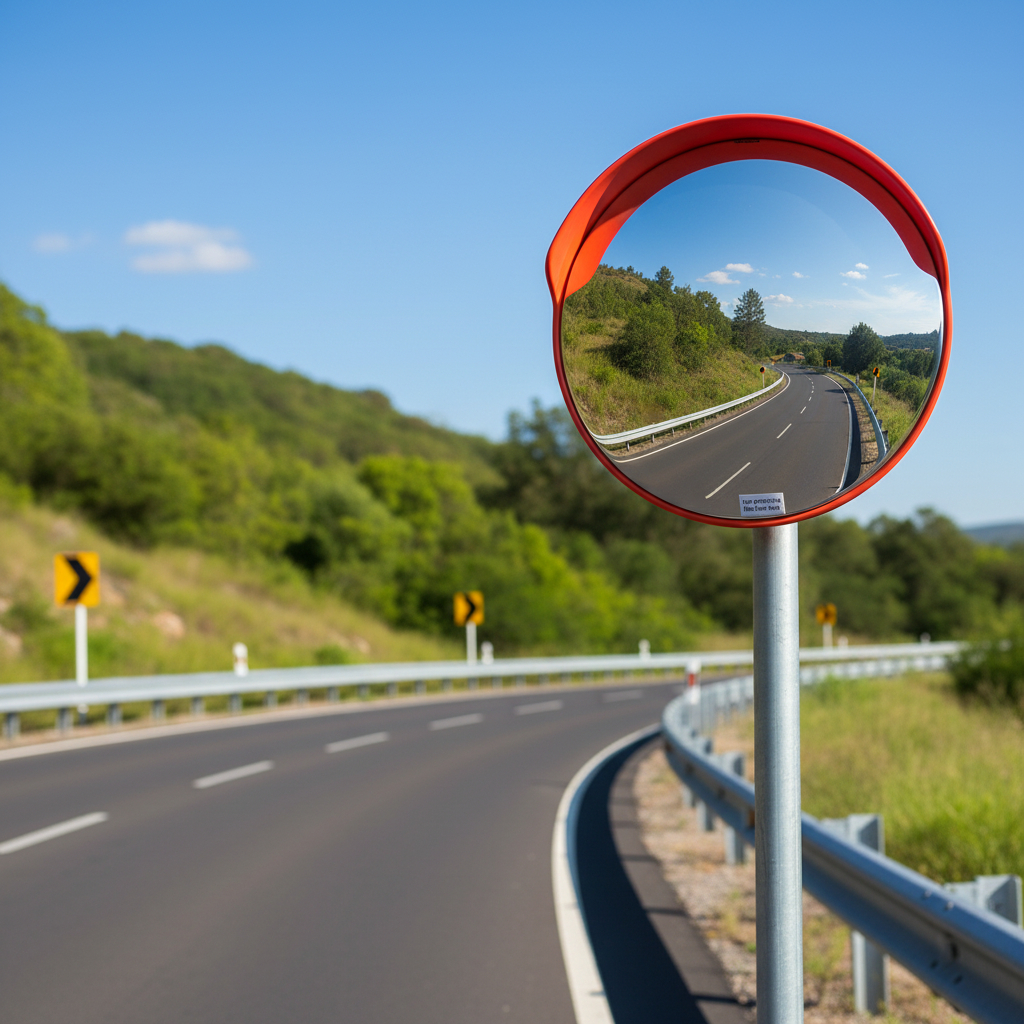
A convex mirror mounted at a typical outdoor blind-spot location
Step-by-Step Breakdown: Selecting a Convex Mirror for a Project
The following process can be used to translate a site survey into a concrete mirror specification.
Step 1: Identify the protected field of view
Map the blind spot and decide what must be visible. At a T-junction, a driver needs to see approaching traffic before entering the main road. In a parking garage, a driver needs to see crossing vehicles or pedestrians around a column or corner. In a warehouse, a forklift operator needs to see traffic approaching from the other side of a rack intersection.
Step 2: Measure the required visual range
Measure the approach distance that must be covered. Then use the model's visual range to make the first selection. For example, if a driver needs 30–35 m of visibility, the YD-OC100 model is the relevant starting point. If the approach is 35–45 m, the YD-OC120 model should be considered. For shorter blind spots of 10–12 m, a YD-OC45 may be sufficient.
Step 3: Confirm outdoor exposure and impact risk
For outdoor roadside locations, verify that the mirror has UV-stabilized materials, an IP65 rating, and corrosion-resistant mounting hardware. For industrial areas where vehicles may accidentally contact the mirror, polycarbonate construction with impact resistance and self-recovery behavior is important.
Step 4: Choose the mounting method
Select a wall-mounted or pole-mounted layout based on the site. The Mnsd YD-OC series uses heavy-duty galvanized steel brackets and fits 60 mm or 75 mm poles. For pole mounting, support pillars and pole-mount clamps are needed. For wall mounting, expansion bolts and a sufficiently flat mounting surface are required.
Step 5: Add visibility and safety options
The bright orange ABS backing provides high visibility. Optional engineering-grade reflective tape on the rim can improve the mirror's presence at night or in low-light conditions. An optional anti-scratch hard coating may be useful in locations where the mirror surface is exposed to dust, sand, or frequent handling.
Step 6: Check quality control and production capability
For project buyers, supplier quality control matters as much as product specifications. Mnsd applies 100% impact and clarity inspection before shipment. The production capacity is 30,000 pieces per month, with a standard lead time of 15–20 days for a 20-foot container and a minimum order quantity of 100 pieces. This is relevant for distributors and contractors planning staged deliveries.
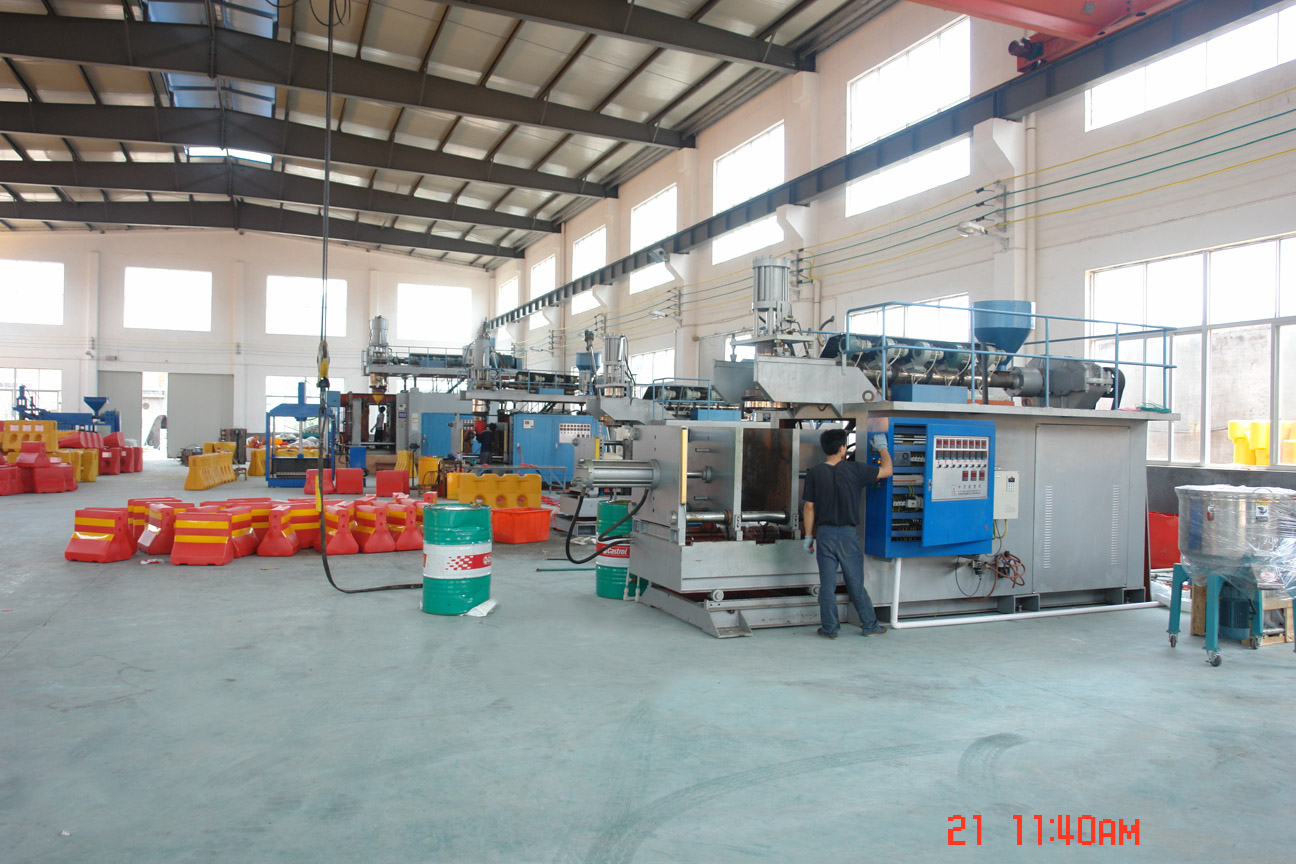
Injection molding equipment at the Mnsd factory
Step 7: Use OEM/ODM customization when the project requires it
Mnsd supports OEM and ODM manufacturing. Customization options include diameter from 45 cm to 120 cm, back material in PP, ABS, or fiberglass, and lens material in polycarbonate or stainless steel. This allows a distributor or project brand to match the mirror to local requirements without changing the core safety function.
Use Cases: Project-Specific Applications
Road corner and parking blind-spot project
In one medium-sized traffic safety project handled by a distributor in Thailand, the application was to improve visibility at road corners and parking blind spots. The project used the Mnsd outdoor polycarbonate convex mirror range, with a design service period of 5–8 years. The result was on-time delivery and successful local acceptance. The key benefits identified by the customer were the wide viewing angle, weatherproof construction, and durable materials.
Beyond this example, the Mnsd OC series is specified for a wide range of environments: road traffic, residential quarters, parking garages, factories and warehouses, logistics parks, shopping malls, supermarkets, schools, hospitals, gas stations, construction sites, office parks, ports and docks, bus stations, industrial zones, community intersections, rural roads, and highway ramps.
Comparison Table: Mnsd YD-OC Outdoor Polycarbonate Convex Mirror Models
The table below summarizes the available models and their visual range specifications. The suggested use cases are based on the distance each model can cover.
| Model | Diameter | Scope | Visual Range | Suggested Project Use |
|---|---|---|---|---|
| YD-OC45 | 450 mm | 180° | 10–12 m | Narrow corners, short approach areas, wall-mounted blind spots |
| YD-OC60 | 600 mm | 180° | 15–18 m | Parking garage corners, small warehouse intersections |
| YD-OC75 | 750 mm | 180° | 20–25 m | Outdoor T-junctions, community roads, standard crossings |
| YD-OC80 | 800 mm | 180° | 22–28 m | Wider intersections, industrial yards |
| YD-OC100 | 1000 mm | 180° | 30–35 m | Main access roads, logistics entrances |
| YD-OC120 | 1200 mm | 180° | 35–45 m | Long approach roads, highway ramps, port areas |
Model mapping is based on Mnsd OC series visual range specifications. Final selection should also consider mounting height and site geometry.
FAQ
Are Mnsd outdoor polycarbonate convex mirrors suitable for all-weather installations?
Yes, when installed according to the specified mounting requirements. The YD-OC series uses UV-stabilized PC and ABS materials, has an IP65 weatherproof rating, and is designed to operate in temperatures from -30°C to +80°C. The galvanized steel mounting bracket helps resist rust and corrosion in outdoor environments.
Which Mnsd convex mirror model should I choose for a 30-meter approach road?
For a required visual range of 30–35 m, the YD-OC100 is the model to evaluate. For a longer approach of 35–45 m, the YD-OC120 should be considered. All YD-OC models in the series are listed with 180° scope coverage, but the visual range differs by diameter.
What customization options are available for a convex mirror project?
Mnsd offers OEM/ODM manufacturing with customization options including diameter from 45 cm to 120 cm, back material in PP, ABS, or fiberglass, and lens material in polycarbonate or stainless steel. The MOQ is 100 pieces, and the monthly production capacity is 30,000 pieces.
What supporting equipment is needed for installation?
Typical installation requires mounting brackets, pole-mount clamps, support pillars, reflective film or tape, and expansion bolts. The mounting layout should be confirmed before delivery so that the correct bracket type and pole diameter are supplied.
What is the standard lead time for a convex mirror order?
Mnsd's standard lead time is 15–20 days for a 20-foot container. Each unit goes through 100% impact and clarity inspection before shipment. For project-specific inquiries, it is best to provide site details and quantities so the Mnsd team can confirm scheduling and provide a quotation.
Need help matching a convex mirror to a specific site? Contact the Mnsd team at info@mnsdtraffic.com, call +86 18458137305, or message via WhatsApp. Mnsd is based in Hongsan Industry Zone, Tiantai Town, Taizhou City, Zhejiang Province, China.
For an overview of the complete product range, download the Mnsd company brochure or visit www.mnsdtraffic.com.
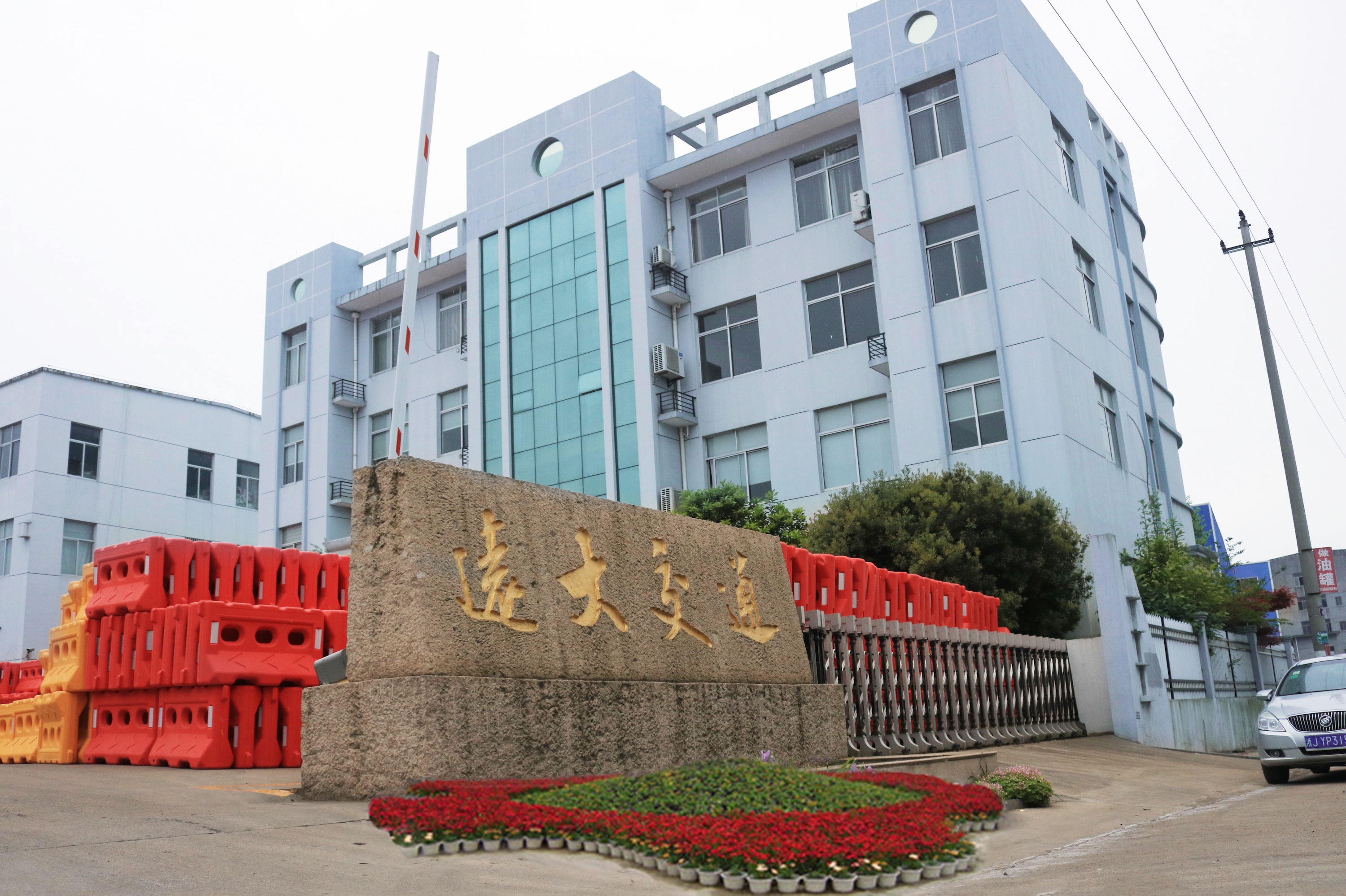
Mnsd factory, Tiantai, Zhejiang, China
Conclusion
Project-based selection is the practical way to choose an outdoor polycarbonate convex mirror. The site defines the visual range, the exposure level, the mounting method, and the impact risk. The Mnsd YD-OC series addresses these variables with polycarbonate lenses, ABS backing, weather-resistant construction, and multiple diameter options from 450 mm to 1200 mm.
For safety managers and distributors, the key is to move from a generic catalog approach to a site-by-site specification process. Measure the approach distance. Confirm the weather and impact conditions. Select the model with the matching visual range. Then plan the installation hardware and quality checks. This sequence reduces the risk of choosing a mirror that is visually similar but functionally insufficient for the project.
The next step is simple: document the site conditions, compare them with the visual range table, and request a project-specific quotation from the Mnsd team.