
How to Build a Convex Mirror Compliance File: IP65, UV Grade 8, and Wind Load Evidence
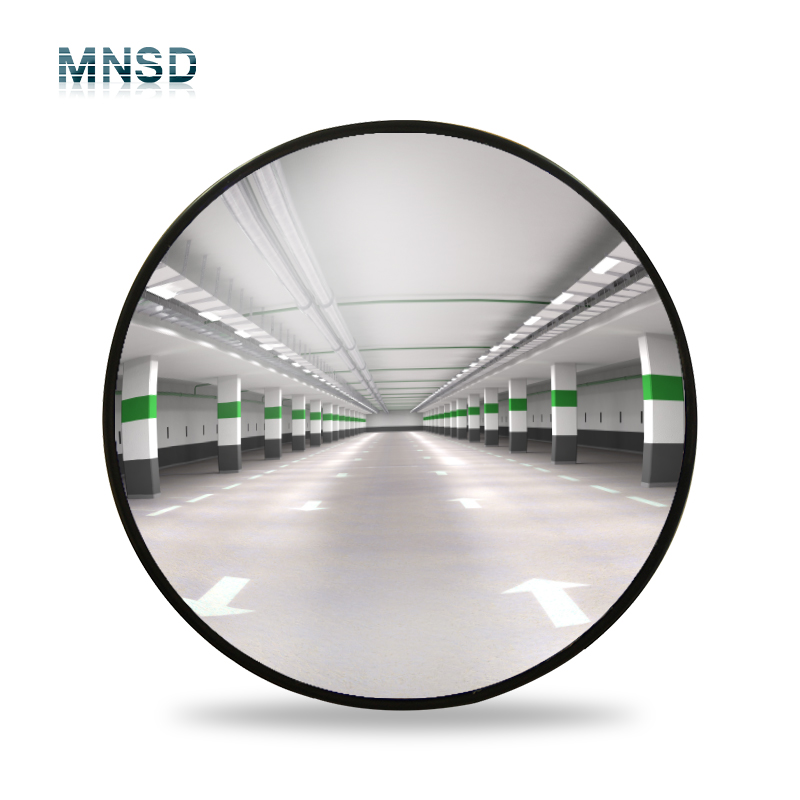
A convex mirror compliance file is not a folder of certificates. It is a model-level evidence pack that connects a specific mirror, its materials, its ratings, its mounting method, and its intended site to the questions a safety reviewer, procurement team, or local authority is likely to ask. For an outdoor polycarbonate convex mirror, the file should show what the manufacturer states, how that statement was tested or controlled, and where the limits of the claim sit.
Mnsd is the brand used by Tiantai Yuanda Traffic Device Co., Ltd, a road safety equipment manufacturer based in Tiantai, Zhejiang, China. The Mnsd outdoor polycarbonate convex mirror series includes the YD-OC60, YD-OC75, YD-OC100, and YD-OC120, with shared material and weather specifications and different diameters, visual ranges, and mounting fits. This guide shows how to turn those product data points into a compliance file that a reviewer can follow without relying on unverified certificate claims.
The framework is deliberately conservative. It treats IP65, UV Grade 8, Level 10 wind load resistance, and impact behavior as claims to be documented, not as slogans to be repeated. It also separates product evidence from site evidence: a mirror can carry a weatherproof rating and still fail an installation review if the bracket, pole, wall substrate, or sight-distance calculation is missing.
Problem Definition: Why a Convex Mirror Compliance File Fails Without Model-Level Evidence
The common failure is a file that proves the wrong thing. It may contain a supplier brochure, a generic declaration, and a photo of a mirror, but no clear link between the document and the exact model being installed. A reviewer then has to guess whether the IP65 rating applies to the YD-OC60 or only to a larger housing, whether the wind load statement covers the supplied bracket, or whether the UV claim refers to the lens, the backing, or both.
That gap matters because outdoor convex mirrors are exposed to several different loads at once. Rain, dust, and washing affect the housing and coating. Sun and heat affect the polycarbonate lens and ABS backing. Wind affects the mirror body, the bracket, and the pole or wall connection. Impact from vehicles, trolleys, or vandalism affects the lens and the self-recovery behavior of the assembly. A compliance file should address each load separately and then show how the installation ties them together.
Procurement teams also need a file that can be compared across models. If the YD-OC60 is proposed for a tight parking ramp and the YD-OC100 is proposed for a warehouse intersection, the file should make the difference in diameter, visual range, and mounting fit visible. That is more useful than a single certificate with no model traceability.
Industry Background: What Outdoor Convex Mirrors Are Expected to Do
Convex mirrors are used where a driver, pedestrian, or forklift operator cannot see around a corner, a pillar, a ramp, or a doorway. The Mnsd product data lists applications across road traffic, residential quarters, parking garages, factories and warehouses, logistics parks, shopping malls, supermarkets, schools, hospitals, gas stations, construction sites, office parks, ports and docks, bus stations, industrial zones, community intersections, rural roads, and highway ramps. The common function is passive visibility: the mirror widens the field of view at a fixed point and does not depend on power, sensors, or network connectivity.
The market context supports the need for better documentation rather than more product claims. Dataintelo's 2026 convex mirror market report, as recorded in the verified data pack, values the global convex mirror market at USD 1.04 billion in 2025 and forecasts USD 1.73 billion by 2034, a 5.8% CAGR. The same source reports Asia Pacific at 42.5% revenue share in 2025. Growth in the category makes supplier selection more important, but it does not tell a buyer whether a particular mirror is suitable for a particular site. That decision still depends on model-level specifications and installation evidence.
Regional requirements vary. Some road authorities publish their own approval lists, mirror size rules, mounting heights, or retroreflective requirements. Others rely on general road-safety design guidance. The Mnsd product data includes an optional engineering-grade reflective tape on the rim, but the supplied data does not confirm a specific road authority approval, a CE certificate, or a test report number. A responsible compliance file should therefore teach the buyer which categories to verify with the local authority instead of asserting a certification that the manufacturer has not confirmed.
The Evidence Pack: Six Spec Categories That Should Drive the File
The Mnsd outdoor polycarbonate convex mirror series provides a useful base because the same core specification appears across the YD-OC60, YD-OC75, YD-OC100, and YD-OC120. The file should not copy the whole spec sheet into every section. It should extract the data points that answer a reviewer's question and place them next to the evidence that supports them.
1. Product Identity and Model Traceability
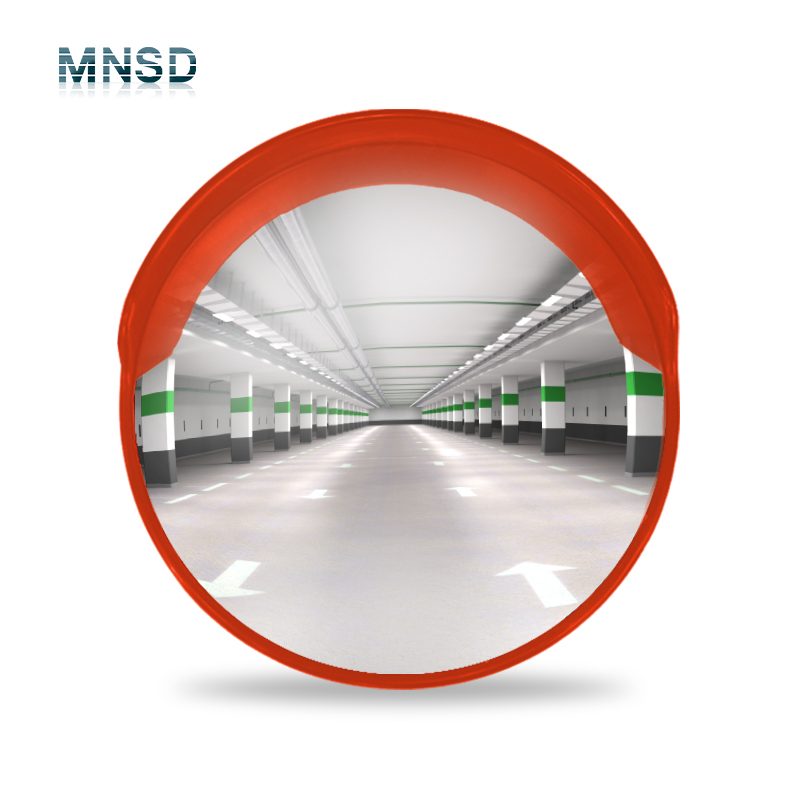
Start with the exact model, diameter, lens material, backing material, color, and mounting interface. For the Mnsd series, the mirror material is impact-resistant polycarbonate, the backing is high-impact ABS plastic in bright orange, the back plate wall thickness is 2.0 mm, and the mounting bracket is heavy-duty galvanized steel. The series uses a vacuum aluminum coating, with an optional anti-scratch hard coating. Lens thickness is listed at 0.6–1 mm and is customizable. Curvature radius is listed at R2200–R3000.
Model traceability means the file should show the label, packaging, or product photo that matches the model code. If the file covers multiple models, the specification table should make the diameter and visual range differences clear. This prevents a reviewer from applying a YD-OC120 wind load statement to a YD-OC60 installation without checking the mounting and sail area.
2. Weather and Temperature: IP65 and -30°C to +80°C
The product data lists IP65 as the weatherproof rating for outdoor use and an operating temperature range of -30°C to +80°C. In a compliance file, IP65 should be presented as the manufacturer's stated enclosure rating, with a request for the supporting test declaration or internal quality record. The file should also state the temperature range as an operating claim, not as a guarantee that every installation will perform identically in every microclimate.
The practical question is where the rating applies. Does it cover the mirror housing, the backing, and the bracket interface? Does it remain valid after the optional reflective tape or anti-scratch coating is added? The supplied data does not answer every one of those questions, so the file should list them as items to confirm with Mnsd rather than filling the gap with assumptions.
3. UV and Material Aging: UV-Stabilized PC and ABS, Grade 8
The lens and backing are described as UV-stabilized PC and ABS, with Grade 8 UV resistance and a 3–5 year estimated lifespan. That is a useful material statement because outdoor mirrors often fail not from a single impact but from cumulative exposure: yellowing, chalking, embrittlement, or coating haze. The compliance file should record the Grade 8 claim exactly as supplied and ask what test method or internal standard supports it.
The file should avoid turning Grade 8 into a certification. It is a material performance claim in the product data. The reviewer may want to know whether the grade applies to the lens, the ABS backing, or the assembled product. The supplied data groups UV-stabilized PC and ABS together, so the file should state that grouping and note the scope to be confirmed.
4. Wind Load and Mounting: Level 10 and Galvanized Steel
The product data lists Level 10 wind load resistance and a heavy-duty galvanized steel mounting bracket. The series is listed with a 60 mm / 75 mm pole fit, and the YD-OC120 is described for wall or pole mounting in the assigned model summary. Wind evidence is only as good as the installation evidence. A Level 10 statement for the mirror body does not automatically prove that a particular pole, wall anchor, or substrate will carry the load.
The compliance file should therefore pair the wind load claim with the bracket specification, the pole diameter, the wall or pole mounting method, the anchor type, and the installation inspection record. If the site has a high-wind exposure or a large mirror diameter, the reviewer may ask for a project-specific mounting check. The file should not present the product rating as a substitute for that check.
5. Impact and Vandal Resistance: Self-Recovery Behavior
The product data describes the mirror as vandal-resistant and self-recovery. The application data adds the requirement for an impact-resistant mirror with memory-springback. In practice, the file should explain that the polycarbonate lens is intended to resist impact without shattering like glass, and that the assembly is described as self-recovering after impact. The file should not claim a specific impact energy, projectile class, or test standard unless that data is supplied.
Mnsd's capability data also states 100% impact and clarity inspection as part of quality control. That is a useful production control statement. It supports batch consistency, but it is not the same as a third-party impact certification. The file should keep those two ideas separate.
6. Optical Performance: View Angle, Visual Range, and Coating
The optical evidence should include the listed view angle, visual range, lens thickness, curvature radius, and surface coating. The Mnsd data lists a 130°+ wide-angle parameter and a 180° scope angle for the series. Those two numbers should not be blended into one claim. The compliance file should record both as supplied and ask Mnsd to confirm the measurement basis for the selected model.
Visual range is model-dependent. The supplied data lists the YD-OC60 at 15–18 m, the YD-OC75 at 20–25 m, the YD-OC100 at 30–35 m, and the YD-OC120 at 35–45 m. These ranges help the buyer match the mirror to the site, but they are not a substitute for a sight-distance check. Mounting height, approach speed, obstructions, and the driver's eye height all affect whether the mirror actually solves the blind spot.
Step-by-Step: How to Assemble the Compliance File
Step 1: Define the Site and the Required Model
Write a short site statement before collecting documents. Record the location, the type of blind spot, the approach speed, the mounting surface, the available pole diameter, and the expected viewing distance. Then select the model. A tight parking ramp may call for the YD-OC60 or YD-OC75, while a logistics park or port approach may call for the YD-OC100 or YD-OC120. The model choice should be justified by the site statement, not by a preference for a larger mirror.
Step 2: Collect the Model-Level Spec Sheet
Request a spec sheet that names the exact model and lists diameter, lens material, lens thickness, curvature radius, view angle, visual range, weatherproof rating, temperature range, UV resistance, backing material, backing color, back plate thickness, bracket material, pole fit, impact rating, surface hardness option, and wind resistance. The Mnsd data provides these fields for the YD-OC series. The file should keep the original supplier document and a clean summary table.
Step 3: Convert Each Spec into a Testable Statement
Do not leave a rating as a standalone adjective. Turn it into a sentence that a reviewer can check. For example: 'The manufacturer states IP65 for outdoor use; the supporting declaration is requested as Appendix A.' Or: 'The manufacturer states Level 10 wind load resistance; the bracket and pole interface are documented in Appendix C.' This makes the evidence trail visible and shows where a document is still missing.
Step 4: Add Installation and Mounting Evidence
Include the bracket type, pole diameter, wall or pole mounting method, anchor specification, mounting height, and inspection sign-off. The Mnsd series lists heavy-duty galvanized steel brackets and a 60 mm / 75 mm pole fit. The file should show that the selected bracket matches the site. If the mirror is wall-mounted, record the wall substrate and anchor selection. If it is pole-mounted, record the pole diameter and condition.
Step 5: Document Optional Features Separately
The Mnsd data lists optional engineering-grade reflective tape on the rim and an optional anti-scratch hard coating. These options should not be buried in the base specification. If the site requires reflective tape, the file should show the tape specification and placement. If the site requires the anti-scratch coating, the file should show that the ordered configuration includes it. Optional features can change the product identity, so they belong in the model description.
Step 6: Build a Regional Authority Checklist
List the local requirements that apply to the site and mark each one as confirmed, not applicable, or pending. Typical categories to check include mirror size and mounting height, retroreflective requirements, road authority approval or acceptance, wind loading requirements, and any local sign or traffic control rules. The supplied Mnsd data does not confirm a specific CE certificate or road authority approval, so the file should state that the local authority requirement must be verified for the project.
Step 7: Add Shipment, QC, and Traceability Records
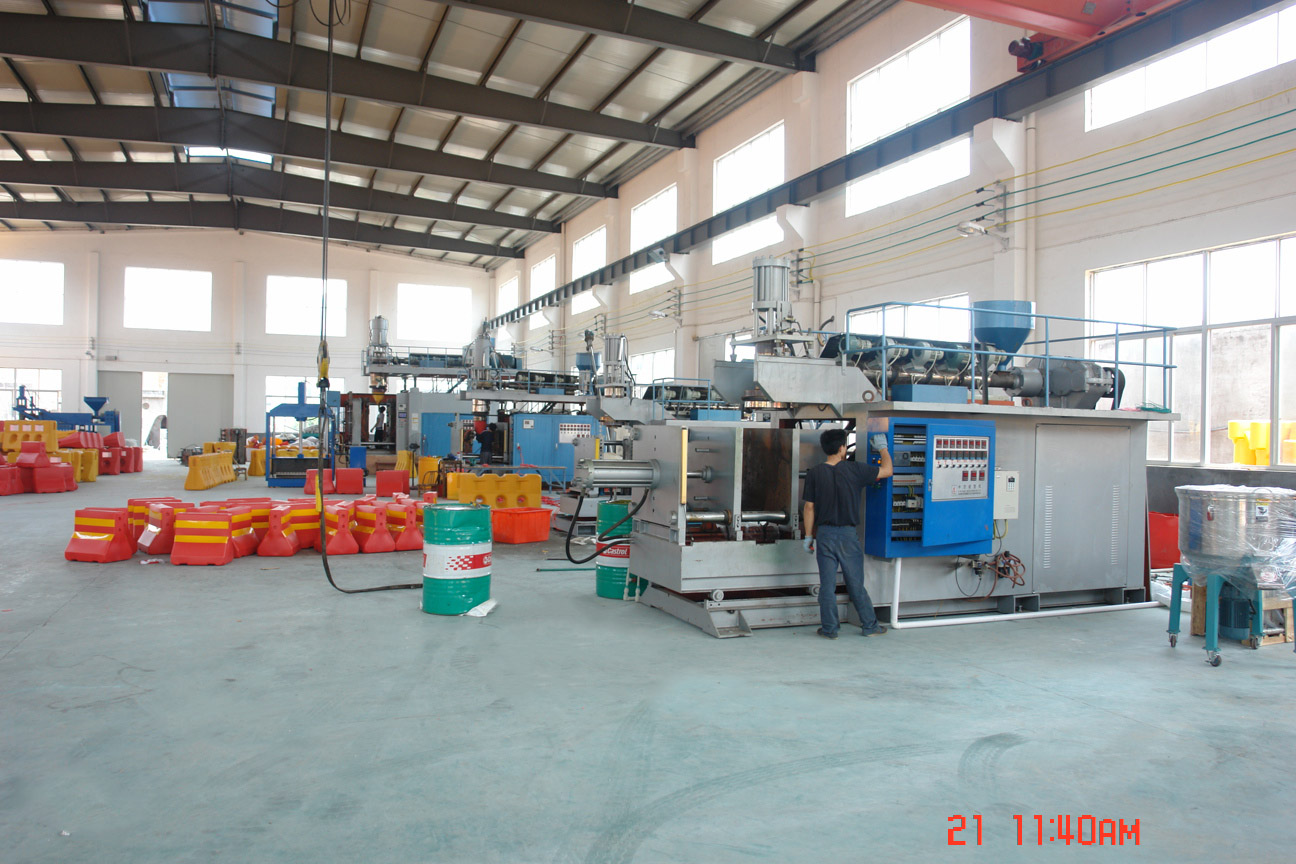
Attach the inspection record, packing list, and shipment photos where available. Mnsd's capability data states 100% impact and clarity inspection, a monthly capacity of 30,000 pieces, an MOQ of 100 pieces, and a lead time of 15–20 days for a 20 ft container. These facts support supply planning and batch consistency. They do not replace product certification, but they help the reviewer see that the delivered batch can be traced to a controlled production process.
Step 8: Control Versions and Re-Approval Triggers
Give the compliance file a revision number and a date. Record what changed: model, diameter, bracket, optional coating, mounting surface, or local requirement. A mirror that was approved for a YD-OC75 pole installation should not be assumed approved for a YD-OC120 wall installation without a new review. Version control is especially important when the same framework is reused across multiple sites.
Model Mapping: From YD-OC60 to YD-OC120
The same compliance framework scales across the series because the core material and weather specifications are shared. The differences that matter for the file are diameter, visual range, mounting fit, and site application.
| Model | Diameter | Listed visual range | Angle data to confirm | Mounting / pole fit | Typical site fit from supplied applications |
|---|---|---|---|---|---|
| YD-OC60 | ⌀600 mm | 15–18 m | 130°+ wide angle in parameter field; 180° in scope field | 60 / 75 mm pole fit | Tight parking corners, small warehouse intersections, community intersections |
| YD-OC75 | ⌀750 mm | 20–25 m | 180° angle of view in scope field; 130°+ wide angle in parameter field | 60 / 75 mm pole fit | Parking garage ramps, warehouse aisle ends, school or hospital entrances |
| YD-OC100 | ⌀1000 mm | 30–35 m | 130°+ wide angle in parameter field; 180° in scope field | 60 / 75 mm pole fit | Logistics parks, factory gates, larger parking areas, industrial zones |
| YD-OC120 | ⌀1200 mm | 35–45 m | 130°+ wide angle in parameter field; 180° in scope field | Wall or pole mounting; 60 / 75 mm pole fit | Ports and docks, highway ramps, large logistics yards, long approach roads |
The angle column is intentionally written as a confirmation item. The supplied data uses both a 130°+ wide-angle parameter and a 180° scope angle. A compliance file should not choose the more convenient number without knowing what it measures. Ask Mnsd to confirm whether the figure refers to the horizontal field of view, the mirror's geometric arc, or another specification. Then record the confirmed definition next to the model.
Use Cases: Mapping One Framework to Different Sites
Road Traffic and Highway Ramps
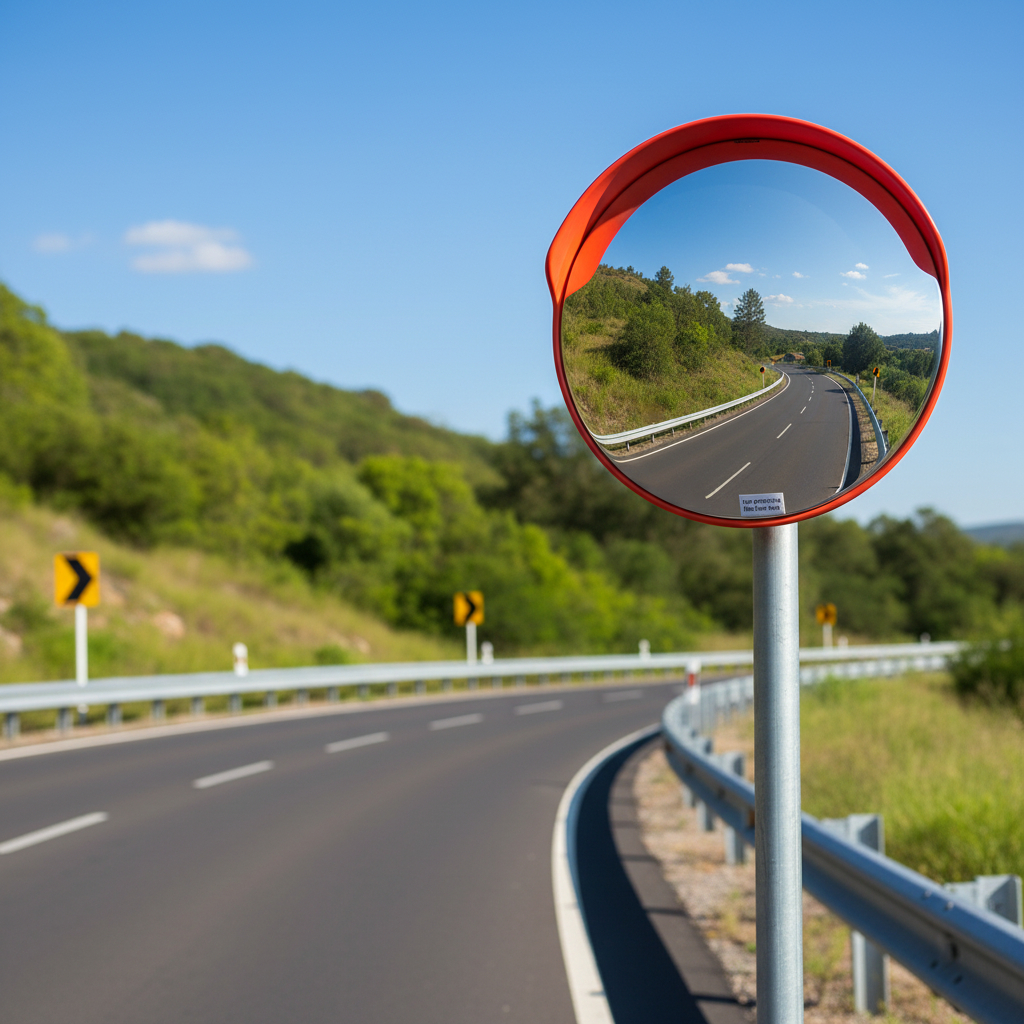
For road traffic, the file should prioritize sight distance, mounting height, and the local road authority's requirements. The YD-OC100 and YD-OC120 are the more likely candidates where approach speeds and viewing distances are longer, because their listed visual ranges are 30–35 m and 35–45 m. The file should record the authority requirement, the mirror size, the mounting location, and the inspection record. If reflective tape is specified, the optional engineering-grade tape should be listed as an ordered feature.
Parking Garages
Parking garages often have low ceilings, tight turns, and mixed pedestrian traffic. The YD-OC60 and YD-OC75 fit smaller corners and shorter viewing distances, with listed ranges of 15–18 m and 20–25 m. The compliance file should document the mounting height, the wall or pole condition, and the protection of the mirror from vehicle contact. The bright orange ABS backing improves visibility of the mirror body, but it does not replace a proper mounting location.
Warehouses and Factory Intersections
In warehouses, the blind spot is often at an aisle intersection or a doorway where forklifts and pedestrians cross. The YD-OC75 or YD-OC100 may fit depending on aisle width and crossing speed. The file should include the mounting bracket, the pole or wall interface, and the impact environment. Mnsd's product data describes the mirror as vandal-resistant and self-recovery, and the application data calls for memory-springback. Those claims should be recorded with the understanding that they describe product behavior, not a guarantee against every impact.
Logistics Parks and Industrial Zones
Logistics parks need wider coverage at yard entrances, gatehouses, and blind corners. The YD-OC100 and YD-OC120 are the stronger fit for these longer approaches. The compliance file should add wind exposure and mounting height to the standard product evidence. A large mirror on an exposed pole is a different installation from a small mirror on a protected wall, even when both use the same series specification.
Ports, Docks, and Construction Sites
Ports and docks may combine long sight distances, high wind, salt air, and vehicle traffic. The supplied product data lists ports and docks and construction sites among the applications, and the YD-OC120 is the largest model with a 35–45 m listed visual range. The file should record the mounting method and the inspection regime. It should also note that the supplied data does not include a salt-spray test or a project-specific wind calculation, so those items should be confirmed with the manufacturer or the site engineer where required.
Schools and Hospitals
Schools and hospitals often require a balance between vehicle visibility and pedestrian safety. The YD-OC75 or YD-OC100 may be appropriate at entrances, service roads, and parking areas. The file should include the mounting height and the local requirement for signs or markings. The mirror is a visibility aid, not a substitute for traffic calming, signage, or pedestrian separation.
Comparison Table: What Each Evidence Item Proves—and What It Does Not
The table below is a document-review aid, not a certificate. It uses the Mnsd product data and the verified data pack to show how each evidence item should be read.
| Evidence item | Mnsd data point | What it supports in the file | What it does not replace |
|---|---|---|---|
| Product identity | YD-OC60, YD-OC75, YD-OC100, YD-OC120; PC lens; ABS backing; galvanized steel bracket | Traceability between the document and the delivered model | A road authority approval or a third-party certificate |
| Weather rating | IP65 for outdoor use | Manufacturer's stated enclosure rating | A site-specific environmental risk assessment |
| Temperature range | -30°C to +80°C | Stated operating range | A guarantee for every microclimate or installation |
| UV resistance | UV-stabilized PC and ABS; Grade 8 UV resistance; 3–5 year estimated lifespan | Material aging claim for review | A standalone UV test report or a warranty |
| Wind load | Level 10 wind load resistant | Product-level wind resistance claim | A project-specific pole, wall, or anchor calculation |
| Impact behavior | Vandal-resistant and self-recovery; 100% impact and clarity inspection | Product behavior and production control statement | A third-party impact certification |
| Mounting | Heavy-duty galvanized steel bracket; 2.0 mm back plate; 60 / 75 mm pole fit | Installation interface and hardware description | A structural design for the pole or wall |
| Optics | Vacuum aluminum coating; optional anti-scratch hard coating; listed visual range by model | Optical configuration and model selection data | A site sight-distance survey |
| Supply and QC | 30,000 pieces/month; MOQ 100 pieces; 15–20 days for a 20 ft container | Capacity, order planning, and batch traceability | Product certification or local approval |
FAQ
What should a convex mirror compliance file contain for an outdoor installation?
It should contain model-level product data, weather and temperature ratings, UV and material information, wind load and mounting evidence, impact and vandal-resistance statements, optical data, installation records, and a regional authority checklist. For the Mnsd YD-OC series, the core data includes IP65, -30°C to +80°C, UV-stabilized PC and ABS with Grade 8 UV resistance, a 3–5 year estimated lifespan, Level 10 wind load resistance, a heavy-duty galvanized steel bracket, and a 60 / 75 mm pole fit. The file should also state which local requirements still need confirmation.
Can Mnsd provide model-specific data for the YD-OC60, YD-OC75, YD-OC100, and YD-OC120?
The supplied Mnsd product data covers these models with diameter, visual range, lens material, backing, bracket, weather rating, temperature range, UV resistance, and wind resistance. The series also supports OEM/ODM customization, including diameter from 45–120 cm, backing material in PP/ABS/fiberglass, and lens material in PC/stainless steel. Buyers should request the exact model-level spec sheet for the ordered configuration, because optional features such as reflective tape or anti-scratch coating can change the product identity.
Does a polycarbonate convex mirror cost more than an acrylic mirror?
Verified data states that the everyday cost of polycarbonate is 15–35% more than an equivalent acrylic mirror. The supplied Mnsd data does not publish a fixed price list, so the budget should be built from a model-level quotation that includes diameter, bracket, optional reflective tape, optional anti-scratch coating, packaging, and freight. The comparison should use the same size and mounting configuration; otherwise the price difference is not meaningful.
Can I request a sample before finalizing the compliance file?
A sample can support visual and dimensional checks before the file is approved. Use it to confirm lens clarity, backing color, bracket finish, label content, and the presence of any ordered option. The supplied data does not state a standard sample price or sample lead time, so those terms should be confirmed with Mnsd. A sample photo or inspection record can be added to the file as supporting evidence, but it should not be presented as a third-party certification.
What is the lead time and minimum order quantity?
The Mnsd capability data lists an MOQ of 100 pieces and a lead time of 15–20 days for a 20 ft container. Monthly capacity is listed at 30,000 pieces. These figures are useful for planning, but the compliance file should still record the approved model, optional features, and delivery schedule. For a current quotation, catalog, or model-level compliance data request, contact Mnsd at info@mnsdtraffic.com or through www.mnsdtraffic.com.
Conclusion
A convex mirror compliance file is strongest when it is boring in the right way: every claim is tied to a model, every rating is paired with its scope, and every installation is supported by a mounting record. The Mnsd YD-OC series gives safety and procurement teams a consistent starting point: IP65, -30°C to +80°C, UV-stabilized PC and ABS with Grade 8 UV resistance, a 3–5 year estimated lifespan, Level 10 wind load resistance, vandal-resistant and self-recovery impact behavior, vacuum aluminum coating, optional anti-scratch hard coating, heavy-duty galvanized steel brackets, and bright orange high-impact ABS backing.
The model range then lets the same framework scale from the YD-OC60 at 15–18 m to the YD-OC120 at 35–45 m, with the YD-OC75 and YD-OC100 covering the middle ground. The file should not pretend that a product rating is a local approval. It should show the reviewer exactly which requirements are supported by manufacturer data and which must be checked with the local authority. That is the difference between a folder of claims and an evidence pack that can survive review.
Next Step: Build the File Around the Exact Model
If you are preparing a compliance file for a road, parking, warehouse, logistics, port, school, or hospital project, start with the model-level data rather than a generic certificate. Mnsd can provide the current catalog and a quotation for the YD-OC60, YD-OC75, YD-OC100, or YD-OC120 configuration you are considering.
Download the Mnsd product catalog (PDF)
Tiantai Yuanda Traffic Device Co., Ltd (Mnsd) | Website: www.mnsdtraffic.com | Email: info@mnsdtraffic.com | Tel: +86 18458137305 | WhatsApp: +86 184-5813-7305 | Address: hongsan industry zone, tiantai town, taizhou city, zhejiang province, china
Have Questions or Need More Details?
Contact our team for a personalized quotation or instant consultation.
Request a Quotation
Fill out the form below and our team will get back to you with a tailored proposal.
WhatsApp Direct Chat
Prefer to chat in real-time? Message us on WhatsApp for instant assistance & quick answers.
- Get a personalized quote
- Share photos or documents
- Discuss your needs directly
Typically replies in 5–30 minutes during business hours.