
How to Evaluate a Convex Mirror Factory: From PC Lens Quality to Galvanized Steel Brackets
A convex mirror is a deceptively simple product: one curved lens, one colored back plate, one steel bracket. Yet the difference between a mirror that still performs after five winters outdoors and one that is replaced within a single season is decided on the factory floor — in material grade, wall thickness, coating quality, and inspection coverage — not at the installation site.
This guide is written for procurement teams at the Research and Evaluation stage who need to vet an outdoor polycarbonate convex mirror manufacturer instead of comparing catalog photos. It breaks the product into five verifiable zones — lens, backing plate, mounting bracket, weather endurance, and process control — and shows which measurements separate a controlled manufacturing process from a sourcing operation that buys lenses, backs, and brackets and simply bolts them together.
Every specification cited below comes from Mnsd's published model data for the YD-OC outdoor polycarbonate convex mirror range. Mnsd is the brand of Tiantai Yuanda Traffic Device Co., Ltd., a road safety equipment manufacturer based in Tiantai, Zhejiang, China, producing convex mirrors, warning posts, rising bollards, speed humps, and traffic lights for markets across Asia, Europe, and the United States.
Problem Definition: Why a Specification Sheet Cannot Identify a Capable Factory
Almost every outdoor convex mirror datasheet in circulation uses the same vocabulary: PC lens, ABS backing, steel bracket, weatherproof. Those words describe a category, not a grade. Two suppliers can both write "impact-resistant polycarbonate lens" while shipping lenses formed at different thicknesses, coated with different uniformity, and mounted on backings of completely different rigidity.
The evaluation problem is structural rather than technical. A convex mirror produces a visible result that looks identical on day one and after three years of UV exposure — until it does not. Failure surfaces late: a distorted reflection at a loading dock, a back plate that cracks after a windstorm, or a rusted bracket that lets a pole-mounted traffic mirror rotate out of alignment.
Three failure modes explain most early replacements of outdoor convex mirrors:
- Lens degradation. UV exposure and surface scratching reduce clarity and reflectivity long before any mechanical part fails. This is why UV-stabilized PC and a defined UV resistance grade matter more than how the mirror looks when it is new.
- Back plate deformation. A thin or low-grade backing flexes under wind load and thermal cycling, and once the plate flexes, the lens geometry it was fixed to has already changed.
- Corrosion at the mounting interface. The pole clamp is the most exposed point of the assembly. A bracket that is painted rather than galvanized rusts first exactly where the load is carried.
Each of these failure modes traces back to a factory decision that can be inspected before a purchase order exists. That is the purpose of a factory evaluation: to convert "weatherproof" into a measurable specification.
Industry Background: A Growing Category With a Churning Supplier Base
Market research published by Dataintelo values the global convex mirror market at approximately USD 1.04 billion in 2025, with a projected value of USD 1.73 billion by 2034. Within that market, Asia Pacific held a 42.5% revenue share in 2025, and traffic and safety applications accounted for the largest end-use segment at 38.2% of the market.
The wider mirror trade moved in the opposite direction in the short term: global trade in unframed mirrors declined 9.2% in 2023 compared with 2022, reflecting supply-chain shifts and softer demand in general mirror products. Read together, the two datasets describe a category whose demand is expanding while its supply base reorganizes.
That combination has a practical consequence for buyers. Rapid growth attracts new suppliers, and not all of them operate an integrated production line. Procurement teams that evaluate only diameter and price will increasingly receive mirrors from vendors that do not control lens thickness, back plate wall thickness, or bracket coating — because those vendors buy the components rather than make them.
The Five Verification Zones of a Convex Mirror Factory
A supplier evaluation for outdoor polycarbonate convex mirrors can be organized into five zones. Each zone corresponds to something physical that can be measured, photographed, or requested as documentation during a factory visit, a video audit, or a sample review.
Zone 1 — Lens Material, Thickness, and Coating
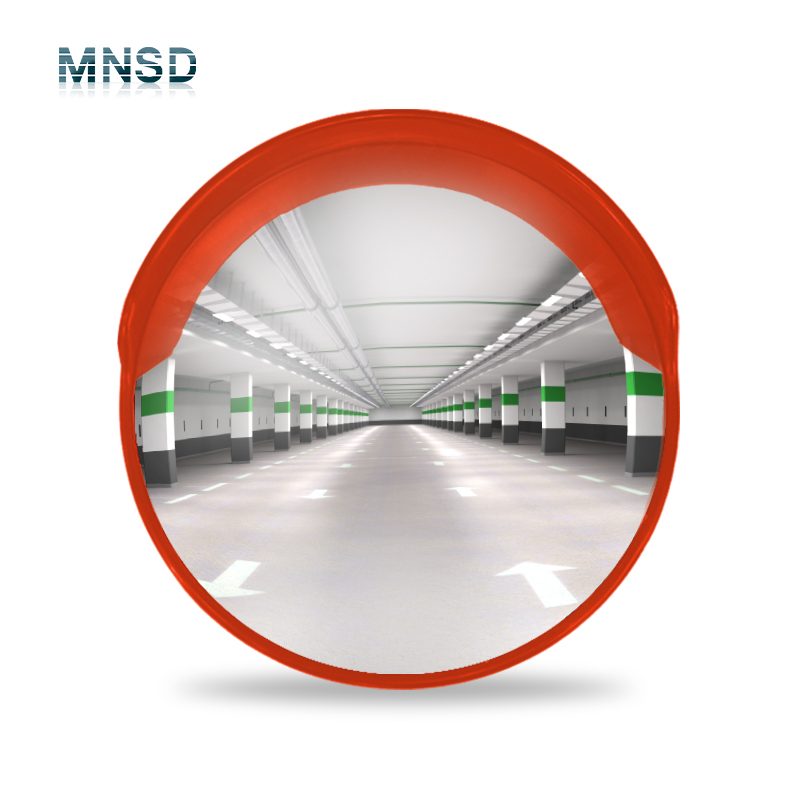
The lens is the only part of a convex mirror the end user actually looks at, and it is the part most often reduced in cost. On the Mnsd YD-OC range, the lens is impact-resistant polycarbonate (PC) finished with a vacuum aluminum coating. Lens thickness is 0.6–1 mm and is customizable to the project, the curvature radius is held at R2200–R3000, and the view angle is 130°+ wide-angle vision.
What to verify: ask the factory to state the lens thickness range it can actually hold in production, not the thickness printed on a single sample sheet. A factory that treats lens thickness as a fixed, unchangeable input is likely buying finished lenses rather than forming them. A customizable thickness range is a manufacturing capability signal, because holding different thicknesses inside the same curvature band requires process control on both the forming side and the coating side.
Two secondary checks belong to this zone. First, coating method: vacuum aluminum coating is a controlled process, whereas hand-applied or sprayed reflective layers vary across a production run. Second, whether an anti-scratch hard coating is available as an option, since outdoor and industrial locations with abrasive dust benefit from a harder surface.
Zone 2 — Back Plate Material, Wall Thickness, and Color
The backing plate is where most non-obvious cost reduction happens. On the YD-OC range, the backing is a high-impact ABS plastic backing with a back plate wall thickness of 2.0 mm, molded in bright orange for high visibility.
Wall thickness is the single most useful measurement in this zone because it governs rigidity directly. A 2.0 mm back plate resists deformation under wind load and keeps the lens geometry stable; a thinner plate flexes, and once the plate flexes, the reflection the lens produces drifts. Ask to measure back plate wall thickness on a production unit rather than on a polished sample, and ask where the measurement is taken — the thinnest point of the molding is the number that matters.
Color is a functional specification here, not a cosmetic one. Bright orange improves daytime visibility of the assembly itself, which matters at intersections and in parking structures where drivers need to notice the mirror before they need it.
Zone 3 — Mounting Bracket, Galvanizing, and Pole Compatibility
The bracket is the least expensive component of a convex mirror and the most common cause of callbacks. Mnsd uses a heavy-duty galvanized steel mounting bracket across the YD-OC range, with pole compatibility for 60 mm and 75 mm poles.
What to verify:
- Galvanizing, not painting. A galvanized bracket resists rust and corrosion at the pole clamp, the most exposed point of the assembly. Ask for the bracket finish to be confirmed in writing, and inspect a production bracket rather than a sample-room model.
- Pole diameter fit. The YD-OC bracket is specified to fit 60 mm and 75 mm poles. Confirm the clamp geometry against the actual pole diameter on site; an adapter that almost fits introduces movement that no wind-load rating can compensate for.
- Complete support set. A convex mirror installation also requires supporting equipment such as mounting brackets (pole-mount clamps), support pillars, reflective film or tape, and expansion bolts. Suppliers who ship the mirror but not the complete mounting set push compatibility risk onto the buyer.
Zone 4 — Weather, UV, Impact, and Wind Endurance
Outdoor convex mirror projects carry a specific set of environmental requirements: UV resistance to prevent aging, an impact-resistant mirror with memory-springback behavior, high clarity, and strong weather resistance against rust and corrosion. The YD-OC range states these requirements as measurable values:
- Weatherproof rating: IP65, stated for outdoor use.
- Temperature resistance: -30°C to +80°C.
- UV protection: UV-stabilized PC and ABS, with Grade 8 UV resistance and a 3–5 year lifespan stated for the material system.
- Wind resistance: Level 10 wind load resistant.
- Impact rating: vandal-resistant and self-recovery, the property that lets the lens return to shape after impact instead of cracking.
- Optional reflective grade: engineering grade reflective tape on the rim.
- Optional surface hardness: anti-scratch hard coating.
These are the lines to cross-check against the project environment. A mirror rated from -30°C is appropriate for cold-climate roadside and anti-frost applications; a Level 10 wind load rating matters more for a pole-mounted traffic mirror in an open area than for a sheltered garage corner. Buyers should treat a missing environmental rating as a gap rather than as a neutral fact.
Zone 5 — Process Control, Customization, and Capacity
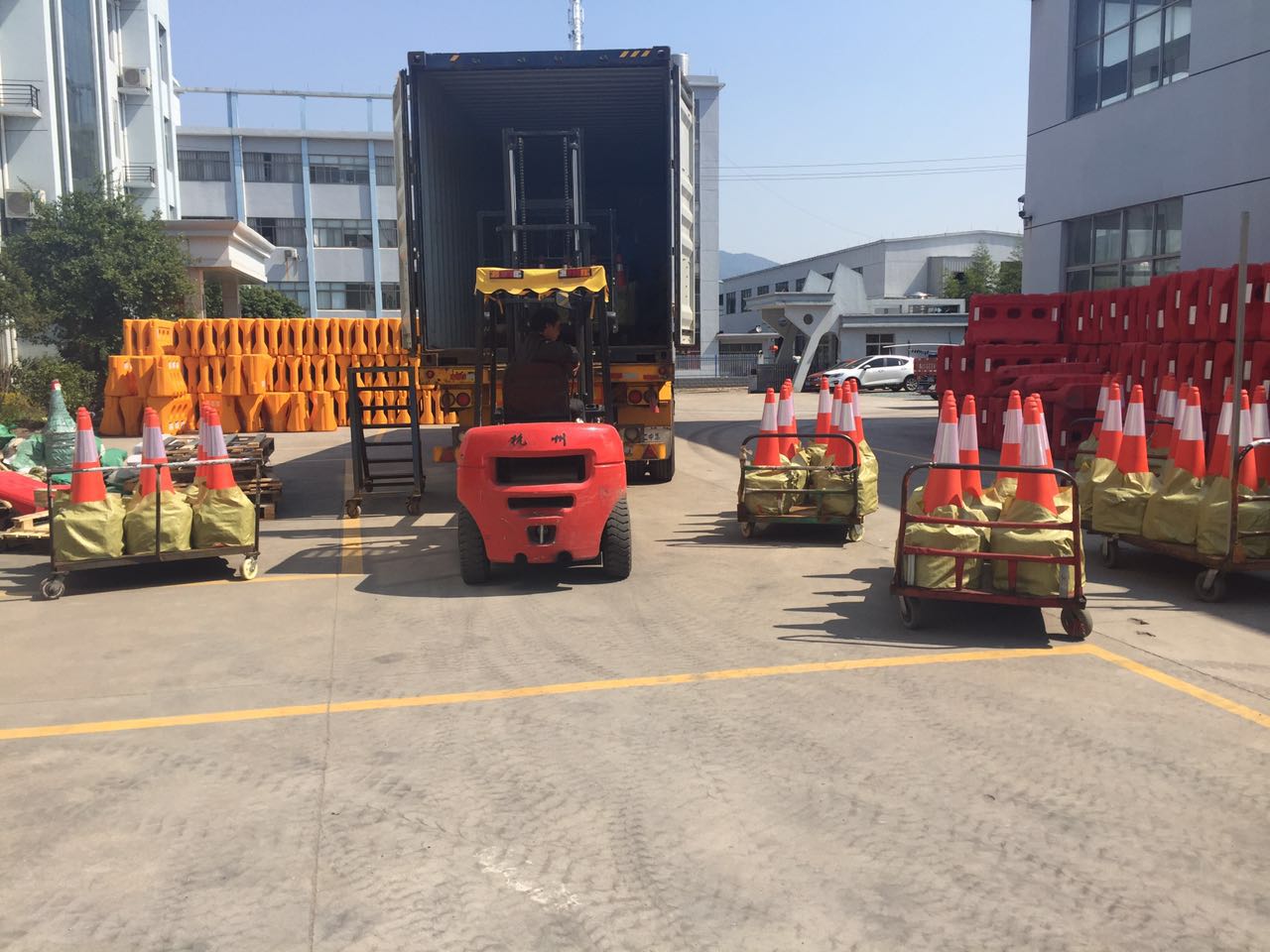
The final zone is the factory itself. Tiantai Yuanda operates OEM/ODM manufacturing for convex mirrors with a stated monthly capacity of 30,000 pieces, a minimum order quantity of 100 pieces, and a lead time of 15–20 days for a 20 ft container. Quality control is stated as 100% impact and clarity inspection.
Customization scope is a useful proxy for vertical integration. On the convex mirror line, customization covers diameter from 45 cm to 120 cm, back material in PP, ABS, or fiberglass, and lens material in PC or stainless steel. A supplier that can switch backing material and lens material on the same form factor is controlling molding and assembly rather than reselling finished goods.
During a factory visit or a remote audit, request the following in writing: the incoming material grade for PC and ABS, the measured back plate wall thickness, the bracket finish specification, the inspection station where 100% impact and clarity inspection is performed, and the stated capacity and lead time for the specific size you intend to order.
Step-by-Step: A Factory Evaluation Sequence for Procurement Teams
- Define the environment before contacting suppliers. Outdoor intersections, underground garage corners, T-junctions, and other areas with significant blind spots each carry a different mix of wind load, temperature range, and mounting requirements. Write the environment down first; it becomes the evaluation standard that every supplier is measured against.
- Request documentation, not a catalog. Ask for the model-level specification of the exact diameter you need, including lens material and thickness, surface treatment, back plate material and wall thickness, bracket material and finish, weatherproof rating, temperature range, wind resistance, and impact rating.
- Measure the sample. Lens thickness, back plate wall thickness at the thinnest point, bracket material and finish, and pole clamp fit. Photograph every measurement so the numbers can be compared with the pilot batch later.
- Test the lens behavior. Confirm clarity across the full 180° sweep and check that the lens returns to shape after a light impact. Memory-springback is the behavior that separates impact-resistant PC from rigid but brittle alternatives.
- Assemble on real site geometry. Mount the sample on a 60 mm or 75 mm pole at the height the project requires, and confirm that the galvanized steel clamp holds position under manual load.
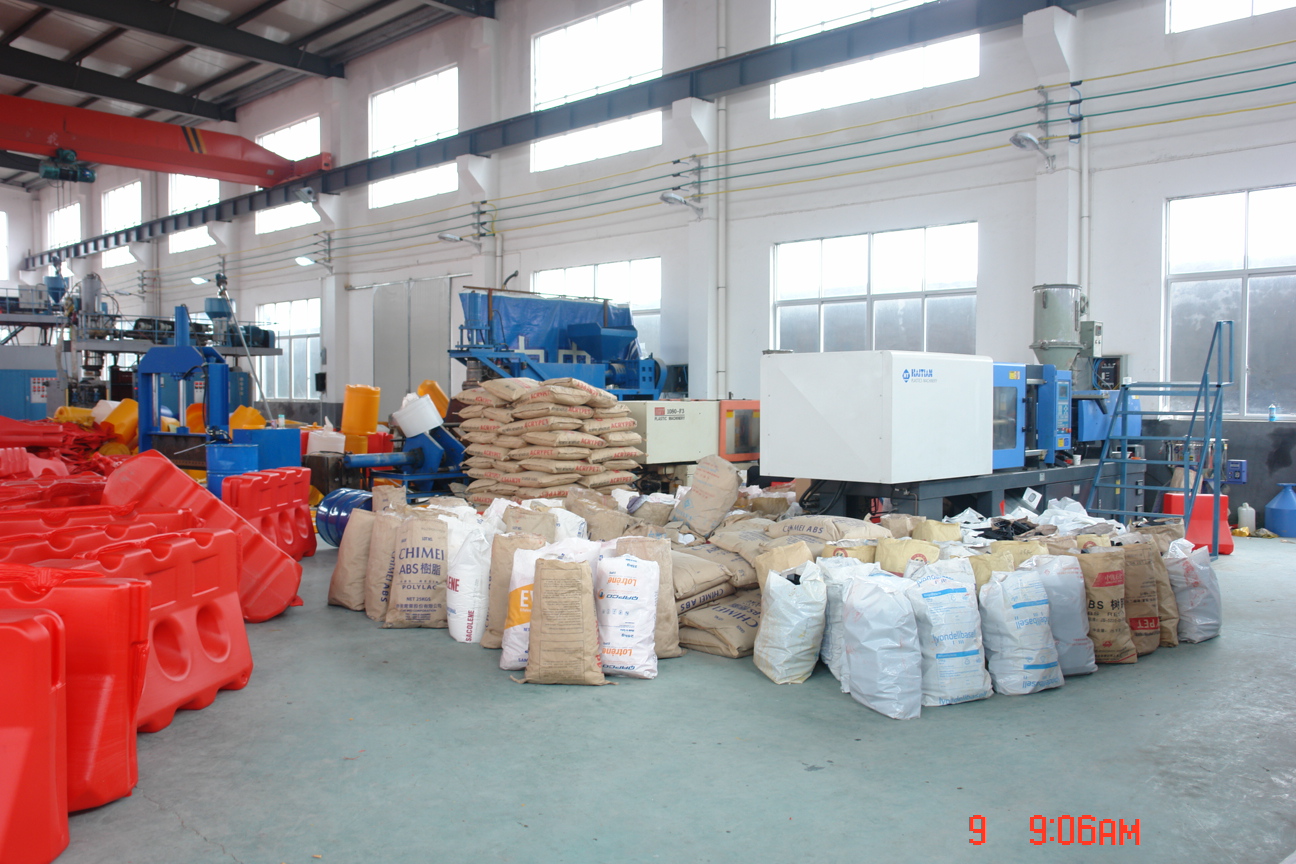
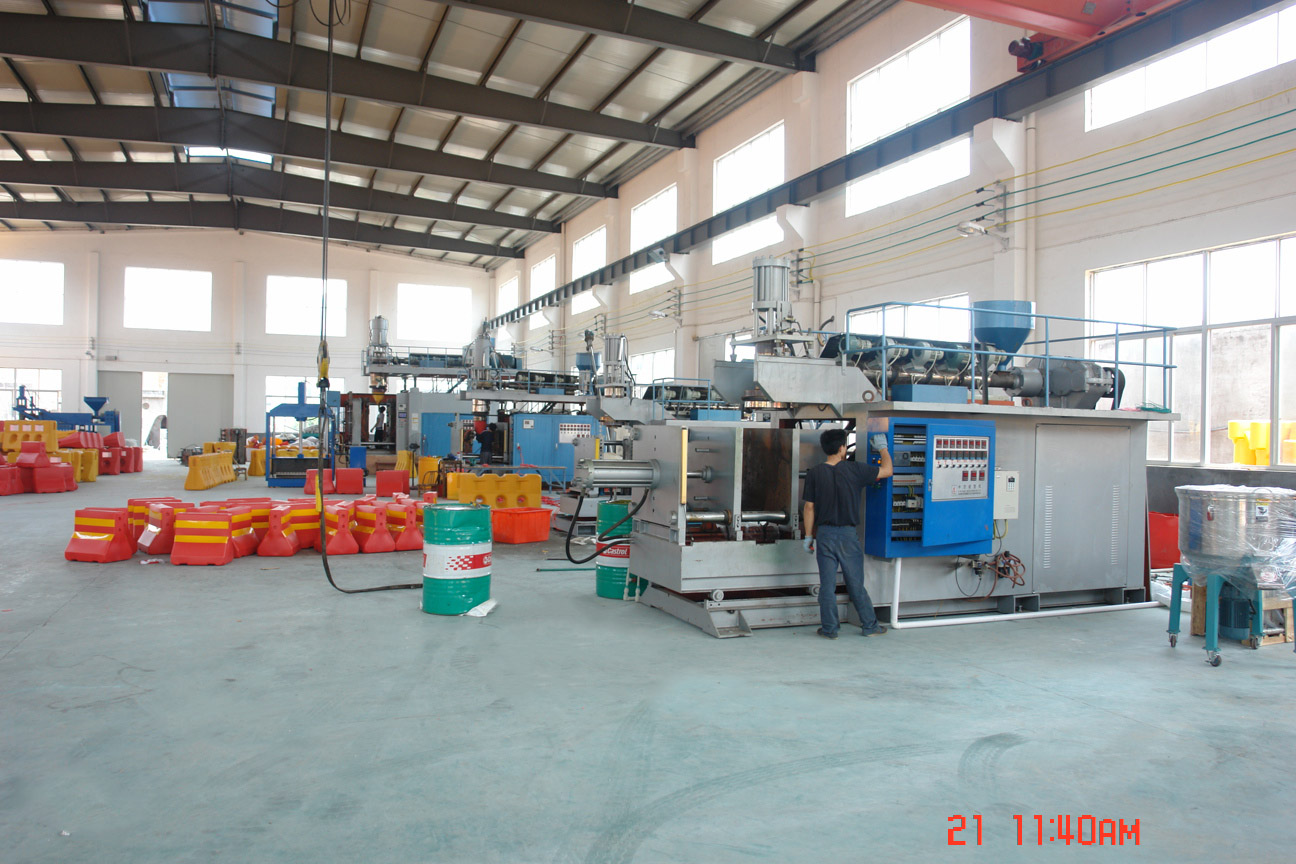
- Audit the line, in person or on video. Look for the injection equipment, the station where 100% impact and clarity inspection happens, and how finished mirrors are packed for export.
- Run a pilot order before committing project quantities. A pilot batch reveals batch-to-batch consistency — the single most important factory attribute — better than any sample-room unit can.
Steps three through five are the ones most buyers skip, and they are the steps that produce evidence. A catalog states capability; a measurement states performance.
Use Cases: Where Factory-Level Quality Decides Project Outcomes
Outdoor polycarbonate convex mirrors are used across road traffic, residential quarters, parking garages, factories and warehouses, logistics parks, shopping malls, supermarkets, schools, hospitals, gas stations, construction sites, office parks, ports and docks, bus stations, industrial zones, community intersections, rural roads, and highway ramps. The function is consistent — eliminate blind spots, expand the driver's field of vision, prevent vehicle collisions, and protect pedestrians and vehicles — but the environmental stress is not.
In warehouse and loading dock applications, the mirror operates in fixed physical reflection mode, or 24/7 passive monitoring, with no power supply. That means the reliability of the whole system rests on the lens, the backing plate, and the bracket. A warehouse intersection mirror that loses clarity or shifts alignment creates a safety gap exactly at the moment a forklift and a pedestrian meet.
In parking garages and underground corners, condensation and limited airflow put more weight on coating quality and backing rigidity than on UV exposure. In roadside and anti-frost installations, the -30°C to +80°C temperature range and UV-stabilized materials carry more of the risk. In all three cases, the factory decisions behind the lens, the back plate, and the bracket determine whether the installation still works in year five.
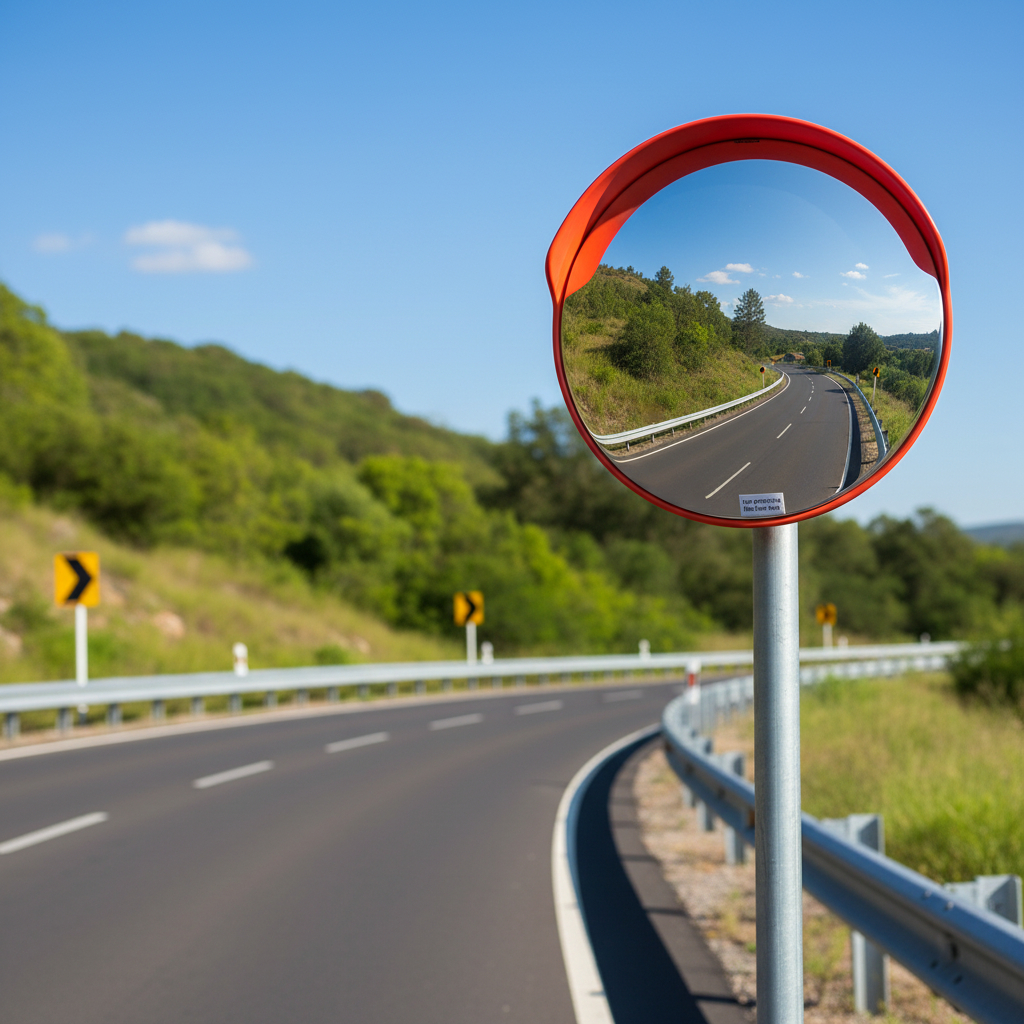
A distributor project in Thailand shows how these factors combine in practice. The project — a medium-scale traffic safety installation supplied by Mnsd to a distributor — covered road corners and parking blind spots. The recorded result was on-time delivery and passing local acceptance. The evaluation criteria documented for that project were wide viewing angle, weatherproof construction, and durability, with an expected service duration of 5–8 years. Those three criteria map directly onto the lens, the weather endurance specification, and the bracket — the same zones described above.
Model Range Comparison: Matching Mirror Size to Visibility Distance
The YD-OC range shares one specification set across all diameters. Only size and visual range change, which makes the range a practical tool for matching a mirror to the distance a driver needs to see.
| Model | Mirror diameter | Viewing angle | Visual range | Lens | Back plate | Mounting bracket |
|---|---|---|---|---|---|---|
| YD-OC45 | ⌀ 450 mm | 180° | 10–12 m | Impact-resistant PC, 0.6–1 mm (customizable) | High-impact ABS, bright orange, 2.0 mm | Heavy-duty galvanized steel, 60/75 mm poles |
| YD-OC60 | ⌀ 600 mm | 180° | 15–18 m | Impact-resistant PC, 0.6–1 mm (customizable) | High-impact ABS, bright orange, 2.0 mm | Heavy-duty galvanized steel, 60/75 mm poles |
| YD-OC75 | ⌀ 750 mm | 180° | 20–25 m | Impact-resistant PC, 0.6–1 mm (customizable) | High-impact ABS, bright orange, 2.0 mm | Heavy-duty galvanized steel, 60/75 mm poles |
| YD-OC80 | ⌀ 800 mm | 180° | 22–28 m | Impact-resistant PC, 0.6–1 mm (customizable) | High-impact ABS, bright orange, 2.0 mm | Heavy-duty galvanized steel, 60/75 mm poles |
| YD-OC100 | ⌀ 1000 mm | 180° | 30–35 m | Impact-resistant PC, 0.6–1 mm (customizable) | High-impact ABS, bright orange, 2.0 mm | Heavy-duty galvanized steel, 60/75 mm poles |
| YD-OC120 | ⌀ 1200 mm | 180° | 35–45 m | Impact-resistant PC, 0.6–1 mm (customizable) | High-impact ABS, bright orange, 2.0 mm | Heavy-duty galvanized steel, 60/75 mm poles |
Shared across the whole range: vacuum aluminum coating, R2200–R3000 curvature radius, 130°+ wide-angle vision, IP65 weatherproof rating, -30°C to +80°C temperature resistance, UV-stabilized PC and ABS with Grade 8 UV resistance, vandal-resistant and self-recovery impact behavior, and Level 10 wind load resistance.
Evaluation Checklist: What to Measure and What It Indicates
| Verification point | Target specification (YD-OC range) | What it indicates about the factory |
|---|---|---|
| Lens material | Impact-resistant polycarbonate | Material control and impact behavior, not only visual clarity |
| Lens thickness | 0.6–1 mm, customizable | Ability to hold different thicknesses in production instead of reselling finished lenses |
| Surface treatment | Vacuum aluminum coating | Controlled coating process with consistent reflectivity across a batch |
| Back plate wall thickness | 2.0 mm (ABS backing) | Rigidity under wind load and stability of the lens geometry |
| Back plate color | Bright orange | Daytime visibility of the assembly at intersections and in garages |
| Mounting bracket | Heavy-duty galvanized steel | Corrosion control at the most exposed load-bearing point |
| Weatherproof rating | IP65 | Documented outdoor suitability rather than a generic weatherproof claim |
| Temperature resistance | -30°C to +80°C | Fitness for cold-climate and high-temperature installation sites |
| Wind resistance | Level 10 wind load resistant | Structural design of the complete assembly, not only the lens |
| Quality control | 100% impact and clarity inspection | Per-unit inspection coverage, which drives batch-to-batch consistency |
A note on terminology: the same product is bought under several names — outdoor polycarbonate convex mirror, PC traffic mirror, wall-mounted safety mirror, pole-mounted traffic mirror, industrial blind spot mirror, warehouse intersection mirror, loading dock safety mirror, or UV-resistant outdoor mirror. The verification zones above apply regardless of the label on the quotation, because they describe material and assembly rather than marketing language.
Frequently Asked Questions
1. What documentation should we request from a convex mirror factory?
Request model-level specifications that state the material grade (UV-stabilized PC and ABS), lens thickness (0.6–1 mm, customizable), back plate wall thickness (2.0 mm), mounting bracket material and finish (heavy-duty galvanized steel), weatherproof rating (IP65), temperature resistance (-30°C to +80°C), wind resistance (Level 10), impact rating (vandal-resistant and self-recovery), and the surface treatment (vacuum aluminum coating). If anti-scratch hard coating or engineering grade reflective rim tape is specified, it should appear in the documentation for the exact model and diameter ordered. Because regulatory requirements for mirrors differ by application and market, also confirm which local standards apply to your installation; vehicle-mounted mirror rules such as FMVSS No. 111 in the United States govern in-vehicle mirrors rather than site-installed roadside safety mirrors.
2. Can a convex mirror factory customize lens thickness, diameter, and back material?
On the Mnsd convex mirror line, OEM/ODM customization covers diameter from 45 cm to 120 cm, back material in PP, ABS, or fiberglass, and lens material in PC or stainless steel, with lens thickness of 0.6–1 mm customizable within the same curvature band of R2200–R3000. Customization depth is itself an evaluation criterion: a supplier able to change lens thickness and backing material on the same form factor is controlling molding and assembly, whereas a supplier offering a single fixed configuration is more likely to be reselling a finished unit.
3. What actually drives the cost of an outdoor polycarbonate convex mirror?
Six variables dominate: lens material and thickness; back plate material and wall thickness (2.0 mm on the YD-OC range); bracket steel and whether the finish is galvanized or painted; weather and UV grade; optional features such as anti-scratch hard coating or engineering grade reflective rim tape; and mirror diameter, which scales from 450 mm to 1200 mm and carries the visual range with it. The Mnsd minimum order quantity is 100 pieces and lead time is 15–20 days for a 20 ft container, so the commercial structure rewards buyers who plan diameter and configuration before ordering rather than changing specifications mid-project.
4. How should a sample be validated before mass production?
Measure lens thickness and back plate wall thickness at the thinnest point of the molding; confirm clarity across the full 180° sweep; check that the lens returns to shape after a light impact; and test the galvanized steel bracket on a 60 mm or 75 mm pole at the installation height. Then run a pilot batch and ask for the inspection record from that batch, since quality control is stated as 100% impact and clarity inspection. A pilot batch reveals batch-to-batch consistency, which a single sample cannot.
5. What lead time and capacity should buyers plan for?
Mnsd states a lead time of 15–20 days for a 20 ft container and a monthly capacity of 30,000 pieces for convex mirrors, with a minimum order quantity of 100 pieces. For project-based or distributor programs, confirm the capacity allocation for your diameter mix before finalizing an installation schedule, because large diameters consume more production time per unit than small ones. Buyers can request samples, a formal quotation, or the full product catalog from the Mnsd team before placing a project order.
Conclusion: Evaluate the Factory, Not Only the Mirror
Factory evaluation is not a formality between supplier search and purchase order. For outdoor convex mirrors it is the step that determines whether the mirrors installed at a warehouse intersection, a garage corner, or a roadside T-junction are still doing their job in year five. The standards are verifiable: an impact-resistant polycarbonate lens with customizable 0.6–1 mm thickness and a vacuum aluminum coating; R2200–R3000 curvature with 130°+ wide-angle vision and a 180° field; a high-impact ABS backing in bright orange with a 2.0 mm wall; a heavy-duty galvanized steel bracket that fits 60 mm and 75 mm poles; and an assembly rated IP65, -30°C to +80°C, Level 10 wind load, with 100% impact and clarity inspection behind it.
When those points are measured rather than assumed, the supplier conversation moves from price to performance — and the mirror that arrives is the mirror that was specified.
Next step for procurement teams
Request a convex mirror sample, a model-level quotation, or the full product catalog: www.mnsdtraffic.com
Download the Mnsd product brochure: Road Safety Equipment Catalog (PDF)
Contact: info@mnsdtraffic.com · Tel / WhatsApp: +86 18458137305 · hongsan industry zone, tiantai town, taizhou city, zhejiang province, china
Have Questions or Need More Details?
Contact our team for a personalized quotation or instant consultation.
Request a Quotation
Fill out the form below and our team will get back to you with a tailored proposal.
WhatsApp Direct Chat
Prefer to chat in real-time? Message us on WhatsApp for instant assistance & quick answers.
- Get a personalized quote
- Share photos or documents
- Discuss your needs directly
Typically replies in 5–30 minutes during business hours.