
Outdoor PC Convex Mirrors: What They Do and the Specs That Matter
Outdoor PC Convex Mirrors: What They Do and the Specs That Matter
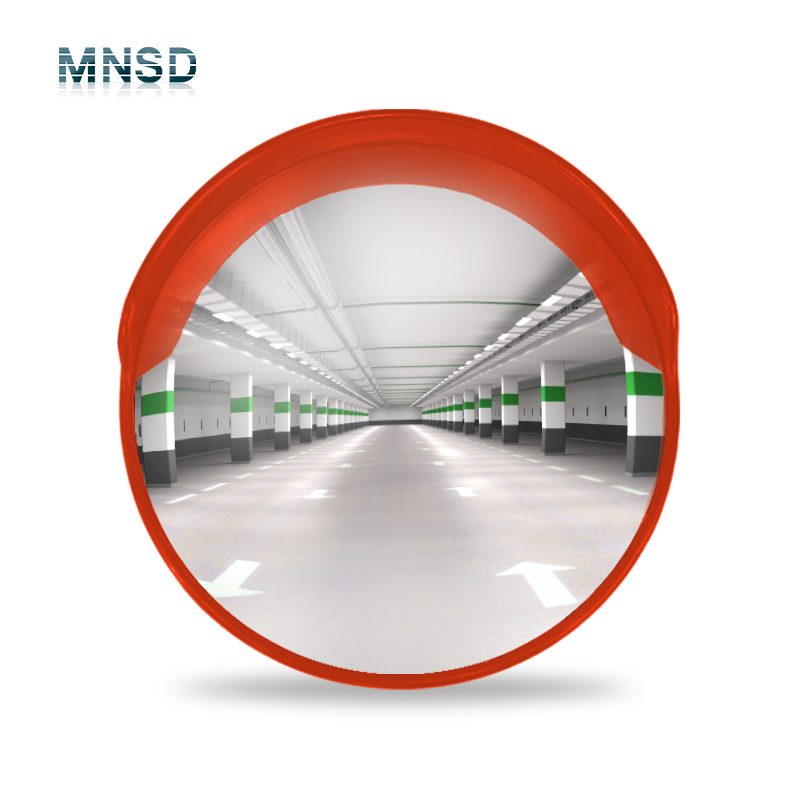
Mnsd outdoor polycarbonate convex mirror series with high-visibility trim and galvanized steel mounting hardware.
An outdoor polycarbonate convex mirror is a curved, impact-resistant mirror used to make hidden corners visible. Because the mirror surface bows outward, it reflects traffic approaching from the side and presents it as a reduced but useful wide-area image. In an industrial setting, this type of mirror is often called an industrial blind spot mirror; on a road, the same style is described as a PC traffic mirror or a weatherproof hooded convex mirror. This article explains the basics so a first-time buyer can evaluate outdoor polycarbonate convex mirrors with a clearer specification.
Why convex mirrors enter a traffic-safety discussion
Most avoidable collisions at industrial sites, parking garages, and road intersections involve two parties moving into a space that neither can see clearly. A wall, a stack of pallets, an entrance pillar, or a blind bend can hide an approaching car, forklift, or delivery vehicle until the last moment. Drivers and operators compensate by slowing down, sounding horns, or relying on someone else to signal. That approach is inconsistent, especially in noisy or busy environments.
A convex mirror provides a fixed passive reflection. It does not need power, a network connection, software, or a daily operator. When installed in the right position, it lets approaching vehicles and pedestrians appear in a driver’s field of view before the vehicle enters the conflict point. For warehouse intersections, loading dock safety mirror applications, and roadway junction points, this is a common and practical layer of protection.
Industry context: convex mirrors are a recognised blind-spot tool
Convex mirrors remain part of the broader road-safety and property-management equipment market. Commercial estimates from Dataintelo value the global convex mirror market at approximately USD 1.04 billion in 2025 and project growth to about USD 1.73 billion by 2034. The same research reports that Asia Pacific accounted for 42.5% of the market in 2025, and that traffic and safety applications made up the largest application segment with a 38.2% share.
For buyers, the practical point is not simply the size of the market. The use of convex mirrors is well established across traffic facilities, road safety, and property management. That means spec sheets, installation methods, and product expectations are fairly consistent across suppliers, but material details still decide whether a mirror will survive months or years outdoors.
The product solution: Mnsd outdoor polycarbonate convex mirrors
Mnsd, the export brand of Tiantai Yuanda Traffic Device Co., Ltd., is one of the specialised Chinese manufacturers producing these mirrors. Tiantai Yuanda was founded in 2007 and operates from a manufacturing facility in Tiantai, Zhejiang, with a facility area of about 40,000 m² and around 300 staff. The company manufactures road and parking safety products such as convex mirrors, warning posts, rising bollards, speed humps, and traffic lights. For a buyer doing awareness-stage research, this manufacturing base is relevant because supplier scale and production consistency affect repeat ordering, contract packing, and long-term quality control.
Mnsd’s outdoor polycarbonate convex mirrors are available in five standard sizes in the current catalogue: YD-OC45 with a 450 mm diameter, YD-OC60 with a 600 mm diameter, YD-OC75 with a 750 mm diameter, YD-OC100 with a 1000 mm diameter, and YD-OC120 with a 1200 mm diameter. Each model is classified as an Outdoor Polycarbonate Convex Mirror and is designed for road traffic, residential quarters, parking garages, factories, warehouses, and many similar applications.
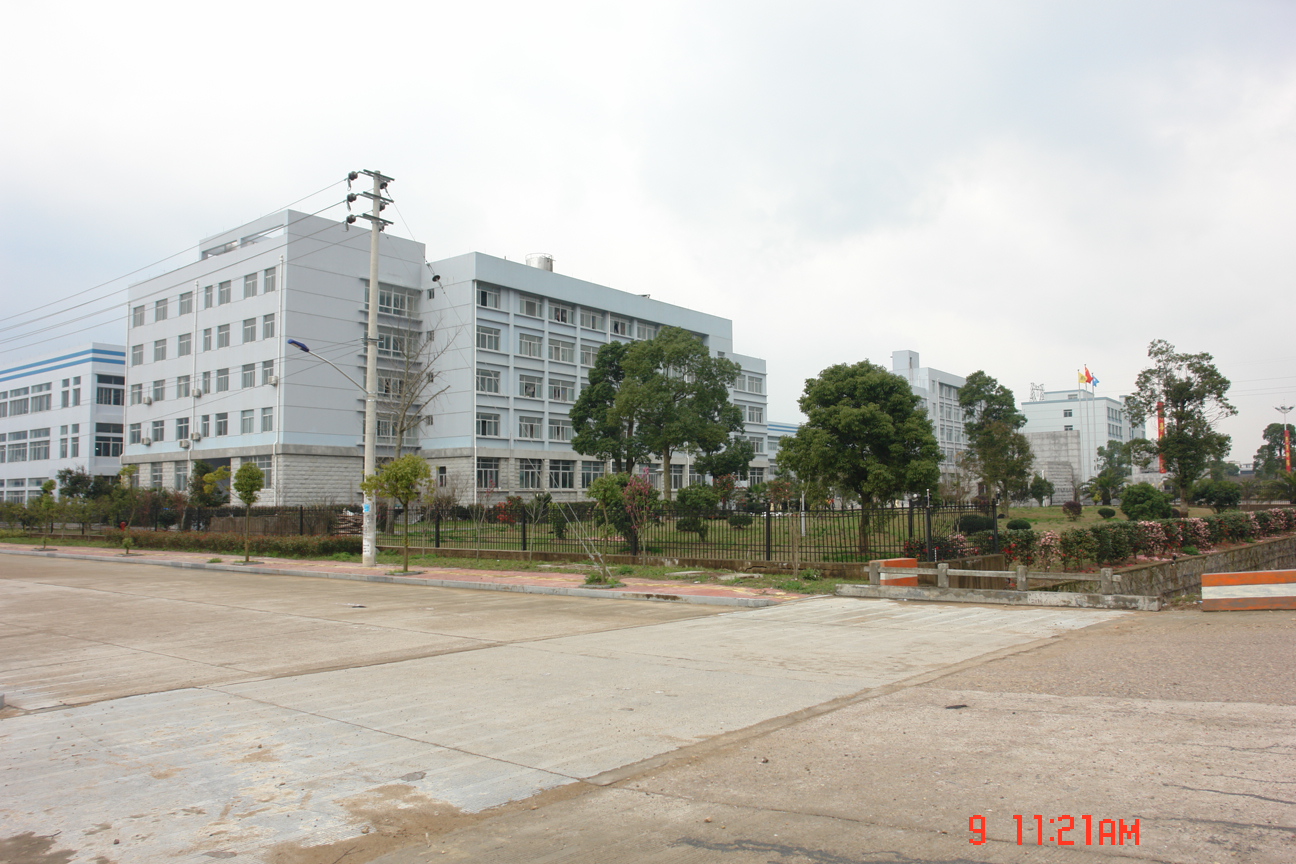
Tiantai Yuanda manufacturing base in Zhejiang, China.
What the mirror is made of
The reflective lens is made from impact-resistant polycarbonate, which is why these products are also referred to as shatterproof polycarbonate mirrors. The mirror surface uses a vacuum aluminum coating, and the PC lens thickness is 0.6–1 mm. In the Mnsd series, the curvature radius is R2200–R3000 and the mirror specification lists 130°+ wide angle vision. The product data also lists a 180° field angle, with the visible range depending on mirror diameter.
The back plate of each mirror uses high-impact ABS plastic in bright orange for high visibility. The backing wall thickness is 2.0 mm. The mounting bracket is made from heavy-duty galvanized steel and fits 60 mm or 75 mm poles, allowing the mirror to be used as a pole-mounted traffic mirror or as a wall-mounted safety mirror.
Outdoor service depends on more than lens material. Mnsd outdoor PC convex mirrors have an IP65 weatherproof rating for outdoor use and an operating temperature range of −30°C to +80°C. The housing uses UV-stabilized PC and ABS, with a Grade 8 UV resistance level and an estimated 3–5 year lifespan. Buyers can also ask about optional specifications such as an anti-scratch hard coating or engineering grade reflective tape on the rim.
Reading convex mirror specifications: key buyer takeaways
When comparing convex mirrors, buyers often focus only on diameter. Diameter is important, but the numbers that matter more are the visual range and the type of installation. A small 450 mm mirror may be enough for a short internal aisle; a wider road or highway entrance may require a 1000 mm or 1200 mm mirror to give the driver useful reaction time.
The product category name also matters less than the specification. The same unit may be sold under different descriptive labels such as wide-angle panoramic mirror, industrial blind spot mirror, weatherproof hooded convex mirror, or PC traffic mirror. In most outdoor applications, the key criteria are consistent: shatter-resistant polycarbonate construction, weather resistance, UV stability, stable backing, and a mounting bracket that fits the existing pole or wall structure.
A step-by-step approach from hazard to model
The following steps help translate an awareness-level question into a selection-ready specification.
- Define the hazard point. Identify the corner, gate, ramp, crossing, or loading dock where a driver cannot see approaching traffic. Measure the distance from the proposed mirror position to the far end of the area the driver needs to monitor.
- Choose the visual range. For Mnsd outdoor PC mirrors, the YD-OC45 offers a visual range of 10–12 m; the YD-OC60 offers 15–18 m; the YD-OC75 offers 20–25 m; the YD-OC100 offers 30–35 m; and the YD-OC120 offers 35–45 m. Match the sight line distance to the area that has to be covered.
- Decide between wall and pole mounting. These mirrors are designed for wall or pole mounting. If installation will be pole-mounted, the galvanized steel bracket fits 60 mm or 75 mm poles. If installation will be wall-mounted, confirm that the wall position gives the required angle of view without obstruction.
- Check outdoor environmental factors. Outdoor mirrors should have weather resistance appropriate for the local climate. In hot, sunny conditions, UV resistance matters. In rainy or dusty conditions, IP65 sealing helps protect the backing and reflective layer.
- Review optional features. If the mirror may be scratched by trolleys or vehicle contact, request the optional anti-scratch hard coating. If drivers need to see the mirror itself at night, engineering grade reflective tape on the rim can make the structure more visible.
- Align with supplier capability. After selecting a probable size, ask the manufacturer how the mirror is made, how the bracket is attached, what the frame or hood structure is, and whether OEM or ODM specifications can be adjusted.
- Request a sample or quotation. At the research stage, it is reasonable to ask for product drawings, photos, and prices for the chosen sizes before accepting a project specification.
Where should outdoor PC convex mirrors be used?
Outdoor polycarbonate convex mirrors are installed wherever a driver or security staff member needs to monitor a space without moving physically closer. The Mnsd product data lists their intended environments for use in road traffic, residential quarters, parking garages, factories, warehouses, logistics parks, shopping malls, supermarkets, schools, hospitals, gas stations, construction sites, office parks, ports, bus stations, industrial zones, community intersections, rural roads, and highway ramps.
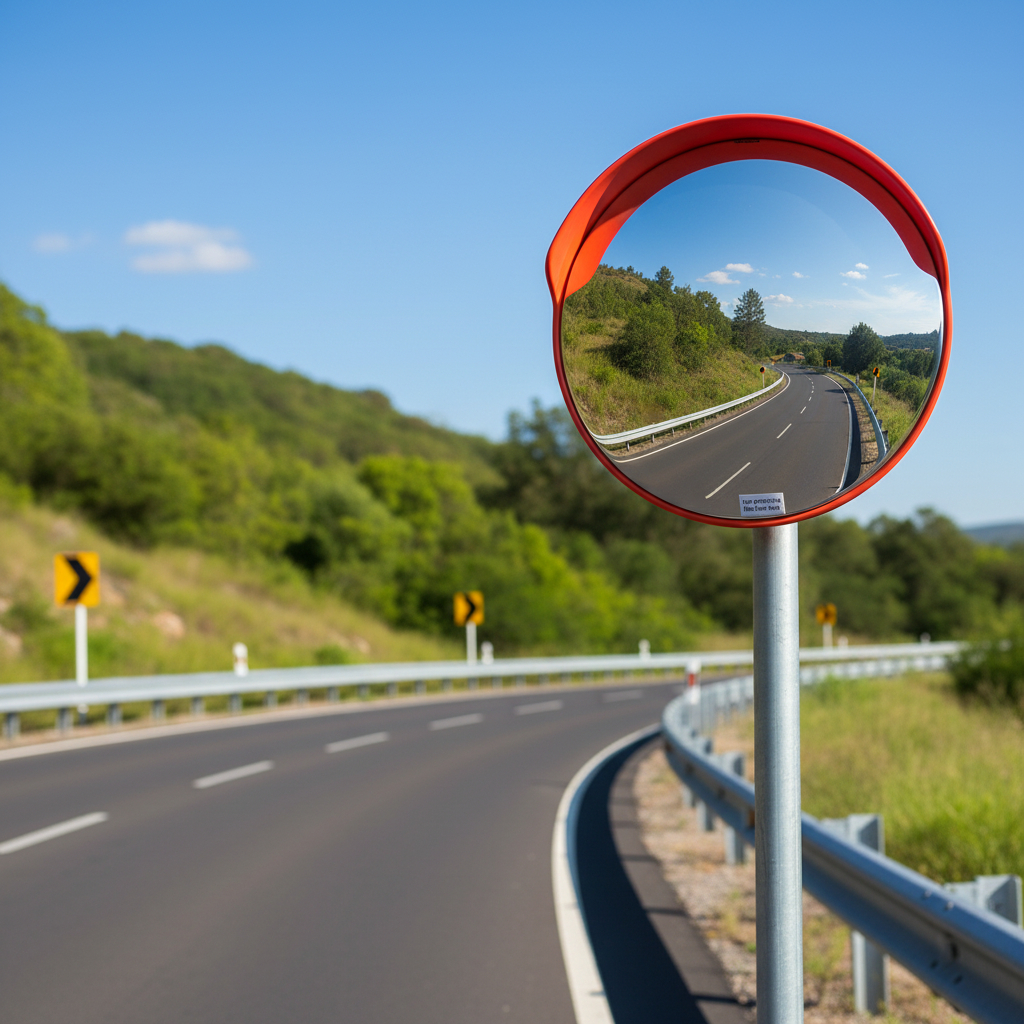
Outdoor convex mirror installation used to expand the visible area around a blind spot.
In practice, these environments can be grouped by installation logic:
- Traffic facilities and public roads: T-junctions, community intersections, rural road junctions, bus stations, and highway ramps where approaching traffic must be seen early.
- Residential and parking properties: Underground garages, garage ramps, residential driveways, parking lots, and gated entry points.
- Industrial and logistics facilities: Warehouse intersections, factory aisle corners, loading docks, logistics parks, port and dock areas, and industrial zones.
- Commercial and institutional buildings: Shopping malls, supermarkets, schools, hospitals, gas stations, construction sites, and office parks where pedestrians and vehicles share limited space.
Loading dock safety mirror applications deserve special attention because large vehicles often reverse or turn in tight areas. In those conditions, an impact-resistant PC mirror is preferred over a fragile glass mirror because an accidental knock is less likely to create sharp debris.
Comparing Mnsd outdoor convex mirror models
| Model | Diameter | Lens spec | Documented range | Typical view use case |
|---|---|---|---|---|
| YD-OC45 | 450 mm | Impact-resistant PC with vacuum aluminum coating; curvature radius R2200–R3000 | 10–12 m | Short internal aisle, small corner, gate approach |
| YD-OC60 | 600 mm | Impact-resistant PC with vacuum aluminum coating; curvature radius R2200–R3000 | 15–18 m | Warehouse crossing or narrow parking aisle |
| YD-OC75 | 750 mm | Impact-resistant PC with vacuum aluminum coating; curvature radius R2200–R3000 | 20–25 m | Parking ramp, entrance lane, medium junction |
| YD-OC100 | 1000 mm | Impact-resistant PC with vacuum aluminum coating; curvature radius R2200–R3000 | 30–35 m | Wider road crossing or intersection approach |
| YD-OC120 | 1200 mm | Impact-resistant PC with vacuum aluminum coating; curvature radius R2200–R3000 | 35–45 m | Long visual lane, wide junction, or highway ramp area |
For a buyer comparing outdoor PC traffic mirrors, a larger diameter is not automatically better. The right model is the one that gives the driver enough time to stop, slow down, or change course without producing an unusably small image. The visual range table above is a practical starting point; final confirmation should come from a physical installation test or an on-site layout drawing.
Frequently asked questions
What is an outdoor polycarbonate convex mirror?
An outdoor polycarbonate convex mirror is a curved mirror made with impact-resistant polycarbonate (PC) and a reflective vacuum aluminum coating. It is designed for wall or pole mounting so that drivers can see approaching traffic around blind corners. Mnsd YD-OC models are classified as Outdoor Polycarbonate Convex Mirrors and also serve as PC traffic mirrors, weatherproof hooded convex mirrors, wall-mounted safety mirrors, pole-mounted traffic mirrors, shatterproof polycarbonate mirrors, and industrial blind spot mirrors.
Which Mnsd convex mirror models are available?
The standard outdoor series covered in this guide includes the YD-OC45 at 450 mm, YD-OC60 at 600 mm, YD-OC75 at 750 mm, YD-OC100 at 1000 mm, and YD-OC120 at 1200 mm. Every model is built with an impact-resistant polycarbonate lens, high-impact ABS orange backing, and a heavy-duty galvanized steel bracket.
How far can a driver see with these outdoor PC mirrors?
Visual range depends on the mirror model. The YD-OC45 provides a visual range of 10–12 m; the YD-OC60 provides 15–18 m; the YD-OC75 provides 20–25 m; the YD-OC100 provides 30–35 m; and the YD-OC120 provides 35–45 m. All models have a documented 180° field angle.
Can these convex mirrors be mounted on a wall or a pole?
Yes. Mnsd outdoor polycarbonate convex mirrors are designed for wall or pole mounting. The mounting bracket is made of heavy-duty galvanized steel and fits 60 mm or 75 mm poles. This allows the mirror to serve as a wall-mounted safety mirror or a pole-mounted traffic mirror.
Can the mirror specification be customised for an outdoor project?
Mnsd supplies OEM and ODM products for buyers with specific project requirements. The PC lens thickness can be varied in the 0.6–1 mm range, and options such as an anti-scratch hard coating or engineering grade reflective tape on the rim can be discussed with the Mnsd export team. Confirmed lead time and customisation details should be based on the chosen model, quantity, and mounting requirements.
How can I request a catalogue, sample, or quotation?
For a catalogue, sample inquiry, or quotation, contact Mnsd directly by email at info@mnsdtraffic.com, by telephone at +86 18458137305, or by WhatsApp at +86 184-5813-7305. Buyers can also download the company brochure to confirm the wider product range.
Conclusion
Outdoor polycarbonate convex mirrors are a simple safety tool with a surprisingly important specification. A mirror made from impact-resistant PC, protected by UV-stabilised PC and ABS, rated for outdoor weather, and supplied with the right mounting bracket will do more than a generic mirror that has not been designed for continuous outdoor service.
For a buyer at the awareness or research stage, the main goal is not to memorise every model. It is to understand which hazard is being addressed, what distance has to be visible, whether the mounting point is a wall or a pole, and which weather conditions the mirror must survive. Once those inputs are clear, a model such as the Mnsd YD-OC75 or YD-OC120 becomes easier to discuss with confidence.
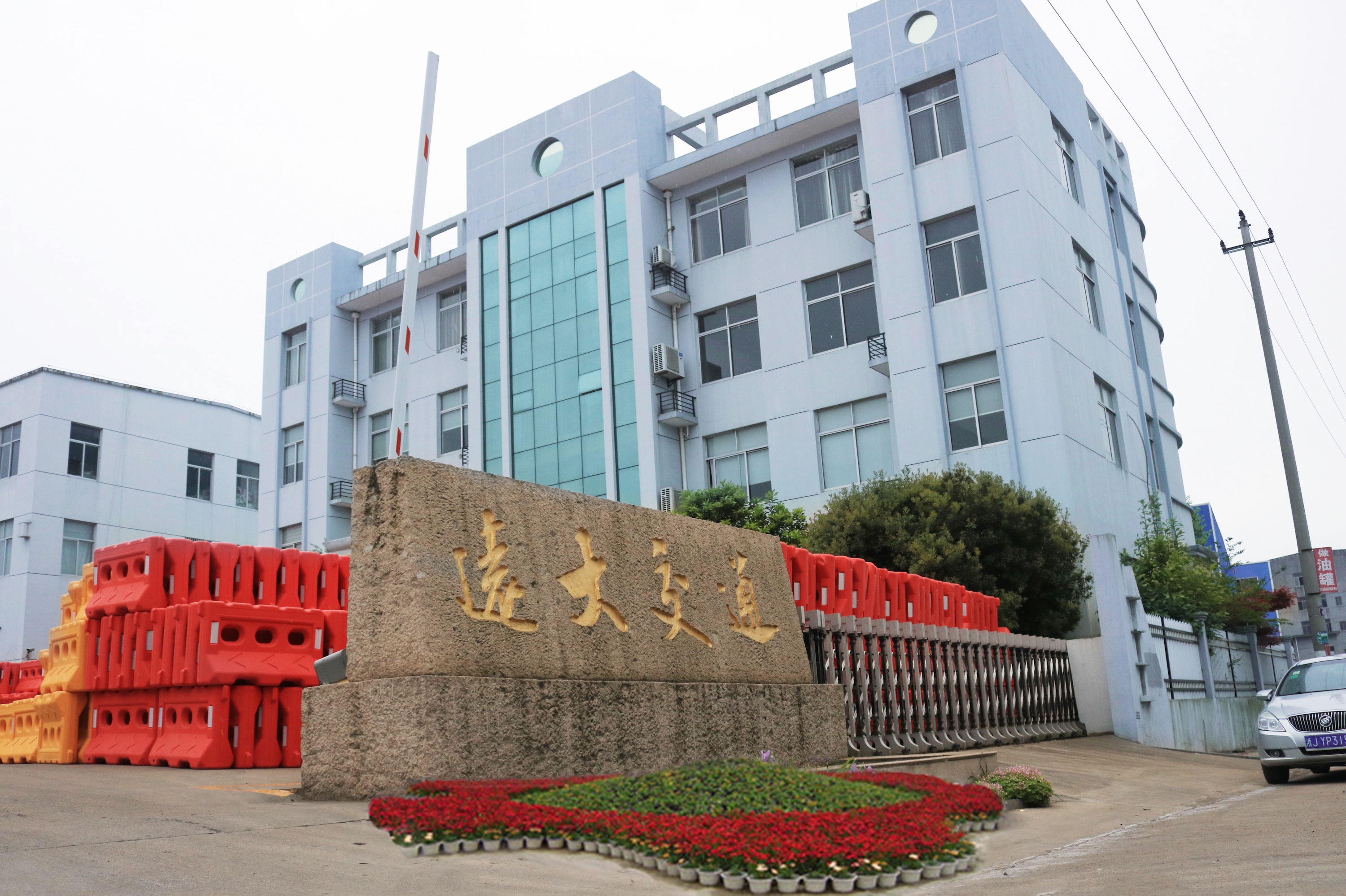
Contact Mnsd to review outdoor PC convex mirror specifications for upcoming projects.
Next step. If you are evaluating convex mirrors for a specific site, download the Mnsd brochure or contact the export team for a specification review.
Download Mnsd brochure Visit Mnsd website
Email: info@mnsdtraffic.com | Tel / WhatsApp: +86 184-5813-7305