
Outdoor Polycarbonate Convex Mirrors: A 2026 Constraint-by-Constraint Guide for Industrial Buyers
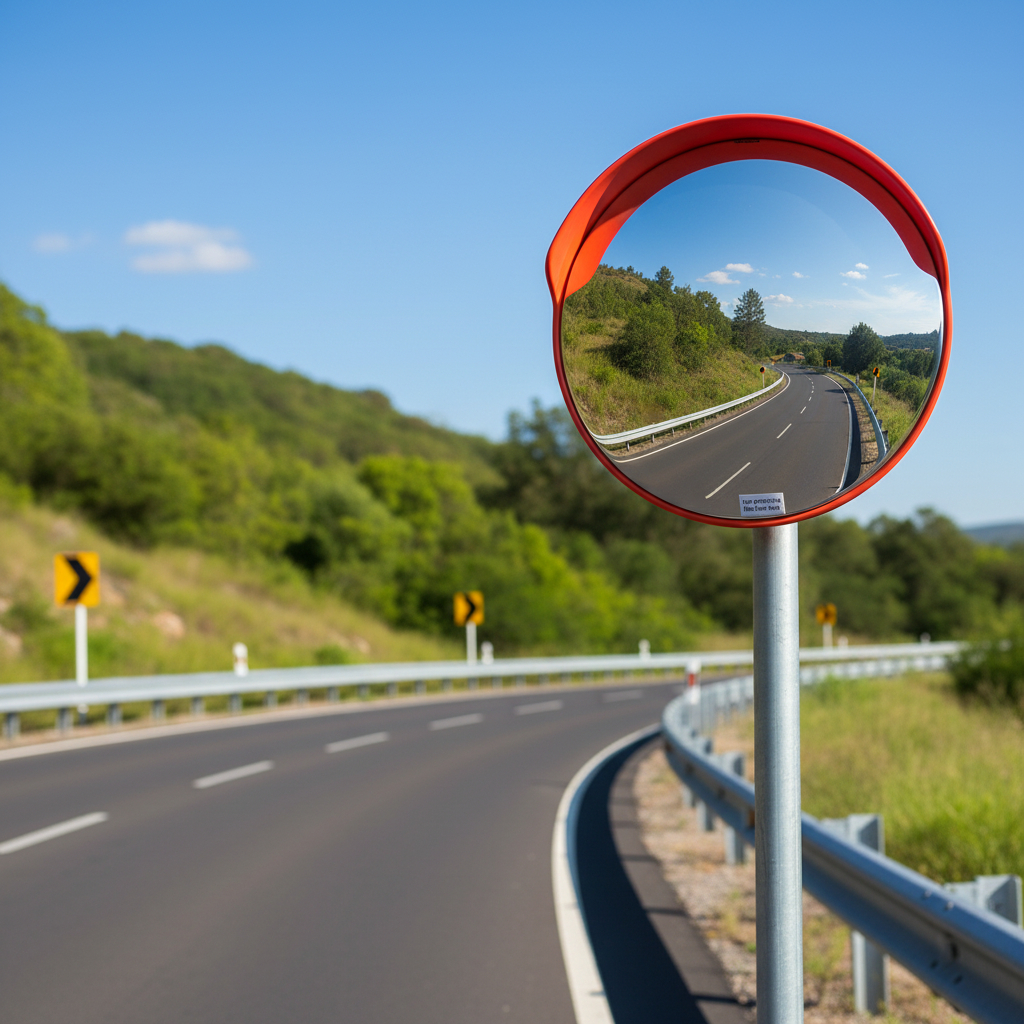
Outdoor Polycarbonate Convex Mirrors: A 2026 Constraint-by-Constraint Guide for Industrial Buyers
When procuring outdoor polycarbonate convex mirrors for road, parking, warehouse, or loading-dock projects, buyers are rarely choosing between “good mirrors” and “bad mirrors.” They are choosing between products that satisfy different operating constraints: weather resistance, impact resistance, viewing range, mounting compatibility, certification needs, and total lifespan. This guide translates product specifications into a practical evaluation framework for importers, distributors, safety officers, and procurement teams who need to specify the right outdoor PC traffic mirror without overbuying or under-specifying.
Why outdoor polycarbonate convex mirrors require a constraint-based approach
Convex mirrors are passive safety devices that eliminate blind spots at intersections, corners, ramps, and loading areas. The global convex mirror market was valued at approximately USD 1.04 billion in 2025 and is projected to reach USD 1.73 billion by 2034, with traffic and safety applications accounting for the largest application share at 38.2% in 2025. Asia Pacific held 42.5% of the market in 2025, and much of the supply chain for PC traffic mirrors is concentrated in China.
In this demand environment, outdoor polycarbonate convex mirrors have become the default choice for many industrial and municipal installations because polycarbonate offers high impact strength and shatter resistance, unlike glass mirrors that can become dangerous when broken. However, not all polycarbonate mirrors perform equally. The key technical differences appear in the curvature radius, lens thickness, backing material, bracket type, UV stabilization, and weatherproofing — parameters that determine whether a mirror will hold up for years on a highway ramp, a factory aisle, or an outdoor parking lot.
Mnsd, the convex mirror brand of Tiantai Yuanda Traffic Device Co., Ltd., is a China-based road safety equipment manufacturer founded in 2007, operating from a 40,000 m² facility with around 300 employees and a 15-person R&D team. Mnsd produces convex mirrors in diameters from 450 mm to 1200 mm, with a monthly capacity of about 30,000 pieces and a stated annual output capacity of 120,000,000 units across the factory’s road safety product range. The company exports to Asia, Europe, and the USA. Because outdoor PC traffic mirrors are a central category for Mnsd, its product data provides a concrete basis for explaining what buyers should check.
Key constraints when specifying outdoor polycarbonate convex mirrors
1. Size: match the mirror to the visual distance
The diameter of a convex mirror determines how far away a driver or pedestrian can identify an approaching vehicle. Selecting the wrong diameter is one of the most common procurement mistakes. Small mirrors are easier to install and less expensive, but they do not provide enough visual range for open roads or high-speed approach areas.
For Mnsd outdoor polycarbonate convex mirrors, the standard diameters and visual ranges are:
- 450 mm (YD-OC45): 180° viewing angle, visual range of approximately 10–12 m
- 600 mm (YD-OC60): 180° viewing angle, visual range of approximately 15–18 m
- 750 mm (YD-OC75): 180° viewing angle, visual range of approximately 20–25 m
- 800 mm (YD-OC80): 180° viewing angle, visual range of approximately 22–28 m
- 1000 mm (YD-OC100): 180° viewing angle, visual range of approximately 30–35 m
- 1200 mm (YD-OC120): 180° viewing angle, visual range of approximately 35–45 m
These ranges explain why municipal road projects often use 800–1200 mm mirrors while a warehouse intersection may work well with 600 mm or 750 mm units. The mirror’s visibility must be long enough for the vehicle to react, brake, or stop in time.
2. Material: polycarbonate lens and ABS backing
An outdoor PC traffic mirror’s performance depends on three material components: the reflective lens, the backing plate, and the rim or housing.
Mnsd uses impact-resistant polycarbonate for the mirror lens, with a lens thickness of 0.6–1 mm, customizable according to project needs. Polycarbonate is widely used for outdoor and industrial convex mirrors because it is shatterproof, lightweight, and resistant to impact without breaking into sharp fragments.
The backing is high-impact ABS plastic, reported as 2.0 mm thick in the back plate. ABS backing provides rigidity and protects the reflective surface from vibration, wind pressure, and physical contact. Bright orange backing is standard in Mnsd outdoor models because high visibility helps prevent people, forklifts, and vehicles from accidentally hitting the mirror assembly.
When evaluating a supplier, buyers should check whether the mirror lens and backing are made from genuine UV-stabilized material. The specification data for Mnsd mirrors lists UV-stabilized PC and ABS, with Grade 8 UV resistance and a stated 3–5 year lifespan under normal outdoor conditions.
3. Reflectivity and optical quality
Reflectivity is what makes the mirror useful. The reflective coating is applied to the polycarbonate lens through vacuum aluminum coating, which creates a consistent reflective layer across the curved surface.
Buyers should evaluate three optical factors:
- Viewing angle: Mnsd lists 130°+ wide-angle vision for the mirrored area, with a 180° positional field of view across the segment range. This wide angle is important because the purpose of a convex mirror is to show a broader scene than a flat mirror can.
- Image clarity: a high-quality vacuum aluminum coating reduces distortion or uneven reflective patches.
- Durability of reflectivity: even a bright mirror will become useless if the coating degrades rapidly under UV exposure, salt spray, or humidity.
Mnsd offers optional engineering-grade reflective tape on the rim, which helps low-light visibility of the mirror frame itself.
4. Weatherproofing: temperature, IP rating, and UV resistance
For outdoor installation, weather resistance is not optional. The product must tolerate direct sunlight, rain, snow, frost, and high winds. The Mnsd outdoor polycarbonate convex mirror is rated for operating temperatures from −30°C to +80°C and listed as IP65 weatherproof for outdoor use. IP65 means the enclosure is protected against dust ingress and against low-pressure water jets, which is a practical level for roadside and facility mirrors.
UV protection is equally critical because polycarbonate is vulnerable to yellowing and embrittlement when exposed to strong sunlight unless it is UV stabilized. The specification for Mnsd mirrors cites UV-stabilized PC and ABS with Grade 8 UV resistance.
A useful question for suppliers is how the mirror performs in frost or icy conditions. Terms such as anti-frost and weatherproof hooded convex mirror describe models designed so that moisture does not settle on the reflective surface and freeze.
5. Impact resistance and wind resistance
Industrial mirrors are often subjected to impacts from vehicles, forklifts, and vandalism. A glass mirror can shatter and create projectiles; a polycarbonate mirror typically dents, flexes, and recovers. The Mnsd convex mirror data lists impact resistance as vandal-resistant with self-recovery, and wind resistance up to Level 10 wind load. These ratings are meaningful for procurement in exposed locations such as port areas, bridge approaches, highway ramps, and open parking lots.
During supplier evaluation, buyers should ask for documentation of impact tests or wind-load standards where available. If a supplier cannot provide test evidence, the claims should be treated as commercial descriptions rather than verified specifications.
6. Mounting: wall-mount, pole-mount, and bracket compatibility
Outdoor convex mirrors are sold for two basic installation types:
- Wall-mounted safety mirror: attached to walls, posts, or structural columns inside buildings, parking garages, warehouses, and loading docks.
- Pole-mounted traffic mirror: installed on a post at road corners, intersections, driveways, or outdoor parking entrances.
Mnsd outdoor polycarbonate convex mirrors use a heavy-duty galvanized steel bracket, and models are designed to fit poles with a diameter of 60 mm or 75 mm. Galvanized steel is important because powder-coated or uncoated steel brackets corrode quickly in outdoor environments.
Buyers should also confirm whether an adjustable swivel bracket is included or available. An adjustable bracket allows the mirror angle to be fine-tuned on site, which is especially important for curved driveways, angled intersections, and custom mounting positions.
7. Product variants: full dome, half dome, and flat mirror alternatives
Many buyers also evaluate dome mirrors and flat mirrors for the same safety purpose. The Mnsd product set referenced in this guide is the outdoor polycarbonate convex mirror series, which is a round curved mirror. Related products include full dome 360° safety mirrors, half dome 180° security mirrors, and acrylic economic convex mirrors. These are different product families with different price points and coverage patterns.
A full dome 360° mirror is used when a single point must show activity in every direction, such as in a warehouse aisle crossing or a retail store corner. A half dome 180° mirror covers a hemisphere and is often mounted near loading docks. A standard round convex mirror is used when the blind spot is directional, such as an intersection, T-junction, or gate.
Acrylic mirrors are more economical but generally have lower impact resistance than polycarbonate. For outdoor and heavy-impact sites, polycarbonate is the more common specification; for indoor retail or light-duty applications, acrylic can be sufficient.
8. Optional specifications and additions
Beyond the base mirror, several optional features appear in real procurement requirements:
- Anti-scratch hard coating for the lens surface, which extends optical clarity in dusty or abrasive environments.
- Engineering-grade reflective tape on the rim for visibility at night or in dim areas.
- Hooded designs that reduce direct rain and frost accumulation on the lens.
- Custom backing colors, logos, or mounting hole patterns for OEM/ODM programs.
Mnsd lists anti-scratch hard coating as optional. If a mirror will face dust, sand, or regular cleaning, adding this coating is worth considering.
Match the mirror to your site
The following table summarizes how typical installation sites match to the outdoor polycarbonate convex mirror sizes from Mnsd. The visual range comes from the product data; the application suggestions reflect common procurement logic for these ranges.
| Model | Diameter | Visual Range | Typical Site | Recommended Mounting |
|---|---|---|---|---|
| YD-OC45 | 450 mm | 10–12 m | Indoor factory blind corners, narrow warehouse aisles, small parking areas | Wall mount or bracket on post |
| YD-OC60 | 600 mm | 15–18 m | Warehouse aisle intersections, loading dock entrances, underground garages | Wall mount or 60 mm pole |
| YD-OC75 | 750 mm | 20–25 m | Parking lot lanes, residential community driveways, modest road corners | Pole mount, 60/75 mm |
| YD-OC80 | 800 mm | 22–28 m | Wider facility roads, distribution centers, campus intersections | Pole mount, 60/75 mm |
| YD-OC100 | 1000 mm | 30–35 m | Public road T-junctions, commercial entrances, large logistics parks | Pole mount, 60/75 mm |
| YD-OC120 | 1200 mm | 35–45 m | Highway ramps, wide arterial crossings, port or industrial zone approaches | Pole mount, 60/75 mm |
Compliance and certification considerations
Certification needs vary by region and application. Buyers should confirm which standards apply to the end-market before signing a contract.
One relevant example in the verified data set is FMVSS No. 111 from the U.S. National Highway Traffic Safety Administration (NHTSA). It governs convex mirrors installed in passenger cars as supplements, with requirements such as a radius of curvature between 35 and 65 inches and the marking: “Objects in Mirror are Closer Than They Appear.” This standard is vehicle-specific and does not directly govern stationary roadside convex mirrors. However, it demonstrates the legal and safety engineering context that buyers must check for their target application.
For stationary traffic mirrors, common buyer requirements include CE certification, ISO factory quality procedures, material test reports, and regional road authority approvals. Because Mnsd exports globally and lists CE as a relevant category, buyers should request the exact certificate scope rather than assuming all products are covered.
A practical approach: list the countries of end use, the installation environment, and the required technical files. Ask the supplier to map each requirement to a specific product model. If a certificate name appears in the datasheet but the buyer cannot confirm its scope, the buyer should ask for a copy of the certificate or an explanation of why it is listed.
Impact resistance: “self-recovery” in practice
One of the recurring phrases in outdoor PC convex mirror specifications is “vandal-resistant and self-recovery.” This means the polycarbonate lens can flex upon impact and return to its original shape instead of cracking like glass or rigid acrylic.
A mirror installed near a loading dock or in a parking garage will inevitably be hit at some point by a vehicle, ladder, or cart. A mirror that shatters creates both a hazard and a replacement cost. A mirror that flexes and recovers absorbs the impact with limited cosmetic damage. Over a 5–8 year service period, this difference has a direct financial impact on maintenance budgets.
Anti-aging and maintenance expectations
Buyers often ask how long an outdoor polycarbonate convex mirror will last. The Mnsd product data cites a 3–5 year lifespan under normal outdoor conditions based on Grade 8 UV resistance. The actual service life depends on local UV intensity, air pollution, salt exposure, and cleaning practices.
Replacement guidelines are not only about the mirror itself. After a mirror becomes hazy or yellowed, its reflective clarity drops, and the safety function weakens even if the structure remains intact. The buyer should also plan for periodic cleaning, occasional re-tightening of the bracket, and replacement of damaged rim tape.
What a full product spec should look like
The following is a practical checklist of parameters that buyers should obtain for every outdoor polycarbonate convex mirror model before purchasing:
- Size and total diameter
- Mirror lens material and lens thickness
- Reflective coating type, e.g., vacuum aluminum coating
- Curvature radius or curvature type
- Viewing angle and visual range
- Operating temperature range
- UV resistance or anti-aging rating
- Weatherproof rating, e.g., IP65
- Backing material and back plate thickness
- Mounting bracket material and pole diameter compatibility
- Impact and wind load resistance
- Optional accessories and customizations
- Relevant certificates or test reports
Use cases: where each mirror type fits
Road safety and municipal intersections
At an outdoor T-junction where a minor road meets a busier road, a pole-mounted 800 mm or 1000 mm PC traffic mirror can give drivers a view of approaching traffic before they edge out. The same mirror may not be necessary if the corner is open with full sightlines.
Warehouse and logistics centers
In a factory or warehouse, forklifts travel along aisles and through doorways that create blind corners for operators. A wall-mounted 600 mm or 750 mm convex mirror at each crossing helps pedestrians and forklift drivers see each other before entering the aisle.
Loading docks
Loading docks combine trucks, trailers, pallet jacks, and personnel in a confined space. A half dome 180° security mirror or a wall-mounted convex mirror is often used to give dock workers a view around trailers and columns. Outdoor loading dock mirrors need strong steel brackets because trailers generate vibration and occasional contact.
Parking garages and ramps
Underground garage corners are a classic blind spot application. The mirror must tolerate humid air, vehicle exhaust, low light, and occasional impacts. An anti-aging, high-impact mirror with a galvanized steel bracket is appropriate here.
Public facilities: schools, hospitals, bus stations
These environments require durable mirrors that keep pedestrians safe, but they may also require high-visibility orange trim or other visual cues. Because installation is often on posts or walls, bracket flexibility and vandal resistance matter as much as mirror size.
Ports and industrial zones
Ports and open industrial zones expose mirrors to wind, rain, salt, and heavy container traffic. Large mirrors such as 1000 mm or 1200 mm are selected to cover wide approaches. A heavy-duty pole-mount system designed for 60 mm or 75 mm poles is typically required to ensure stability.
Comparison: polycarbonate vs. acrylic vs. glass convex mirrors
This comparison table focuses on material behavior, using the verified product data and widely understood characteristics of each material. Buyers should request specific test data when long-term performance is critical.
| Material | Typical Lens Properties | Common Application | Typical Procurement Considerations |
|---|---|---|---|
| Polycarbonate (PC) | Shatterproof, impact-resistant, lighter than glass, UV-stabilized variants available; Mnsd outdoor mirrors use PC with vacuum aluminum coating and 0.6–1 mm lens thickness | Outdoor road, parking, warehouse, industrial facilities, ports | Optimal balance of impact resistance and outdoor weatherability; price is generally higher than acrylic |
| Acrylic | Stiff, clear, more affordable than PC | Indoor retail, light-duty corners | More economical, but more brittle under impact compared with PC |
| Glass | High clarity and scratch resistance, but breaks on strong impact | Indoor and low-impact locations where glass breakage risk is accepted | Fragments become a hazard; mounting location must be carefully selected |
The Mnsd product series described in this guide is made of polycarbonate. Buyers who need maximum impact safety for outdoor sites generally prefer PC over acrylic and glass.
Quality control and manufacturing capabilities
The verification of a supplier’s manufacturing capability should cover capacity, process controls, and quality checks. Mnsd states a monthly production capacity of 30,000 convex mirror pieces, a lead time of 15–20 days for a 20-foot container, and a minimum order quantity of 100 pieces. Its quality control process is described as 100% impact and clarity inspection. The company also supports OEM/ODM manufacturing with customization in diameter (45–120 cm), backing material (PP/ABS/fiberglass), and lens material (polycarbonate/stainless steel).
For buyers, these parameters create realistic procurement expectations. A 100-piece MOQ is manageable for mid-sized projects. The 15–20 day lead time may be acceptable when stock is not available, but buyers with urgent site schedules should request production-slot confirmation before ordering.
One documented use case from the Mnsd file is a distributor project in Thailand: the buyer needed improved visibility at road corners and parking blind spots and selected Mnsd mirrors. According to the case record, the order was part of a medium traffic safety project, was delivered on time, and passed local acceptance. The customer highlights were wide viewing angle, weatherproof performance, and durability.
Brochure download
Download the Mnsd traffic safety catalog (PDF)
FAQ
What certifications should I look for when importing outdoor polycarbonate convex mirrors?
Certification expectations vary by region and application. For vehicle-mounted convex mirrors in the USA, NHTSA FMVSS No. 111 is a relevant vehicle safety standard, with requirements including a curvature radius between 35 and 65 inches and the marking “Objects in Mirror are Closer Than They Appear.” Stationary road mirrors are generally evaluated under construction or road-safety project requirements rather than that vehicle standard. For imports into Europe, CE marking may be requested for certain products. Buyers should ask for the exact certificate scope and the model number before purchase.
Can outdoor polycarbonate convex mirrors really withstand vehicle impacts?
Polycarbonate is a shatterproof engineering plastic. A mirror with a 0.6–1 mm PC lens and ABS backing can flex on impact and recover rather than cracking. Mnsd describes its outdoor mirrors as vandal-resistant with self-recovery, and lists Level 10 wind load resistance. Impact resistance should still be validated by the supplier’s test reports when a specific level of protection is required.
What mirror size is best for a warehouse intersection?
The correct size depends on the distance from which a driver or pedestrian must be able to see approaching traffic. Mnsd’s YD-OC60 (600 mm) provides about 15–18 m of visual range and works for many warehouse intersections and loading docks. A wider aisle or a larger facility may need YD-OC75 (750 mm) or YD-OC80 (800 mm). The viewing range is measured from the mirror surface, so mounting height and angle affect the final result.
How do wall-mounted and pole-mounted mirrors differ?
A wall-mounted safety mirror is attached to a wall, column, or other solid structure and is common in warehouses, factories, and garages. A pole-mounted traffic mirror is fixed to a post and is common at road corners, driveways, and outdoor intersections. Mnsd mirrors use a heavy-duty galvanized steel bracket and fit 60 mm or 75 mm poles. The structural design must match the site’s available mounting surface.
Can outdoor PC traffic mirrors be customized for OEM/ODM requirements?
Yes. Mnsd supports OEM/ODM manufacturing with customization of diameter from 45 cm to 120 cm, backing material including PP, ABS, or fiberglass, and lens material options such as polycarbonate or stainless steel. The minimum order quantity is 100 pieces, with monthly capacity of about 30,000 units for convex mirrors. To begin an OEM/ODM discussion, buyers can contact Mnsd via its website, email, or WhatsApp to confirm the exact specification and delivery plan.
Conclusion
Outdoor polycarbonate convex mirrors are simple devices, but the engineering specifications behind them are not. Size, lens material, coating quality, backing construction, weatherproofing, mounting hardware, certifications, and manufacturing controls all affect whether a mirror will work on the day of installation and still work five years later. By evaluating each constraint against the actual installation site and procurement requirement, buyers can select the correct model and avoid the cost of early replacement.
For distributors and project buyers, compact lead times of 15–20 days, an MOQ of 100 units, and documented OEM/ODM options give Mnsd relevance as a supply option for PC traffic mirror programs. Contact Mnsd for product specifications, samples, or a quotation when your outdoor blind-spot project requires a durable, weatherproof mirror solution.
Need a product sample or quotation? View the Mnsd catalog, email info@mnsdtraffic.com, or contact Otis on WhatsApp.