
PE vs PU Warning Posts: What Certification and Test Data Actually Tell Buyers
PE vs PU Warning Posts: What Certification and Test Data Actually Tell Buyers
Buyers comparing flexible safety plastic warning posts often face a confusing list of names: PU traffic warning posts, PE bollards warning posts, rubber base traffic delineator posts, warning spring posts with rubber base, and 75cm plastic warning posts. These names describe the same family of traffic delineator posts, but the underlying specifications can differ significantly. The practical question is not which name is more popular; it is which material, reflective system, and certification data match the project requirement.
This guide is written for procurement and engineering teams at the Research and Evaluation stage. It explains what to verify before sourcing warning posts, using the YD series from Mnsd as a working example. Mnsd is the traffic safety equipment brand of Tiantai Yuanda Traffic Device Co., Ltd, a manufacturer based in Tiantai, Zhejiang, China, with a 40,000 m² factory, roughly 300 employees, and an annual output capacity of about 120 million units. Mnsd supplies warning posts, convex mirrors, speed humps, rising bollards, and other road safety products to importers, distributors, contractors, and infrastructure suppliers in Asia, the EU, and the USA.
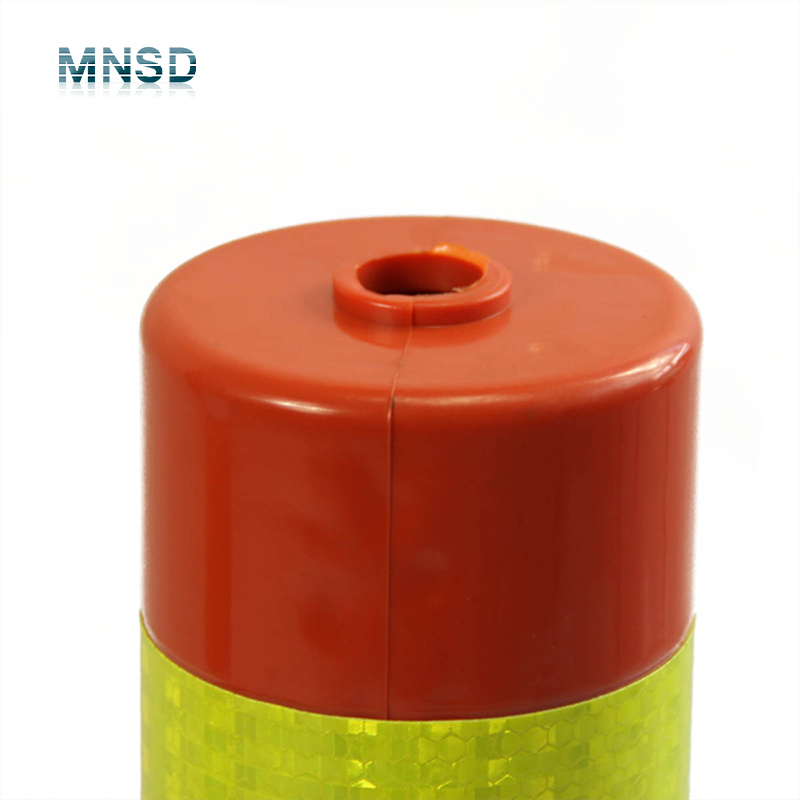
YD-WP45 pure PU warning post, a representative model in the Mnsd YD series.
Why Warning Post Comparison Is Harder Than It Looks
A warning post is visually simple, but it is actually a system of decisions: shaft material, base material, reflective sheeting grade, tape width, mounting method, color, and temperature tolerance. Two 75cm plastic warning posts can look identical and perform differently after a year of sun exposure or after a single forklift impact. Some posts are made of high-elasticity polyurethane (PU), some of heavy-duty polyethylene (PE), and some use a recycled rubber base for stability. Without verified parameters, buyers cannot reliably compare quotations from different suppliers.
Because the same item can be sold as a rubber base traffic delineator post, a traffic flexible car parking guide bollard, a warning spring post bollard, or an unbreakable reflective bollard, procurement teams should treat marketing names as descriptive only. The actual specification sheet determines whether the product will meet local road standards, weather conditions, and installation requirements.
Industry Background: A Market That Expects Proof
The global demand context supports careful specification. The road marker posts market was valued at USD 3.4 billion in 2024 and is projected to reach USD 5.4 billion by 2032, according to the Road Marker Posts Market Size Analysis. A separate Dataintelo forecast expects the broader traffic safety products market to expand at a CAGR of 6.6% from 2026 to 2034, driven by urban population growth and infrastructure investment.
Standards also shape procurement. In Europe, EN 12899-3 specifies requirements for delineator posts and retroreflectors used in traffic circulation areas. In the United States, MUTCD requires delineators to be retroreflective and visible from 1,000 feet when illuminated by high-beam headlights. ASTM D2765 provides standard procedures for measuring the gel content and swell ratio of crosslinked ethylene plastics used in industrial safety products. None of these standards replaces a supplier's own documentation, but they give buyers a common language for asking questions.
Market analysis from Global Market Insights indicates that leading traffic equipment manufacturers such as 3M, Honeywell, and SWARCO hold approximately 39.2% of the global market. Specialist manufacturers such as Mnsd compete through specification transparency, production flexibility, and factory-direct supply rather than brand-level scale.
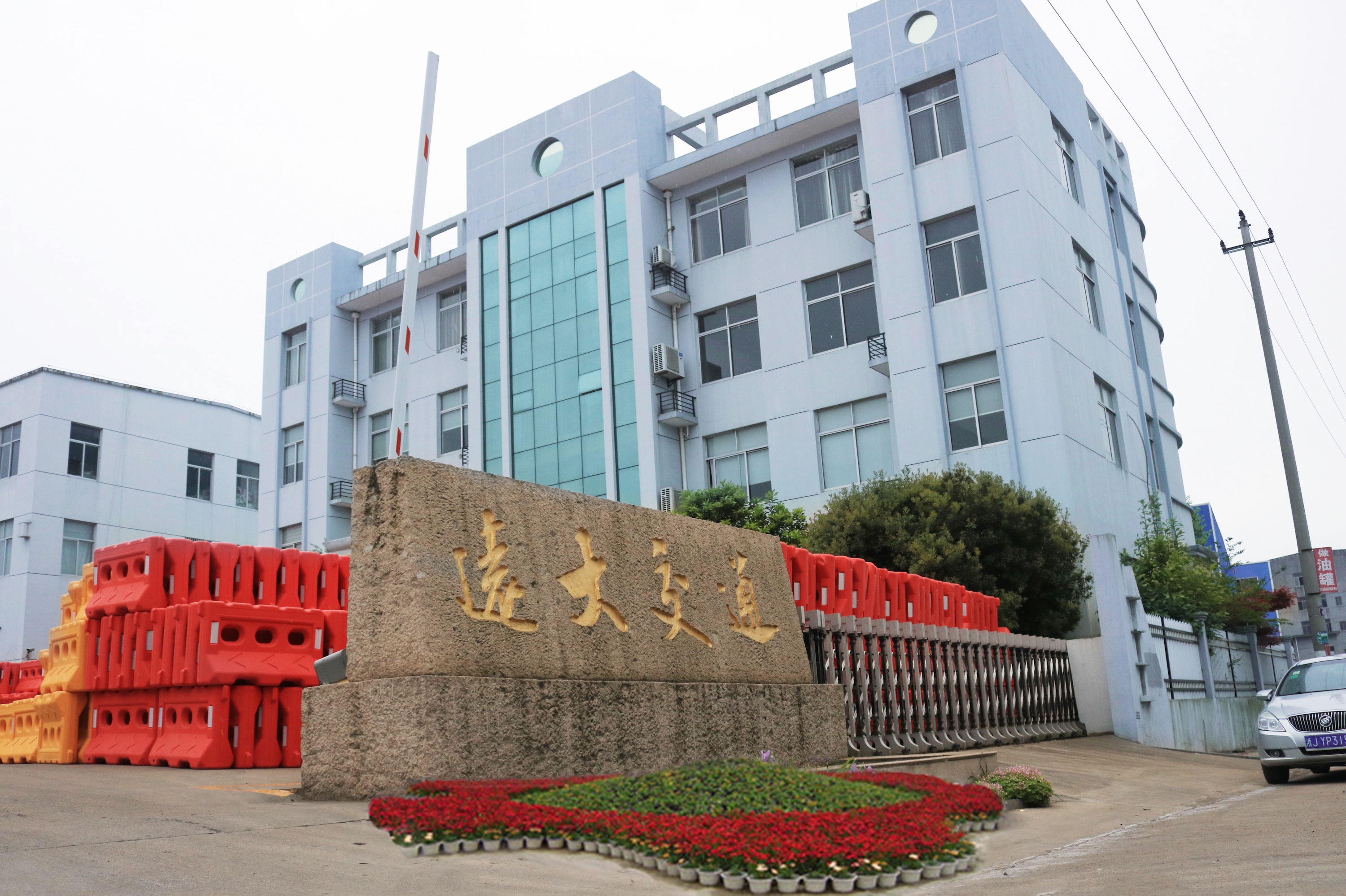
Mnsd factory gate in Tiantai, Zhejiang Province, China.
What to Verify Before You Order Warning Posts
Buyers evaluating a PE Material Warning Post or a PU traffic warning post should verify six areas: material, base, reflectivity, weather resistance, mechanical performance, and installation. The following product data comes from the Mnsd YD series specification sheets.
1. Material
Mnsd offers warning posts in two material families: high-elasticity polyurethane (PU) and heavy-duty polyethylene (PE). According to the OPTRAFFIC material guide, thermoplastic polyurethane is generally preferred for high-impact warning posts because of its elastic recovery and durability compared with standard polyethylene. That does not make PE posts unsuitable; it makes material selection a project decision rather than a default choice. PE posts such as the YD-PE50 are common in parking lots, warehouses, and loading docks, while PU models such as the YD-WP45 and YD-WPS75 are frequently used in road traffic areas where vehicles may make repeated contact.
2. Base
The base determines stability and anchoring. The YD-PE50 uses a PE post with a recycled rubber base of Φ260 mm diameter. The YD-WP45 and YD-WPS75 use PU posts with a base size of 200×80 mm. A rubber base adds weight and grip; an integrated plastic base reduces material variety and simplifies recycling. Buyers should also confirm whether the base is designed for expansion bolt fixing and whether the post can be unbolted and replaced after severe damage.
3. Reflectivity
Reflective tape quality determines night visibility. Mnsd warning posts use high-intensity prismatic reflective tape classified as HIP / Class 1, with a tape width of 250 mm, available in double or triple sleeves and in silver white or fluorescent yellow. The published visibility distance is 200+ meters. For projects governed by MUTCD, delineators must be visible from 1,000 feet when illuminated by high-beam headlights, so buyers should verify the reflective sheeting grade against the applicable road standard instead of relying on a single distance claim.
4. Weather Resistance
Mnsd warning posts are rated for a temperature range of -40°C to +70°C. The surface uses UV-stabilized coating, and the material is described as anti-oxidant, colorfast for over 3 years, and resistant to water and oil. Mnsd also provides an after-sales UV-resistance guarantee of no fading for 3 years. This type of stated guarantee is useful when comparing suppliers in high-sun environments such as the Middle East or Australia.
5. Mechanical Performance
Mechanical data is the most concrete part of a warning post specification. Mnsd's YD series posts are described as 360° flexible and impact resistant, with rapid rebound after a vehicle crush. Published values include tensile strength of 15.0 MPa, elongation at break of 400%, and hardness of 80–85 Shore A. During production, Mnsd conducts more than 1,000 compression and rebound cycles as part of quality control. These numbers give buyers a clearer comparison basis than the phrase “unbreakable reflective bollard” alone.
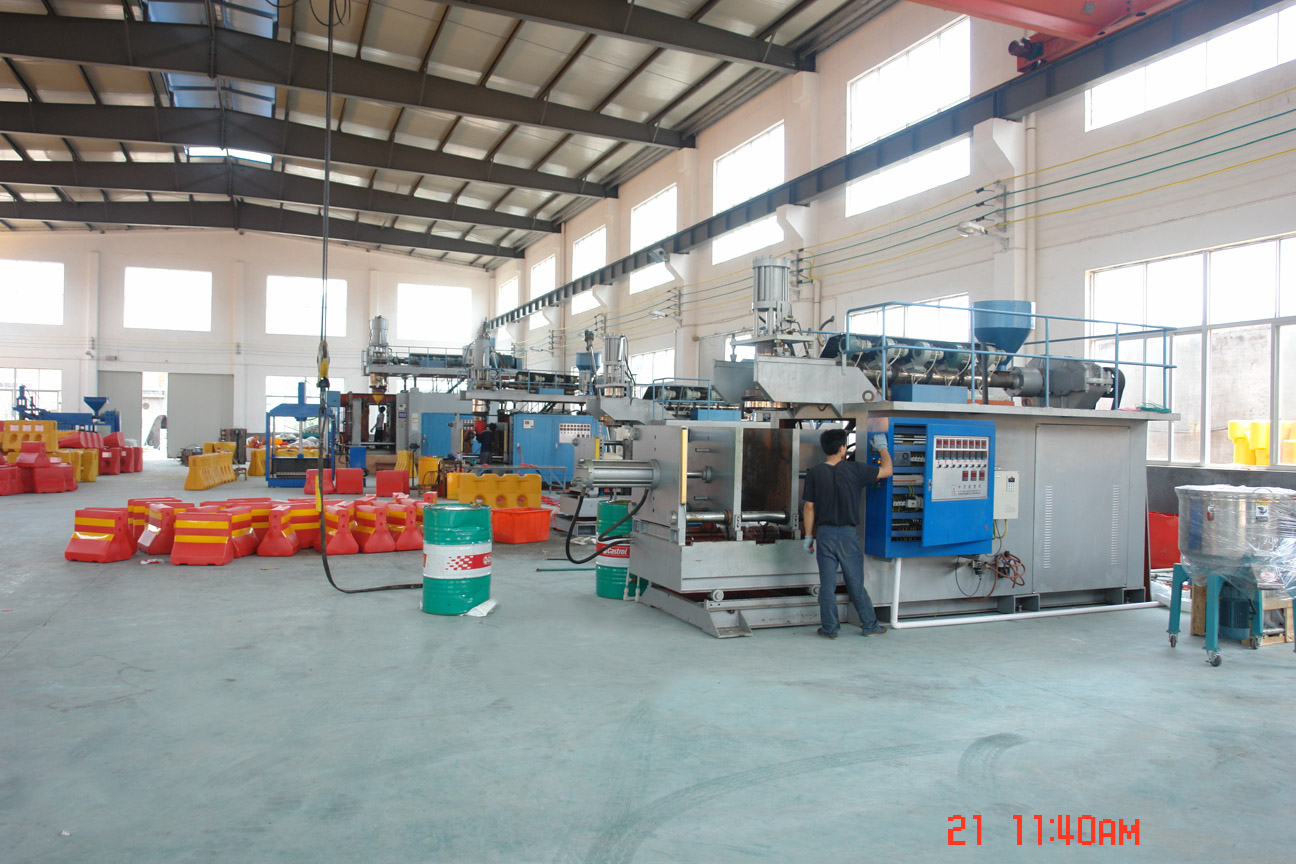
Injection molding product line used for warning post production.
6. Installation
Most Mnsd warning posts are installed with expansion bolt fixing using 3 or 4 holes, and the top design includes a ring for chain attachment. For permanent road applications, the system is surface-mounted and bolt-down. Project specifications for highway and ramp installations often specify heavy-duty expansion anchors and optional epoxy adhesive for base reinforcement. Buyers should confirm that the post's base hole pattern matches the anchors available in their project market.
How to Run a Specification and Compliance Check in Six Steps
For buyers in the Research to Evaluation stage, a structured check reduces the risk of selecting a product that looks correct but cannot be verified.
- Verify the supplier's business registration. Mnsd's manufacturer holds Business License No. 91331023669153260K, issued by the Market Supervision Administration under the China Policy standard. The license is valid from 2007-11-13 to 2107-11-13, covers the warning post business including the YD-PE50 model, and applies to all countries. Buyers should ask the supplier to state which product models are covered by each certificate.
- Confirm material and mechanical parameters. Ask for the exact material type, tensile strength, elongation at break, hardness, and rebound description. Mnsd's published values of 15.0 MPa tensile strength, 400% elongation, and 80–85 Shore A hardness are traceable to the YD series datasheets.
- Check reflectivity in the context of your market. Record the reflective grade, tape width, sleeve configuration, and visibility distance. Mnsd uses HIP / Class 1 high-intensity prismatic tape with 250 mm width. If the project is in the United States, confirm how the reflective finish performs against the MUTCD 1,000-foot visibility requirement.
- Review climate tolerance. Confirm the operating temperature range, UV protection, and colorfastness guarantee. Mnsd's range of -40°C to +70°C covers most road environments, and the 3-year no-fading guarantee is a useful contractual reference.
- Assess the base and anchoring system. Choose between a recycled rubber base or an integrated plastic base depending on the surface and impact risk. Verify the bolt-hole configuration (3 or 4 holes), the base dimensions, and whether the top ring is suitable for chain attachment.
- Request samples and production information. Mnsd's MOQ for warning posts is 200 pieces, with a lead time of 10–15 days for bulk orders and a monthly production capacity of about 50,000 pieces on its high-speed injection molding line. A physical sample allows the buyer to test flexibility, rebound behavior, reflective finish, and base quality before mass production.
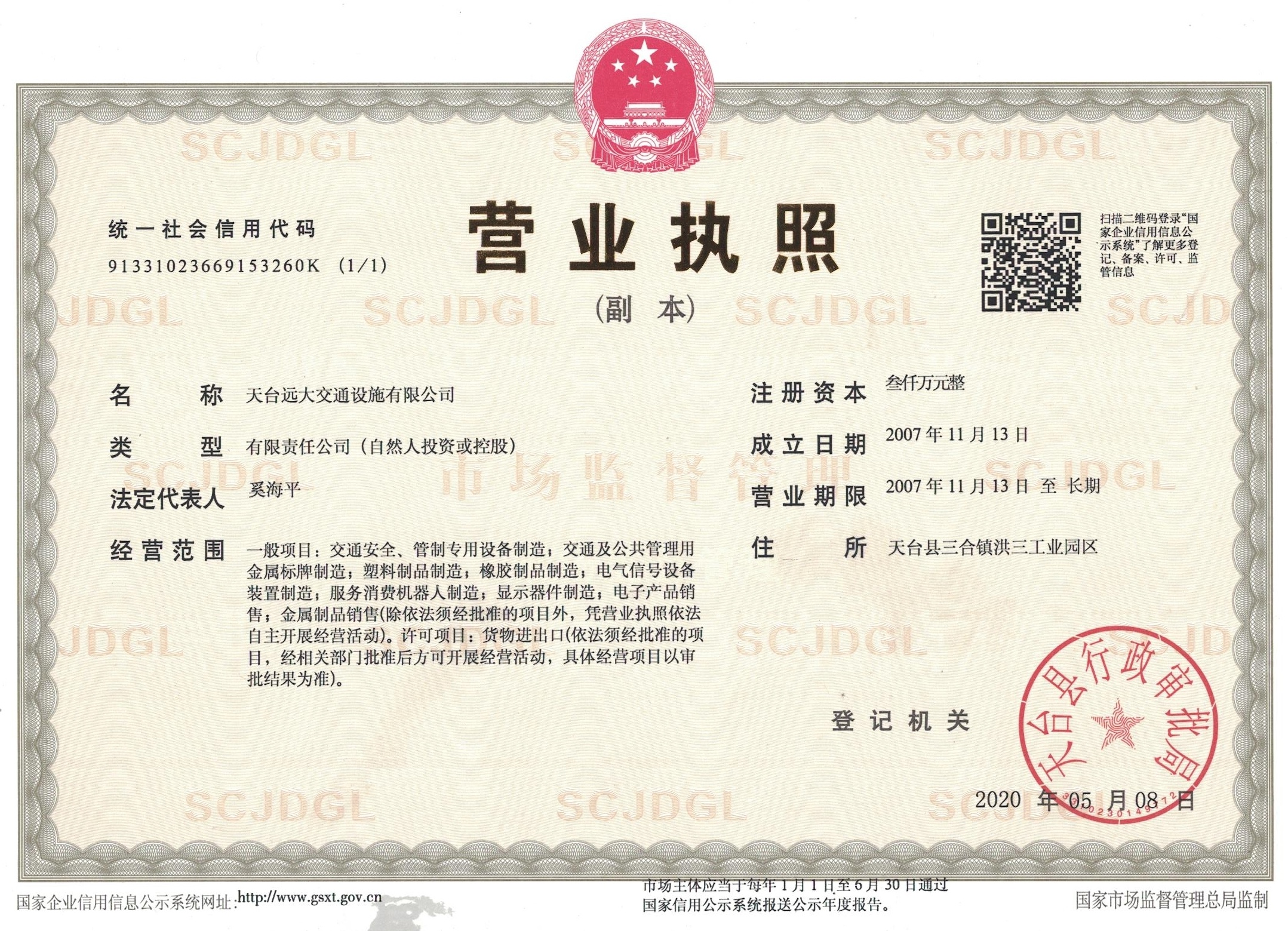
Business License No. 91331023669153260K issued by the Market Supervision Administration.
Use Cases: Where These Verification Points Matter
Highway and Municipal Traffic Projects
In road traffic and municipal infrastructure projects such as highway ramps, T-junctions, and multi-level parking entrances, warning posts are used for lane separation, median delineation, and pedestrian-vehicle segregation. A representative Mnsd application in the UAE includes lane separation on high-speed expressways, highway ramps, urban sidewalk protection, and multi-level parking lot entrances. The specified operation mode is surface-mounted and bolt-down for permanent installation, and the project asks for high-visibility reflective sleeves, M10/M12 heavy-duty expansion anchors, and optional epoxy adhesive. In such environments, buyers should prioritize full-recovery impact resistance and UV stability because installation sites are exposed to continuous traffic and high temperatures.
Contractor Road Safety Projects
A road safety project by a contractor in Vietnam used Mnsd warning posts to warn vehicles and pedestrians and to mark road edges and dangerous areas. The project was completed and accepted by the local authority. The contractor highlighted high visibility, durability, impact resistance, and ease of installation as the main reasons for selecting the product. This case demonstrates that warning posts are evaluated not only on price but also on whether they can be installed quickly and remain effective for the project duration.
Parking, Warehouse, and Logistics Facilities
For parking lots, warehouses, logistics centers, loading docks, airports, seaports, railway stations, schools, hospitals, and commercial complexes, flexible warning posts act as traffic flexible car parking guide bollards. Model choices usually depend on visibility distance and impact risk. A shorter model such as the YD-WP45 at 450 mm can guide vehicles inside a parking structure, while a 75cm plastic warning post such as the YD-WPS75 provides greater visibility for larger areas. The rubber base on the YD-PE50 adds stability on asphalt and concrete surfaces, and the ring top allows temporary chain barriers.
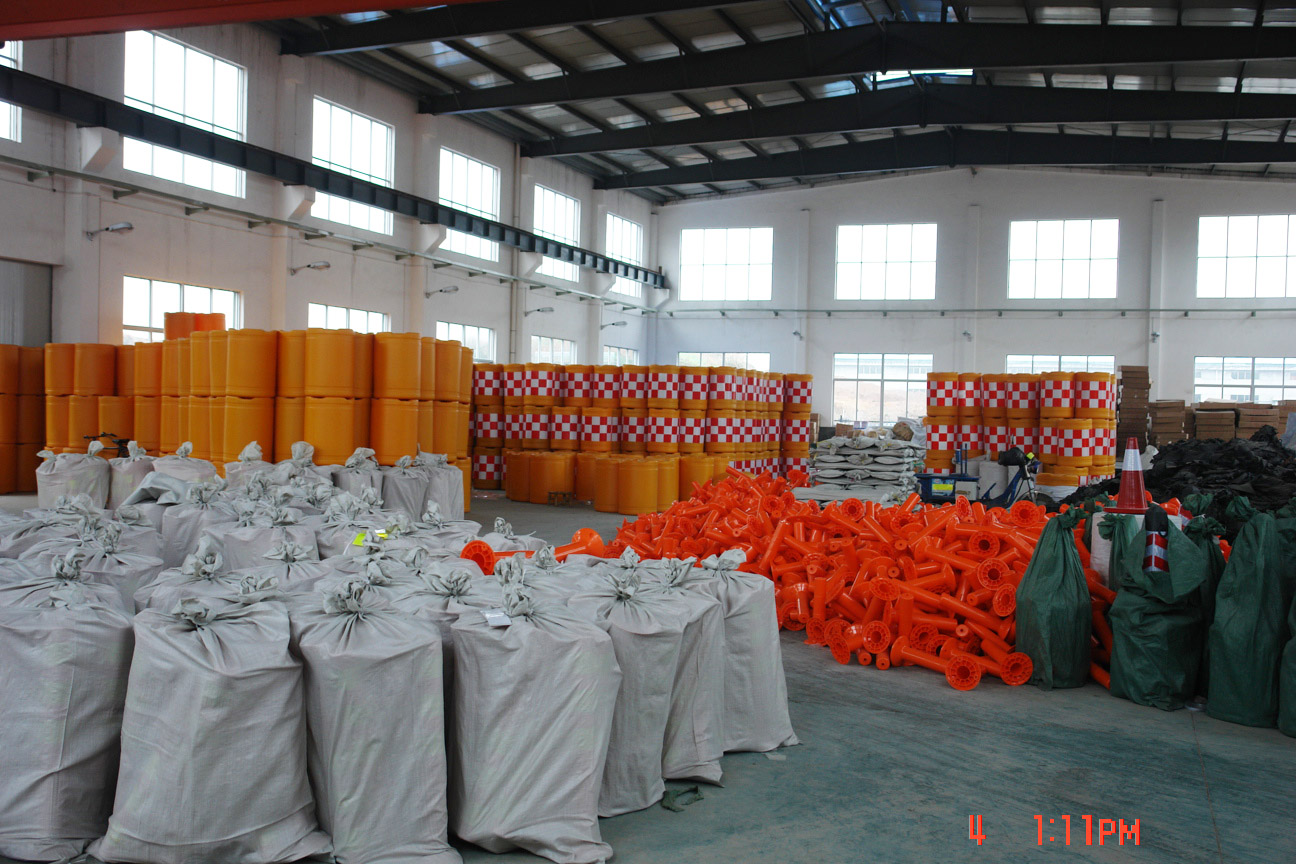
Production line for road safety products at the Mnsd factory.
Comparison Table: Mnsd YD Series Warning Posts
The table below compares the three main Mnsd warning post models using published specification data. Buyers can use this table as a starting point for evaluating other suppliers.
| Model | Height / Base | Material | Key Performance Data | Typical Applications |
|---|---|---|---|---|
| YD-PE50 | 500 mm / Φ260 mm rubber base | PE + recycled rubber base | 360° flexible; tensile 15.0 MPa; elongation 400%; 80–85 Shore A; HIP/Class 1 reflective tape, 250 mm; visibility 200+ m; -40°C to +70°C | Parking lots, warehouses, logistics centers, loading docks, airports, seaports |
| YD-WP45 | 450 mm / 200×80 mm base | High-elasticity PU | 360° flexible; tensile 15.0 MPa; elongation 400%; 80–85 Shore A; HIP/Class 1 reflective tape, 250 mm; visibility 200+ m; -40°C to +70°C | Schools, hospitals, commercial complexes, residential areas, pedestrian-vehicle segregation |
| YD-WPS75 | 750 mm / 200×80 mm base | High-elasticity PU | 360° flexible; tensile 15.0 MPa; elongation 400%; 80–85 Shore A; HIP/Class 1 reflective tape, 250 mm; visibility 200+ m; -40°C to +70°C | Road traffic, highways, construction sites, bus terminals, municipal engineering |
Frequently Asked Questions
What certification should a warning post supplier provide?
At minimum, buyers should verify a valid business registration covering the warning post product line. Mnsd's manufacturer holds Business License No. 91331023669153260K, issued by the Market Supervision Administration under the China Policy standard. It is valid from 2007-11-13 to 2107-11-13, covers the warning post business including the YD-PE50 model, and applies to all countries. For EU or US projects, additional documents such as EN 12899-3 compliance evidence or MUTCD-compatible reflective sheeting data should also be requested from the supplier.
Can warning post height, color, and reflective tape be customized?
Yes. Mnsd operates high-speed injection molding production and accepts customization of height, color such as orange, yellow, or green, and reflective tape brand including 3M or Grade A options. Color choices also include traffic orange, yellow, red, and black depending on the model. Customization should be confirmed in writing before mass production begins.
What should buyers compare when evaluating warning post prices?
Prices are meaningful only when the specification is fixed. Buyers should compare material type (PU vs PE), height, base construction, reflective tape grade and width, installation hardware, and whether the price includes the required certifications. Mnsd offers factory-direct pricing for the YD-PE50, YD-WP45, and YD-WPS75 models. Contact Mnsd for a quotation based on your project specification and destination market.
Can buyers request warning post samples before bulk orders?
Yes. Mnsd's MOQ for warning posts is 200 pieces, and sample requests are an accepted part of the sourcing process. A physical sample lets the buyer test 360° flexibility, rebound after impact, reflective tape finish, and base dimensions. Ask for the sample together with the product datasheet and business license.
What is Mnsd's lead time for warning post bulk orders?
Mnsd's standard lead time for bulk warning post orders is 10–15 days, supported by a monthly production capacity of about 50,000 pieces on its injection molding line. Each batch passes a quality control process that includes more than 1,000 compression and rebound cycles. To begin, request the Mnsd company brochure and a written quotation; the sales team will confirm the lead time for your destination.
Compliance summary: The Mnsd warning post business is covered by Business License No. 91331023669153260K, issued by the Market Supervision Administration and valid to 2107-11-13. Product-level parameters for the YD-PE50, YD-WP45, and YD-WPS75 are published with specific mechanical, reflective, and climate data so buyers can verify claims before ordering.
Conclusion
Certification and specification checks are not administrative steps; they are the most practical form of risk control in traffic safety procurement. A warning post that cannot prove its material, reflectivity, and rebound performance will cost more after installation than the small amount saved at purchase. Mnsd's YD-PE50, YD-WP45, and YD-WPS75 cover the most common height points in the market, and the supporting business documentation, production capacity, and customization options are available for buyer review.
Next step: Download the Mnsd company brochure, compare the YD series against your project specification, and request a sample or quotation.
Download the Mnsd Company Brochure
Email: info@mnsdtraffic.com | WhatsApp: +86 184-5813-7305 | Website: www.mnsdtraffic.com