
PU Warning Post Supplier Audit: Evidence Over Promises
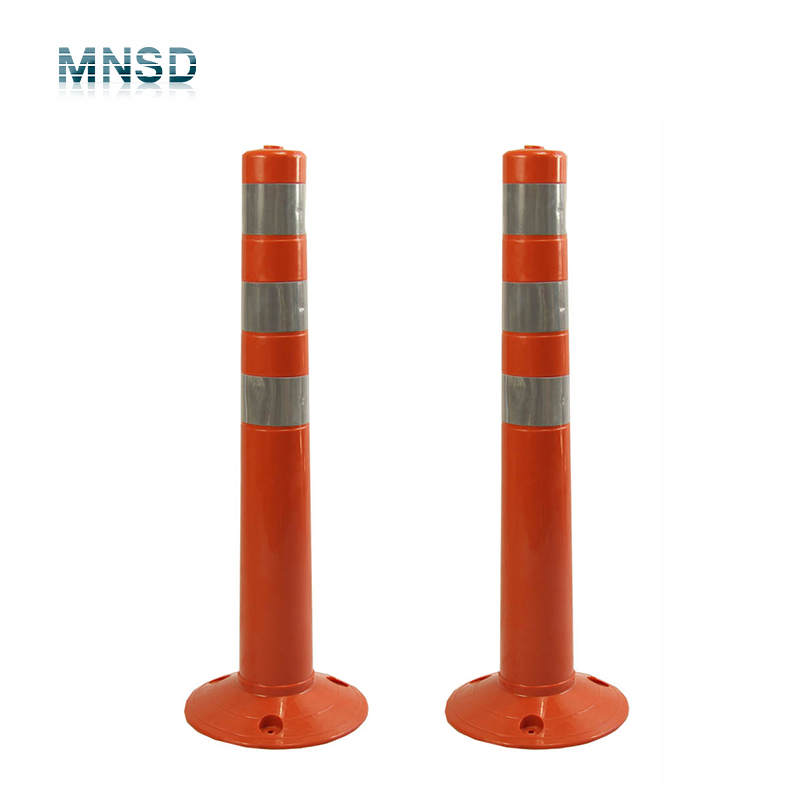
A PU warning post supplier should be qualified on documentation tied to a named model, not on adjectives. The verification path has five checkpoints: fix the model and height, obtain a written material and base declaration, match mechanical and optical data to that specific model, confirm the environmental envelope and fixing method, and only then test supplier-level capacity. On the YD-WP45 (450 mm) and YD-WPS75 (750 mm) PU warning posts from Mnsd, that evidence set is specific — 15.0 MPa tensile strength, 400% elongation at break, a 360° flexible and impact-resistant structure with rapid rebound after vehicle crush, HIP/Class 1 reflective sheeting with 200+ m visibility, a -40°C to +70°C operating range, expansion bolt fixing through 3 or 4 holes, and base options in recycled rubber or integrated plastic.
Problem Definition: Where Warning Post Supplier Promises Break Down
Warning post sourcing fails for three predictable reasons, and none of them is a shortage of suppliers.
1. Material names arrive without grades. Catalogues say PU, PE, TPU or PVC, but rarely say which grade, how the body was moulded, or what the base is made of. A post described only as “flexible” tells a buyer nothing about whether the body will return to vertical after a vehicle drives over it, or go slack after the first season.
2. Performance words replace numbers. “Impact resistant”, “high visibility” and “all weather” are unmeasurable. They become useful only when attached to defined figures — a tensile value, an elongation value, a reflective grade, a tape width, a visibility distance, a temperature range.
3. Two evidence stacks get mixed together. A business licence proves a legal entity exists; it does not prove 15.0 MPa tensile strength. A material data sheet proves a compound exists; it does not prove the supplier can ship in 10–15 days. Reliable evaluation keeps the product-level evidence stack and the supplier-level evidence stack separate, then checks both.
Industry Background: Why Verification Sits With the Buyer
Warning posts are a small line item inside a large category. MarketsandMarkets values the global road safety market — hardware plus solutions — at USD 7.62 billion in 2026, with hardware carrying the larger share. Flexible delineator posts compete for budget inside that hardware segment, which means unit price discipline matters, but so does replacement frequency.
Trade classification adds a compliance layer. Plastic delineator posts move under HS 3926.90 in global trade, and under 3926.90.9880 in the United States. Buyers comparing landed cost across origins need the correct classification before they compare quotations, because a mismatched HS code distorts duty and therefore distorts the comparison.
Standards references vary by market. In Europe, EN 13422:2019 addresses portable traffic cones and cylinders. In the United States, road owners and distributors commonly reference road-authority acceptance criteria and catalog-level MUTCD-related references. These documents do not automatically apply to every post type, and none of them replaces the specific acceptance document a given road authority applies to a given project.
The gap that matters for buyers is performance data. Publicly available, product-specific and independently published test results for warning posts remain limited, and most figures in circulation are supplier-reported. Verification therefore sits with the buyer, and the buyer who arrives with a structured checklist gets comparable answers; the buyer who asks “is it good quality?” gets a brochure.
Mnsd is the brand of Tiantai Yuanda Traffic Device Co.,Ltd, a road safety equipment manufacturer located in Tiantai, Zhejiang, China, producing warning posts, convex mirrors, speed humps, rising bollards and related traffic safety products for importers, distributors, contractors and infrastructure suppliers.
Detailed Solution: What Verifiable Evidence Looks Like on a PU Warning Post
The strongest supplier evaluation asks one question of every claim: which model is this true for, and what document shows it? For PU warning posts, five evidence blocks cover almost every sourcing risk.
Block 1 — Structure and Material Declaration
A written declaration should name the body material, the base material and the dimensional envelope. On the YD-WP45 the body is high-elasticity polyurethane (PU) at 450 × 80 × 200 mm. On the YD-WPS75 the body is PU at 750 × 80 × 200 mm. Both models offer base material options of recycled rubber or an integrated plastic base — a choice that changes both anchoring behaviour and price, so it must be stated in the quotation, not assumed.
Block 2 — Mechanical Performance
The YD-WP45 and YD-WPS75 are specified with a 360° flexible and impact-resistant structure and rapid rebound after vehicle crush. Three numbers support that claim: tensile strength of 15.0 MPa, elongation at break of 400%, and hardness of 80–85 Shore A. In procurement terms, 400% elongation at break describes a material that can stretch to roughly four times its original length before failure, while 80–85 Shore A describes a body stiff enough to stand upright and transmit a visible signal, yet flexible enough to fold under a tyre and recover.
Ask what test was run, on which model, and how rebound was observed. Mnsd documents quality control through 1,000+ times compression and rebound testing — a repetition count is far more useful than the word “durable”, because it describes a process rather than a property.
Block 3 — Reflective System
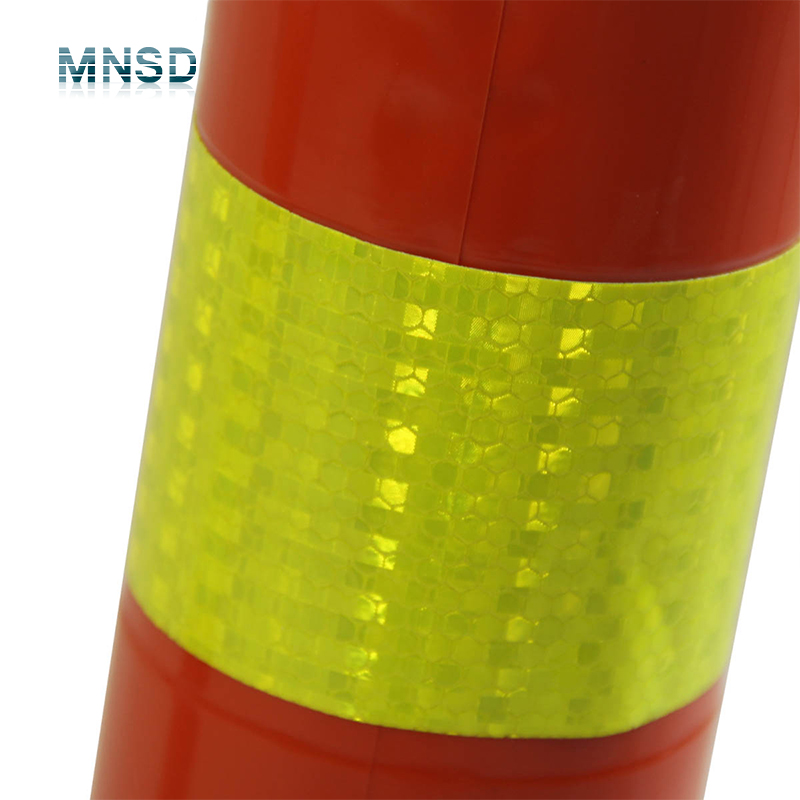
Visibility is a component specification, not a body specification. The reflective grade is High-Intensity Prismatic (HIP) / Class 1, the tape width is 250 mm, and sleeves may be applied as double or triple bands. Reflective colour options are silver white or fluorescent yellow, and the stated visibility distance is 200+ metres. A buyer should verify three things separately: the sheeting grade, the tape width per sleeve, and the number of sleeves per post — a Class 1 sleeve of reduced width on a single band is not the same product as three full-width bands.
Block 4 — Environmental Envelope and Aging
Temperature resistance is stated as -40°C to +70°C. UV protection is delivered through a UV-stabilized coating, aging resistance is described as anti-oxidant and colourfast for over three years, and the body is stated to be water and oil resistant. The Mnsd after-sales position on UV resistance is a no-fading guarantee for three years. For buyers in high-UV markets this is the single most testable promise in the package: it can be verified by sample exposure and revisited through warranty terms.
Block 5 — Base, Fixing and Site Interface
Installation on both models uses expansion bolt fixing through 3 or 4 holes, and the top design includes a ring top for chain attachment. Fixing is where otherwise-good posts fail: an expansion bolt is only as reliable as the substrate it enters. Buyers should state the surface — asphalt, concrete, or a raised kerb — and confirm the anchor specification with the supplier before ordering. In the UAE highway configuration recorded for these posts, bolt-down permanent installation is paired with M10/M12 heavy-duty expansion anchors and, where base reinforcement is needed, epoxy adhesive.

Block 6 — Production and Delivery Capability
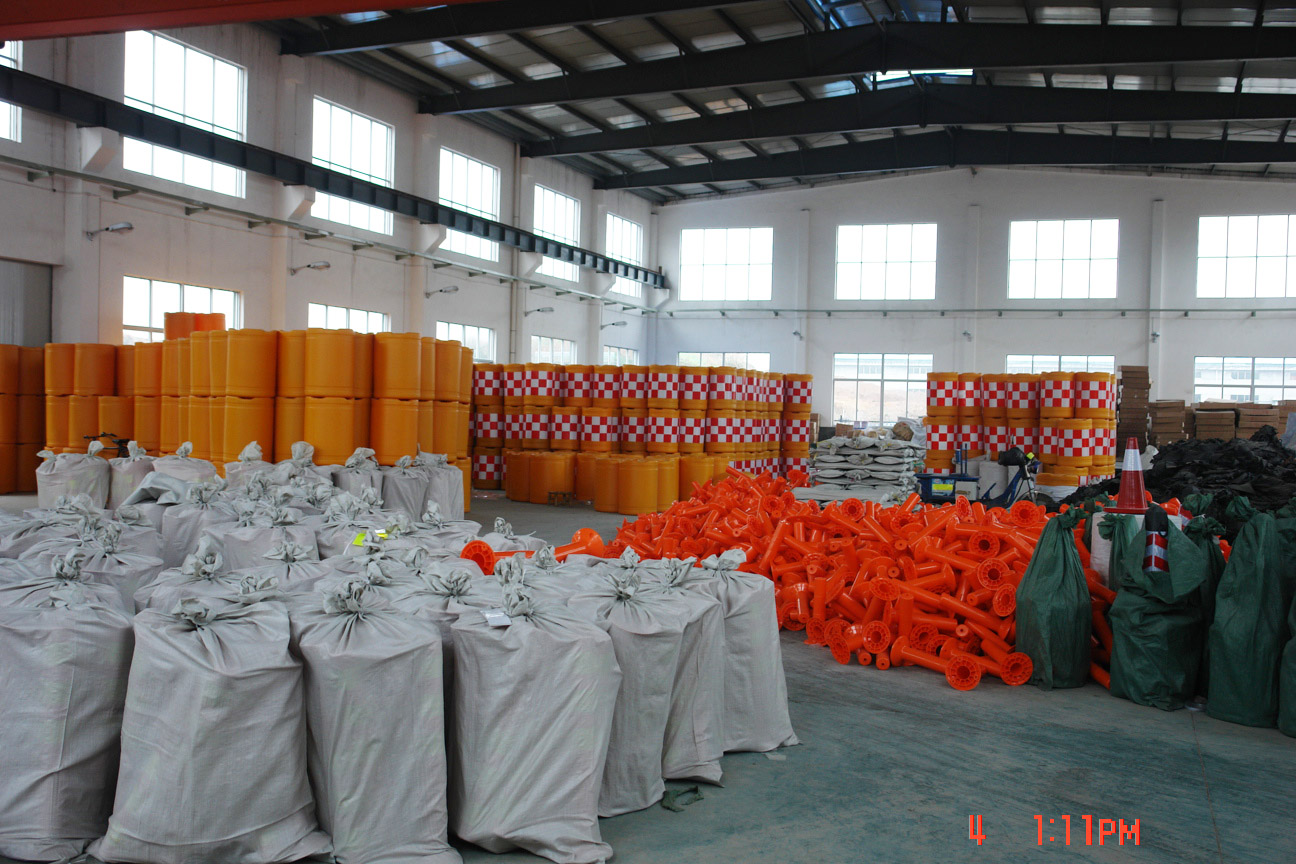
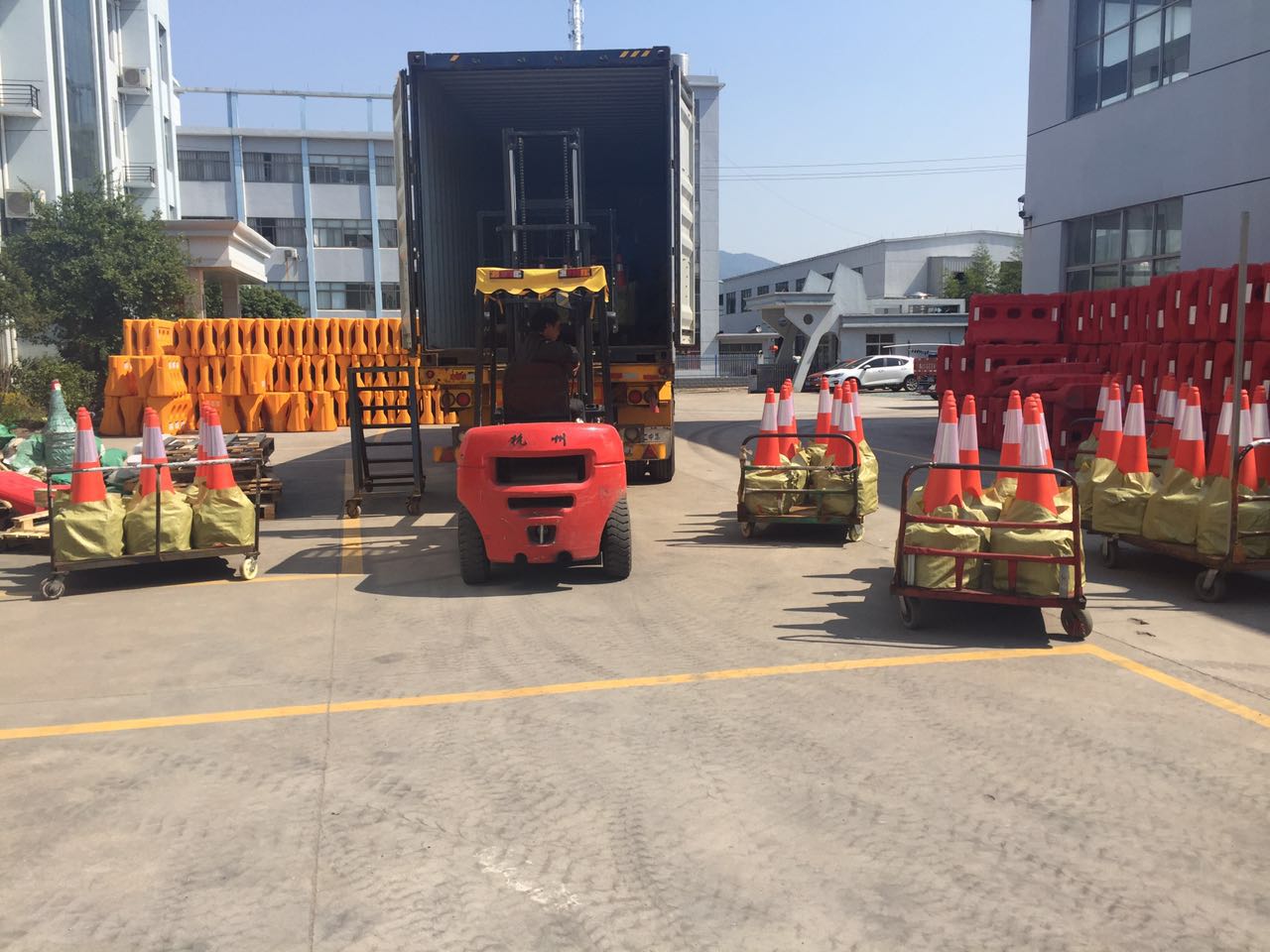
Production runs on high-speed injection molding, with monthly capacity of 50,000 pcs, a MOQ of 200 pcs, and a lead time of 10–15 days for bulk orders. Customization covers height, colour (orange, yellow, green) and reflective tape brand (3M / Grade A). For a distributor planning quarterly stock, those three numbers — capacity, MOQ, lead time — decide whether a delivery date is credible. For a contractor, MOQ decides whether a small site package is even serviceable.
Step-by-Step Breakdown: A Seven-Step Supplier Audit
Run the steps in order. Each one narrows the next, and skipping a step usually means re-quoting later.
Step 1 — Fix the model and mounting height. Decide between 450 mm (YD-WP45), 750 mm (YD-WPS75) and any other height offered, based on sightline and traffic speed. Comparing suppliers before fixing the height produces quotations for different products.
Step 2 — Obtain a written material and base declaration. Require the body material, the base material (recycled rubber or integrated plastic base), and the exact dimensions. Reject quotations that name a material family without stating it per model.
Step 3 — Match mechanical data to the model. Ask for tensile strength, elongation at break and hardness for the specific model, plus the rebound test method. Reference values on the YD-WP45 and YD-WPS75 are 15.0 MPa, 400% and 80–85 Shore A, with 360° flexibility and rapid rebound after vehicle crush.
Step 4 — Verify the reflective system as a component. Confirm grade (HIP / Class 1), tape width (250 mm), sleeve count (double or triple) and colour (silver white or fluorescent yellow) separately, then check the stated visibility distance of 200+ metres against the intended approach speed.
Step 5 — Confirm the environmental envelope and the aging promise in writing. Temperature range -40°C to +70°C, UV-stabilized coating, colourfast performance over three years, and the three-year no-fading after-sales guarantee should appear in the quotation or warranty document, not only in conversation.
Step 6 — Check the fixing method against the substrate. Expansion bolt fixing through 3 or 4 holes must be matched to asphalt, concrete, or kerb mounting, with anchor specification confirmed. Where chain attachment is needed, confirm the ring top design.
Step 7 — Verify supplier-level capacity last. Ask for monthly capacity (50,000 pcs), MOQ (200 pcs), bulk lead time (10–15 days), and legal entity evidence such as the Business License. This ordering matters: capacity is only meaningful once you know what product you are buying.
Use Cases: Where the Same Specification Set Gets Tested Differently
Road traffic and highway delineation. Lane separation, ramps and T-junctions need permanent bolt-down installation, high approach-speed visibility and stable colour retention under sustained UV. This is where HIP / Class 1 sheeting, 250 mm tape width and the -40°C to +70°C range carry the most weight, and where the 750 mm YD-WPS75 is typically paired with a rubber base to hold position.
Parking lots and parking garages. The dominant stress is low-speed crush — a vehicle reversing over a post rather than a high-speed strike. Self-recovery after vehicle crush and the 360° flexible structure are the deciding properties, because a post that stays bent creates a trip and vehicle-damage risk. The ring top for chain attachment is useful for guidance lanes where posts are linked.
Construction sites. Delineation moves weekly, so the base choice and anchoring method matter more than long-term appearance. Buyers typically need a MOQ that matches a site package and a lead time that matches mobilisation; 200 pcs minimum and 10–15 days on bulk orders set those limits.
Project delivery record. A contractor road safety project in Vietnam used these warning posts to warn vehicles and pedestrians and to mark road edges and dangerous areas, with the completed work accepted by the local authority. The stated service duration for that application is 5–8 years, and the performance factors recorded were high visibility, durability, impact resistance and ease of installation.
Comparison Table: YD-WP45 vs YD-WPS75
Both models share the same material and performance platform. The differences are height, dimensional envelope and the resulting application fit.
| Specification | YD-WP45 | YD-WPS75 |
|---|---|---|
| Height | 450 mm | 750 mm |
| Body dimensions | 450 × 80 × 200 mm | 750 × 80 × 200 mm |
| Body material | High-elasticity polyurethane (PU) | High-elasticity polyurethane (PU) |
| Base material options | Recycled rubber or integrated plastic base | Recycled rubber or integrated plastic base |
| Flexibility | 360° flexible and impact resistant | 360° flexible and impact resistant |
| Recovery | Rapid rebound after vehicle crush | Rapid rebound after vehicle crush |
| Tensile strength | 15.0 MPa | 15.0 MPa |
| Elongation at break | 400% | 400% |
| Hardness | 80–85 Shore A | 80–85 Shore A |
| Reflective grade | High-Intensity Prismatic (HIP) / Class 1 | High-Intensity Prismatic (HIP) / Class 1 |
| Reflective tape width | 250 mm (double or triple sleeves) | 250 mm (double or triple sleeves) |
| Reflective colours | Silver white / fluorescent yellow | Silver white / fluorescent yellow |
| Visibility distance | 200+ m | 200+ m |
| Temperature resistance | -40°C to +70°C | -40°C to +70°C |
| UV and aging | UV-stabilized coating; colourfast over 3 years | UV-stabilized coating; colourfast over 3 years |
| Installation | Expansion bolt fixing, 3 or 4 holes | Expansion bolt fixing, 3 or 4 holes |
| Top design | Ring top for chain attachment | Ring top for chain attachment |
| Colour options | Traffic orange / yellow / red / black | Traffic orange / yellow / red / black |
Comparison Table: Claim-to-Evidence Map
Use this map when auditing any PU warning post supplier, including Mnsd. The right-hand column shows the reference value a compliant answer should be able to match or explain.
| Supplier claim | Evidence to request | Reference value (YD-WP45 / YD-WPS75) |
|---|---|---|
| “Flexible PU body” | Per-model material and base declaration | PU body; recycled rubber or integrated plastic base |
| “Impact resistant” | Mechanical data for the named model | Tensile 15.0 MPa; elongation at break 400%; 80–85 Shore A |
| “Bounces back” | Rebound test description and QC record | 360° flexibility; rapid rebound after vehicle crush; 1,000+ compression and rebound tests |
| “High visibility” | Sheeting grade, tape width, sleeve count, colour | HIP / Class 1; 250 mm tape; double or triple sleeves; 200+ m visibility |
| “All weather” | Temperature range and aging statement | -40°C to +70°C; UV-stabilized; colourfast over 3 years |
| “Easy to install” | Fixing method and hole count | Expansion bolt fixing, 3 or 4 holes; ring top for chain |
| “Factory direct” | Legal entity document and capacity statement | Business License 91331023669153260K; 50,000 pcs monthly; MOQ 200 pcs; 10–15 days bulk |
FAQ
What certification should a PU warning post supplier provide before an order?
At minimum, legal entity evidence plus the product-level documents behind each performance claim. Mnsd holds a Business License numbered 91331023669153260K, issued by the Market Supervision Administration under the China Policy standard, valid from 2007-11-13 to 2107-11-13, covering warning post products and recorded as applying across markets. That document confirms registration and operating history; it does not certify tensile strength, reflectivity or lead time. Buyers should request the license, then separately request the mechanical, reflective and aging data for the exact model being purchased.
How can I verify claims like 15.0 MPa tensile strength and self-recovery after vehicle crush?
Ask for the figures tied to the named model rather than to a product family, then confirm the test routine. On the YD-WP45 and YD-WPS75 the reference values are 15.0 MPa tensile strength, 400% elongation at break and 80–85 Shore A hardness, with a 360° flexible and impact-resistant structure and rapid rebound after vehicle crush. Mnsd’s quality control includes 1,000+ times compression and rebound testing, which describes a repetition process rather than a single pass result. A physical sample crush test on the buyer’s side remains the most direct confirmation before a bulk order.
What drives the price of a PU warning post?
Four variables dominate: the body material (high-elasticity PU versus heavy-duty PE alternatives), the base (recycled rubber versus integrated plastic base), the reflective system (HIP / Class 1 sheeting, 250 mm tape width, double versus triple sleeves), and the height (450 mm on YD-WP45 versus 750 mm on YD-WPS75). Customization of colour and reflective tape brand (3M / Grade A) also shifts cost, and order volume interacts with the 200 pcs MOQ. Because the specification set changes the product, quotations are only comparable once model, base and sleeve configuration are stated in writing.
Can we validate a sample before placing a bulk order?
A sample stage is the practical way to test what a specification sheet cannot show: whether the body returns to vertical after being driven over, how the sleeve sits after handling, and whether the colour matches the intended traffic scheme. Sample and quotation requests for the YD-WP45, YD-WPS75 and other warning post models can be sent to info@mnsdtraffic.com or +86 184-5813-7305, with the mounting surface, required height and reflective sleeve configuration included so the sample matches the intended order.
What lead time and capacity should a buyer expect?
Mnsd runs high-speed injection molding at a stated monthly capacity of 50,000 pcs, with a MOQ of 200 pcs and a lead time of 10–15 days for bulk orders. Delivery planning should account for the reflective sleeve configuration and base type, since both are specified per order rather than held as a single standard build. For distributors scheduling repeat shipments, the capacity figure and the bulk lead time together determine whether a quarterly replenishment plan is realistic — and both are supplier-level facts that should be re-confirmed at each purchase order rather than assumed from an earlier quotation.
Conclusion: Audit the Evidence, Then the Supplier
Reliable delivery is not a personality trait of a supplier; it is the output of a specification that can be checked. For PU warning posts, that means a written material and base declaration, mechanical data of 15.0 MPa tensile strength and 400% elongation at break attached to the exact model, a reflective system defined by HIP / Class 1 grade and 250 mm tape width rather than by the word “visible”, an environmental envelope of -40°C to +70°C with a three-year no-fading position, expansion bolt fixing matched to the real substrate, and a supplier able to show 50,000 pcs monthly capacity, 200 pcs MOQ and 10–15 day bulk lead times.
Buyers who audit in that order stop comparing brochures and start comparing products. The YD-WP45 and YD-WPS75 exist to make that comparison concrete at 450 mm and 750 mm, and the same checklist works against any alternative supplier a buyer shortlists.
Next Step: Sample, Specification Sheet or Quotation
Request a sample or a model-specific quotation for the YD-WP45 (450 mm) or YD-WPS75 (750 mm) PU warning post. Share your mounting surface, required height, base preference and reflective sleeve configuration so the response matches your site conditions.
Email: info@mnsdtraffic.com | Tel / WhatsApp: +86 184-5813-7305 | Web: www.mnsdtraffic.com
Download the full product catalogue: Mnsd Traffic Safety Product Catalogue (PDF)
Tiantai Yuanda Traffic Device Co.,Ltd — hongsan industry zone, tiantai town, taizhou city, zhejiang province, china.
Flexible Safety Plastic warning postPU traffic warning post75cm Plastic warning postWarning Spring Post with rubber baseUnbreakable Reflective BollardHigh Visibility Flexible Traffic Safety PU Warning PostDurable Plastic Road Safety Warning post
Have Questions or Need More Details?
Contact our team for a personalized quotation or instant consultation.
Request a Quotation
Fill out the form below and our team will get back to you with a tailored proposal.
WhatsApp Direct Chat
Prefer to chat in real-time? Message us on WhatsApp for instant assistance & quick answers.
- Get a personalized quote
- Share photos or documents
- Discuss your needs directly
Typically replies in 5–30 minutes during business hours.