Top Convex Mirror Picks: Ranked by Durability and Visibility for Industrial Safety
Top Convex Mirror Picks: Ranked by Durability and Visibility for Industrial Safety
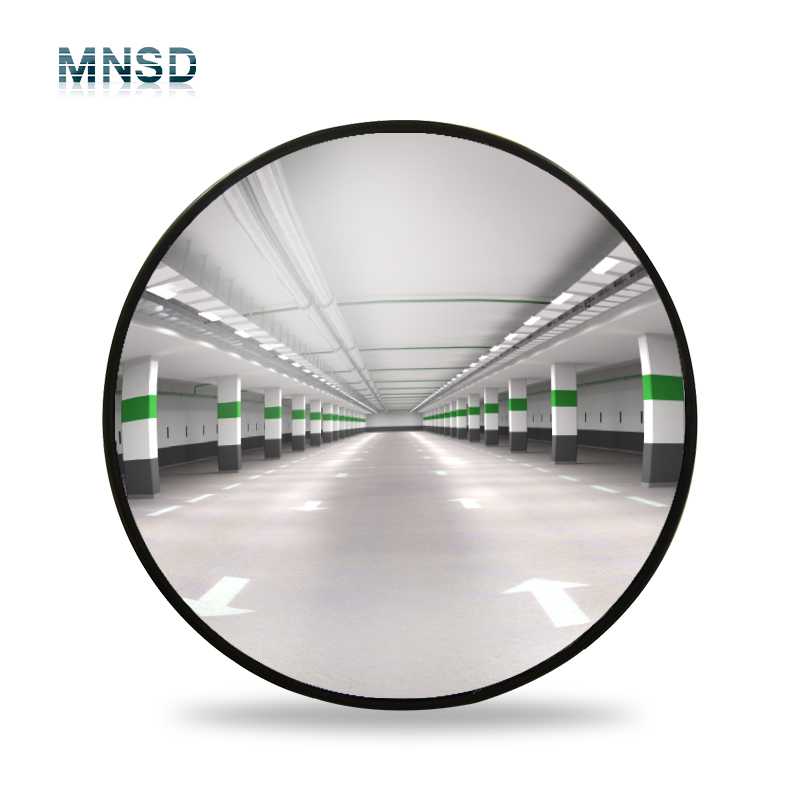
Industrial sites rarely end up with a blind spot because nobody bought a mirror. They end up with one because the mirror was specified on diameter and unit price, while the two variables that decide whether the installation actually works — durability under weather and impact, and usable visual range — were never scored separately. This ranking scores them separately, and places outdoor polycarbonate convex mirrors in order on those two axes alone.
Ranked that way, two outdoor polycarbonate configurations lead the list: the Mnsd YD-OC120, specified with a 35–45 m visual range, and the Mnsd YD-OC100, specified with a 30–35 m visual range. Both are polycarbonate mirrors built for outdoor industrial mounting, both carry IP65 weatherproofing and UV resistance grade 8, and both are finished with a specialized anti-scratch hard coating applied to the polycarbonate face. For calibration, the typical outdoor polycarbonate convex mirror elsewhere in the category is specified at around a 180° viewing angle with a 20–25 m visual range — which is why the two picks above sit above the baseline on range rather than on price alone.
This ranking is deliberately narrow. It covers only outdoor polycarbonate (PC) configurations that can be assessed against all five criteria set out below. Configurations whose specifications could not be verified were excluded rather than estimated, because an unverifiable range figure is worse than no range figure when a junction is being designed.
Problem Definition: Why Industrial Blind Spots Survive an Upgrade
A convex mirror installation fails in one of two ways, and procurement usually plans for only the first.
The first is physical failure. The polycarbonate face is scratched during assembly or by grit and cleaning; sustained UV exposure dulls the reflective surface; or a vehicle or trolley clips the housing. Mnsd treats surface scratching as a production risk rather than a maintenance instruction: a specialized anti-scratch hard coating is applied to the PC surface, and a protective PE film is left in place during assembly and transit so the optical face arrives unmarked. Buyers should ask where in the process that protection is applied, because a hard coating specified after assembly is not the same product as one built into the face.
The second is optical failure, and it is quieter. The mirror is intact, clean and correctly aimed, but its visual range is shorter than the approach distance it is meant to cover. A mirror that gives a usable image at 18 m still leaves part of a 40 m approach lane uncovered; the driver gains confidence without gaining information. Because the installation looks complete — there is a mirror on the pole — the gap is rarely identified until an incident review.
Both failure modes carry the same commercial signature: replacement purchases, re-aiming labour, and a safety control that exists on the drawing but not at the junction. That is the argument for ranking mirrors on durability and visibility rather than buying on diameter.
Industry Background: A Growing Safety Category Inside a Softening Mirror Trade
Convex mirrors are not a declining commodity. The global convex mirror market was valued at approximately USD 1.04 billion in 2025 and is projected to reach USD 1.73 billion by 2034, according to Dataintelo. Asia Pacific accounted for 42.5% of revenue in 2025, and traffic and safety applications already represent the single largest application block at 38.2% of the market.
The counter-trend sits in the general mirror trade: global trade in unframed mirrors declined 9.2% in 2023 compared with 2022, reflecting supply-chain shifts and softer demand for general mirror products. Read together, the two data points describe a category in which general-purpose mirror volume is contracting while the traffic and safety segment expands. For buyers, the practical consequence is that supply is concentrating around safety-grade product rather than around generic mirror capacity, and specification quality — not availability — becomes the point of differentiation between suppliers.
The technical reason the safety segment keeps expanding is that passive optics solve a problem that powered systems do not always solve economically. Compared with electronic monitoring systems, a convex mirror offers a passive safety design with no power requirement, a wide viewing angle, a lower upfront cost, minimal maintenance and suitability for a wide range of applications. It consumes no energy, needs only occasional cleaning, and works where power is unavailable, unreliable, or simply not worth running to a pole at the far edge of a yard.
Electronic monitoring earns its place where recorded evidence, remote viewing or night-time detection is genuinely required — but it carries power, wiring, calibration and service obligations with those capabilities. The decision is not which technology is more modern; it is which one covers the specific blind spot at an acceptable lifetime cost.
How These Picks Were Ranked
Five criteria were applied, and a configuration had to be assessable against all five to enter the ranking. The weighting is intentionally uneven: durability criteria screen a product out, while visibility criteria decide the order at the top of the list.
- Construction and impact resistance. Polycarbonate (PC) is the reference material for outdoor industrial mirror faces because the optical surface is exposed to grit, trolley traffic and vehicle contact. A shatterproof polycarbonate face is the reason an outdoor mirror survives contact that would end an acrylic or glass unit.
- Weatherproofing. IP65 is the working reference for an outdoor housing: sealed against dust ingress and protected against water jets. It matters most on hooded, wall-mounted and pole-mounted units, where rain is driven horizontally into the face rather than falling past it.
- UV resistance. UV resistance grade 8 is the specification to ask for on any mirror that sits in direct sunlight. UV performance governs how long the reflective face holds contrast before yellowing or hazing reduces image quality — a degradation that is invisible in a first-year inspection and obvious in a fifth-year one.
- Wind load resistance. Directly relevant to pole-mounted units on exposed sites. Wind load resistance is a property of the mirror-and-bracket assembly, not of the mirror head alone, and an adjustable swivel bracket allows the head to be re-aimed after installation without re-drilling the mount.
- Visibility — viewing angle plus visual range. Convex geometry produces a wide viewing angle in the 100°–180° band depending on configuration, which is what makes a single mirror useful at a junction. Visual range then decides whether that angle is useful at the distance your vehicles actually approach from.
The Ranking: Top Outdoor Polycarbonate Convex Mirror Picks
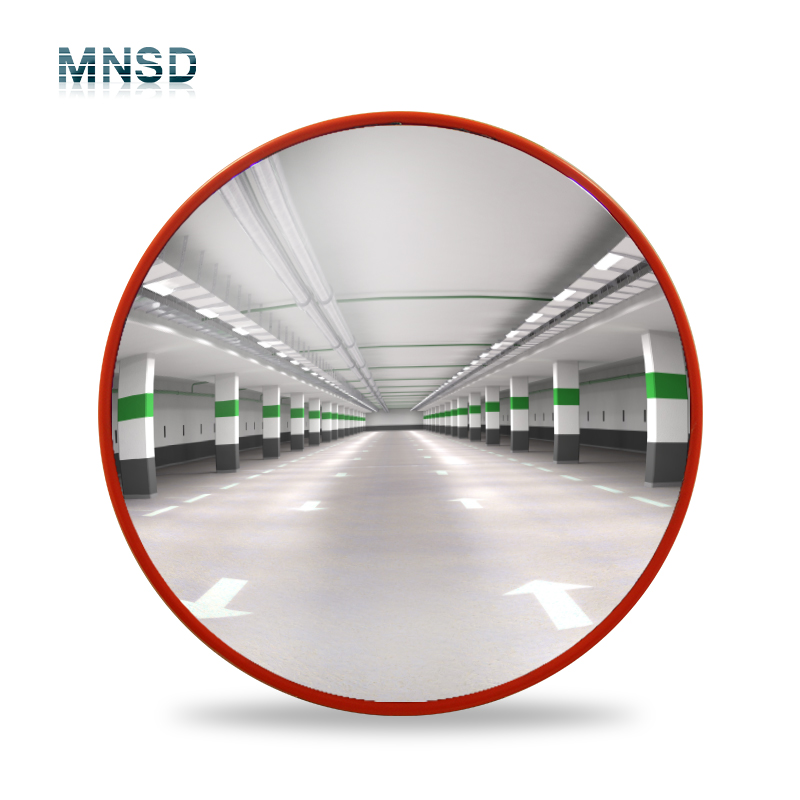
Rank 1 — Mnsd YD-OC120: The Long-Range Pick (35–45 m Visual Range)
The YD-OC120 is the highest-coverage option in this ranking, specified with a 35–45 m visual range. Range is what puts it first, because on long approach lanes range is the constraint that fails first: a mirror can be perfectly manufactured, correctly aimed and still be the wrong product if the driver's decision point sits 40 m out.
Its durability basis is the same package applied across the two ranked picks. The face and body are polycarbonate, chosen for impact resistance rather than for cost. The housing carries IP65 weatherproofing for outdoor exposure, the reflective face is specified at UV resistance grade 8 for sustained sunlight, and the PC surface is finished with a specialized anti-scratch hard coating, with protective PE film applied during assembly and transit. Wind load resistance is addressed at the bracket level, and the adjustable swivel bracket allows re-aiming after the pole is set.
The limit is equally clear, and buyers should not ignore it. On a 15 m yard exit or a tight warehouse corner, a 35–45 m mirror is more reflective area than the junction can use, and the extra coverage is not free. Long-range aiming is also more sensitive to pole position: the further the coverage extends, the more a few degrees of misalignment shifts the image the driver actually receives. The YD-OC120 belongs where the approach is genuinely long.
Rank 2 — Mnsd YD-OC100: The Balanced Pick (30–35 m Visual Range)
The YD-OC100 delivers a 30–35 m visual range on the same durability specification: polycarbonate construction, IP65 weatherproofing, UV resistance grade 8, an anti-scratch hard coating applied at the PC surface, and PE film protection through assembly and transit.
It ranks second only because its coverage is shorter, not because it is weaker. For the majority of industrial installations — warehouse intersections, loading dock exits, parking garage ramps and internal logistics roads — 30–35 m matches the distance a forklift or truck driver actually needs to see before committing. Specifying more range than the junction allows does not improve the safety outcome; it moves the mirror's effective focus further away from where vehicles appear.
Reference Point — Standard Outdoor Polycarbonate Convex Mirrors (180°, 20–25 m)
Outdoor polycarbonate convex mirrors across the category are typically specified with a 180° viewing angle and a 20–25 m visual range. That baseline is adequate for short, low-speed approaches such as interior lot junctions and pedestrian-facing corners, and it is the configuration most often quoted when buyers compare on unit price alone. It appears here as a reference point rather than a recommendation, because the performance ceiling — not the price — is usually what decides whether the installation works.
Step-by-Step Breakdown: Applying This Ranking to a Site
- Measure the blind spot before choosing the mirror. Record the approach distance and the crossing angle at the junction. The distance figure, not the road width, sets your minimum visual range.
- Set a range target. If the approach is under roughly 25 m with low speeds, the 20–25 m category baseline is defensible. Between 30 m and 35 m of approach, specify the YD-OC100. Beyond 35 m, move to the YD-OC120.
- Confirm exposure and weatherproofing. An uncovered outdoor installation calls for an IP65 housing as a minimum, plus UV resistance grade 8 for any face in sustained sunlight.
- Confirm the mounting method. Wall-mounted units suit building corners and dock walls; pole-mounted units on open sites need wind load resistance built into the bracket, plus an adjustable swivel bracket so the head can be aimed after installation rather than during it.
- Confirm how the optical face is protected in production. Ask specifically about the anti-scratch hard coating and whether PE film is applied through assembly and transit. This is the most common quality gap between suppliers quoting the same headline specification.
- Decide passive or powered. A convex mirror needs no power, carries a lower upfront cost and is almost maintenance-free; electronic monitoring adds recorded evidence but also wiring, power and service. Choose according to whether the site needs a record or needs sight — and remember that occasional cleaning is still part of owning a passive system, because a scratched or soiled face cannot be corrected by re-aiming.
Use Cases: Matching the Pick to the Site
Logistics parks and warehouse intersections
Internal logistics roads generate the most frequent, lowest-speed conflicts in industrial environments. Approach distances are usually short but crossing traffic arrives from two or three directions at once, which is where the wide viewing angle of a convex mirror does work that a single point-of-view camera cannot. The YD-OC100 at 30–35 m covers the typical intersection, since the constraint is angle rather than long-range sight lines.
Loading docks and yard exits
Dock exits combine a reversing vehicle, a pedestrian route and often a wall that blocks the sight line entirely. The mirror must be mounted high enough to clear the obstruction and aimed at the point where the two traffic streams meet; 30–35 m of range covers the exit approach without pushing the effective focus past the gate.
Ports, docks, highway ramps and long approach lanes
These are the sites where visual range becomes the binding constraint. Vehicles approach at speed from distances that exceed the category baseline of 20–25 m, and this is the specific case for the YD-OC120 at 35–45 m. The same configuration applies at industrial zone entrances, rural road junctions and ramp merges where the approach geometry is long.
Parking garages, community intersections and pedestrian-facing corners
Where speeds are low and the junction is tight, either the 20–25 m baseline or the YD-OC100 is appropriate. The deciding factor is the distance at which a driver must first see a pedestrian or a crossing vehicle — commonly below 25 m in this environment — rather than the total size of the site.
Comparison Table: Outdoor Polycarbonate Convex Mirror Picks at a Glance
| Pick | Construction | Visual range | Weatherproofing | UV resistance | Surface protection | Best-fit site |
|---|---|---|---|---|---|---|
| #1 — Mnsd YD-OC120 | Polycarbonate face and body; wind-load-resistant bracket; adjustable swivel mount | 35–45 m | IP65 | Grade 8 | Anti-scratch hard coating + PE film during assembly and transit | Ports and docks, highway ramps, long approach lanes, large yards |
| #2 — Mnsd YD-OC100 | Polycarbonate face and body; wall or pole mounting; adjustable swivel bracket | 30–35 m | IP65 | Grade 8 | Anti-scratch hard coating + PE film during assembly and transit | Warehouse intersections, loading dock exits, parking garage ramps, internal logistics roads |
| Category baseline | Polycarbonate outdoor housing | 20–25 m (typical) | — | — | Varies by supplier; confirm coating stage and film protection | Short, low-speed approaches; interior lot junctions |
Only specifications that could be assessed against the five ranking criteria are listed. A convex mirror delivers a viewing angle in the 100°–180° band depending on configuration, and the category baseline for outdoor polycarbonate units is a 180° viewing angle with a 20–25 m visual range.
FAQ: Outdoor Polycarbonate Convex Mirrors for Industrial Buyers
Does FMVSS No. 111 apply to convex mirrors installed at a factory gate or warehouse intersection?
No. FMVSS No. 111 is a US federal standard for mirrors installed on passenger cars. It requires supplemental convex mirrors fitted to vehicles to have a radius of curvature between 35 and 65 inches and to carry the marking “Objects in Mirror are Closer Than They Appear.” Mirrors installed on poles, walls or dock structures are fixed site safety equipment, not vehicle components, so the vehicle-marking requirement does not carry across to them. Buyers should keep the two categories separate in a compliance file and specify site-installed mirrors on construction, IP65 weatherproofing, UV resistance and mounting performance instead.
What do IP65 and UV resistance grade 8 actually change in an outdoor convex mirror?
IP65 seals the housing against dust ingress and water jets, which is what keeps an outdoor, hooded or pole-mounted mirror usable through driven rain. UV resistance grade 8 addresses the failure buyers notice later: prolonged sunlight degrading the reflective face. Together with a polycarbonate face finished with a specialized anti-scratch hard coating — and PE film protection applied during assembly and transit — these are the specification lines that separate a mirror built for outdoor industrial service from a mirror that simply happens to be mounted outdoors.
Is a convex mirror cheaper than electronic blind-spot monitoring over its service life?
On the evidence in this category, a convex mirror carries a lower upfront cost than electronic monitoring, consumes zero energy, requires almost no maintenance beyond occasional cleaning, and needs no power supply or wiring. Electronic monitoring adds capabilities a mirror does not have — recorded evidence, remote viewing, night-time detection — but those capabilities arrive with power, installation, calibration and service costs. The practical rule is to specify powered monitoring where a record or remote visibility is genuinely required, and passive optics where the requirement is simply that a driver can see.
Can a buyer validate an outdoor polycarbonate convex mirror before ordering in volume?
Yes, and it is the fastest way to test the two variables this ranking is built on. A sample order lets the buyer check visual range against the actual junction, confirm the polycarbonate face and anti-scratch coating condition on arrival — including whether PE transit film was applied — and verify that the bracket and swivel geometry can be aimed at the required angle on the real mounting. Mnsd supports sample and trial orders as part of its OEM/ODM process.
What determines lead time on an outdoor polycarbonate convex mirror order?
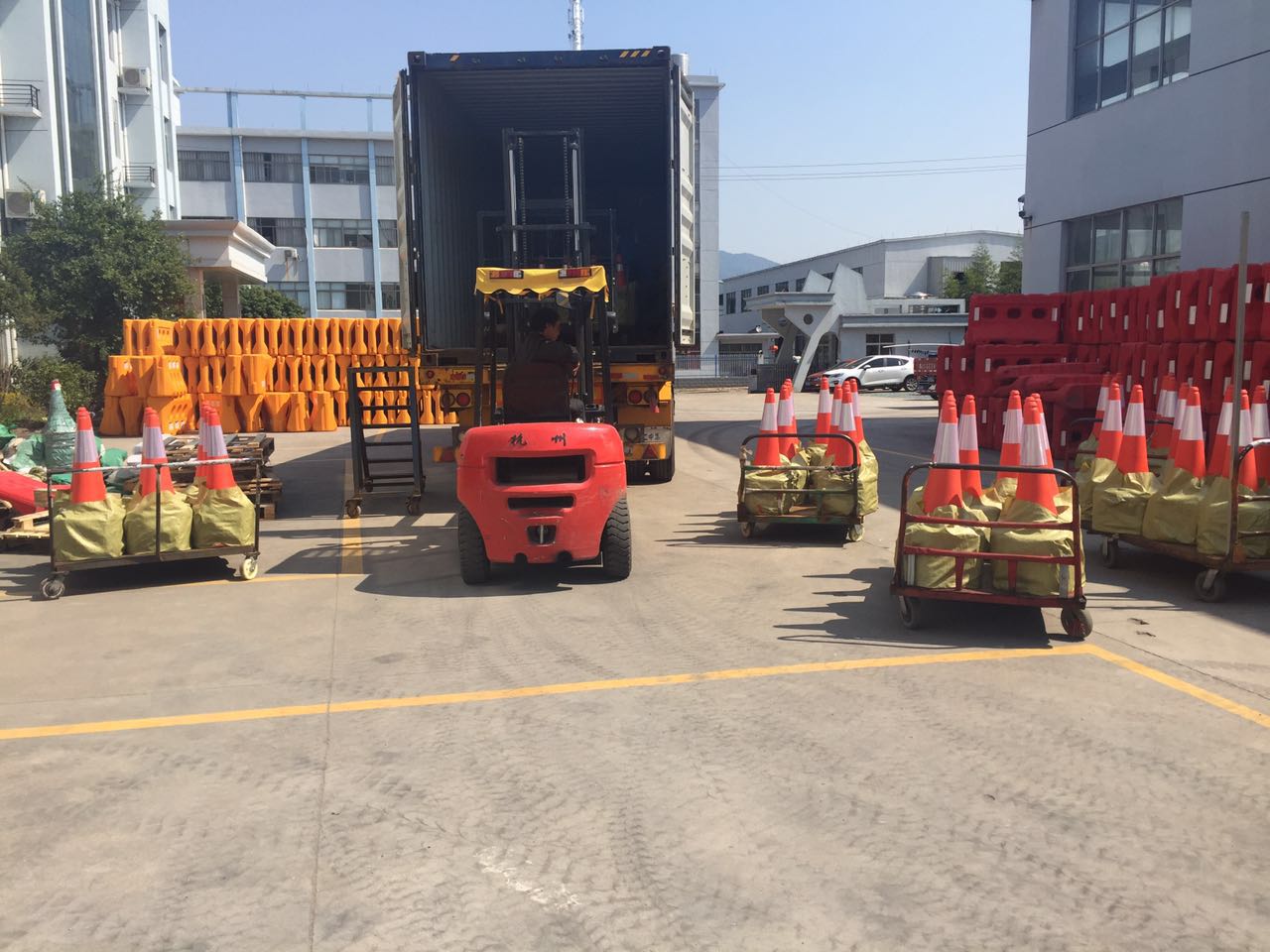
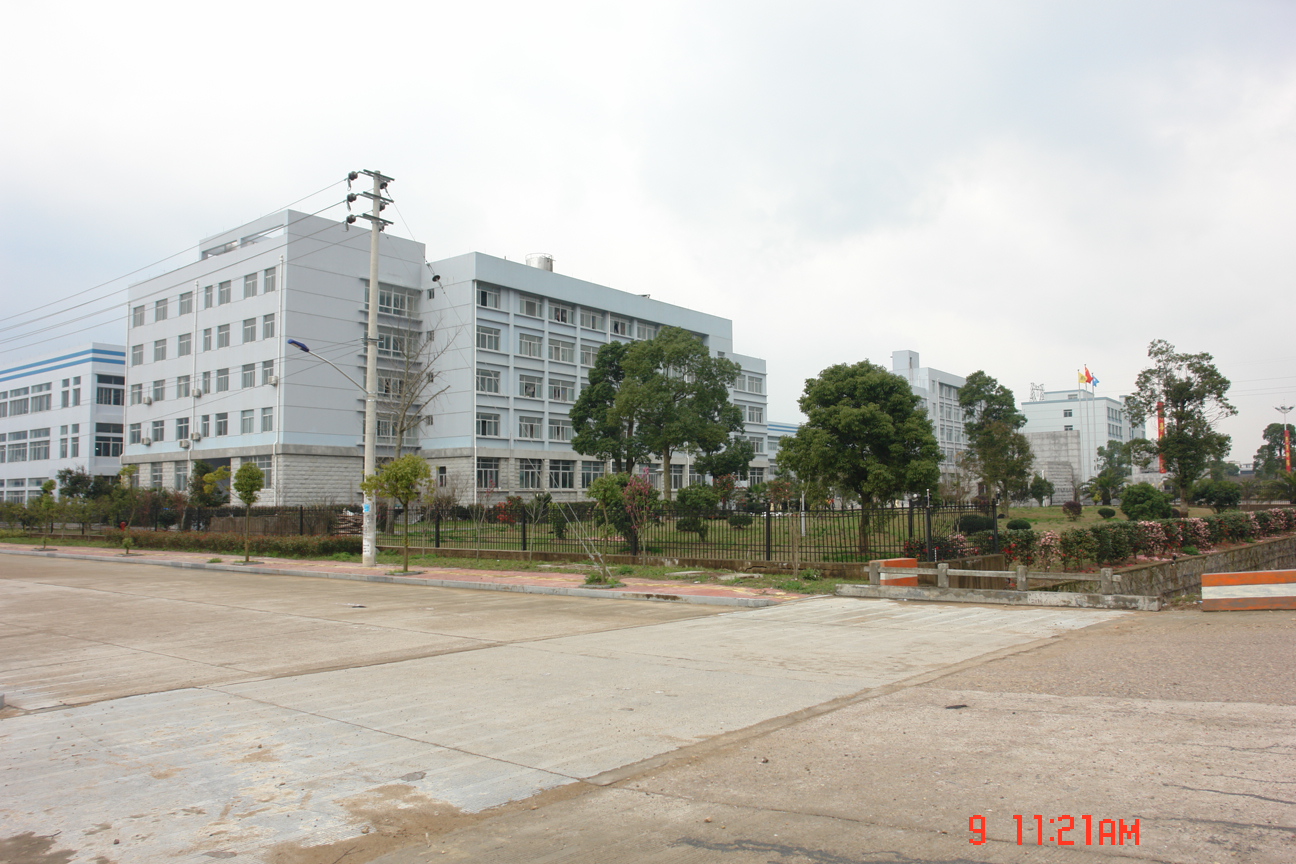
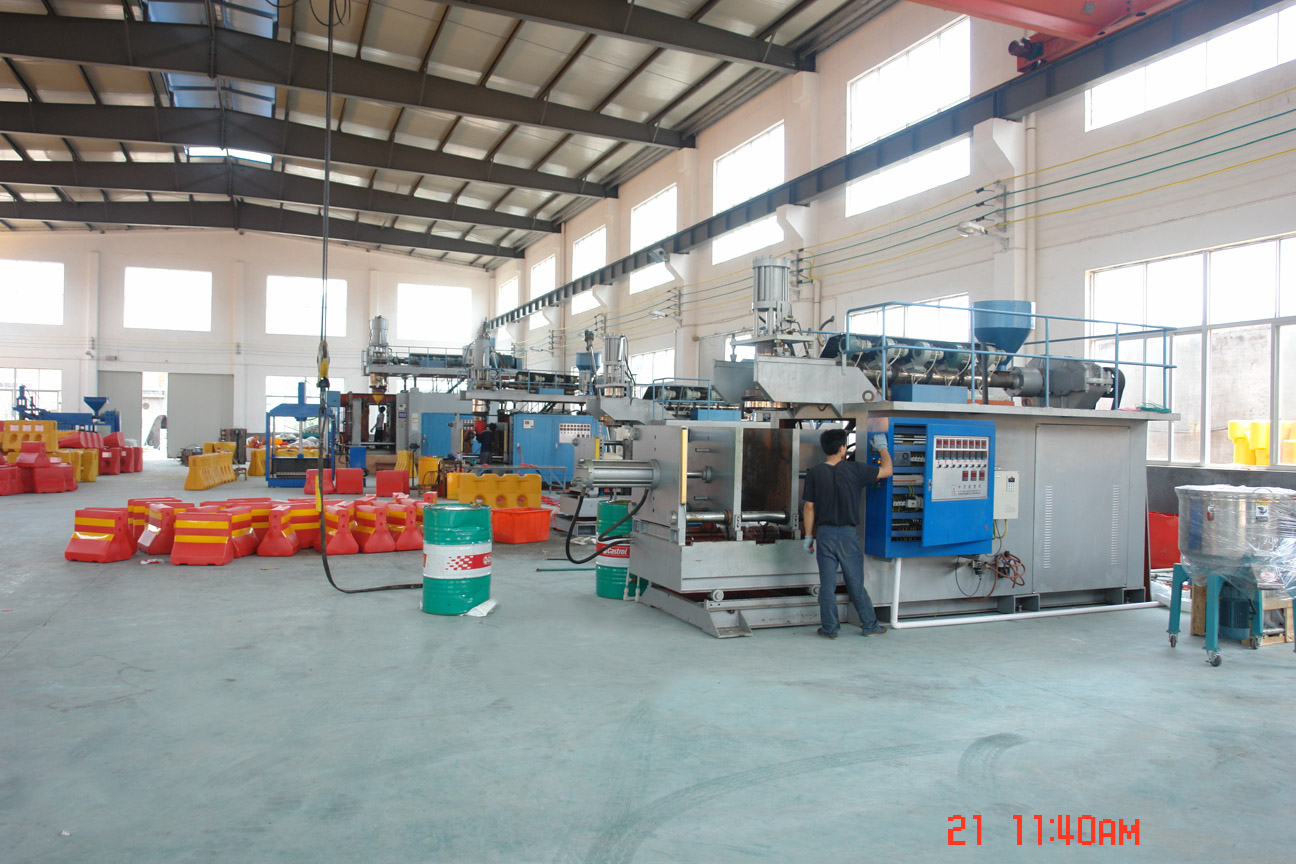
Lead time on a convex mirror order is set by more than the mirror head. Buyers planning a rollout should confirm whether the model is a catalogue item or a configured unit, the bracket and housing combination required, any OEM/ODM customization such as private-label packaging or non-standard mounting sets, and the coating and film stages in production — which cannot be compressed without affecting the optical face. Mnsd is the brand of Tiantai Yuanda Traffic Device Co., Ltd., a road safety equipment manufacturer producing convex mirrors alongside warning posts, rising bollards, speed humps and traffic lights, with an annual output of 120,000,000 units and roughly half of production exported to Asia, Europe and the USA. To confirm lead time for a specific configuration, send your specification to info@mnsdtraffic.com or request a quotation for the YD-OC100 or YD-OC120.

Conclusion: Rank on Durability and Visibility, Then Buy
Durability and visibility are scored separately because they fail separately. Durability is decided at the factory: a polycarbonate face, an IP65 housing, UV resistance grade 8, and an anti-scratch hard coating applied to the PC surface with PE film protection through assembly and transit. Visibility is decided at the junction: how far the driver must see, and from how wide an angle. Get the durability specification right and the mirror will still be working in year five; get the range right and it will be covering the traffic that actually matters.
On that basis, the ranked picks are straightforward. The YD-OC120 at a 35–45 m visual range is the pick for long approach lanes, ports and ramps. The YD-OC100 at a 30–35 m visual range is the balanced pick for warehouse intersections, dock exits and garage ramps. The 180° / 20–25 m category baseline stays in the conversation only for short, low-speed approaches where the approach distance genuinely does not exceed it.
Next step: validate the pick on your own site
Request a sample of the YD-OC100 or YD-OC120 and test the visual range against the real junction, or download the Mnsd traffic safety product brochure for full product data before you specify.
Download the Mnsd product brochure (PDF)
Email: info@mnsdtraffic.com | Tel / WhatsApp: +86 184-5813-7305 | www.mnsdtraffic.com
Mnsd — Tiantai Yuanda Traffic Device Co., Ltd., Hongsan Industry Zone, Tiantai Town, Taizhou City, Zhejiang Province, China.