
Warning Post Selection: How to Match 450mm, 500mm & 750mm Models to Site Conditions
Warning Post Selection: How to Match 450mm, 500mm & 750mm Models to Site Conditions
Choosing a warning post should start with the site, not the catalog. The model that works on a highway ramp may be oversized for a parking aisle or too low for a construction-zone edge. For procurement teams and contractors evaluating flexible safety plastic warning posts, the practical question is simple: which height, which material, and which base fit the conditions at the installation point?
Mnsd, the traffic safety brand of Tiantai Yuanda Traffic Device Co., Ltd (www.mnsdtraffic.com), covers the core height range with three standardized warning post models: YD-WP45 (450 mm), YD-PE50 (500 mm with rubber base), and YD-WPS75 (750 mm). All three share the same visibility and weather-resistance platform—high-intensity prismatic reflective tape, UV-stabilized coating, and a working temperature range of –40°C to +70°C—but differ in height, base geometry, and default material.
This guide translates those differences into a selection framework for road, parking, and construction projects.
What Project Fit Means for a Warning Post
A warning post is a traffic control device with a specific job: to remain visible in a defined environment, absorb accidental impacts, and return to its original position. Project fit means the post's physical specifications match the demands of that environment—approach speed, vehicle type, sight distance, mounting surface, and climate.
Three variables decide most of the fit:
1. Height. Taller posts are visible from further away and work better on high-speed approaches. Shorter posts suit slow-speed areas where sightlines must be kept clear.
2. Material. High-elasticity polyurethane (PU) provides 360° flexibility and rapid rebound after a vehicle crush. Heavy-duty PE is impact resistant and offers a stiffer, more economical alternative for lower-impact positions.
3. Base design. The base transfers impact loads to the ground. A wider round rubber base spreads loads across concrete surfaces; a narrower rectangular base suits channelized bolt-down installation.
The Cost of Choosing the Wrong Traffic Delineator
A post that is correctly manufactured but incorrectly specified will still fail in the field. Common failure patterns include:
- A post that is too low for a high-speed approach fails to catch the driver's attention early enough.
- A post that is too tall in a pedestrian zone blocks sightlines for drivers and walkers.
- A PE post in a high-impact lane may not recover its shape after repeated collisions, while a PU post in the same position rebounds and continues to work.
- A base that does not suit the mounting surface loosens over time, creating a maintenance cycle instead of a permanent installation.
- Reflective tape below the project's required grade reduces nighttime visibility, which is difficult to correct after installation.
The result is re-procurement, reinstallation labor, and a safety gap in the interval between failure and replacement.
Market Demand and Standards That Shape Warning Post Selection
Two external forces are pushing buyers toward more disciplined specification.
First, demand is growing. According to the Road Marker Posts Market Size Analysis, the global road marker posts market was valued at USD 3.4 billion in 2024 and is projected to reach USD 5.4 billion by 2032. Dataintelo expects the broader traffic safety products market to expand at a CAGR of 6.6% from 2026 to 2034, driven by urban population growth and infrastructure investment. Larger projects mean more site conditions to evaluate.
Second, standards are tightening. In Europe, EN 12899-3 specifies requirements for delineator posts and retroreflectors used in traffic circulation areas. In the U.S., MUTCD standards require delineators to be retroreflective and visible from 1,000 feet when illuminated by high-beam headlights. For buyers, this means reflective tape grade, sleeve width, and material stability are not optional extras—they are core compliance variables.
Mnsd Warning Post Models: Specifications That Matter
YD-WP45 — A 450 mm PU Delineator for Controlled-Speed Areas
YD-WP45 is the shortest model in Mnsd's standard warning post range. It measures 450 mm in height with a 200×80 mm base and is made from high-elasticity polyurethane (PU). Its 360° flexibility and rapid rebound after vehicle impact make it suitable for environments where vehicles move slowly and frequently—parking aisles, loading docks, school zones, hospital entrances, and logistics centers.
At 450 mm, the post remains visible without dominating the visual field, which matters in pedestrian-heavy areas where sightlines for drivers and walkers must stay open. It also fits indoor or semi-outdoor facilities where ceiling height or forklift circulation limits the use of taller posts. Like the rest of the series, it offers tensile strength of 15.0 MPa, elongation at break of 400%, hardness of 80–85 Shore A, and a temperature resistance range of –40°C to +70°C.
YD-PE50 — A 500 mm PE Post with Rubber Base for High-Touch Areas
YD-PE50 is the model that corresponds to the warning spring post with rubber base category in Mnsd's lineup. It stands 500 mm high and uses a recycled rubber base with a diameter of 260 mm—the widest footprint of the three standard models.
The default body material is heavy-duty PE. For buyers, the practical difference is this: PE provides a stiffer, impact-resistant body, while the wide rubber base spreads anchor loads across concrete and asphalt surfaces. That combination is often specified for parking lots, warehouse floors, airport roadways, and loading docks—places where vehicles pass close to the post and the mounting surface is hard and flat. The post is installed with expansion bolt fixing using 3 or 4 holes.
YD-WPS75 — A 750 mm PU Post for High-Visibility Applications
YD-WPS75 is the tallest model in the series at 750 mm (75 cm), with a 200×80 mm base and a PU body. Height is the main selection driver for this model. A taller post enters the driver's forward visual field earlier, which makes it a candidate for highway ramps, road edges, T-junctions, and construction-zone boundaries.
With 250 mm double or triple reflective sleeves and high-intensity prismatic (HIP)/Class 1 reflective tape, the model addresses high-visibility requirements directly. When a project's working condition statement includes high visibility or a long approach distance, the 750 mm height is usually the first option evaluated.
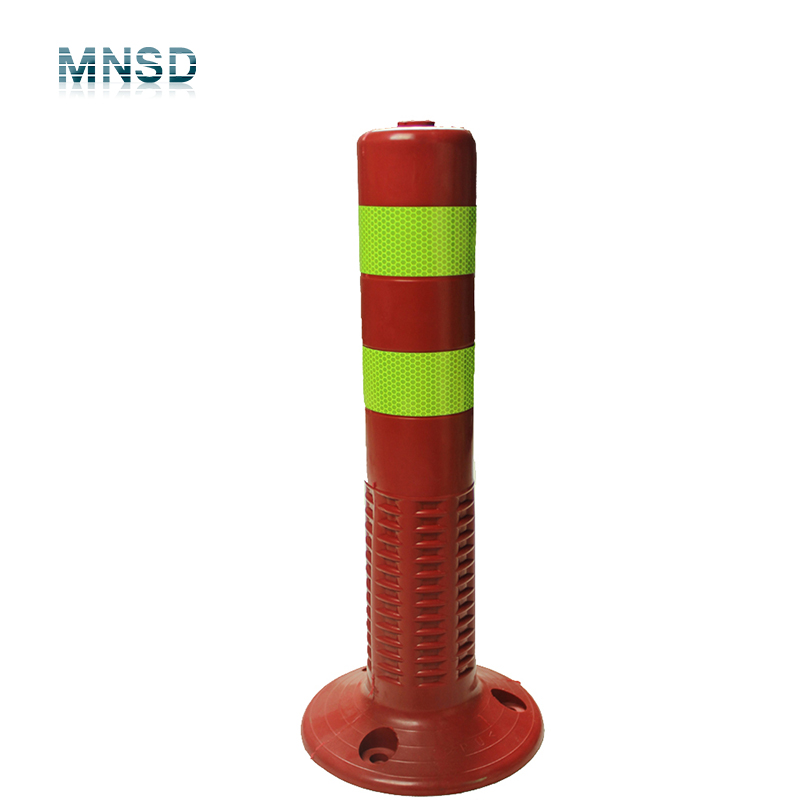
Shared Specification Platform
All three models share a common material and visibility platform:
- Temperature resistance: –40°C to +70°C
- UV protection: UV-stabilized coating; anti-oxidant and colorfast for over 3 years
- Weatherproofing: water and oil resistant
- Flexibility: 360° flexible and impact resistant
- Self-recovery: rapid rebound after vehicle crush
- Installation: expansion bolt fixing, 3 or 4 holes
- Top design: ring top for chain attachment
- Color options: traffic orange, yellow, red, or black
- Reflective tape: high-intensity prismatic (HIP)/Class 1, 250 mm wide, double or triple sleeves
- Reflective color: silver white or fluorescent yellow
- Visibility distance: 200+ meters
A 6-Step Framework for Matching Warning Posts to Site Conditions
Step 1: Define the primary function. Identify whether the post is expected to guide traffic (lane edges, channelization), protect pedestrians (sidewalk edges), or restrict access (prohibited entry). Guidance applications favor higher visibility; protection applications favor impact absorption; restriction applications may require chain connectivity via the ring top.
Step 2: Assess vehicle speed and impact frequency. Higher approach speeds and repeated impacts increase the value of elastic recovery. PU/TPU posts rebound after compression; PE posts provide a stiff body for lower-impact positions. If a post will be struck often, prioritize the material with documented rebound behavior.
Step 3: Choose height by sightline and approach distance. The 450 mm model fits slow-speed, pedestrian-adjacent, or indoor areas. The 500 mm model suits general parking and facility use with a wide base. The 750 mm model fits high-speed approaches, road edges, and construction zones where earlier visibility matters.
Step 4: Verify reflective requirements. Check the project's reflective grade specification against the product's documented reflective tape. The Mnsd series uses HIP/Class 1 tape with 250 mm double or triple sleeves, visible from 200+ meters. MUTCD, for example, requires delineators to be retroreflective and visible from 1,000 feet under high-beam headlights.
Step 5: Check mounting surface and base geometry. Bolt-down installation requires a hard surface that can accept expansion anchors. The round 260 mm rubber base of YD-PE50 spreads the load over a wider area; the rectangular 200×80 mm base of the PU models suits channelized linear installation.
Step 6: Confirm environmental conditions. Operating temperature range, UV exposure, and moisture or oil contact all affect service life. The three Mnsd models are rated from –40°C to +70°C, use UV-stabilized coating, and are water and oil resistant.
Scenario 1 — UAE Road Safety and Municipal Infrastructure
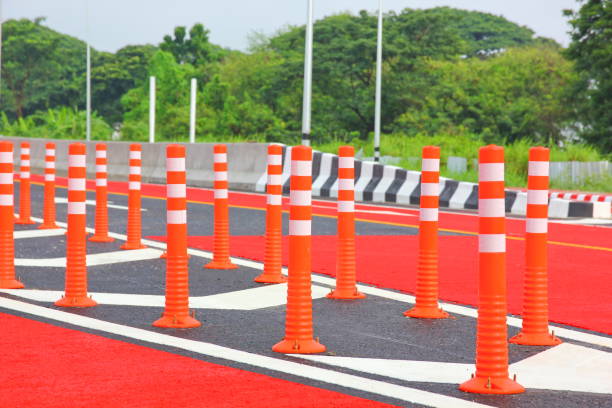
According to Mnsd's application records, this configuration is typically applied in the United Arab Emirates. Working conditions include lane separation on high-speed expressways, highway ramps, T-junctions, urban sidewalk protection, and multi-level parking lot entrances. Installation is surface-mounted and bolt-down fixed for permanent use.
The project requirements normally include 360° full-recovery impact resistance with memory springback, UV-stabilized color fastness for an extended period, high-intensity reflectivity, and an operating temperature range of –40°C to +70°C. In this environment, the 750 mm model is typically evaluated for road-edge and ramp positions, while the 450 mm and 500 mm models are considered for parking and pedestrian-segregation positions where approach speed is lower.
Scenario 2 — Road Safety Project in Vietnam
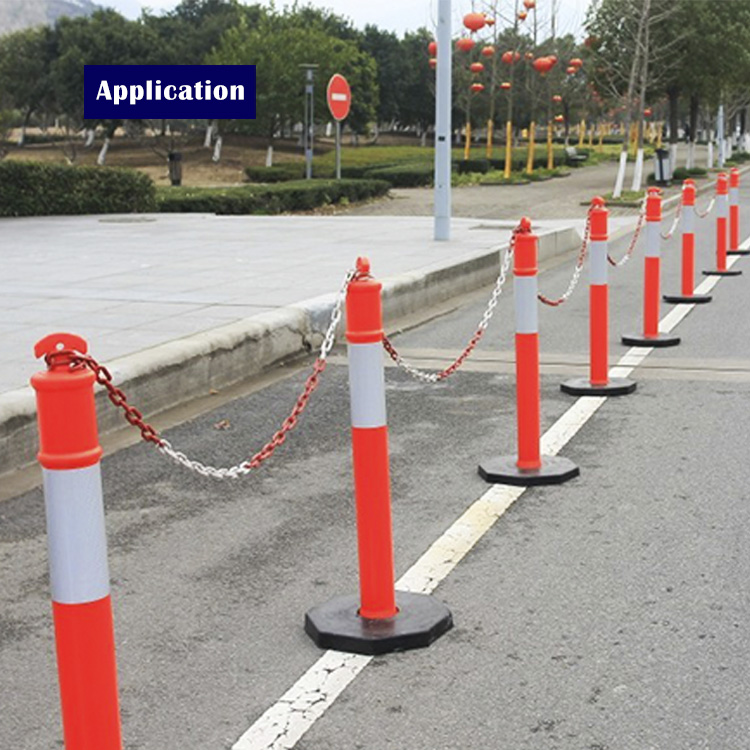
A contractor in Vietnam used Mnsd warning posts on a road safety project to warn vehicles and pedestrians and to mark road edges and dangerous areas. The posts were selected for high visibility, durability, impact resistance, and ease of installation. The project was completed and accepted by the local authority, with an expected service life of 5–8 years in this application.
Flexible impact-resistant posts were chosen because the application required permanent marking of road edges and hazardous zones, not temporary delineation. The combination of reflective visibility and 360° rebound allowed the posts to continue functioning after incidental vehicle contact.
Model Comparison at a Glance
The table below compares the three Mnsd warning post models using data from the product specification sheet.
| Model | Height | Base | Default Material | Reflective Tape | Visibility Distance | Typical Applications |
|---|---|---|---|---|---|---|
| YD-WP45 | 450 mm | 200×80 mm | PU | 250 mm double/triple sleeves; HIP/Class 1 | 200+ m | Parking aisles, loading docks, school zones, hospital entrances, indoor facilities |
| YD-PE50 | 500 mm | Φ260 mm recycled rubber | PE + rubber base | 250 mm double/triple sleeves; HIP/Class 1 | 200+ m | Parking lots, warehouse floors, airport roadways, loading docks |
| YD-WPS75 | 750 mm (75 cm) | 200×80 mm | PU | 250 mm double/triple sleeves; HIP/Class 1 | 200+ m | Highway ramps, road edges, T-junctions, construction zones, high-speed approaches |
Frequently Asked Questions
1. Do Mnsd warning posts meet MUTCD and EN 12899-3 requirements?
Mnsd warning posts use high-intensity prismatic (HIP)/Class 1 reflective tape in double or triple sleeves of 250 mm width, with a stated visibility distance of 200+ meters. MUTCD requires delineators to be retroreflective and visible from 1,000 feet under high-beam headlights. EN 12899-3 specifies performance requirements for delineator posts and retroreflectors used in traffic circulation areas. Because each project specifies its own test method and acceptance level, buyers should match the documented product data against the project specification before ordering.
2. Can Mnsd customize warning post height, color, and reflective tape?
Yes. Mnsd supports OEM/ODM customization covering height, color (orange/yellow/green), and reflective tape brand (3M/Grade A). Production uses high-speed injection molding with a monthly capacity of 50,000 pieces. Each batch undergoes a compression and rebound test of more than 1,000 cycles, and Mnsd provides a UV-resistance guarantee with no fading for 3 years.
3. What is the minimum order quantity for Mnsd warning posts?
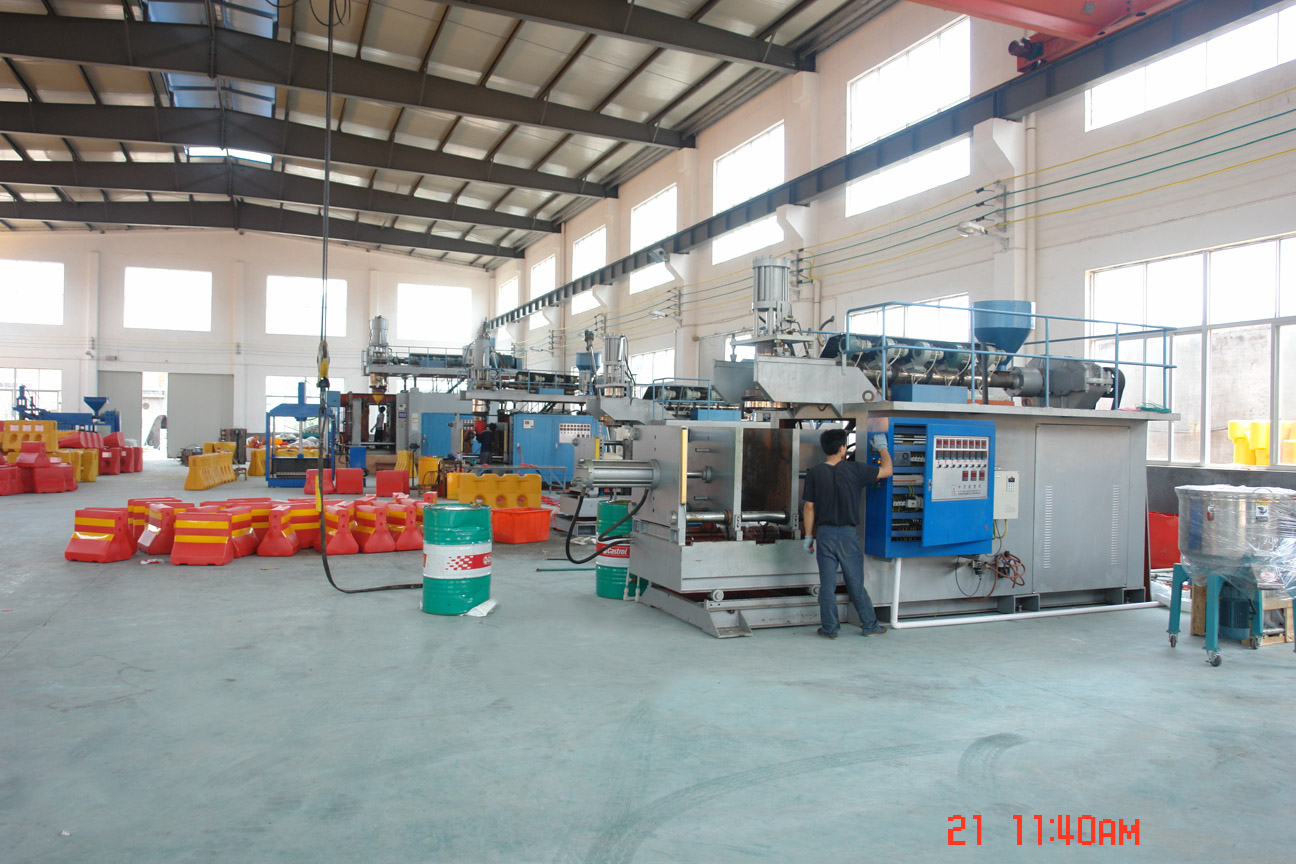
The minimum order quantity for Mnsd warning posts is 200 pieces. Mnsd is the traffic safety brand of Tiantai Yuanda Traffic Device Co., Ltd, a factory-direct manufacturer based in Tiantai, Zhejiang, China, so buyers can request pricing directly from the factory.
4. Can I request a sample before placing a bulk order?
For project-based evaluation, contact the Mnsd sales team with your site conditions and target model. The team can confirm specifications, availability, and quotation before production. Contact by email at info@mnsdtraffic.com or by WhatsApp at +86 184-5813-7305.
5. What is the lead time for bulk warning post orders?
The standard lead time for bulk warning post orders is 10–15 days. Monthly production capacity is 50,000 pieces and MOQ is 200 pieces, which supports consistent scheduling for distributors and contractors. To start a project inquiry, email info@mnsdtraffic.com or send a message via WhatsApp.
Final Takeaway
Warning post procurement is specification matching. The useful question is which model is correct for the speed, sightline, impact frequency, mounting surface, and climate at the site—not which one looks most impressive in a catalog.
Mnsd's standard range—YD-WP45, YD-PE50, and YD-WPS75—covers the 450 mm, 500 mm, and 750 mm height segments with a shared platform of UV-stabilized materials and high-intensity reflectivity. For a project-specific recommendation, contact the Mnsd team by email at info@mnsdtraffic.com, by phone at +86 18458137305, or via WhatsApp at +86 184-5813-7305.
Buyers can also download the company brochure for a full product overview and factory capability profile.
Download Brochure