
Warning Post Standards Simplified: Matching HIP Reflective Grades to Global Traffic Rules
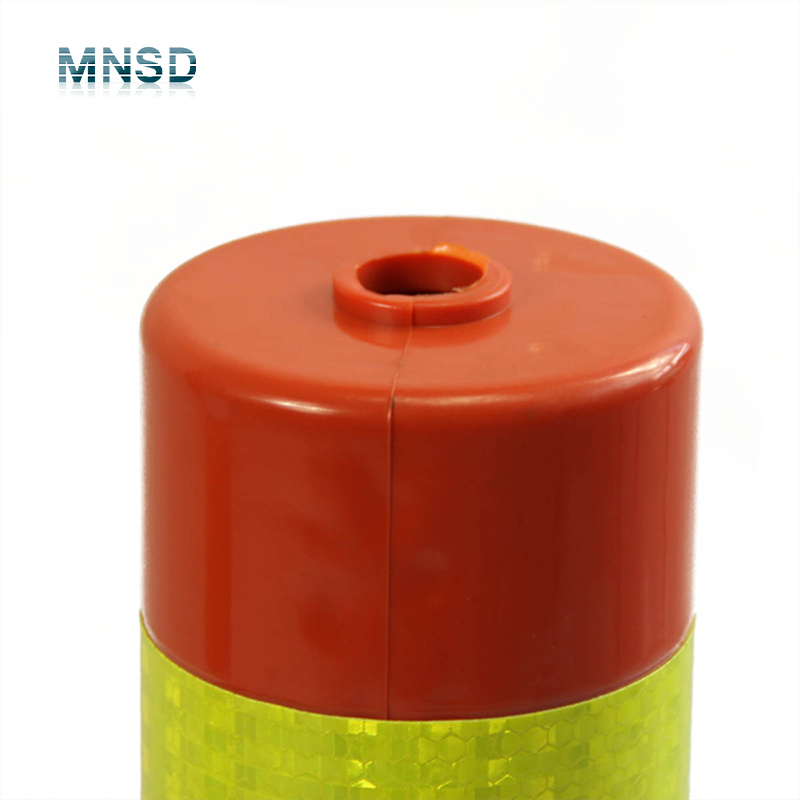
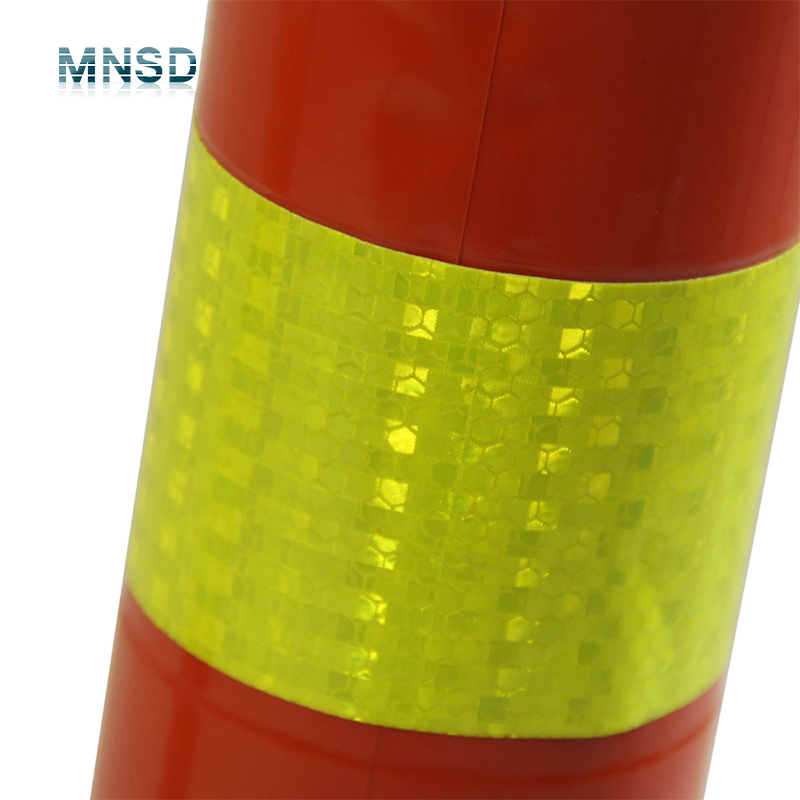
A warning post is judged on one specification line long before anyone discusses unit price: the reflective grade of the tape wrapped around it. High-Intensity Prismatic (HIP) tape graded Class 1, applied in a 250 mm width across double or triple sleeves and rated for a visibility distance of 200 metres or more, is the configuration Mnsd builds into its YD-WP45, YD-WPS75 and YD-PE50 warning posts — and it is also the single line most often quoted imprecisely, because "reflective" is not a specification.
This guide explains what HIP Class 1 reflectivity and anti-oxidant colorfastness mean in procurement terms, how UV-stabilized coatings and three-year aging resistance moved from optional extras to baseline requirements, and which checks a buyer should complete before releasing a purchase order for a road safety project.
The Compliance Gap That Appears at Inspection, Not at Quotation
The gap usually opens during shortlisting. Buyers compare warning posts on things that are easy to see — height, colour, base type, whether the unit is a flexible plastic warning post or a rigid bollard — and compress everything else into one word: reflective. The purchase order then travels through a supply chain in which "reflective" can legitimately mean different tape grades, different tape widths, and different numbers of reflective sleeves.
Three failure modes repeat in road safety procurement:
- Grade substitution. The sample carries a high-grade prismatic tape; the bulk order arrives with a lower-grade tape that photographs similarly under office lighting but returns far less light at 200 metres.
- Width reduction. A nominal 250 mm tape package is delivered as a single narrower sleeve, cutting the retroreflective area on the post without changing the drawing's headline description.
- No colorfastness claim. UV exposure fades pigment and embrittles polymer over a single summer in high-irradiance markets, and no one has contractually committed to a fading period.
None of these shows up at goods-in. They show up after installation, after the first wet season, and after a road authority walks the site. The commercial asymmetry is what makes this a standards problem rather than a price problem: a warning post is a low-value line item, but a rejected batch sits on a contractor's acceptance schedule.
What Global Traffic Rules Ask a Warning Post to Do
Underneath differing national wording, every traffic delineation rule asks the same physical thing: return enough light to an approaching driver, at a usable distance, and keep doing so across the product's service life. How that requirement is expressed varies by region and by method.
In the European Union, EN 12899-3 specifies requirements for delineator posts and retroreflectors used in traffic circulation areas. In the United States, MUTCD requires delineators to be retroreflective and visible from 1,000 feet when illuminated by high-beam headlights. ASTM D2765 provides the standard procedure for measuring gel content and swell ratio of crosslinked ethylene plastics — a laboratory method used to verify that a polymer has actually been crosslinked rather than merely coloured.
| Framework or document | Region | What it covers | Why it belongs in a purchase spec |
|---|---|---|---|
| EN 12899-3 | European Union | Requirements for delineator posts and retroreflectors used in traffic circulation areas | Reference document when the destination market is EU-facing |
| MUTCD | United States | Delineators must be retroreflective and visible from 1,000 feet under high-beam headlights | Sets the visibility expectation applied on US roads |
| ASTM D2765 | United States | Gel content and swell ratio of crosslinked ethylene plastics | Laboratory method for confirming crosslinked polymer content |
| Business License No. 91331023669153260K | All countries (China Policy) | Manufacturer licence covering the warning post business, including the YD-PE50 | Supplier-side identity and operating legitimacy check |
The commercial context is expanding rather than contracting. The global road marker posts market was valued at USD 3.4 billion in 2024 and is projected to reach USD 5.4 billion by 2032, according to Road Marker Posts Market Size Analysis. Dataintelo estimates the broader traffic safety products market will expand at a CAGR of 6.6% from 2026 to 2034, driven by urban population growth and infrastructure investment. On the supply side, Global Market Insights names 3M, Honeywell and SWARCO among the leading global traffic equipment manufacturers and attributes approximately 39.2% of the market to the leading players — a concentration that shapes how dual-branding, tape sourcing and specification language are negotiated.
HIP Class 1 Reflectivity: The Baseline Configuration, Not an Upgrade
High-Intensity Prismatic tape uses a micro-prismatic surface structure to return incoming light toward its source rather than scattering it. In the grade bands used across the traffic safety industry, Class 1 is the highest band, which is why Class 1 appears in specification documents as a floor requirement rather than a premium option.
Across the YD-WP45, YD-WPS75 and YD-PE50 warning posts, Mnsd specifies:
| Reflectivity parameter | Specification |
|---|---|
| Reflective grade | High-Intensity Prismatic (HIP) / Class 1 |
| Reflective tape width | 250 mm, supplied as double or triple sleeves |
| Reflective colour | Silver white / fluorescent yellow |
| Visibility distance | 200+ metres |
Two clarifications prevent misreading. First, 250 mm is a tape package width, not a single band — the retroreflective area can be delivered as two or three separate sleeves positioned along the post, which affects how the post reads at different approach angles. Second, visibility distance is a stated performance figure measured under defined conditions; MUTCD's 1,000-foot expectation applies to delineators on US roads under high-beam headlights and is roughly 305 metres. Buyers specifying for a US project should confirm whether the project requires the manufacturer's stated 200+ metre figure or the MUTCD visibility expectation, and should not assume the two are interchangeable.
Anti-Oxidant Colorfastness and UV-Stabilized Coatings: The Three-Year Baseline
Reflectivity is the specification buyers negotiate; colorfastness is the specification that decides whether the first one still exists in year three. UV radiation breaks polymer chains and degrades pigments, so a warning post's real service life is set by its UV protection system — not by the thickness of its body.
Mnsd's stated baseline across the warning post range includes a UV-stabilized coating, an anti-oxidant and colorfast formulation rated at over three years, a temperature resistance range of −40°C to +70°C, and water and oil resistance. Those are the four lines a buyer should carry into the purchase order, because together they convert an outdoor plastic component into a specified asset with a defined fading horizon.
The mechanical side is specified in the same document set:
- Tensile strength: 15.0 MPa
- Elongation at break: 400%
- Hardness: 80–85 Shore A
- Flexibility: 360° flexible and impact resistant
- Self-recovery: rapid rebound after vehicle crush
These numbers exist for a procurement reason. A flexible warning post is designed to be driven over and recover, which means the material must stretch far enough not to fracture and return far enough to remain vertical. Mnsd's quality control includes a compression and rebound test performed more than 1,000 times, and the after-sales position on the post range is a UV-resistance guarantee of no fading for three years. That guarantee is only meaningful if the colorfastness and UV-coating lines are written into the specification at the ordering stage.

Step-by-Step: Seven Checks Before Approving a Warning Post Specification
The sequence below follows the order in which a specification normally fails — from the tape outward. It can be run on a quotation, a sample or a pre-shipment batch, and it applies whether the destination market is EU-facing, US-facing or regulated by a national road authority.
- Match the tape grade to the destination standard. Confirm the specification names High-Intensity Prismatic Class 1, then check which framework governs the project: EN 12899-3 for EU traffic circulation areas, MUTCD visibility expectations for US roads, or a national authority equivalent.
- Pin down tape width and sleeve count in millimetres. "Reflective tape" is not enough. Write 250 mm, and state whether the package is delivered as double or triple sleeves.
- Require the colourfastness claim in writing, with a duration. Ask for anti-oxidant and colorfast wording plus the number of years. Mnsd states over three years, supported by a UV-resistance guarantee of no fading for three years.
- Check the temperature range against site climate. The range across the warning post range is −40°C to +70°C; confirm it covers the project's recorded extremes, not its average.
- Verify impact recovery data rather than "flexible" claims. Look for tensile strength, elongation at break, hardness and any compression/rebound test wording. A 360° flexibility claim should sit alongside measurable recovery behaviour.
- Confirm the installation interface before ordering bases. Fixing method is expansion bolt with three or four holes; warning posts also accept a ring top for chain attachment. If a surface-mounted or bolt-down installation is planned, verify anchor sizing — M10/M12 heavy-duty expansion anchors are used in typical lane-separation and sidewalk-protection layouts, with epoxy adhesive as an optional base reinforcement.
- Verify supplier identity and licensing. Ask for the operating licence behind the quotation. Tiantai Yuanda Traffic Device Co., Ltd holds Business License No. 91331023669153260K, issued by the Market Supervision Administration, valid from 2007-11-13 to 2107-11-13, under China Policy as the applicable standard, applicable to all countries and covering the warning post business including the YD-PE50.
Where HIP-Class Warning Posts Are Specified
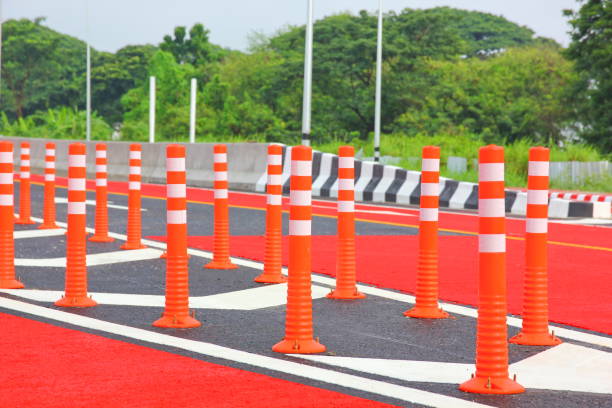
Warning posts with HIP Class 1 tape are specified in environments where a driver has to read a boundary before a defined decision point: lane separation on high-speed expressways, highway ramps, T-junctions, urban sidewalk protection, and multi-level parking lot entrances. Typical applications also include road traffic, parking lots, construction sites, industrial facilities, warehouses, logistics centres, airports, seaports, railway stations, schools, hospitals, commercial complexes, residential areas, municipal engineering, loading docks and bus terminals.
A representative project profile is a contractor-led road safety scheme in Vietnam, where warning posts were used to warn vehicles and pedestrians and to mark road edges and dangerous areas. The installation was completed and accepted by the local authority, with a stated service duration of 5–8 years, and the recorded project highlights were high visibility, durability, impact resistance and ease of installation.
Warning Post Model Comparison: YD-WP45, YD-WPS75 and YD-PE50
| Parameter | YD-WP45 | YD-WPS75 | YD-PE50 |
|---|---|---|---|
| Height | 450 mm | 750 mm | 500 mm |
| Overall size | 450 × 80 × 200 mm | 750 × 80 × 200 mm | 500 × 260 mm |
| Body material | High-elasticity PU or heavy-duty PE | High-elasticity PU or heavy-duty PE | PE |
| Base | Recycled rubber or integrated plastic base | Recycled rubber or integrated plastic base | Rubber base, diameter Φ260 mm |
| Reflective grade | HIP / Class 1 | HIP / Class 1 | HIP / Class 1 |
| Reflective tape width | 250 mm (double or triple sleeves) | 250 mm (double or triple sleeves) | 250 mm (double or triple sleeves) |
| Reflective colour | Silver white / fluorescent yellow | Silver white / fluorescent yellow | Silver white / fluorescent yellow |
| Visibility distance | 200+ m | 200+ m | 200+ m |
| Temperature resistance | −40°C to +70°C | −40°C to +70°C | −40°C to +70°C |
| UV protection | UV-stabilized coating | UV-stabilized coating | UV-stabilized coating |
| Aging resistance | Anti-oxidant & colorfast (over 3 years) | Anti-oxidant & colorfast (over 3 years) | Anti-oxidant & colorfast (over 3 years) |
| Tensile strength | 15.0 MPa | 15.0 MPa | 15.0 MPa |
| Elongation at break | 400% | 400% | 400% |
| Hardness | 80–85 Shore A | 80–85 Shore A | 80–85 Shore A |
| Flexibility | 360° flexible, impact resistant | 360° flexible, impact resistant | 360° flexible, impact resistant |
| Installation | Expansion bolt fixing (3 or 4 holes) | Expansion bolt fixing (3 or 4 holes) | Expansion bolt fixing (3 or 4 holes) |
| Top design | Ring top for chain attachment | Ring top for chain attachment | Ring top for chain attachment |
| Colour options | Traffic orange / yellow / red / black | Traffic orange / yellow / red / black | Traffic orange / yellow / red / black |
Read against a specification, the table shows where the models genuinely differ and where they do not. Reflectivity, tape width, temperature range, UV protection and aging resistance are identical across all three, so a project's compliance position on HIP Class 1 tape is the same whichever height is selected. The real variables are height (450 mm, 500 mm or 750 mm) and base construction — the YD-PE50 pairs a PE body with a Φ260 mm rubber base, while the YD-WP45 and YD-WPS75 use high-elasticity PU with a recycled rubber or integrated plastic base. Height selection therefore drives sightline and application fit, not the compliance question.
Frequently Asked Questions
Which reflective grade and licence should a buyer verify before ordering a warning post?
Confirm the specification names High-Intensity Prismatic Class 1 tape in a 250 mm width, then map it to the destination standard: EN 12899-3 covers delineator posts and retroreflectors in EU traffic circulation areas, MUTCD expects delineators to be retroreflective and visible from 1,000 feet under high-beam headlights in the US, and ASTM D2765 is the standard procedure for measuring gel content and swell ratio of crosslinked ethylene plastics. On the supplier side, Tiantai Yuanda Traffic Device Co., Ltd holds Business License No. 91331023669153260K, issued by the Market Supervision Administration, valid from 2007-11-13 to 2107-11-13, under China Policy as the applicable standard, applicable to all countries and covering the warning post business including the YD-PE50.
How is reflectivity and colour kept stable after installation?
Stability comes from a UV-stabilized coating combined with an anti-oxidant and colorfast formulation rated at over three years, operating across a temperature resistance range of −40°C to +70°C with water and oil resistance. The physical layer is equally specified: 15.0 MPa tensile strength, 400% elongation at break, 80–85 Shore A hardness, 360° flexibility with rapid rebound after vehicle crush. Production runs on high-speed injection moulding with a compression and rebound test performed more than 1,000 times, and the range carries a UV-resistance guarantee of no fading for three years.
Which specification points drive the cost of a flexible warning post?
Cost tracks four decisions rather than one. Material choice between high-elasticity PU and heavy-duty PE sets the body baseline; the reflective tape brand and grade — 3M or Grade A options are both offered — changes the tape position; height and base construction determine material volume, with the YD-PE50 at 500 mm on a Φ260 mm rubber base versus the YD-WP45 at 450 mm and YD-WPS75 at 750 mm; and order quantity interacts with the stated minimum order quantity of 200 pieces. Buyers who fix the tape grade first and the height second avoid paying twice for the same specification.
Can samples and custom tape branding be checked before a bulk order?
Yes. Customization across the warning post range covers height, colour (orange, yellow, green) and reflective tape brand, including 3M and Grade A. A sample lets a buyer verify the tape grade by eye and by measurement, confirm the 250 mm package is delivered as double or triple sleeves, and check the anti-oxidant and colorfast wording against the quotation. The minimum order quantity for bulk is 200 pieces, so sample validation happens well before volume commitment.
What is the production lead time and capacity behind a bulk order?
Bulk orders are quoted at 10–15 days, against a monthly capacity of 50,000 pieces per month produced by high-speed injection moulding. That combination is what makes a project schedule realistic when a specification changes late: the constraint is normally the tape grade and sleeve configuration, not the moulding line. To move from specification to quotation, request the warning post catalogue, current lead time confirmation and a tape sample for the exact grade your project requires.
Conclusion: Fix the Tape Grade First, Then Negotiate Everything Else
Warning post standards become simple once the order of decisions is corrected. The reflective grade and tape width are not variables to be traded against price; they are the reason the product exists. HIP Class 1 tape in a 250 mm package, a UV-stabilized coating, an anti-oxidant and colorfast life of over three years, and a stated temperature range of −40°C to +70°C together form the baseline that international road safety procurement now assumes — and the four lines an inspector is most likely to check.
Height, base construction and colour remain genuine choices, and they should be made after the compliance package is locked. Once that sequence is followed, a warning post specification stops being a description and starts being an enforceable document that survives delivery, installation and the first three summers on site.
Request a Warning Post Sample and Current Quotation
Send your project's destination market, required height and tape grade. Mnsd will confirm the HIP Class 1 specification, sleeve configuration, MOQ and lead time in writing.
Request a Sample Download the Catalogue (PDF)Tiantai Yuanda Traffic Device Co., Ltd (Mnsd) · www.mnsdtraffic.com · info@mnsdtraffic.com · +86 184-5813-7305 · hongsan industry zone, tiantai town, taizhou city, zhejiang province, china
Have Questions or Need More Details?
Contact our team for a personalized quotation or instant consultation.
Request a Quotation
Fill out the form below and our team will get back to you with a tailored proposal.
WhatsApp Direct Chat
Prefer to chat in real-time? Message us on WhatsApp for instant assistance & quick answers.
- Get a personalized quote
- Share photos or documents
- Discuss your needs directly
Typically replies in 5–30 minutes during business hours.