
Warning Post vs Convex Mirror vs Bollard: Which Traffic Safety Device Should You Buy?
Warning Post vs Convex Mirror vs Bollard: Which Traffic Safety Device Should You Buy?
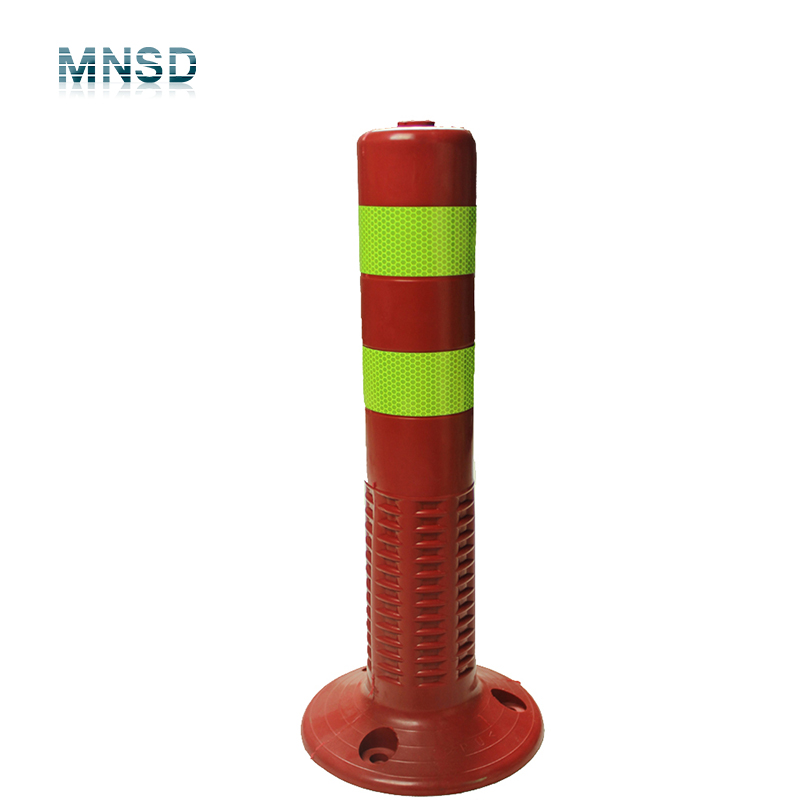
If you are shortlisting traffic safety equipment for a parking lot, warehouse, factory yard, or municipal road project, you may be comparing warning posts, convex mirrors, and bollards. This guide explains what each device does, how they differ, and how to choose based on your application, budget, and maintenance expectations.
Why Buyers Compare Warning Posts with Other Traffic Safety Devices
Traffic safety equipment is not interchangeable. Warning posts, convex mirrors, and bollards solve different problems, and choosing the wrong one can create blind spots, unnecessary cost, or inadequate physical protection. Buyers at the decision stage often need a clear comparison framework before placing an order.
Warning posts are flexible visual delineators that mark edges, lanes, parking spaces, and hazards. Convex mirrors are passive visibility devices that eliminate blind spots at corners and intersections. Bollards are rigid or semi-rigid barriers that prevent vehicle intrusion and protect assets. The right choice depends on the risk you are managing and the level of physical resistance required.
Mnsd, the brand of Tiantai Yuanda Traffic Device Co., Ltd, supplies warning posts and related traffic safety products to importers, distributors, wholesalers, contractors, and infrastructure project suppliers across Asia, Europe, the Middle East, and South America. The company operates a 40,000 m² factory in Tiantai, Zhejiang, China, with around 300 employees and an annual output of 120,000,000 units.
What Is a Warning Post?
A warning post, also called a traffic delineator post or safety warning post, is a flexible vertical marker used to guide drivers, separate traffic flows, and highlight hazards. It is not a rigid barrier. Its main job is visual warning and directional guidance, with flexible rebound to absorb light impacts.
Typical warning posts used by Mnsd range from 75 cm to 120 cm in height, use reflective materials for high visibility, and are designed to recover after impact. Common materials include PE, PU, and TPU. These posts are considered a low-cost, almost maintenance-free solution because they have no moving parts, no power consumption, and only require occasional cleaning or replacement when damaged.
Available model types in the market include:
- 75 cm plastic warning posts
- 115 cm PE warning posts
- Warning spring posts with rubber base
- Rubber base traffic delineator posts
- PE bollards warning posts
- Flexible reflective warning spring posts with bollard design
- 50 mm red reflective warning posts
Warning Post vs Convex Mirror: Key Differences
Compared to convex mirrors, warning posts have distinct advantages. They provide lane and hazard delineation directly on the ground, they are visible at low angles, and they work without requiring drivers to look at a separate mirror surface. Convex mirrors, by contrast, are passive safety devices that offer a wide viewing angle of 100° to 180° and reduce blind spots effectively.
The two products are not direct substitutes. A warning post tells a driver where the edge is. A convex mirror tells a driver what is coming around a blind corner. Many facilities need both.
| Comparison Dimension | Warning Post | Convex Mirror |
|---|---|---|
| Primary function | Visual warning and lane/edge delineation | Wide-angle visibility to eliminate blind spots |
| Physical isolation | Flexible rebound on light impact | Not a physical barrier |
| Typical height / size | 75–120 cm post height | 100°–180° viewing angle |
| Best for | Road traffic, parking garages, factories, warehouses, logistics parks, gas stations, highway ramps | Corners, intersections, indoor/outdoor blind spots |
| Cost | Ultra-low cost | Low upfront cost, lower than electronic monitoring |
| Maintenance | Almost maintenance-free; cleaning or replacement when damaged | Almost maintenance-free; occasional cleaning |
| Energy use | Zero power use | Zero power use |
Warning Post vs Bollard: Key Differences
Compared to a warning post, bollards have distinct advantages in physical protection. Bollards are designed to stop or redirect vehicles, protect pedestrians, buildings, and equipment, and provide a higher level of impact resistance. Warning posts are not designed to stop a vehicle; they are designed to warn and guide.
If your site has a recurring problem of vehicles driving into storefronts, gates, or pedestrian zones, bollards may be the appropriate choice. If the goal is to mark parking bays, guide trucks in a loading area, or reduce wrong-way driving, warning posts are more cost-effective.
Direct Choice Framework: Which Device to Use Where?
The table below maps common traffic challenges to the recommended device category. It is based on application logic rather than a single product claim.
| Scenario | Recommended Device | Reason |
|---|---|---|
| Marking parking bays and lane edges | Warning post | Ultra-low cost, flexible rebound, clear visual guidance |
| Blind corner at warehouse aisle intersection | Convex mirror | 100°–180° viewing angle, reduces blind spots effectively |
| Protecting building entrances from vehicle impact | Bollard | Physical isolation and impact resistance |
| Guiding trucks in a logistics yard | Warning post | Flexible, low maintenance, no power required |
| Separating pedestrian walkways from vehicle lanes | Warning post or delineator | Visual separation with flexible rebound; lower risk of vehicle damage |
| Preventing unauthorized vehicle access to a restricted zone | Bollard / barrier | Physical restriction required |
Material Comparison: PU, PE, and TPU Warning Posts
Material selection affects impact recovery, durability, and suitability for different climates. Mnsd uses PE, PU, and related polymer materials for warning post production, with wall thickness optimized to prevent sagging in high-temperature climates.
According to industry material guidance, Thermoplastic Polyurethane (TPU) is preferred for high-impact warning posts due to its elastic recovery and durability compared to standard Polyethylene (PE). This is a material performance consideration, not a blanket claim that one product is always superior.
| Material | Typical Strength | Consideration |
|---|---|---|
| PE (Polyethylene) | Cost-effective, widely used, good UV resistance with additives | Lower elastic recovery than TPU in repeated impacts |
| PU (Polyurethane) | Good flexibility and impact absorption | Material stability and wall thickness should be checked for hot climates |
| TPU (Thermoplastic Polyurethane) | High elastic recovery and durability | Often preferred for high-impact applications |
For hot climates, heat resistance matters. Mnsd applies heat resistance analysis during product development and optimizes wall thickness to prevent sagging, with material stability targeted up to 60°C. Buyers sourcing for Middle East or tropical projects should verify the supplier’s heat resistance approach and material formulation rather than relying only on generic specifications.
How to Choose: A 4-Step Decision Process
Use this process to shortlist the right product before requesting a quote.
Step 1: Define the primary risk
Is the risk a blind spot, a lane guidance problem, or a physical vehicle intrusion problem? Blind spots point to mirrors. Lane guidance points to warning posts. Vehicle intrusion points to bollards or barriers.
Step 2: Define the location and environment
Indoor parking structures, outdoor highway ramps, warehouse aisles, and gas stations have different visibility, impact, and climate conditions. Confirm height requirements such as 75 cm or 115 cm, reflective requirements, and base type such as rubber base or bolt-down.
Step 3: Evaluate total cost, not unit price
Warning posts are ultra-low cost compared to guardrails and barriers. Convex mirrors are low cost compared to electronic monitoring. Calculate replacement frequency, installation labor, and maintenance effort over a 2–3 year period.
Step 4: Verify supplier quality and consistency
Check factory capabilities, material handling, reflective effectiveness, and production consistency. Mnsd is a Chinese road safety equipment manufacturer with a 40,000 m² factory, around 300 employees, a 15-person R&D team, and an annual output capacity of 120,000,000 units. Buyers can request the company brochure for a detailed product overview.
Certifications and Standards to Consider
Warning posts are traffic safety products, and buyers should verify applicable standards before sourcing. The following standards are relevant to delineator posts and reflective traffic control devices:
- EN 12899-3: European standard specifying requirements for delineator posts and retroreflectors used in traffic circulation areas.
- MUTCD: US Manual on Uniform Traffic Control Devices. MUTCD standards require delineators to be retroreflective and visible from 1,000 feet when illuminated by high-beam headlights.
- ASTM D2765: US standard providing procedures for measuring the gel content and swell ratio of crosslinked ethylene plastics used in industrial safety products.
Buyer note: A certification name alone does not guarantee field performance. Ask the supplier how the standard applies to the exact model, what test evidence exists, and whether the reflective material and base design match your project’s conditions.
Industry Context and Market Direction
The global road marker posts market was valued at USD 3.4 billion in 2024 and is projected to reach USD 5.4 billion by 2032. In a broader context, the traffic safety products market is expected to expand at a CAGR of 6.6% from 2026 to 2034, driven by urban population growth and infrastructure investment. These figures come from third-party research and should be used as directional context rather than as a supplier-specific claim.
Global traffic equipment leaders such as 3M, Honeywell, and SWARCO are estimated to hold a significant portion of the broader traffic equipment market. For buyers, the practical implication is that supplier evaluation should focus on product fit, quality control, customization capability, and delivery rather than brand name alone.
Use Cases: Warning Post Selection by Industry
Parking garages and shopping malls
Use reflective warning posts to mark parking bays, aisle edges, and pedestrian walkways. Their low cost makes them practical for large installations. Convex mirrors can be added at blind corners and ramp entrances.
Factories and warehouses
Warning posts guide forklifts, trucks, and pedestrian traffic. The flexible rebound design reduces vehicle damage compared to rigid barriers. A rubber base or spring base helps the post recover after light impacts.
Gas stations and logistics parks
Use warning posts to protect pumps, delineate fuel lanes, and guide trucks. Heat resistance and material stability up to 60°C are relevant for outdoor exposure and high-temperature climates.
Schools, hospitals, and public facilities
Warning posts separate vehicles from pedestrians in drop-off zones and entrances. Convex mirrors can improve visibility at access points. Bollards should be considered where physical vehicle stopping is required.
Frequently Asked Questions
Are warning posts compliant with road traffic standards?
Compliance depends on the target market and the exact product specification. EN 12899-3 is relevant for delineator posts and retroreflectors in Europe, and MUTCD requires delineators to be retroreflective and visible from 1,000 feet under high-beam illumination in the US. Buyers should verify the exact model against the standard before ordering.
Can warning posts replace convex mirrors?
No. Warning posts provide visual delineation and light-impact flexibility, while convex mirrors provide a 100°–180° viewing angle to reduce blind spots. The two products solve different problems. A complete traffic safety plan often includes both.
What is the typical height and material for a warning post?
Common heights are 75 cm and 115 cm. Materials include PE, PU, and TPU. TPU is often preferred for high-impact applications due to its elastic recovery and durability. Buyers should also verify reflective performance and base type for their specific environment.
Can I get a sample before bulk ordering?
Mnsd supports factory-direct sample verification for approved buyers. Contact the team with your target model, quantity, and project location to confirm sample availability and lead time.
How do I evaluate lead time and factory capability?
Review the supplier’s production capacity, factory size, and delivery track record. Mnsd operates a 40,000 m² factory with around 300 employees and an annual output of 120,000,000 units. Request a quotation and confirm lead time based on your specific order volume and customization needs.
How to Buy with Confidence
Start with a clear definition of your site risk, then compare suppliers on material consistency, reflective performance, standard compliance, and factory reliability. Warning posts are an ultra-low-cost, almost maintenance-free solution for visual guidance, while convex mirrors and bollards serve different safety functions.
If you are sourcing warning posts, bollards, or related traffic safety equipment, Mnsd can provide factory-direct supply, OEM/ODM support, and a full product catalog. Download the company brochure to review the product range and manufacturing background.
Need a sample or quotation?
Contact Mnsd for product specs, pricing, and lead time.
Email: info@mnsdtraffic.com
WhatsApp: +86 184-5813-7305