Warning Posts Explained: What Buyers Should Know About Flexible Traffic Delineators
Warning Posts Explained: What Buyers Should Know About Flexible Traffic Delineators
Warning posts are short, reflective traffic control devices used in road traffic, parking lots, and construction sites. They are also described as flexible safety plastic warning posts, PU traffic warning posts, rubber base traffic delineator posts, or reflective warning bollards, depending on material and regional terminology.
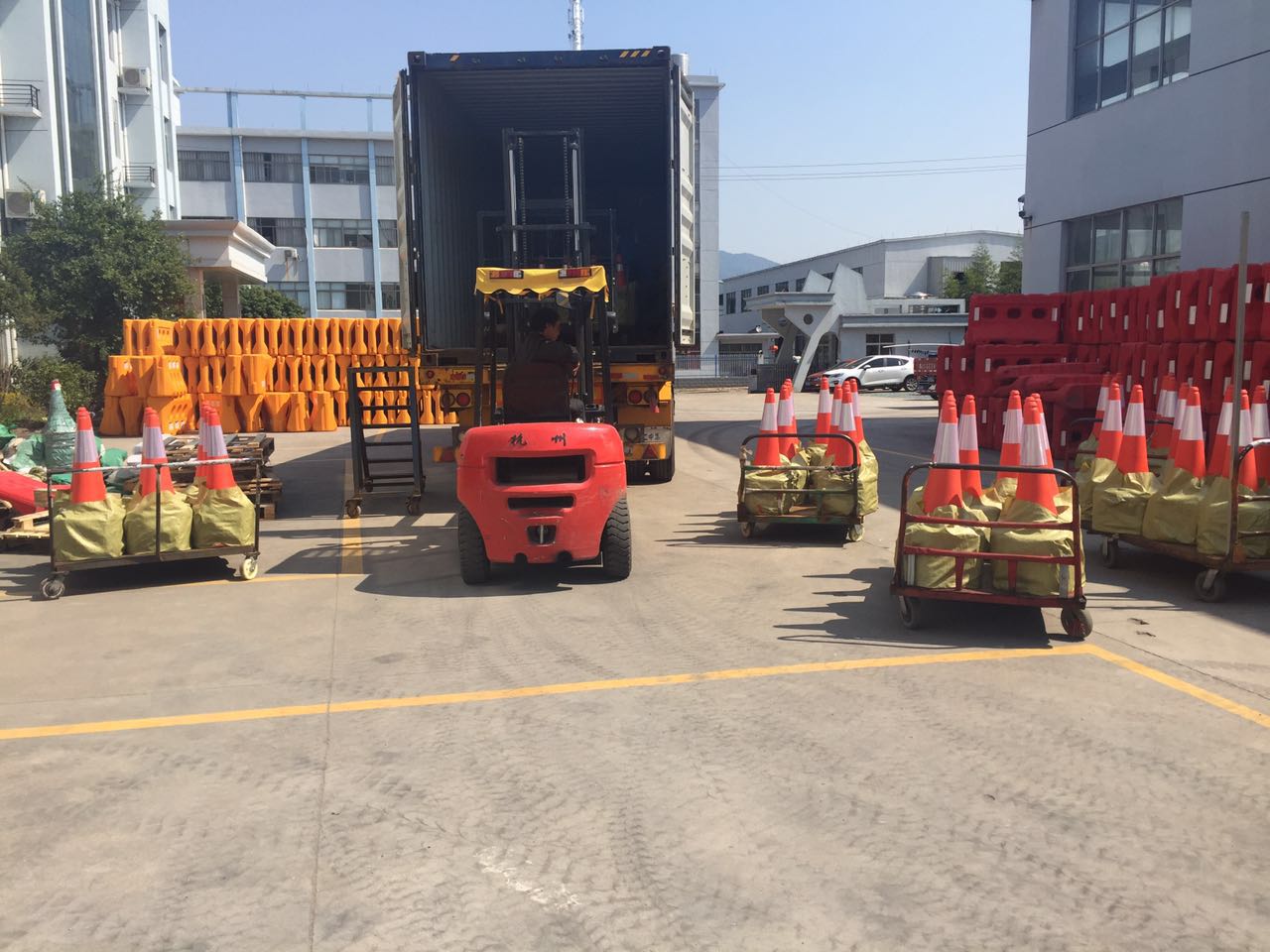
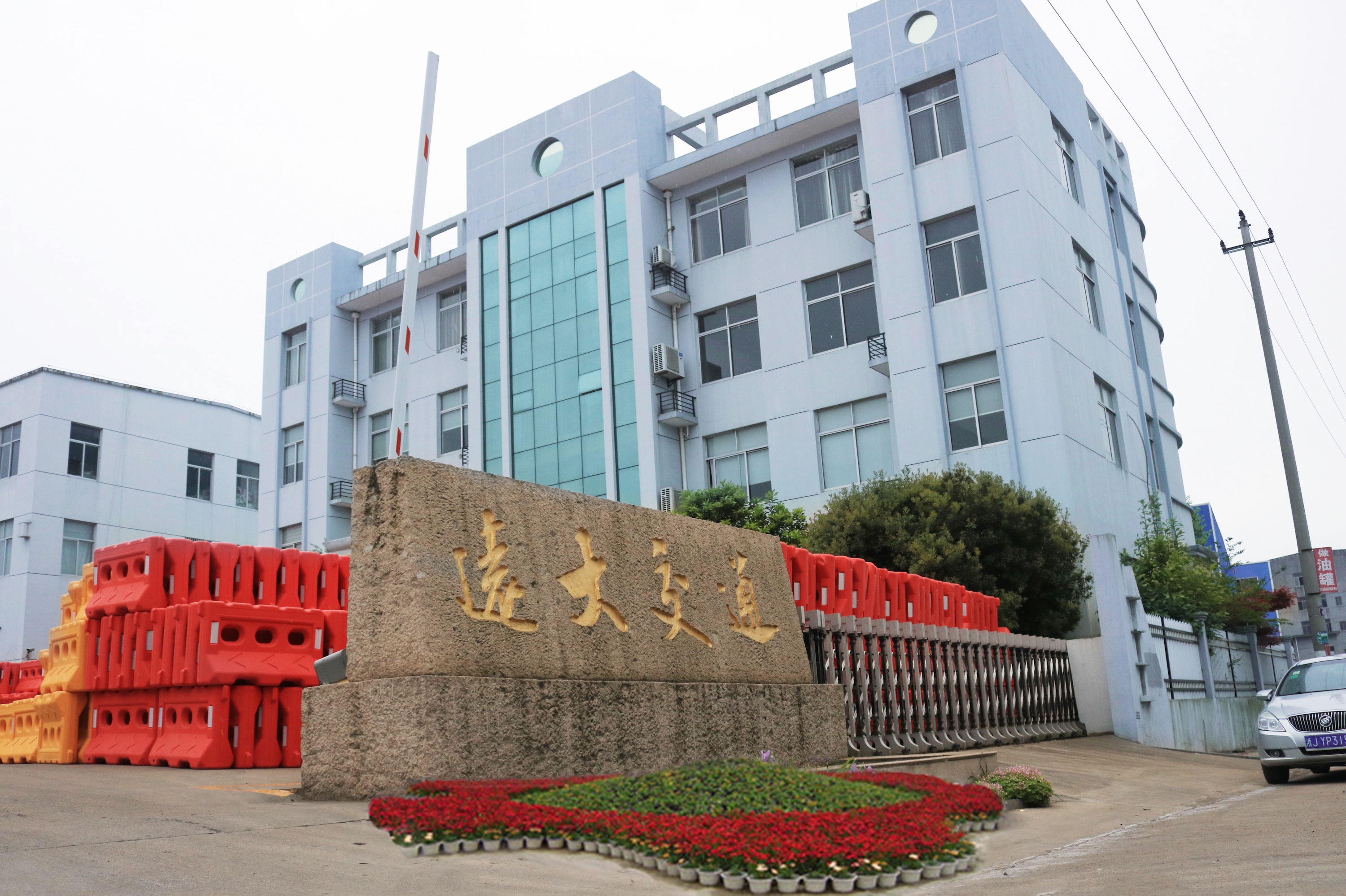
Mnsd is the brand used by Tiantai Yuanda Traffic Device Co., Ltd., a road safety equipment manufacturer established in 2007 and based in Tiantai, Zhejiang, China. This article explains what warning posts do, which specifications matter, and what buyers should verify before sourcing from a manufacturer.
Problem Definition: What Do Warning Posts Solve?
Many traffic safety issues begin with poor visual guidance. Drivers may enter the wrong lane, cross pedestrian zones, or strike curbs and barriers when the road layout is not obvious. A warning post is installed to provide clear visual guidance, define lane boundaries, prevent unauthorized vehicle entry, and mitigate impact damage during accidental collisions.
Warning posts are not limited to highways. The documented product scope includes road traffic, parking lots, construction sites, industrial facilities, warehouses, logistics centers, airports, seaports, railway stations, schools, hospitals, commercial complexes, residential areas, municipal engineering, public facilities, loading docks, and bus terminals.
Industry Background
The warning post segment operates within a broader infrastructure safety market. The global road marker posts market was valued at USD 3.4 billion in 2024 and is projected to reach USD 5.4 billion by 2032. Traffic safety products as a category are expected to expand at a CAGR of 6.6% from 2026 to 2034, driven by urban population growth and infrastructure investment.
Compliance requirements vary by region. In Europe, EN 12899-3 specifies requirements for delineator posts and retroreflectors used in traffic circulation areas. In the United States, MUTCD requires delineators to be retroreflective and visible from 1,000 feet when illuminated by high-beam headlights.
Material selection also shows a clear trend. Thermoplastic polyurethane is preferred for high-impact warning posts because of its elastic recovery and durability compared with standard polyethylene. Buyers evaluating PE and PU options should treat impact exposure as a key decision factor.
Detailed Solution: Mnsd Warning Post Family
Mnsd documents three warning post models: YD-WP45, YD-WPS75, and YD-PE50. Each uses High-Elasticity Polyurethane (PU) or Heavy-duty PE, with a recycled rubber or integrated plastic base.
YD-WP45: 450 mm PU Warning Post
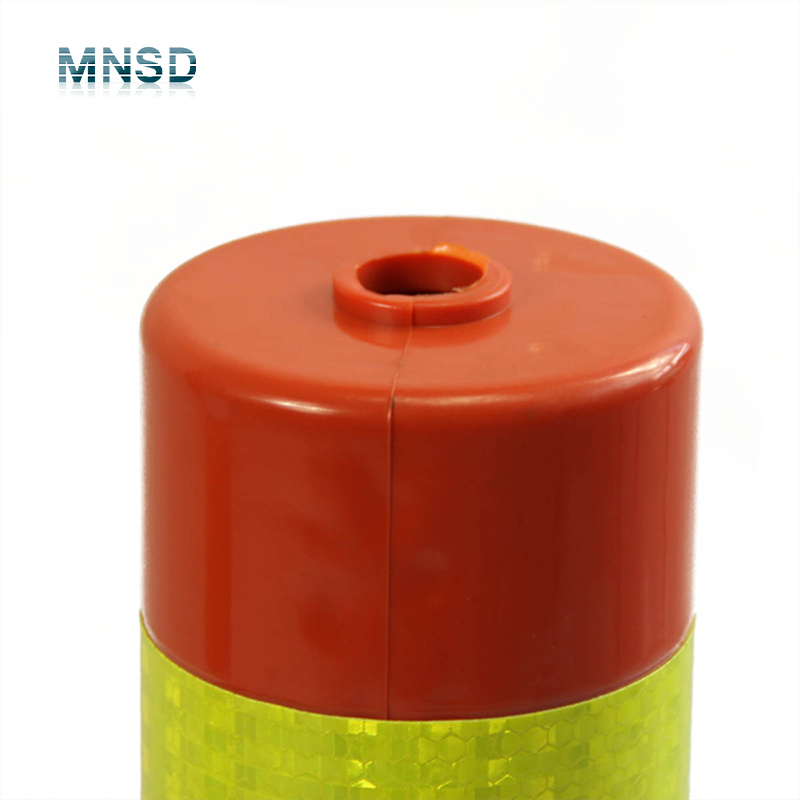
YD-WP45 is made of High-Elasticity Polyurethane (PU) and has an overall height of 450 mm with a base size of 200×80 mm. This model is documented as a Flexible Safety Plastic type warning post.
YD-WPS75: 750 mm Flexible Safety Plastic Warning Post
YD-WPS75 is classified as a Flexible Safety Plastic warning post. It is made of High-Elasticity Polyurethane (PU) and has overall dimensions of 750×80×200 mm.
YD-PE50: 500 mm PE + Rubber Base Warning Post
YD-PE50 has a height of 500 mm and a rubber base diameter of Φ260 mm. Its material configuration is PE with a rubber base.
Shared Performance Specifications
- Structural configuration: 360° flexible and impact resistant.
- Tensile strength: 15.0 MPa; elongation at break: 400%; hardness: 80-85 Shore A.
- Temperature resistance: -40°C to +70°C.
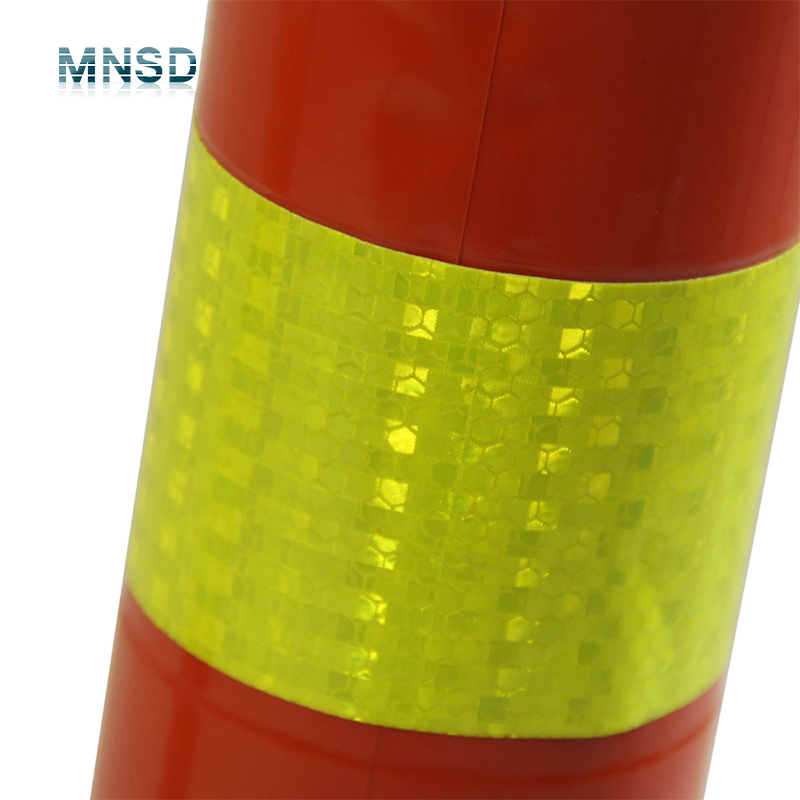
- Reflective grade: High-Intensity Prismatic (HIP) / Class 1; reflective tape width: 250 mm; reflective colors: silver white or fluorescent yellow.
- Visibility distance: over 200 meters.
- UV protection: UV-stabilized coating; anti-oxidant and colorfast for over 3 years.
- Weatherproofing: water and oil resistant.
- Installation: expansion bolt fixing with 3 or 4 holes; top ring for chain attachment.
For projects requiring measurable impact recovery, these models are designed to rebound after vehicle crush rather than remain permanently deformed.
Step-by-Step Buyer Breakdown
Step 1: Define the Traffic Control Function
Confirm the required role. The documented role of a warning post is to provide clear visual guidance, define lane boundaries, prevent unauthorized vehicle entry, and mitigate impact damage during accidental collisions.
Step 2: Identify Site Conditions
Documented working conditions include lane separation on high-speed expressways, highway ramps, T-junctions, urban sidewalk protection, and multi-level parking lot entrances. Consider vehicle speed, impact frequency, and exposure to sun, water, and oil.
Step 3: Select Height and Base
The documented family allows a 450 mm PU post, a 750 mm PU post, or a 500 mm PE post with a rubber base. A taller post may be easier to see in road traffic, while a rubber base can provide a wider footprint. Match the model to the project layout rather than choosing by price alone.
Step 4: Verify Reflectivity and Visibility
Check the reflective grade. Mnsd warning posts are documented with High-Intensity Prismatic (HIP) / Class 1 reflective grade and a visibility distance of over 200 meters. In the US, MUTCD requires delineators to be visible from 1,000 feet under high-beam headlights. In Europe, EN 12899-3 can be used as the reference standard.
Step 5: Confirm Installation Method and Accessories
Documented installation is surface-mounted / bolt-down fixed installation, using expansion bolt fixing with 3 or 4 holes. In some site applications, supporting equipment includes high-visibility reflective sleeves (honeycomb pattern), M10/M12 heavy-duty expansion anchors, and optional epoxy adhesive for base reinforcement.
Step 6: Verify Supplier Capability
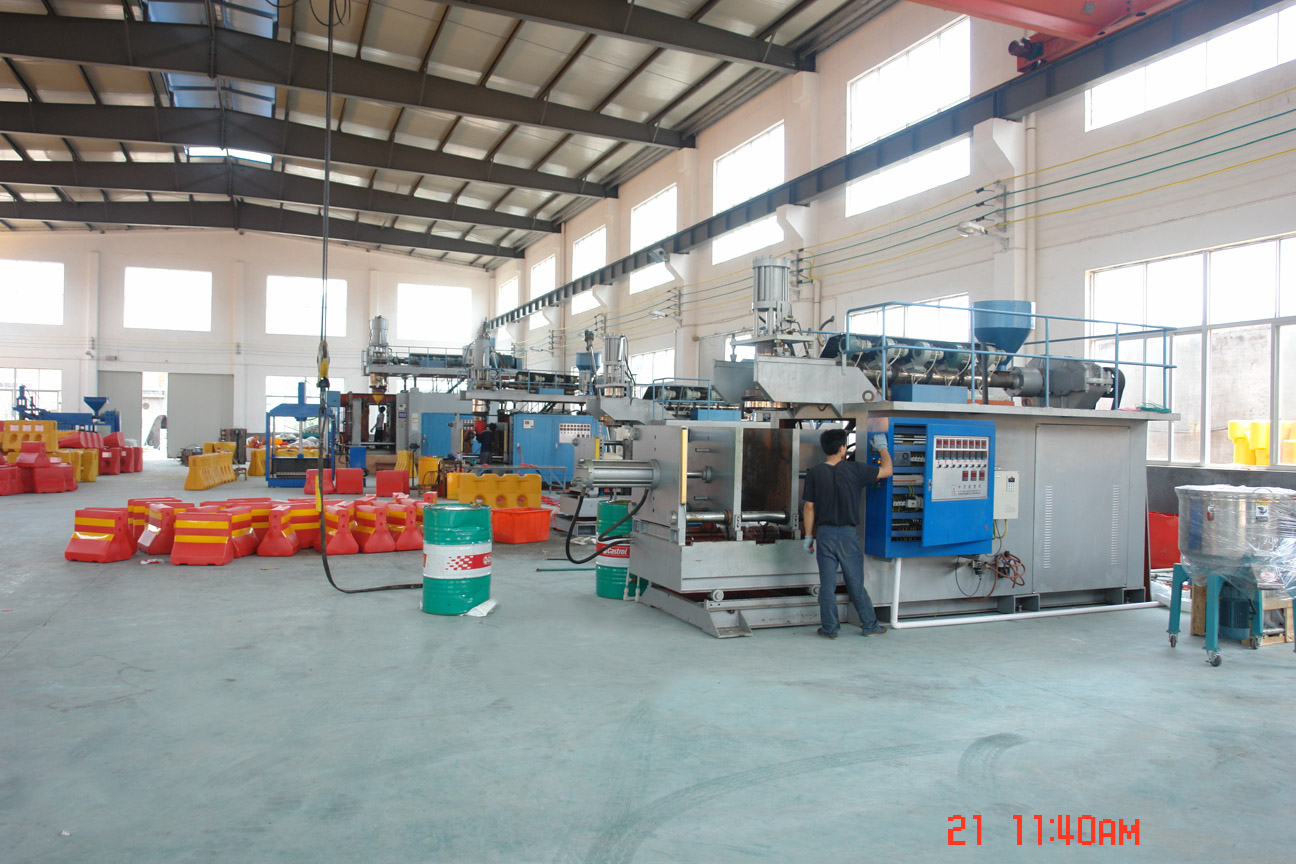
For Mnsd, the manufacturer facts include a 40,000 m² facility, about 300 employees, an R&D team of 15 engineers, annual production capacity of 120,000,000 units, exports to Asia, Europe, and the USA, and export sales accounting for 50% of total business. The company also offers OEM and ODM customization services.
Use Cases: Road Traffic and Municipal Infrastructure
A documented application scenario is in road safety, traffic management, and municipal infrastructure in the United Arab Emirates. Operating conditions include lane separation on high-speed expressways, highway ramps, T-junctions, urban sidewalk protection, and multi-level parking lot entrances. Project types include traffic channelization, median delineation, and pedestrian-vehicle segregation.
Special requirements for this scenario include 360° full-recovery impact resistance with memory-springback, UV-stabilized color fastness for over 5 years, Class 2/Grade A high-intensity reflectivity, and an operating temperature range of -40°C to +70°C.
These requirements show that warning posts are often specified for permanent, bolt-down installation in demanding outdoor environments. Buyers should request evidence that the selected model can meet the project's impact and reflectivity class.
Comparison Table: Mnsd Warning Post Models
The following table compares the three documented models using specification data only.
| Model | Height / Base | Material | Reflectivity | Impact Performance | Installation |
|---|---|---|---|---|---|
| YD-WP45 | 450 mm / 200×80 mm base | High-Elasticity PU | HIP / Class 1; 200+ m visibility | 360° flexible; 15.0 MPa tensile strength | Expansion bolt fixing, 3 or 4 holes |
| YD-WPS75 | 750 mm / 200×80 mm base | High-Elasticity PU | HIP / Class 1; 200+ m visibility | 360° flexible; 15.0 MPa tensile strength | Expansion bolt fixing, 3 or 4 holes |
| YD-PE50 | 500 mm / Φ260 mm rubber base | PE + Rubber Base | HIP / Class 1; 200+ m visibility | 360° flexible; 15.0 MPa tensile strength | Expansion bolt fixing, 3 or 4 holes |
Frequently Asked Questions
1. What compliance standards apply to warning posts?
In Europe, EN 12899-3 specifies requirements for delineator posts and retroreflectors used in traffic circulation areas. In the United States, MUTCD requires delineators to be retroreflective and visible from 1,000 feet when illuminated by high-beam headlights. Mnsd holds Business License certification covering the warning post business; buyers should confirm the specific standard required for their project.
2. What manufacturer capabilities should buyers check before sourcing warning posts?
Relevant indicators include production capacity, R&D resources, export experience, and product range. Mnsd, the brand of Tiantai Yuanda Traffic Device Co., Ltd., operates a 40,000 m² facility with about 300 staff, a 15-person R&D team, and annual production capacity of 120,000,000 units. Export business accounts for 50% of total sales, with main markets in Asia, Europe, and the USA.
3. Does Mnsd offer factory pricing for warning posts?
Mnsd does not publish standardized public prices. The company states factory pricing, efficient production, and dependable delivery as part of its offer for global customers. For a quotation, buyers can contact info@mnsdtraffic.com or +86 18458137305.
4. Can buyers request product specifications before ordering?
Yes. Contact the company for catalogs, quotations, and customized solutions. The contact channels are info@mnsdtraffic.com and +86 18458137305. Mnsd also states that it offers OEM and ODM customization services.
5. What lead time should buyers expect for warning post orders?
Mnsd does not publish a single lead time for all markets. The company's manufacturing facility covers 40,000 m² and annual capacity reaches 120,000,000 units, which indicates production scale for larger orders. Current lead time should be confirmed during quotation; use the contact details above or the brochure link below as a next step.
Conclusion
A warning post is a small device with a clear traffic safety function. It guides drivers, separates lanes, prevents unauthorized entry, and reduces collision damage. Because the category includes different materials, heights, reflective grades, and mounting methods, buyers should evaluate warning posts through documented specifications rather than assumptions.
Mnsd, the brand of Tiantai Yuanda Traffic Device Co., Ltd., supplies documented PU and PE warning post models. For catalogs, quotations, and customized solutions, visit www.mnsdtraffic.com, contact info@mnsdtraffic.com, or call +86 18458137305.