
YD-WP45 vs YD-WPS75: Which Warning Post Fits Your Site?
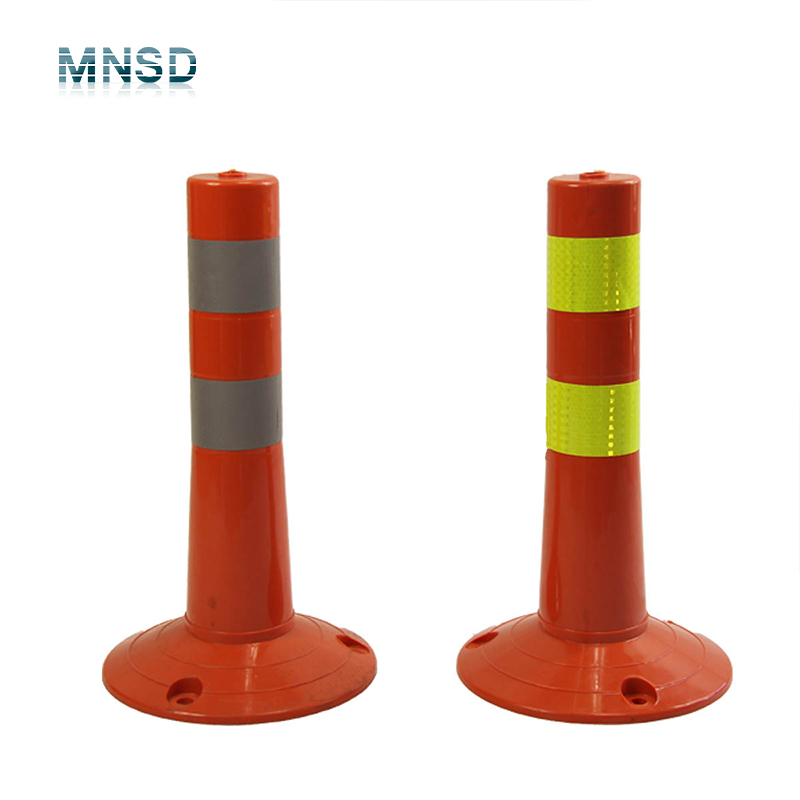
Flexible PU warning posts are chosen for two different jobs: short, repositionable base-mounted posts and taller, reflective posts fixed to the road surface.
Two polyurethane posts from the same manufacturer, sharing the same material platform, but built for different sites. Choosing between the YD-WP45 and the YD-WPS75 comes down to four variables: height, reflective target, top configuration and fixing method.
Direct answer: the YD-WP45 is a 450 mm PU warning post with a 200×80 mm base and more than 200 m of visibility, so it suits parking lots and construction sites where posts are placed, hit and repositioned. The YD-WPS75 is a 750 mm post measuring 750×80×200 mm, built with HIP/Class 1 reflective sheeting, a ring top for chain attachment and expansion-bolt fixing, so it suits road traffic and multi-post chain configurations. Both share a -40°C to +70°C service range, a 15.0 MPa tensile strength and 360° flexibility. The YD-WPS75 adds self-recovery, rebounding rapidly after a vehicle crushes it.
Both models are made by Mnsd, the traffic safety brand of Tiantai Yuanda Traffic Device Co., Ltd, a road safety equipment manufacturer established in 2007 and based in Tiantai, Zhejiang, China, producing warning posts, convex mirrors, speed humps, rising bollards and traffic lights. Because the two posts sit in the same catalogue and use the same PU construction, buyers routinely shortlist both and then have to commit to one. This article works through that decision in evaluation order, then through the order execution steps that follow it.
The selection problem: same material, different geometry, different job
The failure is rarely caused by a bad product. It is caused by choosing on the wrong variable — height alone, or unit cost alone — and discovering the mismatch at installation.
- Under-specification. A 450 mm base-mounted post is specified for a public road approach where the reflective target must be picked up from distance and posts must be linked together. The YD-WP45 model brief describes a 200×80 mm base, not a ring top, so chain layouts cannot be built from it.
- Over-specification. A 750 mm expansion-bolt post is bolted into a parking deck where the layout changes weekly. The fixing outlives the layout, and removal becomes the maintenance task.
- Fixing decided last. Expansion-bolt fixing requires a drillable, structurally suitable surface and a decision on where the post stays. A base-mounted post can be lifted and moved. That decision is a site decision, not a product decision, and it belongs in the evaluation stage.
The working sequence is therefore: define the impact zone and vehicle speed → define the sightline and reflective requirement → define the top configuration (single post or chained line) → define the fixing surface → only then confirm colour, tape grade, quantity and lead time.
Industry background: what flexible warning posts are expected to do
Flexible delineator posts exist to warn drivers of a change in the alignment and tracking of the roadway, and to keep doing it after being struck. Pexco, a US supplier of roadside delineation products, describes the category as impact-resistant, flexible plastic posts that warn drivers of alignment changes. Polyurethane is used for the subset of posts that must recover shape: PU warning posts are designed to return to their original state after being impacted thousands of times, according to a supplier technical comparison of TPU and PE delineators.
Two caveats belong in any procurement file. First, material rebound statements of that kind are supplier-reported behaviour, not an accredited laboratory result for a named model. Second, standards language is often quoted loosely. US distributor catalogues list delineator products against MUTCD, MASH and NCHRP 350 references and note that state and local regulations may impose additional requirements — a catalogue reference is not a product-specific approval. Buyers who need documented acceptance should request the test record for the exact model being supplied.
The category is also commercially broad. MarketsandMarkets values the global road safety market, hardware included, at USD 7.62 billion in 2026, and the posts inside that market differ widely in height, reflectivity and fixing method between suppliers. That variety is why a model-level comparison is more useful than a category-level one.
YD-WP45 vs YD-WPS75: specifications side by side
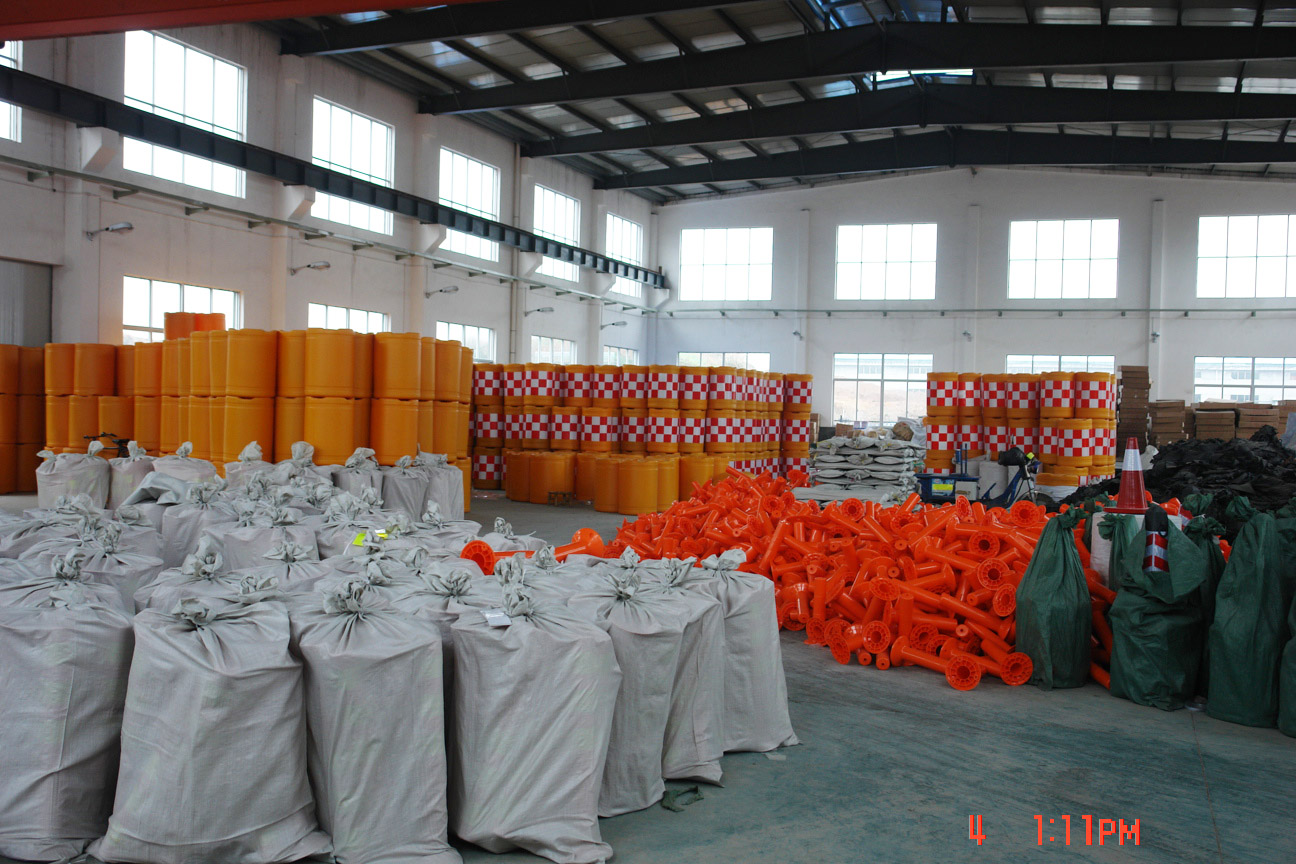
Both models are produced on Mnsd's high-speed injection molding line, with a stated monthly capacity of 50,000 pieces.
| Decision factor | Yd-wp45 | Yd-wps75 |
|---|---|---|
| Post height | 450 mm | 750 mm |
| Stated dimensions | 200×80 mm base | 750×80×200 mm |
| Reflective treatment | More than 200 m visibility | HIP / Class 1 reflective sheeting |
| Top configuration | Not described as a ring top in the model brief | Ring top for chain attachment |
| Fixing method | 200×80 mm base | Expansion bolt fixing |
| Material and base | Polyurethane (PU) warning post | PU warning post; company product listing describes a rubber base |
| Impact behaviour | 360° flexibility | 360° flexibility plus self-recovery, rebounding rapidly after vehicle crush |
| Temperature range | -40°C to +70°C | -40°C to +70°C |
| Tensile strength | 15.0 MPa | 15.0 MPa |
| Primary fit | Parking lots, construction sites | Road traffic, multi-post chain configurations |
The four differences that actually decide the purchase
1. Height and the reflective target
The YD-WP45 presents a 450 mm post with a stated visibility distance of more than 200 m. That is enough for a driver moving slowly through a car park or a site access road, where the post is read at close range and at low approach speed. The YD-WPS75 presents a 750 mm post with HIP/Class 1 reflective sheeting — a taller target with a higher-grade sheeting, which is the combination road traffic asks for. Selecting the shorter post for a fast approach, or the taller post for an aisle where it must be driven around daily, both create avoidable work later.
2. Base, fixing and surface compatibility
The YD-WP45 is defined by its 200×80 mm base. A base footprint is the practical choice where posts must be placed on a surface that cannot be drilled, or where the layout is temporary and the posts will be lifted and re-seated as the site changes. The YD-WPS75 is defined by expansion-bolt fixing, and the company product listing for the model describes a PU post with a rubber base. Bolted fixing is the right answer where the post line must stay in one place, resist being knocked out of position, and hold a chain. Confirm the substrate before ordering: expansion bolts need a surface that can take them.
3. Top configuration and multi-post chain layouts
The ring top on the YD-WPS75 is what turns several posts into one continuous delineated edge. Chain attachment is the practical difference between marking a single hazard and marking a route, a closed lane or a work-zone boundary. The YD-WP45 model brief does not describe a ring top, so where the layout requires chaining, the YD-WPS75 is the model to specify rather than a WP45 with an improvised link.
4. Impact behaviour and recovery
Both posts share a 15.0 MPa tensile strength, a 360° flex range and a -40°C to +70°C service range, which covers the temperature swing of most export markets from cold-store yards to Gulf summer asphalt. The difference is what happens after the impact: the YD-WPS75 adds self-recovery, rebounding rapidly after a vehicle crushes it. Mnsd's quality control for this product family includes 1,000+ compression and rebound cycles, and the stated after-sales position is a UV-resistance guarantee with no fading for three years — relevant because a post that fades stops being a reflective target long before it stops being a physical one.
Step-by-step: from evaluation to a confirmed order
- Classify the vehicle exposure. Slow internal traffic with frequent maneuvering (car parks, site yards) points to the 450 mm YD-WP45. Road traffic and posted approaches point to the 750 mm YD-WPS75.
- Set the sightline requirement. Decide whether more than 200 m visibility is adequate for the approach speed, or whether HIP/Class 1 reflective sheeting is required by the road owner or the tender document.
- Define single posts or a chained line. If the posts must be linked to form a continuous edge, specify the YD-WPS75 ring top. Do not design a chain around a model without a ring.
- Match the fixing to the surface. Choose the base-mounted YD-WP45 where drilling is not possible or the layout is temporary; choose expansion-bolt fixing on the YD-WPS75 where the line is permanent and must resist displacement.
- Confirm the commercial configuration. Customization covers height, colour (orange, yellow or green) and reflective tape brand (3M or Grade A), under OEM and ODM arrangements. The minimum order quantity is 200 pieces, and the stated production capacity is 50,000 pieces per month from high-speed injection molding.
- Close the order with acceptance criteria. Agree pre-shipment testing as the acceptance criterion, with 30/70 payment terms and FOB or CIF delivery. Bulk orders carry a stated lead time of 10–15 days.
Execution detail worth knowing: the Harmonized System classification for plastic delineator posts is 3926.90.9880 in the USA and 3926.90.97 for global and China trade use. Getting the code right at the quotation stage avoids a tariff surprise after the posts are packed.
Use cases: which model wins where
Parking lots and parking structures
The YD-WP45 fits here. A 450 mm post with a 200×80 mm base defines aisle edges, column protection zones and no-parking corners without blocking sightlines, and it can be lifted when the layout is re-striped. Where a taller reflective target is required at an entrance ramp, the YD-WPS75 can be bolted in as a small, deliberate exception.
Construction sites and temporary works
The YD-WP45 handles the internal side of a site: access routes, laydown boundaries, pedestrian separation, all of which move as the works progress. On the boundary where the site meets a public road and the posts must be chained along the edge, the YD-WPS75 is the correct model.
Road traffic and multi-post chain configurations
The YD-WPS75 is built for this. The 750 mm height, the HIP/Class 1 sheeting, the ring top and the expansion-bolt fixing together describe a post line that is installed once, chained, and expected to be hit and recover.
Field evidence
Mnsd warning posts have been used by contractor clients on a road safety project in Vietnam, where the posts were installed to warn vehicles and pedestrians and to mark road edges and dangerous areas. The stated service duration for that application is 5–8 years, and the project was completed and accepted by the local authority. The installer's stated reasons for the choice were visibility, durability, impact resistance and ease of installation — the same four variables this comparison is built around.
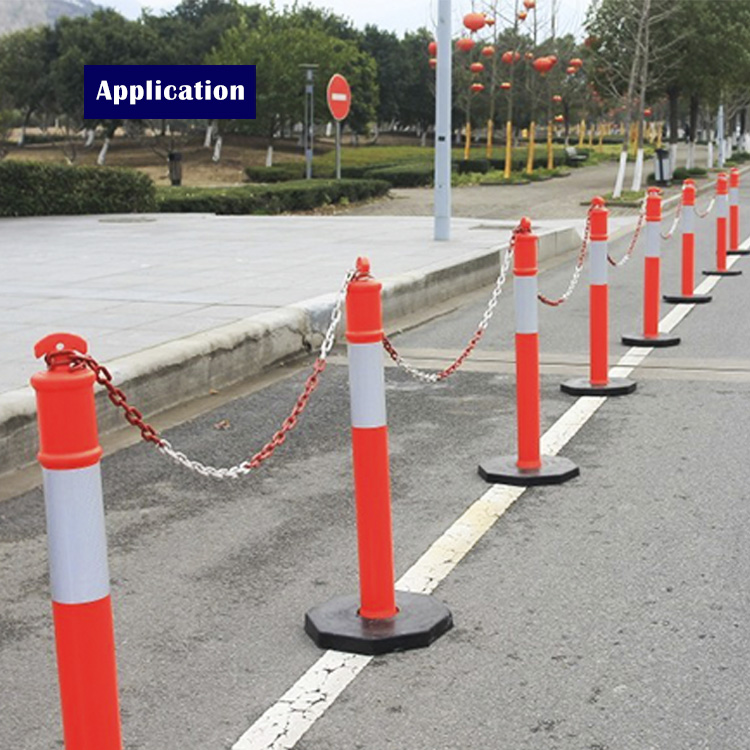
Warning posts used to mark road edges and dangerous areas on a contractor project completed and accepted by the local authority.
Site-fit decision matrix
| Site or layout | Yd-wp45 (450 mm) | Yd-wps75 (750 mm) |
|---|---|---|
| Surface car park, re-striped layout | Best fit: short post, 200×80 mm base, repositionable | Use selectively where a taller reflective target is needed |
| Indoor or multi-storey parking | Best fit: low height, base fixing | Verify substrate and overhead clearance before bolting |
| Construction site, internal routes | Fit: layout changes handled by re-seating the base | Fit where the work-zone edge must be chained |
| Public road traffic and approaches | Not the first choice: shorter target, no ring top described | Best fit: 750 mm with HIP/Class 1 sheeting |
| Multi-post chain delineation | Not applicable as specified | Best fit: ring top for chain attachment |
| High-impact, crush-prone positions | 360° flexibility | 360° flexibility plus self-recovery after vehicle crush |
Frequently asked questions
Do the YD-WP45 and YD-WPS75 come with certification documentation for public road projects?
Mnsd holds a Business License, number 91331023669153260K, issued by the Market Supervision Administration on 13 November 2007 and valid to 13 November 2107. That document confirms the legal manufacturing entity; it is not a product-level road approval. Whether a specific post is accepted on a public road is decided by the road owner and the applicable jurisdiction — US catalogues reference MUTCD, MASH and NCHRP 350 criteria and note that state and local regulations may add requirements. Buyers preparing a tender should request product-specific test documentation for the exact model rather than relying on a family name.
What can be customized on each model?
Customization covers height, colour (orange, yellow or green) and reflective tape brand (3M or Grade A), with OEM and ODM services available. Production runs on high-speed injection molding at a stated 50,000 pieces per month, and quality control includes 1,000+ compression and rebound tests. The stated after-sales position is a UV-resistance guarantee with no fading for three years.
What is the minimum order quantity and how is an order paid?
The minimum order quantity is 200 pieces. Payment terms are 30/70, delivery is quoted FOB or CIF, and pre-shipment testing is the acceptance criterion. Unit pricing is configuration-dependent — model, height, colour and tape grade — so it is quoted per order rather than published as a fixed figure.
Can a buyer test a sample before committing to a bulk order?
Yes. Sampling and pre-shipment testing are the practical way to confirm that the reflective sheeting grade, the colour match and the base or fixing configuration meet the site requirement before volume is committed. Request the specific model, not a generic post photo, so that the sample matches the quoted specification.
What is the lead time for bulk orders?
Bulk orders carry a stated lead time of 10–15 days, supported by a monthly capacity of 50,000 pieces and export coverage across Asia, the EU and the USA. To move from comparison to a quotation, send the model, quantity, colour, tape grade and destination port to info@mnsdtraffic.com or WhatsApp +86 184-5813-7305, and request the current catalogue and a sample of the selected model.
Conclusion: a rule you can apply on site
Specify by fixing and by reflective requirement, not by height alone. If the posts must sit on an undrillable surface, move with the layout and be read at close range, the 450 mm YD-WP45 with its 200×80 mm base and more than 200 m visibility is the efficient choice. If the posts must hold a chained line, be seen from distance, be bolted down and recover after being driven over, the 750 mm YD-WPS75 with HIP/Class 1 sheeting, ring top, expansion-bolt fixing and self-recovery is the correct specification. The shared 15.0 MPa tensile strength, 360° flexibility and -40°C to +70°C range mean the material platform is not the differentiator — the geometry and the fixing are.
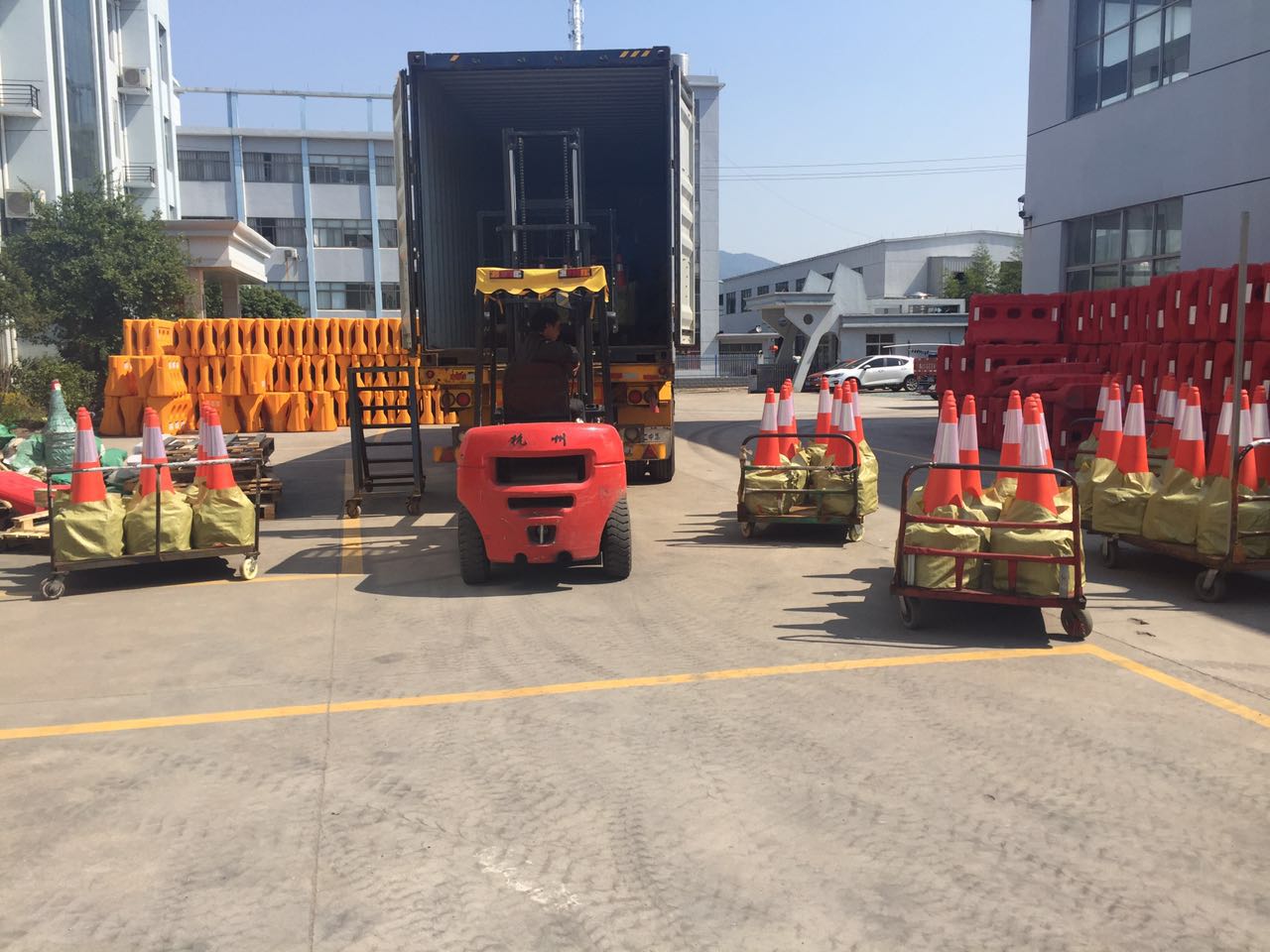
Orders are accepted on pre-shipment testing, with FOB or CIF delivery and a stated 10–15 day bulk lead time.
Next step: send your site type, required quantity and destination port, and Mnsd will confirm which of the two models fits, quote FOB or CIF, and arrange a sample of the specified configuration.
Email: info@mnsdtraffic.com | WhatsApp: +86 184-5813-7305 | Website: www.mnsdtraffic.com
Download the full product catalogue: Mnsd Traffic Safety Product Catalogue (PDF)

Mnsd business license 91331023669153260K, issued by the Market Supervision Administration.
Have Questions or Need More Details?
Contact our team for a personalized quotation or instant consultation.
Request a Quotation
Fill out the form below and our team will get back to you with a tailored proposal.
WhatsApp Direct Chat
Prefer to chat in real-time? Message us on WhatsApp for instant assistance & quick answers.
- Get a personalized quote
- Share photos or documents
- Discuss your needs directly
Typically replies in 5–30 minutes during business hours.