
Homogeneous Body Porcelain Tile: Composition, Formats & Fit
Homogeneous Body Porcelain Tile: Composition, Formats & Fit
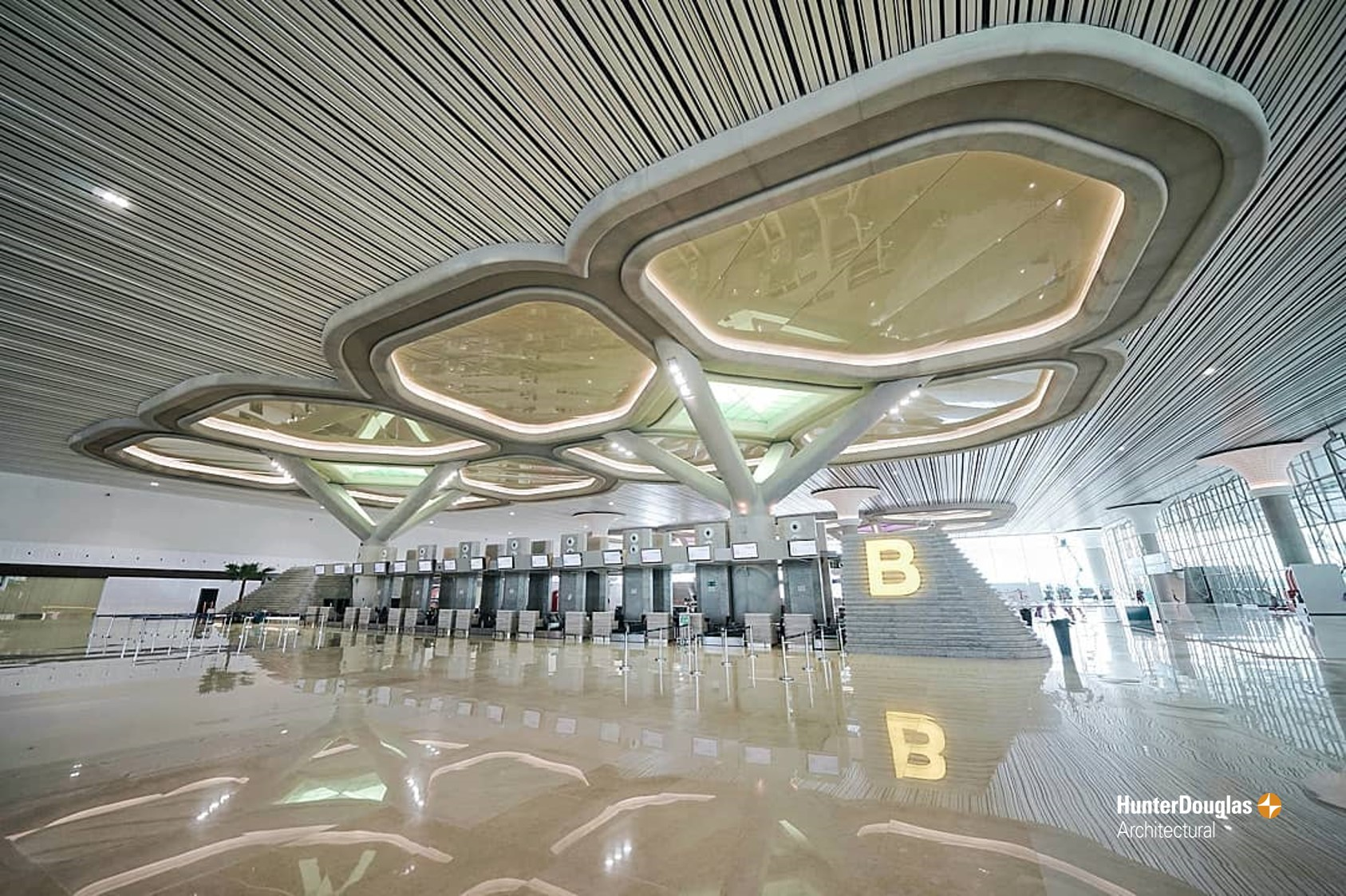
A homogeneous body porcelain tile carries its colour and pattern through the full thickness of the tile body rather than resting them on a decorative surface layer. That single structural decision changes how the tile behaves at a cut edge, how it is specified in large formats, and where it belongs on a project. Monalisa's 120-270FEG12207M is a working example: a 1200 × 2700 × 12 mm matte tile with a natural-stone face, in the Classic Stone category, made from clay and quartz sand.
Short answer. Homogeneous body porcelain tile is a dry-pressed porcelain tile whose visual character continues through the body instead of sitting on top of it. It is specified where continuous surfaces, tight joints and exposed cut edges matter: residential floors and walls, commercial interiors, hospitality spaces, municipal buildings, industrial halls and agricultural buildings. The format is not self-qualifying. Water absorption class, slip resistance class, the abrasion test that actually applies to the ordered product, and current documentation must each be confirmed for the specific SKU before a purchase order is raised.
Why the Word Porcelain Is Not Yet a Specification
Two tiles can both be correctly called porcelain and still behave nothing alike on site. One is a modest-format glazed floor tile with a printed surface. The other is a 1200 × 2700 mm panel whose body and face are effectively the same material. Body composition, format, thickness, surface treatment and slip class decide how each one performs — and quotations that compare only price per square metre quietly compare across those variables without saying so.
Three questions separate a workable specification from an expensive correction later:
- What is the body? Is the colour developed through the full thickness of the tile, or applied as a surface layer over a different base?
- What does the format demand? A 1200 × 2700 × 12 mm panel places different requirements on substrate flatness, handling equipment, cutting and joint design than a 600 × 600 mm tile.
- What does the zone require? Wet areas, public circulation, unheated buildings and food-handling floors each turn a different specification line into the controlling one.
The recurring failure is not a bad tile. It is a submittal that lists a product name without linking body class, format and zone requirements to each other. This guide closes that gap for one category, using a specific product as the reference point.
Where Homogeneous Body Porcelain Tiles Sit in the Category
The technical baseline is not a marketing claim. Under ISO 13006:2018, porcelain tile falls in Group BIa: water absorption (E) of 0.5% or below, with an average mechanical resistance above 40 N/mm². Those two thresholds are what a specification should quote when it says porcelain. Everything else — body type, surface, format, slip class — sits on top of that baseline and has to be stated separately.
Trade documentation uses a different language for the same property. UN Comtrade classifies ceramic paving, hearth and wall tiles partly by water absorption, including a band not over 0.5% by weight. An import entry and a technical submittal can therefore describe the same tile in two vocabularies, which is one reason procurement teams ask suppliers for both the test report and the HS classification rather than accepting a catalogue description.
Market context matters for how much weight to place on documentation and supply continuity. Spherical Insights projects the global porcelain tile market reaching USD 18.33 billion by 2035 from a base of USD 9.73 billion in 2024. At the same time, MECS / Acimac research reported world tile production falling to 14.95 billion m² in 2024, a 6.2% decrease on 2023. A contracting production base does not reduce the number of specification lines a buyer must check; it raises the value of being able to check them against a supplier that can document what it ships.
The reference manufacturer in this guide is Monalisa Group Co., Ltd. ("Monalisa"), founded in 1992 and headquartered in Foshan, Guangdong Province, a listed architectural ceramics group with four modern production bases and 37 production lines. Its portfolio covers ceramic tiles, ceramic slabs and porcelain art products, with porcelain tile listed among its official product categories. That footprint is context, not a substitute for product-level data — which is exactly the point this article keeps returning to.
How a Homogeneous Body Is Built: Clay, Quartz Sand and Through-Body Colour
Monalisa's 120-270FEG12207M belongs to the Classic Stone category and is made of clay and quartz sand. Those two ingredients do different jobs. Clay supplies the plastic behaviour that lets the pressed powder compact hold its shape before firing and develop strength during it. Quartz sand acts as the filler fraction that governs how the body behaves as the kiln takes it through its cycle. The result is a dense porcelain body rather than a decorated skin over an inert core.
Because the visual character is developed in the body, a cut edge, a chamfer or an external corner returns the same material family as the face. This is the practical reason through-body formats are specified where edges stay visible: thresholds, step nosings, column returns, window reveals and the cut lines around service penetrations. On a glazed surface those edges expose a different colour and read as a cut. On a homogeneous body they read as the tile.
The trade-off is honest and worth stating. A through-body tile does not offer the unlimited graphic range of a digitally printed glazed surface; its pattern language tends toward mineral and stone references, which is why this product sits in a stone-led family. Where a project needs a wood or graphic effect, that belongs in a different product line, not in a stretched justification of the body type.
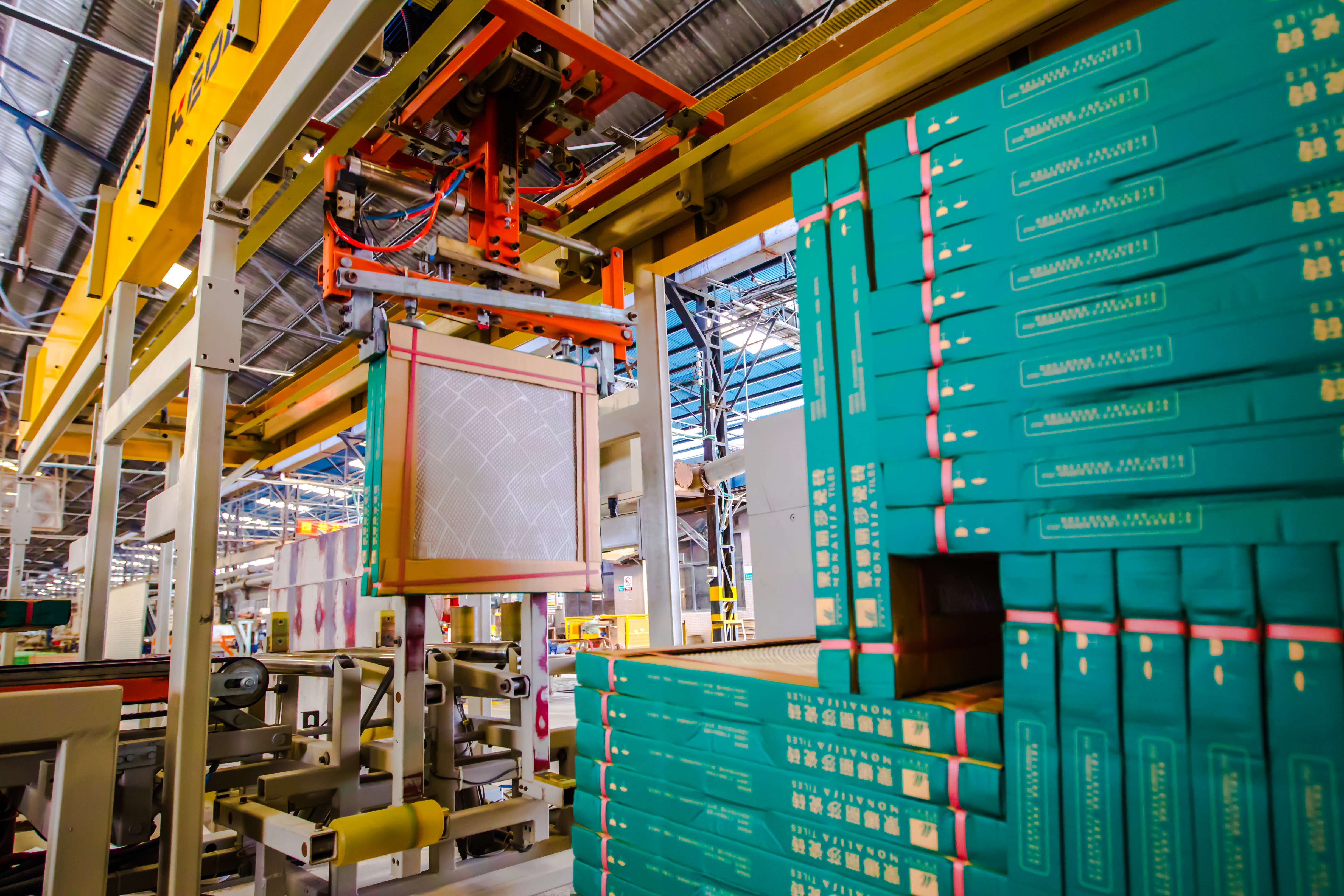
What a 1200 × 2700 × 12 mm Format Changes on Site
Format is where a good tile becomes a good or bad project decision. At 1200 × 2700 mm, the joint count on a given elevation or floor plate drops sharply, which is the visible benefit. The costs and risks move elsewhere:
- Substrate flatness becomes the controlling variable. Large panels do not follow an uneven screed; they rock, and the correction is expensive.
- Joints get narrower and matter more. Tight-joint installation reduces grout consumption and labour, but only when the substrate and the tile dimensional tolerance both support it.
- Handling and cutting need equipment. Vacuum lifters and large-format cutters are not optional on a 2.7 m panel, and the cutting plan should be fixed before the first pallet is opened.
- Breakage allowance has to be planned, not discovered. Waste from cutting and site damage is a line item, not an accident.
- Wall use needs a stated fixing method. Where panels go overhead or onto a ventilated façade build-up, the mechanical fixing method must come from the manufacturer, not from the installer's preference.
A 12 mm body gives the panel the substance that this format needs in floor and wall service. What it does not do is certify slip resistance or frost behaviour; those are separate test results that have to be requested for the ordered product.
Step-by-Step: Specifying a Homogeneous Body Tile for a Project
Step 1 — Define the zone and the duty
Write down what the surface has to survive: foot traffic, trolley traffic, water, cleaning chemicals, frost, or food residue. Every later step depends on this statement. A bathroom floor and a transit hall floor should never share one specification line.
Step 2 — Fix format, thickness and joint width before pricing
Decide the panel size, the thickness and the target joint width as a package. For large formats, joint width and substrate tolerance are technically linked, and changing one after pricing invalidates the number.
Step 3 — Verify water absorption on the product test report
Ask for the report that names the SKU. ISO 13006:2018 Group BIa requires water absorption of 0.5% or below and average mechanical resistance above 40 N/mm². The group classification belongs to the standard; the number in the report belongs to the tile.
Step 4 — Verify slip resistance for the actual zone
Slip resistance is commonly expressed in R-classes, with R9 to R11 appearing most often in project specifications. The required class is a function of the zone and the local rule set, not of the tile category. Confirm the tested class for the ordered product rather than assuming that a matte stone face is automatically suitable for a wet area. The same discipline applies to abrasion: PEI ratings are typically quoted for glazed surfaces, so where the body is unglazed or through-body, ask which abrasion test applies and what the result was.
Step 5 — Verify documentation, and read its scope
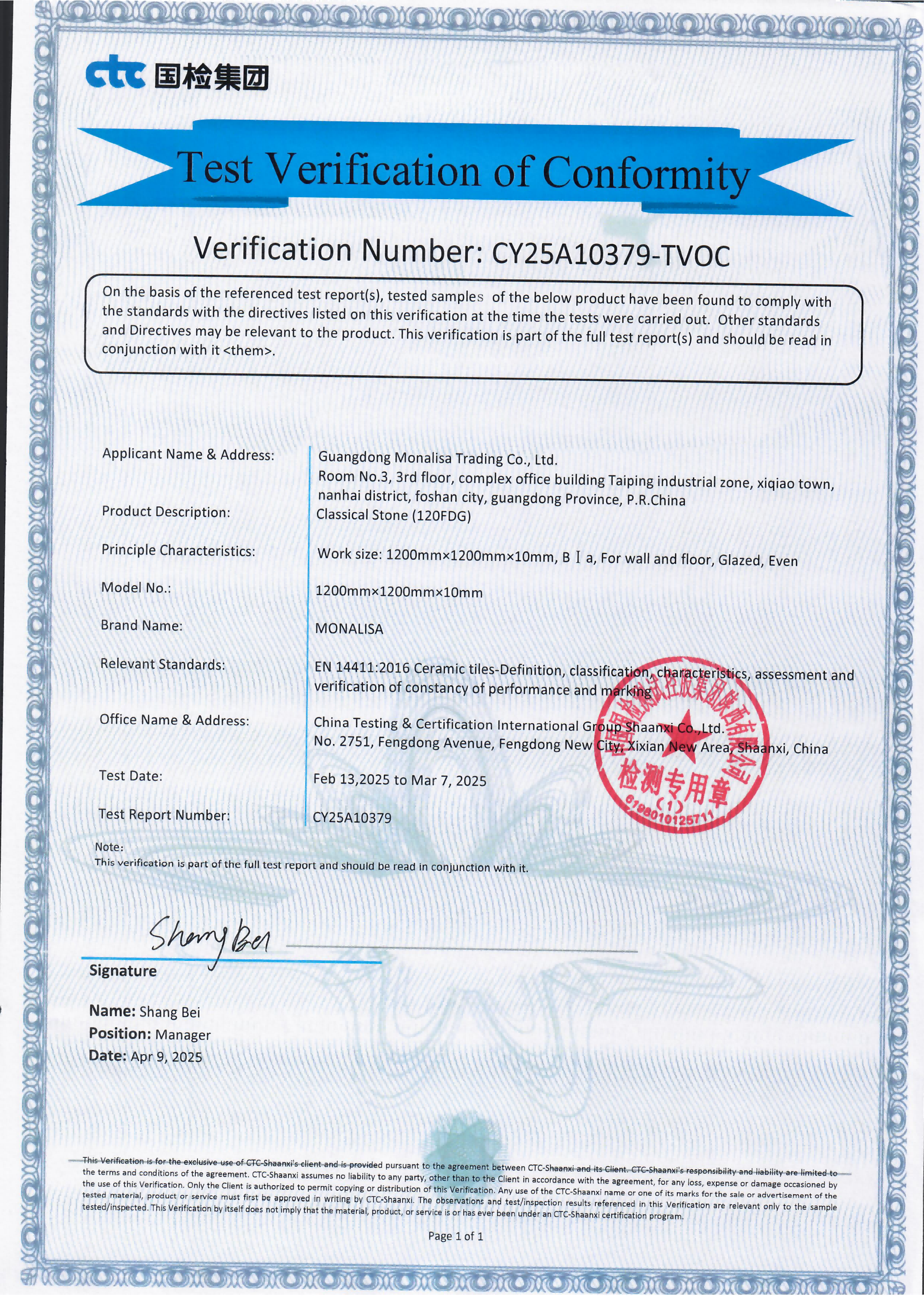
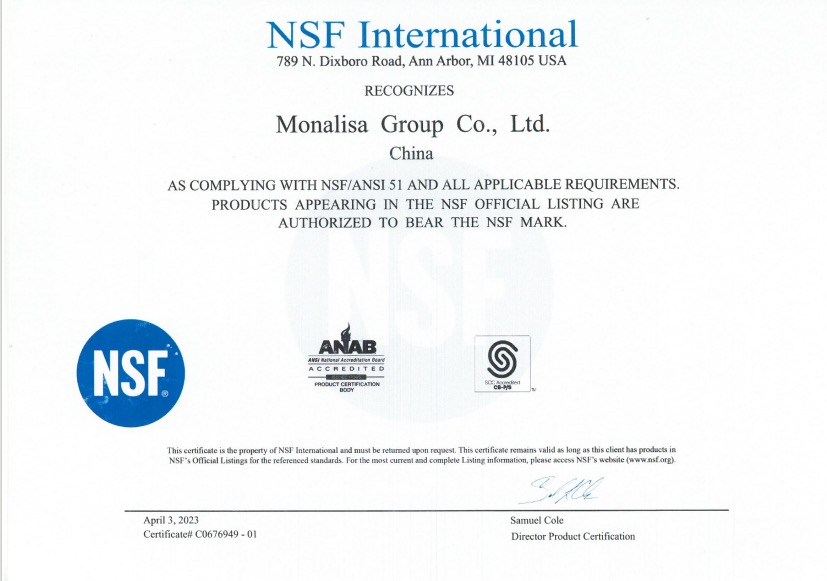
Monalisa holds CE test documentation under EN 14411:2016 — certificate CY25A10379-TVOC, issued 7 March 2025 and valid to 7 March 2035 — filed against porcelain tile product 120-270FEG12207M. The stated work size on that document is 1200 × 1200 × 10 mm, glazed, for wall and floor. A submittal for a 1200 × 2700 × 12 mm order should therefore confirm which certificate covers that specific format. The same rule applies to NSF certification C0676949-01, issued 3 April 2023, which authorises listed products, including model 120-270FEG12207M, to bear the NSF mark. Monalisa holds 15 certifications including ISO 9001 and ISO 14001, and has participated in drafting 49 national, industrial, local and group standards.
Step 6 — Verify supply terms and the acceptance protocol
Monalisa operates OEM and ODM production with a stated monthly capacity of 12.5 million m², a minimum order quantity of 2000 m², a lead time of 7–15 days, and 100% product testing. Commercial terms are FOB, CIF or EXW, with TT or LC payment. Acceptance should be written into the order: outer packaging intact with certificate of conformity and installation guide inside, labelling matching shade, size and quantity; 5%–10% of cartons opened at random and compared against the reference sample or master plate; dimensional and flatness checks on at least 10 pieces per batch using vernier caliper, feeler gauge and straightedge.
Where It Fits: Application by Application
The same 1200 × 2700 × 12 mm matte panel answers different questions in different buildings. The table below maps the setting to the reason the format works there, and to the check that has to be completed first.
| Setting | Why the homogeneous body format fits | Verify before ordering |
|---|---|---|
| Residential floors | Fewer joints across open-plan living areas; through-body colour at thresholds and step edges | Slip class for bathrooms and kitchens; substrate flatness; joint width |
| Residential walls | Continuous wall surfaces with minimal interruption in a matte stone face | Wall fixing method; handling route into the building |
| Commercial interiors | Large uninterrupted floors in lobbies and circulation; cut edges stay visually consistent | Which abrasion test applies to the ordered product; cleaning regime |
| Hospitality | Matte natural-stone face reads consistently across lobbies, corridors and bathrooms | Slip class by zone (bathroom versus lobby); shade consistency across batches |
| Municipal and transit | High-traffic floors where maintenance planning and documented supply both matter | Slip class; breakage allowance; same-batch reserve for later repair |
| Industrial interiors | Dense porcelain body suited to heavy traffic and washdown routines | Chemical resistance data for the actual chemicals used; slip class; joint sealant choice |
| Agricultural buildings | Washable, hard surfaces in livestock and produce areas | Frost resistance data for the SKU where buildings are unheated; slip class; drainage falls |
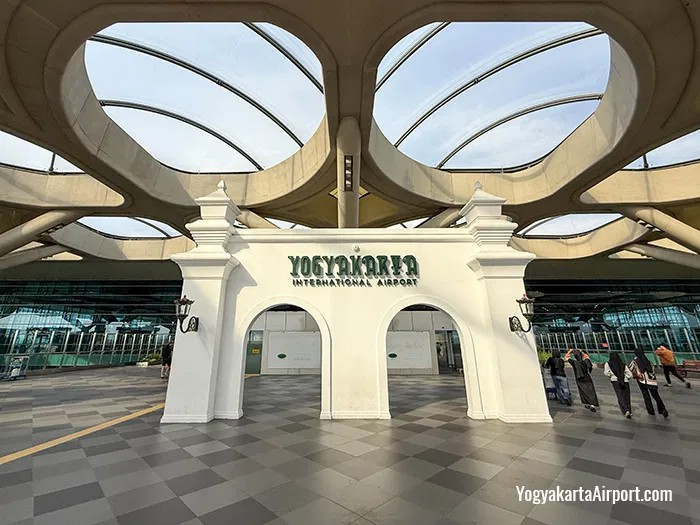
Monalisa's own unglazed porcelain tile reference in this segment is a municipal project: the Jogjakarta Airport project in Indonesia, a municipal government installation covering 80,000 m² of porcelain tiles delivered over a two-year programme. Reported outcomes for that project include a breakage rate below 0.3%, a 30% lower life-cycle maintenance cost, and a 15% saving on grouting materials and labour achieved through tight-joint installation. Those figures describe that project; they are the reason to ask a supplier for project-level data, not a guarantee that transfers automatically to a different building.
Product Snapshot: Verified Attributes of 120-270FEG12207M
| Attribute | Detail | How to verify |
|---|---|---|
| Product category | Classic Stone porcelain tile, homogeneous body format | Product datasheet |
| Body material | Clay and quartz sand | Product datasheet |
| Format | 1200 × 2700 × 12 mm | Confirm against the current catalogue and packing list |
| Surface | Matte, natural-stone face | Physical sample or master plate |
| Group classification | ISO 13006:2018 Group BIa — water absorption ≤ 0.5%, average mechanical resistance > 40 N/mm² | SKU-specific test report |
| CE documentation | EN 14411:2016, certificate CY25A10379-TVOC, issued 7 March 2025, valid to 7 March 2035 | Check that the stated work size covers the ordered format |
| NSF certification | C0676949-01, issued 3 April 2023 by NSF International | Confirm the model appears on the NSF listing |
| Customization | OEM and ODM production; pattern and logo customization | Written spec and approval sample |
| Commercial terms | MOQ 2000 m²; lead time 7–15 days; FOB / CIF / EXW; TT / LC | Signed quotation |
| After-sales | 5–15 year warranty depending on series and project type; response within 24 hours and a solution within 7 working days | Warranty terms in the contract |
Frequently Asked Questions
1. Which standards and certificates should a homogeneous body porcelain tile order reference?
Start with ISO 13006:2018 Group BIa, which sets water absorption at 0.5% or below and average mechanical resistance above 40 N/mm², and with EN 14411:2016 where the project sits in a CE-marking context. Monalisa's 120-270FEG12207M is filed against CE document CY25A10379-TVOC (issued 7 March 2025, valid to 7 March 2035) and NSF certification C0676949-01 (issued 3 April 2023), within a portfolio holding 15 certifications including ISO 9001 and ISO 14001. Certificates name a scope and a work size, so check that the format being ordered falls inside that scope before quoting the certificate number in a submittal.
2. Can a 1200 × 2700 mm homogeneous body tile be customized for a project?
Yes, where the manufacturer runs OEM and ODM production. Monalisa provides both, with customization covering pattern and logo design, supported by a stated monthly capacity of 12.5 million m², 100% product testing, a 100-strong R&D team, and 892 authorised patents including 145 invention patents as of June 2021. Customization should always be locked against an approved sample and a written specification, because pattern approval and dimensional approval are two separate sign-offs.
3. What drives the cost of a large-format homogeneous body porcelain tile project?
Four things dominate: format-driven handling and cutting waste, joint design, breakage allowance, and lifecycle maintenance. Monalisa's minimum order quantity is 2000 m² with FOB, CIF or EXW terms and TT or LC payment. On the Jogjakarta Airport project, tight-joint installation produced a reported 15% saving on grouting materials and labour, breakage stayed below 0.3%, and life-cycle maintenance cost was reported 30% lower. Ask for a quote built on your actual format mix and cutting plan rather than a per-square-metre reference price.
4. How should a sample be validated before placing an order?
Use the same acceptance protocol you intend to apply on delivery. Open 5%–10% of cartons at random and compare the colour and pattern against the reference sample or master plate; check that labelling matches shade, size and quantity; measure at least 10 pieces per batch for length, thickness and flatness with vernier caliper, feeler gauge and straightedge; and confirm the certificate of conformity and installation guide are inside the packaging. Request the SKU test report and the current certificate for the exact format at the same time.
5. What is the lead time, and what support continues after delivery?
Monalisa states a lead time of 7–15 days. After delivery, warranty coverage runs 5–15 years depending on series and project type, covering manufacturing defects such as colour difference, dimensional deviation and glaze cracks. Complaints receive a response within 24 hours with a solution within 7 working days, same-batch tiles are reserved for two years for later repair or replenishment, and free technical guidance covers layout design, installation technique and substrate preparation, with on-site technical support available for large projects. To move from specification to a priced sample, contact the team through the details below.
Conclusion
Homogeneous body porcelain tile earns its place on a project for a specific reason: the body is the finish, so cut edges, corners and tight joints stay visually coherent while the surface takes hard use. Monalisa's 120-270FEG12207M expresses that logic in a 1200 × 2700 × 12 mm matte natural-stone panel made from clay and quartz sand. It suits residential floors and walls, commercial interiors, hospitality, municipal and transit buildings, industrial halls and agricultural buildings — but only once water absorption, slip class, the applicable abrasion test and the certificate scope have been verified for the ordered product. The specification discipline is what makes the format work; the tile alone does not.
Next step: sample, quote or catalogue
Request a physical sample of 120-270FEG12207M, a project quotation based on your format mix and cutting plan, or the current product catalogue. Technical data, certificate copies and installation guidance are available on request.
Monalisa Group Co., Ltd.
Website: fs-monalisa.com
Porcelain tile range: Porcelain Tiles
Catalogue (PDF): Download the Monalisa product catalogue
Contact: Joanna — joanna_wang@fs-monalisatiles.com — Tel / WhatsApp +86 18605191548
Address: Monalisa Tower, Poly Centre, 8 Wenhua S Rd, Shunde, Foshan, 528300, CN
Reference standards and sources: ISO 13006:2018 (Group BIa classification); EN 14411:2016 (CE test documentation CY25A10379-TVOC); NSF certification C0676949-01; Spherical Insights global porcelain tile market projection (2024 base, 2035 horizon); MECS / Acimac world tile production data for 2024. Product-specific figures describe the projects and documents named and should be re-verified for each new order.
Have Questions or Need More Details?
Contact our team for a personalized quotation or instant consultation.
Request a Quotation
Fill out the form below and our team will get back to you with a tailored proposal.
WhatsApp Direct Chat
Prefer to chat in real-time? Message us on WhatsApp for instant assistance & quick answers.
- Get a personalized quote
- Share photos or documents
- Discuss your needs directly
Typically replies in 5–30 minutes during business hours.