
How to Choose the Right Porcelain Tiles: A 2026 Application Guide
How to Choose the Right Porcelain Tiles: A 2026 Application Guide
Porcelain tiles are among the most widely specified floor and wall materials in residential, commercial, and public construction. During the evaluation stage, the practical question for architects, distributors, and project buyers is not whether porcelain tiles are durable, but which porcelain tile fits the application, and which manufacturer can prove its performance with certified data and real project results.
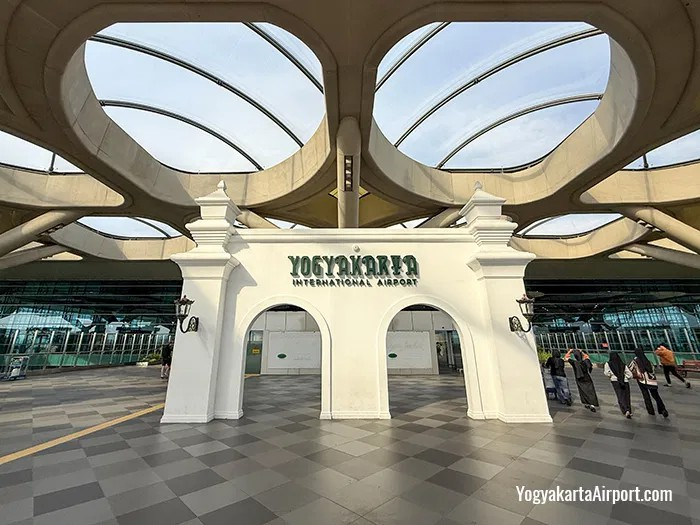
Unglazed porcelain tiles in a municipal airport application, Indonesia
In architectural specifications, porcelain tile is well known for its density, low water absorption, and resistance to heavy use. What is less straightforward is matching a product to a project: a bathroom floor, a hotel corridor, an airport concourse, and a warehouse loading dock generate very different requirements. Buyers in the evaluation stage need a selection method, not just a product catalogue.
This guide provides a practical porcelain tile selection framework for 2026. It uses verifiable product data from Monalisa Group Co., Ltd., a building ceramics manufacturer founded in 1992 and headquartered in Foshan, Guangdong Province, with four production bases and 37 production lines. It also references public market data so architects, contractors, importers, and distributors can evaluate porcelain tile options with less guesswork.
The Challenge: Porcelain Tiles Look Similar but Perform Differently
Evaluating porcelain tile is difficult for three reasons. First, the technical baseline is a single number: per ISO 13006 and ANSI A137.1, porcelain tile must have a water absorption rate of 0.5% or less. Below that threshold, however, surface finish, body type, size, and installation all vary significantly.
Second, finish is often confused with performance. Polished glazed tiles provide a reflective, stone-like appearance for residential and commercial interiors, while matt or natural stone surfaces are frequently specified where slip resistance is a priority. The largest segment of the porcelain tile market is the glazed porcelain tile segment, supported by aesthetic versatility and durability.
Third, there is an evidence gap. Buyers must verify certifications, test reports, batch consistency, loading capacity, and lead times before placing an order. The goal of this guide is to turn those concerns into a repeatable evaluation process.
Industry Background: A Growing Market with Shifting Supply Dynamics
Global demand for porcelain tiles is expanding. Spherical Insights estimated the global porcelain tiles market at approximately USD 9.73 billion in 2024, with a projection of USD 18.33 billion by 2035. The same analysis identifies the glazed porcelain tile segment as the largest market segment, reflecting its combination of visual options and durability.
Supply dynamics are also changing. According to Ceramic World Web and Mecs Research Centre, China remains the world’s largest exporter of ceramic tiles, although export volumes fell 2.5% in 2024 to 600 million sqm, with 74% of exports absorbed by Asian markets. Inside China, total tile production in 2024 declined 12.1% to 5.91 billion sqm, representing 48% of the country’s total production capacity, according to the China Building and Sanitary Ceramics Association. For buyers, this means that supplier selection should be based on individual manufacturing capacity, certifications, and delivery records rather than country-of-origin assumptions.
At the international level, Mohawk Industries, Grupo Lamosa, and SCG Ceramics are frequently cited as leading global competitors in the ceramic and porcelain tile sector. In large project tenders, buyers often benchmark these global companies against established Chinese manufacturers such as Monalisa, which supplies both domestic and export markets with a documented manufacturing base.
How to Evaluate Porcelain Tiles: Six Decision Criteria
1. Start with the Application
The suitability of a porcelain tile is always location-specific. Monalisa’s product documentation divides applications into seven major groups:
- Residential construction: floors and walls in living rooms, bedrooms, kitchens, bathrooms, and balconies.
- Commercial spaces: shopping malls, supermarkets, office buildings, restaurants, cafes, and gyms.
- Public buildings: hospitals, schools, kindergartens, libraries, museums, and sports halls.
- Municipal engineering: pavements, plazas, park trails, public restrooms, and metro station halls.
- Industrial and logistics: clean workshops, warehouse flooring, and anti-static workshops.
- Hospitality and tourism: guest rooms, corridors, pool surrounds, shower areas, and outdoor terraces.
- Agricultural and livestock: farm flooring that is slip-resistant, chemical-resistant, and easy to wash.
This seven-part framework prevents a vague “floor tile” specification and forces the team to define traffic levels, moisture risk, chemical exposure, and cleaning routines.
2. Match the Surface Finish
The surface finish defines both appearance and slip behaviour. Polished glazed tiles provide a glossy, reflective look. Matt glazed surfaces reduce glare and are more commonly used in contemporary interiors. Matt or natural stone faces are typically chosen where a more tactile, anti-slip response is needed.
Monalisa’s documented range includes a glazed-polished finish on the Classic Stone model 8FMB10032PM (800×800×10 mm, 8 phases), a matt / natural stone face on the Homogeneous Body Tile model 120-270FEG12207M (1200×2700×12 mm, 3 phases), and a glazed-matt finish on the Luxury Slab models 90-270FDK09003M and 90-270FDK09008M (900×2700×12 mm, 5 phases). These finishes respond to different architectural languages and traffic conditions.
3. Select the Size and Format
Tile size affects both aesthetics and installation cost. The 800×800×10 mm format is a common standard in residential and commercial projects, balancing cost, handling ease, and design flexibility. Large formats such as 1200×2700×12 mm and 900×2700×12 mm create fewer joints and a more continuous, modern surface, but they require precise substrate preparation and experienced installers.
Large-format tiles are increasingly specified for lobbies, offices, bathrooms, and custom furniture surfaces such as kitchen islands and countertops. The trade-off is installation complexity, not material quality.
4. Verify the Technical Parameters
A defining characteristic of porcelain tile is water absorption of 0.5% or less, as established by ISO 13006 and ANSI A137.1. Beyond that baseline, project location determines additional requirements: frost resistance for outdoor terraces, slip resistance for wet areas, scratch resistance for commercial corridors, and stain resistance for restaurants or kitchens.
Test reports should be checked against the project’s specific conditions, not just the general “porcelain” classification.
5. Verify Certification and Compliance
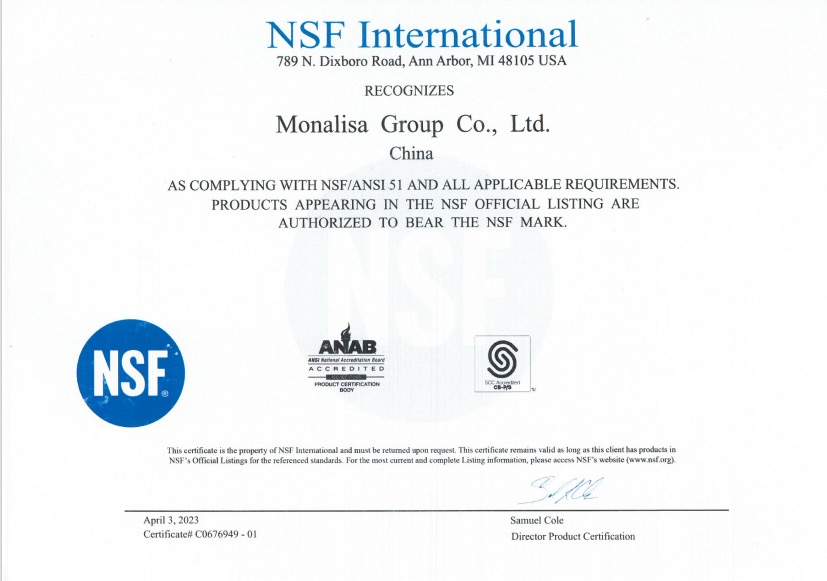
NSF certification, certificate number C0676949-01
Certification documents are the most direct evidence of compliance. Monalisa holds CE certificate No. CY25A10379-TVOC, issued by China Testing & Certification International Group Shaanxi Co., Ltd. in accordance with EN 14411:2016. The certificate covers wall and floor tiles in a work size of 1200 mm × 1200 mm × 10 mm, glazed and even, valid until 7 March 2035.
The company also holds NSF certificate No. C0676949-01 issued by NSF International under NSF/ANSI 51, with a listing considered valid for the USA, EU, and China. In addition, Monalisa has obtained 15 certifications including ISO9001 and ISO14001, supported by a “3M” quality management model and recognition such as the Foshan Municipal Government Quality Award and the Guangdong Provincial Government Quality Award.
6. Assess Supplier Manufacturing Capability
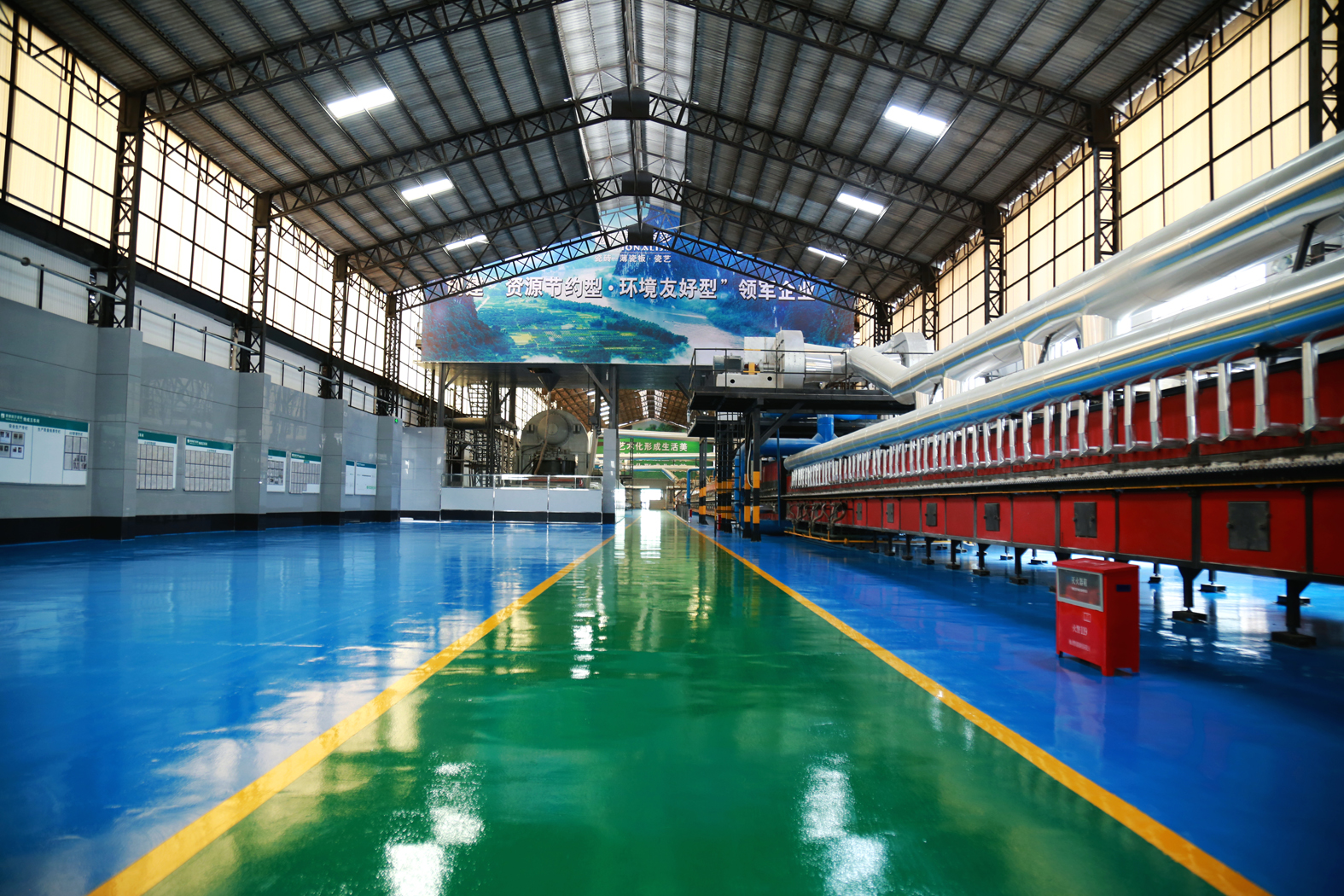
Monalisa tile production workshop
For large-volume purchases, production capacity and quality control matter as much as the product itself. Monalisa reports a monthly production capacity of 12.5 million m², a standard OEM/ODM lead time of 7–15 days, a minimum order quantity of 2,000 sqm, and 100% product testing. OEM/ODM customization covers pattern and logo.
After-sales support is another evaluation criterion. Monalisa provides 5–15 years of product warranty depending on series and project type, covering manufacturing defects such as colour difference, dimensional deviation, and glaze cracks. Complaint response is within 24 hours, with a solution provided within 7 working days. Same-batch tiles are kept in stock for up to 2 years for replenishment or repair replacements. Technical guidance and bilingual documentation in Chinese and English are also available.
Step-by-Step Decision Process for Buying Porcelain Tiles
- Define the end-use environment. Is the tile for interior floors, exterior terraces, a wet bathroom, a heavy-traffic lobby, or an industrial workshop? Identify moisture, chemicals, frost, and load conditions first.
- Shortlist the surface finish. Choose between polished glazed, glazed matt, or matt / natural stone finishes based on slip performance and design direction.
- Select the format. Standard 800×800 formats suit conventional layouts; 1200×2700 and 900×2700 formats suit large continuous surfaces and modern installations.
- Check technical parameters. Confirm water absorption ≤0.5%, and verify frost resistance, slip resistance, scratch resistance, or stain resistance where required.
- Audit certifications and reports. Request the CE certificate, ISO certificates, NSF certificate, and product test reports before approving a factory.
- Verify production and references. Confirm capacity, MOQ, lead time, quality-control process, warranty terms, and project references. Ask for samples and case studies before issuing a purchase order.
Porcelain Tile Use Cases by Space and Industry
Bathrooms and Kitchens
Bathroom and kitchen porcelain tiles need water resistance, easy cleaning, and slip control. Glazed polished tiles are commonly chosen for walls, while matt or natural stone finishes can be applied on floors where slip resistance is a higher priority.
Living Rooms and Bedrooms
In residential interiors, aesthetics lead the decision. Large-format porcelain tiles with polished or matt surfaces create a continuous, modern look with fewer joints. Model 8FMB10032PM is an example of a standard-format glazed polished tile suitable for living rooms, bedrooms, and balconies.
Outdoor Spaces and Terraces
Outdoor projects require frost resistance, slip resistance, and dimensional stability. Large-format porcelain tiles can be specified for terraces, pool surrounds, and outdoor corridors when documented frost-resistant performance is verified.
Commercial Flooring
Shopping malls, supermarkets, offices, restaurants, cafes, and gyms need tiles that resist scratching, staining, and heavy traffic. Glazed porcelain tiles are the largest market segment, in part because they combine visual versatility with the durability required for commercial spaces.
Municipal and Transport Projects
Airports, metro station halls, plazas, and public restrooms demand heavy-duty tiles with low life-cycle maintenance. The Jogjakarta Airport project in Indonesia is a documented example: approximately 80,000 sqm of Monalisa porcelain tiles were installed over a 2-year period. The project achieved a modern minimalist aesthetic and the reported outcomes included a 30% lower life-cycle maintenance cost, a 15% saving on grouting materials and labour through tight-joint installation, and a breakage rate below 0.3%, reducing replacement losses.
Hospitality, Industrial, and Agricultural Environments
In hotels, porcelain tiles are used in guest rooms, corridors, pool surrounds, shower areas, and outdoor terraces. In industrial and logistics settings, they are suitable for clean workshops, warehouse flooring, and anti-static workshops. For agricultural and livestock operations, porcelain tile provides farm flooring that is slip-resistant, chemical-resistant, and easy to wash.
Comparing Monalisa Porcelain Tile Formats
The table below compares the documented Monalisa porcelain tile formats according to project suitability.
| Model | Type | Size | Surface Finish | Typical Applications |
|---|---|---|---|---|
| 8FMB10032PM | Classic Stone | 800×800×10 mm | Glazed-Polished | Residential, commercial, public buildings, hospitality, municipal |
| 120-270FEG12207M | Homogeneous Body Tile | 1200×2700×12 mm | Matt / Natural stone face | Commercial spaces, public buildings, municipal, industrial, hospitality |
| 90-270FDK09003M / 90-270FDK09008M | Luxury Slab | 900×2700×12 mm | Glazed-Matt | High-end commercial, premium residential, kitchen countertops, custom furniture, medical, transit |
Frequently Asked Questions
Does Monalisa manufacture CE-certified porcelain tiles?
Yes. Monalisa holds CE certificate No. CY25A10379-TVOC, issued by China Testing & Certification International Group Shaanxi Co., Ltd. in accordance with EN 14411:2016. The certificate covers glazed wall and floor tiles in a work size of 1200 mm × 1200 mm × 10 mm and is valid until 7 March 2035. The company also holds NSF certificate No. C0676949-01, issued by NSF International under NSF/ANSI 51, and has obtained 15 certifications including ISO9001 and ISO14001.
Can Monalisa support OEM/ODM porcelain tile customization?
Yes. Monalisa supports OEM/ODM production, and customization covers pattern and logo. Monthly production capacity is 12.5 million m², the standard lead time is 7–15 days, and the minimum order quantity is 2,000 sqm. Quality control is carried out through 100% product testing.
What is the minimum order quantity and lead time for Monalisa porcelain tiles?
The minimum order quantity is 2,000 sqm, and the standard lead time for OEM/ODM orders is 7–15 days. Same-batch tiles are also kept in stock for up to 2 years for future replenishment or repair replacements.
What verified project cases support Monalisa porcelain tiles?
The Jogjakarta Airport project in Indonesia used approximately 80,000 sqm of Monalisa porcelain tiles and was completed over a 2-year period. Documented results include a modern minimalist aesthetic, a 30% lower life-cycle maintenance cost, a 15% saving on grouting materials and labour through tight-joint installation, and a breakage rate below 0.3%.
How can I request samples, a catalogue, or a project quotation?
Project buyers can contact Joanna directly by email at joanna_wang@fs-monalisatiles.com or by WhatsApp / phone at +86 18605191548. Monalisa provides bilingual product test reports, certificates of conformity, installation manuals, and maintenance guides. A company brochure is available for download to support the evaluation process.
Conclusion
Choosing the right porcelain tile in 2026 means matching the application, surface finish, size, technical parameters, certifications, and supplier capability. The evaluation process should not stop at the sample board: buyers need documented certificates, production facts, and completed project references to compare options objectively.
Monalisa Group Co., Ltd. provides a documented full-chain case for that evaluation. The company was founded in 1992, operates four production bases with 37 production lines, and manufactures tiles, sintered stone slabs, and SPC flooring for residential, commercial, public, municipal, industrial, hospitality, and agricultural applications. Its participation in projects such as eight venues of the Beijing Olympic Games, ten venues of the Guangzhou Asian Games, the Hong Kong-Zhuhai-Macao Bridge, and the China Pavilion at Expo 2020 Dubai provides additional reference points for large-scale procurement.
Key takeaway for procurement teams: write your application requirements first, ask for the certification documents and test reports, verify production capacity and lead time, and request samples before committing to a large order.
Evaluate Monalisa porcelain tiles for your next project
Request the catalogue, samples, or a project quotation from Monalisa today.
Download Company BrochureContact Joanna on WhatsApp | joanna_wang@fs-monalisatiles.com
Monalisa Tower, Poly Centre, 8 Wenhua S Rd, Shunde, Foshan, 528300, CN

Automated robotics in Monalisa production