
How to Match Sintered Stone Slab Certifications to Regional Project Requirements
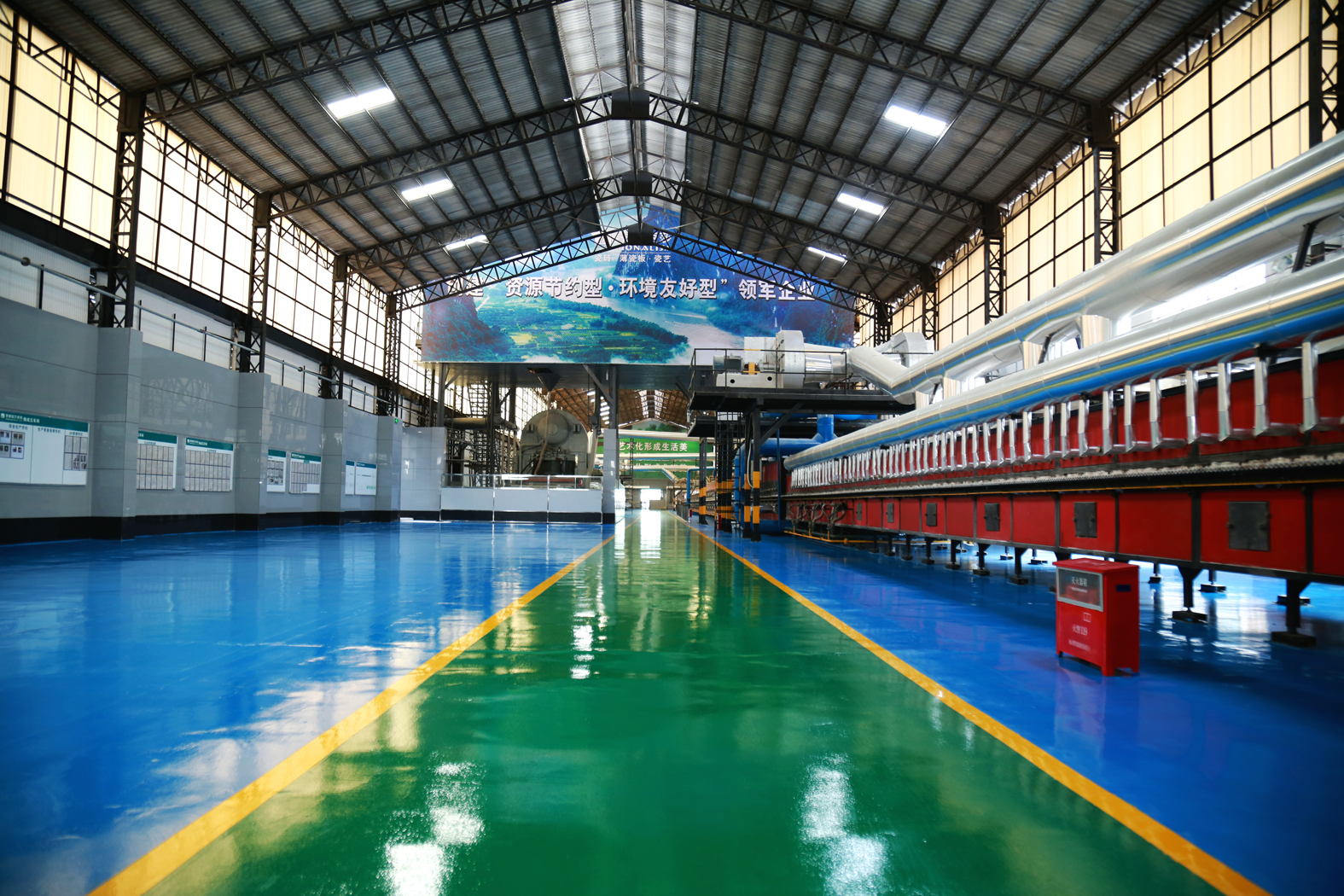
Monalisa production workshop - where the slab parameters tied to export certifications are controlled, measured and recorded.
A sintered stone slab order is rarely stopped by the slab itself. It is stopped by a missing or mismatched document. A specification that clears customs in Rotterdam can stall on a Dubai facade package, and a slab that satisfies a kitchen-countertop brief is the wrong evidence set for a coastal hospital floor. Matching certifications to regional project requirements means turning a supplier's compliance folder into a project-specific checklist, then confirming every parameter against the destination climate, the application zone and the buyer's own acceptance criteria.
This guide is written for importers, distributors, specifiers and project procurement teams working at the Decision and Execution stage, where the slab is already shortlisted and the remaining risk is documentation. It walks through reading a management-system file, verifying the physical parameters that actually decide acceptance, and mapping those checkpoints to real export markets including the UAE, Saudi Arabia, Australia, Brazil, Canada, Spain, the Netherlands, New Zealand, the Philippines, Malaysia and Myanmar.
Why One Global Certification Folder Fails Region by Region
Certifications are frequently treated as a single global box-tick: the buyer asks for ISO and CE, and compliance is considered closed. In practice three separate layers are in play, and each one answers a different question.
- Management-system certification - for example ISO 9001 quality management and ISO 14001 environmental management - tells the buyer that a factory runs a documented, auditable process. It does not certify the performance of any individual slab.
- Product performance parameters - water absorption, abrasion, slip, stain, chemical and frost behaviour - tell the buyer how a specific slab will perform in a specific zone.
- Market-access requirements - customs classification and conformity documents - tell the buyer what the destination country will accept at the border and at handover.
Because these three layers vary independently, the same slab can be fully acceptable for an interior wall in Malaysia and under-documented for an exterior facade in the Netherlands. Compliance therefore has to be built as a checklist that travels with the order, not kept as a static certificate pack.
What the Standards and Certifications Actually Cover
A quality-management certificate of the ISO 9001 type confirms that the manufacturer operates a controlled production system with documented procedures, inspection points and traceability. An environmental-management certificate of the ISO 14001 type confirms that environmental performance - energy, waste, emissions and water - is managed to a documented standard. Both are process certificates: the correct starting point, and the wrong ending point.
Product performance is where the destination market begins to matter. Ceramic and porcelain slab testing is conventionally organised around the ISO 10545 series, which covers dimensions, water absorption (ISO 10545-3), frost resistance, chemical resistance and stain resistance, among others. On top of the test standards sit classification systems that buyers and specifiers quote directly: abrasion resistance on the Porcelain Enamel Institute (PEI) scale from PEI 1 to PEI 5, and slip resistance on the DIN 51130 R-scale (R9 to R13) together with the pendulum (BPN) method common in wet-area specifications. Stain resistance is normally quoted on a Grade 1-5 scale, and chemical resistance uses the A / LA / HA / UHA style classifications - including ULA for low-concentration acid attack - that appear in laboratory and industrial specifications.
To place a manufacturer's claims on solid ground, Monalisa Group Co., Ltd. (Monalisa) - a Chinese architectural ceramics manufacturer founded in 1992 and headquartered in Foshan, Guangdong Province - reports 15 certifications including ISO 9001 and ISO 14001, together with 892 authorised patents (including 145 invention patents) and participation in the drafting of 49 national, industrial, local and group standards. Its production network covers four modern manufacturing bases and 37 production lines. Those facts describe a documented, standards-participating system; the buyer's job is to convert them into project evidence.
Building a Sintered Stone Slab Compliance Checklist
Step 1 - Read the management-system file for process control
When the supplier sends an ISO 9001 / ISO 14001-style file, look at what the certificate actually governs. Confirm that the certificate holder matches the invoicing and exporting entity, the standard version and validity dates, and the products or scope listed. Then look behind the certificate. A genuinely controlled process should be able to describe its in-process inspection points, its traceability method and its laboratory capability. Monalisa reports a full-process inspection chain of 18 quality control points from raw-material intake through pressing, firing, polishing and sorting, an in-house CNAS-accredited laboratory, and a traceability system that laser-marks or RFID-codes product for production date and inspector identification. For the buyer, these are the answers to the question of what happens if a batch deviates - not the certificate alone.
Step 2 - Confirm physical parameters against the project
Parameters must be matched to the application zone rather than to the project as a whole. The following checkpoints most often decide acceptance:
- Water absorption. Specification thresholds are commonly written at 0.5% or below for porcelain and 3% or below for semi-porcelain. Denser bodies reduce staining, frost damage and moisture movement. Monalisa sintered stone slabs are reported at 0.08% water absorption or below, materially under the porcelain threshold.
- Abrasion resistance. The PEI scale runs from PEI 1 to PEI 5; PEI 3 is typical for residential floors, and PEI 4 or above is the usual requirement for commercial and public traffic. Monalisa reports PEI Grade 5 abrasion resistance with a Mohs surface hardness of 7 or above.
- Slip resistance. Wet areas are normally specified between R9 and R11, with R10 or higher for bathrooms and pool surrounds. Monalisa's stated control target for wet areas is a pendulum reading of wet BPN 50 or above, or R10+.
- Stain resistance. Grade 5 is the practical target for kitchens, vanities and food-service zones; Monalisa reports Grade 5 stain resistance and notes that coffee, oil and ink wipe clean.
- Chemical resistance. Laboratory and chemical-plant surroundings call for ULA-grade resistance to low-concentration acid attack, which should be written into the specification rather than assumed.
- Freeze-thaw stability. Cold-climate exteriors are commonly specified to no cracking after 100 freeze-thaw cycles. Monalisa reports freeze-thaw resistance to 150 cycles without cracking.
Step 3 - Document the destination market, not just the slab
The final layer is destination-specific. Confirm the customs classification used for the shipment, the conformity documents the importing country expects, and the test evidence that supports the project's own handover file. The United Nations HS classification places ceramic products in Chapter 69, with heading 6907 covering ceramic flags, paving, hearth or wall tiles; the exact national tariff line still has to be verified with the importing and exporting jurisdictions, because a specific slab may map to a different subheading depending on finish and product characteristics.

Automated production control - the process layer that a management-system certificate is meant to describe.
Step-by-Step: From Specification to Signed Compliance File
- Write the project performance brief first. List each application zone - countertop, vanity, wall cladding, flooring, exterior facade - and the parameter threshold each zone demands. Do this before contacting suppliers so the checklist is driven by the project, not by the catalogue.
- Request the management-system file and map it to an entity. Check the certificate holder, scope, standard version and validity against the exporting company name on the quotation.
- Request parameter-specific test evidence for each zone. Ask for water absorption, abrasion, slip, stain, chemical and frost data that applies to the specified SKU and thickness, not a generic product family.
- Match the evidence to the destination market. Identify which conformity documents and customs classification the importing country requires, and add them to the file.
- Confirm commercial terms in parallel. Monalisa standard purchasing terms are a MOQ of 2,000 sqm, delivery under FOB, CIF or EXW, and payment by TT or LC.
- Lock the acceptance criteria before shipment. Define the packaging and labelling check, the carton-opening verification, and the dimensional and flatness check that will be used at receipt.
The acceptance stage is where a checklist either works or fails. A workable protocol confirms that outer packaging is intact and dry, that each carton carries a certificate of conformity, an installation guide and a label matching the order (shade, size, quantity), that a random 5%-10% of cartons are opened to compare colour and pattern against a reference sample, and that at least 10 pieces per batch are measured for length, thickness and flatness using a caliper, feeler gauge and straightedge.
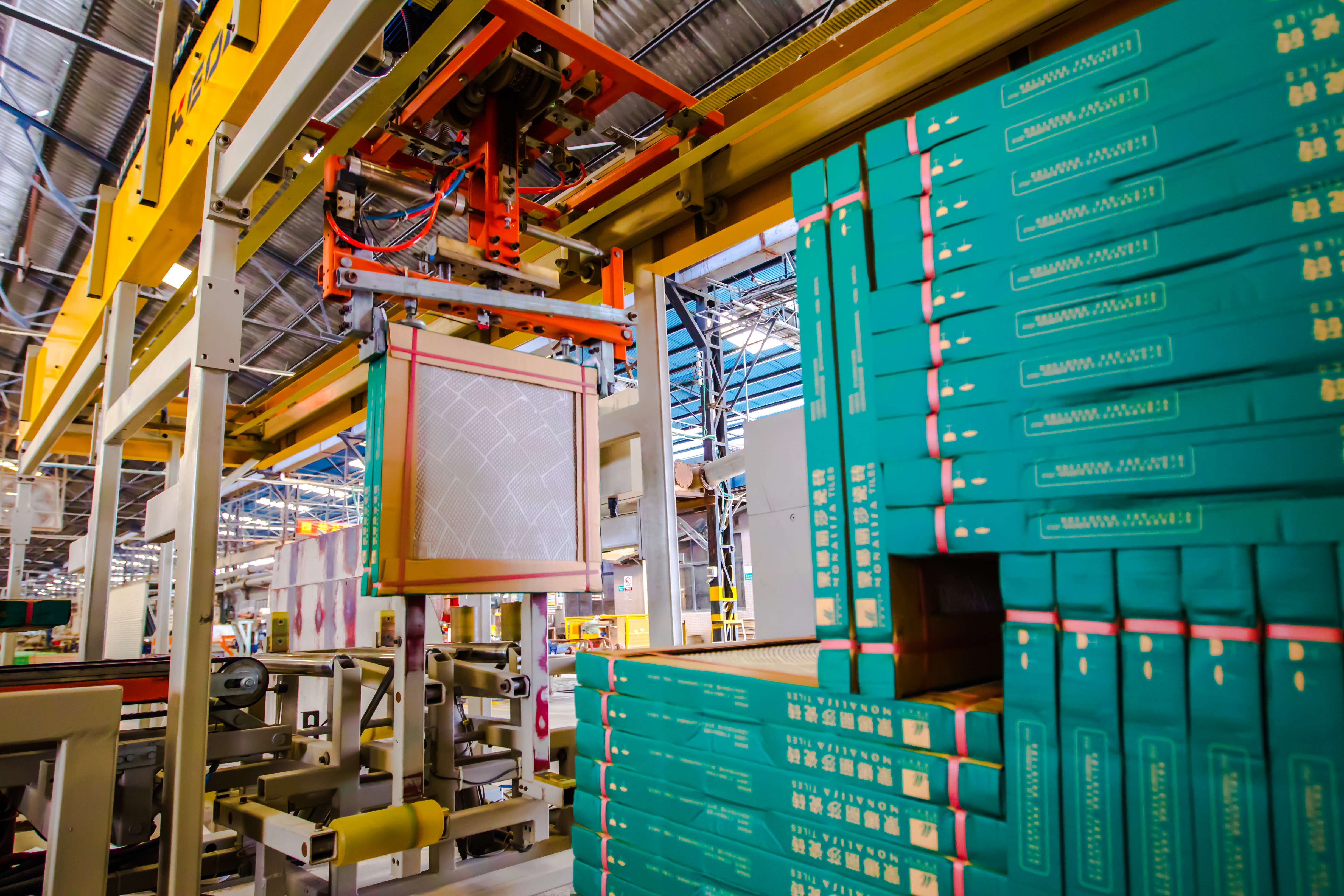
Order handling at scale - handling quality is part of the compliance file because breakage is a documented acceptance risk.
Matching Checkpoints to Real Export Destinations
The same slab passes through very different project environments depending on where it lands. The table below maps the most common destination markets to their dominant climate and application demands, and to the checkpoints a buyer should insist on documenting.
| Destination | Climate and project demand | Checkpoints to document |
|---|---|---|
| AE (UAE) | Hot-arid, high UV, coastal humidity, high-traffic hospitality and retail | UV-stable finish, low water absorption, thermal stability, Grade 5 stain resistance |
| SA (Saudi Arabia) | Extreme heat, sand abrasion, large infrastructure programmes | Heat resistance, PEI 4+, UV stability, low water absorption |
| AU (Australia) | Humid coastal north, hot interior, cold southern exteriors | Wet-area slip resistance, UV resistance for exteriors, freeze-thaw for southern use |
| BR (Brazil) | Tropical, humid, extensive coastal development | Water absorption, stain resistance, moisture stability, exterior UV |
| CA (Canada) | Cold winters, heavy freeze-thaw, indoor underfloor heating | Freeze-thaw stability, thermal-shock tolerance, wet-area slip |
| ES (Spain) | Mediterranean climate, EU market access, wet areas and cold mountain zones | EU conformity documentation, R10+ slip for wet areas, freeze-thaw for mountain exteriors |
| NL (Netherlands) | Maritime temperate, frequent rain, EU market access | EU conformity documentation, R10+ slip for outdoor and wet zones, low absorption, frost |
| NZ (New Zealand) | High UV index, maritime humidity, cold southern regions | UV resistance, slip resistance, freeze-thaw stability |
| PH (Philippines) | Tropical, humid, typhoon-exposed, coastal | Waterproofing, wet-area slip, stain resistance, moisture stability |
| MY (Malaysia) | Tropical, humid, heavy rainfall | Water absorption, wet-area slip, stain resistance |
| MM (Myanmar) | Tropical monsoon, humid, cost-sensitive sourcing | Water absorption, basic conformity documents, wet-area slip |
Two consequences follow. First, cold-climate and coastal markets drive different evidence: Canada and the Netherlands both need frost data, but the Netherlands pairs it with EU conformity documentation that Canada does not. Second, hot-arid and high-UV markets such as the UAE and Saudi Arabia shift the emphasis towards UV-stable finishes and heat resistance rather than frost. A supplier that answers every market with the same folder has not read the destination.
Parameter Reference: Sintered Stone Slab vs Conventional Tile
Where a buyer needs a baseline to compare quotations, the parameters below are the ones that separate a sintered stone slab from a conventional tile - and therefore the ones worth anchoring in the compliance file.
| Parameter | Monalisa sintered stone slab | Conventional tile baseline |
|---|---|---|
| Water absorption | 0.08% or below | 0.5%-3% |
| Surface hardness (Mohs) | 7 or above | - |
| Abrasion resistance | PEI Grade 5 | - |
| Breaking strength | 45 MPa or above | 35 MPa or above |
| Wear volume | 140 mm3 or below | 540 mm3 or below |
| Freeze-thaw resistance | 150 cycles without cracking | 50-100 cycles |
| Flatness tolerance | Plus or minus 0.15% or better | Plus or minus 0.5% or better |
These performance gaps carry commercial consequences. Sintered stone slab unit pricing is typically 15%-30% higher than conventional tile depending on series, but the reported service life is 2-3 times longer, breakage in handling runs at 0.3% or below against roughly 0.8%, and total life-cycle cost is reported 20%-35% lower. Tight-joint installation reduces grouting materials and labour by a further 10%-15%. For the buyer, the correct comparison is compliance-adjusted total cost, not the square-metre price.

Monalisa Group headquarters - the entity that must match the certificate holder on any compliance file.
Why Long-Term Suppliers Treat Certification as a System
Certification matching works more cleanly with a manufacturer that treats quality as a managed system rather than an annual document. Monalisa operates a 3M quality management model, has received the Foshan Municipal Government Quality Award and the Guangdong Provincial Government Quality Award, and was nominated for the 3rd China Quality Award. It reports ISO 9001, ISO 14001 and ISO 45001 certification among its 15 certifications and holds Five-star Standardization Good Practice Enterprise status. Environmental performance is managed to a comparable standard: green design, manufacturing and application, waste-residue recycling and zero wastewater discharge, recognition as a national Resource-saving and Environment-friendly pilot enterprise, and inclusion in the first batch of Green Factories named by the Ministry of Industry and Information Technology.
Project track record provides a further check on whether a compliance file holds up at scale. Monalisa supplied eight venues of the Beijing Olympic Games, ten venues of the Guangzhou Asian Games, and the Hong Kong-Zhuhai-Macao Bridge; it was the designated ceramic tile supplier for the China Pavilion at Expo 2020 Dubai and the exclusive supplier of official architectural ceramics for the 19th Asian Games Hangzhou 2022. The company has also established strategic partnerships with nearly 100 major real estate developers, including Country Garden, Vanke, POLY and COLI, and reports a monthly production capacity of 20,000,000 square meters. For an importer or distributor building a long-term supply line, these are the signals that a certification folder is backed by delivered projects rather than prepared for a single tender.
FAQ
1. Which certifications and documents should be verified before a sintered stone slab order?
Verify three layers. First, the management-system certificate - typically ISO 9001 for quality and ISO 14001 for environment - checking that the certificate holder matches the exporting entity, and confirming scope, standard version and validity dates. Second, product test evidence for each application zone: water absorption (ISO 10545-3 style), abrasion on the PEI scale, slip resistance on the R-scale or by pendulum reading, stain resistance on the Grade 1-5 scale, chemical resistance where relevant, and frost resistance for cold-climate exteriors. Third, destination-market documents, including the customs classification under the applicable HS heading and any conformity documents the importing country expects. Monalisa reports 15 certifications including ISO 9001 and ISO 14001, alongside participation in drafting 49 national, industrial, local and group standards.
2. Can one sintered stone slab manufacturer satisfy several regional markets at once?
Yes, provided the performance envelope is broad enough. A slab reported at 0.08% water absorption or below, PEI Grade 5 abrasion, Mohs hardness 7 or above and 150 freeze-thaw cycles without cracking sits above the thresholds for most markets covered in this guide - including cold-climate destinations such as Canada and frost-exposed exteriors in the Netherlands, and hot-UV destinations such as the UAE and Saudi Arabia. What changes between markets is not the slab but the document set: EU destinations require conformity documentation, and every destination requires its own customs classification. Monalisa four production bases and 37 production lines support the capacity side of multi-market supply, and its stated monthly production capacity of 20,000,000 square meters supports programme volumes.
3. Does higher certification coverage raise the slab price?
Certification itself is not the main price driver; the product series and performance level are. Sintered stone slab unit pricing is typically 15%-30% higher than conventional tile, but the reported service life is 2-3 times longer, breakage during handling is lower at 0.3% or below, and total life-cycle cost is reported 20%-35% lower. Tight-joint installation adds a further 10%-15% saving on grouting materials and labour. The commercially rational approach is to compare quotations on a compliance-adjusted total cost basis, using the parameter table above as the equaliser between offers.
4. How can a buyer validate performance before full production?
Validation should combine samples, test evidence and incoming inspection. Before production, request parameter-specific test reports for the exact SKU and thickness rather than a generic product family. At receipt, apply a documented acceptance protocol: check that packaging is intact and dry and that each carton carries a certificate of conformity, an installation guide and a label matching the order (shade, size, quantity); open a random 5%-10% of cartons to compare colour and pattern against the reference sample; and measure at least 10 pieces per batch for length, thickness and flatness using a caliper, feeler gauge and straightedge. For longer programmes, a 2-year batch stock reserve supports colour consistency when individual slabs are replaced later.
5. What are the standard commercial terms and acceptance criteria for a sintered stone slab order?
Monalisa standard purchasing terms are a MOQ of 2,000 sqm, delivery under FOB, CIF or EXW, and payment by TT or LC. Acceptance is normally structured around three checks: a packaging and labelling check, a carton-opening colour and grade verification on a 5%-10% sample, and a rapid dimensional and flatness check on at least 10 pieces per batch. Buyers preparing a first order can request the product catalogue and current documentation directly, and use the compliance checklist in this article as the basis for their own acceptance file.

Conclusion
Matching sintered stone slab certifications to regional project requirements is a documentation discipline, not a single certificate. Read the ISO 9001 / ISO 14001 file for process control, confirm the physical parameters against each application zone - water absorption, PEI abrasion, R-scale slip, Grade 5 stain resistance, ULA chemical resistance and freeze-thaw stability - and then map those checkpoints to the destination market's climate, application demands and customs requirements. When a manufacturer can show a standards-participating system, a broad performance envelope and delivered reference projects, the checklist stops being an administrative exercise and becomes the buyer's protection for the full life of the project.
Download the Monalisa product catalogue (PDF), or visit Monalisa Group to request sample sets, current test documentation and a project-specific quotation.
Have Questions or Need More Details?
Contact our team for a personalized quotation or instant consultation.
Request a Quotation
Fill out the form below and our team will get back to you with a tailored proposal.
WhatsApp Direct Chat
Prefer to chat in real-time? Message us on WhatsApp for instant assistance & quick answers.
- Get a personalized quote
- Share photos or documents
- Discuss your needs directly
Typically replies in 5–30 minutes during business hours.