Partnering With a Sintered Stone Slab Manufacturer: What Buyers Ask Before Committing Long-Term
Partnering With a Sintered Stone Slab Manufacturer: What Buyers Ask Before Committing Long-Term
A long-term sintered stone slab partnership is decided by four questions long before price is discussed: whether the manufacturer can hold capacity for years, whether batch quality stays identical after the first container, whether warranty and after-sales terms still function in year five, and whether repeat orders can be structured without renegotiating from zero. This buyer companion answers those questions in the order procurement teams and specifiers actually raise them, using the documented record of Monalisa Group Co., Ltd. ("Monalisa"), a Foshan-based architectural ceramics manufacturer founded in 1992 that operates four production bases and 37 production lines.
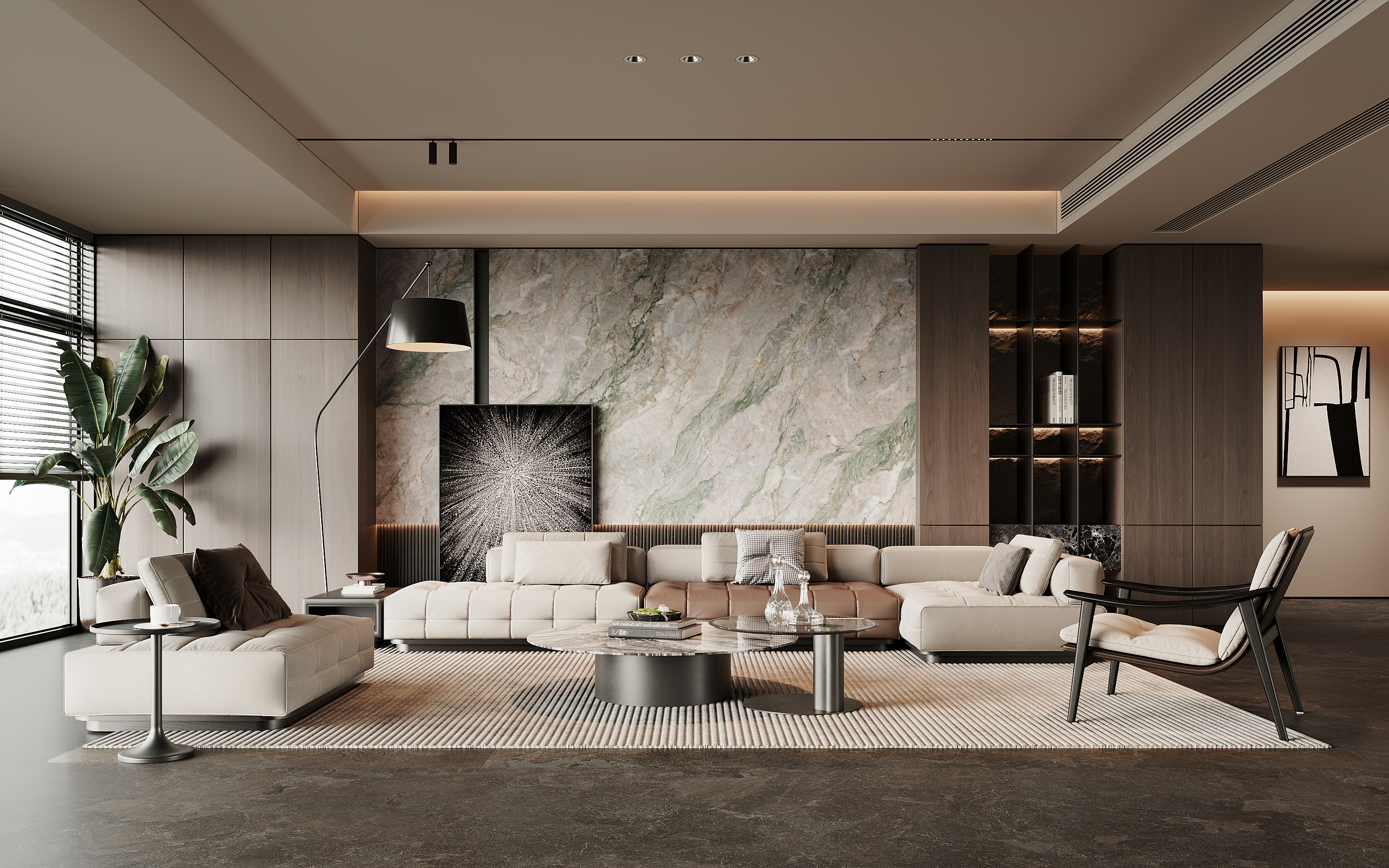
Marble look sintered stone slab — a finish category that multi-year supply programmes are commonly built around.
This is not a first-sourcing article. It assumes the technical shortlist already exists and the real question is commitment: how much of your slab programme can be tied to one manufacturer, under what terms, and with what evidence if something goes wrong in year three.
Why Long-Term Sintered Stone Partnerships Fail Quietly
Most sintered stone supply problems do not appear at the sample stage. They appear between batch two and batch five, and they are rarely dramatic enough to trigger an immediate supplier change.
- Colour drift between production batches — slabs that passed a test report but sit visibly apart on the same facade when installed six months later.
- Capacity promises that were never line-specific — a monthly volume agreed when the factory was quiet, then quietly re-prioritised when a larger customer arrives.
- Warranty wording that covers the first year but not the fifth — manufacturing defects defined narrowly enough to exclude the failure that actually occurs.
- Repeat orders handled as new orders — no reserved batch, no continuity, and a fresh negotiation every time.
The root cause is usually the same: the buyer evaluated a product, while the risk sat in the supplier's ability to repeat that product. Long-term sintered stone slab procurement is therefore an evaluation of process, capacity and service terms — not of a single slab.
The 2026 Supply Context: Why Buyers Lock In Suppliers Earlier
Category growth is part of the reason. The global sintered stone market was valued at approximately USD 877.75 million in 2024 and is projected to reach USD 1.41 billion by 2032, according to Intel Market Research's "Sintered Stone Market – Global Forecast 2025–2032". China's ceramic product exports, which include sintered stone slabs, totalled USD 19.15 billion between January and November 2025, based on data published by the General Administration of Customs of China.
Two practical consequences follow. First, more projects specify the material for surfaces where replacement is expensive — kitchen countertops, bathroom vanities, wall cladding, flooring and exterior facade panels — so the cost of a failure exceeds the cost of the slab. Second, in premium countertop segments, brands such as Dekton (Cosentino) and Neolith are frequently cited as leading names, with category hardness commonly reported at Mohs 7–8. Buyers comparing at that level increasingly ask not "which slab?" but "which manufacturer can repeat this slab for five years?"
That shift is what turns a supply question into a partnership question.
Monalisa Group at a Glance: The Entity Behind the Answers
Monalisa Group Co., Ltd. (002918.SZ) was founded in 1992 and is headquartered in Foshan, Guangdong Province. It is a high-tech listed company integrating R&D, creative design, production and marketing of architectural ceramics, operating three brands — Monalisa, QD and Merqi — through ten holding subsidiaries. The Group reported annual revenue of approximately CNY 3.92 billion for fiscal year 2025, according to S&P Global Market Intelligence.
Four production bases sit behind the brand: Xiqiao (Foshan), Qingyuan (Guangdong), Tengxian (Guangxi) and Gao'an (Jiangxi), with a combined 37 production lines. The manufacturing footprint covers 2,779,333.33 m² and employs 4,106 people, including an R&D team of 100. As of June 2021, Monalisa had participated in drafting 49 national, industrial, local and group standards and held 892 authorised patents, including 145 invention patents. Product milestones include the 1800×900×5.5 mm large ceramic thin plate introduced in 2007, which won first prize at the China Building Materials Science and Technology Progress Award, and the 9000×1800×10.5 mm ultra-large ceramic plate launched in 2021.
Monalisa operates a "3M" quality management model and holds 15 certifications, including ISO 9001 and ISO 14001. The company has received the Foshan Municipal Government Quality Award and the Guangdong Provincial Government Quality Award, was nominated for the 3rd China Quality Award, and is recognised as a national "Resource-saving and Environment-friendly" pilot enterprise and one of the first batch of "Green Factories" designated by China's Ministry of Industry and Information Technology. Project references include eight venues of the Beijing Olympic Games, ten venues of the Guangzhou Asian Games, the Hong Kong-Zhuhai-Macao Bridge, the China Pavilion at Expo 2020 Dubai, and official architectural ceramics supply for the 19th Asian Games Hangzhou 2022.
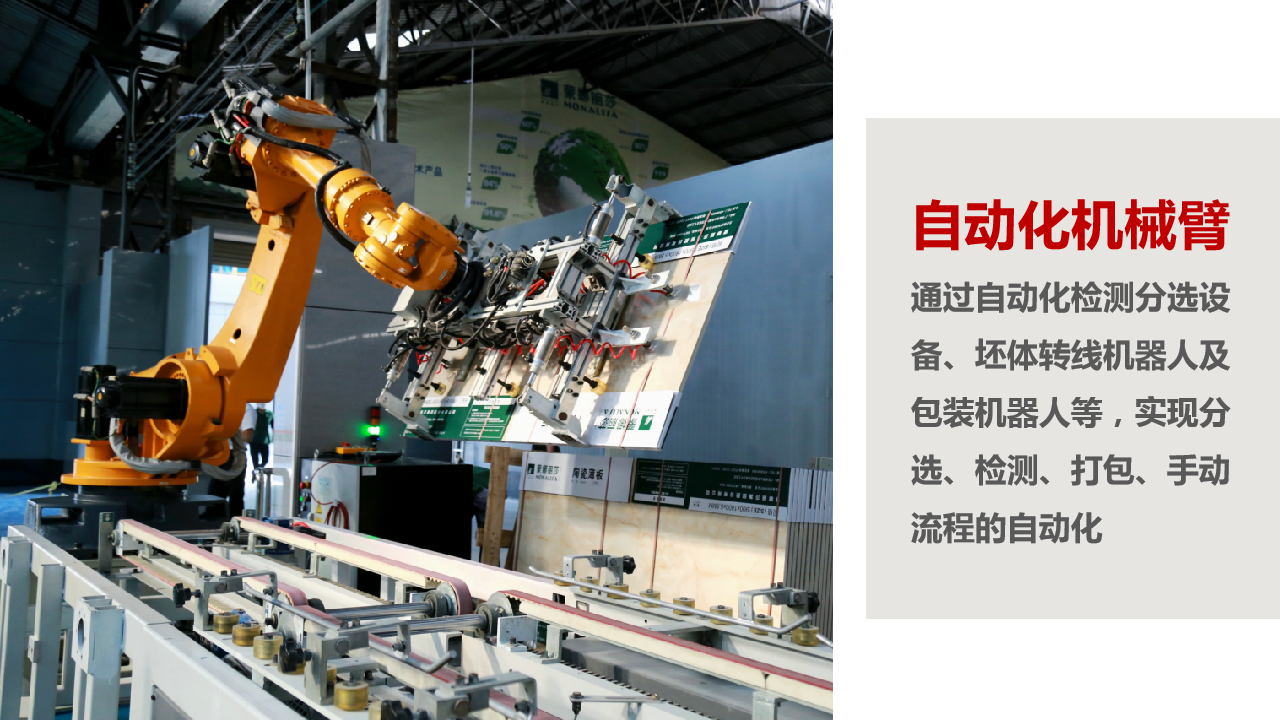
Automated handling equipment on the Monalisa production line, where 100% testing is applied to output.
Question 1: Can Capacity Hold Across a Multi-Year Programme?
Monalisa maintains a monthly production capacity of 12.5 million m² across its porcelain and sintered stone product lines, distributed over 37 lines at four bases in different provinces. That distribution matters more than the headline number: multi-base production reduces the risk that a single-site shutdown, local energy restriction or line conversion halts a running slab programme.
Two operational figures are the ones to test against a quotation. The published lead time is 7–15 days, and the minimum order quantity is 2,000 sqm. Delivery evidence for larger volumes exists in completed projects: a single delivery of more than 80,000 m² of large-format material for a Sri Lankan national convention venue, and 80,000 m² supplied for JOGYAKARTA AIRPORT in Indonesia.
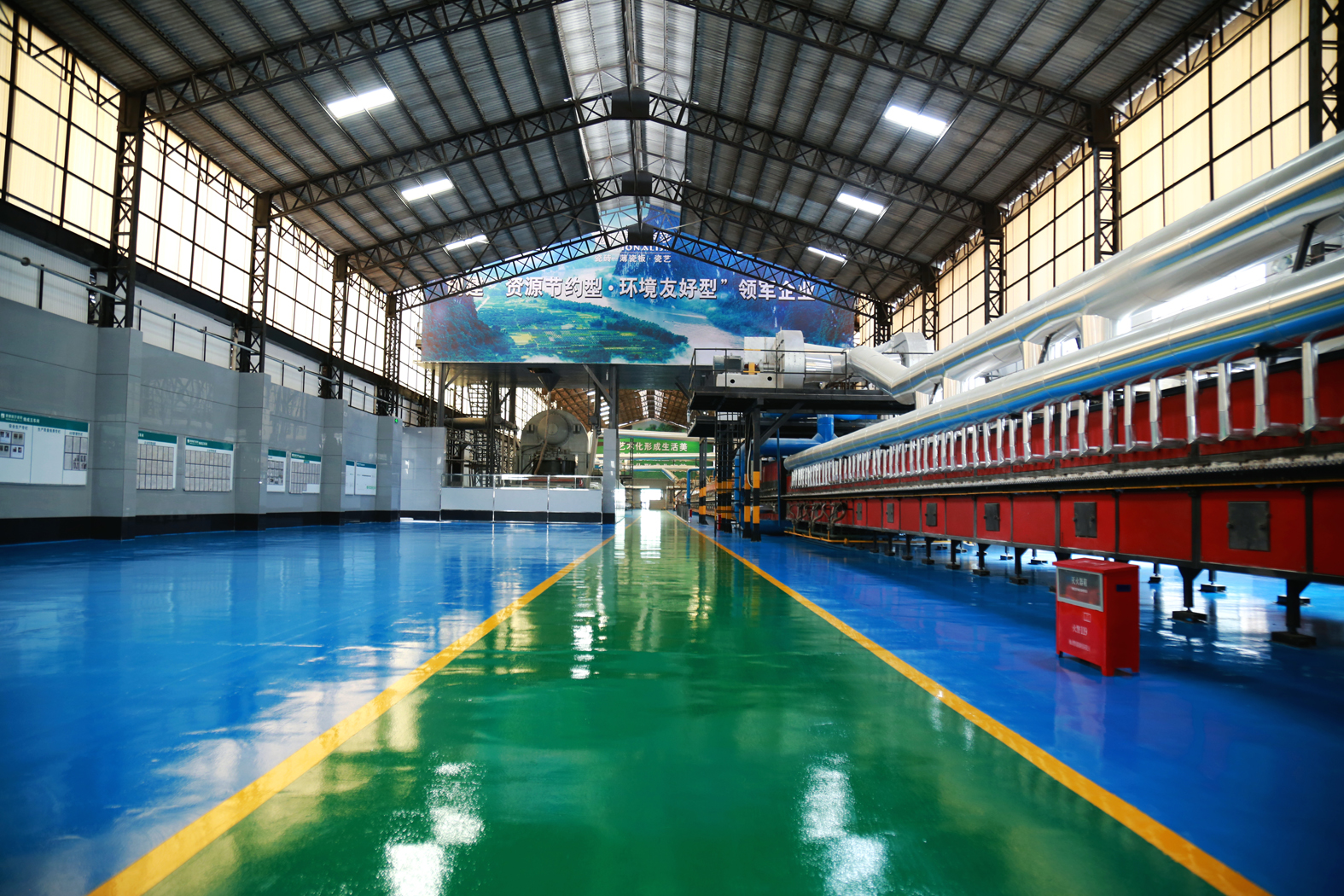
Monalisa Workshop — production capacity for long-term programmes is allocated across 37 lines at four bases.
For a multi-year programme, the useful question is not "what is your capacity?" but "which lines are allocated to my format, and what happens to that allocation in your peak quarter?"
Question 2: How Do You Verify Batch Quality, Not Just the First Sample?
Quality consistency in sintered stone slabs is verified through three things: test coverage, tolerance discipline and batch retention.
- Test coverage: Monalisa applies 100% testing to production, supported by the Group's "3M" quality management model and ISO 9001 certification.
- Tolerance discipline: dimensional tolerance for architectural slabs is normally set at length and width deviation within ±0.2% and thickness deviation within ±5% — the numbers a fabricator needs to plan joint width and adhesive depth.
- Performance benchmarks: architectural sintered stone is commonly benchmarked at water absorption below 0.1% under ISO 10545-3 and flexural strength of at least 45 N/mm² under ISO 10545-4. Stain resistance is typically specified at Grade 5 for common stains such as tea, oil and ink, abrasion resistance at PEI 3–5, and slip resistance between R9 and R11, with R10 or higher required for bathrooms.
- Batch retention: same-batch tiles are kept in stock for two years, so a repair in year two does not require a new production run and a colour-match gamble.
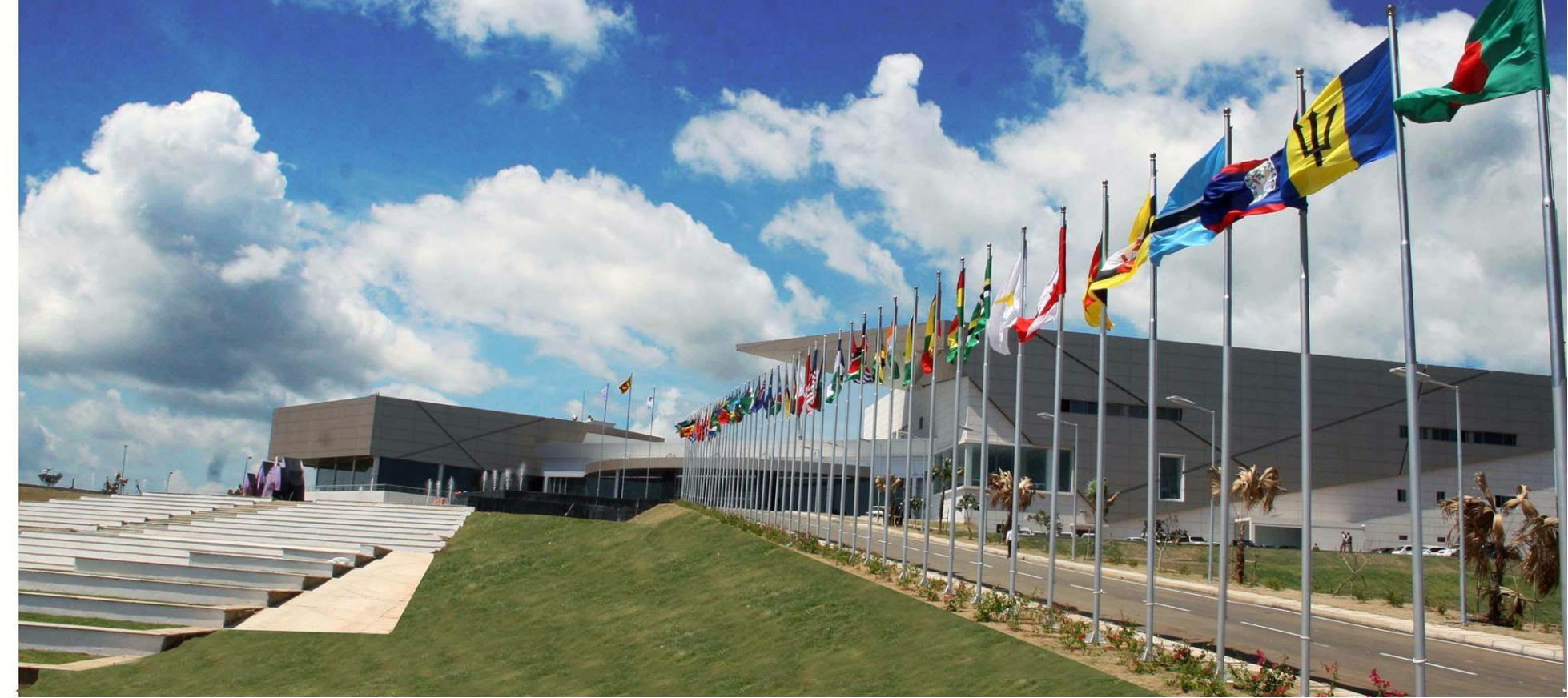
Eco friendly sintered stone slab — surface quality is checked on the batch, not only on the approved sample.
The practical rule for buyers is to request the test report for the specific production batch, not for the product family, and to compare two consecutive batches side by side before increasing volume.
Question 3: What Do Warranty and After-Sales Terms Cover After Year Three?
Monalisa provides a product warranty of 5–15 years depending on series and project type, covering manufacturing defects: colour difference, dimensional deviation and glaze cracks. In large group projects, coverage can extend further — the Sri Lankan convention venue project carries a 10-year group project warranty against a design life of more than 20 years.
After-sales support is defined by service levels rather than intentions:
- Complaint response within 24 hours, with a solution — replacement, return or compensation — provided within 7 working days.
- Free technical consultation on tiling layout design, installation techniques and substrate preparation.
- An on-site technical representative for large projects, to supervise installation or troubleshoot issues.
- Same-batch tiles reserved for two years for replenishment or repair replacement.
- Online and offline training for distributors and installation teams on product knowledge, fitting standards and maintenance.
- After-sales documentation — product test reports, certificate of conformity, instruction manual and maintenance guide — available in Chinese and English.
The clause worth reading closely before committing is the definition of "manufacturing defect". Warranty length is a headline; the defect definition is the actual coverage.
Question 4: How Should Repeat Orders Be Structured?
Repeat orders fail when they are treated as new orders. Three mechanisms keep a multi-year slab programme stable:
- Same-batch reservation: a two-year stock reserve of the original batch keeps repair and replenishment material consistent with the installed surface.
- Call-off planning: instead of one large order followed by renegotiation, volumes are released against an agreed plan within the 7–15 day lead time and above the 2,000 sqm MOQ.
- Customisation locked early: Monalisa supports OEM/ODM production with pattern and logo customisation, which is best fixed at programme level rather than re-specified per order.
Delivery performance on a single order also signals repeat-order reliability. In the JOGYAKARTA AIRPORT project, tight-joint installation with large-format material reduced grouting material and labour cost by 15%, life-cycle maintenance cost came in 30% lower, and the breakage rate stayed below 0.3% — the outcomes that decide whether a second and third order follow.
Comparison Table: Long-Term Partnership Due-Diligence Matrix
The table below converts the recurring buyer questions into an evidence request, alongside Monalisa's documented position. It is a due-diligence framework, not a ranking.
| Evaluation area | Question to put to the supplier | Evidence to request | Documented Monalisa position |
|---|---|---|---|
| Production capacity | Can you hold my monthly volume across a multi-year programme? | Capacity statement, base and line allocation | 12.5 million m² monthly capacity across porcelain and sintered stone lines; 37 production lines at four bases |
| Batch consistency | How do you keep colour and dimension stable between batches? | Batch records, dimensional tolerance data, QA model | 100% testing; "3M" quality management model; ISO 9001 among 15 certifications; length/width deviation ≤±0.2%, thickness ≤±5% |
| Product performance | Which benchmarks does the slab actually meet? | Test reports to ISO 10545-3 and ISO 10545-4 | Category benchmarks: water absorption <0.1%, flexural strength ≥45 N/mm²; stain resistance Grade 5; PEI 3–5; slip resistance R9–R11 |
| Market compliance | Which certificates apply to my destination market? | CE documentation, certificate of conformity, test reports | EU CE marking for sintered stone requires EAD 090142-00-0404; 15 certifications including ISO 9001 and ISO 14001 |
| Warranty | What is covered, for how long, and under what defect definition? | Written warranty terms | 5–15 years depending on series and project type, covering colour difference, dimensional deviation and glaze cracks |
| After-sales response | What is your service level when something goes wrong? | Service-level terms, documentation list | Complaint response within 24 hours; solution within 7 working days; on-site technical support for large projects |
| Repeat orders | How do you keep replenishment material identical to the original batch? | Stock-reserve policy, MOQ and lead-time confirmation | Two-year same-batch stock reserve; MOQ 2,000 sqm; lead time 7–15 days; OEM/ODM pattern and logo customisation |
Reference: Monalisa sintered stone slab formats used in long-term programmes
| Product | Model | Size | Surface finish | Body material |
|---|---|---|---|---|
| Flowing light Sintered Stone | 90-270DBY09340M | 900×2700×9 mm, 4 phases | Glazed-matt | Clay / quartz sand |
| Luxury Slab | 90-270FDK09003M / 90-270FDK09008M | 900×2700×12 mm, 5 phases | Glazed-matt | Clay / quartz sand |
These formats cover the applications where long-term agreements concentrate: kitchen countertops, kitchen islands, vanity tops, backsplashes, integrated slab sinks, wall cladding, flooring, cabinet and furniture surfaces, and external dry-cladding or ventilated rain-screen systems.
Step-by-Step: How to Run a Long-Term Supplier Evaluation
- Define the programme, not the order. List formats, finishes, applications and expected annual volume, including the replacement allowance you will need in years two and three.
- Request the document pack first. Ask for test reports, certificate of conformity, warranty terms and the maintenance guide in the language of your market.
- Audit capacity allocation. Confirm which of the manufacturer's production lines serve your formats and how that allocation behaves in peak quarters. At Monalisa, that means 37 lines across four bases.
- Validate samples and first batches. Test the sample, then compare the first two production batches against each other rather than only against the sample.
- Fix warranty and service levels in writing. Confirm warranty duration, the defect definition, response times and on-site support obligations before volume increases.
- Structure call-offs and batch reserves. Agree the MOQ (2,000 sqm at Monalisa), the lead time (7–15 days) and the same-batch reserve that protects future repairs.
- Set a review rhythm. Add a batch-consistency and replenishment review to the contract, using the manufacturer's training and technical guidance when installation teams change.
Where Long-Term Supply Discipline Shows Up: Verified Project Use Cases
Long-term partnerships are usually justified by demanding environments rather than showroom surfaces. The applications that drive repeat ordering are high-traffic commercial areas such as shopping malls and airports, wet zones with high slip-resistance requirements, outdoor terraces in freeze-thaw regions, and projects where low maintenance cost is a priority.
Case 1: Sri Lankan national convention venue — 80,000 m²
For a venue delivered for the national government of Sri Lanka, with the Urban Development Authority as principal and the Korea International Cooperation Agency as joint contractor, more than 80,000 m² of 900×1800 mm large-format material was supplied for convention halls, banquet spaces, VIP corridors, multimedia rooms, public reception zones, outdoor connectors and roof terraces. The format reduced visible joints by roughly 50%, R10 slip resistance supported safety in high-traffic areas, and water absorption of ≤0.08% combined with freeze-thaw and weather resistance suited a hot-humid, monsoon climate. On-site technical support was provided during installation, and the project carries a 10-year group project warranty against a design life of more than 20 years.
Case 2: JOGYAKARTA AIRPORT, Indonesia — 80,000 m²
For a municipal government project at JOGYAKARTA AIRPORT, 80,000 m² was delivered over two years. Tight-joint installation with large-format material cut grouting material and labour cost by 15%, life-cycle maintenance cost was 30% lower, and the breakage rate stayed below 0.3%, reducing replacement losses.
FAQ: Long-Term Sintered Stone Slab Partnership Questions
Which certifications and documents should be verified before signing a multi-year supply agreement?
Work from the standard, not the logo. Architectural sintered stone is commonly benchmarked at water absorption below 0.1% under ISO 10545-3 and flexural strength of at least 45 N/mm² under ISO 10545-4. In the EU, CE marking of sintered stone for internal and external use requires compliance with EAD 090142-00-0404. Monalisa Group Co., Ltd. holds 15 certifications, including ISO 9001 and ISO 14001, and issues product test reports, a certificate of conformity, an instruction manual and a maintenance guide in Chinese and English. Ask for the document set that matches your destination market before committing beyond a single order.
What production capacity should a long-term sintered stone slab partner be able to prove?
Monalisa maintains a monthly production capacity of 12.5 million m² across its porcelain and sintered stone product lines, operated through 37 production lines at four bases: Xiqiao (Foshan), Qingyuan (Guangdong), Tengxian (Guangxi) and Gao'an (Jiangxi). Delivered volume is stronger evidence than a capacity statement — the Group has supplied 80,000 m² in single overseas projects, including a Sri Lankan national convention venue and JOGYAKARTA AIRPORT in Indonesia.
How should buyers approach budget and cost structure without a published price list?
Sintered stone slab pricing is project-specific and moves with series, format, surface finish, order volume and destination, so the more useful long-term question is which cost drivers a supplier can control. Verified project outcomes show where the savings sit: at JOGYAKARTA AIRPORT, tight-joint installation reduced grouting material and labour cost by 15%, life-cycle maintenance cost was 30% lower, and the breakage rate stayed below 0.3%. Ask for a quotation that separates slab cost, packaging and freight from customisation requirements, and confirm the MOQ — 2,000 sqm at Monalisa — before modelling multi-year volumes.
How can a buyer validate a sintered stone slab before committing to a long-term programme?
Validation combines physical samples and documents. Samples confirm colour, finish and how the format behaves with your fabricators' tools; documents confirm what the slab is specified to do. Check stain resistance (Grade 5 for common stains such as tea, oil and ink), abrasion resistance (PEI 3–5, with PEI 4 or above for commercial and public areas), slip resistance (R9–R11, R10 or higher for bathrooms) and dimensional tolerance (length and width within ±0.2%, thickness within ±5%). Monalisa applies 100% testing and reserves same-batch tiles for two years, which is what keeps a validated sample consistent when it becomes a repeat order.
What lead times and order structures apply to repeat orders?
Monalisa quotes a lead time of 7–15 days on its production lines, with a minimum order quantity of 2,000 sqm and OEM/ODM customisation of pattern and logo. Repeat orders work best as call-offs against a reserved batch rather than as fresh spot orders, because same-batch tiles are held in stock for two years for replenishment and repair replacement. To start that conversation, contact Joanna at joanna_wang@fs-monalisatiles.com or +86 18605191548 (also on WhatsApp), download the product brochure, or review the full range at https://www.fs-monalisa.com/.
Conclusion: The Partnership Question Is an Evidence Question
Committing long-term to a sintered stone slab manufacturer is not a decision about a surface finish. It is a decision about capacity that survives peak quarters, batch discipline that survives year three, warranty wording that survives an actual claim, and order structures that survive the second and third project.
Monalisa Group Co., Ltd. answers those questions with a 1992 founding date, four production bases, 37 production lines, 12.5 million m² of monthly capacity, a 5–15 year warranty structure, a two-year same-batch stock reserve and delivered projects of 80,000 m² or more. Buyers who verify each of those points against documentation — rather than against a showroom sample — are the ones whose slab programmes stay consistent after installation.

Next step: review the technical documents, request slab samples in your project formats, or open a long-term supply conversation with the Monalisa export team.
- Contact: Joanna — joanna_wang@fs-monalisatiles.com
- Tel / WhatsApp: +86 18605191548
- Address: Monalisa Tower, Poly Centre, 8 Wenhua S Rd, Shunde, Foshan, 528300, CN
- Website: https://www.fs-monalisa.com/
- Product brochure (download): Monalisa catalogue PDF