Porcelain Tile by Project: A Room-by-Room Specification Guide
Porcelain Tile by Project: A Room-by-Room Specification Guide
The right porcelain tile for a project is not defined by a photo, a finish name, or a showroom sample alone. It is defined by the environment it will live in: a bathroom with daily water exposure, a kitchen with cleaners and stains, a lobby with heavy foot traffic, or an outdoor terrace that must survive freezing temperatures. This guide explains how to match porcelain tile specifications to each project scenario, with concrete technical criteria and Monalisa product examples.
Where Porcelain Tile Selection Usually Goes Wrong
The problem is rarely that the tile itself is defective. More often, the wrong tile is selected for the wrong working condition. A polished tile can look appropriate in a design rendering, then create a slippery bathroom floor. A tile with normal moisture resistance can be installed outdoors in a cold climate, then develop cracks after repeated freeze-thaw cycles. A tile with insufficient abrasion class can be placed in a shopping mall corridor and show visible wear much earlier than expected.
Those situations are not necessarily caused by a low-grade product. They are caused by missing the link between project load and tile performance. The tile body, surface finish, water absorption, slip rating, abrasion class, dimensional tolerance, and even edge preparation all need to be read as project data, not as decoration options.
A residential living room, a hotel bathroom, an airport floor, an outdoor plaza, and a restaurant kitchen all create different demands. Specifying by visual preference alone is the most common design-to-installation gap that a proper procurement workflow should close.
Porcelain Tile Demand Continues to Grow, but Use Cases Are Not Uniform
According to Spherical Insights, the global porcelain tile market was valued at approximately USD 9.73 billion in 2024 and is projected to reach USD 18.33 billion by 2035. The glazed porcelain tile segment is described as the largest segment of the market because of its aesthetic versatility and durability.
That growth is relevant for project buyers because the product category now includes many formats, surfaces, and body types. Some porcelain tiles are glazed and polished to imitate marble. Others are homogeneous-body matt tiles developed to behave more predictably under wet or outdoor conditions. The label porcelain alone does not provide enough information. A project specification must go one level deeper and identify which body, finish, and rating is required for the specific room or building zone.
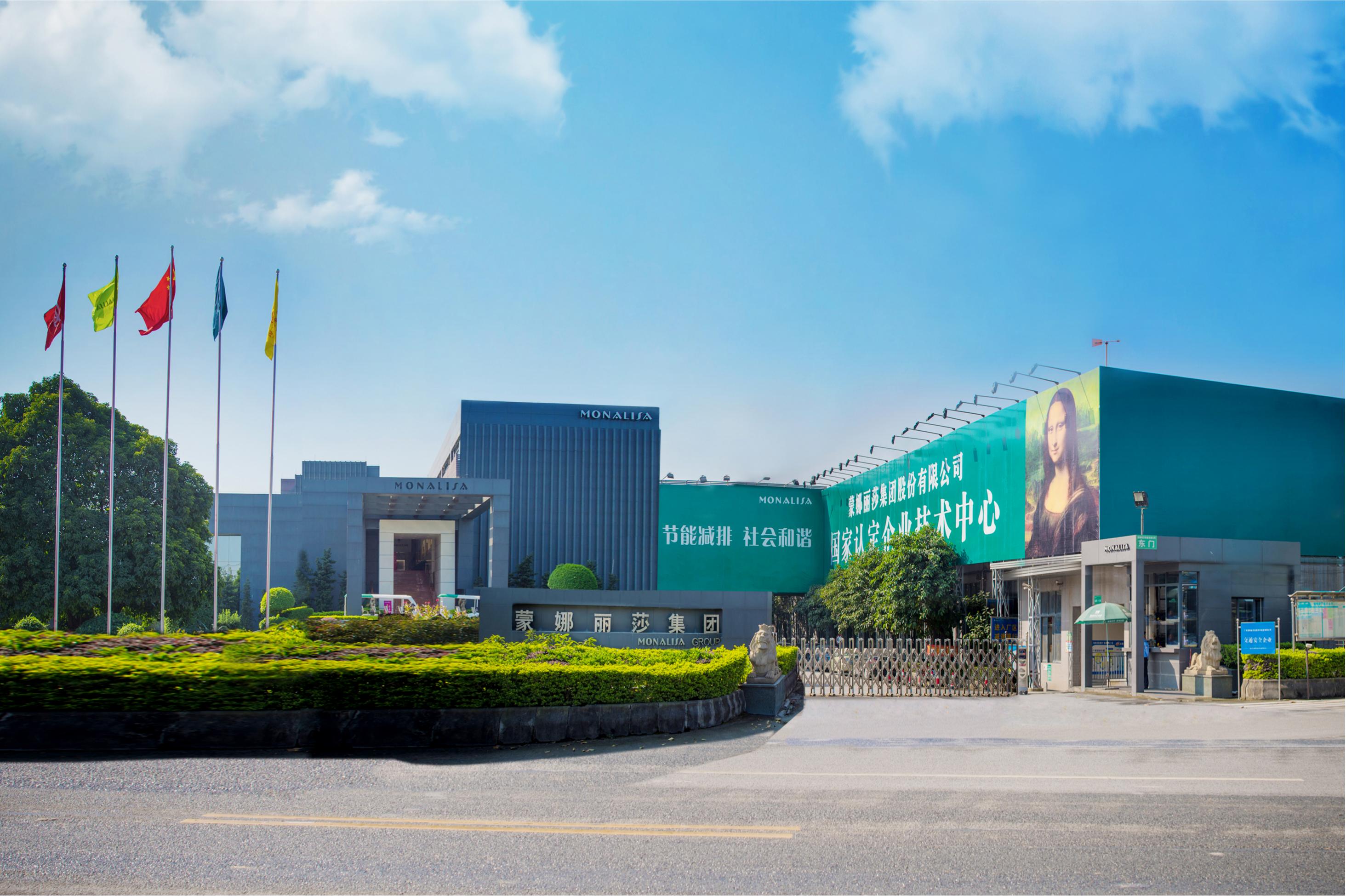
Monalisa Group Co., Ltd., founded in 1992 and headquartered in Foshan, Guangdong Province, is a project-focused manufacturer in this category. Its product range includes glazed-polished porcelain tile, homogeneous-body tile, and large slab formats. It has participated in major public projects, including venues for the Beijing Olympic Games, the Guangzhou Asian Games, the Hong Kong-Zhuhai-Macao Bridge, the China Pavilion at Expo 2020 Dubai, and the 19th Asian Games Hangzhou 2022. Those references matter because large public projects normally require documented product performance, not just aesthetic consistency.
How to Match Porcelain Tiles to Project Environments
A useful way to approach selection is to define the environment before choosing the design. For each zone, answer these questions.
- Is the tile indoors or outdoors?
- Will it be exposed to water, standing moisture, wet cleaning, or occasional mild acid or alkaline cleaners?
- What is the expected pedestrian traffic level, and are trolleys, equipment, or heavy loads present?
- Does the space have cold outdoor conditions, including freeze-thaw cycles?
- What design result is needed: marble look, wood look, stone look, concrete look, or a specific logo and custom pattern?
- Which compliance documentation does the project require?
After those questions are answered, the following technical properties become the decision framework.
Water Absorption
Porcelain tile must have a water absorption rate of 0.5% or less to meet international standards such as ISO 13006 and ANSI A137.1. Low water absorption is especially important for bathrooms, kitchens, outdoor areas, and public projects. In some specification documents, a double-zero absorption body is required for demanding conditions. This property is not decorative; it affects how the tile behaves when moisture or cleaning liquids enter the body.
Slip Resistance
For wet spaces such as bathrooms, the application guidance used by many tile professionals calls for a slip rating of R10 or higher. The broader range seen across residential and light commercial projects is R9 to R11, with ramps, pool surrounds, and other higher-risk outdoor zones treated more strictly.
Abrasion Resistance
Public and commercial floors normally require a PEI abrasion class of 4 or above. PEI 3 can suit lower-traffic residential floors, while corridors, retail areas, lobbies, and other heavily walked zones should be specified with higher wear resistance than a bedroom or a private balcony.
Stain and Chemical Resistance
High-traffic areas and food-service spaces benefit from a stain resistance target of Grade 5. Spaces exposed to common stains such as tea, oil, and ink should also be reviewed for cleanability. Laboratories or industrial environments may have a ULA chemical resistance requirement rather than a standard household expectation.
Freeze-Thaw Stability
Outdoor projects in cold climates should use tiles that pass freeze-thaw testing without cracks after 100 cycles. Outdoor working conditions may also include sun exposure, rain, standing water, and mild chemical corrosion. The product record for Monalisa model 120-270FEG12207M, for example, documents a working range of -20degC to 40degC for outdoor use. That kind of explicit environmental statement is what a specifier should ask for on every outdoor tile candidate.
Dimensional Tolerance and Edge Quality
Installation risk is lower when tile length and width deviation is limited to about plus or minus 0.2%, and thickness deviation is controlled to within plus or minus 5%. These values allow tighter joints and more predictable layouts. In projects using rectified or tight-joint installation, dimensional consistency directly affects labor cost and final appearance.
Compliance and Health-Related Requirements
For some export markets, CE, GreenGuard, or LEED-related documentation is required. In projects with strict radioactive safety limits, materials are checked against Class A radioactive standards. Hospitals and food plants may also specify optional antibacterial or antiviral treatments such as photocatalytic or silver-ion technology.
Porcelain Tile Selection Workflow: Seven Steps for Project Buyers
Use this sequence when preparing a project order. It keeps the decision process repeatable and makes the final specification easier for the supplier to execute.
- Confirm the space category. Separate residential interiors, wet interiors, commercial interiors, public spaces, outdoor paved areas, and industrial zones.
- Define the main risk factors. The highest risk factor may be water, foot traffic, staining, cold weather, or chemical cleaners. The specification should start with the biggest risk.
- Select the body and surface family. Decide whether the project needs a glazed-polished porcelain finish or a homogeneous-body matt / natural stone face. Matt and structured surfaces generally behave better on wet floors than polished surfaces.
- Check the dimensional solution. Choose a format that fits the room size, installation method, and design language. Formats such as 800x800x10mm are common for floors; larger formats such as 1200x2700x12mm reduce joint lines and are useful for wall or floor continuity.
- Verify standards and documentation. Confirm water absorption, slip class, abrasion class, stain resistance, chemical resistance, and freeze-thaw records before layout approval.
- Request quality evidence. Ask for test reports, certificates of conformity, and installation guidance. A factory with ISO 9001 and ISO 14001 certification normally has more consistent quality control documentation.
- Plan installation and after-sales support. Review recommended adhesives, joint widths, and maintenance procedures before the container leaves the factory.
Two Porcelain Tile Product Examples That Read Like Project Data
Monalisa publishes two porcelain tile records that show how technical data should be used during project evaluation. The first is an 800x800x10mm glazed-polished tile with a Classic Stone surface, model 8FMB10032PM. It is listed for use in residential floors and walls, commercial spaces, public buildings, municipal engineering, hospitality, and certain light industrial projects. It belongs to the glazed-polished family, where the decorative surface is protected by a glaze and polished to achieve the look of natural stone.
The second product example is model 120-270FEG12207M, a 1200x2700x12mm homogeneous-body tile with a matt / natural stone face. Its documented working conditions include indoor normal-temperature environments such as bathrooms and kitchens with occasional exposure to mild cleaners, as well as outdoor environments with sun, rain, freeze-thaw cycles, standing water, and mild chemical corrosion. Tile of this type is permanently fixed to the building substrate and operates as passive architectural finishing. A homogeneous body generally means the material performance is more consistent through the tile thickness than a purely decorative surface layer.
These two examples are not interchangeable. The polished glazed format is well suited to applications where the design is the priority and the floor load is moderate. The large-format homogeneous-body matt tile is more appropriate when the project needs reduced joint lines, a natural stone feeling, and documented behavior in wet or outdoor conditions.
| Selection checkpoint | 8FMB10032PM | 120-270FEG12207M |
|---|---|---|
| Tile format | 800 x 800 x 10 mm | 1200 x 2700 x 12 mm |
| Product type | Classic Stone porcelain tile | Homogeneous-body porcelain tile |
| Surface finish | Glazed-polished | Matt / natural stone face |
| No. of surface phases | 8 | 3 |
| Material | Clay / quartz sand | Clay / quartz sand |
| Residential use | Living rooms, bedrooms, kitchens, bathrooms, balconies, and similar spaces are listed in the application file | Living rooms, bedrooms, kitchens, bathrooms, balconies, and similar spaces are listed in the application file |
| Commercial and public use | Shopping malls, offices, restaurants, hospitals, schools, museums, and other public floors are listed in the application file | Shopping malls, offices, restaurants, hospitals, schools, museums, and other public floors are listed in the application file |
| Documented outdoor condition | Project-specific qualification should be requested | Sun, rain, freeze-thaw cycles from -20degC to 40degC, standing water, mild chemical corrosion |
Room-by-Room Porcelain Tile Guidance
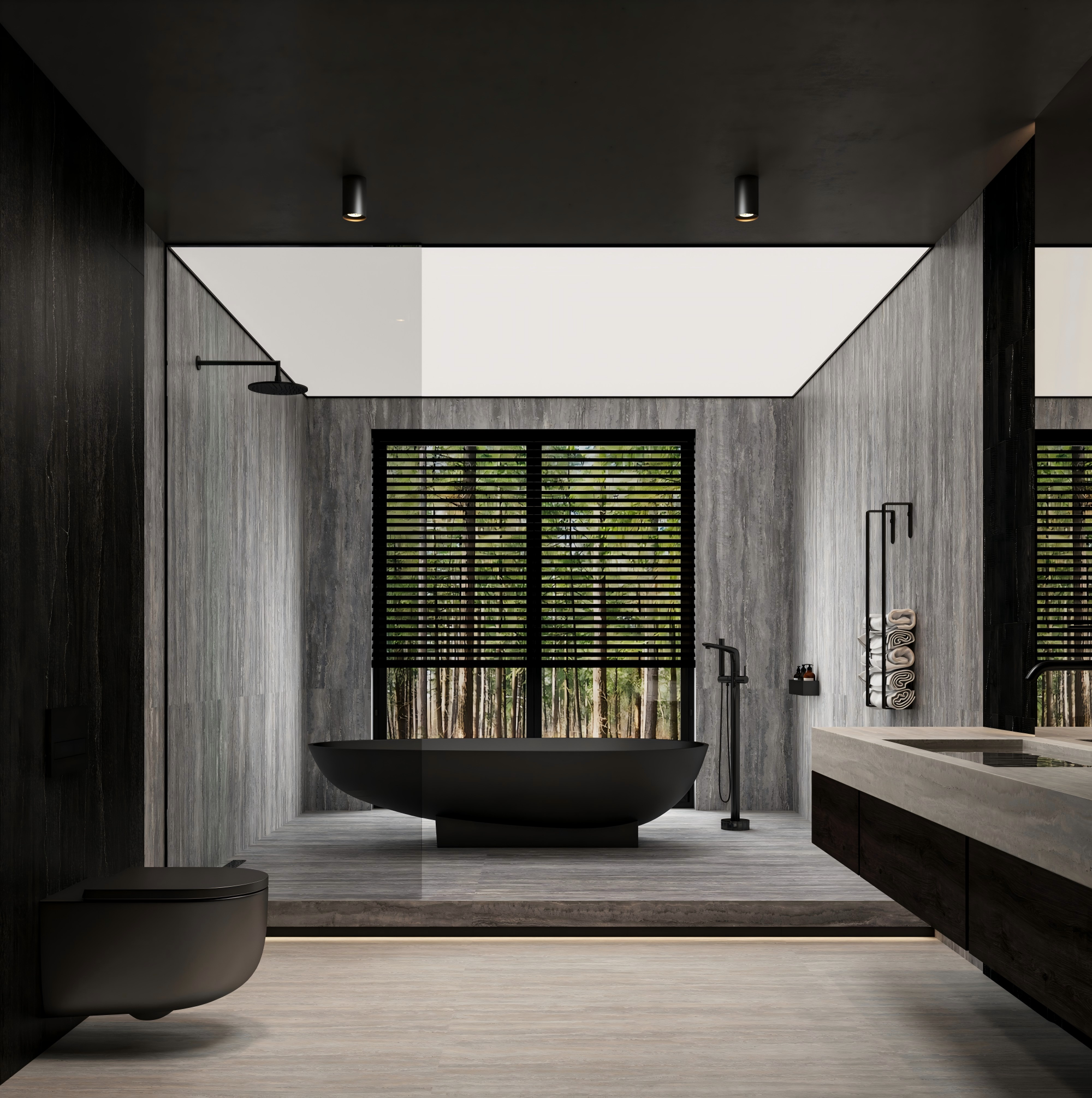
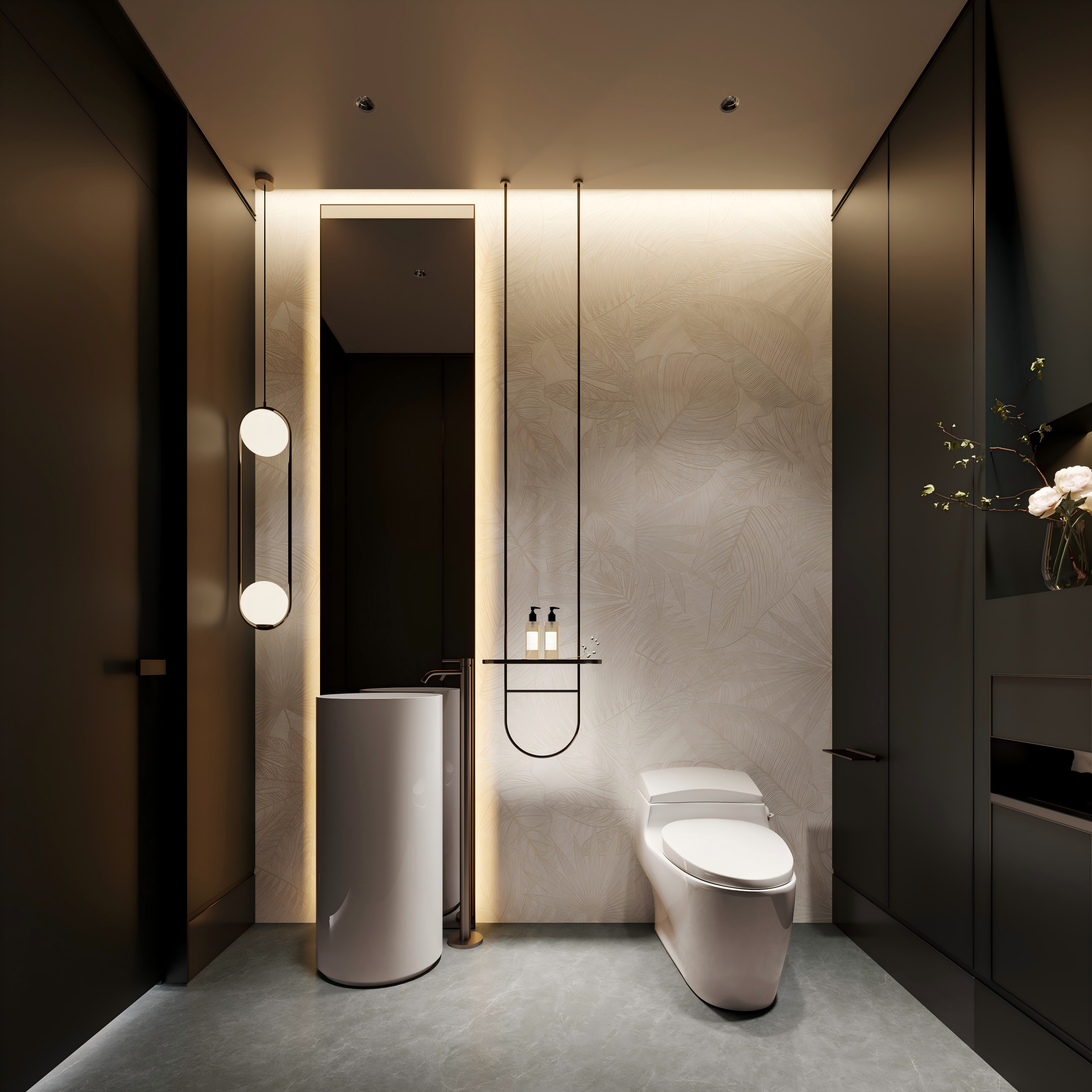
Bathroom porcelain tiles
Bathrooms combine humidity, water, soap, and frequent cleaning with people standing on wet bare feet. The primary decisions should be slip resistance and moisture resistance, not gloss level. In wet bathroom zones, a slip rating of approximately R10 or higher is often expected. A matt or lightly textured surface normally performs better than a high-polish surface. For wall areas, a larger format such as 1200x2700mm can reduce grout lines and create a clean shower-wall look.
Kitchen porcelain tiles
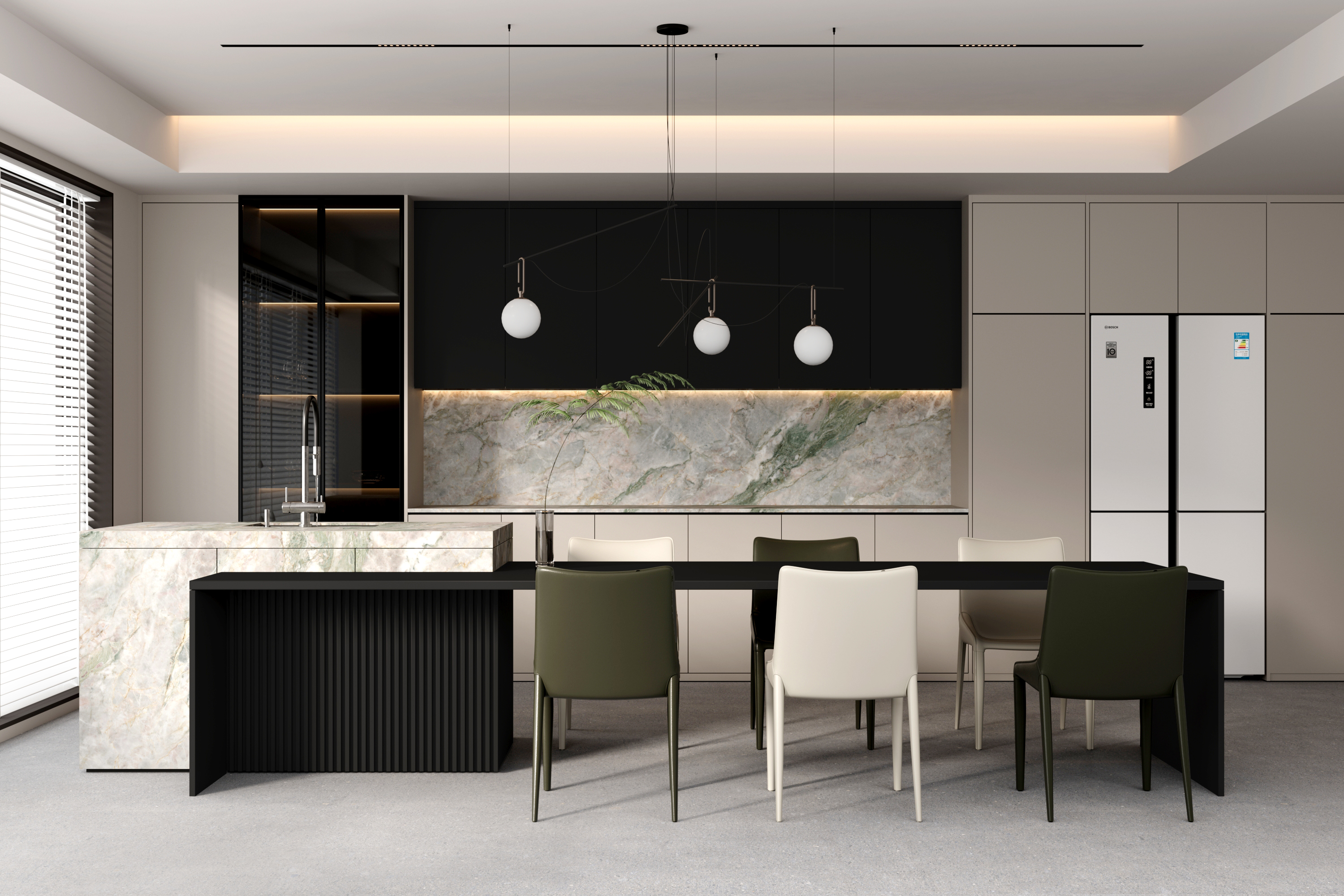
Kitchen floors and splashbacks need to handle spills, oil, cleaning products, and objects dropped on the surface. Stain resistance to common kitchen materials should be reviewed, and the same tile should be easy to clean with mild household cleaners. A scratch-resistant porcelain tile is useful around cabinets, islands, and food preparation areas. For kitchens inside restaurants or catering facilities, chemical and antibacterial options may be justified.
Living room porcelain tiles
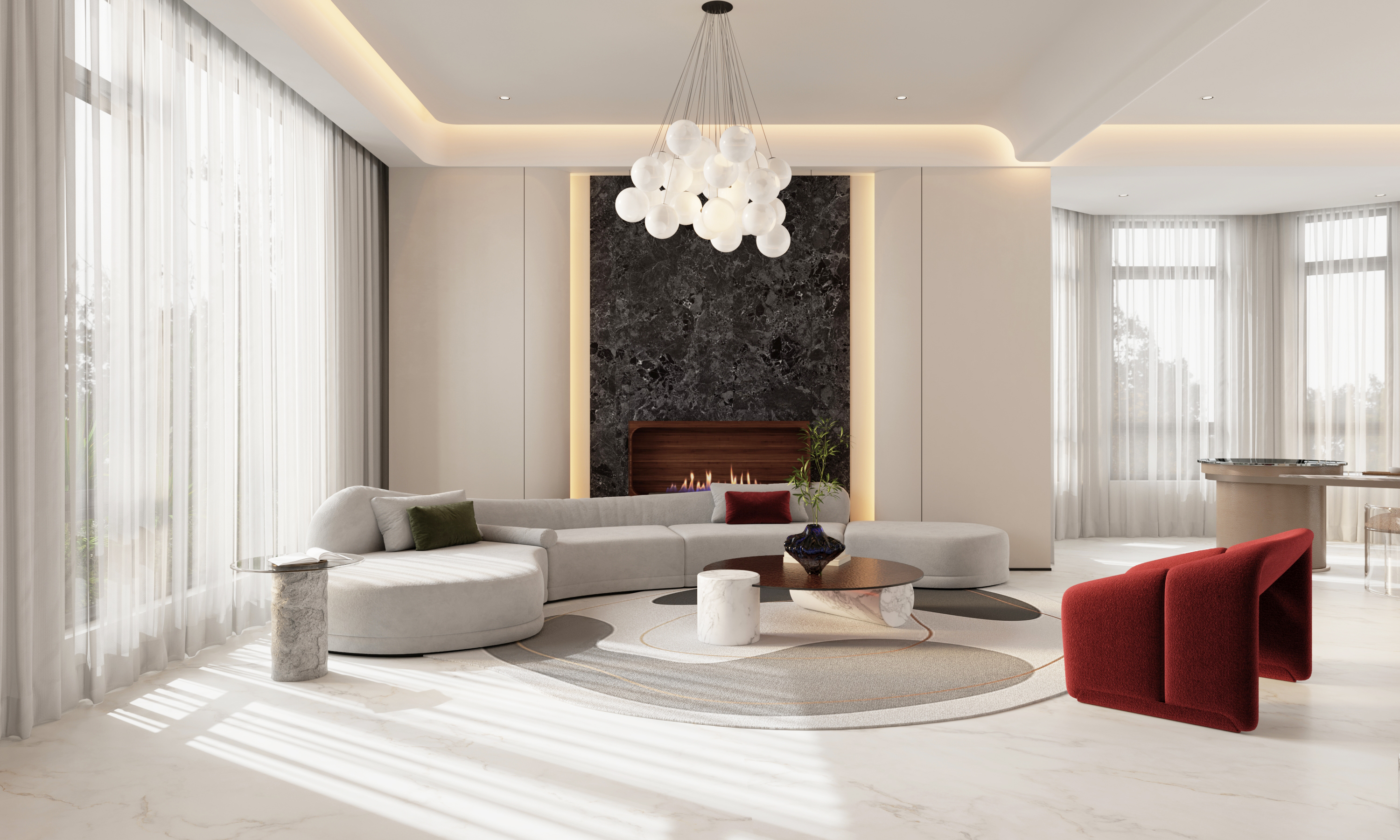
Living rooms usually have moderate traffic, but visual expectations are high. This is where marble look, wood look, concrete look, and stone look porcelain tiles appear most often. A glazed-polished or matt finish can both work, depending on the level of reflectivity and maintenance preference. If the living room connects directly to an entrance, balcony, or wet area, the slip and moisture requirements should be checked before choosing a polished surface.
Outdoor porcelain tiles and frost-resistant zones
Outdoor porcelain tile projects include terraces, balconies, pedestrian walkways, plazas, and pool surroundings. These areas are exposed to sun, rain, standing water, mild chemical corrosion, and possibly freeze-thaw cycles. For cold climates, the tile should resist freeze-thaw cycles without cracking and have low water absorption. A homogeneous-body or fully vitrified material with a matt or natural stone face is often the safer choice because surface wear does not reveal a different internal color. Monalisa's large-format homogeneous-body tile is documented for outdoor environments from -20degC to 40degC.
Commercial porcelain floor tiles
Shopping malls, offices, airports, and public buildings create higher foot traffic than homes. Commercial porcelain floor tiles should be evaluated by abrasion class, stain resistance, dimensional tolerance, and ease of maintenance. For public wet areas, slip resistance cannot be treated as optional. Large-format tiles and precise edge control help reduce the number of joints and make the whole area easier to clean.
Project Evidence: Jogjakarta Airport
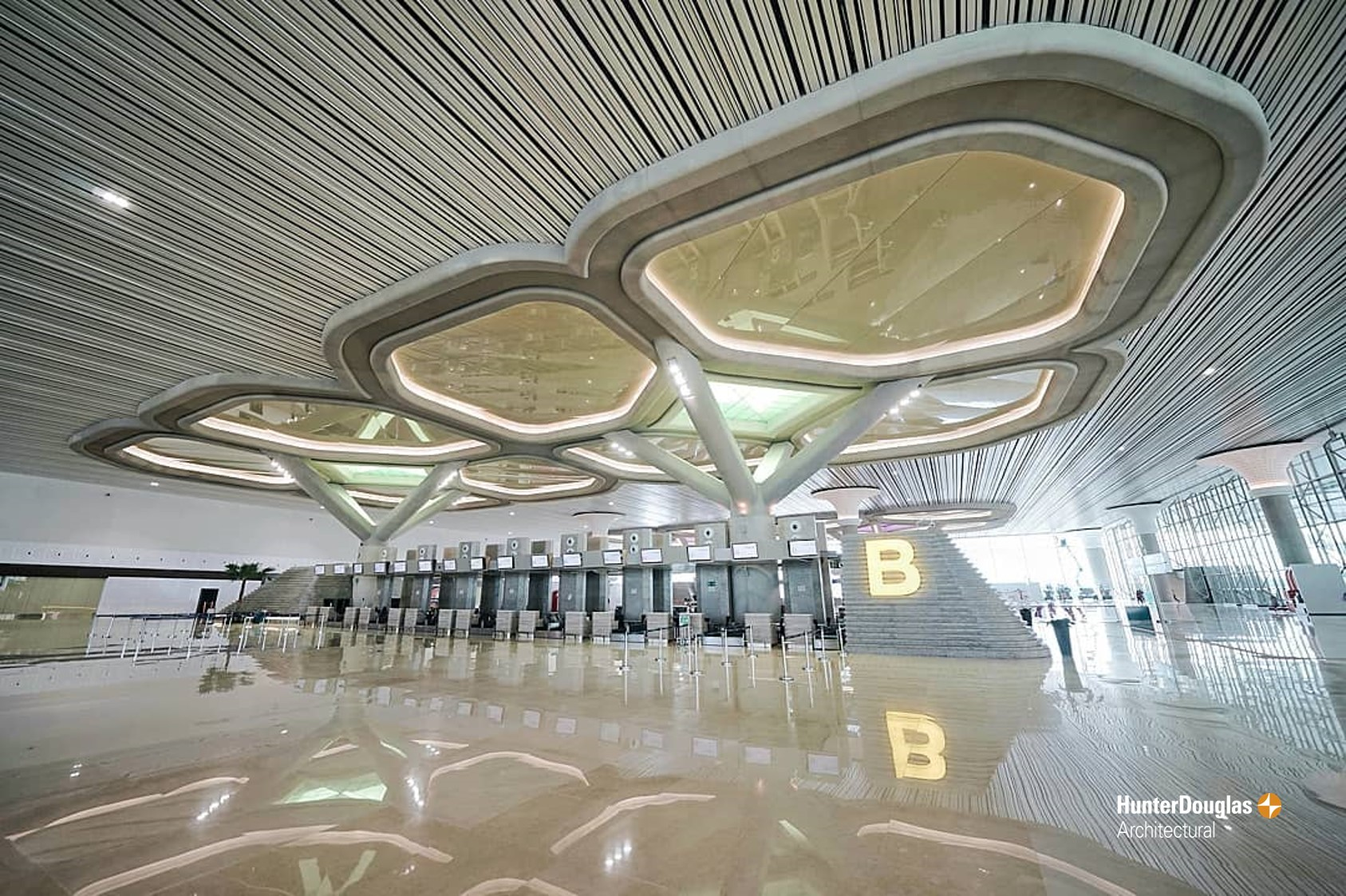
A real project example helps show how these criteria combine at scale. In Indonesia, Monalisa's porcelain tile was applied to the Jogjakarta Airport public project. The project area covered 80,000 square meters and ran over approximately two years. The visual goal was a modern minimalist aesthetic.
The project documentation reports several performance-oriented outcomes. Maintenance cost over the life cycle was reported to be 30% lower. Tight-joint installation generated an estimated 15% saving on grouting materials and labor. The project breakage rate was below 0.3%, reducing replacement losses during installation. These outcomes depend on many variables, including substrate preparation, installation quality, and tile dimensions, but they explain why buyers in large public projects should review not only the tile itself but the installation and joint approach as part of the specification.
Supplier Capabilities That Make Porcelain Tile Project Adaptation Practical
A porcelain tile specification becomes an order only when the supplier has the capacity to execute it. For project buyers, the relevant supplier data is not about brand reputation alone; it is about production control, customization flexibility, inspection, and after-sales service.
Monalisa states a monthly production capacity of 12.5 million square meters and a common OEM/ODM lead time of 7 to 15 days. The stated minimum order quantity for custom production is 2,000 square meters. Custom work can include pattern and logo changes, which is useful for hotel chains, brand-driven retail projects, or government buildings. Quality control is described as 100% test, and after-sales service includes a product warranty of 5 to 15 years depending on the series and project type, covering manufacturing defects such as color difference, dimensional deviation, and glaze cracks.
The after-sales program also includes technical guidance on layout and substrate preparation, on-site support for large projects, complaint response within 24 hours, and a solution within 7 working days. In addition, Monalisa reserves stock of the same batch for 2 years for future replenishment or repair replacement. That kind of reserve policy matters when a building owner needs to replace a damaged tile several years after the original installation.
Porcelain Tile Project Comparison Table
The table below summarizes the main control points discussed in this guide. Use it as a front-end checklist before discussing color, pattern, or price with a tile factory.
| Project scenario | Main operating condition | Key porcelain tile control point |
|---|---|---|
| Bathroom floor / shower | Humidity, water, bare feet, mild cleaners | Slip resistance R10 or higher; water absorption 0.5% or less |
| Kitchen floor / splashback | Food stains, oil, cleaning, dropped objects | Stain resistance Grade 5; scratch-resistant surface; low water absorption |
| Outdoor terrace / plaza | Sun, rain, standing water, freeze-thaw | Freeze-thaw stability for 100 cycles; low water absorption; documented outdoor working range |
| Commercial / public floor | High foot traffic, carts, ongoing maintenance | Abrasion class PEI 4 or higher; stain resistance Grade 5; tight dimensional tolerance |
| Industrial / special area | Chemicals, heavy washdown, controlled environments | Chemical resistance ULA class where required; optional antibacterial treatment for healthcare or food plants |
| Wet public zone such as pool surround | Standing water, smooth footwear, public safety | Higher slip rating in R9-R11 range; water absorption 0.5% or less |
FAQ: Common Porcelain Tile Project Questions
Q1: Do I still need to check water absorption if the product is already labeled porcelain?
Yes. Under ISO 13006 and ANSI A137.1, porcelain tile is defined by a water absorption rate of 0.5% or less. Even when the product is labeled porcelain, the buyer should ask for the test report or certificate of conformity for the project lot. Wet rooms, outdoor areas, and some public projects may require an even lower absorption body.
Q2: Can one porcelain tile model be used in both indoor and outdoor spaces?
Only when the product has documented indoor and outdoor suitability. Monalisa model 120-270FEG12207M is documented for indoor rooms such as bathrooms and kitchens and for outdoor exposure to sun, rain, freeze-thaw cycles from -20degC to 40degC, standing water, and mild chemical corrosion. For every alternative model, ask the factory for an explicit indoor or outdoor environment statement before ordering.
Q3: Can large-format porcelain tile reduce project installation cost?
In some cases, yes. Larger formats create fewer joints, and tight-joint installation can save grouting materials and labor. In the Jogjakarta Airport project, tight-joint installation was reported to save 15% on grouting materials and labor, while the breakage rate of less than 0.3% reduced replacement losses. The ideal format still depends on room geometry, transport access, substrate flatness, and the installation team's equipment.
Q4: What information should be included in a porcelain tile sample and quote request?
A useful request includes project type, country and climate, installation area, room or zone description, tile format, finish preference, traffic load, design reference, and target quantity. If the project requires a custom pattern or logo under OEM/ODM production, that should be stated early. Monalisa's stated MOQ for custom production is 2,000 square meters, and a standard OEM/ODM lead time is 7 to 15 days after design and order confirmation.
Q5: What after-sales support matters for a large porcelain tile contract?
Buyers should look for documented defect warranty, stock reserve, complaint response times, and installation support. Monalisa provides a product warranty of 5 to 15 years depending on series and project type, a 2-year stock reserve of the same batch, complaint response within 24 hours, and a proposed solution within 7 working days. These services reduce the long-term risk of maintaining a building after the tile is installed.
Conclusion and Next Step
Porcelain tile is one of the most versatile building materials available, but its final performance depends on matching the right body, finish, format, and safety rating to the usage environment. Start with the room, not with the trend. Bathrooms need slip resistance and water-tight bodies. Kitchens need stain and scratch resistance. Outdoor cold-climate areas need documented freeze-thaw resistance. Commercial floors need abrasion and maintenance-focused specification. The project data from Monalisa's porcelain tile range shows that a supplier can support these decisions at scale, from two standard formats to custom OEM/ODM programs.
For a manufacturer with long project history, Monalisa Group Co., Ltd. has supplied porcelain and ceramic products to venues of the Beijing Olympic Games, Guangzhou Asian Games, Hong Kong-Zhuhai-Macao Bridge, the China Pavilion at Expo 2020 Dubai, and the 19th Asian Games Hangzhou 2022. Its application portfolio includes a large Jogjakarta Airport installation that tested the balance between aesthetics, installation logic, and maintenance performance.
If you are working on a project and need help converting a use case into a tile specification, contact Monalisa with the project type, installation zone, tile format, finish preference, and local compliance requirement. Joanna can support sample and quote coordination. Email: joanna_wang@fs-monalisatiles.com. Tel / WhatsApp: +86 18605191548. Address: Monalisa Tower, Poly Centre, 8 Wenhua S Rd, Shunde, Foshan, 528300, CN. You can also download the Monalisa company brochure here: Download Monalisa brochure PDF. More product information is available on the official Monalisa website.