
Porcelain Tile vs. SPC Flooring: Wet-Zone Decision Framework for Commercial Projects
In a high-moisture commercial zone, the choice between porcelain tile and SPC flooring is settled by three technical questions rather than by appearance: how much water reaches the floor, how slippery the surface becomes once it does, and whether the floor is a permanently bonded layer or a floating assembly that can be lifted. Answer those three and the specification usually writes itself.
Porcelain tile is a dry-pressed ceramic tile classified under ISO 13006 Group BIa, with water absorption of 0.5% or less and an average mechanical resistance above 40 N/mm². SPC (stone plastic composite) flooring is a rigid-core plank with a click-lock edge, normally installed as a floating floor over an underlayment. Both are marketed as waterproof. They are not waterproof in the same way, and that difference is what separates a commercial washroom, a hotel kitchen and an exposed terrace from a dry retail floor.
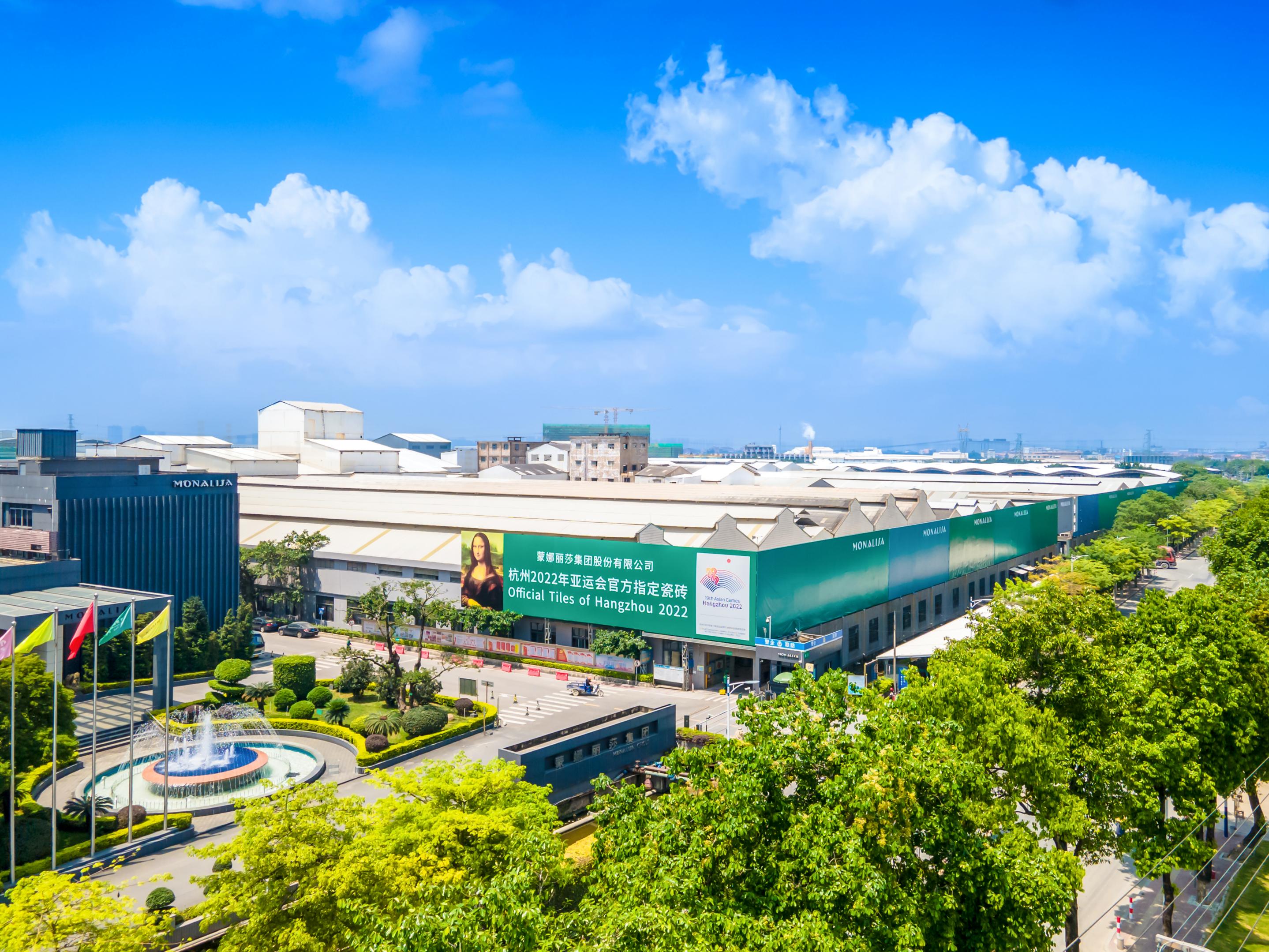
Monalisa Group Xiqiao headquarters, Foshan, Guangdong — the group manufactures architectural ceramics and also carries SPC flooring in its portfolio.
“Waterproof” Is a System Property, Not a Product Property
A tile or plank can pass a water-absorption test and still fail in service. What fails in a wet commercial zone is the assembly: the joint, the perimeter, the penetration, and the interface between the floor and the substrate. Buyers who compare only the surface material usually discover this during the first cleaning cycle, not during the handover inspection.
Three failure points account for most wet-zone flooring complaints:
- Water path. Water that crosses the surface has to go somewhere. On a bonded tile floor it sits in the grout joint or evaporates; on a floating floor it can migrate through the click joints and be trapped beneath the planks, where it has no route to drain.
- Slip performance under contamination. A dry slip result tells almost nothing about a floor that receives soap, grease or rain. Wet slip must be tested wet, with the actual surface finish being purchased.
- Fixing method. A static, adhesively bonded floor behaves differently from a floating floor in respect of substrate tolerance, movement, drainage falls, repairability and build-up height at thresholds and lift lobbies.
Industry Background: Why Water Absorption Became the Dividing Line
Water absorption is not a marketing figure; it is the classification basis of the category. ISO 13006:2018 places porcelain tile in Group BIa, defined by water absorption (E) of 0.5% or less combined with an average mechanical resistance above 40 N/mm². The same 0.5% threshold appears in international trade classification: UN Comtrade separates ceramic paving and wall tiles partly by a water-absorption band “not over 0.5% by weight”. A specifier who fixes that threshold in the tender documents is therefore using a recognised dividing line, not a supplier preference.
The supply side is contracting, which raises the value of documentation. World tile production fell to 14.95 billion m² in 2024, a 6.2% decrease on 2023, according to MECS/Acimac research. Commercial research cited by Spherical Insights projects the global porcelain tile market growing from USD 9.73 billion in 2024 toward USD 18.33 billion by 2035. Consolidation of that kind has a procurement consequence: fewer, larger factories and more pressure on buyers to verify certificates, test reports and batch consistency rather than rely on category reputation.
The Detailed Comparison: Four Axes That Decide the Specification
Axis 1 — Water absorption: read the standard first, then the datasheet
The compliance floor for porcelain is ISO 13006 Group BIa at ≤0.5%. Actual production figures are often far below that floor. Monalisa, a Foshan-based manufacturer of ceramic tiles, ceramic slabs and SPC flooring founded in 1992, publishes ≤0.08% water absorption for its porcelain range, produced on fully automatic presses with compaction force up to 48,000 kN and a nano-scale glaze system. Some suppliers describe product below 0.1% as “double-zero” absorption; that phrase is commercial shorthand, and the enforceable reference remains the ISO group and the declared value on the datasheet.
Density is the reason the number matters. A denser body carries consequences beyond water: Monalisa reports breaking strength of ≥45 MPa against ≥35 MPa for conventional tile, wear volume ≤140 mm³ against ≤540 mm³, flatness tolerance ≤±0.15%, and 150 freeze-thaw cycles without cracking. For a terrace or an unheated loading bay, freeze-thaw resistance is the specification that prevents spalling; for a washroom, it is stain resistance Grade 5 that keeps the floor looking specified.
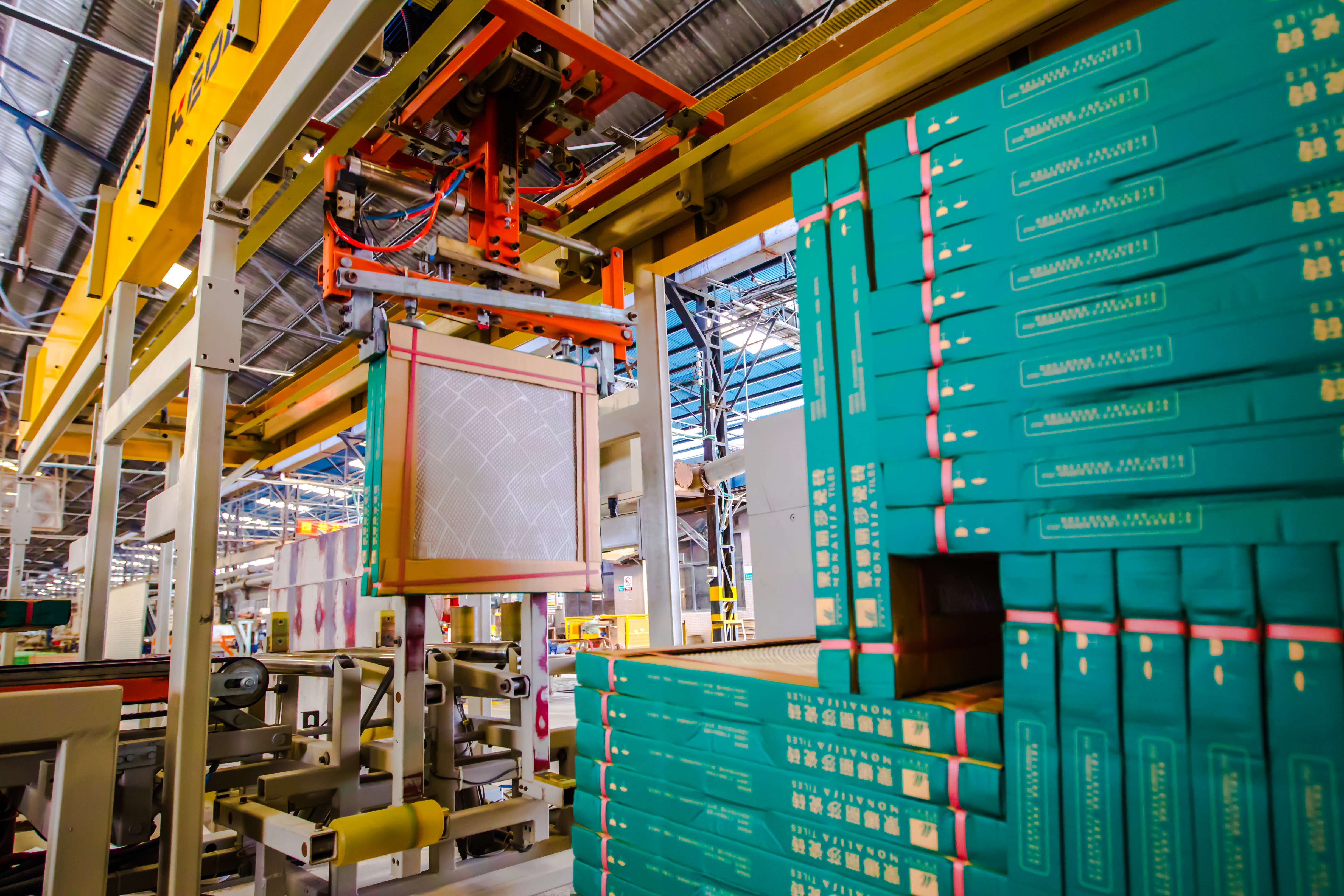
Automated handling at a Monalisa production base. Dense bodies and tight dimensional tolerance are process outcomes, not decorative claims.
Axis 2 — Slip resistance: R-class and wet BPN measure different things
Two test families dominate wet-zone specification. Ramp testing produces the R-class (R9, R10, R11 and above) and is commonly used for commercial floors; pendulum testing produces a British Pendulum Number measured wet (wet BPN). A defensible procurement line for bathrooms, commercial kitchens and pool surrounds is a wet BPN of at least 50, or R10 and above, evidenced by a batch test report rather than a catalogue icon.
Surface finish changes the answer within the same product family. A polished marble-look porcelain and a textured stone-look porcelain can share a water absorption value and behave completely differently underfoot. For SPC flooring, slip performance is governed by the wear layer and surface embossing, and it degrades in service as the surface collects grease and cleaning residue. In both systems the only reliable evidence is a wet test on the finish actually being supplied, plus a cleaning regime that removes residue rather than redistributing it.
Axis 3 — Fixing method: bonded and static versus floating and demountable
Porcelain tile is a static floor. It is bonded with cement-based adhesive over a sound, cured substrate; falls to a drain are formed in the screed; movement joints are placed at designed intervals; and the finished floor becomes part of the building fabric. SPC flooring is a floating assembly: planks click together, expansion gaps are held at the perimeter, and the floor can be lifted to reach services. That is a genuine operational advantage in a letting or refit environment, and a genuine liability in a room where water is hosed or mopped daily.
Build-up height and substrate tolerance are the two places where the fixing method shows up in the budget. A floating floor is more forgiving of minor substrate variation but telegraphs unevenness through the joint line; a bonded tile floor requires a flatter substrate but tolerates thermal movement through designed joints rather than through the plank edge. Neither is cheaper in the abstract — the cost sits in different lines of the bill.
Axis 4 — Maintenance, repair and lifecycle cost
Porcelain requires water or a neutral detergent and no waxing; Monalisa reports stain resistance Grade 5 with coffee, oil and ink wiping clean, and a breakage rate of ≤0.3% against roughly 0.8% for standard tiles. The repair economics are the underrated factor: with tight-joint installation (grout gap ≤0.5 mm) and a two-year batch stock reserve, an individual tile can be replaced without a visible colour break. Monalisa’s published comparison puts the unit price of its porcelain 15–30% above conventional tiles while total lifecycle cost runs 20–35% lower, and tight-joint laying saves a reported 10–15% in grouting material and labour.
Floating floors are quicker to replace locally and easier to remove entirely, but a damaged plank in a wet zone is often a symptom rather than the fault. Replacing it without correcting the moisture path below simply resets the clock.
Where SPC flooring wins — and where it should not be specified
A balanced view matters here, because SPC is not a compromised alternative; it is a different product for a different condition. SPC wins in dry and semi-dry interiors with fast programmes, in spaces that must be demountable for service access, and in refurbishments where the existing floor cannot be removed or where wet trades are impractical. It also wins where underfoot warmth and quiet are commercial requirements without a heating system.
It should generally not be specified on fully exposed exterior terraces, where direct sun, rain and thermal cycling act on the core and the locking joints, and it should be treated with caution in rooms with floor drains, daily wash-down, or standing water. In bathrooms, SPC can perform if the substrate is protected, joints and perimeter are sealed, and the design accepts that water reaching below the planks has no drainage path. Those are conditions to state in writing, not assumptions to leave to the installer.
How Monalisa covers both sides of the decision
Monalisa Group Co., Ltd. manufactures porcelain tile, ceramic slabs and SPC flooring, which means the specification can be split by zone instead of forced into a single product. The group operates four production bases — Xiqiao (Foshan), Qingyuan (Guangdong), Tengxian (Guangxi) and Gao’an (Jiangxi) — with 37 production lines recorded in its CNINFO filing, and holds ISO 9001, ISO 14001 and ISO 45001 certification. In practice this allows a project to place porcelain in washrooms, kitchens and terraces and SPC in dry back-of-house or demountable areas, with one documentation set and one batch-traceability route.
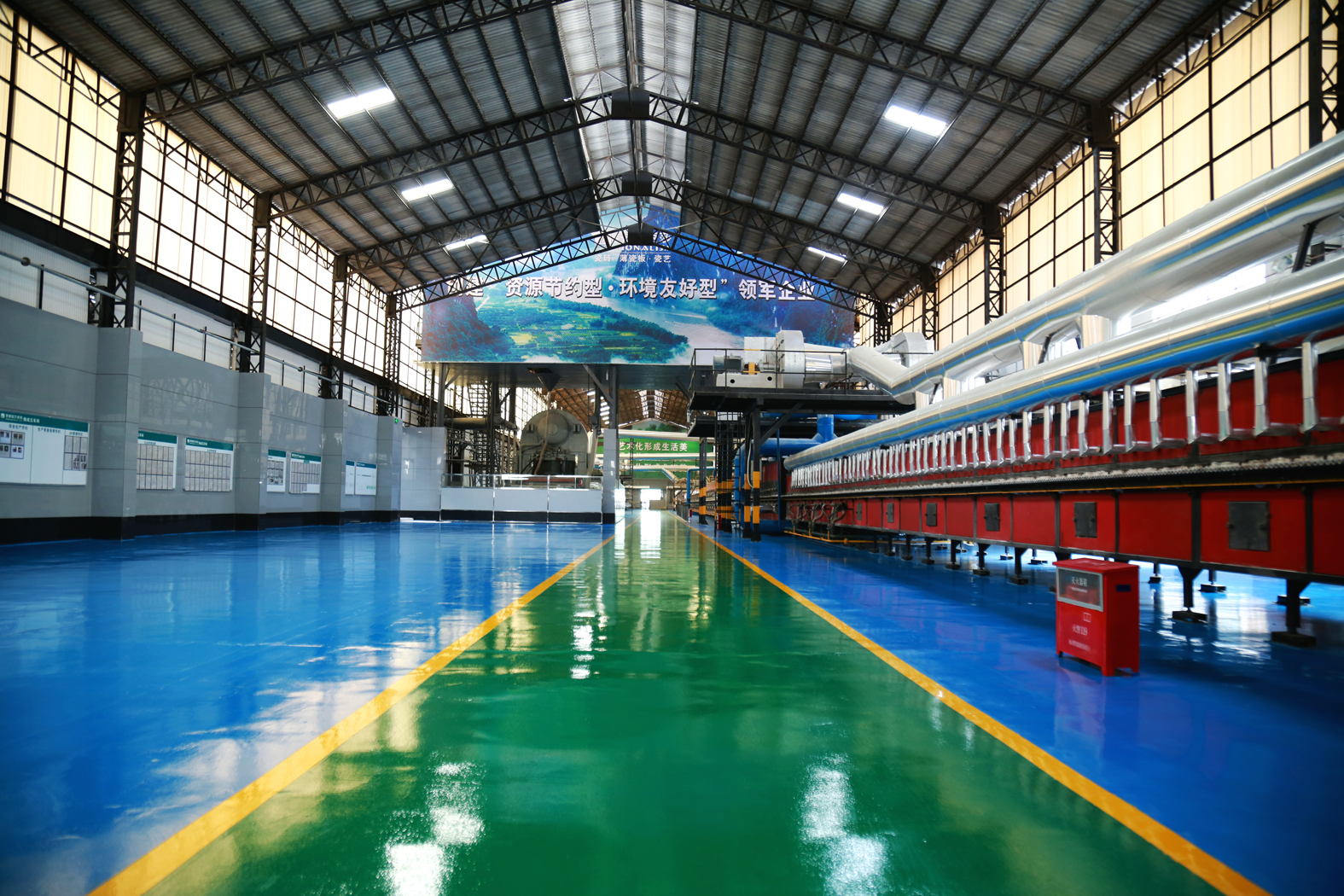
Monalisa workshop. Eighteen quality-control points run from raw-material intake to sorting and packaging.
Step-by-Step: How to Specify a High-Moisture Zone
Step 1 — Map the zone before choosing the material
Classify every area as wet, semi-wet, dry or exterior, and record the water source (spray, hose, rain, condensation, cleaning). This single drawing removes most of the disagreement between design intent and facilities reality.
Step 2 — Write the compliance floor into the tender
State ISO 13006 Group BIa (≤0.5% water absorption) for porcelain, the required wet BPN or R-class, and the documents to be submitted: datasheet, batch test report, and for CE-marked supply a Declaration of Performance against EN 14411 with product scope and thickness matching the order. Where freeze-thaw exposure applies, require a freeze-thaw test result.
Step 3 — Resolve substrate, falls and joints
For bonded porcelain, define screed falls to drains, waterproofing membrane, movement-joint layout and the flatness tolerance the installer must achieve. For floating SPC, define substrate flatness, underlayment, perimeter gaps, sealing at wet boundaries and thresholds.
Step 4 — Test a mock-up, not a catalogue sample
Build a mock-up with the specified adhesive, grout and finish, then wet-test slip on the installed surface, run stain tests with coffee, oil and ink, and check joint alignment and lippage against the declared flatness tolerance. Keep the approved sample as the contractual reference.
Step 5 — Plan batches and traceability
Colour variation is a batch issue, not a defect in the abstract. Monalisa controls shade through automatic colour sorting and spectrometer inspection, laser- or RFID-marks tiles for traceability to production date, press station, kiln zone and inspector, and holds a two-year batch stock reserve for repairs. Ask every supplier how shade is controlled, how a repair tile will be matched in three years, and what the reserve policy is.
Step 6 — Hand over with a maintenance regime
A floor fails when cleaning is designed separately from the specification. Hand over the cleaning agents, dilution, frequency and the prohibited products, and record the wet slip result achieved on the mock-up as the baseline.
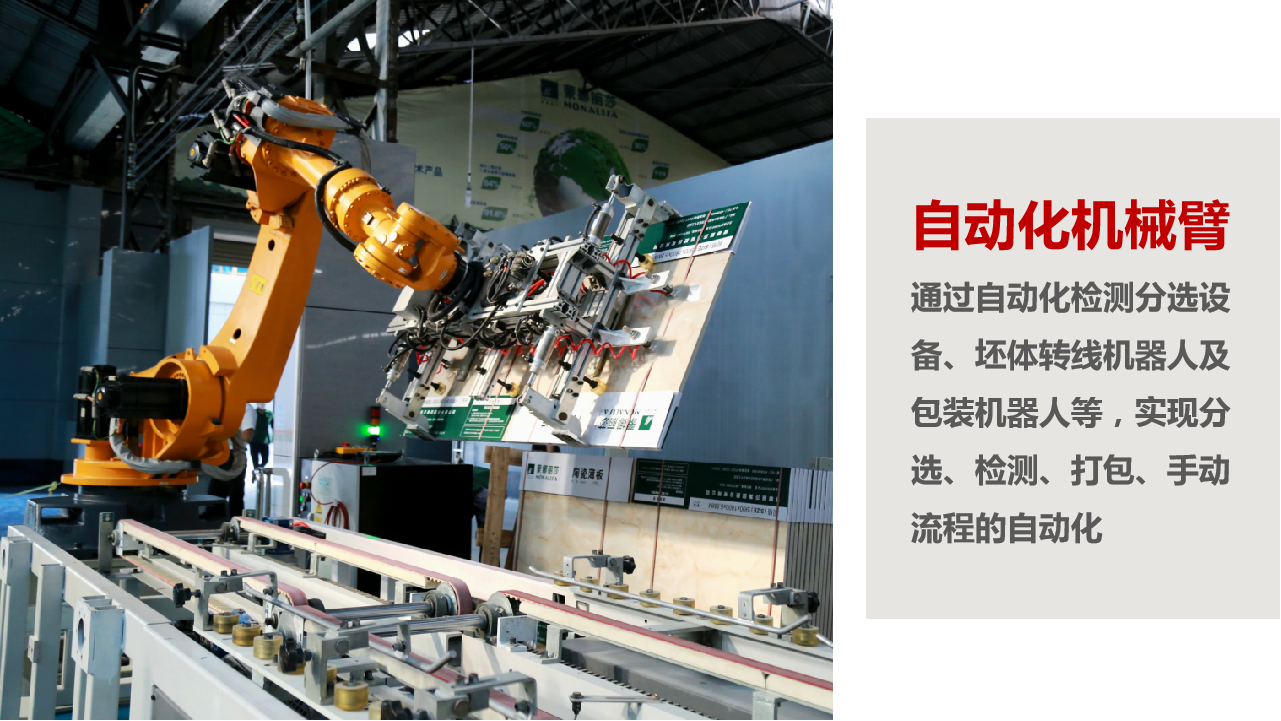
Robotic handling on a Monalisa line. Process control — not post-installation correction — is where dimensional and shade consistency are determined.
Use Cases: Where the Decision Changes
The same two materials produce different answers in different building types, which is why a generic recommendation is unsafe.
- Commercial spaces (washrooms, food courts, retail back-of-house). Porcelain on floors with daily wash-down and grease; SPC acceptable in dry staff areas and demountable fit-outs.
- Public buildings (stations, schools, civic halls). Porcelain, on abrasion resistance and repairability grounds; heavy-duty grades with PEI Grade 5 and Mohs ≥7 are the reference point for Monalisa’s range.
- Hospitality & tourism (hotel bathrooms, spa floors, pool surrounds). Porcelain with wet BPN ≥50 or R10+; SPC only in guest rooms and dry corridors, with sealing at bathroom thresholds.
- Municipal engineering (pavements, plazas, transit halls). Frost-resistant porcelain with documented freeze-thaw cycles; SPC is not a candidate for exposed exterior paving.
- Residential construction (bathrooms, kitchens, balconies). Porcelain in wet rooms and balconies; SPC in living areas where acoustic comfort and fast installation matter.
Head-to-Head Comparison Table
The table compares the two systems on the criteria that decide wet commercial zones. Values are drawn from ISO 13006 classification, Monalisa’s published product data and standard installation practice for each system.
| Decision criterion | Porcelain tile | SPC flooring |
|---|---|---|
| Water absorption | ISO 13006 Group BIa, ≤0.5%; Monalisa states ≤0.08% for its porcelain body | Rigid composite core with a closed surface; performance depends on click joints, perimeter sealing and substrate protection |
| Slip resistance | Specify by test: wet BPN ≥50 or R10+, verified on the actual finish | Wear-layer texture and coating determine class; wet performance falls as grease and residue collect |
| Fixing method | Static, adhesively bonded with cement-based adhesive and grout; becomes part of the building fabric | Floating, click-locked with perimeter expansion gaps; demountable for service access |
| Substrate demand | Sound, cured screed with formed falls to drain; flatness tolerance ≤±0.15% declared by Monalisa | Flat substrate within plank manufacturer tolerance; unevenness telegraphs at the joint |
| Exterior exposure | Frost-resistant grades with documented freeze-thaw cycles (Monalisa: 150 cycles) suit terraces | Generally not specified for fully exposed terraces under sun, rain and thermal cycling |
| Repair strategy | Single-tile replacement using batch-matched stock; two-year reserve avoids colour break | Plank replacement where disassembly access exists; underlying moisture must be corrected first |
| Cleaning | Water or neutral detergent, no waxing; stain resistance Grade 5 | Damp cleaning; standing water and aggressive chemicals are the main risks |
| Cost logic | Unit price 15–30% above conventional tile, lifecycle cost 20–35% lower, breakage ≤0.3% | Cost driven by substrate preparation, trims and replacement cycle; compare installed cost, not plank price |
| Best fit | Washrooms, commercial kitchens, terraces, transit and heavy-traffic floors | Dry retail, offices, fast retrofit, demountable and service-access areas |
Frequently Asked Questions
Porcelain tile belongs to ISO 13006 Group BIa, defined as water absorption of 0.5% or less with average mechanical resistance above 40 N/mm², so any compliant product meets the wet-zone threshold at category level. Verification should go beyond the category: request the product datasheet with declared absorption, a batch test report for slip (wet BPN ≥50 or R10+ where specified), a freeze-thaw result for exterior use, and for CE-marked supply a Declaration of Performance against EN 14411 whose product scope and thickness match the order. Factory-level evidence such as ISO 9001, ISO 14001 and ISO 45001 supports process control but does not replace the product test report.
SPC can perform in bathrooms provided the substrate is protected, click joints and the perimeter are sealed, and the design accepts that water passing the surface has no drainage path; this must be written into the specification rather than assumed. On fully exposed outdoor terraces SPC is generally not specified, because direct sun, rain and thermal cycling act on both the core and the locking joints. The deciding question is not whether the plank resists water, but whether water that reaches below the floor can escape or dry.
Compare installed cost and lifecycle cost, not material price. For porcelain, Monalisa publishes a unit price 15–30% above conventional tiles offset by a 20–35% lower total lifecycle cost, a breakage rate of ≤0.3% against roughly 0.8%, and 10–15% savings in grouting material and labour where tight joints (≤0.5 mm) are used. For SPC, the cost sits in substrate preparation, transition trims, sealing at wet boundaries and the replacement cycle. Ask both suppliers for an installed-cost breakdown covering substrate work, adhesive or underlayment, trims, wastage and a five-year replacement allowance.
Request production-representative samples, not display boards, and check shade and calibre against the declared tolerance — Monalisa declares flatness of ≤±0.15%. Build a mock-up with the specified adhesive, grout and finish, then wet-test slip on the installed surface, run stain tests with coffee, oil and ink, and inspect joint alignment and lippage. Retain the approved sample and the mock-up result as the contractual baseline, because both slip and stain performance are properties of the finished assembly.
Plan by production batch and shade rather than by total square metreage, and reserve stock for future repair: Monalisa holds a two-year batch reserve and marks tiles for traceability to production date, press station, kiln zone and inspector, supported by 18 quality-control points. Confirm the production slot, the quantity split by shade and the delivery sequence in writing, and keep the reserved quantity out of the installation draw. To move from comparison to a project decision, you can request samples and a project-specific quotation from Monalisa with your zone drawing and required compliance line.
Conclusion: Decide by Water Path, Not by Category
Porcelain tile and SPC flooring are both legitimate answers to a wet-zone brief, but they answer different questions. Where water reaches the floor routinely, where the surface faces weather, or where the floor must survive decades of aggressive cleaning, a bonded porcelain floor with documented absorption, wet slip and freeze-thaw performance is the lower-risk specification. Where the zone is dry, the programme is short, or the floor must be lifted again, a floating SPC assembly is the better tool — provided joints, perimeter and substrate are detailed for moisture rather than left to the installer.
The discipline that makes the decision defensible is documentation: ISO 13006 Group BIa in the tender, a wet slip result on the actual finish, a freeze-thaw report for anything outdoors, a Declaration of Performance where CE marking applies, and a batch plan that allows a repair tile to match in three years. Monalisa manufactures both porcelain tile and SPC flooring, so the specification can be split by zone with one documentation set — and the comparison can be made on evidence rather than on category loyalty.
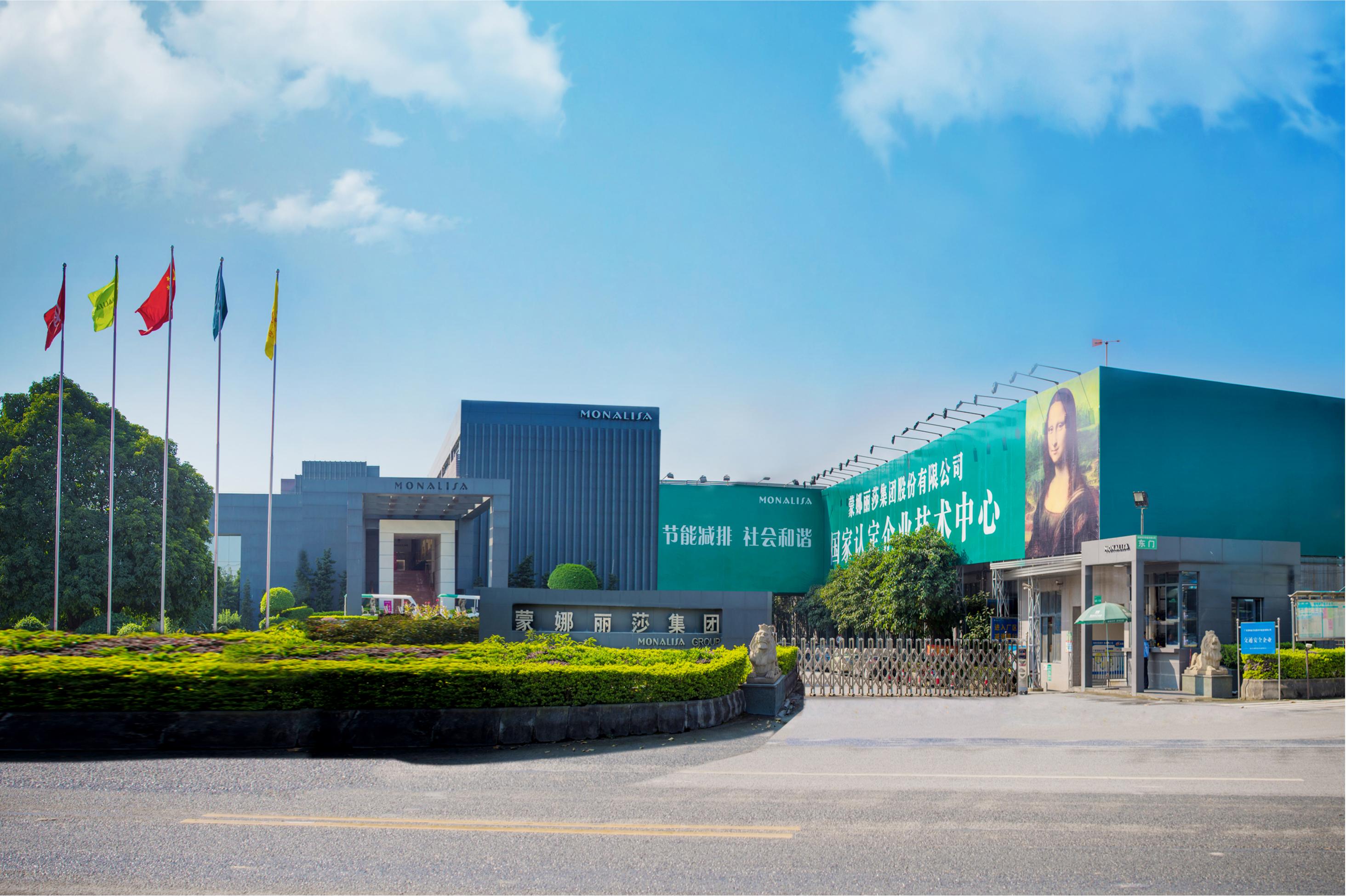
Monalisa Group Foshan headquarters — sample requests and project quotations are handled from here.
Next step: test the decision on your own zone drawing
Send Monalisa your wet-zone layout and required compliance line to receive production-representative porcelain tile and SPC flooring samples, technical datasheets and a project-specific quotation. Brochure and full product documentation are available for download: Monalisa product brochure (PDF).
Website: fs-monalisa.com | Email: joanna_wang@fs-monalisatiles.com | Tel / WhatsApp: +86 18605191548 | Monalisa Tower, Poly Centre, 8 Wenhua S Rd, Shunde, Foshan, 528300, CN
Have Questions or Need More Details?
Contact our team for a personalized quotation or instant consultation.
Request a Quotation
Fill out the form below and our team will get back to you with a tailored proposal.
WhatsApp Direct Chat
Prefer to chat in real-time? Message us on WhatsApp for instant assistance & quick answers.
- Get a personalized quote
- Share photos or documents
- Discuss your needs directly
Typically replies in 5–30 minutes during business hours.