R9 vs R10 vs R11: Porcelain Tile Slip Resistance for Projects
A decision-stage comparison for specifiers, contractors and importers choosing anti-slip porcelain tile ratings for residential, commercial and public buildings.
Slip resistance is one of the few porcelain tile specifications that is decided by where the tile is installed rather than by how it looks. R9, R10 and R11 are the three classifications that appear most often in building specifications, and choosing between them is a decision-stage problem: under-specify and a wet floor becomes a safety issue, while over-specify and the project pays for an aggressive texture it never needed.
The working rule for most projects is straightforward. R9 for dry interior floors. R10 as the minimum for bathrooms and other regularly wet interior areas. R11 for surfaces that stay wet, are washed down, or slope. Monalisa’s own product data applies the same logic: bathrooms require R10 or higher, commercial and public areas may need PEI 4 or higher in addition to a wet-area rating, and a single product code such as 3220 may be specified anywhere from R9 to R11 depending on where it is installed.
This guide compares the three ratings on the dimensions that actually drive a purchase decision: what each class measures, how it interacts with abrasion resistance and water absorption, which zones belong to which class, what test evidence to request, and where the real cost trade-offs sit.
Problem Definition: Why R9, R10 and R11 Cause Specification Errors
R9, R10 and R11 are slip-resistance classifications, not product grades. They come from a ramp test in which a person wearing standardised footwear walks up an inclined surface covered with oil; the classification rises with the steepness the surface can hold before slipping occurs. Because the test is run under oil contamination, these classes describe grip under contaminated conditions — which is precisely why they are used for floors that may become wet or greasy rather than for dry showroom conditions.
Two consequences follow from that definition, and both are frequently missed in procurement documents.
First, the rating describes only one property. A porcelain tile can be classified R11 and still fail a project for an unrelated reason. Water absorption, abrasion resistance (PEI), stain resistance, flatness, dimensional tolerance and breaking strength are separate properties with separate tests. Mixing them into a single “quality” line item is the most common source of disputes at handover.
Second, higher is not automatically better. A surface reaches a higher R classification through more pronounced texture, and that texture also determines how the floor feels underfoot and how much cleaning attention it needs in daily use.
What separates the three classes
- R9 — the entry class of the three. It suits interior floors that are expected to stay dry and clean during normal use, such as living rooms, bedrooms and dry circulation areas.
- R10 — a step up in surface profile, intended for interior floors that become wet regularly. This is the class Monalisa’s product data identifies as the minimum for bathrooms, and it also covers kitchens and similar wet interior zones.
- R11 — the highest of the three. It is used where water, grease or cleaning agents are present continuously, or where the floor slopes, such as outdoor terraces, pool surrounds, ramps and washdown areas.
Monalisa’s production risk register treats slip resistance as one of nine documented failure risks, defined as a surface friction coefficient below standard that causes slipping accidents in wet conditions. The documented control is surface design using special dry grains or textured moulds, verified by batch testing on a pendulum friction tester, with a wet BPN of at least 50 or R10 or higher required for slip-resistant surfaces.
Decision rule: an R classification and a pendulum (BPN) value are not interchangeable. The R class is a ramp result under oil; the BPN value is a friction reading taken under wet conditions. Sophisticated buyers ask for both when a project has both greasy and wet exposure.
Industry Background: Slip Resistance Inside a Re-specified Porcelain Market
The global porcelain tiles market was valued at approximately USD 9.73 billion in 2024 and is projected to reach USD 18.33 billion by 2035, according to Spherical Insights. Within that market, the glazed porcelain tile segment holds the largest share, supported by aesthetic versatility and durability.
Supply-side data explains why specification quality has become the differentiator. Chinese tile production fell 12.1% in 2024 to 5.91 billion square metres, representing 48% of the country’s total production capacity, according to the China Building and Sanitary Ceramics Association. China remains the world’s top ceramic tile exporter, though export volumes fell 2.5% in 2024 to 600 million square metres, with 74% of exports absorbed by Asian markets (Ceramic World Web / Mecs Research Centre).
For buyers, the practical meaning is simple: capacity is abundant and price competition is intense, so the difference between a problem-free installation and a costly one usually comes down to documentation — not to whether a factory can produce the format.
Standards set the baseline. Porcelain tile must have a water absorption rate of 0.5% or less to meet international standards such as ISO 13006 and ANSI A137.1. Slip resistance sits alongside that requirement rather than inside it, which is why a specifier has to write both lines. Project-specific requirements add another layer: in European projects, buyers typically verify CE marking documentation and the slip test report as two separate documents, and many public-sector tenders require the slip classification to be evidenced per production batch rather than by catalogue statement alone.
Surface appearance is independent of the classification. Marble look, wood look, stone look, concrete look and large format porcelain tiles can all be produced across the R9–R11 range depending on the texture applied, which means aesthetic direction rarely has to be sacrificed to meet a slip requirement.
R9, R10 and R11 by Project Zone: What Monalisa’s Product Data Says
The specification decision becomes manageable once the building is divided into zones by wetness and traffic rather than treated as one floor area.
Wet interior zones require R10 or higher. Monalisa’s product data states that bathrooms require R10 or higher. The same threshold applies to kitchen floors, laundries, utility rooms and any interior area where water is used and then walked across.
Commercial and public areas may need PEI 4 or higher. This is an abrasion requirement, not a slip requirement, and the two travel together in commercial and public specifications. A shopping mall entrance can be R10 and still wear out prematurely if the abrasion class is too low for the footfall.
Outdoor, sloped and continuously wet zones require R11. Terraces, pool surrounds, ramps and washdown areas combine water with grade change or contamination, which is where the highest of the three classes belongs.
Monalisa’s homogeneous body porcelain tile is the product family most often specified where these requirements overlap. With colour and structure continuing through the body depth, it is used in high-traffic commercial areas such as shopping malls, airports and school corridors, in wet zones with high slip-resistance requirements such as bathrooms and pool sides, on outdoor terraces and in freeze-thaw regions, and on public floors where low maintenance cost matters. It is also suited to modern minimalist schemes that call for large format, tight-joint installation with a grout gap of 0.5 mm or less.
Where a project wants visual continuity across zones, a single product code can be specified at different classes. Product 3220 is a case in point: it may require R9 to R11 depending on use, so the same base product can serve a dry retail interior, a bathroom and an outdoor threshold without the design language changing between areas.
The body underneath the surface
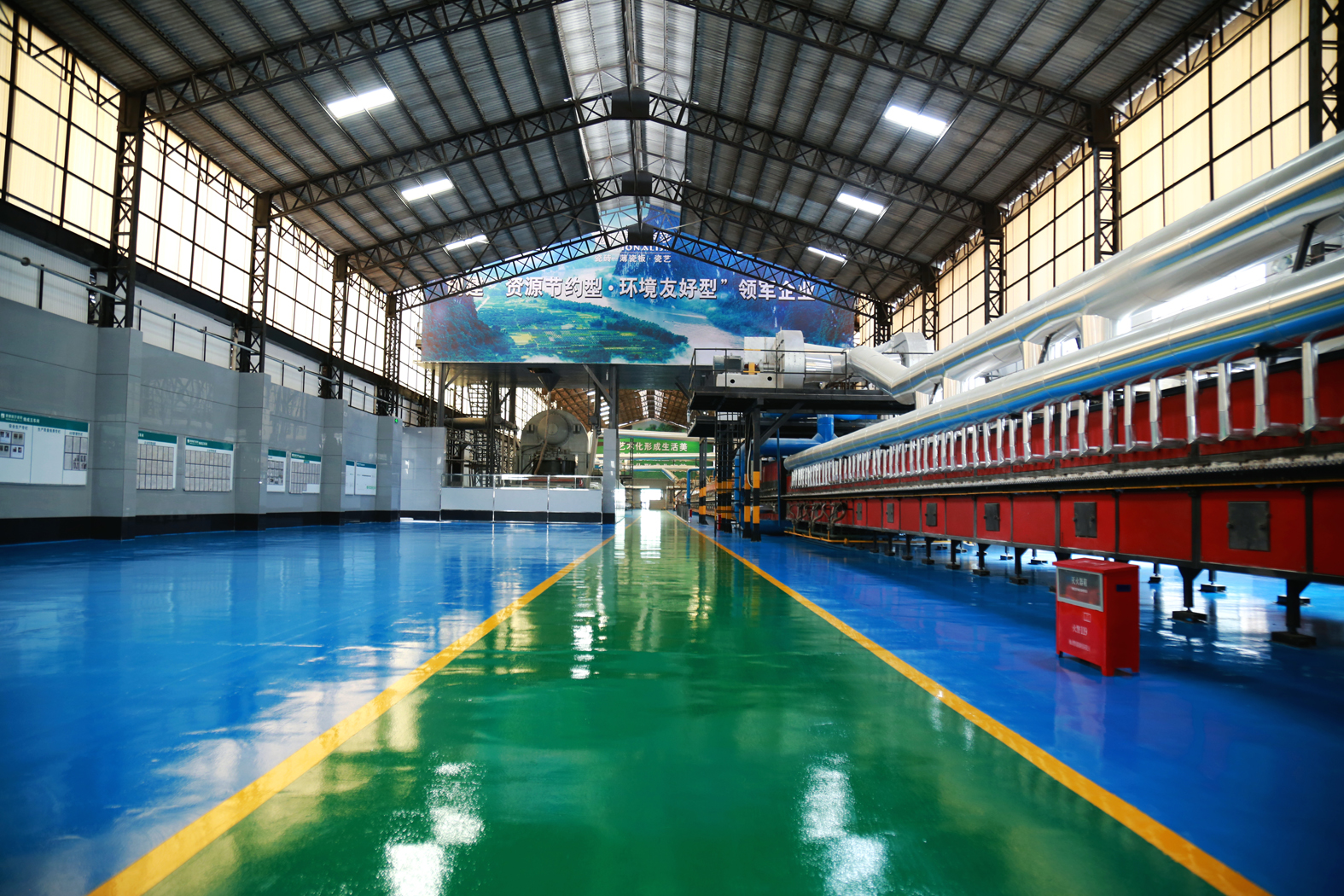
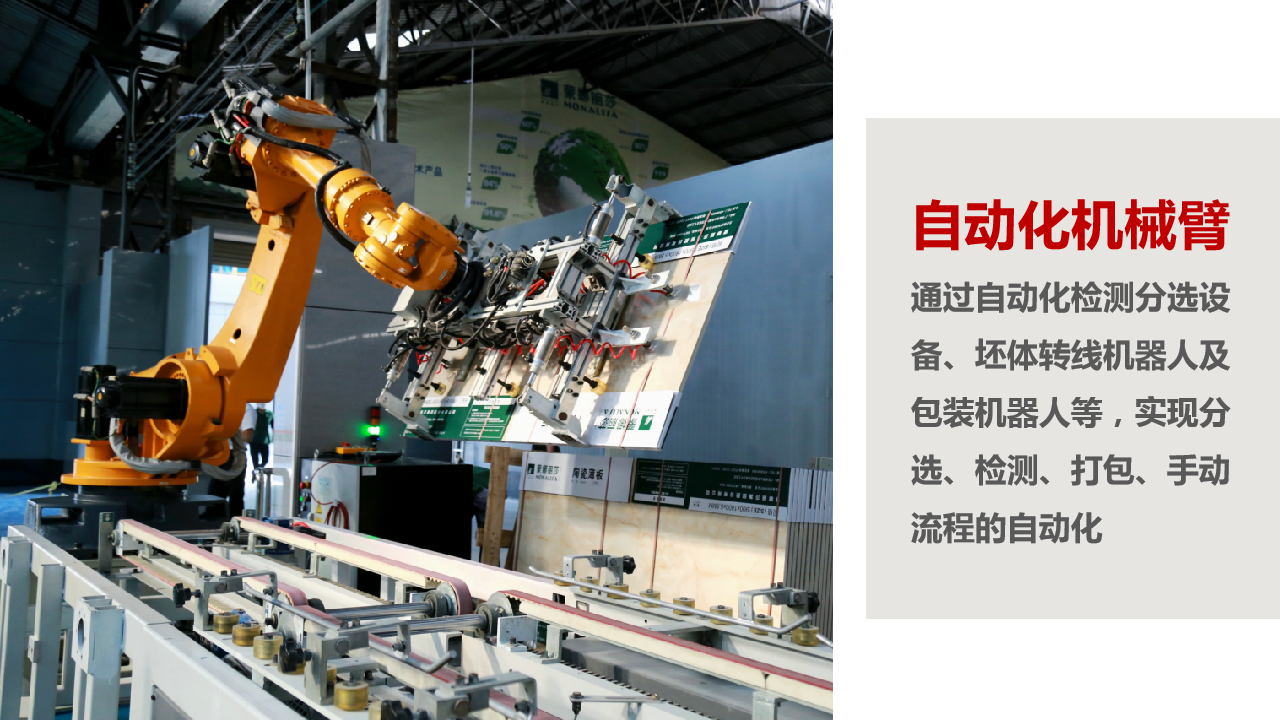
Slip resistance is a surface property, and it performs only as well as the body beneath it. Monalisa’s production uses fully automatic ultra-high pressure presses with a compaction force of up to 48,000 kN, combined with nano-scale glaze technology, producing high-density bodies with water absorption of 0.08% or less. Surface hardness is Mohs 7 or above and abrasion resistance reaches PEI Grade 5. Breaking strength is 45 MPa or higher, wear volume is 140 mm³ or less, and the tile resists 150 freeze-thaw cycles without cracking. Flatness tolerance is within ±0.15%.
Those properties matter for anti-slip performance in three practical ways. Low water absorption limits how much water enters the body, which supports frost-resistant and moisture-stable behaviour in outdoor porcelain tiles. High flatness tolerance prevents ponding, and standing water is a larger contributor to slipping than the surface texture itself. High breaking strength and abrasion resistance keep the texture profile intact under heavy duty use, because a worn-down surface loses the grip it was specified for.
Step-by-Step Breakdown: Specifying Slip Resistance on a Live Project
The following sequence reflects how a slip requirement moves from drawing to delivered tile on a Monalisa project.
- Zone the project by wetness and traffic. List every floor area: dry interior, regularly wet interior, continuously wet, sloped, outdoor, washdown. Assign each zone a wetness rating and a traffic level before any product is discussed.
- Assign the minimum slip class per zone. Dry interior floors: R9. Bathrooms, kitchens, laundries and similar wet interior areas: R10 or higher. Outdoor terraces, pool surrounds, ramps and washdown areas: R11.
- Add the abrasion class. Commercial and public areas may need PEI 4 or higher; Monalisa’s glazed porcelain surfaces are produced at abrasion resistance PEI Grade 5.
- Confirm the body and absorption requirement. Porcelain is defined by water absorption of 0.5% or less under ISO 13006 and ANSI A137.1; Monalisa bodies are produced at 0.08% or less, which is relevant for outdoor and freeze-thaw applications.
- Request batch evidence, not just a certificate. The relevant documents are the pendulum friction test result for the shipped batch (wet BPN of at least 50, or R10 or higher on slip-resistant surfaces), the laboratory results for dimensions, water absorption, breaking strength, abrasion, slip resistance, stain resistance, freeze-thaw and radioactivity, and the traceability code for each tile. Monalisa runs 18 quality control points from raw material intake through ball milling, spray drying, pressing, drying, glazing, firing, polishing and sorting, with key parameters recorded in real time in a CNAS-accredited in-house laboratory.
- Validate before full release. Approve a sample or first production batch, verify colour and texture against the master standard, and confirm that slip performance holds after the intended cleaning regime.
- Document the handover. Issue the zone map with ratings, the batch test reports, and the cleaning method for the chosen texture. A 2-year batch stock reserve protects against shade differences when individual tiles are replaced later.
Use Cases: Where Each Rating Typically Lands
Residential construction. Living rooms, bedrooms and dry corridors are normally specified at R9. Bathrooms require R10 or higher, and the same applies to kitchens and utility areas where water reaches the floor.
Commercial spaces. Retail floors, offices, malls and transport terminals combine heavy footfall with entrance moisture. These areas typically pair R10 with PEI 4 or higher, with R11 at entrances, ramps and food-court or wet-service zones.
Public buildings. Schools, hospitals and stations have both high traffic and repeated cleaning. R10 is the working baseline, with R11 on internal ramps, loading areas and any section exposed to rain ingress.
Hospitality & tourism. Hotel lobbies tolerate R10, while bathrooms, spa areas and pool surrounds call for R11 because the floor is wet by design rather than by accident.
Industrial & logistics. Production floors, washdown bays and vehicle circulation areas combine water, grease and abrasion. R11 with PEI Grade 5 abrasion resistance and water absorption below 0.08% is the relevant combination.
Municipal engineering. Plazas, underpasses and outdoor walkways need R11 plus freeze-thaw performance; Monalisa’s body is tested to 150 freeze-thaw cycles without cracking, which supports outdoor specification in cold regions.
Agricultural & livestock. Floors in these facilities are washed and cleaned continuously and frequently treated with cleaning agents, so R11 is the practical starting point, supported by high-density, low-absorption bodies.
Comparison Tables
Table 1: R9, R10 and R11 compared for specification
| Rating | Relative grip level | Typical project areas | Pair with | Key limit to note |
|---|---|---|---|---|
| R9 | Entry class; least pronounced surface profile of the three | Dry interior floors: living rooms, bedrooms, dry corridors | Porcelain water absorption of 0.5% or less (ISO 13006) | Not sufficient for bathrooms or any regularly wet interior floor |
| R10 | Mid class; designed for floors that become wet during normal use | Bathrooms, kitchens, laundries; commercial and public interiors | PEI 4 or higher in commercial and public areas; Monalisa surfaces at PEI Grade 5 | Still a floor class — confirm with batch pendulum evidence at wet BPN 50 or higher |
| R11 | Highest of the three; most pronounced usable texture | Pool surrounds, outdoor terraces, ramps, washdown and wet-service areas | Abrasion PEI 4 or higher; freeze-thaw performance for outdoor use | Texture is more pronounced, so daily cleaning methods may need adjustment |
Table 2: Monalisa porcelain body versus conventional tile
The figures below are Monalisa’s documented comparison data against conventional tiles, and they explain why a higher slip class does not automatically mean a shorter service life.
| Parameter | Monalisa porcelain | Conventional tile | Difference |
|---|---|---|---|
| Water absorption | 0.08% or less | 0.5%–3% | 80%–95% reduction |
| Breaking strength | 45 MPa or higher | 35 MPa or higher | 28% or more increase |
| Wear volume | 140 mm³ or less | 540 mm³ or less | 74% or more reduction |
| Freeze-thaw resistance | 150 cycles without cracking | 50–100 cycles | 50%–200% longer |
| Flatness tolerance | ±0.15% or better | ±0.5% or better | 70% accuracy improvement |
| Breakage rate | 0.3% or less | Approximately 0.8% | Lower site waste |
| Unit price | 15%–30% higher, depending on series | Baseline | Service life extended 2–3 times |
| Total life-cycle cost | 20%–35% lower | Baseline | Driven by wear, stain resistance and breakage |
| Grouting materials and labour | 10%–15% saving with tight-joint installation | Baseline | Grout gap of 0.5 mm or less |
Additional performance note: daily cleaning of Monalisa porcelain requires only water or neutral detergent, with no waxing or special treatment. Stain resistance is Grade 5, so coffee, oil and ink wipe off easily. Underfloor heating also benefits from the dense body, with heat transfer efficiency approximately 22% higher than conventional tiles, allowing a 1–2°C lower setpoint for the same comfort.
FAQ: Slip Resistance Decisions Before Order
1. Which standard governs R9, R10 and R11, and what is the minimum for a bathroom?
R9, R10 and R11 come from the inclined ramp test performed with oil contamination, which is why they are described as classes rather than measurements. Monalisa’s product data sets the practical minimum: bathrooms require R10 or higher. Water absorption is a separate requirement — porcelain must be 0.5% or less under ISO 13006 and ANSI A137.1, and Monalisa bodies are produced at 0.08% or less. Internally, Monalisa’s risk control requires slip-resistant surfaces to be batch tested on a pendulum friction tester at a wet BPN of at least 50, or R10 or higher.
2. Can Monalisa produce a homogeneous body porcelain tile at R10 or R11, and what creates the grip?
Grip is created at the surface, not in the pattern. Monalisa controls it through surface design using special dry grains or textured moulds, then verifies each batch on a pendulum friction tester to a wet BPN of 50 or higher, or R10 or higher. The body supporting that surface is produced on fully automatic ultra-high pressure presses with up to 48,000 kN of compaction force and nano-scale glaze technology, giving water absorption of 0.08% or less, Mohs hardness of 7 or above, PEI Grade 5 abrasion resistance, breaking strength of 45 MPa or higher and freeze-thaw resistance across 150 cycles. Product 3220 can be specified from R9 to R11 depending on use, which allows one visual language across different zones.
3. Does a higher slip class cost more, and how should that cost be judged?
Monalisa porcelain sits 15%–30% above conventional tile on unit price, depending on series, but the total life-cycle cost is documented as 20%–35% lower because service life extends 2–3 times, breakage stays at 0.3% or less against approximately 0.8% for standard tiles, and tight-joint installation with a grout gap of 0.5 mm or less saves 10%–15% in grouting materials and labour. The variable that changes with the rating itself is maintenance: a more pronounced R11 texture is normally cleaned with a different method than a smooth R9 floor, so the cleaning regime should be costed alongside the tile, not after handover.
4. How can the specified rating be validated before the full order is released?
Ask for three things. First, a batch pendulum friction test result confirming a wet BPN of at least 50, or R10 or higher where specified. Second, laboratory results from a CNAS-accredited in-house laboratory covering dimensions, water absorption, breaking strength, abrasion, slip resistance, stain resistance, freeze-thaw and radioactivity — Monalisa runs 18 quality control points across the production flow, with every tile laser-marked or RFID-coded for traceability to production date, press station, kiln zone and inspector. Third, a physical sample or first-batch approval, compared against the historical master standard for colour and texture. If the sample request needs to move quickly, Monalisa’s export team can be contacted directly at joanna_wang@fs-monalisatiles.com or +86 18605191548.
5. What does supply and lead-time risk look like for a large slip-rated order?
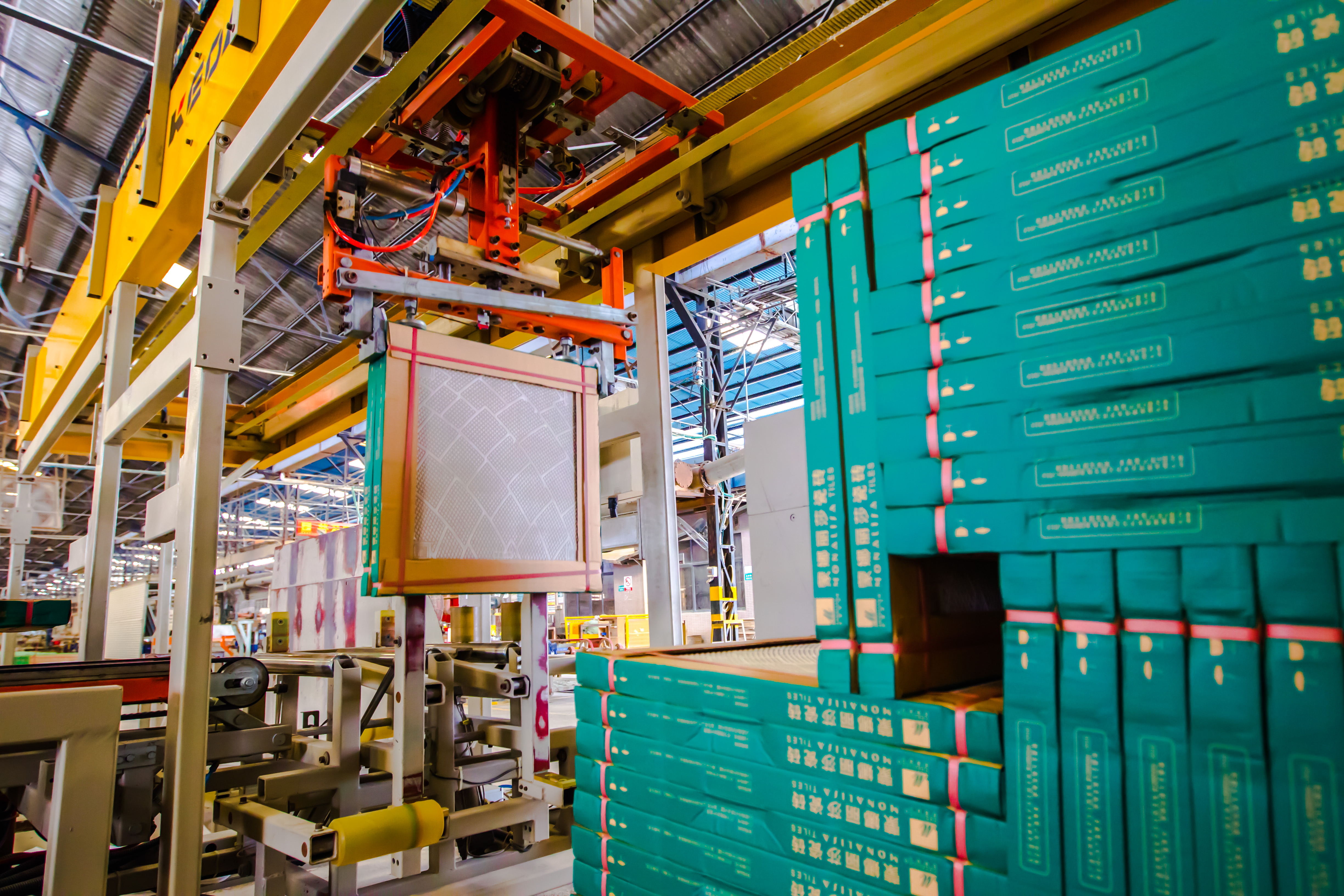
The supply base is substantial: Monalisa Group was founded in 1992 and operates four production bases (Xiqiao in Foshan, Qingyuan in Guangdong, Tengxian in Guangxi and Gao’an in Jiangxi) with 37 production lines and annual output of 100 million square metres. Where slip-rated tile is concerned, the risk that matters more than nominal lead time is batch consistency, so confirm how colour and texture are controlled between production runs: automatic colour sorting with spectrometer inspection online and packaging by shade, high-precision moulds with tolerance within ±0.1 mm, 100% flatness scanning after the kiln, and a 2-year batch stock reserve so later repairs match. Share your zone schedule and quantities with the Monalisa team to confirm current production and shipping arrangements for your market.
Conclusion: A Rating Is a Decision, Not a Label
The comparison reduces to three lines. R9 belongs on dry interior floors. R10 is the floor of the specification for bathrooms, kitchens and any interior area that gets wet in normal use. R11 belongs where water, grease or slope are constant. Around those lines, the buying decision depends on pairing the slip class with abrasion resistance (PEI 4 or higher in commercial and public areas), with water absorption at 0.5% or less as the porcelain baseline — and 0.08% or less on Monalisa bodies — and with documented batch evidence rather than a catalogue claim.
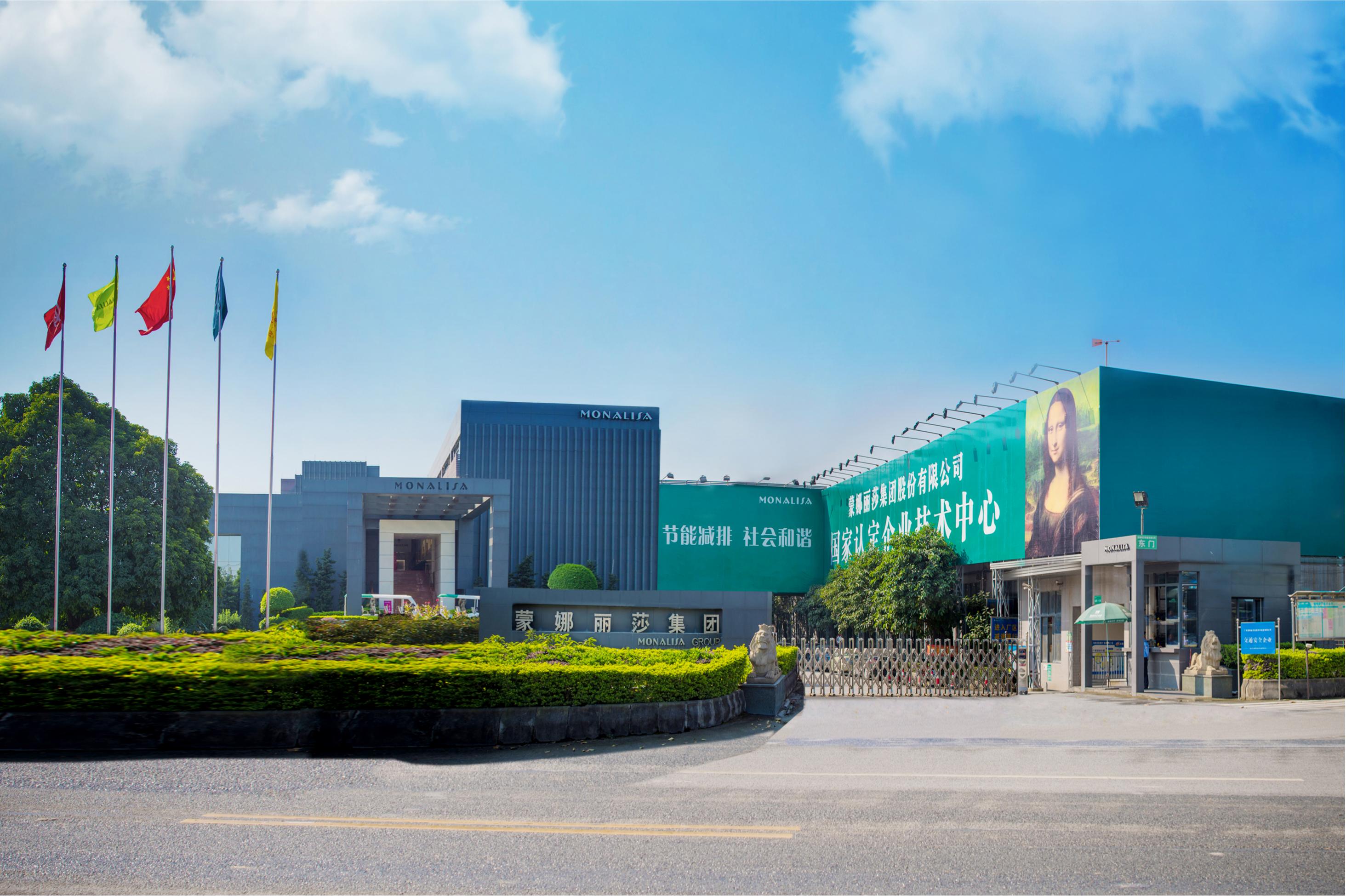
Manufacturer scale and process control are what make that specification deliverable across zones and across production runs. Monalisa Group Co., Ltd. has been manufacturing architectural ceramics since 1992 from Foshan, Guangdong Province, holds ISO 9001, ISO 14001 and ISO 45001 certification, and applies its “3M” quality management model across 18 control points, a CNAS-accredited laboratory and a full traceability system.
Next step: download the Monalisa product brochure for formats, technical data and finishes, or send your zone schedule — wet areas, traffic levels and formats — to receive a slip-rating recommendation and a quotation.
Brochure: Monalisa Group product brochure (PDF)
Website: fs-monalisa.com
Contact: Joanna — joanna_wang@fs-monalisatiles.com · Tel / WhatsApp +86 18605191548