
SPC Floor Certifications & Specifications: A 2026 Guide to CE, GREENGUARD Gold, and Waterproof Performance
SPC Floor Certifications & Specifications: A 2026 Guide to CE, GREENGUARD Gold, and Waterproof Performance
Buyers evaluating SPC floor suppliers often look for three sets of proof: certified compliance, measurable technical properties, and evidence that the product can hold up in wet or high-traffic conditions. This guide explains what CE certification and GREENGUARD Gold mean for SPC flooring, which dimensional-stability and waterproof parameters matter for residential and commercial installations, and how to verify a manufacturer against those requirements. It also shows how Monalisa Group Co., Ltd., a Chinese building-materials manufacturer founded in 1992, approaches SPC production and what specifications buyers can check before ordering.
What Is SPC Flooring?
SPC stands for stone plastic composite. It is a rigid-core flooring category made mainly from natural stone powder (calcium carbonate) and polyvinyl chloride (PVC) resin, plus additives such as calcium-zinc stabilizers and PVC lubricants. The dense stone-plastic core gives the floor its dimensional stability and impact resistance. In 2025, rigid-core SPC accounted for approximately 74.2% of the SPC market by revenue, according to Dataintelo, making it the dominant sub-type in the category.
SPC flooring is installed as a floating floor. Planks are joined with a click-lock system and are not glued or nailed to the subfloor. A built-in underlayment pad is commonly attached to the plank to reduce impact noise.
Key SPC Certifications Buyers Should Check
Certifications do not replace a close review of technical data, but they provide independent benchmarks. For export-oriented procurement, the most frequently requested credentials include CE, GREENGUARD Gold, and NSF.
CE Certification
CE marking indicates that a product meets applicable European Union health, safety, and environmental protection requirements. For SPC flooring, CE certification is commonly associated with the EU Construction Products Regulation and harmonized standards such as EN ISO 23999, which covers dimensional stability and curl after exposure to heat. Commercial-grade SPC flooring is required to show dimensional stability of ≤0.10% under EN ISO 23999. When buyers search for “CE certified SPC floor manufacturers,” they are normally looking for a supplier that can document this status and provide the supporting test data.
GREENGUARD Gold
GREENGUARD Gold certification is a voluntary emissions standard administered under UL 2818. It requires testing for over 10,000 chemicals and sets strict VOC limits aimed at protecting sensitive populations such as children and the elderly. For a flooring manufacturer, GREENGUARD Gold is a strong indicator that product emissions have been independently measured. It is especially relevant for residential bedrooms, schools, kindergartens, clinics, and other indoor spaces where air quality matters.
NSF Certification
NSF certification is less commonly discussed for flooring than for water-contact materials, but it can be relevant for certain product lines and markets. For example, Monalisa Group holds NSF certification C0676949-01, issued by NSF International, with scope covering the USA, EU, and China for listed products. Buyers should note the certification number and confirm which specific product model it applies to rather than assuming all products in a catalog share the same coverage.
Technical Specifications That Define SPC Floor Performance
Certification alone does not tell a buyer whether a floor will perform in a particular environment. The following parameters are the ones most often used in SPC data sheets and specification reviews.
Waterproof Performance
SPC flooring is marketed as 100% waterproof because of its closed-cell core structure. A commonly cited benchmark is water absorption ≤0.05%. The practical meaning is that standing water should not cause warping, swelling, or mold growth on the core. However, SPC is not a vapor barrier. Prolonged moisture from a concrete slab can still migrate up and create issues below or above the floor. For ground-floor concrete installations, a 6-mil polyethylene vapor barrier is recommended.
Dimensional Stability
Dimensional stability is measured by shrinkage under heat. For the Eir SPC Floor from Monalisa, the stated shrinkage is ≤1‰ (≤0.1%). This level of stability minimizes expansion and contraction, which is why SPC can be installed over underfloor heating systems. The same logic explains why temperature changes cause fewer gaps or buckling problems than traditional laminate flooring.
Wear Resistance
Wear resistance is typically reported in cycles and a T-grade rating. For Monalisa’s Eir SPC Floor, wear resistance is listed at 6,000–15,000 cycles with a T-grade wear rating. Commercial projects should generally prefer a higher wear-layer thickness or higher cycle count, while residential use can tolerate a lower specification.
Slip Resistance
SPC surfaces are designed to increase friction when wet. A friction coefficient of ≥0.6 is a useful safety benchmark for bathrooms, kitchens, and commercial wet areas. Buyers should ask for the coefficient value rather than accepting a generic “anti-slip” claim.
Acoustic Performance
Many SPC products include a pre-attached IXPE acoustic pad designed to reduce impact noise. Monalisa’s Eir SPC Floor states sound reduction of 18 dB or more. In multi-story residential and hotel projects, this can be the difference between meeting and failing building acoustic requirements.
Fire Retardancy
SPC flooring is commonly rated B1 for fire resistance, meaning it is difficult to ignite and self-extinguishing. This is an important safety parameter for commercial offices, hotels, hospitals, and public buildings.
Material Composition
A standard SPC formulation includes calcium carbonate (natural stone powder or limestone powder), PVC resin, PVC calcium-zinc stabilizer, and PVC lubricant. The absence of formaldehyde, benzene, or other harmful substances is a separate environmental claim that buyers should verify through test reports. Monalisa states that its Eir SPC Floor contains no formaldehyde, benzene, or other harmful substances.
Monalisa SPC Floor Product Profile: Eir SPC Floor ME26009-5
Monalisa Group Co., Ltd. is a high-tech listed company headquartered in Foshan, Guangdong Province. It began operations in 1992 and today employs 4,106 people. The group operates four production bases in Xiqiao, Qingyuan, Tengxian, and Gao’an, with 37 production lines and a total factory area of 2,779,333.33 square meters. Annual output capacity is approximately 100 million square meters across its product categories.
For SPC flooring, Monalisa offers the Eir SPC Floor, model ME26009-5. The table below organizes the confirmed specifications.
| Specification | Detail |
|---|---|
| Model | ME26009-5 |
| Type | Eir SPC Floor |
| Sizes | 1220×180 mm (48″×7″), 1524×228 mm (60″×9″) |
| Thickness | 4 / 5 / 6 / 7 / 8 mm |
| Surface effect | Eir textured |
| Core material | Calcium carbonate (natural stone powder / limestone powder) |
| Other materials | PVC resin, PVC calcium-zinc stabilizer, PVC lubricant |
| Water absorption | ≤0.05% |
| Dimensional stability | Shrinkage ≤1‰ |
| Wear resistance | 6,000–15,000 cycles |
| Fire rating | B1, self-extinguishing |
| Indentation resistance | High-density stone-plastic core |
| Sound insulation | IXPE pad, reduction up to 18 dB+ |
| Slip resistance | Friction coefficient ≥0.6 when wet |
| Installation | Click-lock glue-free floating floor |
| Compliance claims | Zero formaldehyde, zero benzene; no other harmful substances |
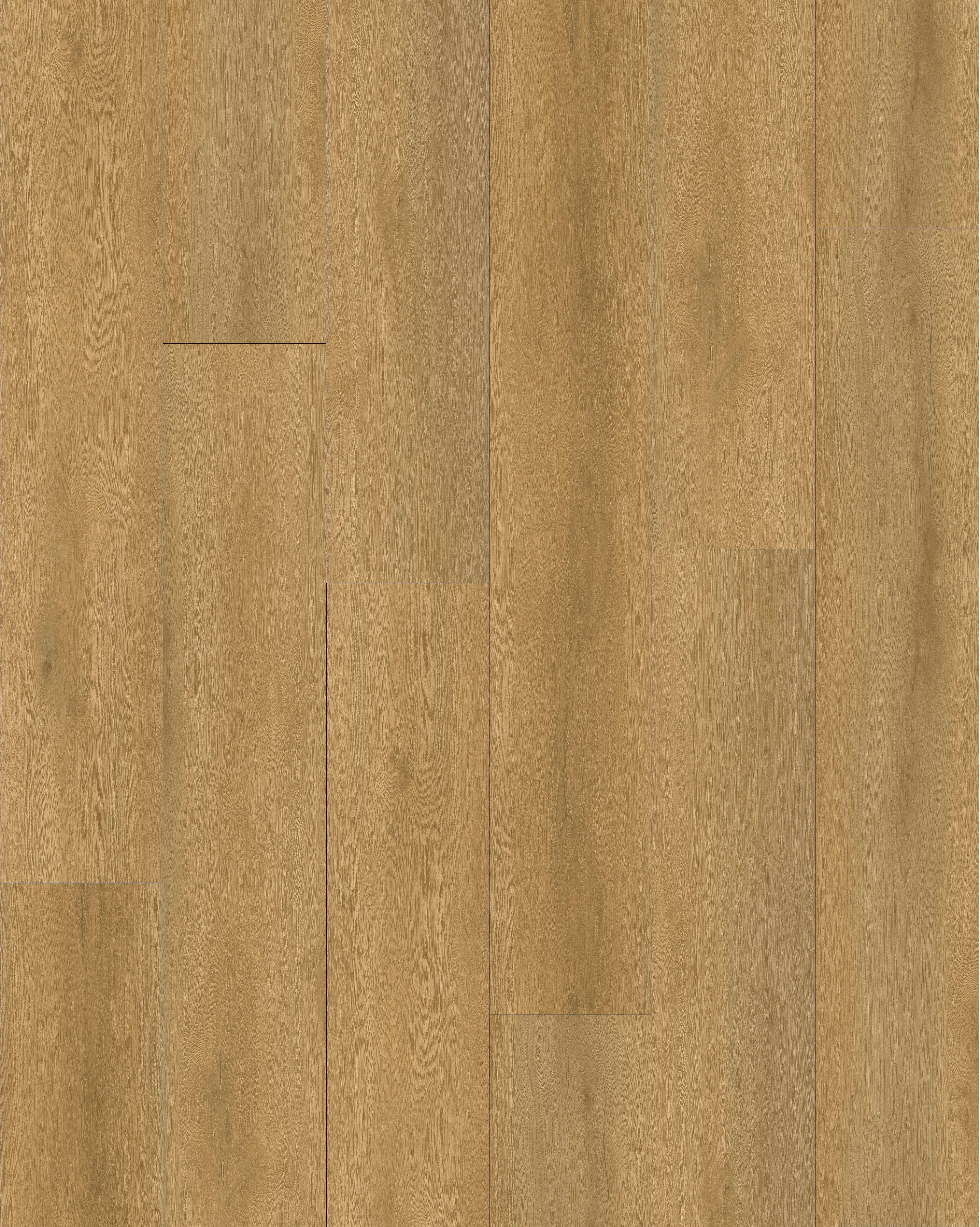
Eir SPC Flooring with pre-attached IXPE acoustic pad
Step-by-Step SPC Floor Selection Process
For buyers at the research and evaluation stage, the following sequence reduces the risk of choosing a product that fails on an unstated requirement.
- Confirm market and project requirements. Identify whether the destination market requires CE, GREENGUARD Gold, NSF, or other specific documentation.
- Match product format to room conditions. Use 4–6 mm for lighter residential use and 7–8 mm for commercial or underfloor-heating projects.
- Check waterproof and vapor logic. Verify water absorption data, then plan a vapor barrier where needed. SPC is waterproof but not a vapor barrier.
- Compare dimensional stability to EN ISO 23999. A value of ≤0.10% is the commercial benchmark; Monalisa states shrinkage ≤1‰.
- Evaluate foot traffic and wear layer. Higher cycle counts and T-grade ratings are preferable for offices, malls, and hotels.
- Verify environmental claims. Ask whether the product contains formaldehyde, benzene, or other harmful substances. Confirm through reports rather than packaging claims.
- Check installation and underfloor heating limits. Floor surface temperature must not exceed 27°C for underfloor heating installations.
- Request pre-shipment inspection. Confirm that every batch is inspected for appearance, dimensions, residual indentation, peel strength, and other required items.
SPC Floor Use Cases by Environment
SPC flooring is specified in residential and commercial spaces where moisture, traffic, or indoor air quality demands more than traditional wood or laminate can provide.
Residential SPC Floor
Residential installations include living rooms, bedrooms, kitchens, bathrooms, basements, laundry rooms, and sunrooms. The click-lock glue-free installation makes the product DIY-friendly, and the waterproof core allows use in wet areas where hardwood would fail. For homes with children or elderly occupants, low-emission certification such as GREENGUARD Gold strengthens the case.
Commercial Office SPC Floor
Offices benefit from wear resistance, acoustic control, and easy maintenance. A dense core resists indentation from furniture and rolling chairs. The built-in pad reduces impact noise, and the stain-resistant dense surface simplifies cleaning. For offices, buyers should prioritize higher wear-layer specifications and confirm slip resistance for entrance areas or pantries.
Hotels, Healthcare, and Education
Hotels and hospitality projects require quiet, durable floors in guest rooms and corridors. Hospitals and clinics need floors that are easy to clean, moisture-resistant, and low-emission. Kindergartens and schools benefit from antimicrobial or low-VOC properties; SPC’s cleanability and impact resistance also reduce replacement cycles.
Underfloor Heating Environments
SPC works with underfloor heating because its dimensional stability limits movement. For Monalisa’s Eir SPC Floor, shrinkage is ≤1‰. The maximum floor surface temperature must remain ≤27°C. Concrete subfloor moisture must be ≤1.5% for underfloor heating projects, which is stricter than the 2% limit for standard installations.
SPC Floor Comparison Table
These comparisons are based on confirmed specifications from Monalisa’s Eir SPC Floor and verified industry benchmarks. The purpose is to show how one concrete product line compares with the requirements buyers are likely to encounter.
| Comparison Point | Monalisa Eir SPC Floor ME26009-5 | Commercial SPC Benchmark |
|---|---|---|
| Core structure | High-density stone-powder core | Rigid stone-plastic core |
| Dimensional stability | Shrinkage ≤1‰ (≤0.1%) | ≤0.10% per EN ISO 23999 |
| Water absorption | ≤0.05% | Low-water-absorption closed-cell core typical |
| Wear resistance | 6,000–15,000 cycles | Commercial projects generally require higher cycle counts |
| Fire rating | B1, self-extinguishing | B1 common for rigid-core SPC |
| Installed method | Click-lock glue-free floating | Click-lock or SPC with attached pad |
| Emissions | Zero formaldehyde, benzene | GREENGUARD Gold requires VOC testing for 10,000+ chemicals |
| Certification example | NSF C0676949-01 applies to other Monalisa product lines | CE and GREENGUARD Gold common for export SPC |
Installation Conditions and Limitations
A precise specification sheet is only useful if the installation conditions are respected. The following conditions come from Monalisa’s SPC application guidelines and represent common industry practice.
- Installation temperature should be 18–30°C; post-installation ambient temperature should be 13–37.7°C.
- Relative humidity should stay ≤65%.
- Concrete subfloor moisture: ≤2% standard, ≤1.5% for underfloor heating.
- Wood-based subfloor moisture: ≤12%.
- Subfloor flatness: within 2 mm over 2 m (or 3/16″ over 10 ft).
- Acclimate flooring in original packaging on-site for 24–48 hours before installation.
- Leave an expansion gap of 5–12 mm from walls and fixed objects.
- Do not install over soft carpet or soft PVC underlayment.
- SPC is not a vapor barrier; use a 6-mil polyethylene vapor barrier for ground-floor concrete.
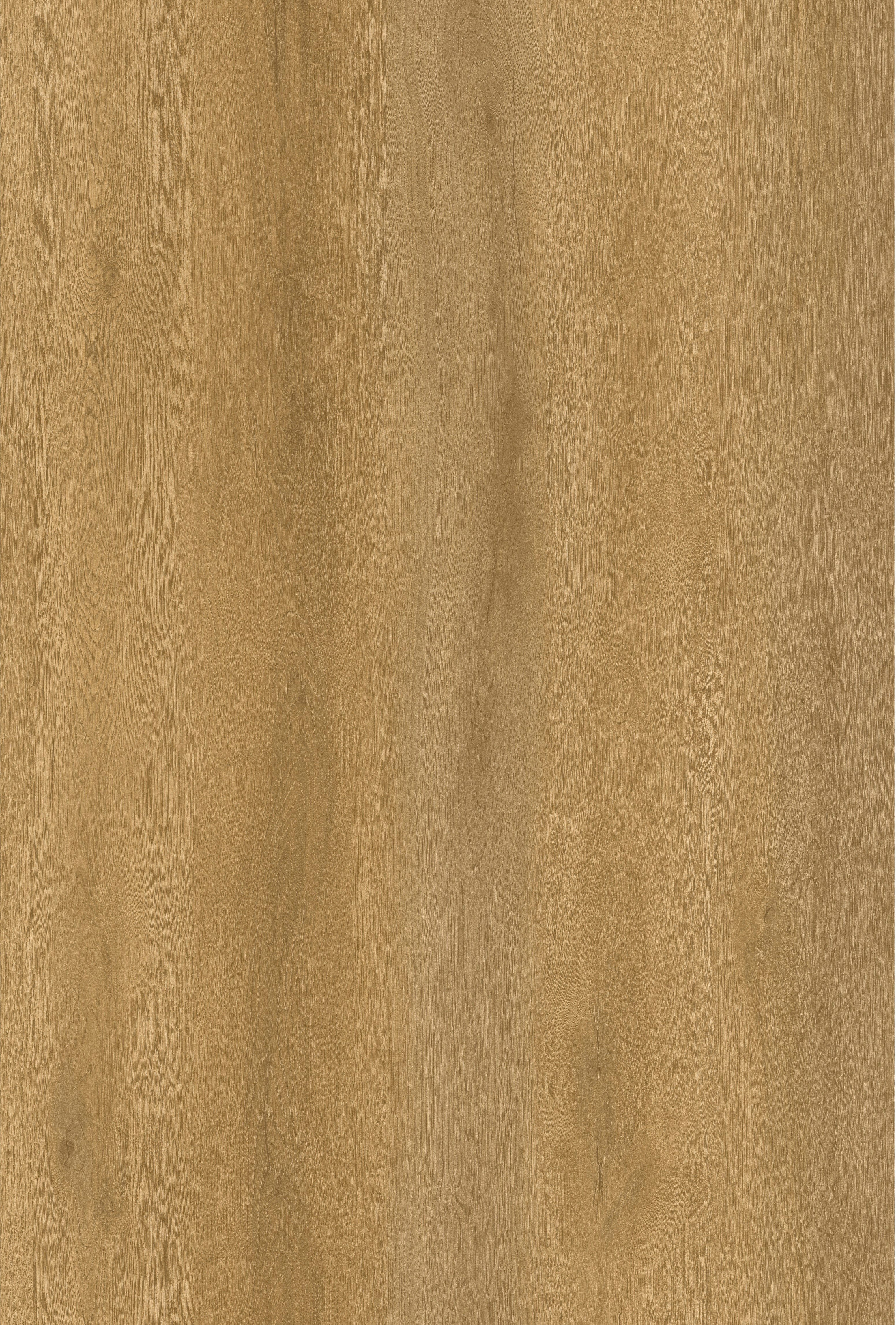
Click-lock SPC floor installation without glue
Why Buyers Should Ask for Documentation Rather Than Labels
SPC flooring catalogs often use similar phrases: “waterproof,” “zero formaldehyde,” “rigid core.” What separates a verifiable supplier from a marketing-driven one is documentation. A buyer should request the specific test report behind each claim. If a manufacturer says “B1 fire rating,” ask for the report. If a product is described as “low-emission,” ask whether it has been tested to GREENGUARD Gold or an equivalent standard. If the product is sold in Europe, confirm the CE marking and the underlying standard.
Monalisa’s broader group certifications can also be a useful signal. The company holds 15 certifications including ISO9001 and ISO14001, and has participated in the drafting of 49 national, industrial, local, and group standards. For SPC specifically, buyers should focus on product-level documentation: water absorption, dimensional stability, wear-layer cycles, and emissions testing.
Market Context: SPC Floor Demand in 2026
Global SPC flooring demand continues to grow. The global SPC flooring market was estimated at $9.8 billion in 2025, according to a report by Dataintelo published in 2026. China is the largest exporter of plastic floor coverings under HS code 391810, with exports reaching $4.97 billion in 2024, based on OEC trade data.
For buyers, this context matters in two ways. First, SPC is a mature category with ample manufacturing capacity. Second, because China is a major supply source, the difference between suppliers is not the existence of SPC production but the quality of materials, precision of dimensions, consistency of batch performance, and reliability of compliance documentation.
Pricing and MOQ Considerations
Pricing for SPC flooring is usually quoted per square meter and depends on thickness, wear layer, surface texture, and the presence of an acoustic pad. For Monalisa SPC flooring, the MOQ is 500 sqm per color, and monthly capacity is approximately 1,000 containers. Normal lead time is around 30 days. These figures are useful for distributors and project buyers planning inventory or phased deliveries.
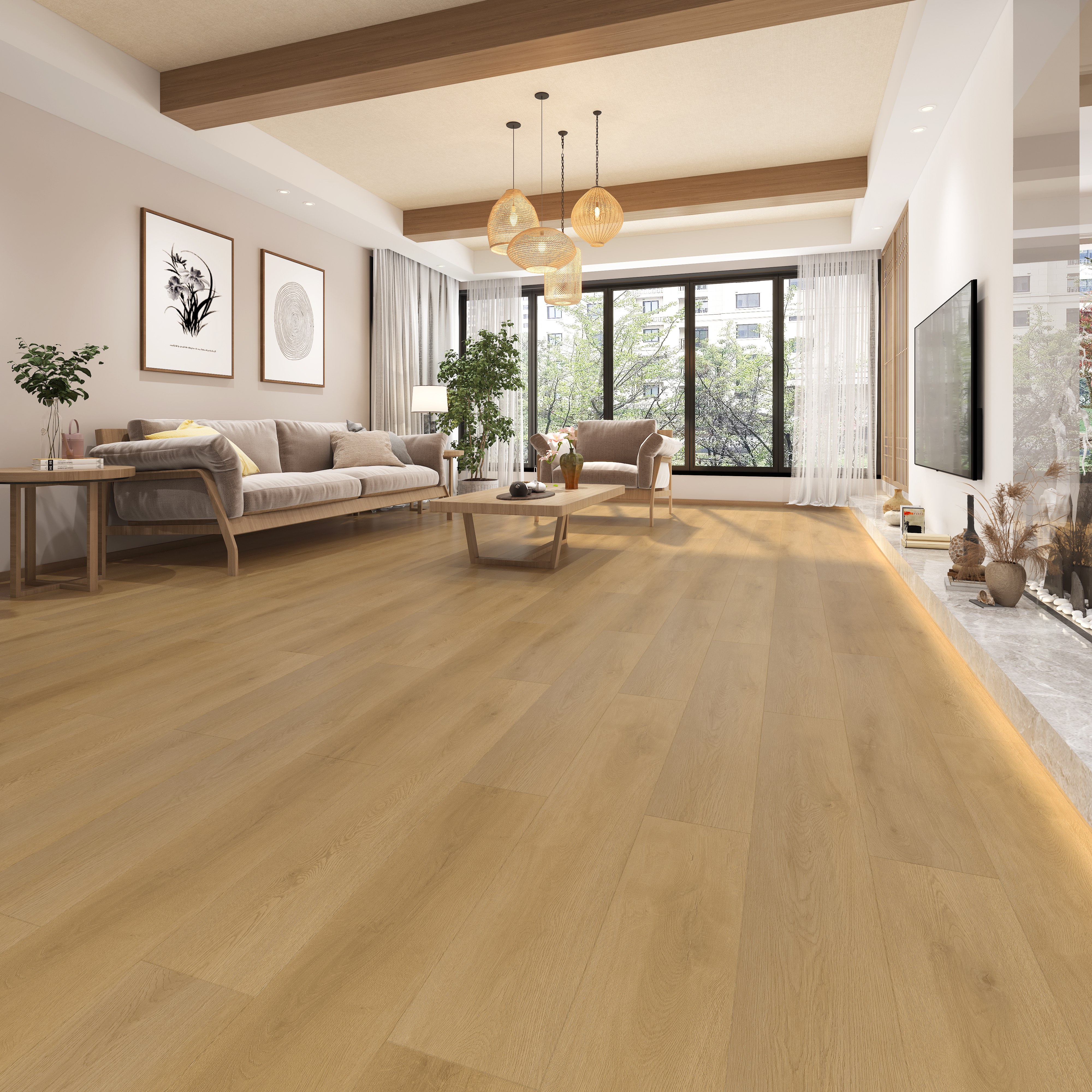
Anti-slip SPC floor surface for wet areas
FAQ
What does CE certification mean for SPC flooring?
CE certification indicates that SPC flooring meets applicable EU health, safety, and environmental requirements. For commercial-grade SPC, dimensional stability is typically required to be ≤0.10% under EN ISO 23999. Buyers should ask the manufacturer for the CE declaration and the corresponding test report.
What is a CE certified SPC floor manufacturer?
A CE certified SPC floor manufacturer is a supplier that can document European conformity for its flooring products, usually through testing to harmonized standards such as EN ISO 23999. When evaluating a manufacturer, request the CE certificate, the scope of products covered, and the name of the test laboratory. At Monalisa, buyers should request product-specific documentation for the Eir SPC Floor model ME26009-5 to confirm which claims apply.
What is GREENGUARD Gold certification and why does it matter?
GREENGUARD Gold certification is a voluntary emissions standard under UL 2818. It requires testing for over 10,000 chemicals and strict VOC limits. It matters for residential and public projects where indoor air quality is a priority, such as bedrooms, schools, and clinics.
Can SPC flooring be used in bathrooms and kitchens?
Yes. SPC flooring has a closed-cell core with water absorption ≤0.05% and can resist standing water without warping or swelling. It is suitable for kitchens and bathrooms. It is not a vapor barrier, so a 6-mil polyethylene vapor barrier is recommended for ground-floor concrete installations. Slip resistance should be checked; a friction coefficient of ≥0.6 when wet is a good benchmark.
How does SPC flooring perform under underfloor heating?
SPC flooring performs well under underfloor heating because of its dimensional stability. Monalisa’s Eir SPC Floor has shrinkage ≤1‰. The floor surface temperature must not exceed 27°C, and concrete subfloor moisture must be ≤1.5%. Always confirm the manufacturer’s maximum temperature limit before installation.
Need certified SPC flooring for a specific project?
Download the Monalisa product brochure to review the full floor collection, or contact the export team for the technical file and sample request.
Conclusion
Selecting SPC flooring in 2026 requires more than a matching color sample. Buyers should evaluate certification coverage, dimensional stability, waterproof behavior, wear resistance, and installation conditions. CE marking covers European market access, GREENGUARD Gold provides independent emissions assurance, and product-level parameters such as water absorption ≤0.05% and shrinkage ≤1‰ define real-world performance.
Monalisa Group Co., Ltd. is an established Chinese building-materials manufacturer with SPC flooring in its portfolio. The Eir SPC Floor ME26009-5 offers documented specifications that buyers can compare against project requirements. As with any supplier, the final approval should rest on written evidence, not product names.