
SPC Flooring Underfloor Heating Technical Guide: Temperature Limits and Installation Conditions
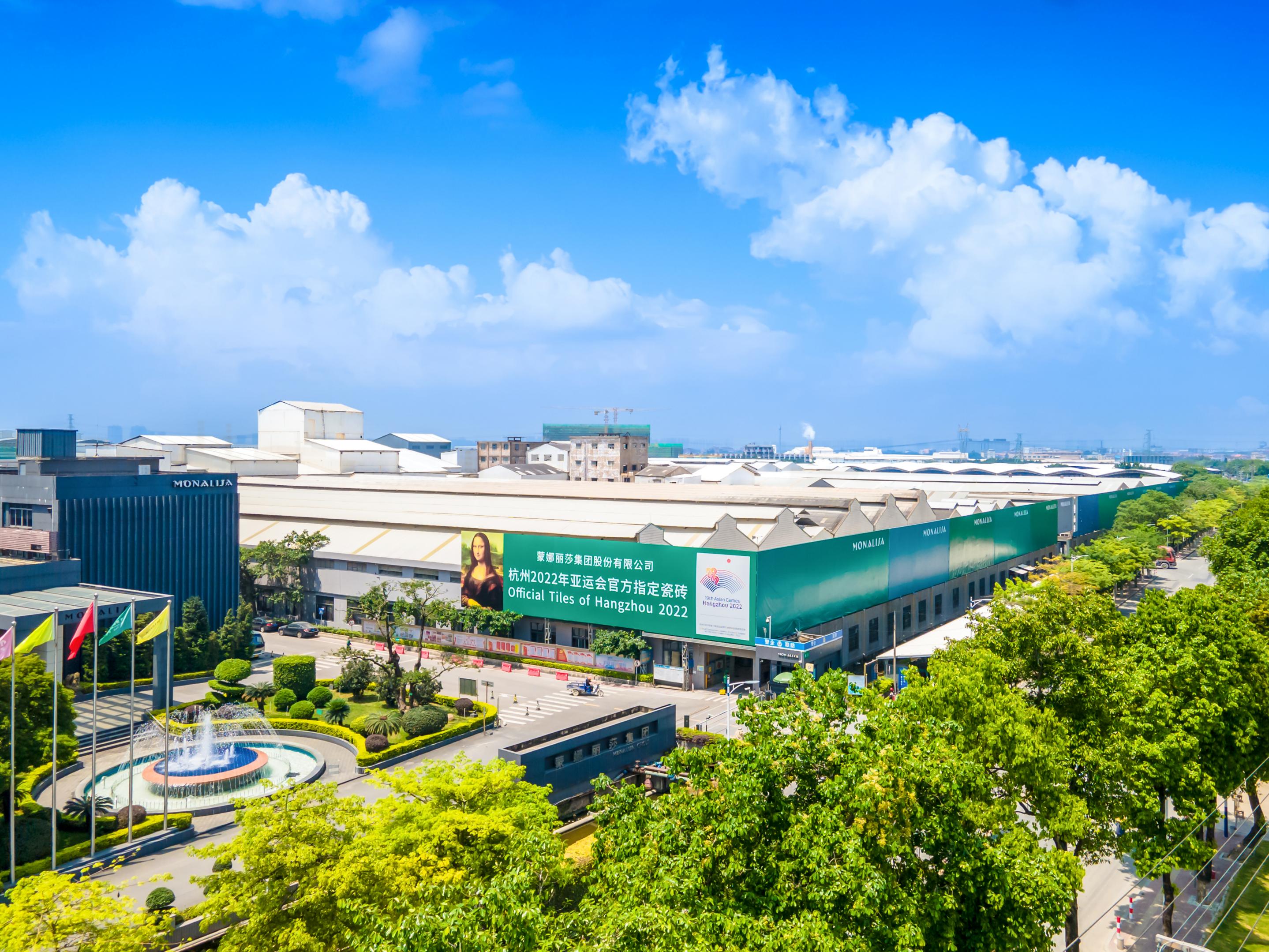
Quick answer: SPC flooring is suitable for underfloor heating because its thermally stable rigid stone-plastic core limits the expansion and contraction that a warm floor creates. Five measurable conditions decide whether an installation performs: the floor surface temperature must not exceed 27 °C; the installation ambient temperature must stay between 18 °C and 30 °C; the post-installation ambient temperature must remain between 13 °C and 37.7 °C; relative humidity must stay at or below 65 %; and the subfloor must be flat to within 2 mm over 2 m. Installation over carpet, soft PVC, or similar soft materials is not allowed.
This guide is written for importers, distributors, contractors, and facility teams who are specifying Monalisa SPC Floor — or comparing SPC suppliers — on a project that already has, or will have, a hydronic or electric underfloor heating system. It sets out the temperature and site limits, the substrates that are excluded, the installation and commissioning sequence, and the long-term supply terms that keep a heated floor serviceable over its working life.
Problem Definition: Why Heated Floors Expose Flooring Weaknesses
Heat alone rarely destroys a floor covering. Movement does. A heated slab expands as it warms and contracts as it cools, and the floor covering on top of it moves on a different curve. Every plank joint and every perimeter edge has to absorb part of that difference. When a covering cannot hold its dimensions across that cycle, the failure sequence is predictable: open end joints appear first, then peaking at the seams, then edge lift, and finally adhesive or core failure in systems that are bonded down.
Three variables drive that risk, and each one has a limit that can be checked on site:
- Thermal movement at the walking surface. The surface is the warmest part of the assembly, so the material closest to the heat source must be the most dimensionally stable element in the build-up.
- Ambient moisture. A heated room is not a neutral environment. Relative humidity must be held at or below 65 % before, during, and after installation.
- Substrate rigidity. A click-lock floor needs a firm, flat plane. Compressible layers let the locking profile flex, and flexed profiles loosen over time.
All three have to be controlled at the same moment. A floor laid on a flat subfloor in a humid room, or on a soft substrate at the right temperature, will still fail — which is why the limits below are stated as a set rather than as individual recommendations.
Industry Background: Rigid-Core SPC in a Warm-Floor Market
Rigid-core construction now dominates the category. Dataintelo estimates the global SPC flooring market at USD 9.8 billion for 2025, and rigid-core sub-types accounted for a 74.2 % revenue share in the same year. Supply remains concentrated in China, the largest exporter of plastic floor coverings under HS 391810, at USD 4.97 billion in 2024 (OEC).
Two practical consequences follow from that scale. First, buyers can compare core constructions and dimensional performance rather than accepting whatever is quoted. Second, installation conditions become a commercial issue, not only a technical one: a floor that fails over a heated slab costs far more than the difference between two core specifications.
Standards already assume heat exposure. Commercial-grade SPC flooring is required to hold dimensional stability of ≤0.10 % under EN ISO 23999, the test used to measure how a resilient floor covering changes after exposure to heat. Indoor air quality follows the same logic: GREENGUARD Gold certification under UL 2818 requires testing for more than 10,000 chemicals and strict VOC limits — a relevant reference whenever a floor is warmed rather than kept at a neutral temperature.
Why SPC Flooring Performs Over Underfloor Heating
The reason SPC works over underfloor heating is structural. A high-density stone-powder core is mineral-filled and pressed into a rigid plank. That rigidity produces the property that matters here: thermal stability. Under a 27 °C surface, the plank expands and contracts within a narrow band, so click-lock profiles stay engaged instead of being pushed apart by differential movement between the floor and the slab.
Dimensional-stable, anti-deformation construction
Rigid Stone-plastic SPC Floor and High-density Stone-powder Core SPC Floor are the constructions specified where heat and traffic overlap. A dimensional-stable anti-deformation build is designed to resist warping and twisting, and the EN ISO 23999 figure of ≤0.10 % gives buyers a number to request instead of a marketing description.
Click-lock, glue-free assembly
Click-lock Glue-free SPC Floor is a floating system: it is not bonded to the heated substrate. In practice, that suits a heated slab, because the installed floor can move as one plane. There is no adhesive layer to be stressed by repeated warming and cooling cycles.
Waterproof and hygiene-led variants
Heated rooms are often wet rooms. Waterproof SPC Floor is normally specified for residential bathrooms and kitchens and for commercial washrooms, where a waterproof rigid core tolerates intermittent wetting that would exclude other rigid coverings. Where a project brief also requires hygiene support, Antimicrobial SPC Floor is available in the same rigid-core format.
Certification routes buyers verify
Commercial specifications usually ask for evidence rather than claims: CE Certified SPC Floor for European Union projects, and GREENGUARD Gold SPC Floor for North American indoor air quality requirements. Because a heated floor stays warm, VOC behaviour is a design consideration rather than a footnote, and UL 2818 testing covers more than 10,000 chemicals with strict emission limits.
The Five Site Limits That Govern a Heated SPC Installation
These are the conditions that decide whether the system above performs. They apply together, and each one should be recorded before, during, and after installation.
| Condition | Limit | What it controls on site |
|---|---|---|
| Maximum floor surface temperature | 27 °C | The upper thermal limit the SPC plank experiences; the heating system must be commissioned to hold it. |
| Installation ambient temperature | 18–30 °C | Room and material temperature during fitting, so planks are at a condition the locking profile was designed for. |
| Post-installation ambient temperature | 13–37.7 °C | The ongoing room condition the finished floor tolerates, including seasonal shutdowns and unconditioned buildings. |
| Relative humidity | Up to 65 % | Ambient moisture around the assembly before, during, and after installation. |
| Subfloor flatness | Within 2 mm over 2 m | The plane a click-lock system needs; deviation causes flexing joints and peaking seams. |
| Substrate type | No carpet, soft PVC, or similar soft materials | Compressible layers remove the rigidity the locking profile depends on. |
The limits are not abstract. Flatness is checked with a 2 m straightedge and a feeler gauge; humidity and room temperature are read with a meter at the time of installation; surface temperature is confirmed at the heating control panel and, where possible, with a surface probe once the system is running. Recording these readings creates the evidence trail that a warranty conversation depends on.
Substrates and Materials That Are Not Allowed
Installation over carpet, soft PVC, or similar soft materials is not allowed. The restriction is not about appearance or acoustics; it is about what the locking system needs in order to work. A click-lock joint holds because the plank edges bear against each other on a rigid plane. When the layer underneath compresses, load is transferred into the profile rather than into the substrate, and the joint gradually opens.
The same rule applies to existing floor coverings left in place and to any compressible underlay layer introduced between the heated slab and the SPC plank. Where a soft covering already exists, it is removed and the substrate is brought back to a firm, flat condition before the floor is laid.
Step-by-Step: Installation and Commissioning Sequence
The sequence below is the order that keeps the five limits under control. It assumes a click-lock, glue-free SPC floor over an existing underfloor heating system.
- Confirm the heating system can hold the surface limit. Before any material arrives, verify that the system and its controls can be commissioned to keep the floor surface at or below 27 °C across the whole heated area, including zones near manifolds or high-output sections.
- Check ambient conditions. Installation ambient temperature must sit within 18–30 °C, and relative humidity must be at or below 65 %. If the building is not yet conditioned, this is resolved before the floor is installed, not after.
- Verify the substrate. Confirm there is no carpet, soft PVC, or similar soft material in the build-up. Compressible layers are removed.
- Check flatness. The subfloor must be flat to within 2 mm over 2 m. Deviations are corrected and re-checked with a straightedge before installation begins.
- Acclimatise the material. Cartons are brought into the installation room and allowed to reach the installation ambient range with the heating system in a stable state, so planks are laid at the temperature they will live at.
- Install as a floating click-lock system. Planks are locked mechanically without adhesive, keeping the perimeter expansion provision required for a floating floor, and keeping the finished plane continuous over the heated area.
- Re-commission the heating gradually. The system is brought back up in controlled steps, with the floor surface held at or below 27 °C, and the setpoints recorded.
- Hand over the record. Flatness readings, humidity, installation ambient temperature, and commissioning setpoints are documented. The installed floor keeps working within a post-installation ambient range of 13–37.7 °C, which matters in buildings that are left unconditioned between seasons.
Application Fit: Residential, Commercial Office, and Wet Areas
Heated SPC floors behave differently depending on how the heating is run. A house runs low and continuous; an office runs on a schedule; a retail floor runs long hours under heavier footfall. Matching the construction to the run pattern is what keeps the installation predictable.
| Application | Heating pattern | Condition to hold | Construction commonly specified |
|---|---|---|---|
| Residential (living areas, bathrooms, kitchens) | Low temperature, long continuous run | Surface at or below 27 °C; waterproofing in wet rooms | Residential SPC Floor; Waterproof SPC Floor |
| Commercial office | Scheduled daily cycles | Installation ambient 18–30 °C during fit-out; humidity at or below 65 % | Commercial Office SPC Floor; High-density Stone-powder Core SPC Floor |
| Retail, hospitality, public interiors | Long daily run, higher footfall | Subfloor flatness 2 mm over 2 m; dimensional stability under load | Dimensional-stable Anti-deformation SPC Floor; Click-lock Glue-free SPC Floor |
| Hygiene-led interiors | Continuous, controlled | Hygiene requirement plus a heated surface at or below 27 °C | Antimicrobial SPC Floor; Waterproof SPC Floor |
| Export projects (EU, North America) | Project-dependent | Dimensional stability evidence plus certification documentation | CE Certified SPC Floor; GREENGUARD Gold SPC Floor |
Long-Term Planning: Warranty, Batch Reserve, and Technical Support
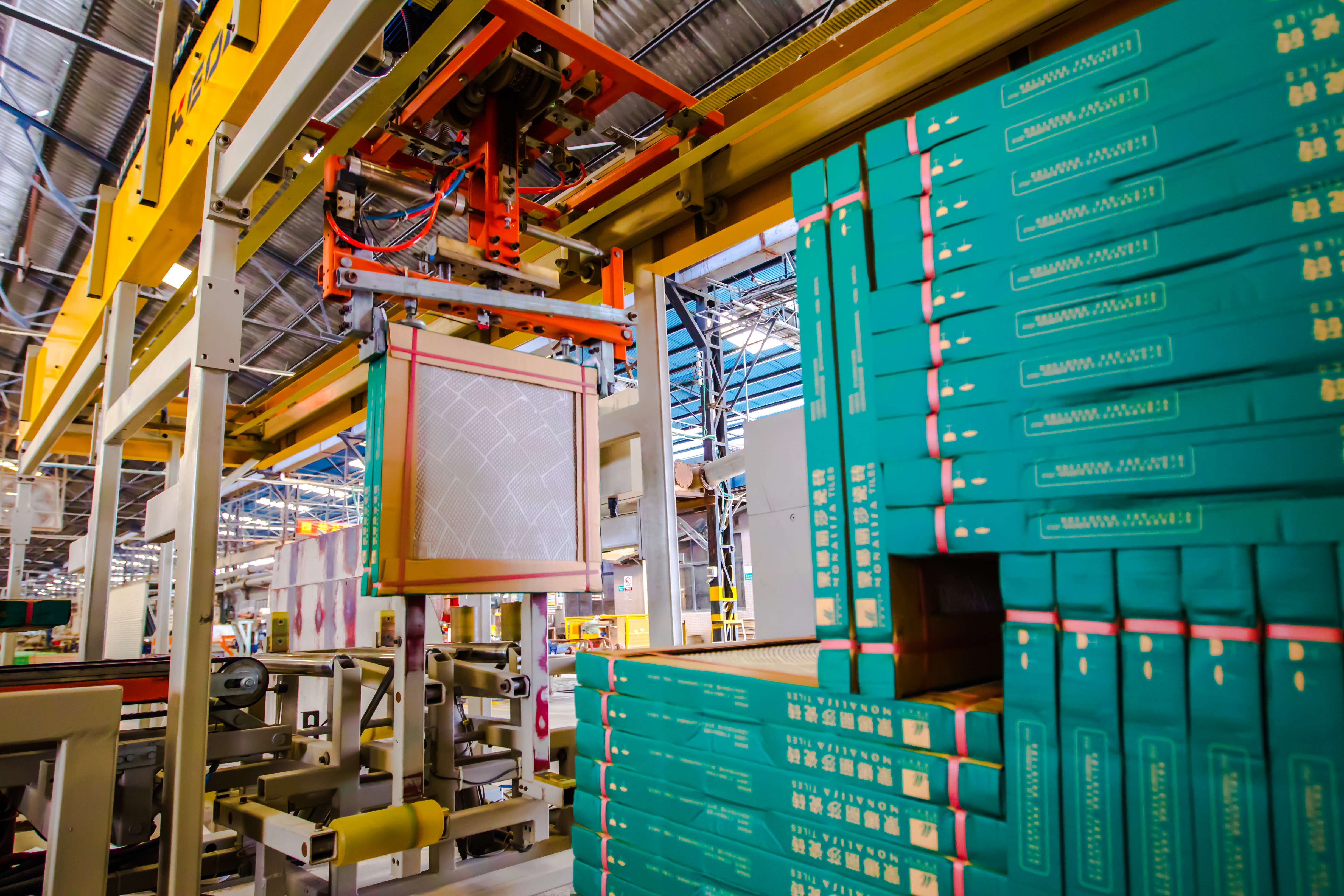
Monalisa Group Co., Ltd. (SZSE: 002918), founded in 1992 and headquartered in Foshan, Guangdong, manufactures ceramic tiles, sintered stone slabs, and SPC flooring. For a heated-floor project, four commitments matter more than the purchase price, because they determine what happens two, five, or ten years after handover.
Supply continuity. SPC production capacity runs at 12.5 million square meters per month, with a standard delivery time of 7–15 days and delivery on FOB/CIF terms. That matters on phased fit-outs, where a heating system is commissioned floor by floor and the flooring package has to follow the construction sequence rather than the other way round.
Batch reserve for later repairs. Heated floors are opened up years later — a manifold replaced, a section of screed repaired, a damaged plank swapped out. The manufacturer provides a stock reserve service for same-batch planks that can be kept for 2 years, which is what prevents a repair from becoming a visible patch.
Verification. Quality control follows 100 % test standards, and warranty service runs 5–15 years covering manufacturing defects. For a buyer evaluating suppliers, those two statements plus the EN ISO 23999 dimensional stability figure form a comparable evidence set.
Technical service and after-sales. Technical services include free consultation covering layout design, installation techniques, and substrate preparation. On-site support is provided for large projects, and training services are available for distributors and installation teams — the practical route to keeping installation ambient temperature, humidity, and the 2 mm over 2 m flatness requirement under control on a working site. Complaint handling includes a response within 24 hours and a solution within 7 working days, and after-sales documentation is provided in both Chinese and English.
Export coverage includes China, Southeast Asia, the Middle East, North America, Europe, Australia, Africa, and regions with active Belt and Road infrastructure development — the same markets where underfloor heating is either standard practice or growing quickly. Delivery terms are FOB/CIF, acceptance is based on pre-shipment testing, and payment terms include TT, LC, and OA.
FAQ
Which standards and certifications should a buyer verify for SPC flooring over underfloor heating?
Start with dimensional stability: commercial-grade SPC flooring is required to hold ≤0.10 % under EN ISO 23999, which is the reference used to judge how a plank behaves when warmed. For European Union projects, CE marking is the compliance baseline. For North American projects, GREENGUARD Gold certification under UL 2818 addresses indoor air quality and requires testing for more than 10,000 chemicals with strict VOC limits. Site conditions belong in the same verification file: floor surface temperature at or below 27 °C, installation ambient temperature of 18–30 °C, post-installation ambient temperature of 13–37.7 °C, relative humidity up to 65 %, and subfloor flatness within 2 mm over 2 m.
Can click-lock, glue-free SPC flooring be used over underfloor heating in commercial offices?
Yes, within the stated conditions. A click-lock glue-free system is not bonded to the heated slab, so the installed floor can move as one plane instead of fighting the substrate through an adhesive layer. In an office fit-out the limiting factor is usually schedule rather than heat: installation ambient temperature has to stay between 18 °C and 30 °C, and relative humidity at or below 65 %, which means the building envelope and temporary conditioning have to be ready before the flooring package starts. Where heating runs long daily cycles, specify a High-density Stone-powder Core SPC Floor or a Dimensional-stable Anti-deformation SPC Floor rather than a standard build.
What drives the cost of a heated SPC floor project?
Three drivers dominate. Floor preparation is the first: bringing a subfloor to 2 mm over 2 m, or removing an existing carpet or soft PVC layer, is labour and material that has nothing to do with the plank price. Core specification is the second: high-density stone-powder cores, waterproof builds, and dimensional-stable anti-deformation constructions sit at different points in the range. Certification and documentation is the third, and it depends on the destination market — CE Certified SPC Floor for the EU, GREENGUARD Gold SPC Floor for North America. Commercial terms are quoted on FOB/CIF delivery with acceptance based on pre-shipment testing, and payment terms include TT, LC, and OA. Buyers should also weigh lifecycle cost rather than purchase price: a warranty of 5–15 years covering manufacturing defects and a 2-year same-batch stock reserve reduce the cost of the repairs that heated floors eventually need.
Can I validate an SPC sample before committing to a heated-floor project?
Yes — sample validation is the normal first step for this specification. Request the exact construction you intend to buy — Rigid Stone-plastic SPC Floor, High-density Stone-powder Core SPC Floor, or Click-lock Glue-free SPC Floor — then check the click profile and edge condition, and confirm how the plank behaves when the surface approaches the 27 °C limit. On the supply side, technical services include free consultation covering layout design, installation techniques, and substrate preparation, and training services are available for distributors and installation teams, so the same sample can be used to align the installer with the site limits before full material is delivered.
What are the lead times and after-sales terms for a heated-floor SPC project?
Monthly SPC production capacity is 12.5 million square meters, and standard delivery time is 7–15 days, delivered on FOB/CIF terms with acceptance based on pre-shipment testing. Warranty service runs 5 to 15 years and covers manufacturing defects. Complaint handling includes a response within 24 hours and a solution within 7 working days, and after-sales documentation is provided in both Chinese and English. On-site support is provided for large projects, and a same-batch stock reserve service can keep matching planks available for 2 years. To turn a specification into a firm quotation, request a sample and share the project details — heated area, construction type, subfloor condition, and target market — so the delivery schedule and documentation package can be confirmed in writing.
Conclusion and Next Step
SPC flooring suits underfloor heating because the rigid stone-plastic core holds its dimensions under a warm surface, and the installation limits that make that performance repeatable are specific: 27 °C maximum floor surface temperature, 18–30 °C installation ambient temperature, 13–37.7 °C post-installation ambient temperature, relative humidity up to 65 %, subfloor flatness within 2 mm over 2 m, and a substrate that is never carpet, soft PVC, or another soft material. Hold those six conditions and the floor behaves as specified; ignore any one of them and the risk moves to the joints.
Next step: request a Monalisa SPC Floor sample for your heated-floor specification, or ask for a project quotation with the delivery schedule and documentation package. Download the full product catalogue here: Monalisa Product Catalogue (PDF).
Contact: Joanna — Email: joanna_wang@fs-monalisatiles.com — Tel / WhatsApp: +86 18605191548 — Address: Monalisa Tower, Poly Centre, 8 Wenhua S Rd, Shunde, Foshan, 528300, CN — Website: www.fs-monalisa.com
Have Questions or Need More Details?
Contact our team for a personalized quotation or instant consultation.
Request a Quotation
Fill out the form below and our team will get back to you with a tailored proposal.
WhatsApp Direct Chat
Prefer to chat in real-time? Message us on WhatsApp for instant assistance & quick answers.
- Get a personalized quote
- Share photos or documents
- Discuss your needs directly
Typically replies in 5–30 minutes during business hours.