
SPC vs WPC Flooring: Head-to-Head for Wet, High-Traffic Areas
For a floor that will be walked on by thousands of people a week and cleaned with water, the SPC-versus-WPC decision is settled by construction, not by category names. Both are vinyl plank floors with a printed decor film and a wear layer; the difference that matters is the core. SPC, short for stone plastic composite, uses a rigid mineral-filled core. WPC, or wood plastic composite, uses a lower-density core that contains wood flour and is commonly foamed. In high-traffic and wet-area projects, that single difference cascades into dimensional stability, joint behaviour under load, water management and installation method.
This comparison is written for a buyer at decision stage, whether that is a contractor, distributor, facility specifier or project owner, who has to select between the two constructions for a defined space and then defend the choice internally. It separates what is documented from what is merely asserted, shows which questions a supplier should be made to answer in writing, and marks the honest limits of any category-level comparison. Where a performance value is not published for a construction, the gap is stated rather than filled with an invented number. Published WPC values vary widely by manufacturer, so every WPC figure discussed below must come from the datasheet and test report of the product actually being quoted.
- Core type, not the category label, decides how a floor behaves under load and after water exposure.
- A rigid, mineral-filled SPC core resists compression and holds joints closed; a lower-density wood-plastic WPC core is chosen when a thicker, softer floor is the priority.
- A waterproof core is not a waterproof assembly: seams, perimeter gaps and subfloor moisture still decide the outcome.
- An impact-resistance multiple is not a specification. Replace it with a test report for the exact SKU, thickness and core before it enters a tender.
Why high-traffic and wet areas expose flooring decisions
Most flooring complaints in demanding spaces follow six patterns: joints that open or peak; edges that swell or delaminate after water exposure; indentation under chair casters, trolleys and equipment feet; wear-layer breakthrough in the main traffic lanes; slipping during or after wet cleaning; and visible colour mismatch when a damaged area is repaired. Each pattern maps to a property of the construction, meaning core density and dimensional stability, joint geometry, wear-layer thickness, surface texture and batch control. None of them maps reliably to the marketing tier of the product or to the price of the plank alone.
The reason high-traffic and wet areas are treated together rather than separately is that the two stresses interact. A floor under heavy footfall is also the floor that gets mopped most often, and a floor in a kitchen, entry zone or washroom corridor is where spills sit longest against a seam. Traffic compresses the core; water finds every gap that compression opens. A construction that resists one stress but not the other tends to fail at the joint line, which is exactly where both meet.
A useful comparison therefore has to answer three questions in order: what the core does under sustained load, what happens to the assembly when water reaches it, and how the installed system behaves across a full year of temperature and humidity swings. Everything else, including surface design and price, sits behind those three.
What the market data says, and what it does not
Rigid-core construction took 74.2% of SPC revenue in 2025, according to Dataintelo's market research, which means the rigid stone-plastic plank is the mainstream product in this category rather than a specialist variant. That number is useful context for a specification decision: a buyer comparing SPC with WPC is comparing a mainstream rigid-core format against a wood-plastic format that competes mainly on comfort, thickness and a quieter feel underfoot.
Category market size should be read with the definition in mind. Dataintelo estimates the global SPC flooring market at USD 9.8 billion for 2025, while Grand View Research has reported USD 5.9 billion for the same period. The gap reflects a scope difference, with the larger figure understood to include related rigid vinyl segments. That is a definitional disagreement rather than a growth signal, and it matters whenever an internal business case is built on a market-size slide: two credible publishers can differ by more than half simply by drawing the category boundary in a different place.
Trade data gives a firmer picture of supply. China exported USD 4.97 billion of plastic floor coverings under HS 391810 in 2024, making it the largest exporter in that code according to OEC trade records. For a project buyer, that concentration carries a practical implication: most SPC sourcing decisions are also supplier-verification decisions, and the difference between two quotations often lies in core formulation, batch control and documentation rather than in the visible surface.
SPC and WPC defined in construction terms
An SPC plank is a composite of polyvinyl chloride and a high proportion of mineral filler, typically stone powder, formed into a dense, rigid core. Because the core is stiff, the plank can be made relatively thin and still span small subfloor irregularities without a separate rigid backing; the wear layer sits above a printed decor film, and the underside is usually finished with a factory-applied backing for acoustic or moisture purposes. The rigidity is the product, not a side effect: it is what allows the click profile to stay engaged and what keeps the plank from following every dip in the substrate.
A WPC plank uses a core that combines PVC with wood flour and a foaming agent, producing a lower-density, more compressible board. Manufacturers commonly supply WPC in thicker profiles so the floor feels solid and cushioned, and the wood fraction is why water management at the edges and seams deserves closer attention on that construction. Specific WPC density, thickness, water-absorption and impact values are not reproduced here because they are manufacturer-specific.
The rigid stone-plastic core under a loaded floor
A denser core is not automatically a better floor, but in a loaded space it changes the mechanism of failure. When a chair caster, pallet trolley or equipment foot presses on a resilient plank, the surface deforms and the core either resists that deformation or absorbs it. A mineral-filled rigid core resists compression over a smaller contact patch, so the load is spread rather than pressed into the joint. Over years of traffic, that difference shows up as joints that stay flush instead of joints that step, and as fewer visible dents in the traffic lanes.
Stability is the second half of the same property. Commercial-grade SPC is commonly specified against a dimensional-stability requirement of no more than 0.10% under EN ISO 23999, a threshold that matters because a floating floor has to be able to expand and contract without closing its expansion gap at the wall or opening a seam in the middle of a room. A floor that moves more than its detailing allows will peak at the seams or gap at the perimeter, and no amount of installation care compensates for a plank that cannot hold its own geometry across a seasonal humidity cycle.
Monalisa's product documentation positions its flooring for high-traffic commercial interiors such as shopping malls, airports and school corridors, and for wet zones that require high slip resistance. That positioning only becomes a specification when the dimensional-stability report, the wear-layer class and the slip result for the named SKU are attached to the submittal, which is the step most quotations skip.
Water: the core is waterproof, the assembly is where risk lives
The phrase 100% waterproof core is accurate in a narrow sense and misleading in a broad one. A polymer-mineral SPC core does not contain wood fibre, so it does not absorb water and swell the way a wood-based core can; a spill on an exposed plank edge will not grow the board. What the phrase does not cover is the installed assembly. Water enters a floating floor at the seams, at the perimeter gap under the skirting, at transition profiles and through penetrations, and from below through a damp substrate. Once water is under the planks, the floor can look perfect from above while the subfloor stays wet.
This is where the two constructions are compared correctly. On an SPC floor, the practical water questions are: how tight and how well supported is the click joint; is the perimeter gap correct and unobstructed; is the substrate dry and, where required, tanked; and does the cleaning method push water rather than flood it? On a WPC floor the same questions apply, with closer attention to the edges because the core contains wood flour. Neither answer should be taken from a brochure. Both should be taken from the joint design, the installation detail and a wet test on the actual sample.
One boundary deserves stating plainly. In a continuously wet room such as a communal shower or a plant room, the floor covering is not the waterproofing layer. A tanked or sealed substrate provides that function and the planks provide the wearing surface. Treating a waterproof core as a substitute for wet-room waterproofing is one of the most expensive misunderstandings in this category.
The impact-resistance claim: how to use it, and how not to
Buyers are often offered a simple multiple, that SPC impact resistance is ten times that of WPC, as the reason to select rigid core. The reasoning behind such a claim is straightforward: a dense, mineral-filled core is less compressible than a foamed wood-plastic core, so a falling object or a concentrated load leaves a shallower indentation at the same thickness and the same wear layer. The mechanism is real and it is the reason rigid core dominates commercial specification.
The multiple, however, is not a specification. Its value depends on the test method, the specimen thickness, the core density, the backing and the temperature at testing. A figure measured on one supplier's thin plank does not transfer to another supplier's thicker one, and a figure quoted without a method cannot be compared with anything. The defensible way to use the claim is as a prompt rather than a conclusion: ask each supplier for the impact or indentation test report for the exact SKU, at the exact thickness being purchased, and compare only results produced by the same method. A supplier who can only offer a multiplier, and no report, has given an unverified marketing statement, and it should be scored as such in the evaluation.
The same discipline applies to the softer side of the comparison. WPC's lower-density core is frequently described as quieter and more comfortable underfoot, and that is a legitimate reason to choose it in a domestic or upper-floor setting. Acoustic performance and compression still need to be confirmed from data for the specific product, not inferred from the category.
Click-lock floating installation: speed and its conditions
A click-lock floating system joins planks mechanically, with no adhesive to the substrate. In a high-traffic or wet-area project this has three practical consequences. The floor can be lifted and a single damaged plank replaced without demolition, which shortens closures and protects the budget for repairs. Installation does not depend on adhesive cure schedules, so the area can be handed over sooner and there is no adhesive layer to trap moisture. And the assembly now depends entirely on the joint profile, the perimeter expansion gap and the flatness of the subfloor.
The last point is where floating floors fail. A floating floor that is trapped at the edges has nowhere to move, and the symptom appears months later as peaking seams rather than as an obvious installation error. Rigid planks also telegraph substrate irregularities more visibly than thick, soft planks, so the flatness check is not a formality on SPC. The honest way to compare installation cost is to price the subfloor preparation that each construction actually needs in the specific room, not the plank alone.
SPC vs WPC: head-to-head comparison table
The table compares the two constructions on the dimensions that decide a high-traffic or wet-area project. Where a value is manufacturer-specific, the table states what has to be verified rather than supplying a number that would not survive a submittal review.
| Decision dimension | SPC (rigid stone-plastic core) | WPC (wood-plastic composite core) | What to verify before ordering |
|---|---|---|---|
| Core construction | Mineral-filled rigid core; dense and low-compressibility | PVC with wood flour, commonly foamed; lower density and more compressible | Core type, total thickness and nominal density on the datasheet |
| Behaviour under point loads | Resists compression over small contact patches; shallower indentation mechanism | Absorbs more deformation; softer feel underfoot | Impact or indentation test report for the exact SKU at the purchased thickness |
| Dimensional stability | Commercial-grade SPC is commonly specified at no more than 0.10% under EN ISO 23999 | Manufacturer-specific; not generalised here | Stability report with the standard reference, per SKU and per batch |
| Water at the core | No wood fibre, so the core does not absorb water and swell | Wood fraction makes edge and seam water management more critical | 24-hour jointed-sample soak; perimeter detail; substrate moisture reading |
| Water at the assembly | Risk sits at seams, perimeter gaps, transitions and penetrations | Same risk points, with closer attention to edges | Joint design, expansion gap, transition profiles, cleaning method |
| Underfoot comfort and impact noise | Harder and often thinner; acoustic backing available | Thicker, softer profile is the usual reason to select it | Acoustic test data if a sound requirement applies; backing compatibility with the joint |
| Installation method | Click-lock floating, glue-free, replaceable plank by plank | Click-lock floating is also common | Joint profile, acclimation instruction, expansion gap detail |
| Subfloor sensitivity | Rigid core follows irregularities visibly; flatness matters more | Thicker soft profile is more forgiving of minor unevenness | Flatness measurement and the prep cost for each option in the same room |
| Indoor-air documentation | GREENGUARD Gold is achievable; that programme screens more than 10,000 chemicals under UL 2818 against strict VOC limits | Certification is product-specific and must be evidenced | Certificate plus its scope, matched to the SKU being supplied |
| Typical project fit | High footfall with water events: retail, offices, corridors, food service, entry zones, laundries | Comfort-led domestic and upper-floor work at lighter traffic | Confirm the intended wet use against the supplier's written recommendation |
Step-by-step: running the head-to-head for your project
An SPC-versus-WPC decision becomes defensible when it is run as a short evaluation rather than as a preference. The seven steps below take roughly the time of one specification review and produce a comparison that will survive a client or procurement challenge.
- Profile the exposure. Write down daily traffic, the types of load (foot traffic, chairs with casters, trolleys, equipment feet, cleaning machines), how often water appears and in what volume, the cleaning chemistry, the temperature range and the hours of direct sun. This profile, not the room name, is what the flooring has to match.
- Fix both constructions on paper at equal thickness. Record core type, thickness, wear layer, backing and joint system for each option. Comparing a thin rigid plank against a thick soft plank compares two different budgets and two different failure modes, and the result will not transfer to the tender.
- Put a number on stability. Request the dimensional-stability report with its standard reference. For commercial-grade SPC the working benchmark is no more than 0.10% under EN ISO 23999; ask for the equivalent evidence for the WPC option rather than assuming it.
- Settle the impact question with reports. Require impact or indentation data produced by the same method, at the same thickness and at a stated temperature. Where a supplier offers only a multiplier, record it as unverified and score the submission accordingly.
- Draw the water path. Trace every route water can take: the seam, the perimeter, the transition at a doorway, a pipe penetration, the substrate below. Decide whether the room needs a tanked substrate, and note that requirement against both options rather than against SPC alone.
- Check the subfloor against the plank. Measure flatness and moisture. A rigid core needs a flatter substrate, and that preparation cost belongs in the SPC column; if the slab is already flat, the same cost disappears from the comparison.
- Price the assembly and the service life. Add the quoted plank, wear layer, subfloor preparation, wastage, installation labour and time, perimeter profiles and transitions, and the cost of closing an area to replace a damaged plank. The cheaper plank is frequently the more expensive floor.
Where each construction fits
Commercial offices. The load pattern is casters, chair mats and concentrated point loads at desks, combined with periodic damp cleaning. The rigid core's stability and compression resistance are the relevant properties, and wear-layer class should match the traffic lane rather than the average of the floor plate.
Retail and shopping centres. High footfall, grit at entrances, frequent machine cleaning. Specify a wear layer and surface texture for abrasive traffic, and plan entrance zones separately from the main sales floor because the exposure differs.
Schools, clinics and other public interiors. Cleaning frequency and indoor-air documentation matter as much as wear. GREENGUARD Gold, run under UL 2818 with screening for more than 10,000 chemicals against strict VOC limits, is the kind of evidence to request where handover dates and occupied buildings are involved.
Wet zones inside buildings. Kitchens, laundries, entry areas and bathroom floors outside the shower footprint are the typical SPC wet-area applications. The core will not swell, but the joint and the perimeter still need correct detailing, and slip performance should be measured wet for the specific surface rather than assumed from a product family.
Where WPC makes sense. In domestic bedrooms, upper-floor living areas and refurbishments over older or slightly uneven substrates, the thicker, softer profile is a genuine advantage, and the lighter traffic reduces the significance of core stiffness. That choice should be supported by the WPC supplier's own data for the intended wet use, not by an assumption that all vinyl planks behave alike.
Limitations of SPC to price into the decision
A rigid core is hard underfoot and reflects more impact noise than a thick soft plank; where acoustic performance is a requirement, the backing and its compatibility with the click joint must be confirmed rather than added afterwards. Rigid planks follow substrate irregularities, so flatness preparation is a real line item. Direct sun and heat sources enlarge the movement range, which makes the expansion gap and the perimeter detail non-negotiable. Point loads will dent any resilient floor at sufficient pressure, and a wear layer protects against abrasion rather than against indentation. Colour and batch consistency depend on production control, so spare stock from the same batch should be reserved for later repairs. Where an antimicrobial additive is offered, ask which component is treated, what the test method is and whether the claim survives the cleaning regime in use, because that claim is separate from the base floor's certification.
Documents to request before signing
- Dimensional-stability report with standard reference, naming the SKU and the batch.
- Impact or indentation test report at the purchased thickness and a stated test temperature.
- Wear-layer specification and abrasion class for the traffic lane in question.
- CE marking documentation and declaration of performance where the project is placed in the EU market.
- Indoor-air evidence such as GREENGUARD Gold under UL 2818, with its scope matched to the supplied product.
- Slip-resistance result measured in wet conditions for the actual surface finish.
- Installation instructions covering acclimation, expansion gaps, substrate flatness and moisture limits.
- Batch and shade-control statement, plus the spare-stock arrangement for future repair.
Monalisa's position in this comparison
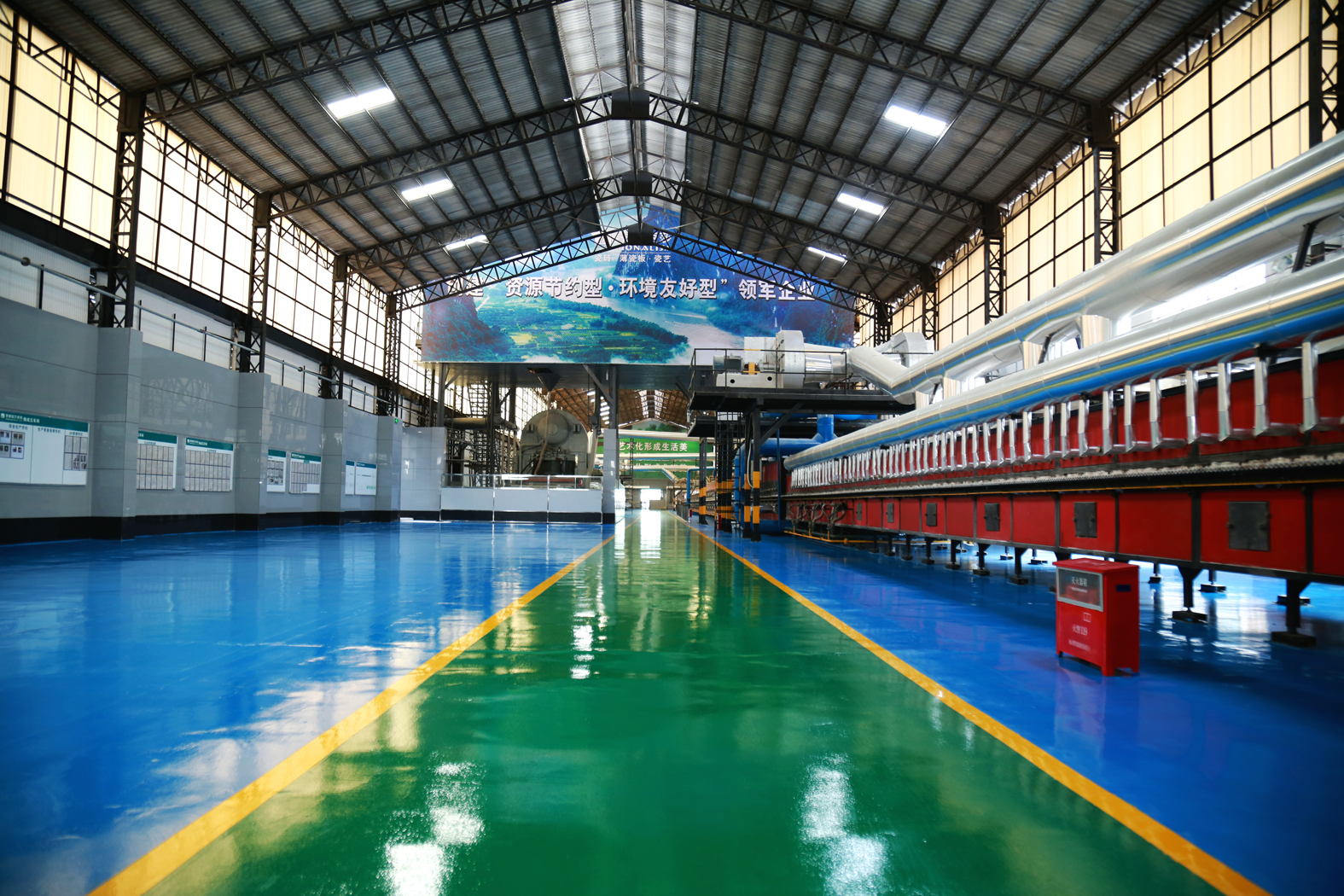
Monalisa Group Co., Ltd. is a Chinese building-materials manufacturer founded in 1992 and headquartered in Foshan, Guangdong Province, listed on the Shenzhen Stock Exchange under the code 002918. The group operates four production bases, in Xiqiao (Foshan), Qingyuan (Guangdong), Tengxian (Guangxi) and Gao'an (Jiangxi), with 37 production lines, a site area of 2,779,333.33 square metres, 4,106 employees, a research and development team of about 100 and group annual output of 100 million square metres. Its product range covers tiles, sintered stone slabs and SPC floor, which means an SPC project can be coordinated with the wall and surface specification through one supplier.
Quality and compliance infrastructure relevant to a project submittal includes the group's 3M quality management model, the Foshan Municipal Government Quality Award, the Guangdong Provincial Government Quality Award and a nomination for the third China Quality Award. The group holds 15 certifications including ISO 9001 and ISO 14001, and its stated quality model runs 18 control points along the production flow supported by an in-house laboratory and ISO 45001 certification for occupational health and safety. As of June 2021 it had participated in drafting 49 national, industrial, local and group standards and held 892 authorised patents, including 145 invention patents, and it was recognised in the first batch of Green Factories by the Ministry of Industry and Information Technology.
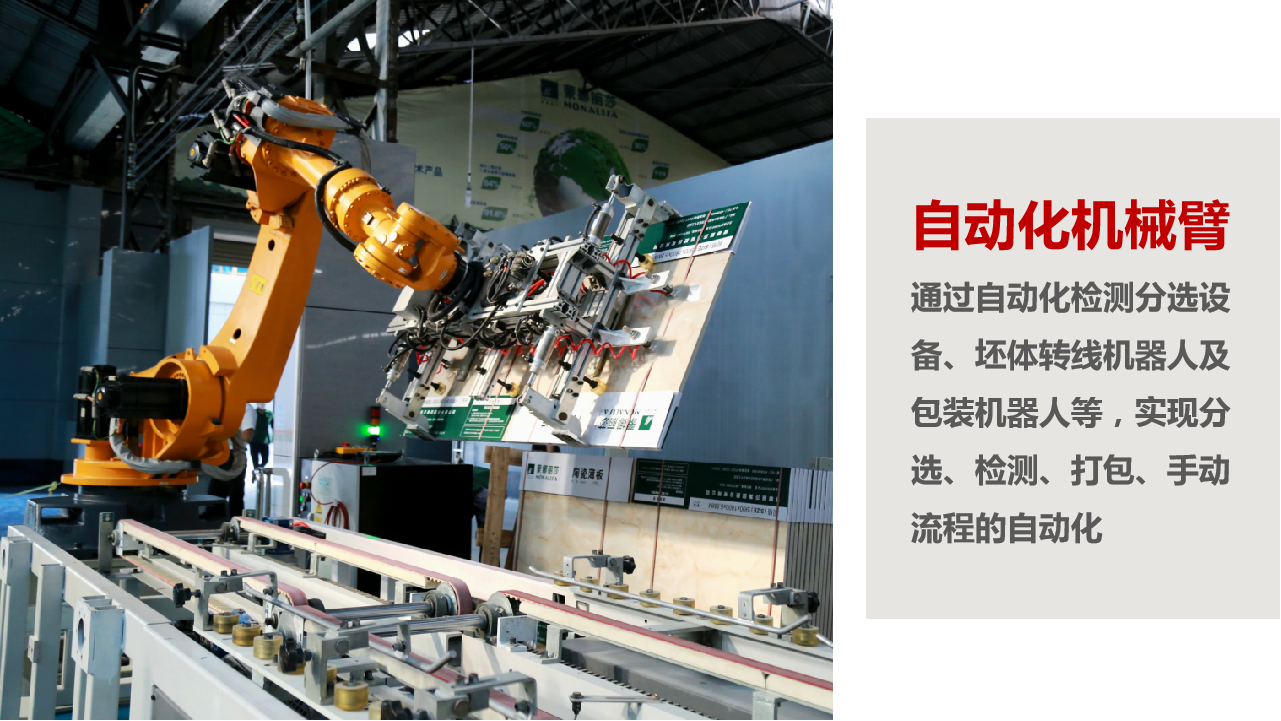
For a buyer, the practical relevance of that infrastructure is documentation rather than scale. A supplier that can trace a batch, test dimensional stability and issue certificates matched to the supplied SKU is the difference between a comparison that can be signed off and one that stalls in procurement. The same demands should be applied to the WPC option; the point of this head-to-head is not to exempt any product from verification.
Frequently asked questions
Does SPC flooring carry the compliance documentation a commercial project asks for?
Compliance is documented per product, not per category. For a tender, request the dimensional-stability report with its standard reference, since commercial-grade SPC is commonly specified at no more than 0.10% under EN ISO 23999; the CE marking documentation and declaration of performance where the project is placed in the EU; indoor-air evidence such as GREENGUARD Gold, which is run under UL 2818 and screens more than 10,000 chemicals against strict VOC limits; and slip-resistance and fire-class reports for the actual SKU. A certificate issued for one series does not cover a different series, so the certificate and the supplied product must match. The same set should be requested from any WPC supplier, because without it neither construction can be compared on compliance.
Can an SPC floor handle heavy foot traffic and rolling loads?
The rigid, mineral-filled core is the reason SPC is usually the starting point for high-traffic commercial interiors: it resists compression better than a softer foamed wood-plastic core, and its dimensional stability keeps joints closed through temperature and humidity swings. Whether that becomes performance in a specific building depends on two conditions. The wear layer must be matched to the traffic, because abrasion resistance is a surface property and the core does not compensate for a thin wear layer. The subfloor must be flat, because a rigid plank follows the substrate and a floating floor trapped at the edges has nowhere to move. Rolling loads from chairs, trolleys and cleaning machines should be checked against the supplier's indentation data for the purchased thickness.
Is SPC more expensive than WPC?
There is no dependable category-level answer, because installed cost is driven by the assembly rather than by the plank name. Build both quotations on the same room schedule and compare the unit price at equal thickness, the wear layer, the subfloor preparation each option needs, wastage, installation labour and time, perimeter and transition profiles, and the cost of replacing a damaged plank over the service life. A thicker soft plank can reduce preparation on an uneven domestic floor, while a rigid plank on a well-prepared commercial slab often carries the lower long-term cost because single planks can be replaced without closing the area. Any comparison that stops at the plank price is incomplete.
What sample testing should we do before choosing?
Test both products at the thickness you intend to buy. Soak a jointed pair of planks for 24 hours and inspect the seam and edges for swelling or separation. Place a concentrated load on each sample at room temperature and again after warming, and compare the depth of indentation. Run a caster chair across the joint line. Lay each plank over a deliberately uneven surface with a straight edge to see which one telegraphs the substrate. Clean a sample with the chemicals your facility actually uses. Record the conditions, photograph the results and keep the samples, because they become the acceptance reference for the delivered batch.
How do we move from comparison to a delivered order?
Fix the construction in writing first: core type, thickness, wear layer, joint system, backing and certification scope. Then request a quotation and a production schedule against that specification, together with samples from the production batch. Lead time depends on the series, the quantity and any customisation, so ask for it in writing rather than working from a category average. The Monalisa company brochure can be downloaded here: Monalisa Group brochure (PDF). For project-specific questions, contact Joanna at joanna_wang@fs-monalisatiles.com or +86 18605191548.
Conclusion
For high-traffic and wet-area projects, the SPC case rests on a rigid, mineral-filled core that resists compression, holds its geometry against a documented stability threshold and supports a click-lock floating assembly that can be repaired plank by plank. The WPC case rests on a thicker, softer profile that suits lighter-traffic domestic work and more forgiving substrates, provided its own data supports the wet use intended. Neither case is won by a slogan, and neither is won by a multiplier quoted in a sales meeting.
The decision rule that survives procurement is simple. Where footfall and water events coincide, and the substrate can be brought flat, specify the rigid construction and attach the stability, impact and slip evidence for the named SKU. Where comfort and thickness lead, and traffic is moderate, WPC remains viable once its documents are in hand. Apply the same eight-document checklist to both, test the samples at the purchased thickness, price the assembly rather than the plank, and the head-to-head resolves itself into a decision that can be defended for the life of the floor.
Next step
If the project involves a wet-prone, high-traffic space, the fastest way to close the comparison is to test the actual construction. Request SPC samples from the production batch, the dimensional-stability and impact reports for the named SKU, and a quotation built on your room schedule, so the SPC and WPC options are compared on the same terms.
Have Questions or Need More Details?
Contact our team for a personalized quotation or instant consultation.
Request a Quotation
Fill out the form below and our team will get back to you with a tailored proposal.
WhatsApp Direct Chat
Prefer to chat in real-time? Message us on WhatsApp for instant assistance & quick answers.
- Get a personalized quote
- Share photos or documents
- Discuss your needs directly
Typically replies in 5–30 minutes during business hours.