Sintered Stone Slab vs. Quartz vs. Porcelain: A 2026 Buyer's Comparison Guide
Sintered Stone Slab vs. Quartz vs. Porcelain: A 2026 Buyer's Comparison Guide
The choice between sintered stone slab, engineered quartz, and porcelain tile is not a design preference only. In 2026, procurement teams are asking how each material behaves on a countertop edge, in a monsoon-exposed facade, near an airport corridor, or under a heavy kitchen island. Surface failures happen after installation, usually because a buyer compared a price list but not the physical test data.
This guide compares the three material families and builds a supplier qualification path for buyers who are moving from evaluation to execution. The sintered stone and porcelain references are based on Monalisa Group's verified product and project dossier. Quartz is treated as a category that should be checked against the same project-specific criteria before a final order.
Why the 2026 Comparison Is Different
The global sintered stone market was valued at roughly USD 877.75 million in 2024 and is projected to grow to about USD 1.41 billion by 2032, according to Intel Market Research. Large-format fired ceramic panels are entering projects that were previously dominated by natural stone, quartz, and traditional porcelain tile. At the same time, China's ceramic product exports reached USD 19.15 billion from January to November 2025, according to the General Administration of Customs of China. That means international buyers are comparing a growing number of Chinese manufacturers on quality consistency, certification, and delivery risk.
For a procurement manager, the practical question is not which category is newest. It is which material satisfies the project's abrasion class, water absorption range, stain resistance, slip resistance, fabrication constraints, and supply continuity.
Three Material Families That Overlap in Use
Sintered Stone Slab
Sintered stone is a fired ceramic slab commonly made from materials such as clay and quartz sand. In the Monalisa dossier, the Luxury Slab models 90-270FDK09003M and 90-270FDK09008M are produced in a 900 by 2700 by 12 mm format with a glazed-matt surface. The same slab is listed in product application notes for kitchen countertops, kitchen islands, vanity tops, backsplashes, cabinet doors, custom furniture, and external ventilated rain-screen walls. Large-format sintered stone reduces visible joints, which is one reason buyers specify it for continuous horizontal surfaces and facade systems.
Quartz
Quartz is an engineered stone category that uses crushed natural quartz bound with resin. It is widely used for interior countertops and vanities because it can be polished to a consistent surface and does not need the same monthly sealing routine as natural granite. Unlike fired ceramic products, the resin matrix creates category-level thermal and UV limits. Those limits vary by manufacturer, so the correct buying decision is to request a thermal-resistance test report, UV-stability data, and the warranty behind the resin system.
Porcelain Tile
Porcelain tile is the modular, time-tested member of the comparison. Monalisa's NSF-listed Classic Stone porcelain tile, model 8FMB10032PM, is an 800 by 800 by 10 mm glazed-polished tile made from clay and quartz sand. Traditional porcelain tile installation produces grout lines, but it also allows smaller fabrication batches and can be a strong choice for floors, wall surfaces, and repetitive commercial layouts. In the Monalisa portfolio there is also a 1200 by 2700 by 12 mm homogeneous body tile, model 120-270FEG12207M, which brings the durability of porcelain into a large-format panel.
The Four Test Metrics That Matter Most
When a buyer compares sintered stone, quartz, and porcelain, the conversation should begin with four measurable properties: abrasion resistance, water absorption, stain resistance, and slip resistance. Each maps to a real failure mode in kitchens, bathrooms, floors, or facades.
1. Abrasion: Use a PEI or equivalent surface class
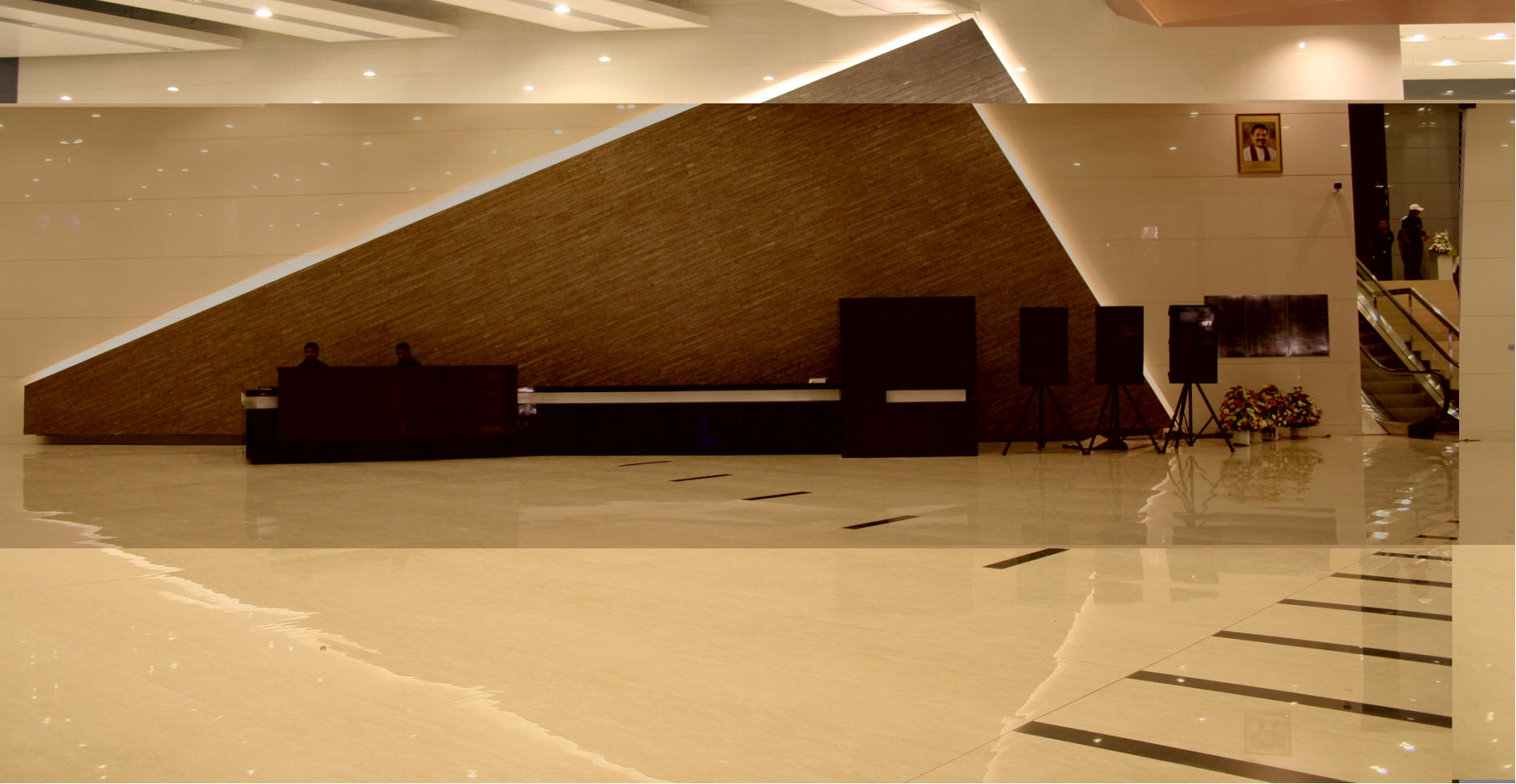
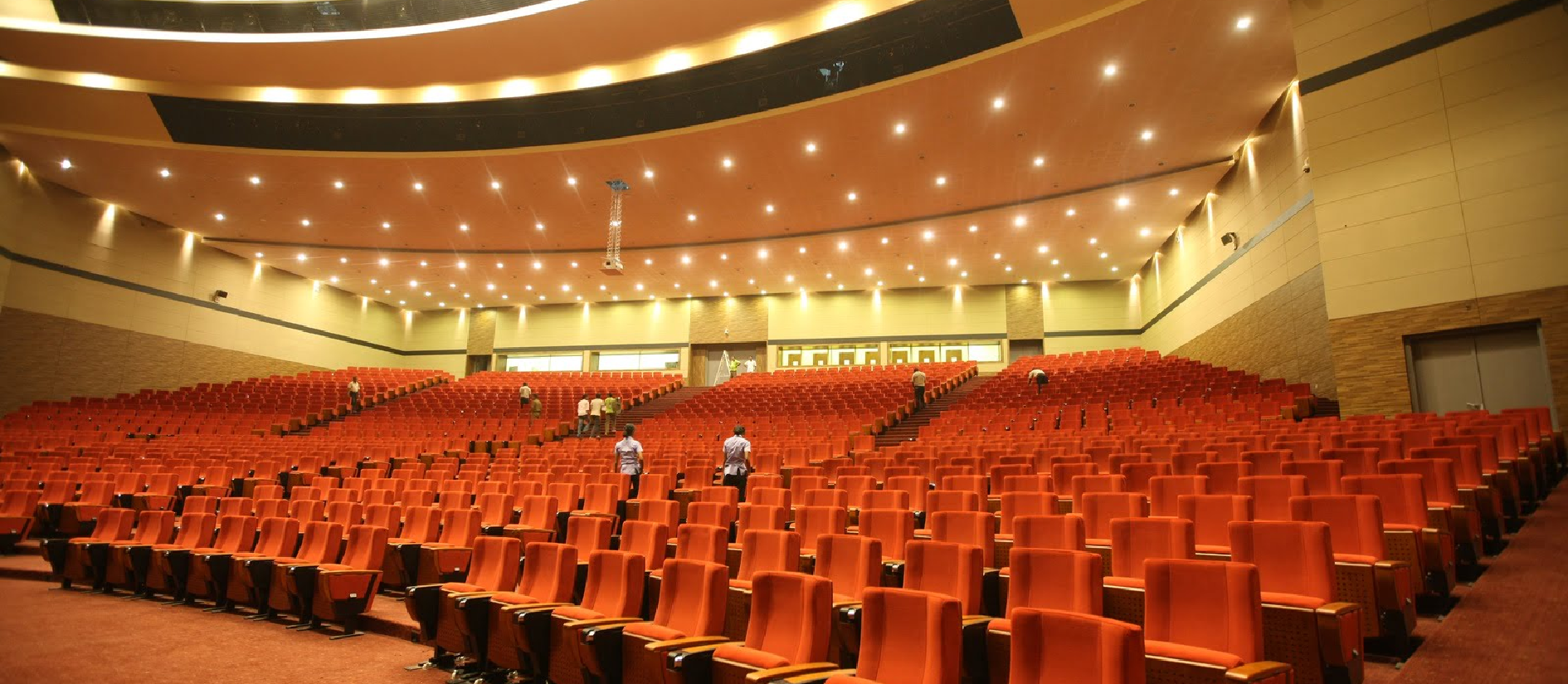
Abrasion resistance tells you whether a surface will keep its finish under foot traffic, cleaning equipment, or repeated contact with pots and appliances. Buyers should request a PEI class or an equivalent abrasion classification before approving a floor or worktop. For airports, hotel corridors, and other public projects, the specification should match the expected traffic, not the showroom appearance. In Monalisa's Sri Lanka project, large-format panels were used in convention halls, banquet spaces, VIP corridors, multimedia rooms, public reception zones, outdoor connectors, and roof terraces—areas where abrasion and cleaning frequency are high.
2. Water Absorption: Target low single digits or below 0.5 percent
Water absorption is the most direct predictor of freeze-thaw survival and long-term moisture performance. In ceramic classification, a water absorption value at or below 0.5 percent is commonly associated with porcelain-type bodies. Many fired ceramic specifiers use the trade shorthand double-zero to mean a very low absorption body suitable for wet areas and exterior cladding. For architectural sintered stone, buyer guides cite a benchmark of less than 0.1 percent water absorption according to ISO 10545-3. In Monalisa's public-building project in Sri Lanka, the large-format product reported ultra-low water absorption at or below 0.08 percent, with freeze-thaw and weather resistance validated for a hot-humid climate with monsoon rain.

3. Stain Resistance: Look for Grade 5
Stain resistance is tested by exposing a surface to staining agents and measuring how easily it can be cleaned. Grade 5 represents the strongest practical result on the common stain-resistance scale. Kitchen countertops, bathroom vanities, and food-service surfaces should be evaluated at Grade 5 or the highest grade relevant to the project. A polished visual sample cannot prove stain resistance. Always ask for the test report that corresponds to the production batch, not a decoration sample.
4. Slip Resistance: Use R9-R11 to match the zone
Slip resistance is usually communicated as an R value for inclined-plane testing or as a coefficient of friction. Residential kitchens and vanities can often use an R9 to R10 surface with more design freedom. Public circulation areas, shower floors, pool surrounds, and outdoor connectors benefit from R10 or R11, depending on traffic and wetness. In Monalisa's Sri Lanka national project, the selected large-format tiles carried an R10 slip-resistance rating, helping to keep high-traffic public venues safer during formal events.
Step-by-Step Comparison Process for Buyers
The following sequence helps a buyer avoid comparing products on appearance only. It is designed for the evaluation-to-execution stage, when decisions must be turned into purchase orders.
Step 1. Map the surface to the working environment. Identify whether the material will be used for an interior countertop, a wet bathroom vanity, a corridor floor, a facade panel, or a high-traffic commercial zone. Put the project area in a table with the primary risk: scratching, staining, water, foot slipperiness, heat shock, or UV exposure.
Step 2. Set minimum physical thresholds. For floors, decide the abrasion class. For wet or exterior areas, set the maximum water absorption value. For countertops, ask for the stain-resistance grade. For public and wet zones, set a slip rating such as R10 or R11. Write these thresholds into the inquiry document so suppliers can respond with data.
Step 3. Compare product formats and fabrication reality. A large-format sintered stone slab reduces joints, but slab handling, fabricator tooling, and edge polishing cost money. Quartz is usually fabricated with diamond tooling and cut to shape, while resin edges need protection from high heat. Small-format porcelain tile is easier to move but leaves grout lines that become long-term maintenance lines.
Step 4. Verify certifications and test reports. For Europe, CE marking is a construction-market signal; for food-zone surfaces, NSF/ANSI 51 matters. Read the certificate scope and issue date. For sintered stone, request water absorption, flexural strength, stain resistance, slip resistance, and abrasion reports. For quartz, request heat-shock, UV, scratch, and stain data from the exact product line being offered.
Step 5. Audit production capacity and lead time. A beautiful sample does not solve a project schedule. Ask how many production lines are in operation, what the monthly capacity is, what the lead time is for your batch size, and whether the supplier has completed government-scale deliveries.
Monalisa's Scale Evidence and What It Means for Supply
Monalisa Group Co., Ltd. is a Chinese architectural ceramics company founded in 1992 and headquartered in Foshan, Guangdong Province. The group operates 37 production lines across four modern production bases. Its monthly production capacity is 12.5 million square meters across porcelain and sintered stone product lines, according to its corporate manufacturing data.

Scale becomes evidence when it is attached to completed projects. In Sri Lanka, a single Monalisa delivery exceeded 80,000 square meters of large-format tiles, supporting the conclusion that the company can keep a consistent supply rhythm for overseas government projects. OEM and ODM production is available with customization options including pattern and logo. The stated project lead time is 7 to 15 days, the MOQ is 2,000 square meters, and the quality-control process includes testing on 100 percent of production. For international orders, delivery terms can be FOB, CIF, or EXW, and payment is typically made by TT or LC.
Those facts matter more in 2026 than a single brochure line because buyers are evaluating not only appearance but whether the factory can hold shade consistency, deliver a phased project, and support after-sales claims.
Use Cases and Project Evidence
Kitchen countertops and bathroom vanities
Sintered stone slabs and engineered quartz are both common choices for kitchen islands and vanity tops. A slab format can span a cabinetry run with fewer visible seams, which reduces food and moisture traps. For this reason, the Monalisa Luxury Slab application map includes kitchen countertops, islands, vanity tops, and backsplashes. Its NSF/ANSI 51 certification is relevant when the same surface will be used around food preparation and hygiene-sensitive zones.
Public convention halls and VIP corridors
The Sri Lankan national government project is one of the strongest examples of large-format ceramic performance in a diplomatic building context. The client was the Urban Development Authority of Sri Lanka, with the Korea International Cooperation Agency as joint contractor. More than 80,000 square meters of large-format tiles were delivered in one procurement cycle for floors and walls in convention halls, banquet spaces, VIP corridors, multimedia rooms, public reception zones, outdoor connectors, and roof terraces. The R10 slip rating and ultra-low water absorption of 0.08 percent or less supported safe and stable performance under a hot-humid climate and monsoon rain.
High-traffic airport flooring
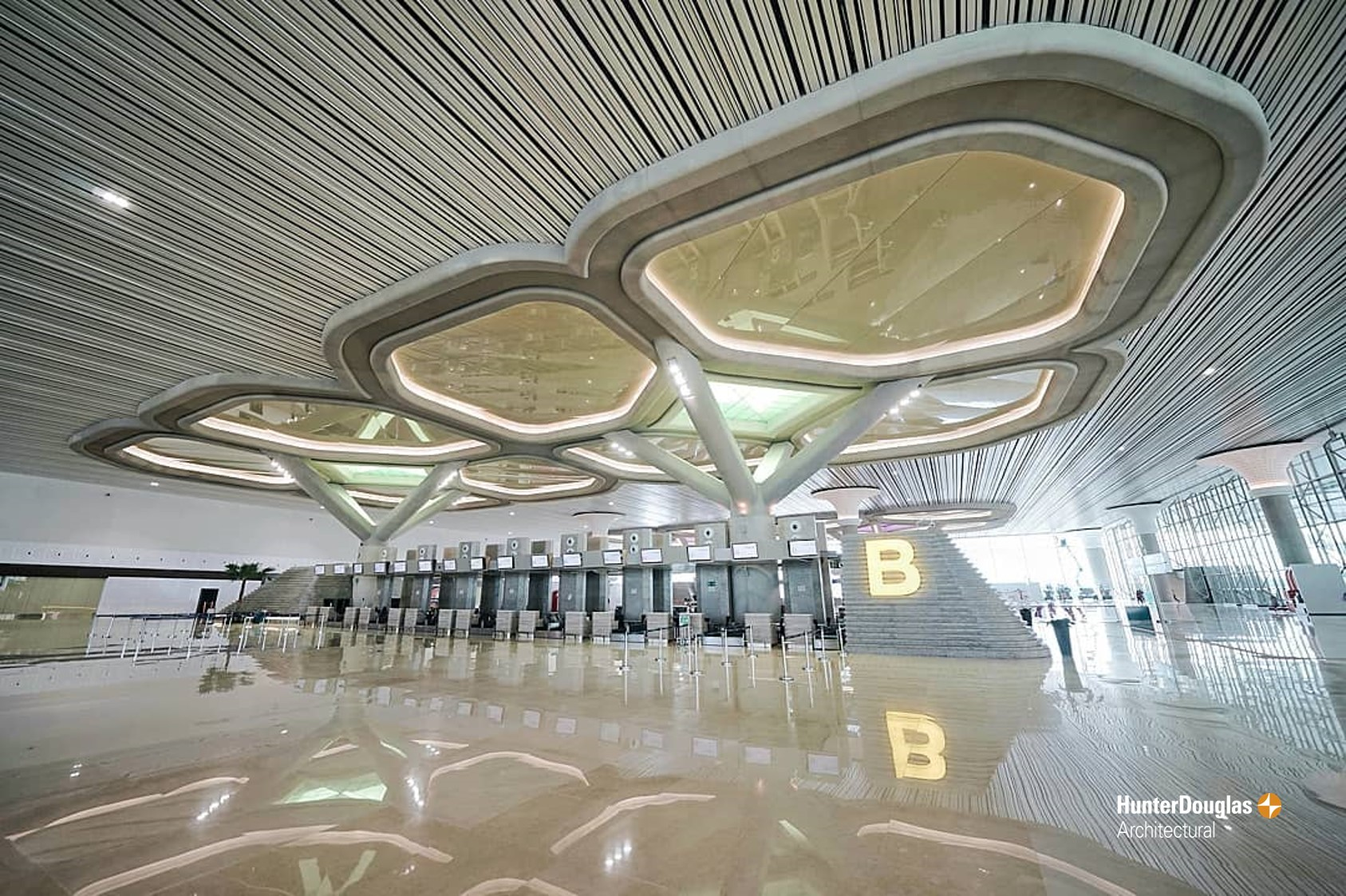
In Indonesia, Monalisa porcelain tile products were used by a municipal government project at Jogyakarta Airport. The project achieved a breakage rate below 0.3 percent, reducing replacement losses, while tight-joint installation delivered a modern minimalist aesthetic. The case also reported a 15 percent saving on grouting materials and labor, plus a 30 percent lower life-cycle maintenance cost. For airport and public-infrastructure buyers, this is evidence that material quality changes not only the installation process but the long-term operating budget.
Comparison Table: What a Buyer Should Qualify
| Material | Verified Evidence from This Guide | Best-Fit Use in the Monalisa/Project Context | Check Before Order |
|---|---|---|---|
| Sintered stone slab | Monalisa Luxury Slab models 90-270FDK09003M and 90-270FDK09008M are 900 by 2700 by 12 mm glazed-matt slabs made from clay and quartz sand. | Kitchen countertops, islands, vanity tops, wall panels, external curtain walls, ventilated rain-screen cladding. | PEI class, water absorption report, stain grade, R rating, flexural strength, CE/NSF document scope. |
| Quartz category | No Monalisa quartz model is used in this comparison; quartz is treated as an engineered stone category that requires brand-specific reports. | Interior bathroom vanities and countertops with controlled heat exposure and no continuous UV or exterior requirement. | Thermal resistance, UV stability, resin content, stain grade, warranty terms, fabrication capability. |
| Porcelain tile | Monalisa Classic Stone model 8FMB10032PM is an 800 by 800 by 10 mm glazed-polished porcelain tile; model 120-270FEG12207M is a 1200 by 2700 by 12 mm homogeneous body tile. Both are NSF-listed in the direct corporate directory. | Floors and walls for residential, commercial, and public buildings; modular layouts where grout lines are acceptable. | Water absorption class, abrasion class, slip rating, shade control, packaging grade, installation-format plan. |
The table separates facts from Monalisa's verified products and projects from category-level advice on engineered quartz. Quartz performance is manufacturer-specific; no project should be approved without a written test report from the exact brand and finish.
Frequently Asked Questions
1. Which certifications should I check on a sintered stone slab?
For food-zone and hygiene-sensitive projects, check for NSF/ANSI 51 listing. Monalisa's NSF certificate C0676949-01 lists Slab models 90-270FDK09003M and 90-270FDK09008M along with several porcelain tile references. For European construction installation, CE conformity under EN14411:2016 is relevant; the Monalisa certificate CY25A10378 was issued in March 2025 and is valid to March 2035.
2. Can Monalisa produce both sintered stone slabs and porcelain tiles for one large project?
Yes. Monalisa Group operates 37 production lines across four production bases and reports a monthly capacity of 12.5 million square meters across porcelain and sintered stone product lines. The same group can support OEM and ODM production, custom patterns and logos, a 2,000-square-meter MOQ, and a typical lead time of 7 to 15 days.
3. How should I think about cost when comparing quartz, porcelain, and sintered stone?
Compare installed project cost rather than one square-meter price. Large-format sintered stone reduces joints and grout lines but changes fabrication, transport, and handling; quartz needs templating and fabrication and can vary with its resin content; porcelain tile installation adds grout lines but can reduce panel-fabrication complexity. Ask each supplier for a cost breakdown that includes delivery, unloading, fabrication, edge profile, and installation.
4. Can a visual sample verify stain and slip performance?
A visual sample only confirms color and finish. Physical claims such as stain-resistance Grade 5, water absorption, PEI abrasion class, and R9-R11 slip rating require the corresponding test report. For large projects, join sample approval with a written datasheet and the production batch number that will be shipped.
5. What are Monalisa's lead time and payment terms for project orders?
Monalisa's posted lead time is 7 to 15 days depending on the order configuration and project schedule. The MOQ is 2,000 square meters. Payment can be made by TT or LC, and delivery terms include FOB, CIF, and EXW. Product warranty ranges from 5 to 15 years depending on series and project type. For a project-specific timeline or sample-based evaluation, contact joanna_wang@fs-monalisatiles.com or WhatsApp +86 18605191548.
Conclusion: Choose with Test Data, Not Only with the Eye
Sintered stone slab, quartz, and porcelain tile can all deliver excellent projects, but they should be chosen against the project's physical environment and the manufacturer's ability to supply consistent batches. Sintered stone offers large-format, low-water-absorption surfaces with strong application coverage for counters, floors, and facades. Quartz can be a strong interior-engineered surface when its resin-dependent thermal and UV limits are documented. Porcelain remains a dependable modular solution with proven public-project case studies.
The Monalisa evidence in this guide was presented to show how a buyer can test supplier scale: more than 30 years of corporate history, 37 production lines, a 12.5-million-square-meter monthly capacity, a completed single delivery over 80,000 square meters in Sri Lanka, and an airport project that reported a breakage rate below 0.3 percent. Those signals, combined with certification documents, give an evaluation team a credible path from shortlist to execution.
Download the Monalisa corporate brochure to keep product capacity, OEM/ODM, and project evidence in your procurement file.
Download Brochure