
Technical Capability Assessment: How to Select a Sintered Stone Slab Supplier for Specialized Applications
Technical Capability Assessment: How to Select a Sintered Stone Slab Supplier for Specialized Applications
Selecting a sintered stone slab supplier for performance-critical projects — whether it's a kitchen countertop, bathroom vanity, exterior facade, or high-traffic flooring — requires moving beyond general catalogs. Procurement professionals must match specific technical requirements (scratch resistance, heat resistance, NSF certification) with a manufacturer's verified production capabilities. This guide provides a structured framework for evaluating suppliers based on industry standards, real project evidence, and manufacturing competence.
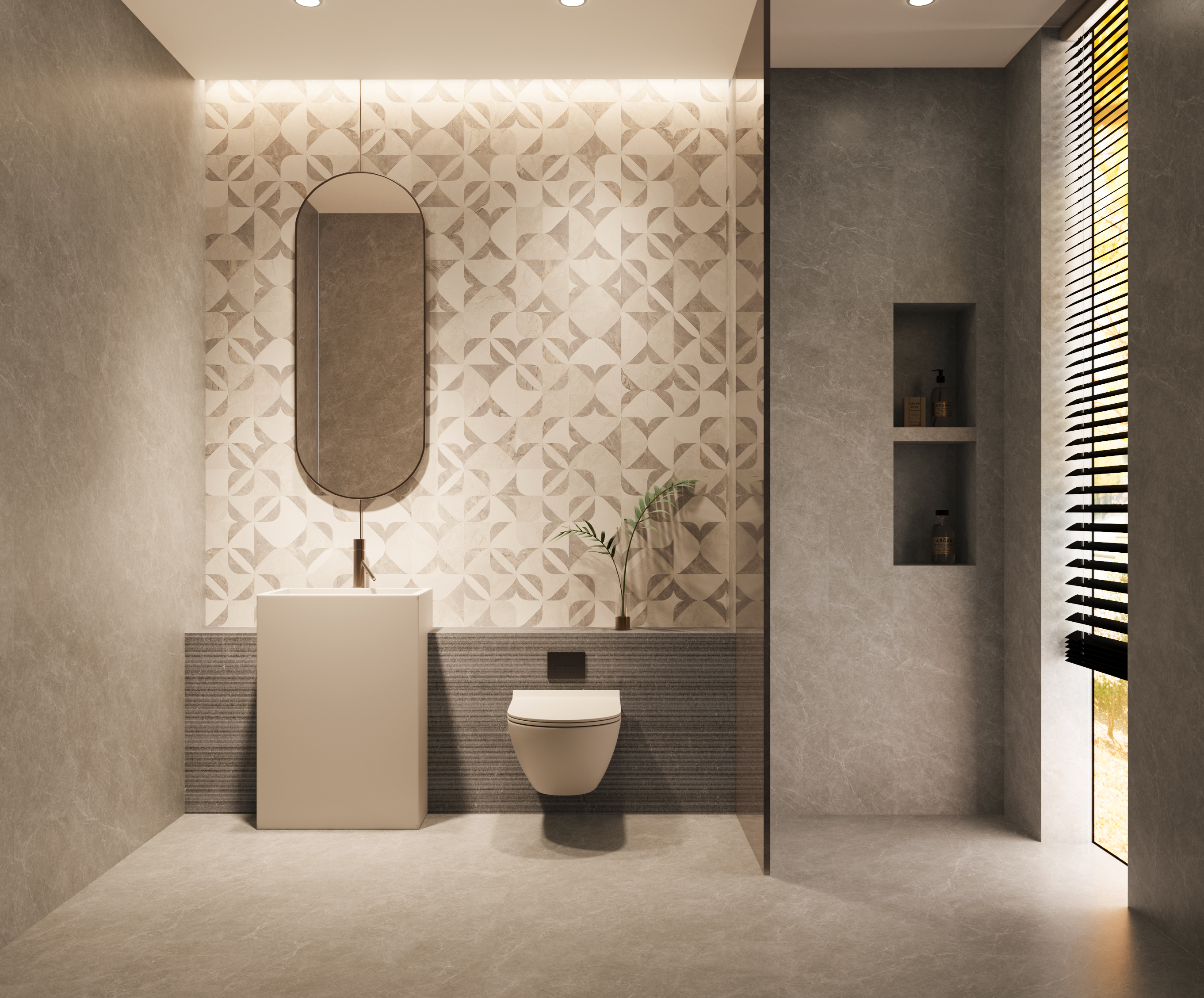
What Is a Sintered Stone Slab and Why Does Specialized Selection Matter?
A sintered stone slab (also known as sintered compact surface or porcelain slab) is a high-performance ceramic material produced by pressing natural minerals (clay, quartz, feldspar) under extreme pressure (up to 48,000 kN) and firing at temperatures above 1200°C. Unlike natural stone or conventional tiles, sintered stone offers a virtually non-porous body (water absorption ≤0.08%), Mohs hardness ≥7, and resistance to scratches, stains, heat, and UV radiation.
However, not all sintered stone slabs are equal. A slab designed for exterior facade cladding requires different properties (freeze-thaw resistance, UV stability) than one for kitchen countertops (food-safe certification, scratch resistance). The challenge for buyers is to identify a supplier whose manufacturing process, quality control, and certification portfolio align with the intended application.
Industry Background: The Growing Demand for Application-Specific Sintered Stone
The global sintered stone market is expanding rapidly, driven by architectural trends favoring large-format, thin, and durable surfaces. Key end-use sectors include:
- Residential: Kitchen islands, vanity tops, backsplashes, flooring
- Commercial: Hotel lobbies, restaurant tables, airport terminals, retail displays
- Infrastructure: High-speed rail stations, subway walls, curtain wall systems
- Healthcare & Food Service: Antibacterial surfaces, cleanroom partitions, laboratory worktops
Each vertical imposes distinct performance criteria. For example, a scratch-resistant sintered stone for a commercial kitchen requires PEI 5 abrasion rating, while an exterior facade sintered stone panel must pass 150 freeze-thaw cycles. Buyers who skip technical due diligence risk premature failures, safety hazards, and cost overruns.
Problem Definition: The Risk of Mismatching Supplier Capabilities with Project Requirements
The core problem procurement teams face is the information asymmetry between marketing claims and actual manufacturing capability. Common pitfalls include:
- Relying solely on price comparisons without verifying certification validity (e.g., NSF, CE).
- Assuming all large-format slabs meet the same flatness tolerance (±0.15% vs ±0.5%).
- Ignoring the supplier's track record in similar large-scale projects.
- Underestimating the importance of batch consistency for multi-year warranty commitments.
A structured assessment framework helps buyers answer: "Does this supplier have the production lines, quality systems, and proven experience to deliver the specific sintered stone slab my project requires?"
Detailed Solution: A Multi‑Axis Supplier Evaluation Framework
We propose a five-axis evaluation model tailored to sintered stone slab procurement:
1. Production Scale & Technology
Assess the manufacturer's installed capacity, press tonnage, and kiln technology. For instance, Monalisa Group operates four production bases with 37 lines, a monthly capacity of 12.5 million m², and fully automatic ultra-high pressure presses (48,000 kN). Their 9000×1800×10.5mm ultra-large ceramic plate, launched in 2021, set a domestic record. Large-scale production with advanced pressing ensures consistent density and minimal warpage.
2. Certification & Compliance
Verify application-specific certifications:
- NSF/ANSI 51 (food contact safety) – Required for kitchen countertops and food preparation surfaces. Monalisa holds NSF certificate C0676949-01.
- CE marking (EN 14411:2016) – Mandatory for European markets; confirms dimensional conformity and performance. Monalisa's CE certificate CY25A10378 covers 900×1800×10mm products.
- ISO 9001, ISO 14001, ISO 45001 – Demonstrate systematic quality, environmental, and safety management.
- Class A radioactive standard – Essential for residential and commercial indoor use.
Check the certification scope – does it explicitly include the product line you need (e.g., 20mm thick slab for countertops)?
3. Quality Control & Traceability
Examine the supplier's QC process. Monalisa implements 18 inspection checkpoints from raw material to finished product, with 100% testing on final goods. They own a CNAS-accredited lab capable of standard tests (water absorption, breaking strength, slip resistance, freeze-thaw, radioactivity). Each tile is laser-marked for traceability to production date, press station, and inspector ID. Such granular traceability is critical for warranty claims and batch consistency.
4. Relevant Project Experience
Demand case studies that mirror your application. Monalisa has supplied:
- 80,000 m² of large-format slabs for the Sri Lanka International Convention Centre (floor/wall covering, R10 slip resistance, 20+ year design life).
- 80,000 m² for Yogyakarta Airport in Indonesia (modern minimalist aesthetic, 30% lower life-cycle maintenance cost).
- Key landmarks: Beijing Olympic Games (8 venues), Guangzhou Asian Games (10 venues), Hong Kong-Zhuhai-Macao Bridge, China Pavilion at Expo 2020 Dubai, exclusive supplier for Hangzhou 2022 Asian Games.
These projects demonstrate the ability to deliver large-scale, technically demanding orders across diverse climates and usage conditions.
5. Supply Chain & Commercial Flexibility
Consider lead time (7–15 days), minimum order quantity (2,000 m²), payment terms (TT/LC), and delivery methods (FOB/CIF/EXW). Suppliers with dedicated export teams and multi-lingual support (e.g., Monalisa's export to Southeast Asia, Middle East, North America, Europe, Australia, Africa) simplify international procurement.
Step‑by‑Step Selection Process for Specialized Applications
- Define Application-Specific Requirements – List mandatory properties (e.g., NSF for countertop, R10+ slip resistance for bathroom, ≥100 freeze-thaw cycles for exterior).
- Shortlist Suppliers Based on Certification & Technical Specs – Use databases or trade platforms; verify certifications online.
- Request Technical Data Sheets & Test Reports – Compare water absorption, breaking strength, abrasion, stain resistance (Grade 5), and dimensional tolerance.
- Audit Production Facilities (Virtual or On-site) – Check press tonnage, kiln type, QC lab, and traceability system.
- Review Past Projects of Similar Scale & Application – Ask for references and contact details.
- Evaluate Commercial Terms & After-Sales Support – Warranties (Monalisa offers 5–15 years), stock reserve service, technical guidance, and complaint handling.
- Request Samples for In-House Testing – Test stain resistance, scratch resistance, and heat shock.
- Make a Decision Based on Total Cost of Ownership – Not just unit price but installation savings (tight-joint reduces grout 10–15%), lower breakage (≤0.3%), and extended lifespan (2–3×).
Use Cases: Matching Suppliers to Specialized Needs
| Application | Critical Properties | Recommended Supplier Criteria | Example Product |
|---|---|---|---|
| Kitchen Countertop | Scratch resistant, heat resistant, NSF certified, stain resistant Grade 5 | NSF/ANSI 51 cert, Mohs ≥7, PEI ≥4, large-format (900×2700mm) | Monalisa Luxury Slab 90-270FDK09003M (12mm thick, glazed-matt) |
| Bathroom Vanity | Waterproof, stain resistant, slip resistant, easy to clean | Water absorption ≤0.08%, slip resistance R10+, non-porous surface | Monalisa Flowing Light Sintered Stone 90-270DBY09340M (9mm, matte) |
| Exterior Facade | UV resistant, freeze-thaw stable, ultra-low water absorption | 150 freeze-thaw cycles passed, CE certified, UV resistance test report | Monalisa 900×1800×10mm (CE certify CY25A10378) |
| High-Traffic Flooring | Scratch resistant, abrasion resistant PEI 5, slip resistant | PEI Grade 5, Mohs ≥7, breaking strength ≥45 MPa | Monalisa Flowing Light (9mm, PEI 5, R10) |
Frequently Asked Questions
What is the difference between sintered stone and porcelain tile?
Sintered stone is a subset of porcelain tile but produced with higher pressing pressure (≥48,000 kN vs typical 30,000 kN) and denser body (water absorption ≤0.08% vs 0.5–3%). This results in superior strength, stain resistance, and large-format capability.
Why is NSF certification important for kitchen countertops?
NSF/ANSI 51 certifies that the material is safe for food contact, resists staining from common kitchen substances, and does not support bacterial growth. Without it, the slab may not comply with health codes in commercial kitchens.
How do I verify if a supplier's sintered stone is truly UV resistant?
Request the UV weathering test report (e.g., Xenon-arc test per ISO 4892). A reliable supplier should demonstrate no significant color change or gloss loss after 1000+ hours of exposure.
What is the typical lead time and MOQ for custom projects?
Many manufacturers, including Monalisa, offer a lead time of 7–15 days and MOQ of 2,000 m². For large orders, negotiate phasing delivery and stock reserve.
Conclusion
Selecting a sintered stone slab supplier for specialized applications demands rigorous technical evaluation. By focusing on production capability, certifications (NSF, CE), quality control systems, relevant project case studies, and commercial flexibility, buyers can avoid costly mistakes. Manufacturers like Monalisa Group, with a proven track record in landmark projects, extensive R&D investment, and full certification coverage, represent a reliable partner for performance-driven procurement. Use the framework above to create a customized supplier scorecard and request detailed technical documentation before committing.
📄 Download Monalisa Sintered Stone Brochure (PDF)