Top 8 Porcelain Tile Specifications for Hospitality Spaces: 2026 Ranking
Top 8 Porcelain Tile Specifications for Hospitality Spaces: 2026 Ranking
A hospitality floor is inspected twice: once by a guest standing on it in bare feet, and once by a procurement team reading its specification sheet. Those two inspections do not reward the same numbers, which is why this guide ranks specifications rather than suppliers.
The eight porcelain tile parameters below are ordered by risk-weighted criticality for 2026 hospitality projects: the likelihood that a zone fails, the consequence if it does, and the cost of correcting it after handover. The zones covered are the ones where failure is most visible in hotel, resort and serviced-apartment work, namely guest rooms, corridors, pool surrounds and outdoor terraces. Product model 3516 from Monalisa is used as a worked example where fire performance and slip resistance are concerned.
Problem Definition: Why Hospitality Tile Specifications Fail
Most hospitality tile failures are specification failures, not product failures. A tile can be genuinely porcelain and still be the wrong porcelain for a pool surround. Three patterns cause most of the problems.
- One specification for the whole property. Guest rooms, corridors, shower areas, pool decks and terraces are written with identical requirements, even though the performance envelope differs by zone. Bathrooms require R10 or higher slip resistance, commercial and public areas require PEI 4 or above, and outdoor projects in cold climates carry a freeze-thaw requirement.
- Thresholds replaced by adjectives. Writing 'anti-slip', 'heavy duty' or 'waterproof' instead of a class leaves nothing to verify at delivery. 'Waterproof porcelain tiles' and 'heavy duty porcelain tiles' are useful search phrases but unusable specification lines.
- Claims with no document behind them. A specification sheet that asserts performance without a test report, certificate of conformity or declared classification cannot be defended at handover.
The asymmetry matters. A slip-resistant floor that is specified loosely is discovered by a guest; a tile with the wrong dimensional tolerance is discovered by the installer, when the grout joints are already set and the adhesive has been consumed. Both are cheaper to prevent than to remediate.
Industry Background: A Consolidating Supply Base Raises the Bar on Verification
Specification discipline matters more in 2026 because the supply base is tightening. The global porcelain tiles market was valued at approximately USD 9.73 billion in 2024 and is projected to reach USD 18.33 billion by 2035 (Spherical Insights). Chinese tile production fell 12.1% in 2024 to 5.91 billion square meters (China Building and Sanitary Ceramics Association), while Chinese exports declined 2.5% to 600 million square meters, with 74% of that volume absorbed by Asian markets (Ceramic World Web / Mecs Research Centre). Industry reviews name Mohawk Industries, Grupo Lamosa and SCG Ceramics among the leading global competitors in the ceramic and porcelain tile sector (Ceramic World Review / Mordor Intelligence). Fewer, larger suppliers mean fewer chances to source on price alone, and more need to buy on verified specification.
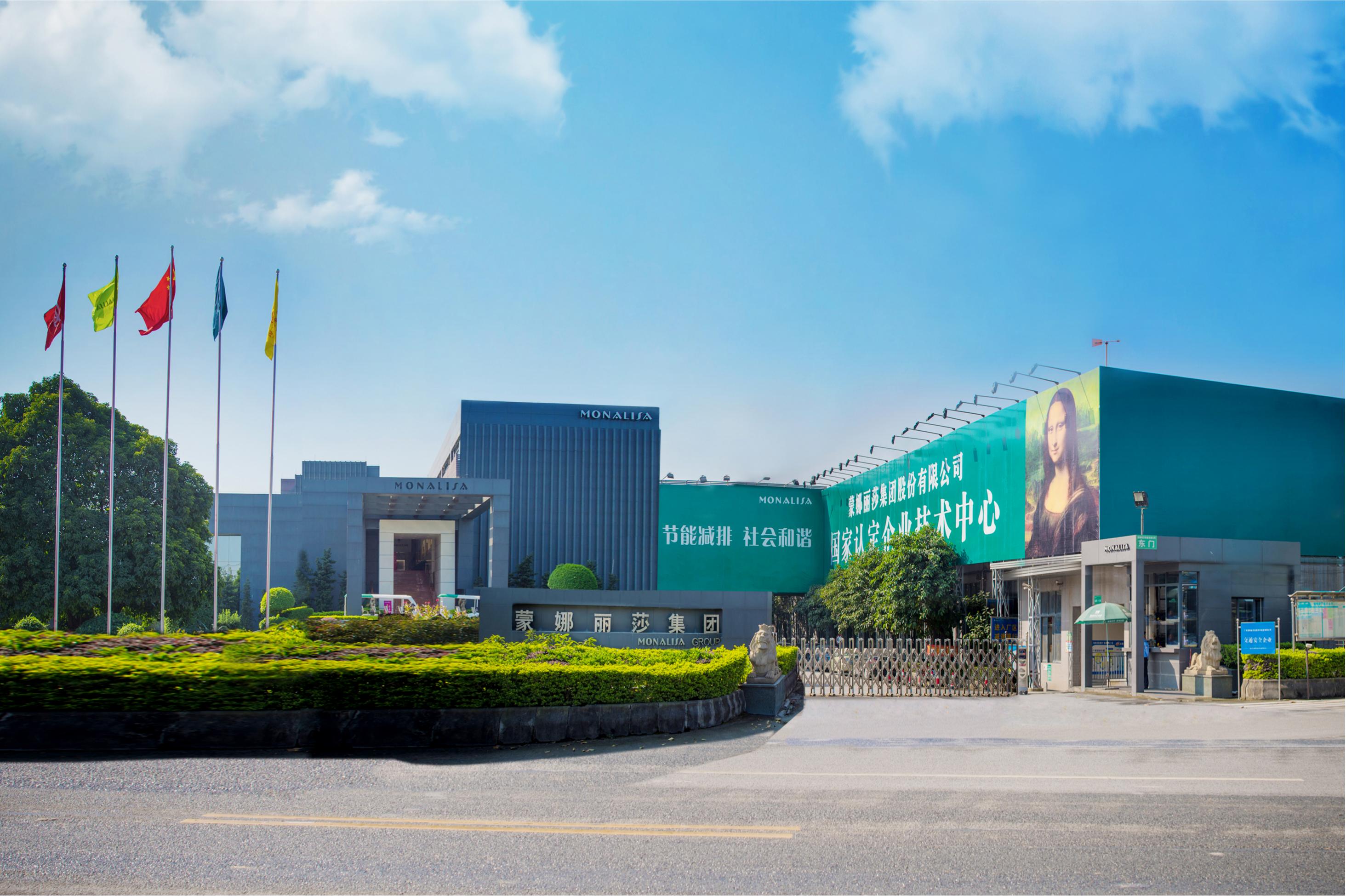
Monalisa Group Co., Ltd. is an architectural ceramics manufacturer founded in 1992 and headquartered in Foshan, Guangdong Province, China. The group operates four production bases (Xiqiao in Foshan, Qingyuan in Guangdong, Tengxian in Guangxi and Gao'an in Jiangxi), a total of 37 production lines, an annual output of 100 million square meters, 4,106 employees and a 100-person R&D team. Its portfolio covers ceramic tiles, ceramic slabs and porcelain tile, with hospitality applications stated for guest rooms, corridors, pool surrounds, shower areas and outdoor terraces. The company's website is fs-monalisa.com. Glazed porcelain tile, the segment with the largest share of the porcelain tile market according to Spherical Insights, is the surface family most hospitality projects land on.
The 2026 Ranking: Eight Porcelain Tile Specifications for Hospitality Spaces
The first four entries are thresholds that fail inspection or generate a guest complaint. The last four govern installation quality, commercial predictability and compliance sign-off. All eight use the same measurement language, so a project team can copy them into a specification sheet and check them at delivery.
1. Slip Resistance: R9 to R11, with R10+ as the Bathroom Threshold
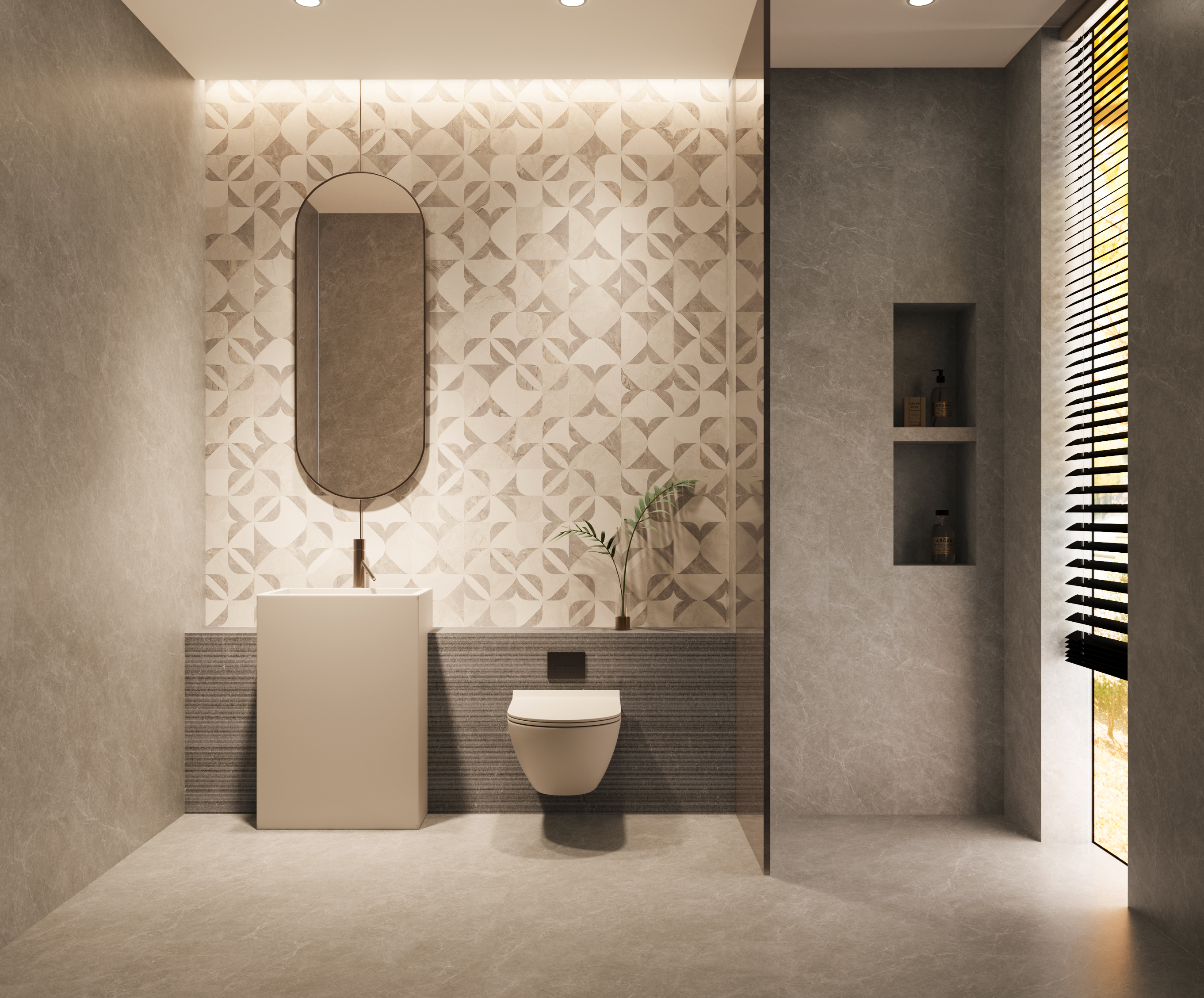
Slip resistance ranks first because it is the only specification on this list that is simultaneously a safety requirement, an insurance question and a guest-comfort issue. The working envelope recorded for Monalisa porcelain tile is R9 to R11, and bathrooms require R10 or higher. Pool surrounds and ramps sit in the same slip-driven category as wet indoor areas, while dry guest-room floors and upper-floor corridors can be specified at the lower end of the range.
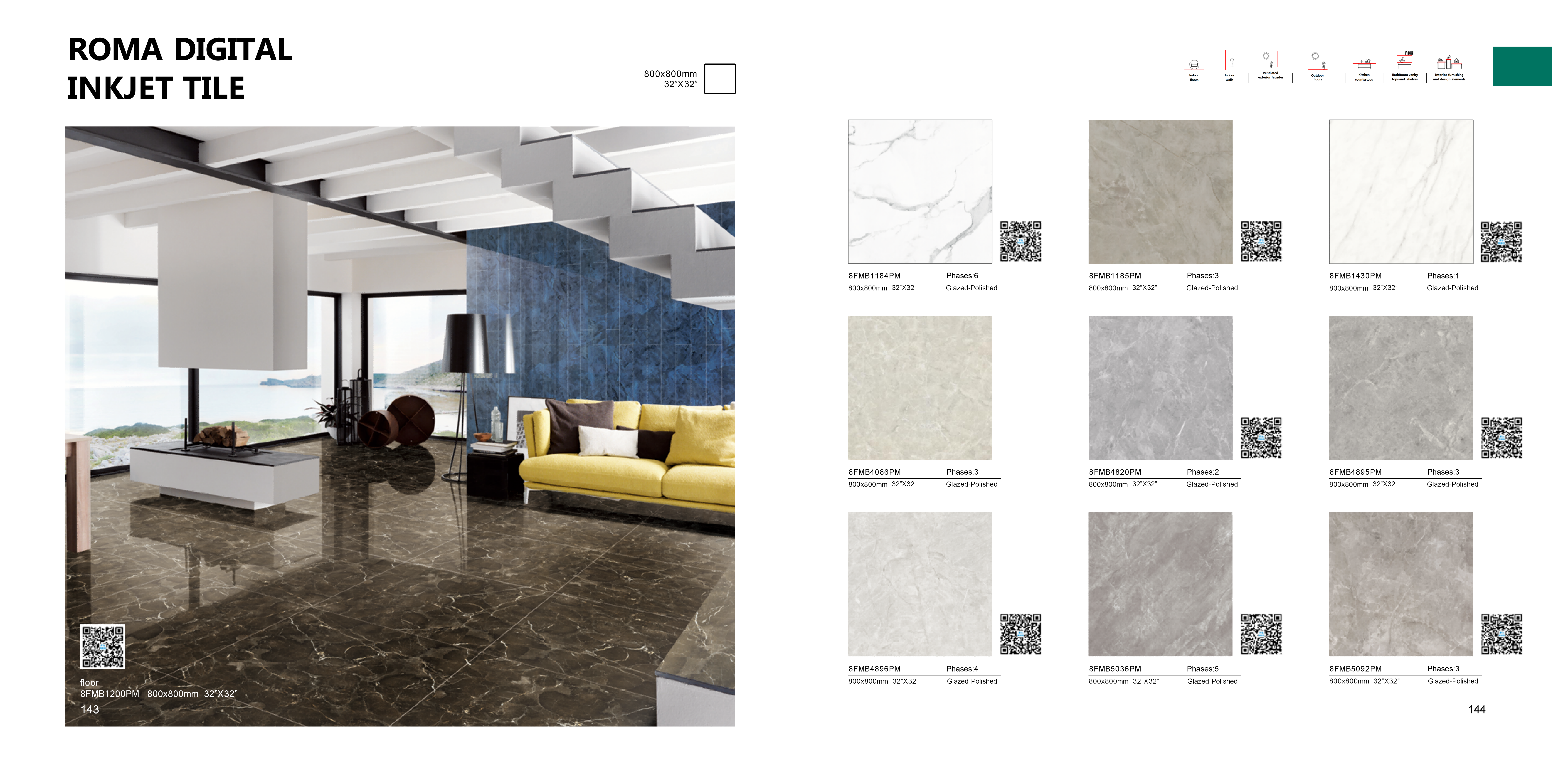
The frequent error is writing 'anti-slip' with no class. A hospitality project should state the class per zone and confirm it against the delivered batch. Model 3516 (8FMB10032PM), an 800x800x10 mm glazed-polished porcelain tile in the Classic Stone range, is a useful reference here: slip resistance is one of the performance functions specified across the porcelain tile range, and 3516's stated applicable industries explicitly include guest rooms, corridors, pool surrounds, shower areas and outdoor terraces.
2. Water Absorption: 0.5% or Less, and the Double-Zero Exception
Water absorption is the number that separates porcelain tile from other ceramic bodies. To meet international standards such as ISO 13006 and ANSI A137.1, porcelain tile must have a water absorption rate of 0.5% or less. Semi-porcelain bodies are permitted up to 3%, which means a product described as porcelain with a 3% figure is a materially different purchase. Certain projects require double-zero absorption.
This specification does more work than it appears to. Frost resistance, stain behaviour and dimensional stability all improve as absorption falls, so absorption is the cheapest early indicator of how a tile will behave in a shower area or on a terrace after two winters. Ask for the absorption value in the test report, not in the brochure.
3. Abrasion Resistance: PEI 3 to 5, with PEI 4+ for Public Circulation
Abrasion resistance is recorded in the range PEI 3 to 5, and PEI 4 or above is required for commercial and public areas. In a hotel, practically every surface outside a guest room is public circulation: corridors, lift lobbies, function foyers, stair landings, restaurant floors and back-of-house routes. Those are the areas where a PEI 3 surface begins to show traffic paths long before the guest rooms do.
The practical rule is to let traffic set the abrasion class and let design set the surface finish. Choosing a softer abrasion class to preserve a particular look is a decision that gets paid for in replacement cycles, and replacing a corridor floor in a trading hotel is far more disruptive than specifying PEI 4 at the outset.
4. Frost Resistance: No Cracks After 100 Freeze-Thaw Cycles
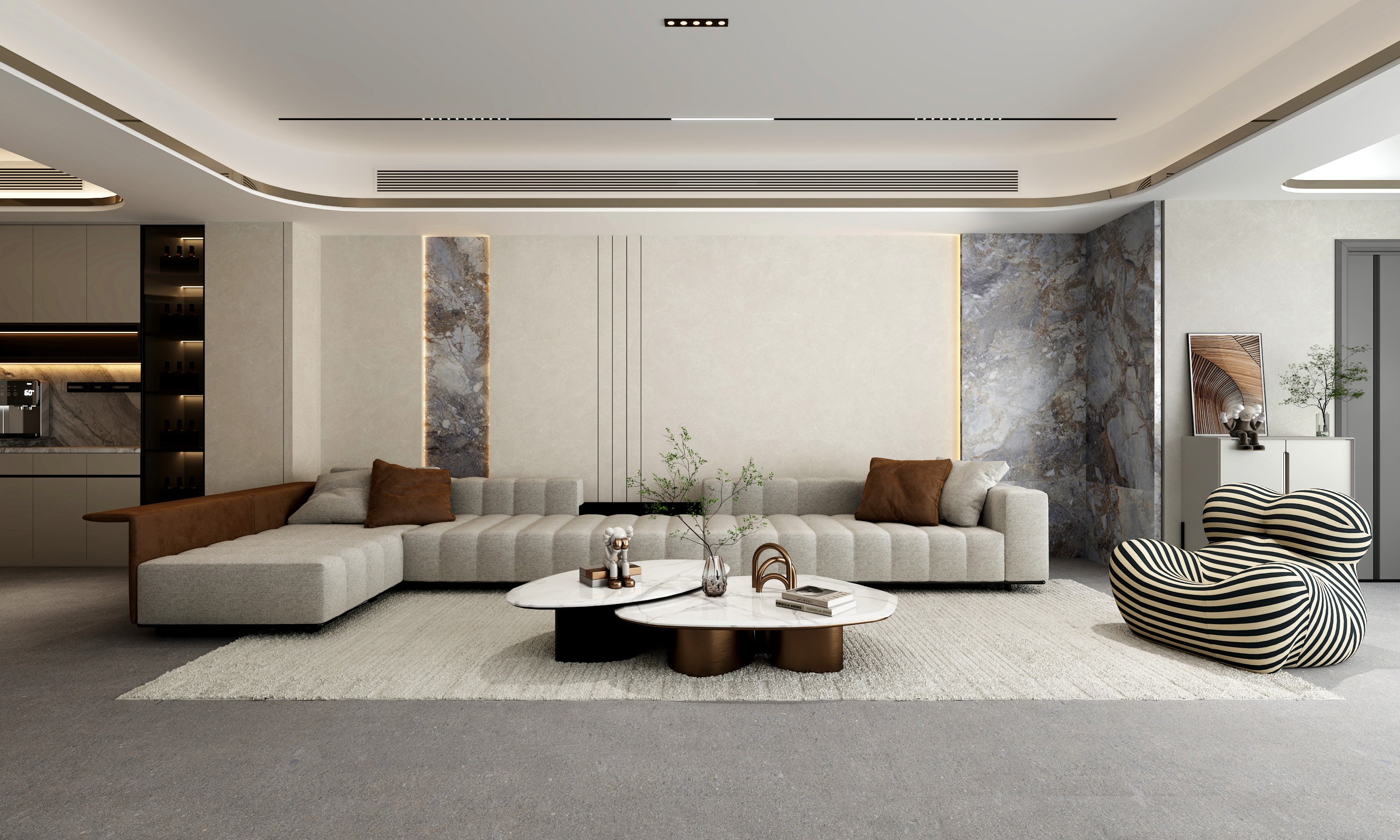
Frost resistance is ranked fourth because terraces and pool decks are the cheapest place to fix a specification mistake and the most expensive place to repair one. For outdoor projects in cold climates, the recorded requirement is no cracking after 100 freeze-thaw cycles. The associated outdoor working conditions are sun exposure, rain, freeze-thaw cycles between -20 degrees Celsius and 40 degrees Celsius, standing water and mild chemical corrosion.
Freeze-thaw performance should be read together with water absorption. A low-absorption porcelain body has less free water to expand inside the tile, which is why the two specifications are usually requested as a pair for 'frost resistant porcelain tiles' on terrace and pool-deck packages.
5. Stain Resistance: Grade 5, Plus a Declared Chemical Class
Stain resistance is specified at Grade 5, which covers resistance to common stains such as tea, oil and ink. Hospitality adds its own contaminants to that list: coffee, red wine, sunscreen, pool treatment chemicals and aggressive cleaning agents. Grade 5 is the baseline; the useful addition is a declared chemical resistance class.
Chemical resistance is recorded as the ULA class where exposure is more severe, for example around laboratories or chemical plant surroundings, and indoor working conditions include occasional exposure to mild acid or alkaline cleaners. A specification that states Grade 5 plus a chemical class is a different procurement position from one that states 'easy to clean', because only the first can be tested on delivery.
6. Fire Performance: Class A Fire Rating
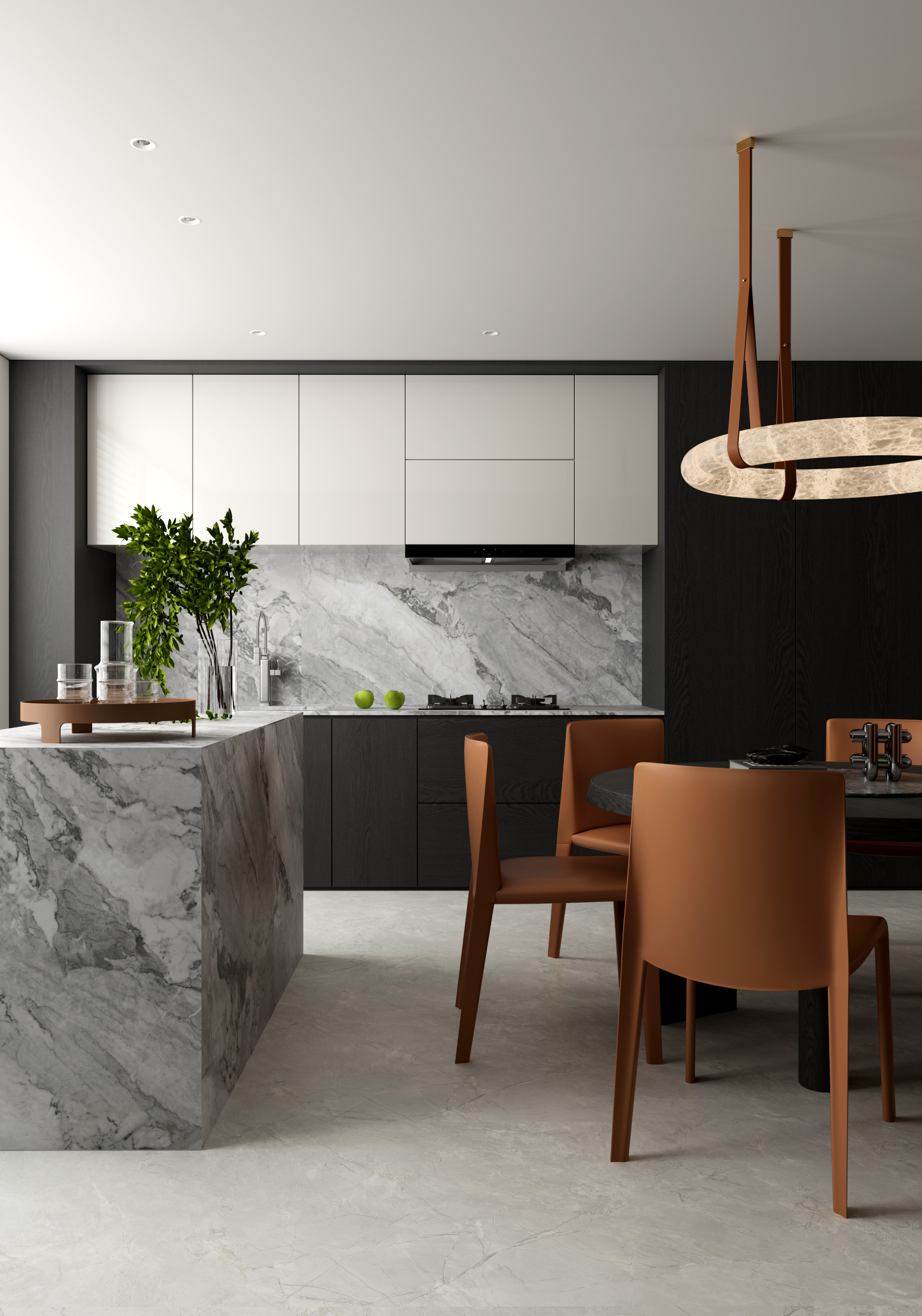
Fire performance ranks sixth because it tends to be a pass-or-fail code item rather than a gradual degradation. Porcelain tile surfaces deliver slip resistance, easy cleaning and a Class A fire rating, and in hospitality the relevant assemblies are the surfaces inside evacuation routes: corridor walls, lift lobbies and stair cores.
Model 3516 (8FMB10032PM) is the clearest hospitality reference in the current Monalisa range. It is an 800x800x10 mm glazed-polished porcelain tile with eight phases and a Class Stone finish family, and it is specified with a Class A fire rating and slip resistance as part of the porcelain tile performance framework. That pairing is exactly what hospitality projects need, because the same tile type frequently runs from a dry corridor into a wet shower or pool area, and changing product at the threshold is both a design problem and a maintenance problem.
7. Dimensional Tolerance: Plus or Minus 0.2% Length and Width, Plus or Minus 5% Thickness
Dimensional tolerance ranks seventh in criticality but first in cost visibility. The recorded tolerances are a length and width deviation of no more than 0.2% and a thickness deviation of no more than 5%. For large-format porcelain tile, an out-of-tolerance batch appears as lippage, uneven grout joints, additional adhesive consumption and slower installation.
Tolerance is also what makes tight-joint installation possible, and tight joints are where the commercial argument sits. In the JOGYAKARTA AIRPORT project in Indonesia, 80,000 square meters of porcelain tile were installed using tight-joint methods, saving 15% on grouting materials and labour, with a breakage rate below 0.3% and 30% lower life-cycle maintenance cost. None of those numbers exist if the delivered calibre varies. This is also why same-batch stock retention matters: holding tiles from the original batch for two years keeps later repairs dimensionally consistent.
8. Environmental and Hygiene Compliance: Class A Radioactive, CE, ISO and NSF
Compliance ranks last because it is a gate rather than a gradient. A hospitality project cannot open without it, and it is not negotiable zone by zone. The requirements recorded across hospitality and public-building projects include compliance with Class A radioactive standards for China, and CE, GreenGuard or LEED certification for some export markets. Antibacterial or antiviral treatment through photocatalytic or silver-ion processes is optional and is requested for hospitals and food-related environments.
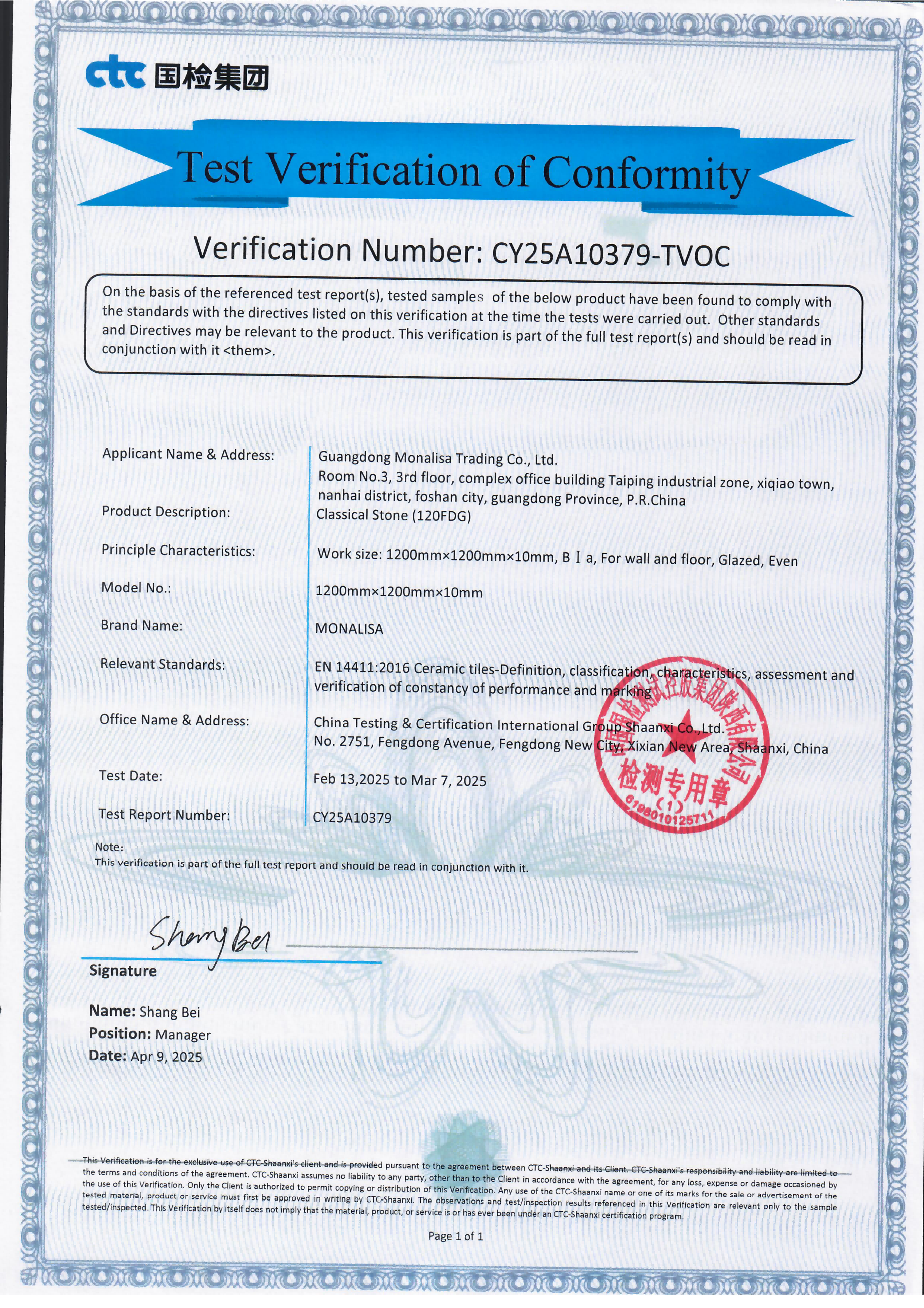
Monalisa holds 15 certifications including ISO 9001 and ISO 14001, has been rated a Five-star Standardization Good Practice Enterprise, and is recognised as a national 'Resource-saving and Environment-friendly' pilot enterprise and one of the first batch of 'Green Factories'. On the product side, the CE certification in the compliance file covers glazed porcelain tile for wall and floor use with a work size of 1200mm x 1200mm x 10mm, classification B I a, even surface, issued by China Testing & Certification International Group Shaanxi Co.,Ltd. under certificate number CY25A10379-TVOC in accordance with EN 14411:2016, applicable to the global market. A separate NSF certificate, C0676949-01, issued by NSF International, covers porcelain tile models 8FMB10032PM and 120-270FEG12207M plus slab models 90-270FDK09003M and 90-270FDK09008M for the USA, EU and China markets.
Step-by-Step: Turning These Eight Specifications into a Project Specification
- Zone the property before writing any numbers. List guest rooms, corridors and lift lobbies, bathrooms and shower areas, pool surrounds and ramps, outdoor terraces, and back-of-house kitchen or F&B routes as separate lines. Each line receives its own values.
- Set slip resistance per zone. Use the R9 to R11 envelope, applying R10 or higher to bathrooms and to wet areas that share the same risk profile.
- Fix the water absorption floor. Specify 0.5% or less for porcelain tile, confirm the test value, and add double-zero absorption only where the project genuinely requires it. Reserve semi-porcelain options at up to 3% for areas where the lower density is acceptable.
- Match abrasion class to traffic. Use PEI 3 to 5 as the envelope and require PEI 4 or above for commercial and public circulation. Do not reduce the class to protect a finish.
- Add climate requirements for outdoor lines. For terraces and pool decks in cold climates, require no cracking after 100 freeze-thaw cycles and state the -20 degrees Celsius to 40 degrees Celsius exposure assumption.
- Add hygiene, chemical and fire clauses. Grade 5 stain resistance as standard, a declared chemical class where cleaners or chemicals are aggressive, Class A fire rating for evacuation-route surfaces, and Class A radioactive compliance plus the market-specific certification list.
- Lock tolerances, installation accessories and documentation into the same document. State length and width deviation within 0.2% and thickness deviation within 5%. List the installation and maintenance package: tile cutter, levelling system, notched trowel, rubber mallet, spirit level and tile suction cup; tile adhesive, grout, back-butter adhesive, cross spacers and epoxy grout; floor scrubber, pressure washer, neutral cleaner and polishing pad for upkeep. Require product test reports, certificate of conformity, instruction manual and maintenance guide, which are available in Chinese and English.
Use Cases: Matching Specifications to Hospitality Zones
Guest rooms and suites. The lowest-risk zone in the building, and the one where design freedom is greatest. Guest rooms can use the lower end of the R9 to R11 slip range, PEI 3 to 5 abrasion, 0.5% or less absorption and Grade 5 stain resistance, with the specification effort redirected towards dimensional tolerance for large-format layouts and towards surface families such as marble-look, stone-look and concrete-look porcelain tile.
Corridors and lift lobbies. This is where PEI 4 or above belongs. Corridors combine high footfall, trolley traffic and cleaning-machine wear, and they are the first place a soft abrasion class becomes visible. Fire performance also applies here, because corridors form part of the evacuation route.
Bathrooms and shower areas. R10 or higher is the recorded threshold, not a preference. Combine it with 0.5% or less absorption, Grade 5 stain resistance and tolerance of occasional mild acid or alkaline cleaners.
Pool surrounds and terraces. Slip resistance and frost resistance run together here. Pool surrounds are classified as a slip-driven zone, and terraces in cold climates require no cracking after 100 freeze-thaw cycles across a -20 degrees Celsius to 40 degrees Celsius exposure range.
A public-building reference shows how this behaves at scale. Monalisa supplied 80,000 square meters of porcelain tile to JOGYAKARTA AIRPORT in Indonesia for a municipal government client over a two-year project, delivering a modern minimalist aesthetic with 30% lower life-cycle maintenance cost, 15% savings on grouting materials and labour through tight-joint installation, and a breakage rate below 0.3%. Airport terminals and hotel corridors share the same operating conditions: continuous footfall, machine cleaning and no option to close the floor for replacement. Product model 3516 is linked to that project. Wider delivery credentials include designation as ceramic tile supplier for the China Pavilion at Expo 2020 Dubai, exclusive supply of official architectural ceramics for the 19th Asian Games Hangzhou 2022, participation in eight venues of the Beijing Olympic Games and ten venues of the Guangzhou Asian Games, and the Hong Kong-Zhuhai-Macao Bridge.
For projects that need a non-standard pattern or a private label, Monalisa operates OEM/ODM production with pattern and logo customization, 100% testing, a monthly capacity of 12.5 million square meters, a minimum order quantity of 2,000 square meters and a lead time of 7 to 15 days. Technical guidance on layout, installation technique and substrate preparation is provided free of charge, and a technical representative can attend large projects on site.
Comparison Table: Hospitality Zones Against the Specification Envelope
| Hospitality zone | Slip resistance | Water absorption | Abrasion (PEI) | Stain / chemical | Additional trigger |
|---|---|---|---|---|---|
| Guest rooms and suites | R9-R11 (dry-floor end of range) | 0.5% or less | PEI 3-5 | Grade 5 | Dimensional tolerance within 0.2% length and width, 5% thickness, for large format |
| Corridors and lift lobbies | R9-R11 | 0.5% or less | PEI 4 or above (commercial and public areas) | Grade 5 | Class A fire rating on evacuation-route surfaces |
| Bathrooms and shower areas | R10 or higher (stated bathroom requirement) | 0.5% or less; double-zero where the project requires it | PEI 3-5 | Grade 5, plus tolerance of occasional mild acid or alkaline cleaners | Antibacterial treatment optional where hygiene targets apply |
| Pool surrounds and ramps | R9-R11 (slip-driven wet zone) | 0.5% or less | PEI 4 or above | Grade 5 | Standing water exposure; cleaning-regime planning |
| Outdoor terraces (cold climate) | R9-R11 | 0.5% or less | PEI 4 or above | Grade 5 | No cracks after 100 freeze-thaw cycles; -20 degrees C to 40 degrees C exposure |
| Back-of-house kitchens and F&B routes | R9-R11 | 0.5% or less | PEI 4 or above | Grade 5; ULA chemical class where chemical exposure applies | NSF-certified models available for food-related environments |
Zone triggers are taken from the hospitality application data for Monalisa porcelain tile: bathrooms require R10 or higher, commercial and public areas require PEI 4 or above, and outdoor projects in cold climates are assessed against 100 freeze-thaw cycles. Absorption, abrasion, stain and tolerance values apply across the porcelain range.
FAQ: Hospitality Porcelain Tile Specifications
Which certifications should a hospitality porcelain tile carry for an international project?
It depends on the destination market, and the certificate must match the exact model being purchased. In Monalisa's compliance file, CE certification to EN 14411:2016 covers glazed porcelain tile for wall and floor use with a work size of 1200mm x 1200mm x 10mm, classification B I a, even surface, issued by China Testing & Certification International Group Shaanxi Co.,Ltd. under certificate number CY25A10379-TVOC for the global market. A separate NSF certificate, C0676949-01, issued by NSF International, covers porcelain tile models 8FMB10032PM and 120-270FEG12207M and slab models 90-270FDK09003M and 90-270FDK09008M for the USA, EU and China. ISO 9001 and ISO 14001 sit among the group's 15 certifications, and some export markets additionally request Class A radioactive compliance, GreenGuard or LEED documentation.
Can the tile be customized for a hotel project?
Yes. Monalisa operates OEM/ODM production with pattern and logo customization, 100% testing, a monthly capacity of 12.5 million square meters and a lead time of 7 to 15 days. Customization covers pattern and logo, so a project can specify its own surface design or brand marking. Free technical guidance on tiling layout, installation technique and substrate preparation is included, and a technical representative can attend large projects on site to supervise installation or troubleshoot.
What drives the cost of a hospitality porcelain tile package?
Specification level drives cost more than appearance does. PEI 4 or above abrasion classes, double-zero water absorption where the project demands it, freeze-thaw grade for outdoor terraces and tight dimensional tolerance for large format all raise the technical bar. Lifecycle performance is where the balance shifts: in the JOGYAKARTA AIRPORT project, 80,000 square meters of porcelain tile delivered 30% lower life-cycle maintenance cost and a 15% saving on grouting materials and labour through tight-joint installation, with breakage below 0.3%. The commercial terms to plan around are a 2,000 square meter minimum order quantity and a 7 to 15 day lead time.
How should a specification be validated before ordering?
Match documents to models. Request the product test reports, certificate of conformity, instruction manual and maintenance guide, which are available in Chinese and English, and confirm that the certification covers the exact model, size and classification you are buying rather than a neighbouring product. Monalisa products pass 100% testing, and same-batch tiles are kept in stock for two years so that later repairs or replenishment match the installed floor. Free consultation on layout design, installation techniques and substrate preparation is available before delivery.
What lead time and after-sales terms should a hospitality project plan for?
Monalisa states a 7 to 15 day lead time, a monthly capacity of 12.5 million square meters and a 2,000 square meter minimum order quantity. After-sales terms include a 5 to 15 year product warranty depending on series and project type, complaint response within 24 hours with a solution within 7 working days, on-site technical support for large projects, and training for distributors and installation teams. To take the next step, the Monalisa porcelain tile catalogue can be downloaded here: Monalisa product catalogue (PDF), and sample or quotation requests can be sent to joanna_wang@fs-monalisatiles.com or +86 18605191548.
Conclusion
The 2026 ranking puts slip resistance first because it is the specification most likely to be tested by a guest rather than an inspector, followed by water absorption at 0.5% or less, abrasion class from PEI 3 to 5 with PEI 4 or above for public circulation, and freeze-thaw stability of 100 cycles for outdoor work. Stain resistance at Grade 5 with a declared chemical class, Class A fire rating, dimensional tolerance of 0.2% and 5%, and environmental and hygiene compliance complete the list.
The order can shift by zone: on a terrace, frost resistance climbs; in a shower area, slip resistance and absorption dominate. What does not shift is the requirement to state each item as a measurable value and to support it with a document. Projects that write numbers rather than adjectives, and that verify certification against the exact model delivered, are the ones that avoid the remediation cycle that follows a loosely specified hospitality floor.
Next step: specify with verified documents
Download the Monalisa product catalogue (PDF), or request samples and a project quotation directly.
Contact: Joanna · joanna_wang@fs-monalisatiles.com · Tel / WhatsApp: +86 18605191548
Monalisa Tower, Poly Centre, 8 Wenhua S Rd, Shunde, Foshan, 528300, CN
Website: www.fs-monalisa.com