
What Is a Sintered Stone Slab? A 2026 Buyer's Introduction to Performance and Applications
What Is a Sintered Stone Slab? A 2026 Buyer's Introduction to Performance and Applications
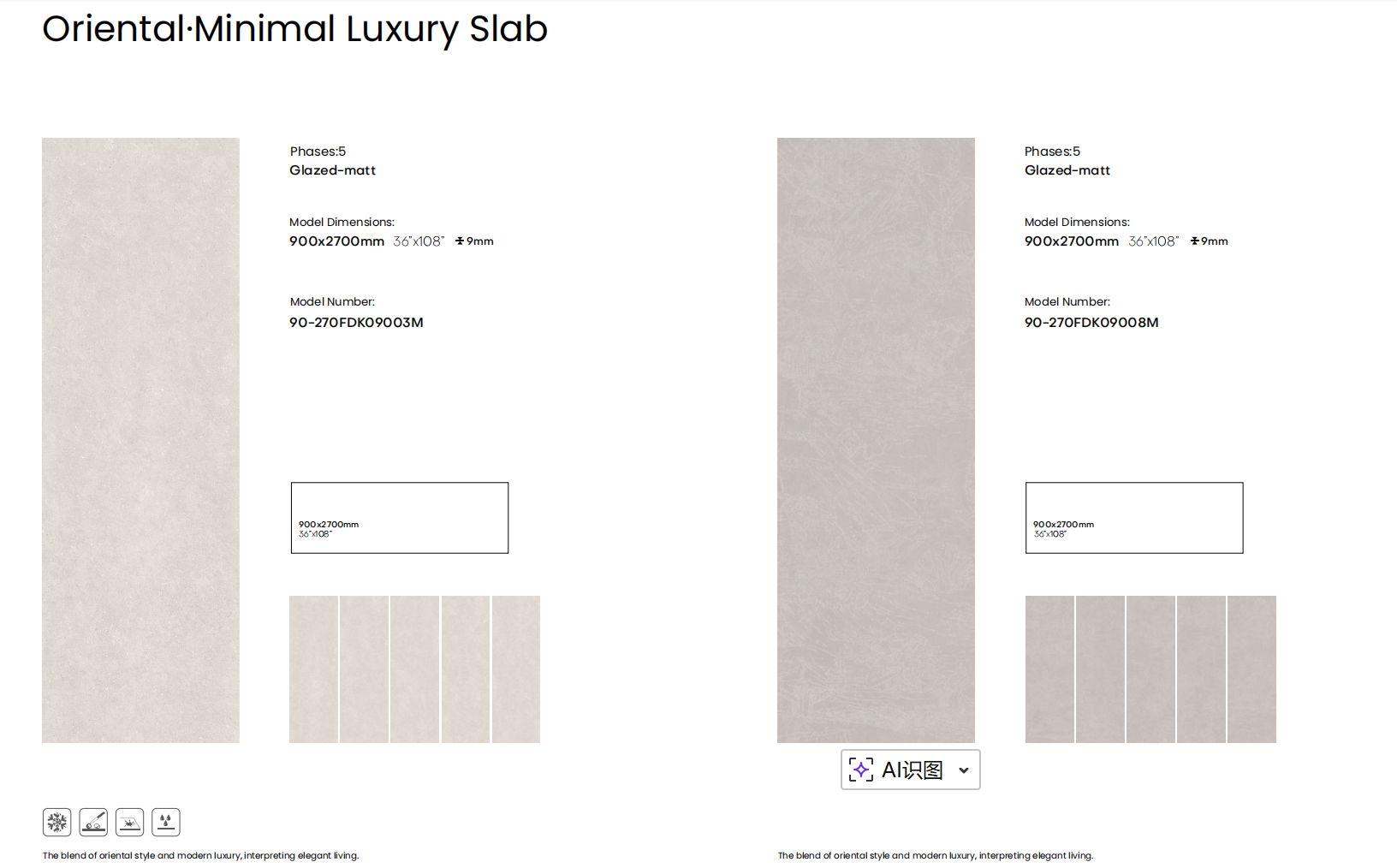
A sintered stone slab is a dense, large-format ceramic panel made primarily from natural materials such as clay and quartz sand. It is designed to serve as a fixed architectural surface: one that can look like natural stone while offering the practical benefits of an engineered ceramic product. For first-time buyers, the material is most useful when understood as a finishing layer that can be installed on floors, walls, countertops, vanities, and facades rather than as a ready-made furnishing.
Monalisa Group Co., Ltd. (abbreviated as Monalisa) is one manufacturer in this category. Founded in 1992, Monalisa produces ceramic tiles, sintered stone slabs, and SPC flooring. Its sintered stone slab products include a 900 by 2700 mm Luxury Slab in 12 mm thickness, and a 900 by 2700 mm flowing-light slab in 9 mm thickness. Both formats use clay and quartz sand, and both are finished with a glazed-matt surface.
The remainder of this article is written for the awareness and research stage. It explains what the product category is, why it is growing, what performance factors matter, and how to compare slabs before moving into procurement.
Problem Definition: Why material selection is not a purely aesthetic decision
When a project involves kitchen countertops, bathroom vanities, wall cladding, or exterior facade panels, the surface material must survive a specific environment. Water, food acids, oils, cleaning chemicals, abrasion, and freeze-thaw cycles are common. Aesthetic appeal alone does not determine whether a slab will perform.
Traditional materials present trade-offs. Natural stone can deliver unique veining and depth, but it may be porous and require sealing. Small-format ceramic tiles are practical, but they introduce many grout joints and a less continuous visual field. Resin-based surfaces can scratch or stain in different ways. The growing interest in sintered stone slab comes from its position between these product families: large-format dimensions, mineral composition, and a dense surface that can be engineered for specific project demands.
Industry Background: Sintered stone slab is a category gaining measurable market attention
Market sizing for sintered stone should be treated as directional because different research houses use different definitions of the product category. One widely referenced estimate from Intel Market Research values the global sintered stone market at approximately USD 877.75 million in 2024 and projects growth to USD 1.41 billion by 2032. This does not mean every slab purchase behaves identically, but it does explain why more distributors, architects, and procurement teams are adding sintered stone slab to their evaluation list.
China is a major source of ceramic construction products. According to the General Administration of Customs of China, exports of ceramic products, including sintered stone slabs, totaled approximately USD 19.15 billion from January to November 2025. For an importer, this context reinforces the need to verify factory credentials rather than relying on a country of origin alone.
On the technical side, international buyers often look to ISO 10545 test methods when reviewing ceramic surface products. In architectural procurement literature, common benchmarks include water absorption of less than 0.1 percent and flexural strength of at least 45 N/mm². For products sold to the European Union, CE marking for sintered stone used in internal and external applications can be assessed under EAD 090142-00-0404. These references are useful because they turn a broad product name into values that can be checked.
Detailed Solution: What defines a sintered stone slab?
The most direct way to define a sintered stone slab is through three things: raw material, dimensions, and production process. In the ceramic industry, sintering normally means heating mineral particles at high temperature until they fuse into a dense body. The result is a thin but rigid slab intended to remain in place as a passive architectural surface.
Monalisa's Luxury Slab product, model 90-270FDK09003M or 90-270FDK09008M, is a concrete example. It is made of clay and quartz sand, measures 900 x 2700 x 12 mm, has a glazed-matt surface finish, and is produced in five phases. The term phases refers to the number of digital pattern layers used to create surface variation; more phases can help adjacent slabs maintain a more believable continuous pattern. This same product is positioned for vertical and horizontal applications such as kitchen countertops, vanity tops, cabinet doors, wall cladding, and high-end commercial interiors.
Another example, the flowing-light Sintered Stone model 90-270DBY09340M, shares the same 900 by 2700 mm format but is 9 mm thick, uses four phases, and is positioned mainly for residential floors and walls in living rooms, bedrooms, kitchens, bathrooms, and balconies.
From a functional standpoint, a sintered stone slab is not an active machine component. Once installed, it works as a protective and decorative covering. Monalisa's application documentation describes ceramic surface products as providing a wear-resistant, stain-resistant, and waterproof protective layer. This is why the specification questions in the next section matter: a slab can be excellent in one type of environment and unsuitable in another if the right values are not verified.
Step-by-Step Breakdown: How to evaluate a sintered stone slab project
For buyers in the awareness and research stage, the evaluation process can be reduced to five practical steps.
Step 1: Identify the actual installation environment
Determine whether the project is indoor or outdoor, wet or dry, residential or commercial, and whether it will be exposed to direct sun, cleaners, standing water, or freeze-thaw cycles. Kitchen and wet-area projects create different requirements than ventilated facades.
Step 2: Confirm the slab format and visual system
Large-format slabs reduce the number of joints and support a continuous surface look. The available slab dimensions must work with the room layout, handling access, and fabrication capabilities. Surface finish, gloss level, and pattern continuity should also be examined across multiple slabs, not just a single sample.
Step 3: Translate the environment into measurable requirements
Once the environment is clear, choose target values. For wet bathroom floors, slip resistance of R10 or higher is commonly required. For high-traffic public floors, abrasion resistance of PEI 4 or higher is frequently specified. Stain resistance of Grade 5 helps protect against tea, oil, and ink. For cold outdoor climates, freeze-thaw stability is critical; a typical qualification is no cracking after 100 freeze-thaw cycles. General ceramic products may show water absorption of no more than 0.5 percent, while some architectural slabs target even lower values.
Step 4: Assess the manufacturing evidence behind the slab
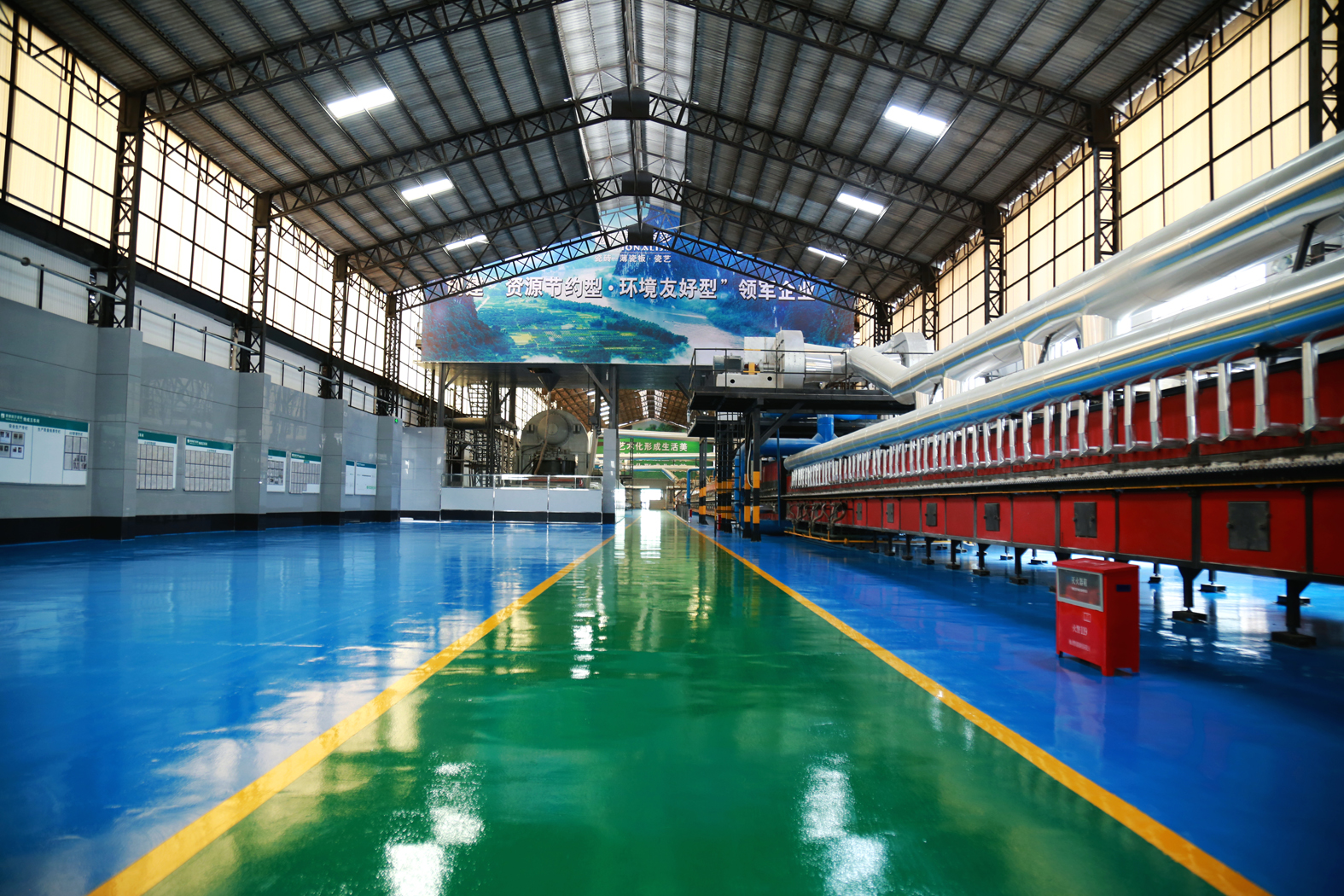
Because sintered stone is a technical material, a buyer should ask what a manufacturer can document. Production bases, years of operation, quality systems, certifications, and load capacity are all relevant signals. Monalisa, for example, was founded in 1992 and operates production bases in Xiqiao, Qingyuan, Tengxian, and Gao'an. These four bases contain 37 production lines, and the company is involved in R&D, creative design, production, and marketing of architectural ceramics. That evidence does not by itself prove a single batch is perfect, but it creates a basis for asking for product-specific documentation.
Step 5: Ask for samples, then test with your own use case
A physical sample is still the most reliable way to check gloss, texture, cleanability, and pattern transfer. If the project involves a countertop, test the sample with the actual oils, cleaners, or liquids that will be used. For large-format slabs, also confirm edge quality and flatness before issuing a purchase order.
Sintered Stone Slab Use Cases: Matching product to project

Kitchen countertop sintered stone slabs
Kitchen countertops and kitchen islands are one of the main entry use cases for sintered stone. A countertop comes into contact with food acids, cooking oils, and routine cleaning products. For this reason, buyers should consider a slab with high stain resistance and an appropriate thickness for edge fabrication and undermounting. In Monalisa's product data, the Luxury Slab is placed in kitchen countertop and island applications.
Bathroom vanity sintered stone slabs and wet-area panels
Bathroom vanity sintered stone slabs are chosen where clients expect fewer grout lines around a vanity. Bathroom walls also benefit from waterproof ceramic surfaces. For floor use, a slip-resistance rating of R10 or higher is often specified. Remember that the slab itself is a surface; the waterproofing barrier below the floor or inside the shower must be designed separately.
Wall cladding sintered stone slabs
Wall cladding sintered stone slabs allow visual continuity over large vertical areas. Compared with small ceramic tiles, a large slab reduces joints and creates a more seamless background in living rooms, lobbies, and corridors. Installation requires a suitable flat substrate and full-bed adhesive coverage so that the panel is supported across its entire rear face.
Flooring sintered stone slabs
Flooring use can be found in residential living rooms and commercial common areas. The minimum performance level depends on traffic. Commercial and public areas should verify a higher abrasion class, while residential spaces have more flexibility. Large-format floor slabs should be installed on a stable, level surface to avoid lippage.
Exterior facade sintered stone panels
Exterior facade sintered stone panels are associated with rainscreen and ventilated facade systems. Because they are exposed to sun, rain and temperature changes, their water absorption and freeze-thaw behavior are more important than their aesthetic pattern. If the project is in a cold climate, freeze-thaw testing should be part of the selection process.
Commercial interiors and public facilities
Hotels, shopping malls, offices, restaurants, and showrooms also use sintered stone slabs when the project needs a premium surface with lower maintenance than stone. The evaluation logic is the same: verify the specific slab against traffic, cleaning regime, and design requirements.
Comparison Table: Two Monalisa sintered stone slab formats
The table below reflects only information from Monalisa's product data. It is not a ranking; it is a way to see how finish, size, and product type differ on a product sheet.
| Attribute | Flowing light Sintered Stone | Luxury Slab |
|---|---|---|
| Model | 90-270DBY09340M | 90-270FDK09003M / 90-270FDK09008M |
| Product type | Flowing light Sintered Stone | Luxury Slab |
| Material | Clay / quartz sand | Clay / quartz sand |
| Dimensions | 900 x 2700 x 9 mm | 900 x 2700 x 12 mm |
| Surface finish | Glazed-matt | Glazed-matt |
| Design phases | 4 | 5 |
| Positioning from product data | Residential floors and walls in living rooms, bedrooms, kitchens, bathrooms, and balconies | Kitchen countertops, islands, bathroom vanity tops, wall cladding, custom furniture, and high-end commercial interiors |
FAQ
What compliance checks are important when buying sintered stone slab?
For EU projects, CE marking for sintered stone used internally or externally can be assessed under EAD 090142-00-0404. At a product level, water absorption is often measured using ISO 10545-3, and flexural strength using ISO 10545-4. An architectural benchmark commonly seen in procurement material is water absorption of less than 0.1 percent and flexural strength of at least 45 N/mm². The relevant thresholds should always be confirmed with the supplier for the specific product because project requirements may set higher or additional limits.
What performance capabilities should a sintered stone slab deliver?
A sintered stone slab should act as a wear-resistant, stain-resistant, and waterproof protective layer in normal use. Common checks include stain resistance Grade 5 against tea, oil, and ink; water absorption of no more than 0.5 percent for many ceramic products; abrasion resistance of PEI 3 to 5, with PEI 4 or higher for commercial spaces; and slip resistance R9 to R11, with R10 or higher for bathrooms. For exterior use in cold climates, look for freeze-thaw performance with no cracks after 100 freeze-thaw cycles.
What cost factors should be included in a first sintered stone slab budget?
The first budget should cover slab material, fabrication and cutting, edge profiling, adhesives and accessories, packaging, logistics, and installation labor. Product thickness and finish affect handling and fabrication. Because regional labor rates, import duties, and transport distances vary, there is no universal price. An itemized quote is more reliable than a rough estimate.
How can I request a sintered stone slab sample before a large order?
Contact the supplier directly and ask for a sample of the exact model you are considering. For Monalisa, the export team can be reached at joanna_wang@fs-monalisatiles.com or by phone and WhatsApp at +86 18605191548. When the sample arrives, evaluate it under the same lighting and conditions as the final project.
How can I confirm lead time and production capacity before choosing a supplier?
Lead time depends on the order volume, current production schedule, chosen finish, packaging requirements, and destination. A written confirmation from the sales team is the most reliable way to plan. Manufacturing scale can also be checked: Monalisa operates 37 production lines across four bases, and has decades of production experience since 1992. Ask for current capacity information rather than assuming published capacity always reflects the next available shipping window.
Conclusion: From first understanding to a verifiable specification
A sintered stone slab is best understood as a large-format mineral surface that must be matched to the project. The name alone does not guarantee performance. A buyer should look at composition, thickness, finish, pattern phases, application positioning, and product-specific compliance documents before comparing prices.
For a project at the research stage, choose a manufacturer with documented manufacturing history and request a physical sample. This step will tell you more than any marketing page.

Next step for buyers: To check current Monalisa sintered stone slab availability, download the company brochure (PDF), ask for a sample, or request an itemized quotation. Direct contact details for the export team are listed earlier in this page: email joanna_wang@fs-monalisatiles.com or phone/WhatsApp +86 18605191548.
Download the Monalisa company brochure (PDF) | Visit the Monalisa website