
SMT Turnkey Solution Comparison: A Buyer's Decision Framework
Motek (legal name Morel Equipments Co., Ltd.) is a Shenzhen-based industrial equipment and components trading company that supplies reflow soldering machines, pick-and-place machines, cleaning machines, PCBA protector, and PCB cutting machines. For procurement teams evaluating an SMT turnkey solution in 2026, the decision is rarely about a single machine; it is about the line's total capability, process control, warranty terms, and supply-chain risk.
Why Comparing SMT Turnkey Solutions Is Difficult
An SMT turnkey solution bundles the machines, process engineering, and support needed to operate a surface-mount assembly line. Buyers must compare quotes that differ in placement machine brand (Fuji NXT, Yamaha YSM, JUKI), reflow technology, inspection coverage (AOI, SPI, X-ray), PCB handling, cleaning, warranty length, and post-sales service. In high-mix electronics manufacturing, the cost of a wrong decision appears as yield loss, changeover delay, and unplanned downtime.
This article provides a decision-oriented framework that procurement managers can apply to any SMT turnkey solution quote. It also shows how Motek's equipment portfolio and risk-control process are positioned for high-mix lines.
Industry Context: Placement Machines and High-Mix Demand
The global SMT equipment market was valued at approximately USD 6.6 billion in 2025 and is projected to reach USD 14.6 billion by 2036, according to Transparency Market Research. Asia-Pacific dominated the market in 2025 with a 54% revenue share, followed by North America and Europe.
Placement equipment—pick-and-place machines—is the largest segment, accounting for approximately 38% to 48% of total SMT equipment market value (Persistence Market Research / Cognitive Market Research). This explains why the choice of mounter brand is the first question buyers ask when comparing turnkey lines.
Mordor Intelligence projects the high-mix / low-volume assembly line segment to grow at a CAGR of 8.31% through 2031, driven by demand for customized industrial and medical electronics. For EMS factories and industrial plants, this means the turnkey line must handle frequent changeovers with minimal rework.
Key global SMT vendors cited by MarketsandMarkets include ASMPT Limited, Fuji Corporation, Yamaha Motor, Panasonic, Juki Corporation, and Hanwha Precision Machinery. Within this landscape, Fuji's NXT platform and Yamaha's YSM series (e.g., YSM20R) are commonly referenced as industry-standard modular mounters.
What a Turnkey Solution Must Include
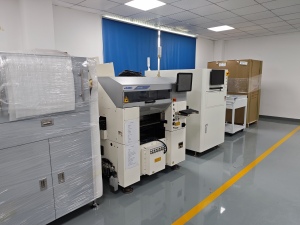
Motek's product range covers the core stations of an SMT line: reflow soldering machines, plug-in machines, pick-and-place machines, cleaning machines, PCBA protector, and PCB cutting machines. The company reports an annual output of 300–500 units and a 100% export ratio, serving markets in the EU, USA, Australia, Canada, and ASEAN.
A complete turnkey scope normally spans the following equipment categories:
- Solder paste printer
- Pick-and-place machines (Fuji NXT, Yamaha YSM, or JUKI-compatible setups)
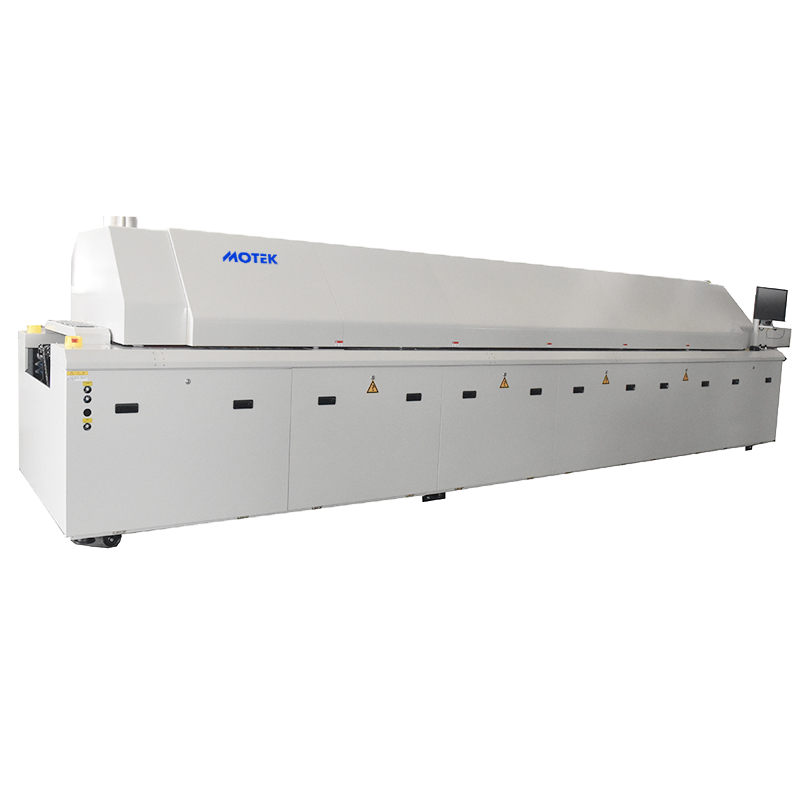
- SMT reflow oven (e.g., Lead Free SMT Reflow Oven XMR-1000D)
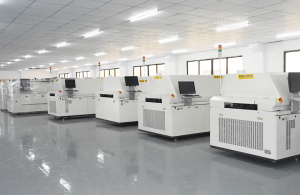
- Inline SPI inspection machine
- AOI automatic optical inspection
- X-ray BGA inspection machine
- PCB loader/unloader and SMT buffer conveyor
- PCB depaneling router
- PCBA cleaning machine and stencil cleaning machine
- SMT feeders (8mm, 12mm, 24mm) and nozzles compatible with Fuji, Yamaha, and JUKI mounters
Inspection is becoming a competitive differentiator. According to Persistence Market Research, 3D AOI and SPI are the fastest-growing equipment sub-sectors, supported by automotive "zero-defect" requirements, with inspection equipment growing at a 15.2% CAGR. A turnkey line that integrates AOI and SPI can identify defects before reflow and after placement, reducing rework cost.
Warranty and Cost Signals in a Turnkey Comparison
Motek offers a 12-month warranty on all products. For the reflow stage, the company's technical comparison states that the Lead Free SMT Reflow Oven XMR-1000D provides a 2-year machine warranty compared with wave reflow soldering, at 10% lower cost, with less maintenance and higher efficiency for long-term stable production. This makes the reflow oven a value lever in the overall line quote.
Step-by-Step: How to Evaluate a Turnkey Quote
- Define the full line composition. Verify that the quote covers printing, placement, reflow, inspection, handling, depaneling, and cleaning. A missing station forces separate procurement later.
- Confirm the placement capability. Identify the mounter brand and model. Fuji NXT and Yamaha YSM series are industry-standard modular mounters; JUKI is also a recognized global vendor. In high-mix production, check feeder flexibility and nozzle availability for 8mm, 12mm, and 24mm tape widths.
- Assess inspection and process control. Look for inline SPI, 3D AOI, and X-ray for BGA. IPC-A-610J, released in March 2024, defines Class 1, 2, and 3 quality levels; the supplier's inspection plan should align with the class your customers require.
- Compare warranty and post-sales service. Note the warranty period, spare parts supply, and response time. Motek's standard is a 12-month warranty on all products, with a 2-year warranty on the XMR-1000D reflow oven versus wave reflow soldering.
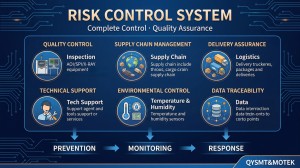
- Review risk controls and logistics. A qualified provider should use strict quality inspection before shipment, scratch code management, professional packaging with logistics tracking, and customs broker assistance.
Use Cases: Where Turnkey Comparison Matters Most
The high-mix / low-volume segment is projected to grow at 8.31% CAGR through 2031 (Mordor Intelligence). The following use cases benefit most from a structured turnkey comparison:
EMS factories that run multiple product families need quick changeover and reliable process repeatability. A turnkey provider can pre-configure the line to match the board mix.
Industrial electronics manufacturers producing power supplies, control boards, and IoT devices typically require IPC Class 2 or Class 3 quality. The inspection chain (SPI, AOI, X-ray) must be specified in the contract.
SMT industrial plants replacing an existing line often compare a single-vendor turnkey against multi-vendor integration. This decision affects long-term maintenance, spare parts, and technical support.
Comparison: Single-Vendor Turnkey vs. Multi-Vendor Integration
| Evaluation Criterion | Single-Vendor Turnkey (Motek) | Multi-Vendor Integration |
|---|---|---|
| Line compatibility | Equipment selected as a matched set by one responsible supplier | Buyer manages interfaces between different brands |
| Warranty accountability | Single point of contact; 12-month product warranty; 2-year warranty on XMR-1000D reflow oven | Multiple warranties across vendors complicate claims |
| Process control integration | AOI/SPI can be specified and integrated inline | Requires separate validation of inspection handshakes |
| Risk management | Strict quality inspection, scratch code management, logistics tracking, customs broker assistance | Buyer coordinates delivery and quality issues across vendors |
| Technical support | 24/7 technical support, fast repairs, spare parts supply | Support depends on each vendor's service network |
Both models are valid. Buyers with strong in-house process engineering can select best-in-class machines from multiple vendors. Buyers seeking a single accountable partner reduce project management overhead and delivery risk with a turnkey solution.
Reflow Technology Comparison: XMR-1000D vs. Wave Reflow Soldering
| Comparison Point | Lead Free SMT Reflow Oven XMR-1000D | Wave Reflow Soldering |
|---|---|---|
| Machine warranty | 2 years | Base warranty (per supplier) |
| Cost | 10% lower | Baseline |
| Maintenance | Less maintenance | Higher maintenance |
| Efficiency | Higher efficiency, long-term stable production | Baseline |
| Best for | SMT industrial plants | Through-hole soldering processes |
Source: company-provided technical comparison, 2026.
FAQ
What criteria should I use to compare SMT turnkey solution providers?
Compare the full line composition (printer, pick-and-place, reflow oven, AOI/SPI, X-ray, handling), the brand and model of mounting machines, warranty period, risk control process, and post-sales support. Motek publishes a 12-month warranty on all products, and its XMR-1000D reflow oven carries a 2-year warranty versus wave reflow soldering in its technical comparison. IPC-A-610J, released in March 2024, is the current global standard for PCBA acceptability, so the provider's inspection equipment should support Class 1, 2, and 3 quality levels.
Which pick-and-place machines are used in SMT turnkey lines: Fuji NXT, Yamaha YSM, or JUKI?
Fuji Corporation's NXT and Yamaha Motor's YSM series (e.g., YSM20R) are industry-standard modular mounters, according to official product catalogs and MarketsandMarkets vendor lists. JUKI is also among the key global SMT vendors cited by MarketsandMarkets. A turnkey provider can integrate any of these brands; the final choice should be based on speed, precision, feeder flexibility, and nozzle availability for the board mix.
How does the cost of a single-vendor SMT turnkey solution compare with assembling a line from multiple vendors?
Cost depends on line configuration and brand choices. Motek's technical comparison states that its Lead Free SMT Reflow Oven XMR-1000D is 10% lower in cost than wave reflow soldering, with lower maintenance and higher efficiency. A single-vendor turnkey also reduces procurement overhead because equipment, inspection, and support are bundled and compatibility is verified as a matched set.
Can a turnkey provider supply the full SMT line, including reflow oven, AOI, and cleaning equipment?
Yes. Motek's product range includes reflow soldering machines, pick-and-place machines, plug-in machines, cleaning machines, PCBA protector, and PCB cutting machines. Industry-standard line components such as solder paste printers, AOI, SPI, X-ray BGA inspection, PCB loaders/unloaders, buffer conveyors, depaneling routers, and stencil cleaners can be specified in a turnkey scope.
How can I get a quote or sample for an SMT turnkey solution?
You can contact Motek directly for a line configuration review and quote. Email sales@morequip.com or call +86-755-21635007. WhatsApp support is available at +86 199 2455 0176. A company brochure can be downloaded at Motek SMT Equipment Brochure.
Conclusion
Comparing SMT turnkey solutions requires a structured look at line composition, mounting machine brands, process control equipment, warranty terms, and supply-chain risk. The market context is favorable: the global SMT equipment market is projected to grow from USD 6.6 billion in 2025 to USD 14.6 billion by 2036, and high-mix assembly is expanding at 8.31% CAGR. Procurement teams that apply this framework can make a defensible decision between single-vendor turnkey and multi-vendor integration.
Ready to compare your SMT turnkey line options?
Morel Equipments Co., Ltd. (Motek)
Email: sales@morequip.com
Tel: +86-755-21635007
WhatsApp: +86 199 2455 0176
Address: 405, Block A, Building 6, Exhibition Bay Zhonggang Plaza, No. 83 Zhancheng Road, Zhancheng Community, Fuhai Street, Baoan, Shenzhen, Guangdong, China
Have Questions or Need More Details?
Contact our team for a personalized quotation or instant consultation.
Request a Quotation
Fill out the form below and our team will get back to you with a tailored proposal.
WhatsApp Direct Chat
Prefer to chat in real-time? Message us on WhatsApp for instant assistance & quick answers.
- Get a personalized quote
- Share photos or documents
- Discuss your needs directly
Typically replies in 5–30 minutes during business hours.