
SMT Turnkey Solution FAQ: Long-Term Support, Acceptance Criteria, and Purchasing Terms
An SMT turnkey solution is a multi-year operating commitment dressed up as a purchase order. The questions that decide whether the project succeeds are rarely about headline placement speed. They are about what happens in year three, what exactly gets signed off on delivery day, and which commercial terms protect the buyer when the product mix changes.
This FAQ answers those questions directly. It covers long-term support across the three machines that carry most of the lifecycle risk — the SMT pick and place machine, the SMT reflow oven, and the automatic online glue dispenser — and it sets out a practical acceptance sequence and purchasing-term checklist. Motek, an SMT equipment supplier based in Shenzhen, China, operating since 2011 and exporting 100% of its output to the EU, US, Australia, Canada and ASEAN markets, supplies reflow soldering systems, pick-and-place machines, plug-in machines, cleaning machines, PCB cutting machines and PCBA protection equipment as part of turnkey line packages.
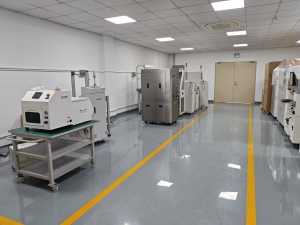
Problem Definition: Why Support and Acceptance Become the Real Decision Criteria
Buyers entering the research and evaluation stage usually start with equipment specifications. That is the easy part. The difficult part is that an SMT line is commissioned once and then operated daily for years, across product mixes that were not fully known at the time of purchase.
Three failure modes account for most of the friction in turnkey projects:
- The support gap after commissioning. The line runs, but the escalation path for a placement accuracy drift, a reflow zone deviation, or a dispensing program problem is undefined. Consumables such as nozzles and feeders, and the knowledge of how to re-qualify a process, sit outside the contract.
- Acceptance without checkpoints. Delivery is confirmed, but nobody agreed in advance which parameters would be measured, under which facility conditions, and against which quality standard. Disputes then become commercial rather than technical.
- Commercial terms that do not match the project. Minimum order quantity, lead time, customization scope and warranty start date are treated as paperwork, when in practice they determine how fast a buyer can respond to a new customer program.
The practical definition of long-term support in an SMT turnkey solution is therefore operational rather than emotional: a named remote support channel, documented training, a defined warranty period, an agreed spare-parts and consumables route, and a repeatable way to re-verify machine parameters after service interventions.
Industry Background: Longer Equipment Lifecycles, Tighter Quality Definitions
The commercial context explains why lifecycle questions have moved to the front of the evaluation. The global Surface Mount Technology equipment market was valued at approximately USD 6.6 billion in 2025 and is projected to reach USD 14.6 billion by 2036, according to Transparency Market Research. Asia-Pacific dominated that market in 2025 with a 54% revenue share.
Within the equipment mix, placement equipment remains the single largest segment, accounting for approximately 38% to 48% of total SMT equipment market value. At the same time, the High-Mix/Low-Volume assembly line segment is projected to grow at a CAGR of 8.31% through 2031, driven by demand for customized industrial and medical electronics. That growth pattern matters for support design: high-mix lines change configuration frequently, so program management, feeder and nozzle handling, and fast technical response carry more weight than they do on a single-product line.
Quality definitions have also tightened. IPC-A-610J, released in March 2024, is the current global standard for the acceptability of electronic assemblies and defines Class 1, Class 2 and Class 3 quality levels. 3D AOI and SPI are identified as among the fastest-growing equipment sub-sectors, at a 15.2% CAGR for inspection, driven largely by automotive zero-defect requirements. A buyer who agrees on acceptance criteria without naming a quality class is agreeing to something that cannot be measured consistently.
Detailed Solution: How Long-Term Support Is Structured Across the Three Core Machines
Support is not one service. On a typical turnkey line it splits into three different maintenance realities, one per core machine. Understanding the split is the fastest way for a buyer to know which questions to ask.
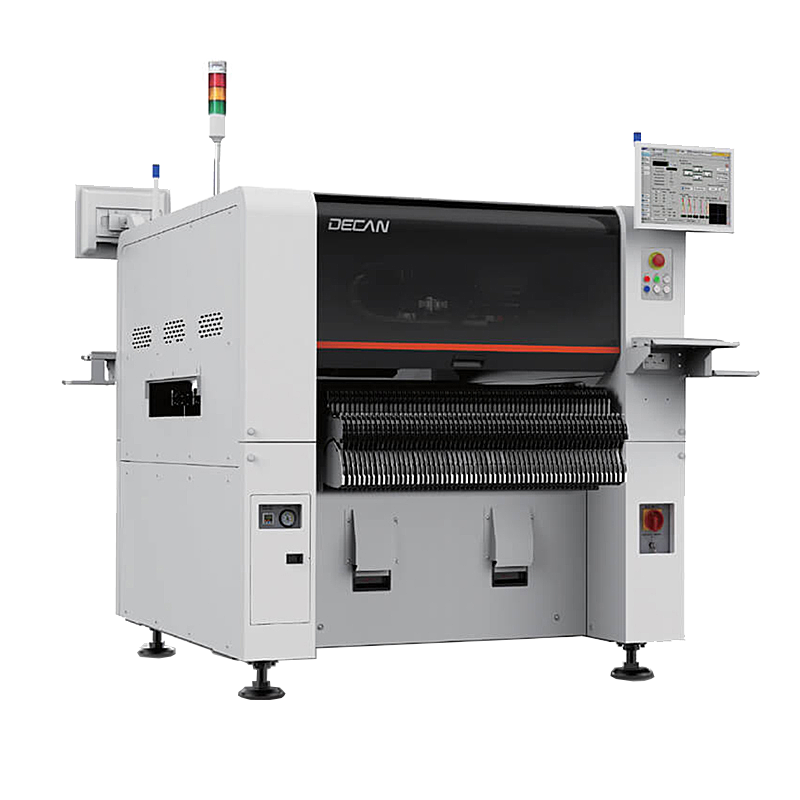
1. SMT Pick and Place Machine — Hanwha Decan S2
The placement platform is where accuracy and consumable wear interact most directly. The Hanwha Decan S2 specified in Motek turnkey packages runs at 92,000 CPH (optimum, HS10 head), with a 2 gantry × 10 spindles/head structure, placement accuracy of ±28μm Cpk≥1.0 for 03015 chips and ±25μm Cpk≥1.0 for ICs, a component range of 03015 to 12 mm with height up to 10 mm, and a standard PCB range of 50 × 40 mm to 510 × 460 mm.
Lifecycle support on this machine centres on three things: nozzle and feeder condition, program and component-library backup, and the ability to re-verify accuracy after any service event. Motek's customization scope includes nozzle handling, with the option to engrave letters on nozzles rather than relying on a QR code — a small detail that matters in high-mix environments where nozzles are swapped frequently between product runs. For lines running 8 mm, 12 mm and 24 mm feeders across many programs, feeder-level discipline is usually the first thing to formalize with the supplier.
2. SMT Reflow Oven — XMR-800D
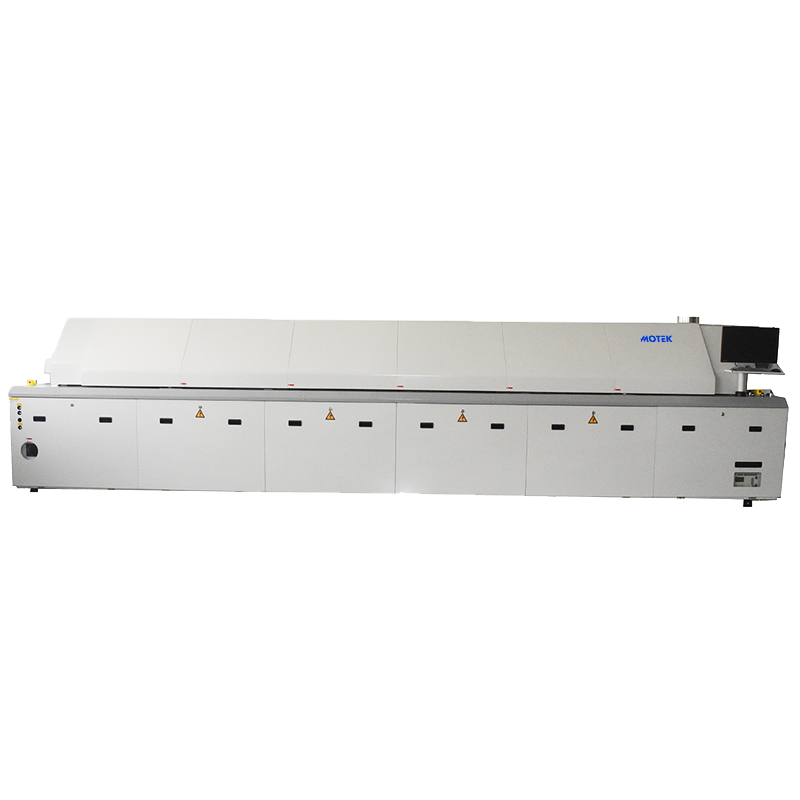
The reflow oven is a thermal asset, and its support profile is about stability rather than wear parts. The XMR-800D uses top 8 / bottom 8 heating zones over a 3,110 mm heating length, with top 3 / bottom 3 cooling zones, a small-circulation rectifying plate structure, an exhaust requirement of 11 m³/min × 2 exhausts, a machine weight of approximately 2,710 kg and dimensions of 5,520 × 1,430 × 1,530 mm.
For a buyer, the support implication is that zone calibration, profile reproducibility and exhaust balance must be documented at handover. When a defect appears months later, the difference between a two-day fix and a two-week investigation is usually whether the original profile baseline and zone readings were recorded and stored.
3. Automatic Online Glue Dispenser — HMH830D
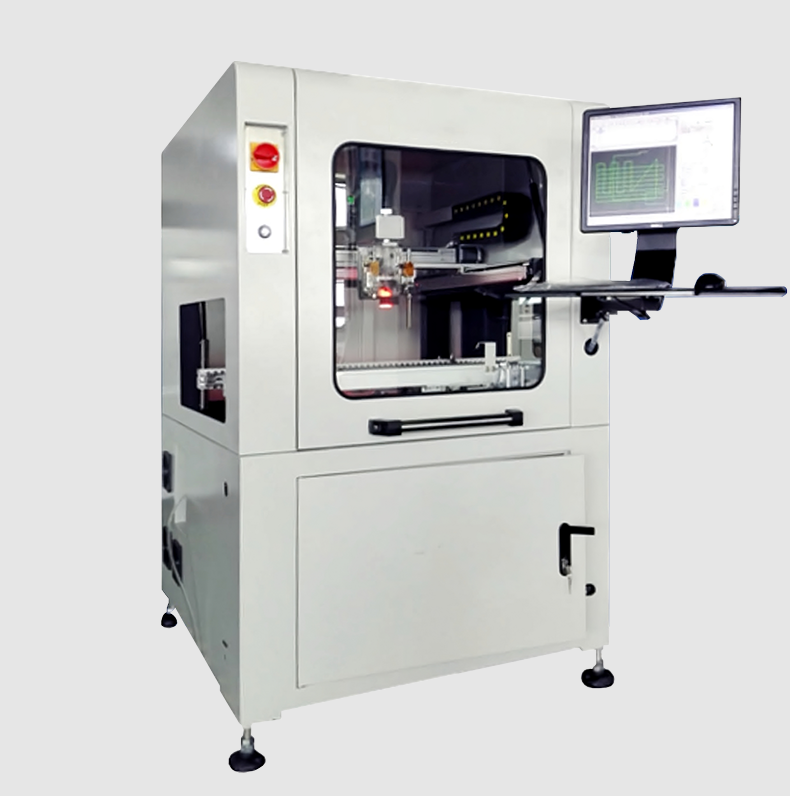
Dispensing is the machine most often forgotten in support planning, and it is the one where program knowledge concentrates. The HMH830D runs on an industrial computer plus motion control card, is computer controlled, uses manual teaching, stores more than 1,000 running programs, transfers PCBs at 0–5,000 mm/min, accepts PCB widths of 50–450 mm, has a PCB transfer height of 920±20 mm and weighs 650 kg.
Because the machine holds a large program library, support should include a program backup routine and teaching-file handover at acceptance. In practice, a supplier that documents the teaching workflow and the backup method removes a large share of future downtime on this unit.
What the Support Package Includes
Motek's after-sales structure for turnkey packages combines remote technical support, 24/7 online service, optional remote or on-site training, the option for the client to dispatch engineers to China for approximately one week of training, and service-centre arrangements in the United States and India. All products carry a 12-month warranty. Customization extends to voltage, logo, labeling, packaging, colour, size, graphics, material, a personalized service plan, and production line layout design.
Step-by-Step Breakdown: A Seven-Checkpoint Acceptance Sequence
Acceptance works best as a sequence of small, documented decisions rather than a single signature. The following order reflects how a turnkey line is actually handed over.
Step 1 — Freeze the configuration in writing
List every model and every parameter that was quoted. For the core machines, that means the Decan S2 placement figures, the XMR-800D zone and exhaust figures, and the HMH830D transfer, speed and program-storage figures. If a parameter is not written down, it cannot be a checkpoint.
Step 2 — Confirm pre-shipment testing
Motek applies 100% pre-shipment testing. Ask for the test record to be attached to the shipment documentation so the site team can compare it with the installation readings.
Step 3 — Verify parameters at installation
Re-measure the agreed parameters on site. Where a machine is rated at ±28μm Cpk≥1.0 on 03015 chips, the acceptance question is not only what the number is, but on which product and with which head configuration it was demonstrated.
Step 4 — Confirm facility conditions
Equipment performance is conditional on the environment. Typical turnkey SMT requirements include indoor cleanroom operation at 23°C ± 2°C, controlled humidity of 50% ± 10%, IP20/IP40 protection, low vibration, low dust and ESD protection, with ISO Class 8 cleanroom and 40–60% RH used in many high-mix installations, plus ANSI/ESD S20.20 compliance and grounded workstations. If the facility is not ready, acceptance results will not be reproducible.
Step 5 — Agree the quality class
Name the IPC-A-610J class that applies to the product — Class 1, Class 2 or Class 3. This single line converts a vague acceptance discussion into a measurable one.
Step 6 — Complete training and handover of knowledge
Training should cover operation, teaching and program backup, not only running the line. Remote or on-site training is available, and engineers can attend approximately one week of training in China.
Step 7 — Record the warranty start and escalation path
The 12-month warranty start date, the remote support channel and the named contacts should be recorded in the same document as the acceptance results.
Purchasing Terms: What Should Be Fixed in Writing
Commercial terms on a turnkey SMT solution are configuration-dependent, which is exactly why they should be explicit. The terms below reflect Motek's standard position and are the ones buyers most often ask about.
- Minimum order quantity: 1 unit, which allows a buyer to start with a single machine or a partial line and expand later rather than committing to a full line on day one.
- Lead time: 7–45 days, depending on configuration and customization scope. The upper end typically involves layout design work or non-standard customization.
- Capacity: a monthly capacity of 5,000 units supports volume programs and repeat orders.
- Customization scope: OEM/ODM supported, covering voltage, logo, label, packaging, colour, size, graphics and material, plus production line layout design and a personalized service plan.
- Quality control: 100% pre-shipment testing before dispatch.
- Warranty: 12 months on products.
- Trade profile: 100% export, with main markets in the EU, US, Australia, Canada and ASEAN, plus the Middle East and Southeast Asia.
Two negotiation habits are worth recommending. First, tie the lead-time commitment to the frozen configuration from Step 1, so that later customization requests are treated as scope changes rather than delays. Second, treat training as part of the delivery milestone, not as an optional add-on — an untrained team will consume far more support hours than any hardware issue.
Use Cases: Where These Terms Change the Outcome
High-mix EMS factories
An EMS environment runs many short programs, so the acceptance questions that matter most are program-related: how quickly a new product can be taught, how feeder and nozzle changes are managed, and whether the parameter baseline is re-verified after service. The dispensing program library and the placement accuracy standard both become daily operational tools rather than specifications on a datasheet.
Automotive and industrial electronics
Where zero-defect expectations apply, the acceptance conversation should include inspection coverage from SPI and AOI, and in some cases X-ray for BGA joints, alongside the reflow profile baseline. The 15.2% CAGR in inspection equipment reflects how seriously this segment treats defect escape, and the acceptance sequence in this article should be extended accordingly.
Medical, LED and telecommunications production
These programs typically combine environmental constraints with long product lifecycles. Cleanroom class, humidity control and ESD compliance become contractual rather than advisory, and a documented support path matters more than a fast delivery date.
Documented multi-year relationships
Motek's case record includes SMT factory customers in Germany, Israel, India and Australia operating 20–35 units over a five-year relationship, covering smartphone motherboard assembly, tablet circuit board production, ECU control unit assembly, LED display modules, LED streetlight drivers and consumer electronics, with reported mass production output of 20,000–100,000 pieces per day. Relationships of that length are usually the result of clear acceptance records and a workable escalation path, not of a single favourable quotation.
Comparison Table: Verified Parameters and Lifecycle Focus by Machine
| Equipment | Model | Verified parameters to check at sign-off | Lifecycle support focus |
|---|---|---|---|
| SMT pick and place machine | Hanwha Decan S2 | 92,000 CPH (optimum, HS10 head); 2 gantry × 10 spindles/head; ±28μm Cpk≥1.0 (03015 chip); ±25μm Cpk≥1.0 (IC); parts 03015–12 mm, height 10 mm; PCB 50 × 40 to 510 × 460 mm | Nozzle and feeder condition, program and component-library backup, accuracy re-verification after service |
| SMT reflow oven | XMR-800D | Top 8 / bottom 8 heating zones; 3,110 mm heating length; top 3 / bottom 3 cooling zones; small-circulation rectifying plate; exhaust 11 m³/min × 2; approx. 2,710 kg; 5,520 × 1,430 × 1,530 mm | Profile baseline, zone calibration records, exhaust balance, thermal stability over long runs |
| Automatic online glue dispenser | HMH830D | Industrial computer plus motion control card; computer control; manual teaching; more than 1,000 stored programs; 0–5,000 mm/min; PCB width 50–450 mm; transfer height 920±20 mm; 650 kg | Program library backup, teaching-file handover, transfer and axis maintenance |
Read across the table rather than down it. The parameters define what is bought; the right-hand column defines what is lived with. A supplier that can answer questions in both columns is a different kind of partner from one that can only answer the first.
FAQ
Which standards and certifications should an SMT turnkey solution be checked against?
Three layers apply. Equipment compliance is the first: Motek holds multiple CE certifications covering its exported equipment. Process quality is the second: IPC-A-610J, released in March 2024, is the current global standard for the acceptability of electronic assemblies and defines Class 1, Class 2 and Class 3 levels, so the applicable class should be named in the acceptance document. Facility and handling compliance is the third: typical turnkey SMT installations assume ESD protection with ANSI/ESD S20.20 compliance and grounded workstations, and many high-mix lines operate in ISO Class 8 cleanrooms at 40–60% relative humidity.
What does long-term support actually include after the line is installed?
Motek's after-sales scope covers remote technical support, 24/7 online service, optional remote or on-site training, the option to send engineers to China for approximately one week of training, and service-centre arrangements in the United States and India. All products carry a 12-month warranty. Beyond the service list, buyers should confirm three practical items: how nozzles and feeders are replenished, how placement and reflow parameters are re-verified after a service visit, and how dispensing programs are backed up so that a control-system issue does not erase taught programs.
How should purchasing terms and budget be planned for a turnkey SMT line?
Because a turnkey line is configured around a product mix, the commercial scope matters more than a single list figure. Motek's standard terms are a minimum order quantity of 1 unit, a lead time of 7–45 days depending on configuration and customization, a monthly capacity of 5,000 units, OEM/ODM customization across voltage, logo, label, packaging, colour, size, graphics and material, and 100% pre-shipment testing. Budget planning should extend beyond equipment to consumables, training time and the cost of an unplanned stop, which is usually the largest hidden item in the first two years.
Can a buyer validate the equipment before committing to a full line?
Yes, and the practical route is phased commitment. A minimum order quantity of 1 unit allows a single machine or partial line to be installed and validated first, with 100% pre-shipment testing and on-site parameter verification forming the evidence base. Training — remote, on-site, or roughly one week in China — should be completed before the decision to scale. Buyers who want a reference point can also review documented multi-year relationships, such as the 20–35 unit installations operated by SMT factory customers in Germany, Israel, India and Australia over five years.
How long does delivery take, and what drives the range?
Motek quotes a lead time of 7–45 days. The lower end corresponds to standard configurations of the pick and place machine, reflow oven and glue dispenser; the upper end is driven by customization scope, production line layout design work, and scheduling of training. Because the range is wide, the delivery date should be tied to a frozen configuration list so that later additions are handled as scope changes rather than as delivery slippage. Buyers planning a line expansion can also request the current catalogue to align the next phase with the same configuration baseline.
Conclusion: Sign the Lifecycle, Not Just the Invoice
A turnkey SMT solution is judged twice: once on delivery day, and again every quarter afterwards. The delivery-day judgement depends on acceptance criteria that are written down, measurable and tied to named standards such as IPC-A-610J and to verified machine parameters. The quarterly judgement depends on whether support is a phone number or a structure — remote diagnostics, documented training, a defined warranty, a consumables route, and a repeatable way to re-verify process parameters after any intervention.
Motek's position in that structure is straightforward: a Shenzhen-based supplier operating since 2011 from a 955 m² facility, exporting 100% of its output to the EU, US, Australia, Canada and ASEAN markets, with a 12-month product warranty, 24/7 online service, remote technical support, training options, a minimum order quantity of 1 unit and a 7–45 day lead time. For buyers in the research and evaluation stage, the most useful next step is not a faster quotation — it is a configuration list and an acceptance checklist that both sides will still be able to read in year three.
Next Step: Build the Acceptance Checklist Before the Quotation
Download the Motek product catalogue to review machine models and parameters, then send your product mix, PCB size range and target output for a configured turnkey proposal with matching acceptance checkpoints.
Catalogue: Download the Motek SMT equipment catalogue (PDF)
Email: sales@morequip.com | Tel: +86-755-21635007 | WhatsApp: +86 199 2455 0176
Website: www.morequip.com
Address: 405, Block A, Building 6, Exhibition Bay Zhonggang Plaza, No. 83 Zhancheng Road, Zhancheng Community, Fuhai Street, Baoan, Shenzhen, Guangdong, China.
Have Questions or Need More Details?
Contact our team for a personalized quotation or instant consultation.
Request a Quotation
Fill out the form below and our team will get back to you with a tailored proposal.
WhatsApp Direct Chat
Prefer to chat in real-time? Message us on WhatsApp for instant assistance & quick answers.
- Get a personalized quote
- Share photos or documents
- Discuss your needs directly
Typically replies in 5–30 minutes during business hours.