Grab & Go vs. Craft Bar: Which Wellness Hub Central Mode Fits Your Hong Kong Site?
Grab & Go vs. Craft Bar: Which Wellness Hub Central Mode Fits Your Hong Kong Site?
Most beverage sites in Central generate revenue in one time window and sit idle in the other. A Wellness Hub Central site is built to run two. The ground floor operates a Grab & Go counter from 08:00 to 22:00; the floor above runs a Craft Bar from 12:00 to 00:00. For an operator evaluating a Hong Kong site, the real question is not which format is better in the abstract — it is which mode should lead the location, and how the two fit together without doubling the operating cost.
This guide compares the two modes on the criteria that actually decide the answer: daypart fit, day-to-night dual-scene use, ambience, staffing, compliance and order logistics. It uses the operating facts behind Mother Pearl's dual-level flagship to show what each mode requires in practice.
Mother Pearl is a Hong Kong plant-based beverage hospitality brand founded in 2020, operating Wellness Hub Central as a two-level site in Central where a daytime Grab & Go outlet and an evening Craft Bar run under a single operating standard and a single kitchen discipline.
The Two Modes, Defined Before You Compare Them
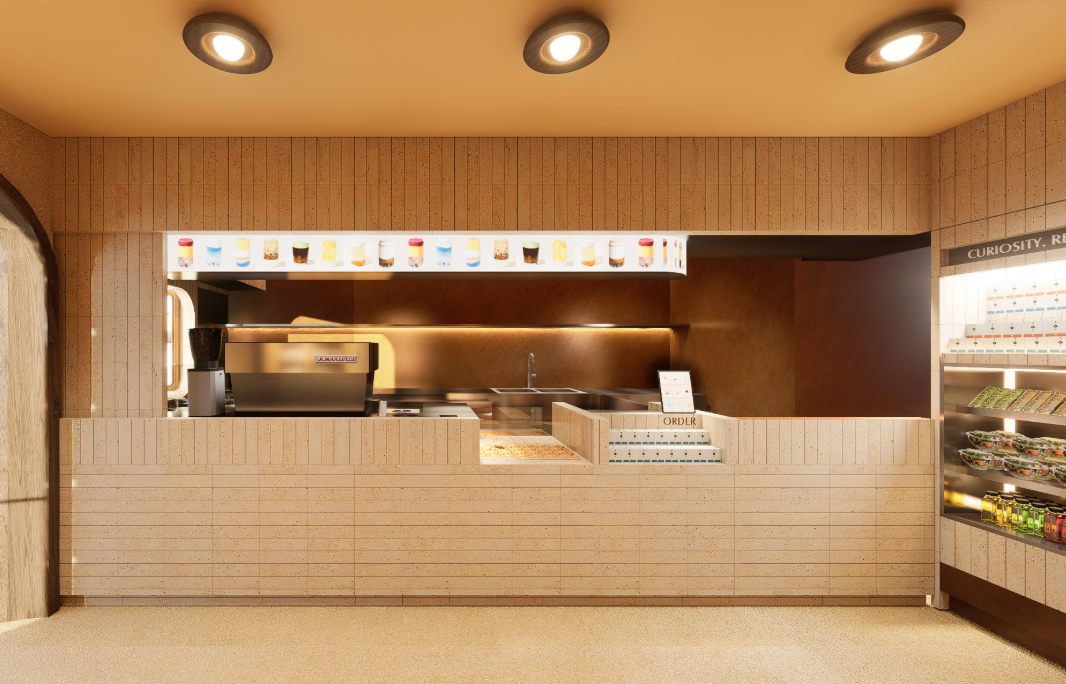
Grab & Go is a ground-floor counter format built around throughput. At Wellness Hub Central it operates daily from 08:00 to 22:00, serving plant-based bubble teas, coffee, gelato and light refreshments. Its function is to catch commuter, office and afternoon foot traffic with a short dwell time and a fast handoff.
Craft Bar is an upper-floor format built around dwell time. It runs daily from 12:00 to 00:00, serving clean wine and low-to-high ABV botanical cocktails and mocktails. The format gives guests full autonomy over their own sensory state — fully sober or gently relaxed — rather than pushing a fixed drinking outcome.
The two are operationally connected, not just thematically. They share an ingredient standard, a handcrafted pearl kitchen and one all-day operating rhythm, which is what allows a guest to arrive at 09:00 for a bubble tea and return at 20:00 for a seated drink on a different floor of the same address.
The Problem: One Address, Two Income Windows
Central street-front rent is priced across the whole day, but most beverage concepts only monetise one slice of it. That mismatch produces three predictable failure patterns.
The first is a daytime-only site. A Grab & Go counter captures morning commuting and lunchtime takeaway, but by 18:00 the location is dark while foot traffic is still in the district.
The second is an evening-only site. A Craft Bar captures higher-value seated trade, but the same floor stands empty from 08:00 to noon, and the fixed cost of the space is spread across fewer trading hours.
The third, and the one that costs the most, is the split site that is operationally duplicated rather than operationally shared. Two menus, two back-of-house standards, two stock profiles and two quality regimes mean the second mode stops being incremental revenue and starts being a second business.
Day-night dual-scene use only pays off when the second mode reuses the first mode's ingredients, prep and staff framework. That is the structural decision this comparison is really about.
Industry Background: Why This Comparison Matters in Hong Kong Now
Demand for functional and wellness-oriented beverages in Hong Kong is no longer a niche behaviour, and the following third-party figures describe the environment an operator is entering.
- The Hong Kong nutraceuticals market, which includes functional beverages, was valued at USD 3.67 billion in 2024 and is projected to reach USD 6.56 billion by 2033 (Grand View Research).
- The functional beverage segment held a 47.9% share of that market in 2024 (Grand View Research).
- Approximately 62.9% of Hong Kong adults — around 3.9 million people — consumed health supplements or functional food and drinks in the first half of 2024 (CUHK / Hong Kong Health Food Association survey, cited by Grand View Research).
- The APAC functional beverage market is expected to grow from USD 98.53 billion in 2024 to USD 146.99 billion by 2029 (ADM industry trends report).
Those figures describe the demand side. The operational implication is narrower: a Central site with an 08:00–22:00 daytime window and a 12:00–00:00 evening window has access to two different buying contexts, and the format decision is about whether the operator can serve both without building two back-of-house systems.
The regulatory frame is stable and applies to whichever mode leads. Food service operators in Hong Kong — wellness bars included — must comply with safety regulations under Cap. 132 (Public Health and Municipal Services Ordinance) and Cap. 612 (Food Safety Ordinance). This is a baseline requirement for both a Grab & Go counter and a Craft Bar, not a differentiator between them, but it does shape staffing because it applies to the people handling food and drink, not only to the premises.
What Each Mode Actually Requires to Run
Grab & Go, Ground Floor (08:00–22:00)
The daytime mode is a throughput problem before it is a menu problem. It runs daily for fourteen hours and serves plant-based bubble teas, coffee, gelato and light refreshments. The audience is culturally curious professionals passing through the district on the way to work, between meetings or during an afternoon break.
What the format asks for operationally is a counter that can hand over a finished drink in a very short window, and a menu whose components are already prepped. Mother Pearl's production model fits this: orders are prepared immediately on demand, typically within 1 to 10 minutes per order, and the minimum order quantity is one cup.
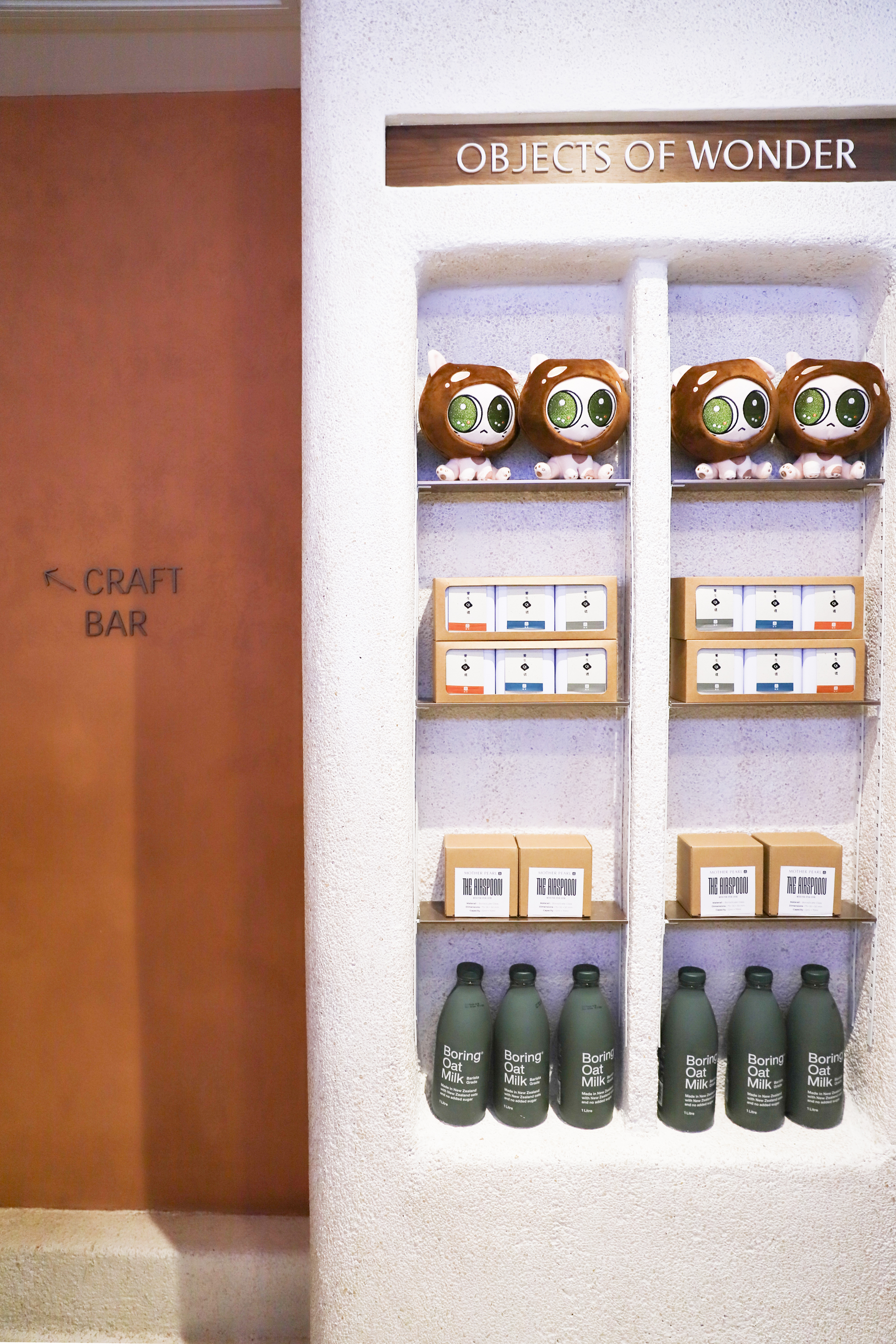
The menu itself carries the brand's core product line. The refined sugar-free bubble tea range spans 36 to 104 kcal per 100ml depending on the build, which is a materially different profile from conventional bubble tea. Zero-sugar bottled herbal teas are also available as grab-and-go items at HK$34 per bottle, or HK$149 for a mixed five-bottle pack, with a return-and-recycle offer of 10% off when clean empty bottles are brought back to the store.
Craft Bar, First Floor (12:00–00:00)
The evening mode is a dwell-time and ambience problem. It operates daily from 12:00 to 00:00 and serves clean wine alongside low-to-high ABV botanical cocktails and mocktails. The bar menu was not assembled quickly — it was refined through roughly six months of continuous internal experimentation before settling into a curated lineup of 10 distinct cocktails and mocktails.
This is the mode that carries the sober socialising position. Rather than framing the evening around abstinence, the format keeps a full ABV range on the menu so a guest chooses their own state, and a table of four can mix drinking and non-drinking orders without the non-drinkers being routed to a separate, thinner list.
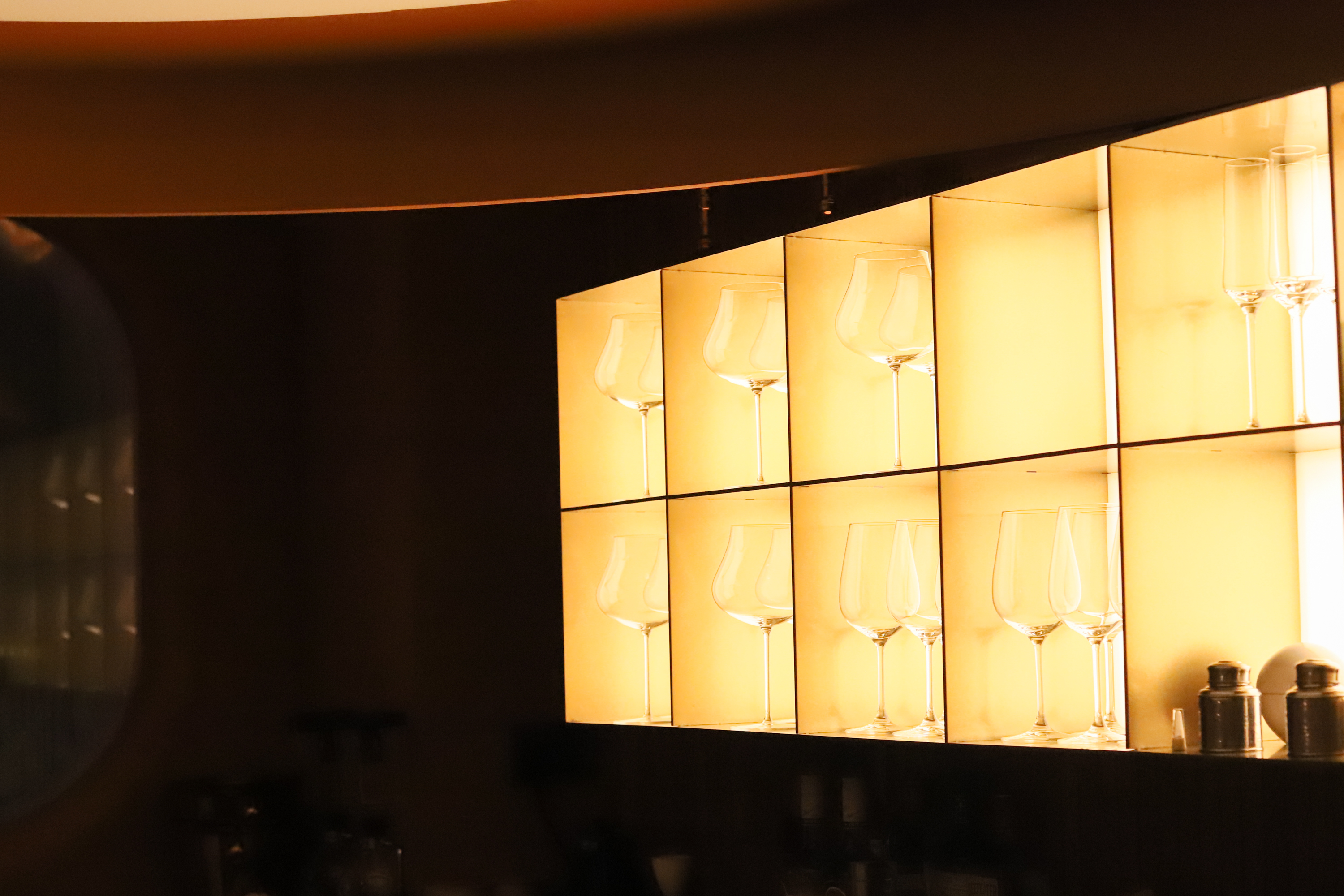
The spatial requirement is different from the ground floor. The upper level is built around a concept of silent restraint — a tranquil urban oasis set against the noise of the surrounding district. The original visual identity was developed by Hong Kong design studio A Work of Substance, defined by pearl-shaped lighting and a grounding olive-green facade that acts as a physical portal between city hustle and calm exploration. For an operator, that means the upper floor carries a fit-out budget and an atmosphere standard that a pure counter format does not.
What Both Modes Share — and Why That Matters for Cost
The reason a single site can carry both modes without doubling overhead sits in the shared production layer.
- No pre-mixed synthetic powders or syrups. Every component, including the signature tapioca pearls, is handcrafted in-house — so the daytime and evening menus draw from the same prep kitchen rather than from two separate supply chains.
- Low-GI natural sweeteners. Coconut nectar and monkfruit replace refined sugar across the range, which means the same sweetener inventory serves a bubble tea, a mocktail and a bottled herbal tea.
- TCM-inspired formulation. Traditional Chinese Medicine references are translated into modern drink builds, giving the evening menu a botanical vocabulary that the daytime menu already stocks.
- Plant-based base. Oat milk replaces dairy milk, so the same base liquid supports both floors and accommodates diverse dietary needs.
- Capacity and lead time. Monthly capacity is 10,000 cups. Single orders are made immediately on demand within 1 to 10 minutes; group or custom orders require 72 hours advance notice; minimum order quantity is one cup.
- Quality control. Repeated internal tasting tests plus full transparent raw material inspection sit behind both modes.
- Order logistics. In-store pickup, Keeta, Foodpanda and in-person delivery are all supported. Payment is accepted by credit card, Alipay, Octopus and bank transfer — cash is not accepted.
The compliance position is likewise shared rather than duplicated. Mother Pearl holds a Food Hygiene Manager Certificate issued by The Hong Kong Management Association (certificate number G-47252-2025-B-P, issued 11 November 2025) covering food hygiene management and food safety supervision under Cap. 132 and Cap. 612, and a Chartered Institute of Environmental Health Intermediate Level 3 certificate (22138-HCC1-I-CRMINV056899-0136) covering HACCP system implementation and hazard analysis.
Step-by-Step: Choosing the Mode Mix for Your Site
Step 1 — Map your daypart traffic before you map your menu. Establish what foot traffic actually passes the address between 08:00 and 12:00, between 12:00 and 18:00, and after 18:00. If the first two windows are strong and the third is weak, Grab & Go should lead. If the address sits inside a nightlife footprint, the reverse applies.
Step 2 — Decide whether the site can physically hold two floors. The dual-scene model depends on vertical separation. A single-floor site can still run both dayparts, but it will have to convert the room rather than operate two distinct environments, which changes the fit-out brief.
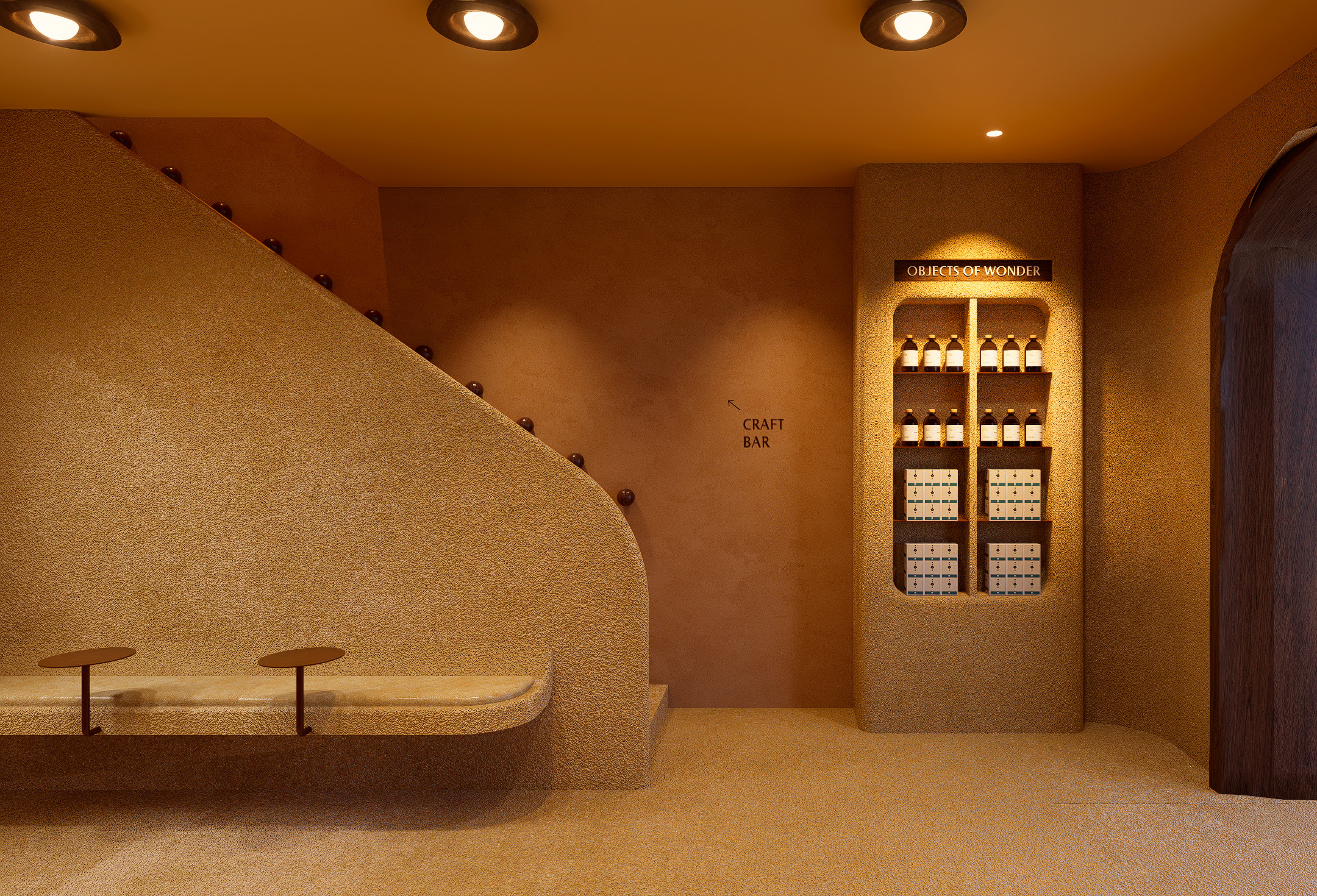
Step 3 — Set the ambience brief for each level separately. The ground floor answers a downtown commercial context; the upper floor answers a tranquil indoor oasis brief. Treating them as one aesthetic decision usually produces a room that serves neither trade well.
Step 4 — Build one ingredient backbone, two menus. Keep a single sweetener system, a single plant-based base and a single pearl production line, then split only at the point of serve. This is the step that determines whether the second mode is profitable or merely busier.
Step 5 — Size the kitchen to the combined peak, not the average. With monthly capacity of 10,000 cups across the site, the constraint is rarely total volume — it is the 08:00–09:30 rush and the 19:00–22:00 evening peak landing on the same prep team.
Step 6 — Confirm compliance and people certification early. Food hygiene management and HACCP-based supervision requirements under Cap. 132 and Cap. 612 apply across both modes, and the qualification sits with people, not just premises. Confirm who holds the recognised food hygiene manager qualification before finalising the operating plan.
Step 7 — Validate with a small live test. Because minimum order quantity is one cup and standard orders are turned around in 1 to 10 minutes, an operator can run a live daypart test at minimal volume before committing to a full fit-out. For a custom menu or group trial, 72 hours advance notice is the planning window.
Use Cases: Where Each Mode Earns Its Place
Central commercial frontage with morning commuter flow. Here Grab & Go carries the site. The 08:00–22:00 window captures the commute, the lunch handoff and the afternoon slump, and a zero-sugar bottled tea at HK$34 gives a low-friction entry product for first-time customers.
Addresses inside a nightlife footprint. Here the Craft Bar leads. A 12:00–00:00 window with clean wine and a full low-to-high ABV botanical range lets the venue serve the sober socialising demand without alienating guests who do want alcohol.
Corporate catering and employee programmes. Both modes have been used for corporate café and canteen supply, corporate gifts, team-building workshops and events, employee benefits, and cross-brand collaboration. The reference set of clients spans corporate enterprises, luxury brands, financial institutions, education institutions, airlines and retail and FMCG enterprises, delivered as enterprise-level bulk orders, VIP gift sets and large-scale workshop events.
Event and private gathering service. The site has been used by individual consumers, corporate team-building clients and event and party clients, covering dine-in and takeaway beverage consumption, corporate event catering and party gathering beverage service — with handcrafted daily preparation and a one-day fresh shelf life.
Brand collaboration and cultural programming. Wellness Hub Central has supported cross-brand partnerships with names including Berluti and The Murray Hotel, and functions as a cultural venue as much as a beverage outlet — useful when a site's value proposition depends on programming rather than pure volume.
Comparison Table: Grab & Go vs. Craft Bar at a Glance
| Decision Dimension | G/F — Grab & Go | 1/F — Craft Bar |
|---|---|---|
| Operating mode | Daytime counter, high throughput | Evening bar, longer dwell time |
| Daily hours | 08:00 – 22:00 | 12:00 – 00:00 |
| Core offer | Plant-based bubble tea, coffee, gelato, light refreshments | Clean wine, low-to-high ABV botanical cocktails and mocktails |
| Alcohol content | None | Zero to full ABV on the same menu |
| Primary audience | Commuters, office workers, afternoon traffic | Evening social groups, mindful drinkers, non-drinkers |
| Dwell time | Short; takeaway dominant | Long; seated trade dominant |
| Ambience brief | Downtown commercial context | Tranquil indoor oasis, silent restraint concept |
| Order turnaround | 1 – 10 minutes per order | 1 – 10 minutes per order |
| Group / custom orders | 72 hours advance notice | 72 hours advance notice |
| Minimum order quantity | 1 cup | 1 cup |
| Shared production layer | Same handcrafted pearl kitchen, same low-GI sweetener system, same oat-milk plant base, same TCM-inspired formulation library | |
FAQ
What food safety and personnel requirements apply to a wellness bar site in Hong Kong?
Food service operators in Hong Kong, wellness bars included, must comply with safety regulations under Cap. 132 (Public Health and Municipal Services Ordinance) and Cap. 612 (Food Safety Ordinance). Beyond premises compliance, the supervisory qualification sits with people: Mother Pearl holds a Food Hygiene Manager Certificate issued by The Hong Kong Management Association (certificate number G-47252-2025-B-P, issued 11 November 2025), covering food hygiene management, food safety supervision and food safety risk control, and a Chartered Institute of Environmental Health Intermediate Level 3 certificate (22138-HCC1-I-CRMINV056899-0136), covering HACCP system implementation, hazard analysis and critical control point monitoring.
Can a Grab & Go counter and a Craft Bar be run by one team and one kitchen?
Yes, provided the second mode reuses the first mode's production layer rather than duplicating it. At Wellness Hub Central, both floors draw on the same in-house crafted components — including the signature tapioca pearls, which are handcrafted in-house rather than bought pre-mixed — the same low-GI sweeteners such as coconut nectar and monkfruit, and the same oat-milk plant base. Site capacity is 10,000 cups per month, standard orders are prepared immediately on demand within 1 to 10 minutes, minimum order quantity is one cup, and quality control runs through repeated internal tasting tests and full transparent raw material inspection.
Where does the real cost difference between the two modes sit?
The difference sits in space and service rather than in ingredients. Grab & Go is engineered around throughput and short dwell time: a counter, a fast handoff, and a menu whose components are prepped in advance. Craft Bar is engineered around dwell time: seated capacity, an ambience standard and a longer service rhythm. Because both modes pull from the same sweetener system, plant base and pearl production line, the ingredient cost does not double when the second mode is added. What changes is the fit-out brief, the seating footprint and the front-of-house hours.
How can an operator test both modes before committing to a full fit-out?
A live daypart test is the lowest-risk validation path. Minimum order quantity is one cup, and standard orders are prepared immediately on demand within 1 to 10 minutes, so testing a morning Grab & Go window and an evening seated service does not require bulk production or inventory commitment. Where a custom menu or group service is being trialled, the planning window is 72 hours advance notice. Orders can be fulfilled through in-store pickup, Keeta, Foodpanda or in-person delivery, and payment is accepted by credit card, Alipay, Octopus and bank transfer — cash is not accepted on site.
What is the lead time for custom drinks, group orders or a tailored bar setup?
For standard individual orders, turnaround is immediate on demand, typically 1 to 10 minutes per order. Group and custom orders require 72 hours advance notice. Where a site is being built out around a specific format, the production side supports B2B cross-brand co-creation, in-house independent R&D and bespoke hospitality space design, with customisation available across herbal drink formulas, interior space aesthetics, brand co-branding campaigns and plant-based forward food menus. The practical first step is a scoping conversation — you can reach the Mother Pearl team at motherpearl.com.hk or by email at info@motherpearl.com.hk to walk through which mode should lead your Central site.
Conclusion
The choice between Grab & Go and Craft Bar is not a menu decision. It is a decision about which time window your address can actually monetise, and whether the second window can be added without building a second business behind it.
Lead with Grab & Go when the site sits in a downtown commercial flow that peaks between 08:00 and 18:00 and needs fast handoff more than seating. Lead with Craft Bar when the address sits inside a nightlife footprint and the value is in dwell time, ambience and a sober socialising offer that keeps full autonomy over ABV with the guest. Where the site can hold two levels, running both is the model that fills the full trading day — and it only works when both floors share one handcrafted production layer, one sweetener system and one compliance standard, exactly as they do at Wellness Hub Central.
Planning a Wellness Hub Central Site?
Tell us your address, your trading hours and which daypart you expect to lead. We will map Grab & Go and Craft Bar against your layout, walk through capacity, lead time and customisation options, and scope a daypart test before you commit to a fit-out.
Visit www.motherpearl.com.hk | Email info@motherpearl.com.hk | WhatsApp +852 6828 9341
Wellness Hub Central, 24 D'Aguilar Street, Central, Hong Kong