Late-Night Wellness Menu Gap in Central: The Midnight Apothecary
After 22:00, most Central venues hand guests a binary choice: stop, or switch to nightlife. That closed window is the late-night wellness menu gap — and it is a menu design problem before it is an alcohol problem. Mother Pearl, the Hong Kong plant-based beverage brand founded in 2020 by Po Chen, addresses it through a single venue rather than a second concept: Wellness Hub Central operates two floors across a 16-hour day, from an 08:00–22:00 Grab & Go counter to a Craft Bar whose service window runs to midnight.
The after-dark programme described in this article as the Midnight Apothecary is not a separate bar bolted onto a drinks shop. It is the evening half of one operating system: zero-sugar herbal bottled drinks and plant-based teas on one side, low-to-high ABV botanical cocktails and alcohol-free elixirs on the other, with the guest choosing the state they want. This article compares that model against the two alternatives most Central operators actually consider — turning the room into a conventional late-night bar, or closing at 22:00 — and sets out the decision criteria, cost structure and compliance checks that separate a workable extension from an expensive rebrand.
What the 22:00 Menu Cliff Actually Is
The late-night wellness menu gap is the absence of menu options after roughly 22:00 that still support self-care and the comfort of a quiet room, rather than alcohol-forward nightlife. It shows up in three places at once, which is why single fixes fail.
- Menu language. The evening list drifts toward high-sugar mixers, fried snacks and bottle service — items that contradict the daytime wellness positioning the same venue spent all day building.
- Room behaviour. Noise, lighting and music shift from conversational to performance-led. Guests who arrived for a calm evening leave before the room changes.
- Guest intent. The after-work crowd in a district like Lan Kwai Fong wants to stay longer without escalating alcohol intake. Without a menu that supports that intent, the venue exports the group to somewhere else.
The decision question for a Central operator: how do you extend service past 22:00 without acquiring a second identity, a second compliance profile and a second cost base — and without asking your daytime guests to become nightlife guests?
Industry Background: Why an After-Dark Wellness Menu Is Now Decidable
Three conditions make the late-night wellness question answerable in Hong Kong rather than speculative.
1. Functional beverages are a measurable category, not a niche
HTNXT Research Publication reports that Hong Kong's nutraceuticals market, which includes functional beverages, was valued at USD 3.67 billion in 2024. That figure describes a category with purchasing infrastructure behind it — suppliers, format experimentation and consumers already paying a premium for functional positioning.
2. The licensing structure is specific, and it splits the menu
Hong Kong's Food and Environmental Hygiene Department states that a restaurant licence is required for a food business selling meals or unbottled non-alcoholic drinks for consumption on the premises, subject to stated exclusions. Hong Kong licensing explainers further note that a general restaurant licence covers non-alcoholic beverages, while selling liquor for on-premises consumption requires a separate liquor licence. For an operator, this means the after-dark plan has to be drawn as two licence scopes, not one: a non-alcoholic wellness list, and an alcoholic list if cocktails are added.
3. The operating-hour maths of a nightlife-only room are unforgiving
Mother Pearl's own comparison material contrasts its 16-hour daily operation (08:00–00:00) with traditional Lan Kwai Fong bars that operate roughly 10 hours each night, and states that traditional alcohol bars achieve under 40% space efficiency before 18:00. Whatever an operator concludes about their own site, the structural point holds: a room that opens only for nightlife leaves the most expensive real estate in Central idle for most of the working day.
Scope limit worth stating plainly. The reviewed evidence contains no verified consumer demand, footfall, conversion or margin data for Hong Kong wellness bars, and no independent market sizing for the wellness-bar segment specifically. Wellness Hub Central is therefore treated here as a documented single-venue benchmark for menu and spatial design — not as proof of category-wide demand or of competitive leadership.
The Solution: How the Midnight Apothecary Is Built
The Midnight Apothecary works because the evening list keeps the formulation standards of the daytime list and only changes the format and the atmosphere. Six components carry it.
Dual-mode operation on one site
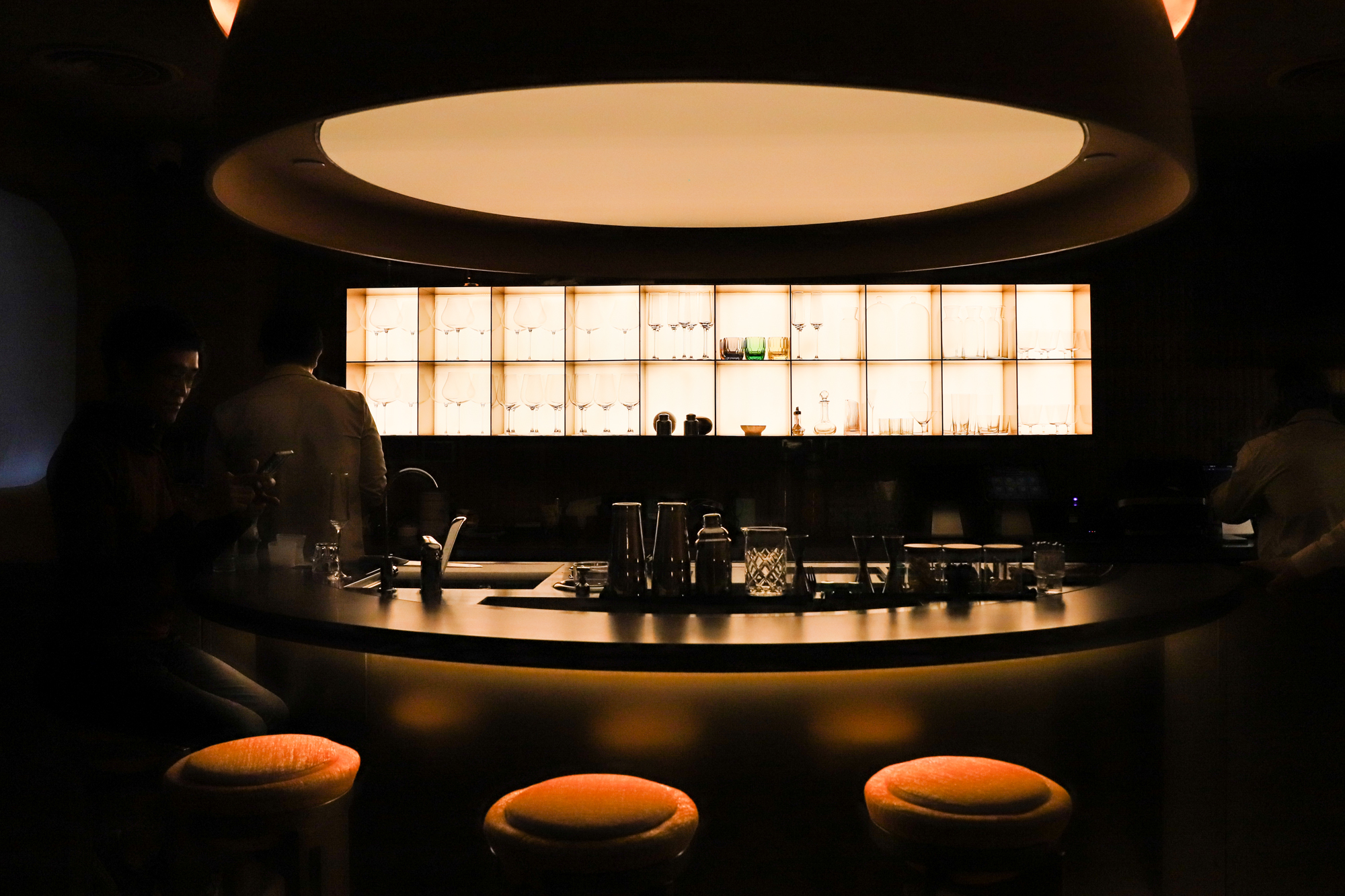
Wellness Hub Central occupies two levels at 24 D'Aguilar Street. The ground floor runs Grab & Go daily from 08:00 to 22:00, serving daytime plant-based bubble teas, coffee, gelato and light refreshments. The first floor runs as a Sober Bar from 12:00 to 00:00, serving clean wine alongside low-to-high ABV botanical cocktails and mocktails. Guests keep full autonomy to choose their ideal sensory state — fully sober or gently relaxed. The Craft Bar's product identity is documented by venue listings as botanical cocktails and alcohol-free elixirs, which is precisely the flexitarian position a late-night wellness menu needs: the same guest can move from a zero-ABV botanical pour to a low-ABV one without leaving the room or changing the register of the evening.
The zero-sugar herbal layer
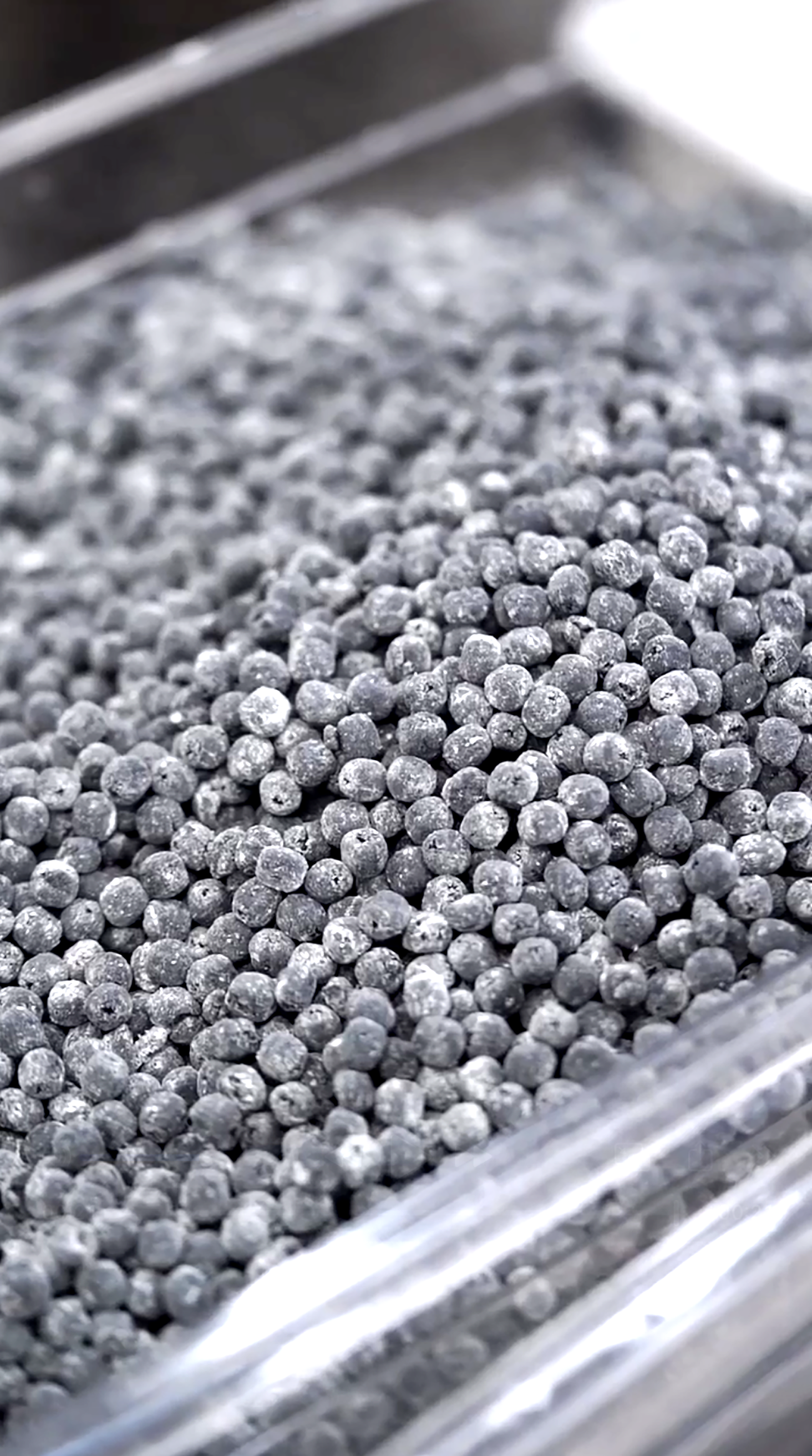
The non-alcoholic side is where the wellness claim is won or lost. Mother Pearl's drinks are plant-based and reformulated around natural sweeteners: a representative build uses oat milk, rice froth, allulose sweetener and plant-based pearls, and a chocolate variant uses oat milk, rice froth, cacao nibs, black tea pearls and vegan chocolate. The headline numbers are 0 g refined sugar per serving and 36–104 kcal per 100 ml, against a 150–250 kcal per 100 ml benchmark for conventional bubble tea. The brand states that core drinks contain no synthetic flavourings, pigments or preservatives, that pearls and other components are handcrafted in-house rather than bought as pre-mixed powders, and that 100% of menu items support an oat milk alternative.
The craft layer and its price ladder
The alcoholic side is priced as a ladder, not a flat list. Time Out Hong Kong reported the signature cocktail Empress Wu at HK$286, with a pearl powder addition taking it to HK$333. At the top of the ladder, The Price of Time — built on aged chen pi and whisky — was reported at up to HK$1,999. A second signature pour, Fountain of Youth, sits within the same crafted-cocktail programme. For an operator, the ladder matters more than any single price: it lets a late-evening guest spend at HK$286 or at four figures on the same visit, without the venue introducing bottle minimums to protect revenue.
Sensory design that signals "not a nightclub"
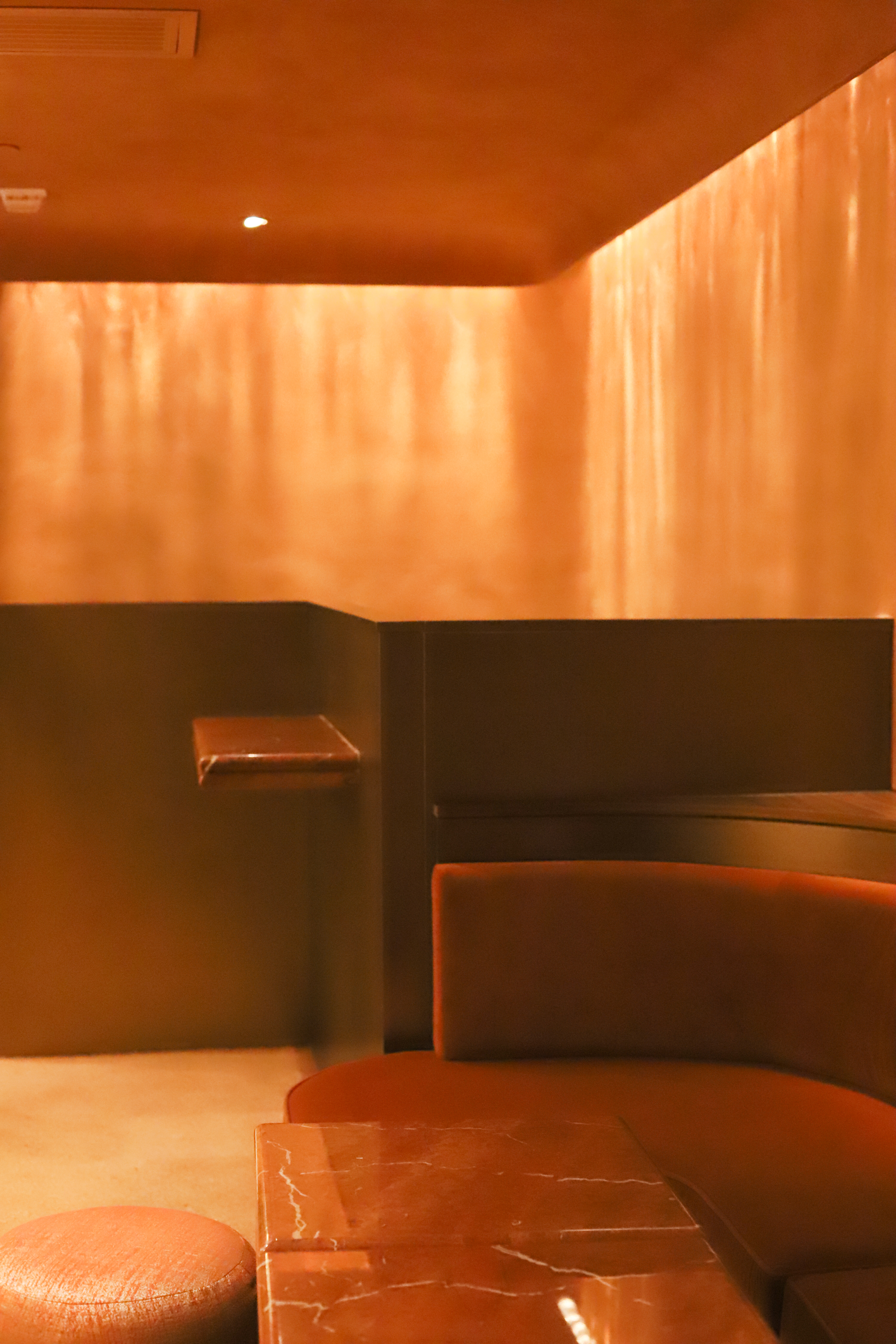
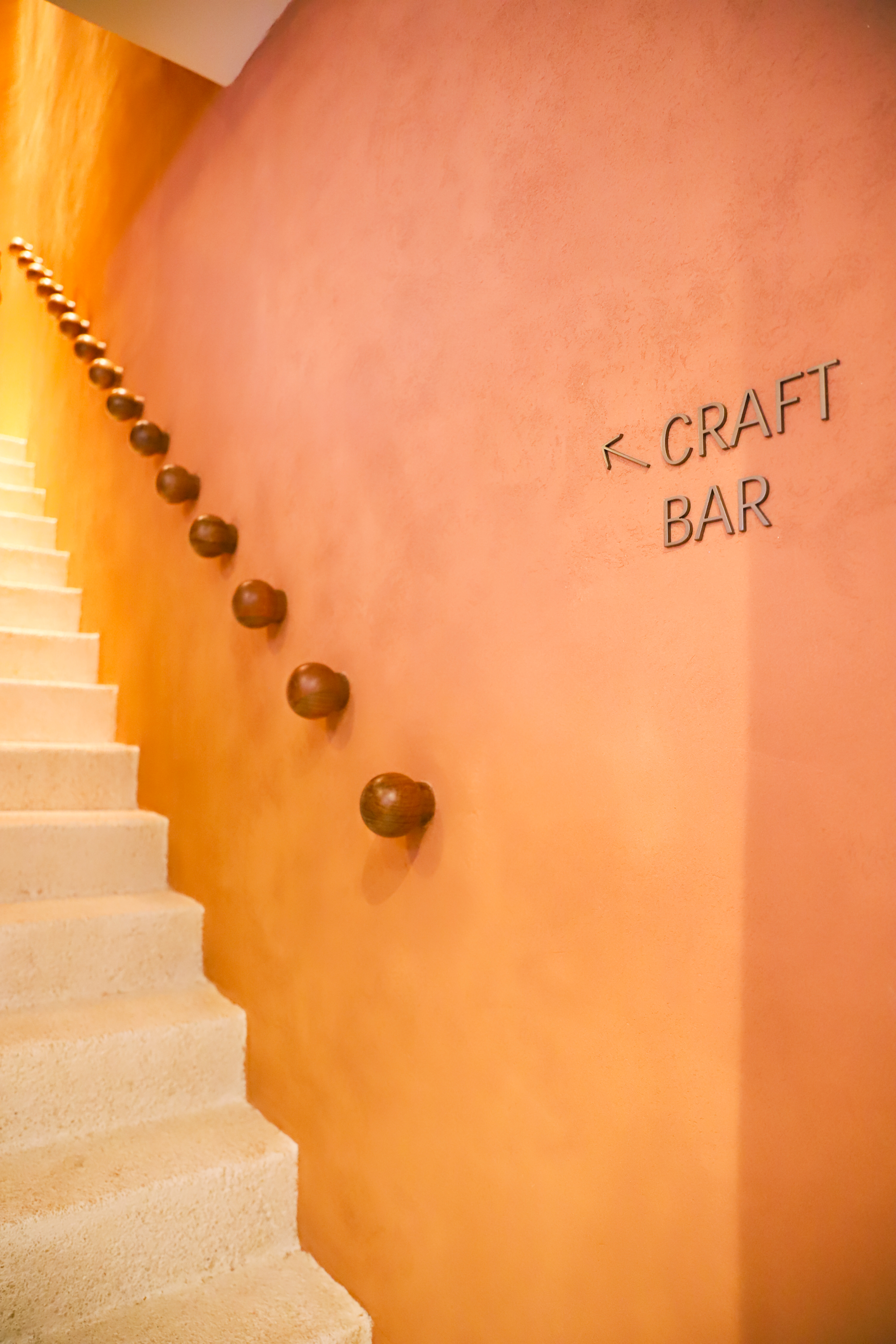
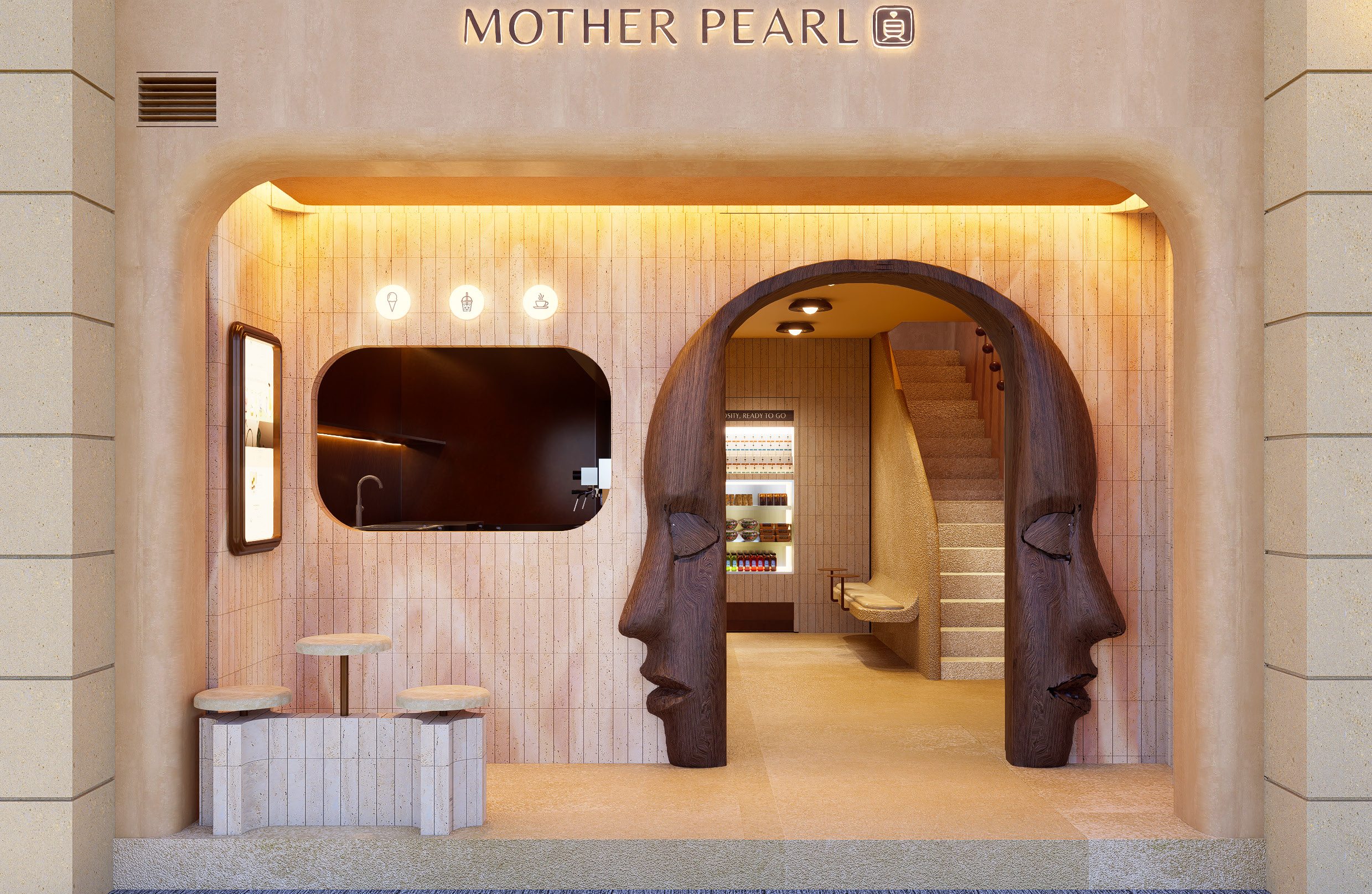
The room is deliberately restrained rather than decorated for peak hours. The original visual identity was developed by Hong Kong design studio A Work of Substance, defined by pearl-shaped lighting and olive-green facades that form a physical portal between the street and the interior. The concept is described as Silent Restraint — a two-storey minimalist space intended as a tranquil urban oasis inside Lan Kwai Fong, explicitly contrasted with noisy, over-decorated party venues. This is what allows an after-dark menu to read as hygge rather than as nightlife with healthier drinks.
Ingredient transparency, including the uncomfortable parts
The brand's stated position is radical transparency in craft alchemy: no pre-mixed synthetic powders or syrups, low-GI natural sweeteners, nutrient-dense superfoods and Traditional Chinese Medicine inspirations translated into modern serves — the herbal-infused, botanical-cocktail territory that reads as a TCM cocktails bar in Hong Kong without the clinical framing. Transparency also means disclosure where it costs something. Oat is a declared allergen risk in this menu system; the operator's control is clear indication on the menu and messaging, backed by staff trained with product knowledge. Any venue copying the format should treat that as a baseline requirement, not an optional nicety.
Community instead of discounting
The retention mechanism is the part most operators get wrong. Wellness Hub Central does not run a generic discount or point system. Retention is built through co-creation and experimental cross-industry B2B collaborations, aimed at culturally curious professionals — a wellness community in Central rather than a loyalty card. The brand reports that this produced partnerships with luxury names including Berluti and The Murray Hotel within five years of launch.
Step-by-Step: Building a Midnight Apothecary on an Existing Site
The sequence below follows the order in which the decisions constrain each other. Changing the order is what produces a room that opens late but still feels like a bar.
Step 1 — Fix the two service windows before writing a menu
Define the daytime and evening windows as two products on one site. The working reference is a 08:00–22:00 Grab & Go counter and a 12:00–00:00 bar-level service, producing a 16-hour total operating day. The evening window must end after the last realistic conversation, not after the last sale.
Step 2 — Split the licence scope
Confirm the food-business licence position for on-premises non-alcoholic service, then scope a separate liquor licence if the evening list includes alcohol. Treat these as two workstreams with two timelines, because the alcoholic list cannot open on the strength of the food licence alone.
Step 3 — Build the menu as a twin track, not a compromise
Keep the zero-sugar herbal and plant-based tea list intact after dark, then add the botanical craft list alongside it. The evening menu should not force a guest to choose between "the healthy option" and "the real drink" — both must be credible on the same page.
Step 4 — Engineer the ABV ladder and the price ladder together
Map alcohol-by-volume against price so that guests can move up or down without changing tables. The documented reference points are HK$286 for Empress Wu, HK$333 with the pearl powder addition, and up to HK$1,999 for The Price of Time. Remove bottle minimums if the ladder is doing its job, since the model depends on dwell and frequency rather than bottle spend.
Step 5 — Specify the sensory environment against the nightlife default
Set lighting, acoustics and material palette to a restrained brief — the Silent Restraint approach uses pearl-shaped lighting and olive-green facades to separate the room from the street. If the after-dark room looks like a party venue, the wellness menu will be read as a marketing claim rather than a service.
Step 6 — Lock the production standard and the allergen disclosures
Secure in-house or tightly controlled production for pearls, sweetener systems and botanical components. The reference operation runs a 186 m² production hub capable of supplying pearls for 160,000 beverages a year, supported by an internal R&D kitchen and a four-engineer development team — the mechanism that keeps a daytime formulation and an evening cocktail formulation consistent. Publish oat allergen indications on the menu and brief floor staff.
Step 7 — Design the community layer last, not the discount layer
Replace promotional mechanics with co-creation: cross-industry collaborations, brand salons for media, investors and cultural professionals, and ESG-aligned partnerships. This is the retention engine the brand cites instead of temporary discount marketing, and it is what makes an after-dark wellness programme defensible against a competitor copying the menu.
Where the Model Fits: Use Cases
The format is documented as suitable for specific occasions, which is more useful to an operator than a general claim of broad appeal.
- Morning takeaway for office professionals. The Grab & Go counter converts the pre-work window into revenue that a nightlife-only room never sees.
- Quiet daytime business negotiation and client hosting. A restrained room with table service supports conversations that a loud venue cannot host at any price.
- Low-key sober dating. Alcohol-free botanical serves let a guest hold the table without drinking, which widens the addressable evening audience.
- After-work mindful drinking. The ABV ladder serves the guest who wants one good drink and a long conversation rather than a session.
- Cross-border co-brand events with ESG-concept brands. The plant-forward operating standard gives a partner something concrete to align with.
- Brand salons for media, investors and cultural professionals. The brand reports that conversion efficiency for high-end media interviews, investor cooperation and B2B co-branding runs about three times that of mass beverage brands.
Comparison Table: Three Ways to Handle the 22:00 Window
Only facts from the reviewed brand materials and published reporting are used below. Cells without a verified figure are marked accordingly rather than estimated.
| Decision factor | Conventional late-night bar extension | Grab & Go only (close at 22:00) | Midnight Apothecary (Wellness Hub Central dual mode) |
|---|---|---|---|
| Daily service window | Roughly 10 hours, night-led (brand comparison material) | 08:00–22:00 on the ground floor | 08:00–00:00, 16 hours across two levels |
| Space use before 18:00 | Under 40% efficiency (brand comparison material) | Counter-led, no evening seating | Daytime counter plus daytime bar service from 12:00 |
| Refined sugar position | Not verified in reviewed sources | 0 g refined sugar per serving | 0 g refined sugar per serving across both floors |
| Calorie density | Not verified in reviewed sources | 36–104 kcal per 100 ml | 36–104 kcal per 100 ml, against a 150–250 kcal conventional bubble tea benchmark |
| Guest control over alcohol | Alcohol-led list | No alcohol | Low-to-high ABV botanical cocktails plus alcohol-free elixirs |
| Published price points | Not verified in reviewed sources | Not verified in reviewed sources | HK$286 for Empress Wu (HK$333 with pearl powder); up to HK$1,999 for The Price of Time |
| Spend pattern | All-night party nightclub model | Per-cup transaction | About 20% lower average per-capita consumption than all-night party nightclubs; no mandatory bottle minimum |
| Guest dwell time | Not verified in reviewed sources | Chain takeaway baseline | 1.8 times longer average stay than chain bubble tea takeaway shops |
| Retention mechanism | Promotion and bottle-spend led | Points or stamp cards | Co-brand community, explicitly without a discount or point system |
| Licence scope | Liquor licence for on-premises alcohol | Food-business (restaurant) licence | Food-business licence plus a separate liquor licence for the alcoholic list |
| Fit-out intensity | Single floor | Single floor | Two storeys; rental and decoration reported at 2–3 times a single-floor takeaway store |
FAQ
Does a Central venue need a separate licence to serve wellness drinks after 10 pm?
Two separate questions apply. Hong Kong's Food and Environmental Hygiene Department states that a restaurant licence is required for a food business selling meals or unbottled non-alcoholic drinks for consumption on the premises, subject to stated exclusions. Hong Kong licensing explainers add that a general restaurant licence permits non-alcoholic beverages, while selling liquor for consumption on the premises requires a separate liquor licence. A wellness menu that stays non-alcoholic after 22:00 therefore sits inside the food-business licence scope, while any alcoholic cocktail extension must be scoped under liquor licensing. Because Wellness Hub Central's first-floor Craft Bar serves both botanical cocktails and alcohol-free elixirs, both scopes are relevant to a venue copying the model — and specific licence status should be confirmed for each site rather than assumed from this description.
Can a wellness menu stay credible past 10 pm without becoming a conventional bar?
Yes, if the evening list keeps the daytime formulation standards and only changes format and atmosphere. Mother Pearl's core drinks carry 0 g refined sugar per serving and 36–104 kcal per 100 ml, use low-GI natural sweeteners such as allulose and monkfruit alongside superfoods and TCM-inspired botanicals, and are described as free of synthetic flavourings, pigments and preservatives, with components handcrafted in-house rather than bought as pre-mixed powders or syrups. The evening layer adds botanical cocktails and alcohol-free elixirs at low-to-high ABV, so guests choose their own sensory state. The brand states that its cocktail and mocktail formulas were finalised after more than six months of internal blind tasting trials.
What does an after-dark wellness menu cost to run compared with the alternatives?
Three cost lines dominate. Core raw material cost is reported at 35% higher than mass bubble tea brands, reflecting organic zero-additive botanical formulas, and menu pricing carries a 15–20% premium for clean-label ingredients. A two-storey flagship's rental and decoration run 2–3 times a single-floor takeaway store. Those costs are offset by the operating model: a 16-hour day instead of roughly 10 night-led hours, average dwell 1.8 times longer than chain bubble tea takeaway shops, and full-day space utilisation. On the revenue side, average per-capita consumption is about 20% lower than at all-night party nightclubs, and there is no mandatory bottle minimum, so the model depends on frequency and dwell rather than bottle spend. Published price anchors are HK$286 for Empress Wu (HK$333 with pearl powder) and up to HK$1,999 for The Price of Time.
Can a buyer taste the range before committing to a menu or partnership?
Validation is part of the documented process rather than a post-purchase step. Mother Pearl developed its botanical tea and cocktail formulas through repeated internal blind tasting trials over more than six months, and supports iteration with an internal R&D kitchen and a four-engineer development team, plus a 186 m² production hub capable of supplying pearls for 160,000 beverages a year. Sample, menu-development and quotation requests can be sent to info@motherpearl.com.hk or +852 6828 9341, or via WhatsApp.
What is the first move for a Central operator who wants to test the format?
Start with the service windows and the licence scope, because both constrain the menu. Model the day as two windows on one site — a daytime Grab & Go counter and an evening bar-level service ending at midnight — then confirm the food-business licence position and any separate liquor licence requirement for the alcoholic list. Only after those two decisions should the menu be written as a twin track, with the zero-sugar herbal and plant-based tea list retained after dark and the botanical cocktail list added alongside it. The sensory brief and the community layer follow, since both are easier to specify once the operating window and licence scope are fixed.
Conclusion: Close the Window Without Changing the Room
The late-night wellness menu gap is not solved by adding a healthy drink to a nightlife list, and it is not solved by closing early. It is solved by treating the evening as a second service mode of the same venue: the same formulation standards, the same restrained room, and a menu that lets a guest move from a zero-ABV botanical pour to a low-ABV one without becoming a different kind of customer.
Wellness Hub Central demonstrates the mechanics — 08:00–22:00 Grab & Go, a 12:00–00:00 bar level, 0 g refined sugar per serving, 36–104 kcal per 100 ml, an ABV ladder paired with a price ladder from HK$286 to HK$1,999, and a community layer built on co-branding rather than discounts. The costs are real and documented: 35% higher core raw material cost, a 15–20% pricing premium, and a two-storey fit-out at 2–3 times a single-floor takeaway. The decision is therefore commercial, not aesthetic — whether longer dwell, all-day space utilisation and a guest base that stays past 22:00 outweigh a heavier cost base. For operators in Central, that comparison is now specific enough to price.
Request a Sample, Menu Brief or Quotation
If you are scoping a late-night wellness menu, a zero-sugar herbal range or a botanical cocktail list for a Central site, start with a tasting and a written menu brief rather than a fit-out. Mother Pearl works from an in-house R&D kitchen and a 186 m² production hub in Hong Kong.
Email info@motherpearl.com.hk · WhatsApp or call +852 6828 9341 · Website www.motherpearl.com.hk
Have Questions or Need More Details?
Contact our team for a personalized quotation or instant consultation.
Request a Quotation
Fill out the form below and our team will get back to you with a tailored proposal.
WhatsApp Direct Chat
Prefer to chat in real-time? Message us on WhatsApp for instant assistance & quick answers.
- Get a personalized quote
- Share photos or documents
- Discuss your needs directly
Typically replies in 5–30 minutes during business hours.