Specifying a Healthy Sugar-Free Bubble Tea Station in Hong Kong
A healthy sugar-free bubble tea station is not a conventional boba counter with the syrup switched off. Specifying one means fixing five interdependent layers before a single machine is ordered: the plant-based base and froth system, the sweetener and claim architecture, the pearl and topping line, the equipment train that must hold those parameters at peak, and the packaging and waste flow that lets one counter serve dine-in and takeaway.
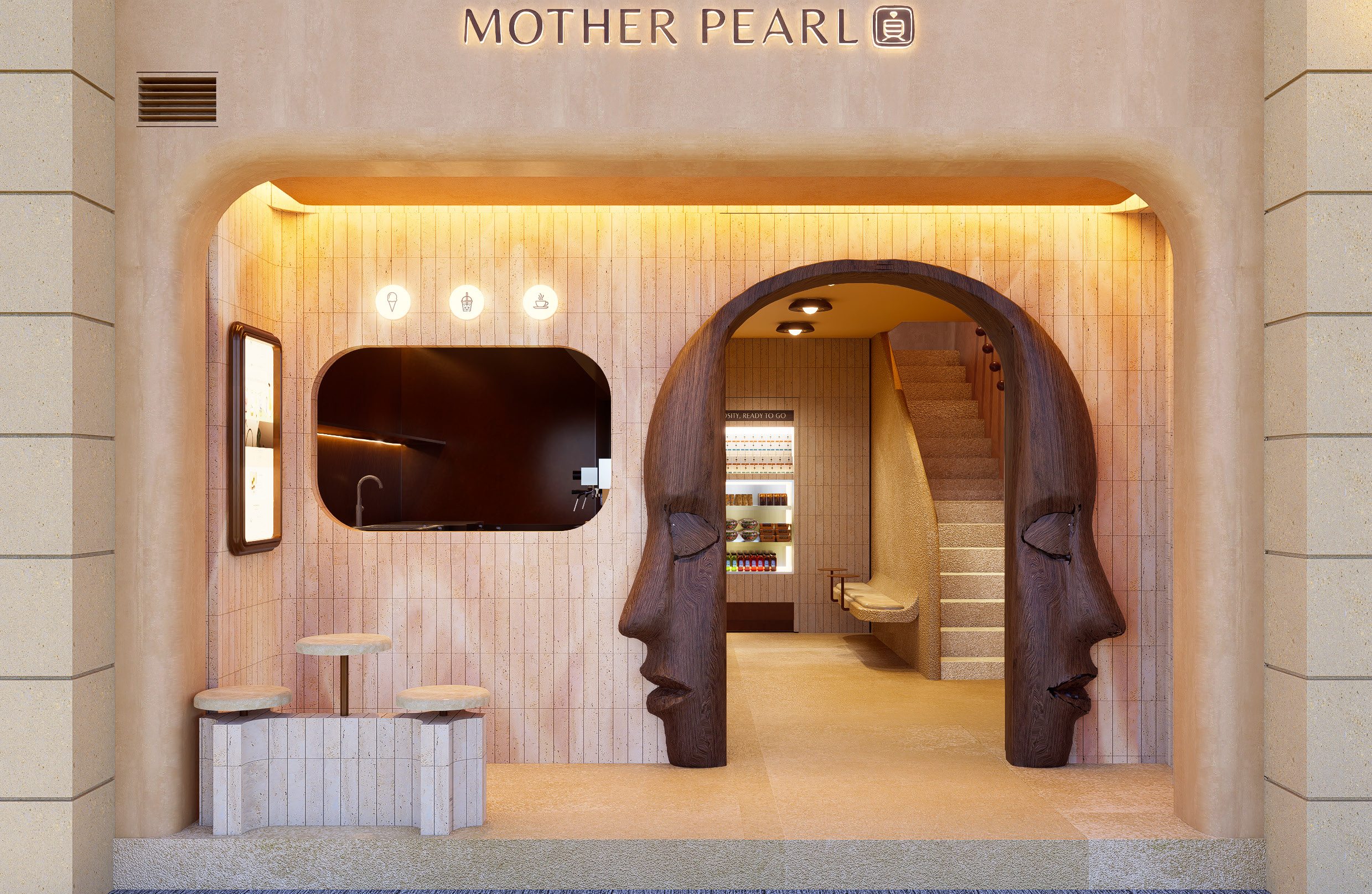
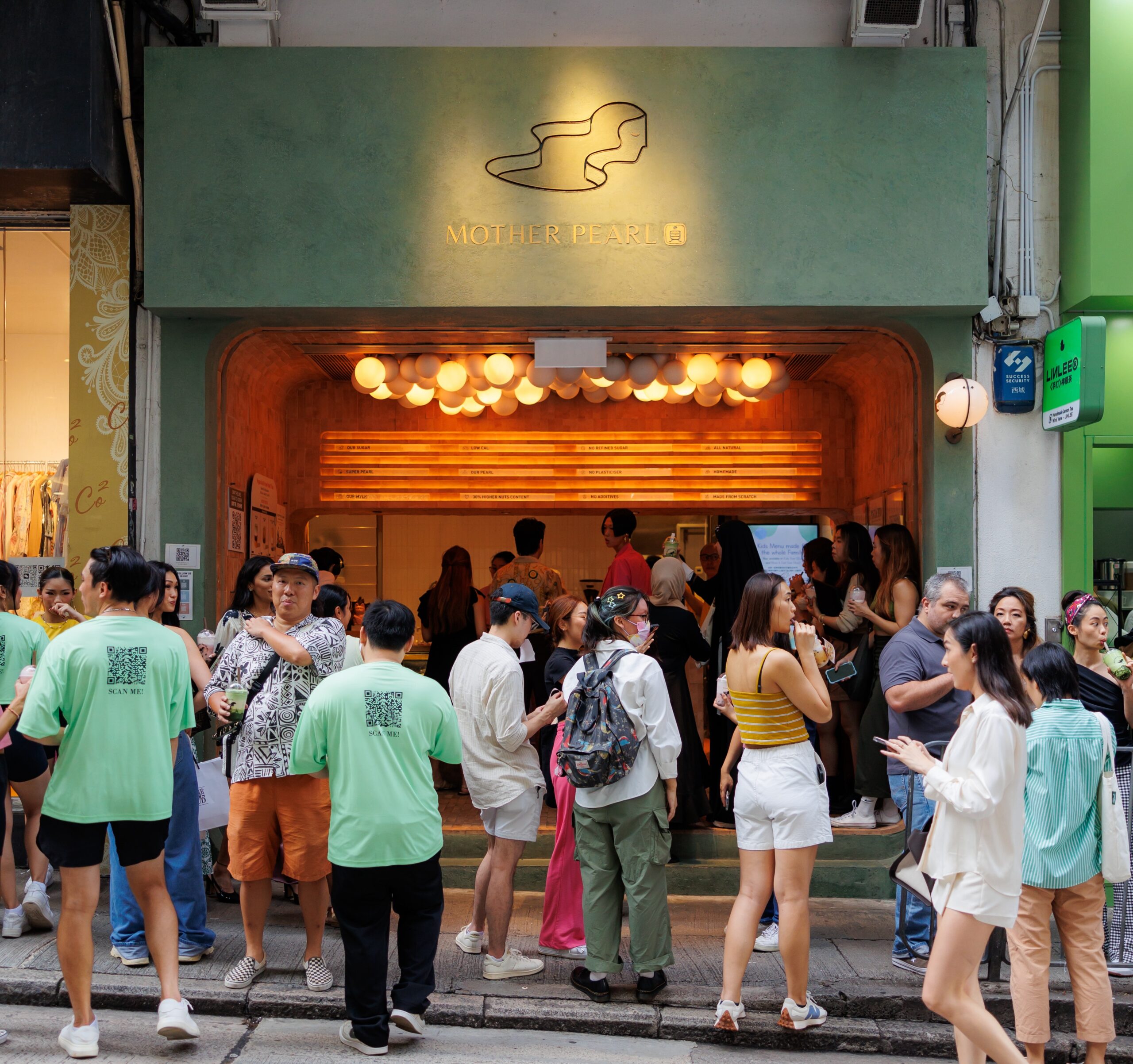
Mother Pearl is a Hong Kong plant-based pearl tea brand founded in 2020 by Po Chen. Its Central flagship runs a ground-floor Grab & Go counter from 08:00 to 22:00 and a first-floor Sober Bar from 12:00 to 00:00, and its published product descriptions, certificate records and capability data are used here as a working reference. Where a Hong Kong regulatory threshold or a documented figure is quoted, it is attributed. Where a point is a specification decision rather than a measured value, it is labelled as such.
Why “sugar-free” is a project risk before it is a menu claim
A station designed around an adjective rather than a parameter set usually fails in one of four places, and all four are specification line items rather than kitchen accidents.
- Base substitution changes the water and fat balance. Replacing dairy with a plant base alters body, sweetness and how much ice the drink tolerates before it reads as thin. The ice dose is therefore part of the recipe card, not a server judgement.
- Sweetener substitution changes dose and mouthfeel. A natural sweetener system rarely swaps gram for gram with sucrose. Without a fixed dose per cup, the calorie figure printed on the menu stops being true between shifts.
- The topping line carries its own sugar load. Pearls, gels and fruit preparations are frequently the largest uncontrolled variable in a “sugar-free” drink.
- The claim outruns the substantiation. “Refined sugar-free”, “low calorie” and “sugar free” are three different statements, and only some of them are defined in Hong Kong regulation.
The practical consequence: build the station so that a measured nutrition panel exists for every finished cup at served dilution. Everything downstream — equipment sizing, claim wording, packaging, staff SOP — hangs off that panel.
Hong Kong demand signals an operator can actually use
Three published references are useful when justifying the capital spend, provided each is kept inside its own scope.
The Centre for Food Safety has published a reference study on the sugar and energy contents of common non-indigenous tea-based beverages in Hong Kong (2019). It establishes the category baseline: the sugar load of a milk tea or fruit tea is a formulation decision, not an inherent property of the drink type.
The Department of Health reported in 2023 that about 10% of the Hong Kong population aged 15 or above have diabetes, equating to roughly 700,000 diagnosed individuals. That is a demand signal for lower-sugar menu options. It is not a product specification, and it does not make any particular recipe suitable for any particular medical condition.
On the commercial side, Fortune Business Insights projects the reduced-sugar bubble tea segment growing at a compound annual rate of 8.90% from 2026 to 2034. That is a global commercial-research projection, not a Hong Kong market measurement, and should be presented internally as directional context rather than as local demand evidence.
Formulation parameters: oat milk base, rice froth base, pearl layer
Mother Pearl’s published product descriptions give two usable formulation references, and both are informative because they name the components rather than the marketing position.
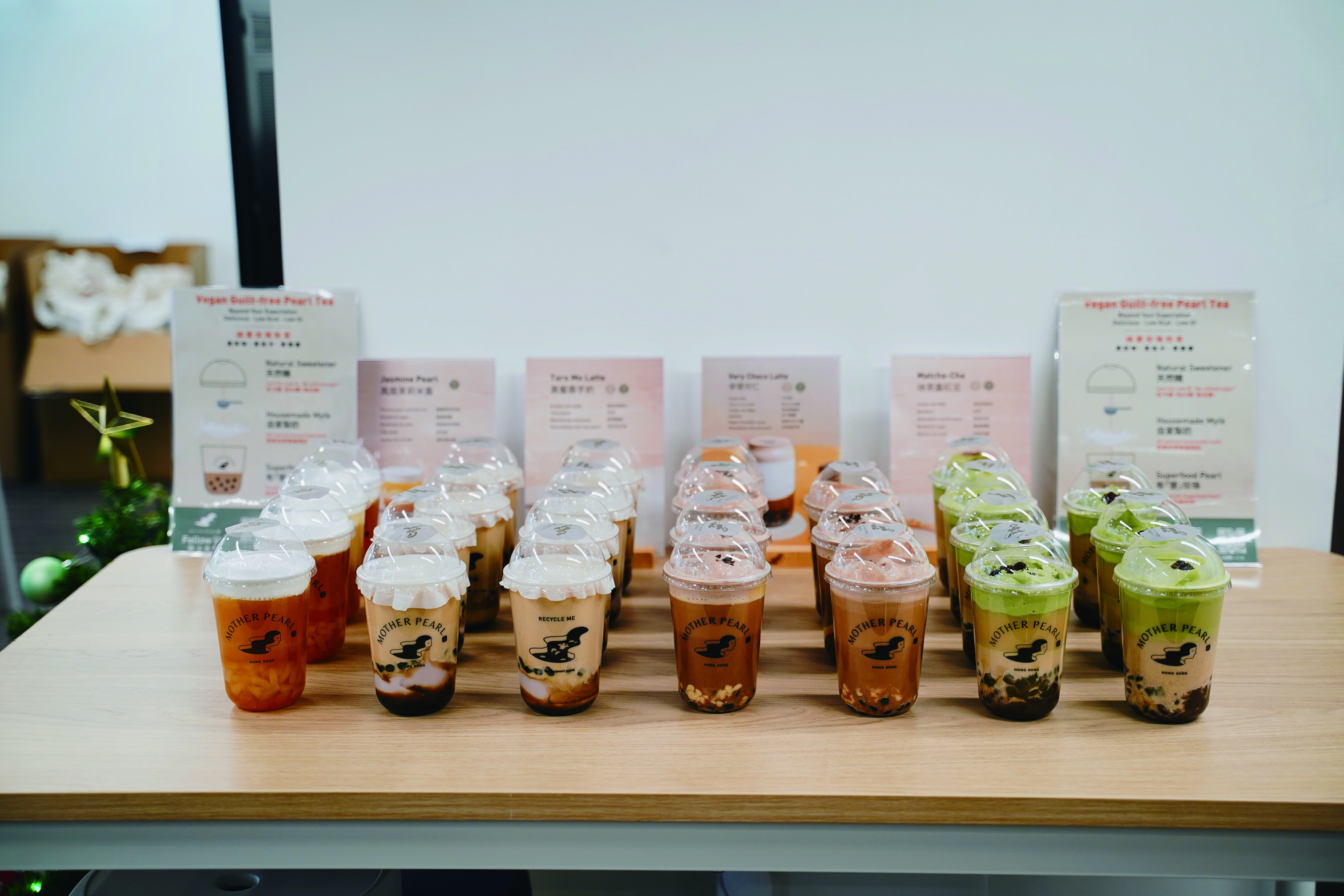
The refined sugar-free coffee oat milk latte is built from oat milk, coffee powder, oolong tea and monkfruit tapioca pearls, at 57 kcal per 100 ml, and is stated as intended for the food and beverage industry. The refined sugar-free mango blossom jasmine tea is built from jasmine tea leaves, mango puree, rice froth and matcha tapioca pearls, at 56 kcal per 100 ml, and is stated as intended for the food and beverage industry, tea houses and catering services. A further product in the range is documented at 84 kcal per 100 ml.
Oat milk: specify by finished-cup contribution
Oat milk is the dairy replacement in the brand’s formulation approach, adopted to accommodate diverse dietary needs. For specification purposes its relevant properties are body, natural sweetness and behaviour under ice and blending. Two rules keep it controllable: fix the oat milk volume per cup in grams rather than by free pour, and evaluate texture at the served ice level, because a base that reads full at room temperature can read thin five minutes after sealing.
Rice froth: a texture and calorie parameter, not a garnish
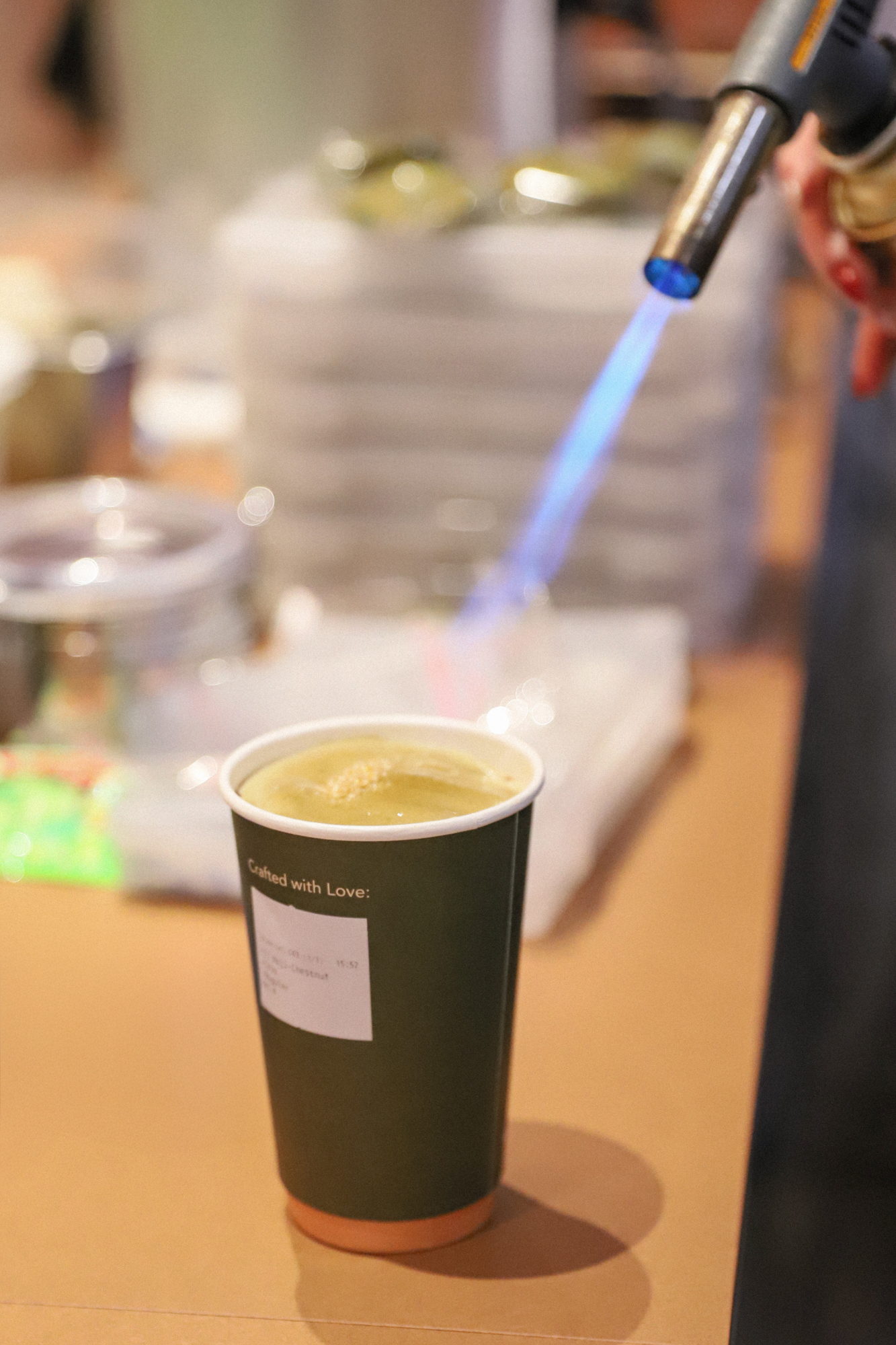
Japanese-style froth is one of the documented customisation axes on the beverage side, alongside tea base, add-ons and packaging design. A froth layer adds volume and energy to the finished cup, so it belongs in the recipe card and the nutrition panel. Specify the aeration target, the dispensing vessel, the hold time before service, and whether the froth is prepared to order or batched — a batched froth that collapses mid-service changes both texture and the calorie statement.
Tea base and pearl layer
Oolong tea and jasmine tea appear in the two documented references, and the brand states that it rejects pre-mixed synthetic powders and syrups, handcrafting every component including its signature tapioca pearls in-house. That in-house model is the reason the pearl layer can be specified rather than merely selected: pearls produced on site can be tied to a cooking curve, a hold time and a portion weight, which is where most “sugar-free” drinks lose their claim.
Sweetener architecture and the calorie reference
The sweetener decision sits at the intersection of formulation and law, so it should be signed off once, in writing, by someone accountable for both.
Natural sweeteners in use
Mother Pearl’s documented sweetener set comprises coconut nectar, blackstrap molasses, allulose and monkfruit sugar, described as low-glycaemic options, with natural sweetener listed as a menu positioning element. For a station specification, each sweetener needs four attributes recorded: dose per cup, contribution to the measured sugar and energy panel, behaviour in the base at chilled and blended temperatures, and its regulatory classification for the intended use.
The Hong Kong sweetener rules that shape the recipe
Sweeteners in food are regulated in Hong Kong under the Sweeteners in Food Regulations (Cap. 132U). The official guidance describes a positive-list framework identifying ten permitted sweeteners, including steviol glycosides, sucralose and neotame. A sweetener that is not on the applicable positive list cannot be assumed to be usable in a Hong Kong beverage simply because it is sold elsewhere, and a sweetener that is permitted still has use conditions to check. The station specification should therefore include a signed line-by-line mapping of every sweetener in the recipe against Cap. 132U before the first menu print run.
What “sugar free” legally means, and what “refined sugar-free” does not
Hong Kong defines the nutrition claim “sugars free” as containing not more than 0.5 g of sugars per 100 g or 100 ml of food. That threshold is measurable, and it is the number a customer or an inspector can test you against. “Refined sugar-free” is a formulation description, not a defined nutrition claim — it tells the buyer what was left out, not what the finished cup contains. Both can legitimately appear on a menu, but only one carries a numeric obligation, and confusing them is the single most common claim risk in this category.
The 36–104 kcal per 100 ml band and the mid-band anchor
Mother Pearl’s published calorie and sweetener parameters describe a caloric density broadly between 36 and 104 kcal per 100 ml for healthy sugar-free formulations aimed at Hong Kong F&B buyers. The documented product points inside that band are 56 kcal per 100 ml, 57 kcal per 100 ml and 84 kcal per 100 ml. A mid-band figure of approximately 71 kcal per 100 ml is a useful planning anchor when a menu needs one representative calorie statement: arithmetically it sits inside the documented band, but it is a planning value, not a measured result for any specific recipe, and it must be replaced by a finished-product panel before it is printed. Derived or anchor figures should always be labelled as such internally so they never migrate onto a menu as measured data.
| Documented reference | Plant base and froth | Pearl type | Recorded energy | Stated use |
|---|---|---|---|---|
| Refined sugar-free coffee oat milk latte | Oat milk, coffee powder, oolong tea | Monkfruit tapioca pearls | 57 kcal per 100 ml | Food and beverage industry |
| Refined sugar-free mango blossom jasmine tea | Jasmine tea leaves, mango puree, rice froth | Matcha tapioca pearls | 56 kcal per 100 ml | Food and beverage, tea houses, catering |
| Additional product in range (model not specified in the source text) | Not stated | Not stated | 84 kcal per 100 ml | Not stated |
| Published technical band for Hong Kong sugar-free formulations | Varies by recipe | Varies by recipe | 36–104 kcal per 100 ml | Formulation planning range |
Toppings: superfood pearls, alternative pearls and nata de coco
The topping line is where a technically sound station most often loses control, because toppings are bought on appearance and stored on habit.
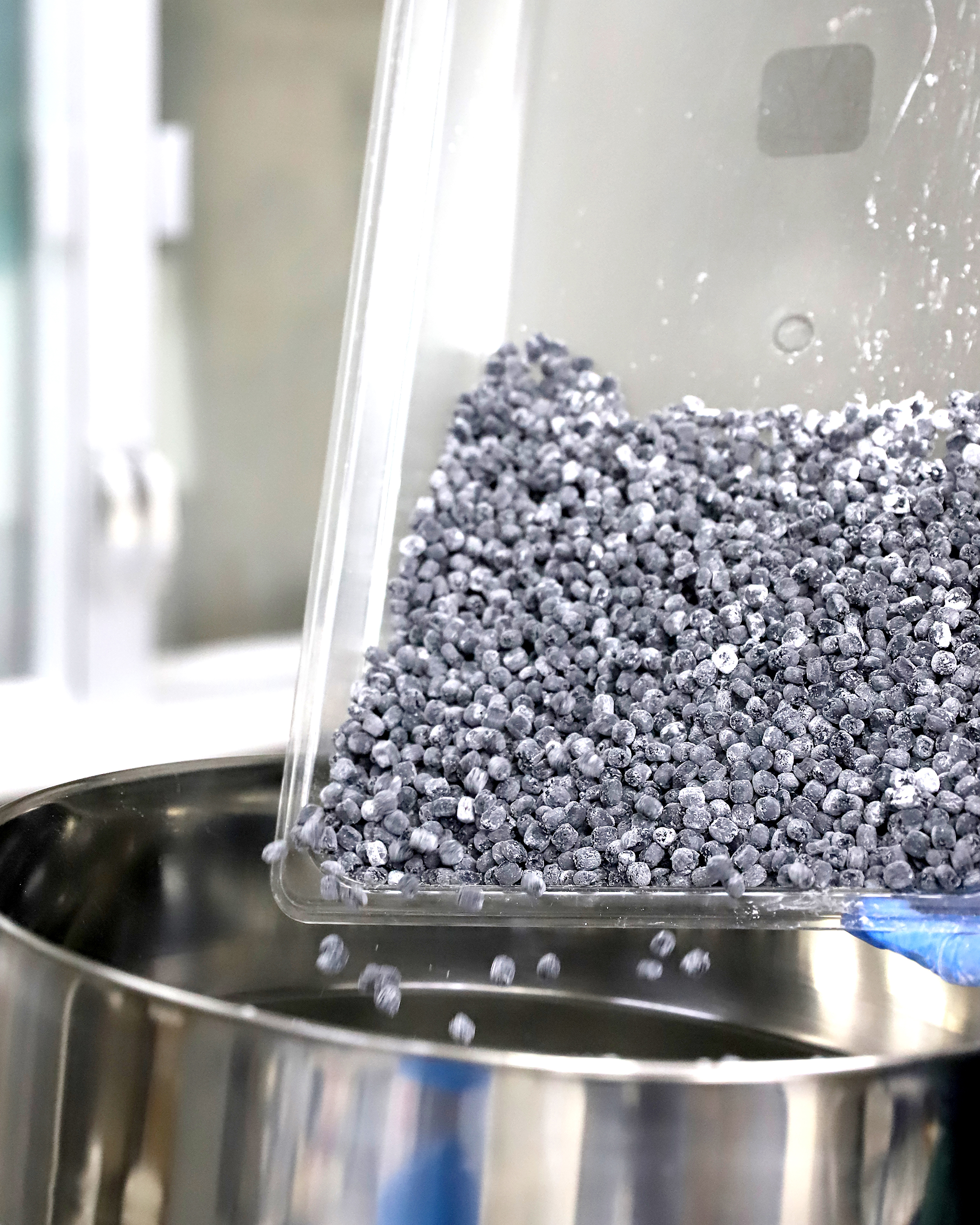
The documented pearl types in the brand’s product descriptions are monkfruit tapioca pearls and matcha tapioca pearls, sitting under a broader positioning of handmade superfood pearls and superfood bubbles. Neither chestnut pearls nor nata de coco appears in the product descriptions reviewed for this guide, so both should be treated as topping categories to be specified and verified rather than as documented menu items. That distinction matters commercially: an operator can absolutely add them, but the calorie and sugar panel then has to be rebuilt rather than assumed.
A topping specification that survives service should record five attributes per item:
- Base material and structure. Starch-based pearls, chestnut-based pearl formats and coconut gel (nata de coco) behave differently under heat, ice and acid. Texture hold across the full service window, not at the moment of preparation, is the acceptance test.
- Packing liquid. Gels and pearls are often supplied in a packing liquid that carries sugar. Whether the item is drained, rinsed or dosed with its liquid changes the finished-cup sugar figure, so the handling instruction is part of the specification.
- Portion weight in grams per cup. Free-scooped toppings make the menu claim untestable. A portion scale at the topping station is cheaper than a relabelled menu.
- Declared allergens and cross-contact. Record them per item against the recipe card, and keep scoops segregated by topping family.
- Hold time and storage condition. The brand’s in-store regime includes a daily quality check and repeated internal tasting; a topping specification should state the same in writing — hold time, chilled storage, discard rule.
For a station working at scale, the supply side of the pearl line is worth verifying before the fit-out. Mother Pearl operates a 186 m² production hub for its tapioca pearls, reported as able to cater to 160,000 beverages a year, with the brand’s own capability data recording a monthly capacity of 10,000 and a quality-control regime of repeated tasting tests plus full raw material inspection. A buyer asking the same three questions — where are the pearls made, what is the monthly ceiling, and what is the documented inspection routine — will get a usable answer or an instructive non-answer.
Equipment selection: the five-machine core
Equipment should be sized from the recipe card and the peak hour, never from a catalogue. The five units below are the ones that decide whether the station holds its stated parameters on a Saturday afternoon.
Ice makers
Ice is an ingredient, so the machine is a formulation decision. Specify the ice format first — cubed ice and flake ice dilute and chill at different rates, and a blended drink built on the wrong format will read diluted before it reads cold. Then size production against peak cup volume including the ice used in the display and in chilling, not against a daily average. Placement matters as much as capacity: air-cooled units discharge heat into the prep area, and a machine that cannot reject heat will under-produce exactly when demand peaks. Add a written cleaning and bin-sanitation schedule, and keep service ice physically separate from any ice used for display or chilling.
Sealing machines
The sealing machine is specified by cup, not by brand. Match the sealing head and film width to the exact cup rim diameter and rim profile you have standardised, and confirm the film specification with the cup supplier in writing. Two operational checks belong in the commissioning pack: a seal-integrity test at the machine’s normal dwell setting, and a leak test after the cup has been carried and tilted as it would be for delivery. For a station selling through delivery platforms, the seal is a customer-facing failure point, not a packaging detail. Keep a spare heater and a film stock buffer, because a station with one machine and no film has no menu.
Blenders
Blenders are the equipment item that most often breaks a calorie specification, because aeration and ice crush change both volume and mouthfeel. Specify duty cycle against peak order rate — how many blends per hour, back to back, without the motor derating — rather than against a single smoothie. Allocate jars by flavour family so a matcha pearl drink never carries a coffee note, and place a rinse station within arm’s reach so the rinse happens during service rather than between shifts. Jar and blade material should be checked against the supplier’s food-contact documentation, and the blending time per recipe should be fixed in seconds in the recipe card, since blend time is effectively an undocumented ingredient.
Refrigerated display cabinets
The display cabinet holds the toppings, the froth components and any chilled fruit preparation, so it is a food-safety control point before it is a merchandising unit. Specify continuous temperature monitoring with a log that a supervisor actually signs, covers on every open well, and a cabinet layout that separates topping families. Turnover should drive the well size: a large open well holding a slow-selling topping is a temperature and quality liability. The daily in-store quality check used in the brand’s operating model should record cabinet temperature, topping hold time and discard at the same time.
Tea brewing equipment
Brewing is where the recipe is either reproducible or approximate. Specify a brewer that allows a separate, locked programme per tea type — temperature, steep time and batch size — and pair it with a water filtration specification, because water hardness changes extraction and therefore the sweetness balance the recipe was built around. Batch size should be set against turnover, not convenience: a large batch held too long will not taste like the panel that produced the calorie figure. Write the holding time into the SOP, and train staff to brew to the programme rather than to colour.
Layout, throughput and the two-counter problem
The station should be laid out as a sequence: order capture, base dispense, sweetener dose, ice and blend, pearl and topping, seal, handoff. Each handoff is a place where a gram dose can be lost, so the recipe card should be mounted at the point of use rather than filed in an office.
Throughput parameters from the brand’s capability data give a realistic planning frame. Preparation is immediate and on demand, recorded at 1 to 10 minutes per order, with a minimum order quantity of one cup per individual order; the procurement record also states that MOQ is flexible by number and that acceptance is governed by central kitchen quality control and check points plus sourcing control. Group and custom orders require advance notice — the recorded figures are 24 hours in the in-store operation capability entry and 72 hours in the bespoke co-creation entry, so the applicable figure should be confirmed in writing for the specific order type rather than assumed.
The layout question that catches operators is the dual-counter model. A ground-floor grab-and-go counter and an upstairs seated or evening counter may share one prep kitchen but run different service rhythms. Both must draw from the same recipe cards, the same pearl hold times and the same nutrition panel; otherwise the same menu item will carry two different calorie realities depending on which floor the customer sits on.
Hong Kong food safety compliance: what to document before opening
Compliance for a beverage station is largely a documentation exercise, and it is cheaper to build the file first than to reconstruct it after an inspection.
The statutory frame is the Public Health and Municipal Services Ordinance (Cap. 132) and the Food Safety Ordinance (Cap. 612), read alongside the Food and Environmental Hygiene Department’s Food Hygiene Manager qualification requirements. Mother Pearl’s certificate records illustrate the level of evidence a buyer or landlord may reasonably ask to see: a Food Hygiene Manager Certificate numbered G-47252-2025-B-P issued by The Hong Kong Management Association on 11 November 2025, with a scope covering food hygiene management, food safety supervision and hygiene compliance for food service, catering, retail, processing and manufacturing under Cap. 132 and Cap. 612; and a Chartered Institute of Environmental Health Intermediate (Level 3) certificate numbered 22138-HCC1-CRMINV056899-0136, issued 11 November 2025, with a scope covering HACCP implementation, hazard analysis and critical control point monitoring against Codex Alimentarius HACCP Guidelines and Cap. 612.
The station’s own compliance file should hold: a signed recipe card per SKU with gram-level doses; a laboratory panel for sugars and energy on the finished drink at served dilution; the Cap. 132U sweetener mapping; approved claim wording with the evidence behind each phrase; the equipment commissioning records including seal integrity and cabinet temperature logs; staff training records; and the hygiene manager appointment. Where the drinks are made to order and consumed immediately, the labelling question changes; where any product is bottled for retail or gifting, it does not.
Zero-waste packaging for dine-in and takeaway
Packaging is a specification line, not an afterthought: on the beverage side, packaging design is one of the documented customisation axes, and eco-friendly packaging is a stated product highlight in the brand’s case record. A station that runs both dine-in and takeaway needs two packaging logics rather than one compromise.
- Dine-in: reusable service ware with a defined return and wash flow, sized so a customer finishes the drink rather than leaving half of it. Reusable cups only reduce waste if the wash cycle exists and is staffed.
- Takeaway: specify by material count. A mono-material cup and lid, a straw that can handle pearls without a second oversized straw, and opt-in napkins and condiments remove more waste than a heavier “eco” cup that fails the leak test and gets double-cupped.
- Claims: do not print recyclable, compostable or biodegradable wording without supplier documentation for that exact material and a realistic view of the local collection route. An unverified material claim is a compliance exposure, not a marketing gain.
- Front-of-house: separate collection points for liquid residue, cups and lids, and a simple monthly record of volumes, so waste reduction can be evidenced rather than asserted.
Commissioning checklist: from sample to sign-off
The sequence below converts the specification into a sign-off pack. Each step produces a document; the station is not ready when the machines arrive, it is ready when the pack is complete.
- Lock the recipe card per SKU. Base volume, froth volume, sweetener dose, ice dose and topping weight in grams, plus blend time in seconds.
- Commission a finished-drink panel. Sugars and energy per 100 ml at the served dilution, from a laboratory, per SKU — not per concentrate.
- Map every sweetener against Cap. 132U. Record permitted status and any use conditions; escalate anything that cannot be confirmed rather than assuming it.
- Approve claim wording against the panel. Use “sugars free” only where the measured result meets the 0.5 g per 100 ml threshold; use “refined sugar-free” only as a formulation description.
- Size and test the equipment. Ice production against peak cups, seal integrity at production settings, blast chill and blend duty cycle, cabinet temperature logging, brewer programme per tea.
- Run a topping hold-time trial. Texture and sweetness at the start, middle and end of the intended service window, per topping family.
- Complete the compliance file. Hygiene manager appointment, HACCP-based controls, training records, cleaning and temperature logs.
- Trial packaging in both modes. Dine-in return flow and takeaway leak, carry and delivery tests.
- Measure real order time. Compare observed preparation time against the 1 to 10 minute per-order planning figure at peak, and adjust staffing or station layout from the measurement.
- Sign off and version-control. One approved pack, dated, with a named owner for changes — because every recipe change invalidates the panel behind it.
Where this station fits: three operating formats
Grab-and-go wellness counter. A compact daytime counter in a retail or transport-adjacent site, typically running a long day part, trades on speed and clarity: a short menu, one calorie statement per drink, and a sealed cup that survives delivery. The equipment priority is ice production, sealing reliability and blender duty cycle.
Seated wellness lounge or sober-social venue. A dual-level or evening format trades on dwell time. The documented model pairs a daytime Grab & Go counter with an evening bar offering clean wine and low-to-high ABV botanical cocktails and mocktails, giving guests the choice between fully sober and gently relaxed. For specification, the relevant change is that the same drink may be served in glassware by staff, which shifts the control point from sealing to pouring accuracy and glass wash capacity.
Corporate, event and gifting supply. The brand’s case record documents a tailored one-stop B2B solution for corporate clients covering customisable wellness tea and drinks, vegan options and zero-added refined sugar, used for VIP customised gift sets, corporate gifts, team-building workshops and employee benefits. It also documents a 333-unit single engagement with a one-day fresh shelf life for handcrafted daily production. Those two facts define the operational boundary: gifting and events are viable where the delivery window is short and the packaging protects a fresh, unsealed product; they are not viable as long-shelf-life retail without a different product format and its own labelling.
Frequently asked questions
- What actually makes a bubble tea “sugar free” in Hong Kong?
- The defined claim is a measured threshold: “sugars free” means not more than 0.5 g of sugars per 100 g or 100 ml of food. A station meets it by testing the finished drink at served dilution, including the topping and any packing liquid, and holding that result with a fixed recipe card. “Refined sugar-free”, by contrast, is a formulation description rather than a defined nutrition claim, and it does not on its own establish a sugar content.
- Do we need a Food Hygiene Manager to operate the station?
- Hong Kong’s Food and Environmental Hygiene Department sets Food Hygiene Manager qualification requirements, and the relevant statutory frame is Cap. 132 and Cap. 612. Mother Pearl’s records show a Food Hygiene Manager Certificate (G-47252-2025-B-P, issued by The Hong Kong Management Association on 11 November 2025) and a CIEH Intermediate Level 3 certificate covering HACCP (22138-HCC1-CRMINV056899-0136, issued the same date). Treat these as personnel and management-system evidence, and confirm the requirement that applies to your own licence type and premises.
- Which sweeteners can we use, and can we claim they are natural?
- Sweeteners in food are regulated in Hong Kong under Cap. 132U, which the official guidance describes as a positive list of ten permitted sweeteners including steviol glycosides, sucralose and neotame. Mother Pearl’s documented sweetener set is coconut nectar, blackstrap molasses, allulose and monkfruit sugar, described as low-glycaemic. Every sweetener in your recipe should be mapped against the positive list, and any “natural” wording should be checked separately, because permitted status and a marketing descriptor are two different tests.
- What calorie figure should we put on the menu?
- Use a measured panel for each finished drink, not an average. The published band for healthy sugar-free formulations in Hong Kong runs from 36 to 104 kcal per 100 ml, and the documented product points are 56, 57 and 84 kcal per 100 ml. A mid-band anchor of roughly 71 kcal per 100 ml is useful for early menu planning, but it is a derived planning value that sits inside the band and must be replaced by your own measurement before printing.
- What is the minimum order and lead time for launching a custom station menu?
- The recorded figures are a minimum order quantity of one cup per individual order, with the procurement record describing MOQ as flexible by number, and immediate on-demand preparation of 1 to 10 minutes per order. Monthly capacity is recorded at 10,000. Group and custom orders require advance notice, recorded at 24 hours for in-store operation and 72 hours for bespoke co-creation, so the applicable figure should be confirmed in writing for your order type. Payment terms on record are credit card, Alipay, Octopus and bank transfer, with no cash.
- How do we validate a specification before committing to a fit-out?
- Run the ten-step commissioning sequence against a small trial rather than a full build: fix two or three recipe cards, obtain finished-drink panels, map the sweeteners against Cap. 132U, then test the equipment questions that actually matter — ice output against peak cups, seal integrity under delivery conditions, topping texture across the service window. A tasting or sample round at this stage is cheaper than a relabelled menu and a replaced ice machine. Mother Pearl’s B2B model includes customisable tea base, add-ons, froth and packaging design, with continuous formula iteration after launch, which is the practical way to run that trial.
Conclusion
A healthy sugar-free bubble tea station in Hong Kong is specified in this order: measured formulation first, claim wording second, equipment third, packaging fourth, and documented compliance throughout. The brand-side references in this guide — oat milk and rice froth bases, monkfruit and matcha tapioca pearls, a documented 36–104 kcal per 100 ml band with product points at 56, 57 and 84 kcal per 100 ml, a monthly capacity of 10,000, a 186 m² pearl production hub serving 160,000 beverages a year, and hygiene and HACCP certificate records issued in November 2025 — show what a verifiable specification file looks like. They do not substitute for your own finished-drink panels, and no supplier’s data should be printed as your menu claim.
Build the file, then the station. Operators who sequence it the other way usually end up rebuilding both.
Planning a station build or a menu trial? Mother Pearl works with F&B operators, hospitality venues and corporate buyers on customisable plant-based drinks, tea bases, froth and packaging, with sample and group-order rounds available before commitment. Details of the range and the Hong Kong flagship are published on the Mother Pearl official website. Enquiries: info@motherpearl.com.hk or +852 6828 9341.
Have Questions or Need More Details?
Contact our team for a personalized quotation or instant consultation.
Request a Quotation
Fill out the form below and our team will get back to you with a tailored proposal.
WhatsApp Direct Chat
Prefer to chat in real-time? Message us on WhatsApp for instant assistance & quick answers.
- Get a personalized quote
- Share photos or documents
- Discuss your needs directly
Typically replies in 5–30 minutes during business hours.