Sugar-Free Bubble Tea for Heritage Cafes: A Hong Kong Application Guide
Application Guide · Hong Kong · Heritage & Cultural Beverage Projects

This guide answers one question: how does a refined sugar-free, plant-based bubble tea programme actually fit a heritage or cultural beverage venue in Hong Kong? The short answer is that it fits when three things are designed together — formulation, handmade production, and service format. A heritage cafe cannot buy its way to a credible sugar-free menu by swapping syrup for sweetener. The pearl still has to be made by hand, the tea base still has to carry the flavour, and the packaging still has to survive a takeaway counter without undermining the venue's cultural positioning. Mother Pearl is a Hong Kong plant-based pearl tea brand founded in 2020 by Po Chen, operating a dual-level flagship at 24 D'Aguilar Street in Central and a second shop at MOKO in Mong Kok; the company's application records for heritage and cultural beverage projects are the reference point used throughout this guide.
What a Heritage Cafe Application Actually Requires
A heritage or cultural beverage project is a venue type where the drink menu is expected to carry cultural memory rather than only refreshment: regional tea references, slow-cooked textures, and a room that behaves like a third place rather than a transaction counter. In Mother Pearl's application records this sits alongside three neighbouring project types — wellness hub projects in Hong Kong, modern beverage and third space projects with plant-based milk tea options, and clean eating retail projects — and is specified separately because the requirements genuinely differ. The company describes the scenario plainly: a heritage and cultural beverage project requiring sugar-free bubble tea, combined with traditional elements and health-conscious formulations.
Six constraints travel with that specification, and they are operational rather than aspirational:
- Full transparent handcraft production with no synthetic additives — the pass is part of the proposition, not a back-of-house detail.
- A plant-forward formula combined with recycling of all nutrient pulp waste — plant-based sourcing and waste handling are treated as one decision.
- A supporting in-house food and beverage R&D kitchen — menu development has to happen on site, close to service.
- Pearl-shaped lighting as a fitted installation — the space is built to reinforce the product, not to host it generically.
- Dual-layer staggered opening hours running a day-to-night split shift — one address, two service dayparts.
- Refined sugar-free, plant-based ingredients, handcrafted preparation, Hong Kong food safety compliance, and a zero-waste packaging option — the full compliance and packaging brief in a single line.
Read together, these constraints explain why heritage venues often struggle with sugar-free menus. The conventional route — buy a pre-mixed powder, add a commercial syrup, print "less sweet" on the board — breaks at least two of the six constraints immediately, because pre-mixed synthetic components contradict both the additive restriction and the transparent-handcraft requirement. A venue that wants the sugar-free claim and the heritage positioning at the same time has to build the drink differently from the start.
Industry Background: Why Sugar-Free Is Now a Heritage Category Question
The demand argument is measurable at the population level. According to the Hong Kong Department of Health, about 10% of the population aged 15 or above have diabetes — roughly 700,000 people as of 2023. That figure matters to a heritage venue whose guests routinely span three generations at the same table, because a drinks list that offers only full-sugar options effectively excludes part of its own audience from the second round.
The category is moving in the same direction globally. Fortune Business Insights projects the reduced-sugar bubble tea segment to grow at a compound annual growth rate of 8.90% between 2026 and 2034. That is a global segment projection, not a Hong Kong measurement — no verified Hong Kong-only market size or growth rate for healthy bubble tea is currently available, so any local number should be treated with caution rather than quoted as fact.
What is verifiable locally is the regulatory frame, and it shapes the menu earlier than most operators expect. Sweeteners in Hong Kong food are regulated under the Sweeteners in Food Regulations, Cap. 132U, which operates on a positive-list basis; Centre for Food Safety guidance identifies ten permitted sweeteners, including steviol glycosides, sucralose and neotame. Separately, a sugars-free nutrition claim in Hong Kong means not more than 0.5 g of sugars per 100 g or 100 mL of food, and the nutrition labelling scheme covers energy plus seven core nutrients — protein, carbohydrate, total fat, saturated fat, trans fat, sodium and sugars — for applicable prepackaged food.
For a heritage venue the practical implication is that concept and claim have to be settled in the same conversation. Retrofitting compliance onto a finished, printed drinks list is the expensive way to discover that a topping, a syrup or a bottled retail line has changed the labelling obligation.
The Product Fit: Refined Sugar-Free and Plant-Based Without Losing the Ritual
A sugar-free bubble tea holds up in a cultural setting when sweetness, body and chew are rebuilt rather than removed. That is a formulation problem, a texture problem and a sourcing problem at once — which is why the credible builds in Hong Kong are the ones where the pearl, the base and the sweetener were designed as a single system.
Sweetener architecture
Mother Pearl sweetens with low-glycemic options — coconut nectar, blackstrap molasses, allulose and monkfruit sugar — instead of refined sugar. In specific builds, allulose and monkfruit pearls carry the primary sweetness load, which keeps the sweetness inside the drink rather than layered on top of it. The design consequence is worth noting for anyone adapting the model: when sweetness is delivered through pearls and low-glycemic syrups, portioning becomes a quality-control task, not a pouring task.
Plant-based bases
Oat milk replaces dairy across the range, and the froths are built on rice and vegan coconut rather than cream. Mother Pearl's official menu lists oat milk, superfood bubbles and natural sweetener as visible product options, which means the plant-based position is communicated to guests on the menu itself rather than buried in a staff briefing. For a heritage venue, that transparency does double duty: it reassures the health-driven guest and it gives the cultural story a modern anchor.
Handcrafted superfood pearls
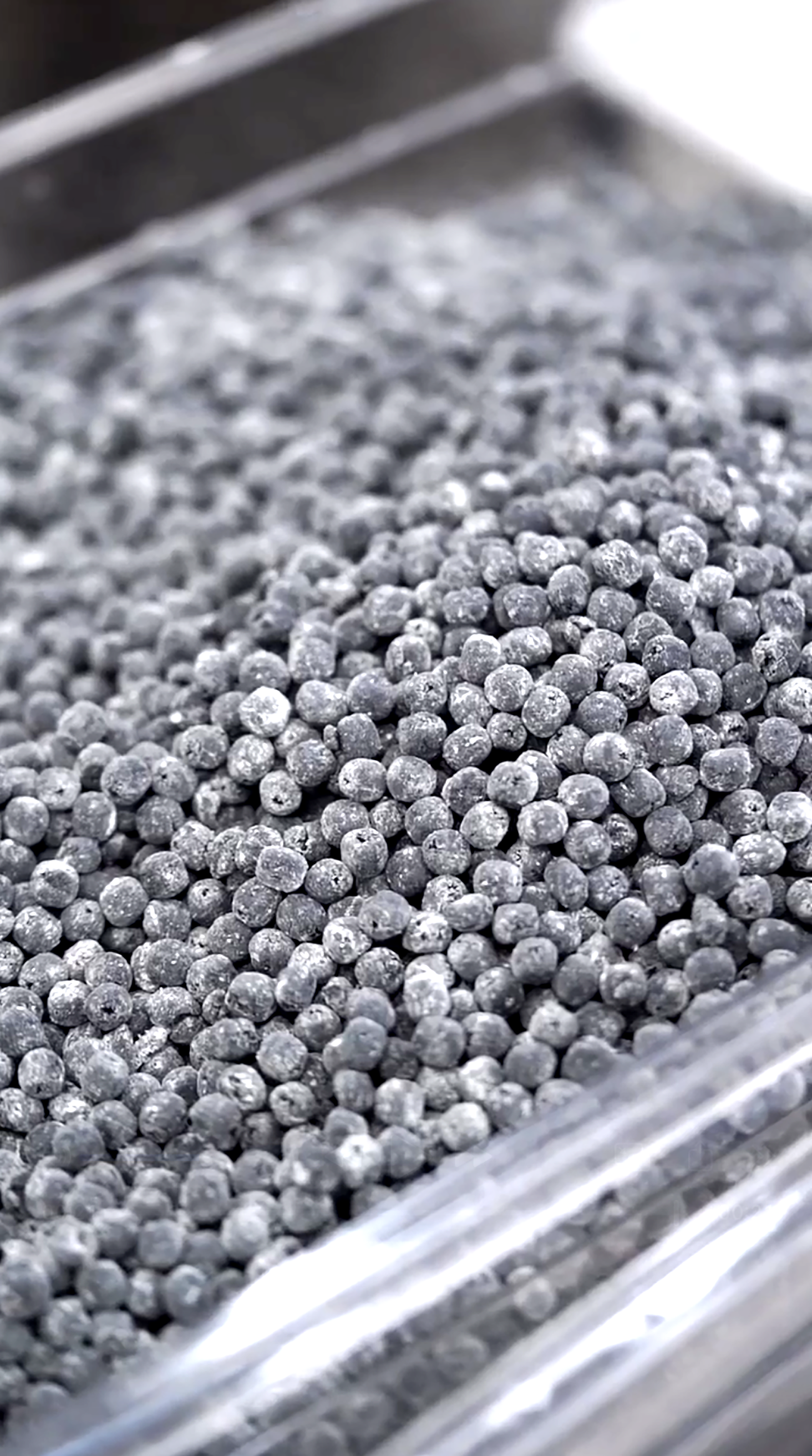
Every component, including the signature tapioca pearls, is handcrafted in-house. The manufacturing footprint behind that claim is 186 sq m of production space in Central with capacity for 160,000 beverages a year. The company operates with 20 staff and a four-engineer R&D team, which is the structural reason a menu can be iterated rather than frozen.
Calorie band
Across refined sugar-free formulations for F&B buyers in Hong Kong, caloric density sits broadly between 36 and 104 kcal per 100 ml. That band is wide enough to run a full daypart menu without offering a second, conventional list — a light floral opener in the late morning, a roasted or chocolate build in the evening, and a taro reference for the guest who came for the traditional order.
| Format | Type | Calories (per 100 ml) | Core components | Heritage menu role |
|---|---|---|---|---|
| Cheeky Collagen | Refined sugar-free osmanthus oolong bubble tea | 36 kcal | Golden oolong tea, osmanthus, chia seed, charcoal pearl, nata de coco, monkfruit sugar | Light floral opener; late-morning and tea-salon service |
| Berry Bright | Refined sugar-free strawberry blue spirulina bubble tea | 46 kcal | Strawberry, vegan coconut frost, blue spirulina, oat milk, allulose, lychee pearls | Multi-generation tables; family and weekend service |
| Golden Giggle | Refined sugar-free lychee sparkling bubble tea | 49 kcal | Lychee, plum lemon soda, sparkling water, golden oolong oat milk, lychee pearls | Takeaway counter and afternoon refreshment |
| The Imposter Coca | Refined sugar-free chocolate oat milk latte bubble tea | 68 kcal | Cacao nibs, chocolate rice froth, oat milk, allulose, black tea pearls | Dessert substitute; evening and after-dinner service |
| Nut & Smoke | Refined sugar-free hojicha bubble tea | 71 kcal | Kyoto hojicha rice froth, golden oolong oat milk, chestnut pearl, nata de coco | Roasted flavour anchor; strongest heritage flavour reference |
| Taro & Co | Refined sugar-free taro oat milk latte bubble tea | 104 kcal | Oat milk, black molasses, taro paste, charcoal pearls | Traditional taro reference; indulgent anchor for the list |
Special Requirements: Craft, Space, and Waste
Handcraft as a visible process
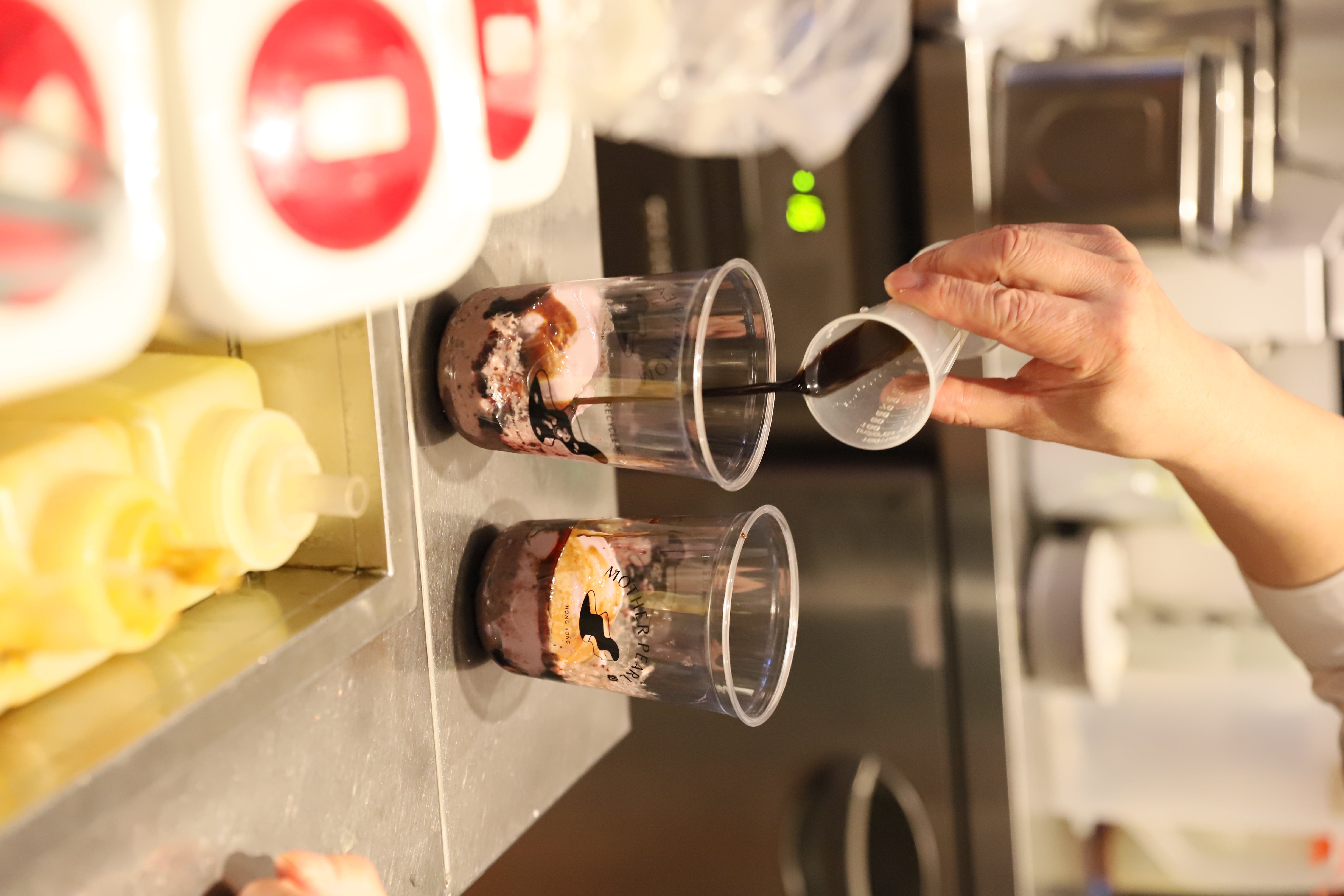
The application specification asks for full transparent handcraft production with no synthetic additives, which is a design instruction as much as a sourcing rule. Pearls made in-house, a tea base brewed to order and a froth built on the pass all create visible labour — and visible labour is what allows a heritage venue to charge a modern price without abandoning its craft narrative. The same principle explains why pre-mixed powders are excluded: they remove the only part of the process a guest can actually see.
Space and equipment
Two pieces of supporting equipment are named in the application record: an in-house food and beverage R&D kitchen, and the pearl-shaped lighting installation that ties the room to the product. The flagship's olive-green facade and pearl motif were developed by Hong Kong design studio A Work of Substance under a concept the brand calls Silent Restraint — a relevant detail for heritage projects, because it shows how a modern beverage identity can be inserted into a culturally loaded room without visual conflict.
Zero-waste packaging
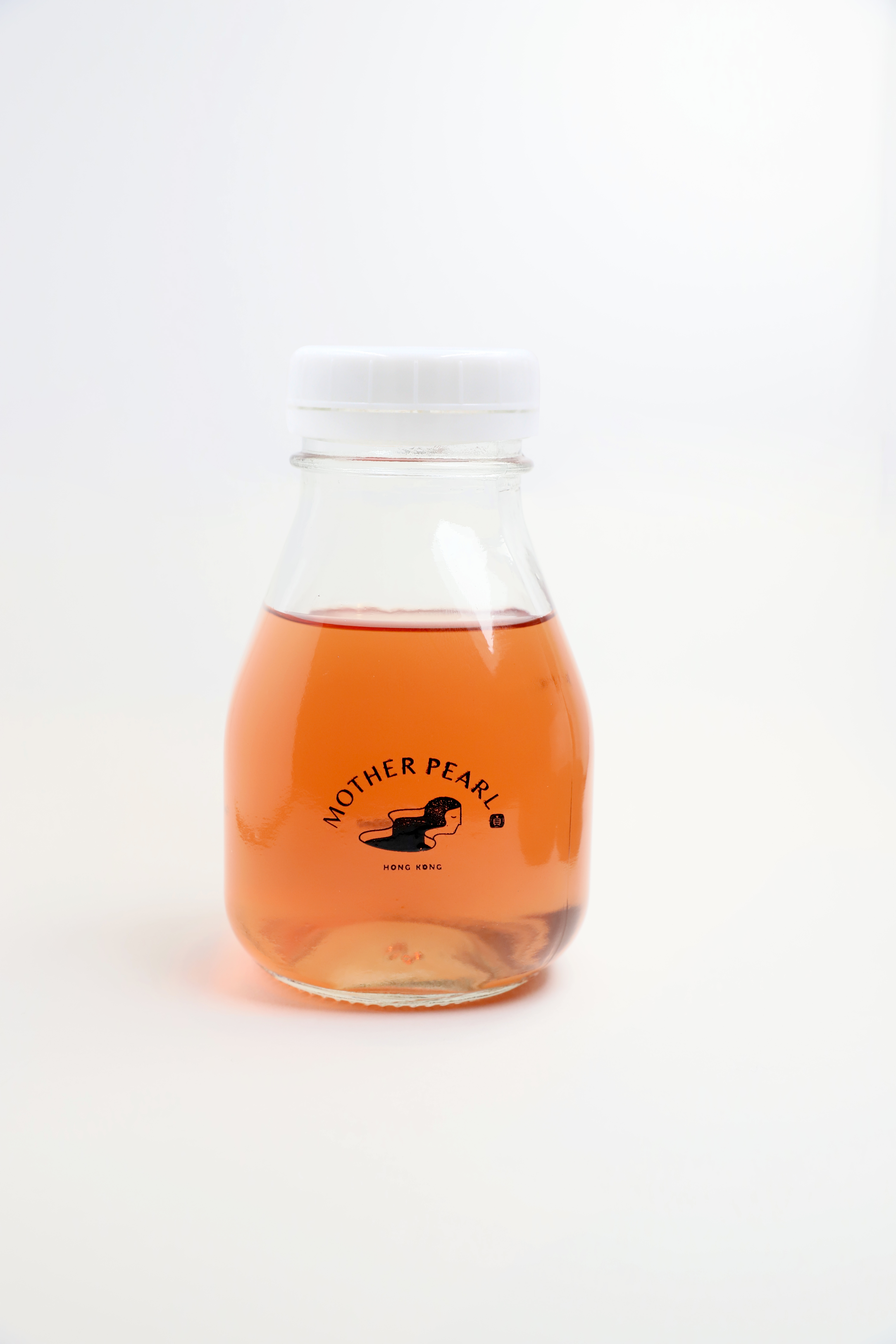
Packaging is where heritage venues lose the argument most often. The working loop in this model combines three elements. First, bottled pure teas are sold in a small glass bottle with a plastic cap. Second, guests who wash the empty bottle and return it to the store receive 10% off a purchase. Third, the plant-forward formula is paired with recycling of all nutrient pulp waste, so the by-product of the drink is handled inside the same system. A zero-waste packaging option is also a stated requirement of the F&B application itself — not a marketing extra.
Day-to-night service
The Central flagship runs a dual-layer layout on staggered hours. The ground-floor Grab & Go counter handles daytime plant-based bubble teas, coffee, gelato and light refreshments; the first-floor crafted bar opens from midday into midnight with clean wine and low-to-high ABV botanical cocktails and mocktails. For a heritage venue, this is the most transferable structural idea in the model: the same address serves a cultural daytime guest and an evening social guest without splitting the brand.
Step-by-Step: Building the Menu Programme
Step 1 — Choose heritage flavour anchors before choosing products. Work from the flavour vocabulary the venue already owns: osmanthus, hojicha, taro, black sesame, matcha, red bean, jasmine, longan, roasted black bean. Each of these exists as a working reference in the Mother Pearl range or its bottled tea line, which means the flavour decision can be made against real builds rather than against a specification sheet.
Step 2 — Set the calorie band by daypart. Use the 36–104 kcal per 100 ml band as a planning range. Place floral and sparkling builds in the light end of the day, roasted and chocolate builds in the evening, and keep one traditional anchor — taro, at 104 kcal per 100 ml — for the guest who is not there for a wellness drink at all.
Step 3 — Confirm the sweetener position and the claim together. Low-glycemic natural sweeteners such as coconut nectar, allulose and monkfruit sugar solve the formulation question. They do not automatically solve the claim question. Settle the wording of the menu claim against the sugars-free threshold and the permitted-sweetener framework before the menu is printed, and keep the documentation for each component.
Step 4 — Specify the handcraft station. The structural model worth copying is an in-house R&D kitchen plus in-house pearl manufacturing plus a pass guests can see. Mother Pearl runs that combination inside 186 sq m of Central production space with annual capacity for 160,000 beverages, 20 staff and a four-engineer R&D team. A heritage venue does not need that footprint on day one, but it does need to decide which components are made on site and which are documented, supplied components.
Step 5 — Decide whether you are running one counter or two. Day-to-night split shifts are an operational decision with a menu consequence. If the venue can support a second daypart, the Grab & Go plus crafted bar split is the proven pattern; if it cannot, concentrate the range on the light and mid-calorie formats that suit daytime service and keep the heavier builds as seasonal specials.
Step 6 — Close the packaging loop. Choose the retail and takeaway format before launch, because the return scheme drives the price architecture. The three bottled pure teas — Dispels Dampness & Strengthens Spleen, Promotes Sleep & Calms Mind, and Nourishes Skin & Replenishes Blood — are priced at HK$34 per bottle or HK$149 for five, mixable across flavours, with 10% off a purchase for each washed bottle returned to store.
Step 7 — Test, then stage the launch. Quality control in this model runs on internal repeated tasting tests and full transparent raw material inspection, supported by Hong Kong food safety compliance inspection and daily in-store quality checks. Because handcrafted products carry a fresh shelf life of one day, the launch should be staged as a controlled service period rather than a stocked inventory push.
Use Cases: Five Ways the Format Enters a Heritage Venue
1. The heritage tea salon. Dine-in service built around light and mid-calorie builds — Cheeky Collagen at 36 kcal per 100 ml, Nut & Smoke at 71 kcal per 100 ml — where the drink is served as a tasting rather than a takeaway cup. This is the format that benefits most from visible pearl making.
2. The takeaway window in a heritage district. Fruit-led and sparkling builds, such as Golden Giggle at 49 kcal per 100 ml, suit a pavement-facing counter where the decision is made in seconds and the cup has to survive a walk.
3. The evening cultural programme. The first-floor crafted bar model shows how a sober-socialising offer can extend a heritage venue past its daytime audience. Refined sugar-free cocktails follow the same logic as the bubble tea: the absence of sugar is treated as a design principle rather than a compromise, so the spirit and botanical notes stay readable instead of being masked by syrup.
4. The retail shelf. Bottled zero-sugar herbal pure teas let a heritage venue sell its beverage identity as a packaged product, with the return scheme acting as a reason for the guest to come back rather than simply dispose of the bottle.
5. Group, corporate and cultural events. Enterprise-level supply, VIP gift sets and larger workshop formats are serviced as bulk orders, and cross-brand collaboration is part of the operating model — the brand's partnership record includes Berluti and The Murray Hotel. For a heritage venue, that pattern supports museum nights, gallery openings and cultural festival programming.
Format Comparison: Matching the Build to the Service Mode
| Service mode | Recommended formats | Why it fits | Operational note |
|---|---|---|---|
| Dine-in tea salon | Cheeky Collagen (36 kcal), Nut & Smoke (71 kcal) | Low caloric density with a roasted or floral reference keeps the cultural register intact | Best served where pearl making is visible to the guest |
| Takeaway counter | Golden Giggle (49 kcal), Berry Bright (46 kcal) | Fruit-led and sparkling builds travel well and read quickly on a menu board | Requires the zero-waste packaging option to be decided before launch |
| Evening bar | The Imposter Coca (68 kcal), refined sugar-free cocktail series | Dessert-style and botanical builds suit later dayparts without a sugar load | Dual-layer staggered hours needed to run a second shift |
| Build-your-own menu | Custom Classic | Lets a heritage venue hold its own flavour identity across tea base, add-ons and froth | Tea base HK$34, add-ons HK$7 each, Japanese-style froth HK$9 each |
| Retail shelf | Three bottled zero-sugar herbal pure teas | Extends the beverage identity into packaged retail with a return incentive | HK$34 per bottle, HK$149 for five, 10% off for returned washed bottles |
Hong Kong Compliance Notes Before You Print a Menu
- Sweetener eligibility. Sweeteners used in food must be permitted under the Sweeteners in Food Regulations, Cap. 132U, which applies a positive-list approach. Centre for Food Safety guidance identifies ten permitted sweeteners, including steviol glycosides, sucralose and neotame.
- Sugars-free claim threshold. A sugars-free claim means not more than 0.5 g of sugars per 100 g or 100 mL of food.
- Labelling scope. The nutrition labelling scheme covers energy plus seven core nutrients — protein, carbohydrate, total fat, saturated fat, trans fat, sodium and sugars — for applicable prepackaged food. This matters directly to a bottled retail line.
- Made-to-order versus prepackaged. Labelling obligations written for prepackaged food do not automatically transfer to drinks assembled to order.
- Product-specific verification. Applicability of claim thresholds to a specific recipe, topping set or combined serving should be confirmed product by product.
FAQ
Does a sugar-free claim on a Hong Kong heritage cafe menu need regulatory sign-off?
There is no single approval, but three separate checks apply. Sweeteners must be permitted under the Sweeteners in Food Regulations (Cap. 132U), which uses a positive-list approach; Centre for Food Safety guidance identifies ten permitted sweeteners, including steviol glycosides, sucralose and neotame. A sugars-free claim means not more than 0.5 g of sugars per 100 g or 100 mL of food. Where the item is prepackaged, the nutrition labelling scheme requires energy plus seven core nutrients — protein, carbohydrate, total fat, saturated fat, trans fat, sodium and sugars. Made-to-order drinks are not automatically covered by prepackaged labelling rules, and applicability to a specific recipe, topping set or combined serving should be confirmed product by product.
Can a small heritage kitchen produce refined sugar-free bubble tea in-house?
It can, provided the pearl is treated as a production task rather than a purchased topping. Mother Pearl handcrafts every component, including the signature tapioca pearls, in a 186 sq m production hub in Central with capacity for 160,000 beverages a year, supported by 20 staff and a four-engineer R&D team. Monthly capacity in the operating record is 10,000 drinks, minimum order quantity is one cup, and the application requires full transparent handcraft production with no synthetic additives. Tea base, add-ons, Japanese-style froth and packaging are all customisable, which is what allows a venue to keep its own flavour identity.
What does a refined sugar-free menu cost to build?
Cost depends on how much of the drink is made on site. What is verifiable is the published price architecture: in the build-your-own Custom Classic format, a tea base is HK$34, add-ons are HK$7 each and a Japanese-style froth is HK$9 each; bottled zero-sugar herbal pure teas are HK$34 per bottle or HK$149 for five. Those are retail figures rather than wholesale quotations, so ingredient cost, equipment cost and packaging cost need to be quoted per project.
Can a venue trial the menu before committing to a full launch?
Yes. Minimum order quantity is one cup for individual orders and products are prepared on demand, so a tasting can be arranged without a volume commitment; group and custom orders require advance notice. Because everything is handcrafted daily with a fresh shelf life of one day, trials are usually run as a short tasting session rather than as stocked inventory. Sampling and menu-trial requests can be sent to info@motherpearl.com.hk or by phone and WhatsApp on +852 6828 9341.
How fast can a heritage venue go from trial to trading?
Individual drinks are prepared on demand within 1 to 10 minutes, so service speed is not the constraint. Group and custom orders require advance notice — recorded at 24 hours for standard group orders and up to 72 hours for larger custom or co-creation programmes. Monthly capacity is 10,000 drinks, so larger event volumes should be scheduled against that figure rather than added to a standing order.
Conclusion: Design the Constraint, Not the Substitution
A heritage venue in Hong Kong does not have to choose between cultural authority and modern dietary expectations. The workable formula is narrower than it looks: a refined sugar-free formulation built on low-glycemic natural sweeteners, plant-based bases instead of dairy, pearls handcrafted in-house, a calorie band spanning 36 to 104 kcal per 100 ml so the list can serve both a light afternoon guest and a dessert-seeking evening table, a packaging loop that returns value for returned glass, and a service layout that can run a daytime counter and an evening bar from the same address.
The failure mode is treating sugar-free as a substitution — the same drink, minus something. The version that survives scrutiny treats it as a design constraint applied to sweetness, texture, provenance and waste at the same time. Three tests are worth applying before signing off any heritage menu: can the pearl be made in the room, can the calorie position be stated per 100 ml without ambiguity, and can the bottle come back?
Next Step: Sample a Heritage Menu Build
For venues evaluating a refined sugar-free programme, the practical first move is a tasting rather than a quotation — minimum order quantity is one cup, and drinks are prepared on demand. Group and custom orders are scheduled with advance notice, and bulk or event volumes are planned against monthly capacity.
Mother Pearl · www.motherpearl.com.hk
Email: info@motherpearl.com.hk · Phone / WhatsApp: +852 6828 9341
Flagship: G/F & 1/F, 24 D'Aguilar Street, Central, Hong Kong
Second shop: Shop No. M31, MOKO, 193 Prince Edward Rd W, Mong Kok, Hong Kong
Have Questions or Need More Details?
Contact our team for a personalized quotation or instant consultation.
Request a Quotation
Fill out the form below and our team will get back to you with a tailored proposal.
WhatsApp Direct Chat
Prefer to chat in real-time? Message us on WhatsApp for instant assistance & quick answers.
- Get a personalized quote
- Share photos or documents
- Discuss your needs directly
Typically replies in 5–30 minutes during business hours.