Wellness Hub Central: Compliance Guide to Beverage Acceptance Criteria
Hong Kong hospitality buyers evaluating a wellness beverage supplier face a specific procurement risk: the words used to sell the product are not always the words that can be tested at handover. “Zero sugar,” “plant-based” and “0 calorie” are meaningful marketing signals, but they become contract terms only when the buyer defines the evidence, the measurement method and the acceptance threshold before signing.
This guide sets out a practical acceptance-criteria framework for buyers sourcing from a wellness hub concept such as Mother Pearl in Central. It focuses on three product families covered by the verified corpus: customizable plant-based bubble tea, zero-sugar herbal bottled drinks, and the handcrafted beverage programme that supports a dual-mode grab-and-go and craft-bar operation. The aim is not to repeat supplier claims, but to show how a procurement team can verify them.
Why the claim-to-contract gap matters in Hong Kong
Hong Kong’s food and beverage market rewards wellness positioning, but it also exposes buyers to terminology that lacks a single, universal definition. A beverage described as “zero sugar” may mean no added sugar, no refined sugar, or no sugar at all. A “plant-based” tea may use oat milk as the dairy alternative while still containing honey or other animal-derived ingredients unless the specification says otherwise. A product line labelled “0 calorie sugar bubble tea” may still report a measurable calorie value per 100ml because the calories come from fruit puree, nut paste or other ingredients rather than added sugar.
That is not a reason to reject the category. It is a reason to write acceptance criteria that separate the claim from the measurement. Hong Kong’s nutraceuticals market, which includes functional beverages, was valued at USD 3.67 billion in 2024 according to HTNXT research. A market of that size attracts suppliers with different formulation standards, so buyers need a repeatable way to compare them.
The regulatory backdrop adds a second layer. Hong Kong’s Food and Environmental Hygiene Department states that a restaurant licence is required for a food business selling meals or unbottled non-alcoholic drinks for consumption on the premises, subject to stated exclusions. A secondary licensing explainer also notes that on-premises alcohol sales require a separate liquor licence. For a dual-mode venue that sells both daytime plant-based drinks and evening botanical cocktails, the buyer should not assume one licence covers both. The compliance check belongs in the supplier questionnaire, not in a post-opening audit.
Buyer takeaway: Treat every wellness claim as a specification item with a named evidence document, a test method and an acceptance threshold. If the supplier cannot state the basis of the claim, the claim is not yet a purchasing term.
A five-step acceptance criteria framework
The framework below is designed for a buyer at the research-to-evaluation stage. It assumes the buyer has already identified a shortlist of wellness beverage suppliers and now needs to compare them on evidence rather than presentation.
Step 1: Define each claim in the contract
Start by converting marketing language into defined terms. “Zero sugar” should specify whether it means zero added sugar, zero refined sugar or zero total sugar. “Plant-based” should name the plant-based ingredients and confirm whether animal-derived ingredients are excluded from the entire recipe, including toppings and froths. “0 calorie” should state the measurement basis: per 100ml, per serving, or per packaged unit, and whether the value is calculated or laboratory-tested.
Mother Pearl’s product specifications illustrate why this matters. The product family named “0 calorie sugar bubble tea” includes The Salty Floral at 56 KCAL per 100ml, Cheeky Collagen at 62 KCAL per 100ml, Taro & Co at 84 KCAL per 100ml and Nut & Smoke at 101 KCAL per 100ml. The same verified data pack records a broader Mother Pearl drink calorie range of 36 to 104 kcal per 100ml, compared with a traditional bubble tea range of 150 to 250 kcal. Those figures are useful for benchmarking, but they also show that a “0 calorie” product name is not the same as a zero-calorie nutrition panel. The buyer’s contract should use the measured value, not the product name.
Step 2: Require ingredient disclosure at recipe level
Ingredient disclosure should be granular enough to verify every claim. Request the full ingredient list for each stock-keeping unit, including sweeteners, dairy alternatives, functional inclusions, toppings, froths and any optional add-ons. For customizable products, request the component-level list separately: tea base, add-ons, froth and sweetener.
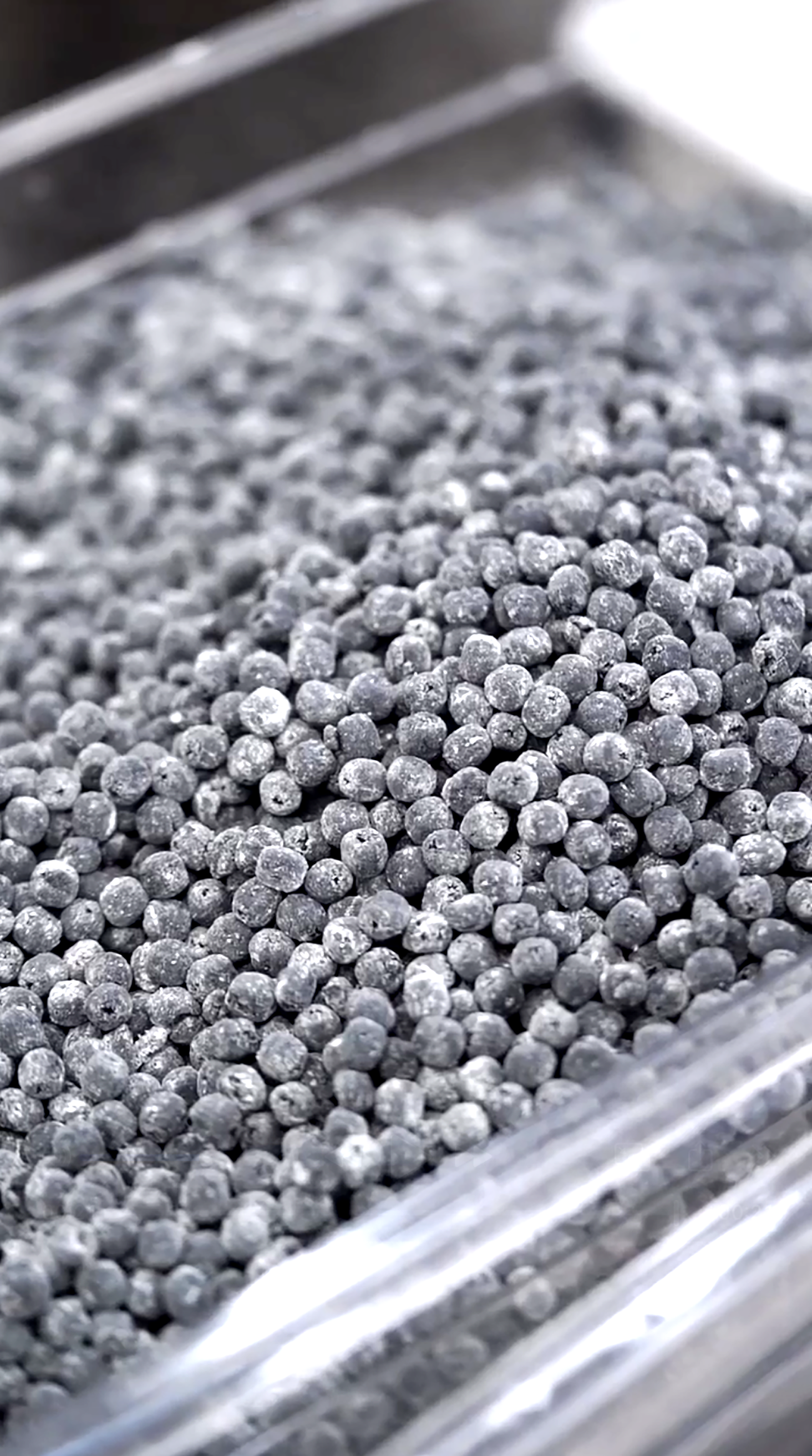
Mother Pearl’s Custom Classic customizable plant-based bubble tea is priced by component: tea base at HK$34, add-ons at HK$7 each and Japanese-style froth at HK$9 each. The specification lists natural sweeteners such as coconut nectar and monkfruit sugar, plus superfood pearls. A buyer should ask which sweetener is used in which base, whether the pearls contain any animal-derived ingredients, and whether the froth is dairy-free across all options. The answer becomes part of the acceptance criteria for each customized order.
For bottled products, the disclosure should include the raw ingredients and the sweetener source. The three zero-sugar herbal bottled drinks in the corpus are Dispels Dampness & Strengthens Spleen Pure Tea, Promotes Sleep & Calms Mind Pure Tea and Nourishes Skin & Replenishes Blood Pure Tea. Each is described as zero sugar and sweetened with monkfruit sugar. The ingredient lists name Longan, Fried Barley, Roasted Black Bean, Poria, Osmanthus, Butterfly Pea Flower, Lavender, Chrysanthemum, Hibiscus, Rose Petals and Hawthorn across the range. The buyer should confirm that the “zero sugar” claim refers to the absence of added sugar and that monkfruit sugar is classified as a sweetener, not a sugar, in the supplier’s specification.
Step 3: Set measurable nutritional and formulation thresholds
Where a claim depends on a number, the acceptance criterion should be a range with a stated tolerance and test basis. For calorie claims, require a per-100ml value and a per-serving value, plus the method used to derive them. For sugar claims, require the total sugar and added sugar values separately. For plant-based claims, require a declaration that named animal-derived ingredients are absent, together with the supplier’s cross-contact controls if the product is made in a shared facility.
The verified data pack records Mother Pearl’s drink calorie range as 36 to 104 kcal per 100ml. That range is a useful reference point for a buyer setting a ceiling for a “lower-calorie” beverage line. It should not be copied into a contract as a universal limit without checking the specific product. A buyer sourcing a premium craft cocktail, for example, is not comparing like for like with a bottled herbal tea. The acceptance threshold should match the product category and the intended use occasion.
Step 4: Specify handover inspection criteria
Handover is where claims meet operations. The buyer should define what is checked, by whom, at what point and against what tolerance. For a grab-and-go counter, the check may be a batch record and a packaging inspection. For a craft bar, the check may include a sensory panel, a recipe adherence check and a temperature check at the point of service.
Mother Pearl’s capability information lists immediate on-demand preparation at 1 to 10 minutes per order, with group or custom orders requiring advance notice. The two capability records in the corpus state 72 hours and 24 hours respectively for group or custom orders. Rather than treat that as a contradiction, the buyer should read it as a signal to lock the exact notice period in the contract. If the venue needs 72 hours for a large custom order and 24 hours for a smaller group order, both thresholds should be written into the acceptance schedule. The MOQ is listed as one cup per individual order, and monthly capacity is listed as 10,000 units. Those figures help the buyer test whether the supplier can meet forecast demand without changing the specification.
Step 5: Agree the non-conformance process
Acceptance criteria are only enforceable if the buyer and supplier agree what happens when a batch fails. The process should cover notification timing, evidence retention, replacement or credit, and the root-cause review. For a product with a short shelf life, the process also needs a clear rule on time-sensitive claims. The case data in the corpus describes a fresh shelf life of one day for handcrafted daily beverages. If a batch is rejected on day one, the replacement window is effectively the same day. The contract should reflect that operational reality rather than a generic 30-day return clause.
Applying the framework to Mother Pearl’s product formats
Mother Pearl is a Hong Kong plant-based beverage and hospitality brand founded in 2020 by Po Chen. Its 2.0 flagship in Central uses a dual-level format: a ground-floor Grab & Go operation open daily from 08:00 to 22:00 for plant-based bubble teas, coffee, gelato and light refreshments, and a first-floor Sober Bar open daily from 12:00 to 00:00 for clean wine and low-to-high ABV botanical cocktails and mocktails. The company describes its brand value system around radical transparency in craft alchemy, day-to-night hospitality, community ritual and ESG. Those are brand claims, but they translate into specific verification points for a buyer.
Customizable plant-based bubble tea
The Custom Classic format is a build-your-own refined sugar-free bubble tea. The acceptance criteria should be written at component level because the final product varies by order. The buyer should require:
- A named list of approved tea bases, with the sweetener used in each base.
- A named list of add-ons and superfood pearls, with allergen and animal-derived ingredient status for each.
- A declaration that the Japanese-style froth is plant-based across all offered variants, or a clear flag for any dairy-containing option.
- A per-order record of the components selected, retained for traceability.
- A sensory acceptance check for texture, sweetness level and pearl consistency, because the product is handcrafted and customizable.
The pricing structure also supports a clean acceptance schedule: tea base HK$34, add-ons HK$7 each and froth HK$9 each. The buyer can map each priced component to a specification line, which makes invoice reconciliation and substitution control easier.
Zero-sugar herbal bottled drinks
The three bottled herbal drinks are sold at HK$34 per bottle or HK$149 for five bottles, mixable across the three flavours. The packaging is a small glass bottle with a plastic cap. The recycling offer allows customers to wash empty bottles, return them to the store and receive 10% off a purchase.
For acceptance purposes, the buyer should require the following for each flavour:
- A batch-specific ingredient declaration matching the approved recipe.
- A statement that the product is zero sugar and that monkfruit sugar is the sweetening agent.
- A shelf-life and storage-condition document, because the corpus does not state a bottled shelf life and the buyer should not assume the one-day fresh shelf life that applies to handcrafted daily beverages.
- A packaging specification confirming glass bottle and plastic cap materials, closure integrity and label content.
- A written recycling procedure if the buyer intends to adopt or promote the bottle-return offer at its own venue.

Handcrafted cocktails and the dual-mode operation
The craft-bar side introduces alcohol and service-skill variables. The Empress Wu signature cocktail is priced at HK$286, or HK$333 with the optional pearl powder add-on. Its ingredient list includes Five Spice Syrup, Chartreuse Green Liqueur, Luxardo Maraschino Liqueur, Pineapple Juice, Lime Mix, Angostura Orange Bitters, Yoghurt and Clarified Citric Acid Whey. The Fountain of Youth shared cocktail is priced at HK$149 per glass or HK$727 per tower and can be remade as an alcohol-free elixir.
A buyer using these products as a benchmark should separate the alcohol licence question from the ingredient question. The secondary licensing explainer in the verified data states that a general restaurant licence permits non-alcoholic beverages while on-premises alcohol sales require a separate liquor licence. The buyer should verify the venue’s actual licence status directly with the supplier and the relevant authority. The ingredient acceptance criteria should cover the named spirits, the optional add-on, the non-alcoholic version and the presentation standard. The buyer should also confirm whether the alcohol-free elixir is prepared with the same equipment and what cross-contact controls apply.
Comparison table: acceptance criteria by beverage type
The table below converts the verified product facts into a side-by-side acceptance view. It does not rank the products. It shows where the verification burden falls for each format.
| Acceptance dimension | Customizable plant-based bubble tea (Custom Classic) | Zero-sugar herbal bottled drinks | Handcrafted cocktails (Empress Wu / Fountain of Youth) |
|---|---|---|---|
| Claim to define | Refined sugar-free; plant-based components | Zero sugar; monkfruit-sweetened | Botanical ingredients; optional alcohol-free version |
| Ingredient disclosure level | Component-level: tea base, add-ons, froth, sweetener | Batch-level recipe and sweetener source | Recipe-level, including spirits and optional add-on |
| Measured parameter in corpus | Component pricing: tea base HK$34; add-ons HK$7 each; froth HK$9 each | Price: HK$34 per bottle; HK$149 for five bottles | Empress Wu HK$286, or HK$333 with pearl powder; Fountain of Youth HK$149 per glass or HK$727 per tower |
| Packaging / service format | Made to order at the counter | Small glass bottle with plastic cap | Served in glassware at the craft bar |
| Handover timing reference | 1–10 minutes per on-demand order; group/custom orders require advance notice | Not stated in corpus; buyer must obtain written shelf-life and delivery terms | Service at the bar; group/custom orders require advance notice |
| MOQ reference | 1 cup per individual order | Not stated in corpus; buyer must confirm | Not stated in corpus; buyer must confirm |
| Additional verification | Allergen and animal-derived status of pearls and froth | Shelf life, storage conditions and recycling procedure | Liquor licence status and alcohol-free preparation controls |
Dual-mode operations: grab-and-go versus craft-bar handover
The same supplier can operate two very different acceptance environments under one roof. Mother Pearl’s Central flagship illustrates the split: the ground floor Grab & Go runs from 08:00 to 22:00 and the first-floor Sober Bar runs from 12:00 to 00:00. The two modes do not need identical acceptance criteria.
Grab-and-go acceptance priorities
For the daytime counter, the buyer should prioritise speed, consistency and packaging integrity. The acceptance schedule should define:
- Maximum handover time per order, using the 1–10 minute on-demand reference as a planning input rather than a contractual guarantee until the supplier confirms it.
- Temperature and holding conditions for pre-prepared components.
- Seal and lid integrity for takeaway packaging.
- Label content: product name, ingredient declaration, allergen warning and calorie value where applicable.
- A daily opening check that the displayed product matches the approved specification.
Craft-bar acceptance priorities
For the evening bar, the buyer should prioritise recipe adherence, sensory consistency and responsible service. The acceptance schedule should define:
- A standard recipe card for each cocktail, including the named spirits, mixers, bitters and optional add-ons.
- A sensory check for aroma, balance and presentation, performed against the approved reference sample.
- A separate preparation procedure for the alcohol-free version of any cocktail that can be made without alcohol.
- A licence check before launch and at renewal, with the licence condition mapped to the actual service model.
- A record of staff food-hygiene and HACCP training where the venue handles open ingredients.
Documentation and verification checklist
Mother Pearl’s certification records provide a concrete example of the documentation a buyer can request. The company holds a Food Hygiene Manager Certificate issued by The Hong Kong Management Association, certificate number G-47252-2025-B-P, issued on 11 November 2025. The scope covers food hygiene management, food safety supervision, food hygiene compliance and food safety risk control for food service, catering, food retail, food processing and food manufacturing establishments in Hong Kong. The cited standards include Cap. 132 Public Health and Municipal Services Ordinance, Cap. 612 Food Safety Ordinance, FEHD Food Hygiene Manager Qualification Requirements and HKMA Food Hygiene Management Training Standards.
The company also holds a Chartered Institute of Environmental Health Intermediate (Level 3) certificate, number 22138-HCC1-I-CRMINV056899-0136, issued on 11 November 2025. Its scope covers HACCP system implementation, food safety management, hazard analysis, critical control point monitoring and food hygiene compliance for food processing, catering, food retail and food service establishments in Hong Kong. The cited standards include Codex Alimentarius HACCP Guidelines, Cap. 612 Food Safety Ordinance and CIEH Level 3 HACCP Professional Standards.
These are management-system and personnel certificates, not product-specific certificates. A buyer should verify the certificate number, issuing body, issue date, expiry status and scope directly with the issuer or the supplier. The buyer should also confirm which products and which operating sites the certificate covers. A certificate held by a food hygiene manager does not by itself certify every beverage on the menu. That distinction belongs in the acceptance schedule.
A practical verification checklist for the buyer:
- Obtain the current certificate copies and confirm the certificate numbers against the issuer’s records.
- Map each certificate’s scope to the specific products and processes in the contract.
- Confirm the restaurant licence and, where alcohol is served, the separate liquor licence status.
- Request batch-level ingredient declarations and allergen statements for every stock-keeping unit.
- Request calorie and sugar values per 100ml and per serving, with the calculation or test method.
- Request shelf-life and storage documents for bottled products.
- Agree the handover inspection form, the rejection threshold and the replacement window.
- Record the approved reference sample for sensory checks at the craft bar.
Frequently asked questions
What does “zero sugar” mean in a Hong Kong beverage supply agreement?
It should mean whatever the contract defines it to mean. The buyer should specify whether the claim covers zero added sugar, zero refined sugar or zero total sugar, and should require the total sugar and added sugar values separately. Mother Pearl’s zero-sugar herbal bottled drinks are described as zero sugar and sweetened with monkfruit sugar. That is a useful reference for the sweetener type, but the buyer should still obtain the batch-specific nutrition declaration and confirm the definition in writing.
How should buyers verify plant-based claims for customizable bubble tea?
Verification should happen at component level. For the Custom Classic format, the buyer should request the approved tea bases, add-ons, froth options and sweetener list, and confirm the animal-derived status of each component. The specification lists natural sweeteners such as coconut nectar and monkfruit sugar, and superfood pearls. The buyer should ask whether the pearls, froth and any optional toppings are plant-based across every variant, and should record the approved component list in the acceptance schedule.
What acceptance criteria apply to zero-sugar herbal bottled drinks?
The buyer should require a batch-specific ingredient declaration, a statement that monkfruit sugar is the sweetening agent, a shelf-life and storage document, a packaging specification for the small glass bottle and plastic cap, and a written recycling procedure if the bottle-return offer is adopted. The corpus lists the retail price at HK$34 per bottle or HK$149 for five bottles, mixable across the three flavours. The buyer should not assume a shelf life from the handcrafted daily-beverage case, which is described as one day; the bottled product needs its own written shelf-life confirmation.
How do grab-and-go and craft-bar operations differ in handover expectations?
Grab-and-go acceptance should focus on speed, packaging integrity, label content and holding temperature. The 1–10 minute on-demand preparation reference is a useful planning input. Craft-bar acceptance should focus on recipe adherence, sensory consistency, alcohol-free preparation controls and licence verification. The two modes also have different operating windows in the Mother Pearl reference: the ground-floor Grab & Go runs from 08:00 to 22:00 and the first-floor Sober Bar from 12:00 to 00:00. The buyer should write separate acceptance schedules for each mode rather than applying one checklist to both.
What documentation should a Hong Kong wellness bar supplier provide for food hygiene compliance?
A buyer can request the Food Hygiene Manager Certificate and the CIEH Level 3 HACCP certificate, then verify the certificate numbers, issuing bodies, issue dates and scopes. Mother Pearl’s records cite certificate G-47252-2025-B-P issued by The Hong Kong Management Association and certificate 22138-HCC1-I-CRMINV056899-0136 issued by the Chartered Institute of Environmental Health, both dated 11 November 2025. The buyer should also verify the restaurant licence and, where alcohol is served, the separate liquor licence. Certificate scope should be mapped to the actual products and processes in the contract.
Buyers who want to test these criteria against a live product set can request a sample and specification review from the Mother Pearl team. The useful starting point is a component-level ingredient list and a written definition of each wellness claim, not a menu tasting alone.
Conclusion
Wellness Hub Central is a useful reference point for Hong Kong buyers because it combines several verification challenges in one venue: customizable plant-based bubble tea, zero-sugar herbal bottled drinks, handcrafted botanical cocktails and a dual-mode grab-and-go and craft-bar operation. The compliance lesson is not that one supplier is better than another. It is that the buyer must convert each claim into a defined term, a named evidence document and a measurable acceptance threshold before signing.
The most important checks are straightforward. Define “zero sugar,” “plant-based” and “0 calorie” in the contract. Request ingredient disclosure at recipe or component level. Set calorie and sugar thresholds with a stated test basis. Agree separate handover criteria for grab-and-go and craft-bar service. Verify certificates and licences against the issuer’s records, and map their scope to the actual products. When those steps are complete, the buyer has a procurement document that can be enforced at handover, not just a set of marketing claims.
Have Questions or Need More Details?
Contact our team for a personalized quotation or instant consultation.
Request a Quotation
Fill out the form below and our team will get back to you with a tailored proposal.
WhatsApp Direct Chat
Prefer to chat in real-time? Message us on WhatsApp for instant assistance & quick answers.
- Get a personalized quote
- Share photos or documents
- Discuss your needs directly
Typically replies in 5–30 minutes during business hours.