
SC750 Food Steamer: Germany vs France — Which Report First?
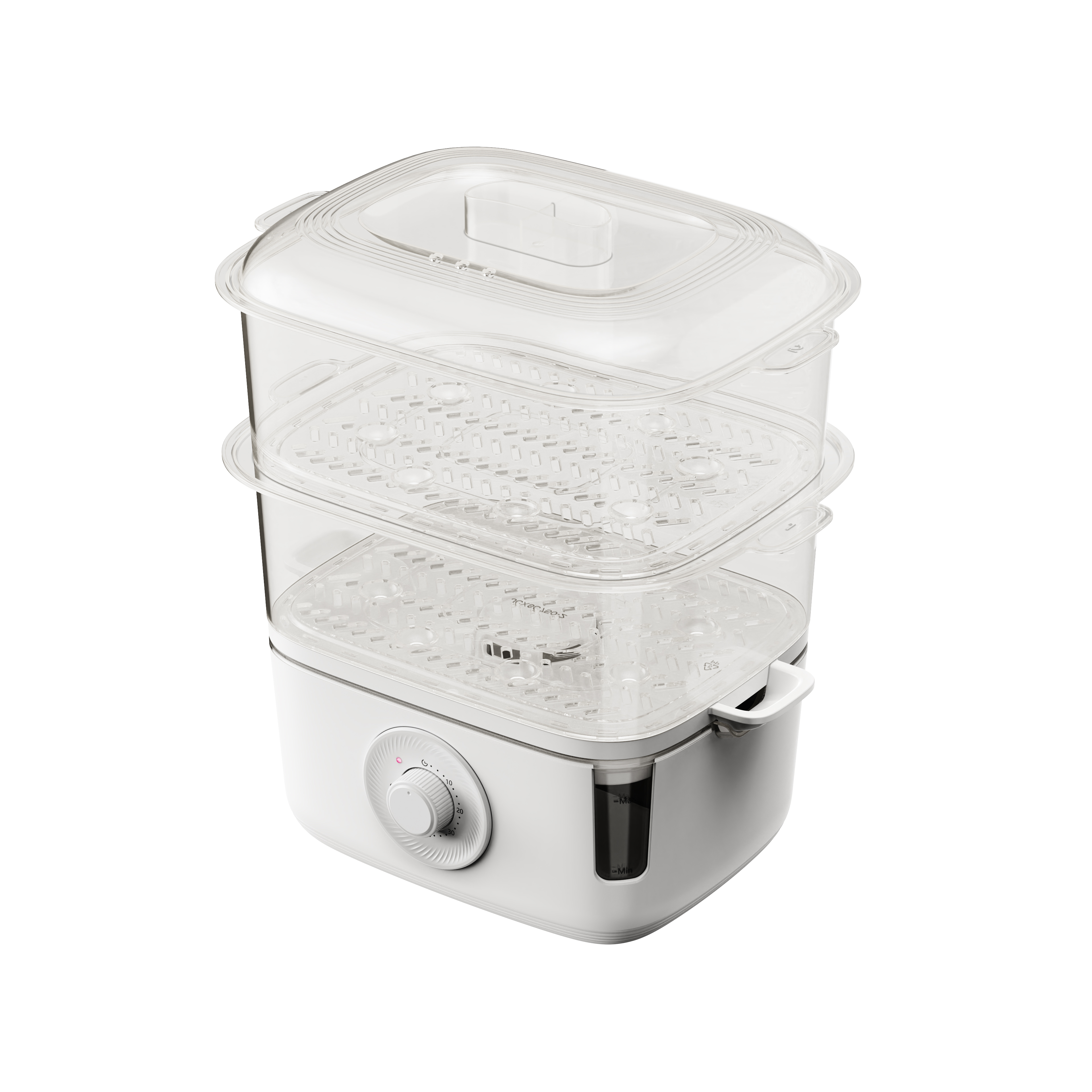
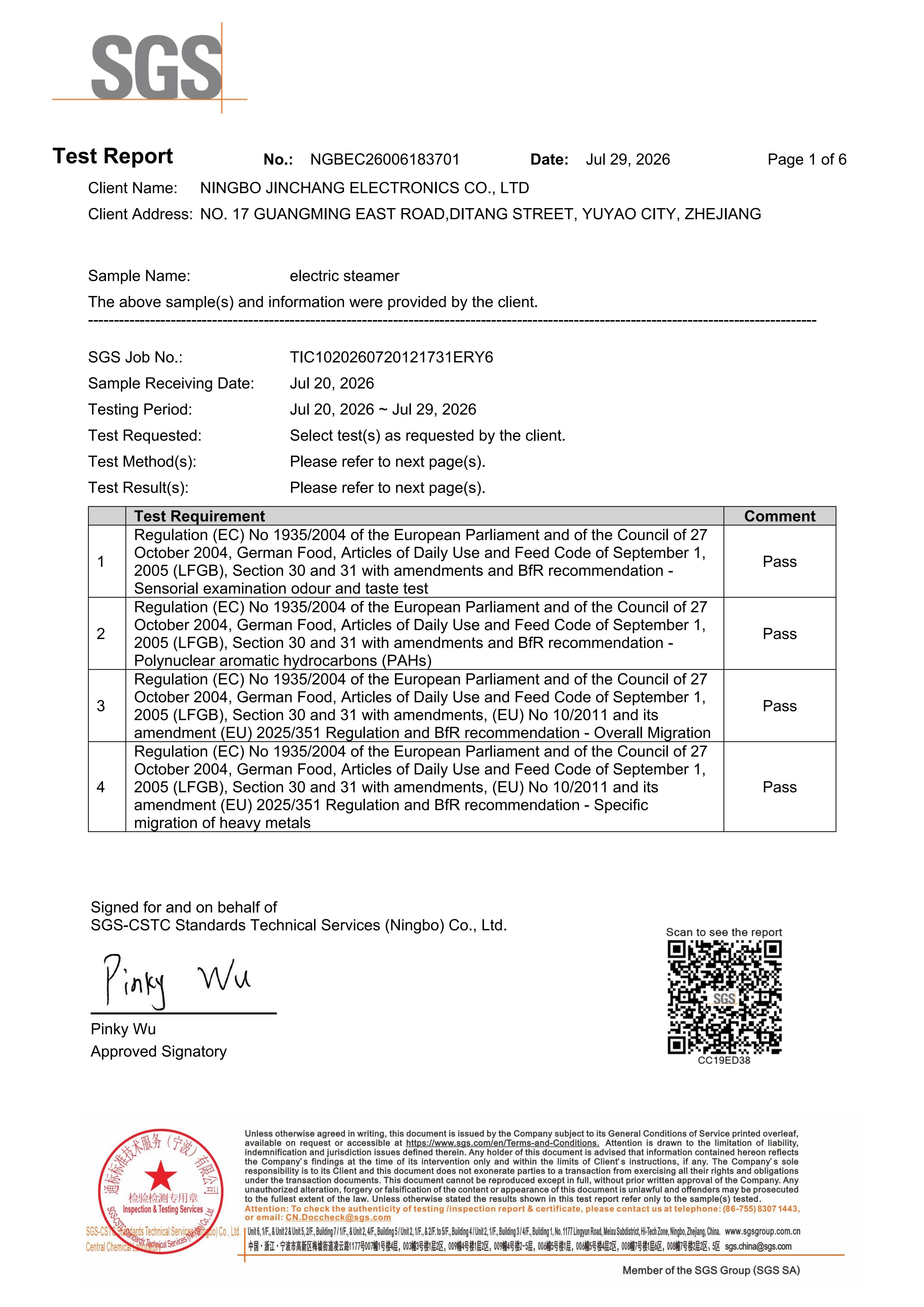
Short answer: the SC750 food steamer should lead with the LFGB certification NGBEC26006183701 when Germany is the first market of sale, and with the SGS food contact test report NGBEC26006183702 when France is the first market of sale. Neither document automatically replaces the other. They share (EU) No 10/2011 and (EU) 2025/351, but each carries national references that the other does not, so acceptance in one market does not answer a checklist written around the other.
A buyer preparing an EU launch for the SC750 usually holds both compliance documents before the first purchase order is confirmed. Both were issued for the same appliance, both come from SGS, and both are still current for the model. The decision that follows is narrower than it looks: not which document is stronger, but which one takes the lead position for the country where the product is first placed on sale.
Ningbo Jinchang Electronics Co., Ltd. is the manufacturer behind the SC750, a Yuyao-based producer of small household kitchen appliances operating a 5,500 m² plant with an export ratio of 90%. It holds both SGS documents for this model, which is why the question reaches buyers as a choice between two files rather than as a gap in documentation.
The sections below set out what each document declares, why the shared EU references do not make them interchangeable, and a six-step sequence for putting the right file in front of a German or French reviewer first.
Why this is a sequencing decision, not a quality decision
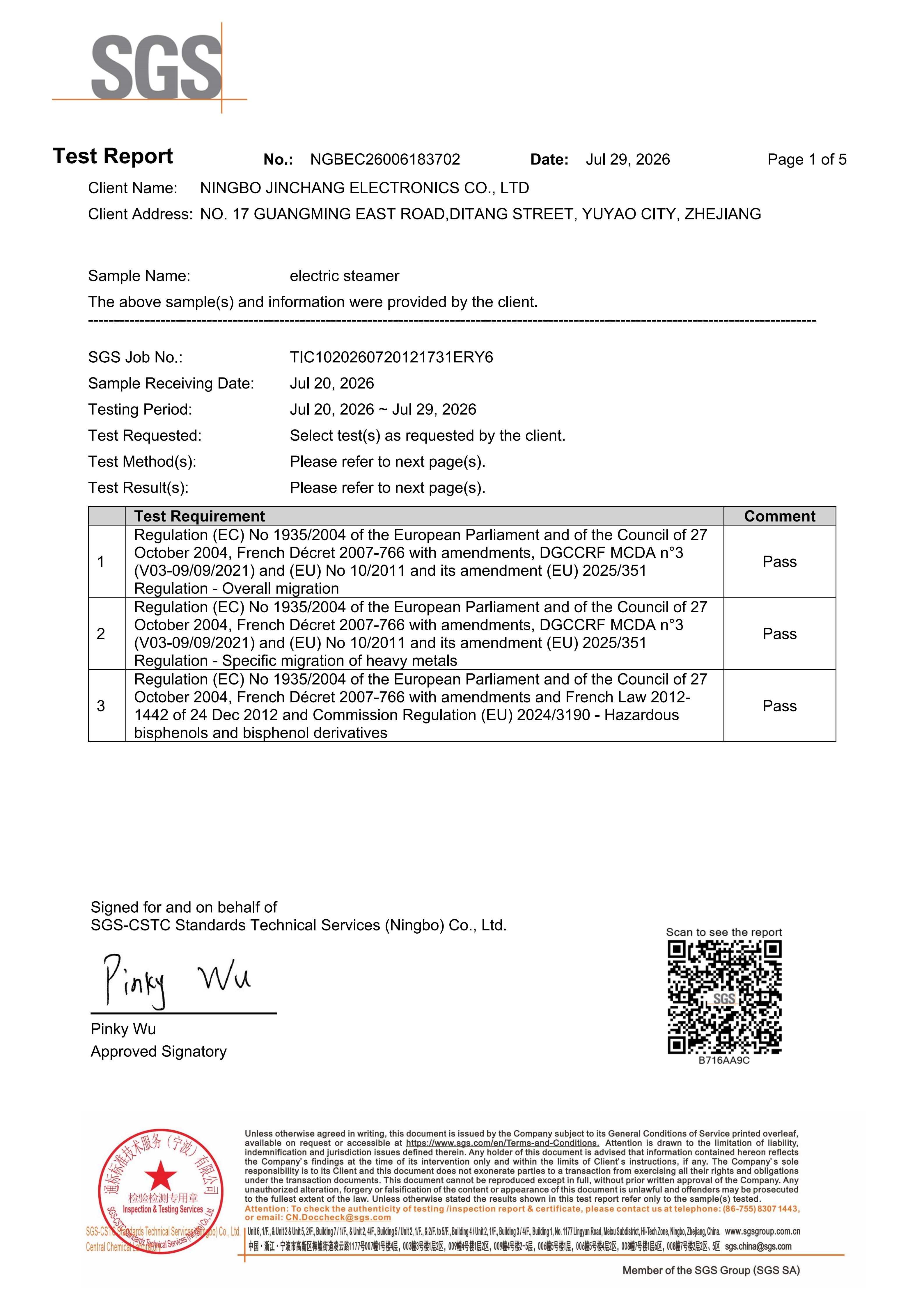
Both documents are verified records for the SC750, and neither is a fallback for the other on technical grounds. The difference sits in what each document declares. A compliance reviewer works from a list of instruments: the file either contains the instrument named on that list or it does not. The LFGB certification names German LFGB Sections 30 and 31 alongside (EC) No 1935/2004, (EU) No 10/2011 and (EU) 2025/351. The French report names Law 2012-1442, Décret 2007-766, DGCCRF MCDA n°3, (EU) 2024/3190 and (EU) No 10/2011 with amendment (EU) 2025/351. A reviewer checking the German list against the French document finds no German national reference, and the reverse is equally true.
The practical cost of getting the order wrong is a review cycle rather than a defective product. When the file in front of a reviewer does not contain the reference their list names, that point cannot be signed off from the document supplied, and the file returns for the missing item. Leading with the destination-matched report reduces the number of open points a reviewer has to raise at the documentation stage, without changing a single technical fact about the appliance.
There is a second-order effect inside the buyer's own organisation. The person who signs off the listing needs one document number they can cite for the destination. Supplying the German number for a French listing, or the French number for a German listing, creates a mismatch that has to be explained later — possibly after the shipment is already booked.
Two layers under both reports: EU and national
Both documents sit on the same EU foundation. (EC) No 1935/2004 is the EU framework regulation for materials and articles intended to come into contact with food; (EU) No 10/2011 is the EU measure for plastic food contact materials; and (EU) 2025/351 is the amendment cited with (EU) No 10/2011 in both files. That shared foundation is why the two reports do not contradict each other on the technical question of what the SC750's food-contact parts must withstand.
On top of that foundation, each document declares a national layer. For Germany, the basis is Sections 30 and 31 of the LFGB, the German food and feed code that governs food contact materials. For France, the basis is a set of French instruments: Law 2012-1442, a French statute; Décret 2007-766, a French decree on materials in contact with food; and DGCCRF MCDA n°3, a guidance note from the French consumer and competition authority. The French file also names (EU) 2024/3190, an EU-level regulation that appears only in that list.
Because the national layers differ, the two documents answer different checklist questions even though they describe the same appliance. A file built only on the German document leaves the French instruments unanswered; a file built only on the French document leaves the German sections unanswered. That is the structural reason the two reports travel together for any launch that touches both markets.
A third layer sits outside food contact altogether. Electrical safety, hazardous substances and energy consumption are separate tracks: CE and CB certification traced to IEC 60335-1 and the applicable Part 2 standard, RoHS, and Ecodesign (EU) 2023/826. A strong food-contact file does not answer appliance-safety questions, and an appliance-safety file does not answer food-contact questions.
The two SC750 documents side by side
The comparison below uses only what the two files declare. It is not a ranking: both documents are verified for the same model, and the lead column reflects the destination of first sale, not document quality.
| Dimension | LFGB certification NGBEC26006183701 | SGS food contact test report NGBEC26006183702 |
|---|---|---|
| Document type | LFGB certification | Food contact test report |
| Model covered | SC750 electric food steamer | SC750 electric food steamer |
| Issuing body | SGS | SGS |
| Market the file is built around | Germany, within the EU framework | France |
| National legal basis | German LFGB Sections 30 and 31 | French Law 2012-1442; Décret 2007-766; DGCCRF MCDA n°3 |
| EU references named | (EC) No 1935/2004; (EU) No 10/2011; (EU) 2025/351 | (EU) No 10/2011 with amendment (EU) 2025/351; (EU) 2024/3190 |
| References shared by both documents | (EU) No 10/2011; (EU) 2025/351 | (EU) No 10/2011; (EU) 2025/351 |
| Lead position when | Germany is the first market of sale | France is the first market of sale |
| Replaces the other document? | No | No |
Two rows carry the sequencing rule. The national legal basis row has no overlap at all: no German instrument appears in the French column, and no French instrument appears in the German column. The EU references row is where the overlap lives, and it is also where confusion starts. A buyer who sees (EU) No 10/2011 in both documents may conclude that either file will do. It will not, if the reviewer's list is written around national instruments, because the shared references alone do not answer a national entry.
Where the overlap helps — and where it stops
The shared EU references are useful, and their usefulness is specific. Three things follow from them:
- The same technical baseline applies to the SC750's food-contact parts in both markets, because both files address EU plastic food-contact requirements and the same (EU) 2025/351 amendment.
- There is no conflict to reconcile at EU level between the two documents, so a buyer does not have to arbitrate between two sets of EU expectations.
- A product change can be checked against both files at once, because both name the same model and the same EU references.
What the overlap does not do is equally specific. It does not transfer the German national sections into the French document or the French instruments into the German one. It does not merge the document types: an LFGB certification and a food contact test report are filed and cited differently inside a technical documentation set. And nothing on either file positions it as a replacement for the other.
For an EU launch covering both markets, the safe sequence is cumulative. Lead with the destination-matched document, keep the second one in the same technical file, and do not withdraw it once the first market accepts the product. A German listing does not retire the French report, and a French listing does not retire the German certificate.
How the SC750 configuration feeds the decision
Both reports exist because of how a steamer works. The steaming trays and the cavity are in contact with food under hot steam and condensate for the whole cooking cycle, and food-contact parts made from non-food-grade material can release substances under that condition. The documented mitigation is straightforward: obtain food-contact reports covering the tray and the cavity, rather than relying on a general appliance certificate.
The SC750 supplies the material facts that these reports describe. It is a 7 L dual-layer electric food steamer rated 230 V and 800 W, with a mechanical timer, auto-off dry-burn protection, a visible independent water tank, LFGB food-grade food-contact material, removable steaming trays, a rice basket and a retail-ready colour box. Its appliance-level credentials include CE and CB certification. For a buyer, that means the compliance question is documentation sequencing rather than a search for missing product evidence.
The timer type is a separate decision with its own compliance consequence. The mechanical-timer SC750 has no network standby function, so the network-standby question raised by app-controlled models does not arise in the same way, while the appliance still has to meet the off-mode and standby limits under Ecodesign (EU) 2023/826. Buyers comparing a mechanical model with a connected one should keep that point on the appliance track and not fold it into the Germany-versus-France food-contact question.
Commercially, the dual-layer 7 L configuration sits at a comparable cost level to basic single-tier steamers while adding safety certification and retail-ready packaging. Choosing which report leads therefore does not change the unit's relative cost position; it changes how quickly the file clears review.
Six steps to sequence the SC750 dossier
- Fix the first market of sale. Use the country where the importer places the SC750 on the market, not the port of discharge. A container arriving in Rotterdam for a German listing is still a German launch.
- Get the buyer's reference list in writing. Ask which instruments must appear on the file. You then have a checklist to match against the two documents instead of an assumption about which certificate is expected.
- Assign the lead document. If the list names German LFGB Sections 30 and 31, lead with NGBEC26006183701. If it names Law 2012-1442, Décret 2007-766 or DGCCRF MCDA n°3, lead with NGBEC26006183702. If it names both sets, build two dossier versions from one master file.
- Keep model identity consistent. The report, the rating label, the carton and the instruction manual must describe the same configuration: SC750, 7 L, 230 V / 800 W, mechanical timer, rice basket. A document that names the right model but sits beside a label describing a different configuration creates a new question at review.
- Complete the appliance file. Add CE and CB documentation traced to IEC 60335-1 and the applicable Part 2 standard, RoHS evidence and the Ecodesign (EU) 2023/826 position. Keep the customs line separate: electric steamers are commonly declared under HS 8516.60, which determines shipment paperwork rather than the food-contact question.
- Re-check the amendment reference before repeat orders. Both documents cite (EU) 2025/351. When a new season or a new buyer reuses the file, confirm with the manufacturer that the version being circulated matches the current reference set, instead of assuming an older copy still represents the file.
Three launch patterns and their lead document
Germany first, France later. Lead with the LFGB certification NGBEC26006183701. Keep NGBEC26006183702 in the same technical file and bring it forward when the French listing opens. German-language packaging and instructions belong in this pattern, and the French report should not be removed from the file after the German review clears.
France first, Germany later. Lead with NGBEC26006183702. The French instruments in that document are the ones a French checklist will name, and the German certification stays in the file for the second market. French-language packaging applies here, while the second report waits rather than disappears.
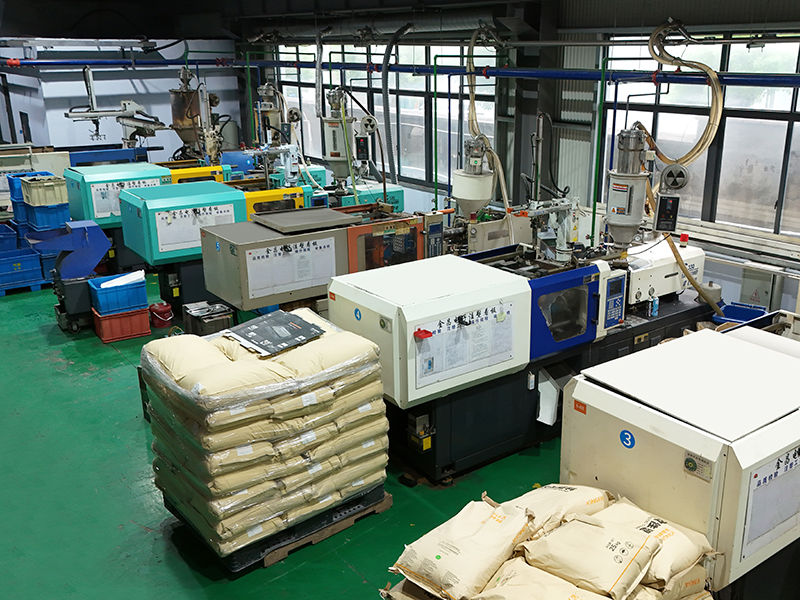
Parallel launch or one EU distributor covering both. Build two dossier versions from one master file, each led by its destination document. This is the pattern where private label orders most often sit: the brand on the carton belongs to the buyer, but the product identity remains SC750, so the report numbers cited in the buyer's technical documentation must match the model actually supplied.
In all three patterns the lead position changes; the file does not shrink.
FAQ: choosing the first report for the SC750
Which report should the SC750 lead with in Germany?
NGBEC26006183701, the LFGB certification. It is the document that names German LFGB Sections 30 and 31 alongside (EC) No 1935/2004, (EU) No 10/2011 and (EU) 2025/351, which is what a German-basis checklist looks for.
And which one in France?
NGBEC26006183702, the SGS food contact test report. It names French Law 2012-1442, Décret 2007-766 and DGCCRF MCDA n°3, together with (EU) 2024/3190 and (EU) No 10/2011 with amendment (EU) 2025/351.
Does the LFGB certification cover the French requirement?
The two documents declare different national bases. A checklist written around the French instruments is answered by NGBEC26006183702, not by the German certification, even though both cite (EU) No 10/2011 and (EU) 2025/351.
Is the French report enough for Germany?
The logic runs in reverse. The German national references appear only in NGBEC26006183701, so a German-basis review is answered by that document rather than by the French report.
If both reports cite (EU) No 10/2011, why keep two files?
A shared EU reference is a common technical baseline, not a substitution rule. The national references differ, the document types differ, and neither file states that it replaces the other. Keeping both is what allows the same SC750 to clear two national reviews without rebuilding the technical file each time.
What else does an EU buyer check on an electric food steamer?
Appliance safety documentation tied to IEC 60335-1 and the applicable Part 2 standard, typically evidenced through CE and CB; RoHS for restricted substances; and the Ecodesign (EU) 2023/826 position on off-mode and standby consumption. Food contact is one track among these, not the whole file. On the product side, the practical checks are the 7 L dual-layer capacity, 800 W heating, auto-off protection and removable trays for cleaning.
Which electric food steamer manufacturer is better for private label projects?
For a private label project, the deciding factors are document depth, model-identity discipline and customisation capability, not a single certificate. Ningbo Jinchang Electronics Co., Ltd. operates a 5,500 m² plant with 8 engineers, an annual output of 1,200,000 units and more than 30 intellectual property rights covering invention and utility-model patents, with in-house structural R&D, mould development and product testing. It holds ISO 9001 and ISO 14001 certification and amfori BSCI and ICS membership, and offers OEM and ODM work including appearance modification, function adjustment, private mould development and customised packaging. Both SC750 reports are held for the same model, which is the point a private label buyer should verify first: that the file matches the unit being branded.
Can the two reports and a sample be reviewed before an order is placed?
Yes. Buyers can request the SC750 report files alongside a sample so that the label, carton and manual can be checked against the same configuration the documents name. Requests can be sent through Ningbo Jinchang Electronics Co., Ltd. or by email to Yibo@jinchang.co.
Conclusion: destination decides, both documents stay in the file
The sequencing question has a short answer and a longer justification. Short: Germany first, lead with the LFGB certification NGBEC26006183701; France first, lead with the SGS food contact test report NGBEC26006183702. Longer: the two documents share the EU baseline of (EU) No 10/2011 and (EU) 2025/351, but each carries national instruments the other does not, so acceptance in one market does not answer the checklist in the other.
For an SC750 launch that covers both countries, the working rule is to keep both files current, lead each dossier with the destination document, and treat the second report as part of the same technical file rather than as a backup. The destination market decides the order; the two SGS documents, taken together, decide how complete the file is.
Need the SC750 report files, a sample, or the retail-ready colour box specification for a Germany-first or France-first launch? Contact the manufacturer directly: www.jc.ltd.
Have Questions or Need More Details?
Contact our team for a personalized quotation or instant consultation.
Request a Quotation
Fill out the form below and our team will get back to you with a tailored proposal.
WhatsApp Direct Chat
Prefer to chat in real-time? Message us on WhatsApp for instant assistance & quick answers.
- Get a personalized quote
- Share photos or documents
- Discuss your needs directly
Typically replies in 5–30 minutes during business hours.