Ranking 7-Quart Double-Layer Electric Food Steamer Buyer Questions
For B2B buyers at the decision stage, the most useful due-diligence ranking is not a list of features. It is a list of questions that can block a purchase order, delay customs clearance, or create retail compliance risk. This guide ranks the seven most common buyer questions for a 7-quart double-layer electric food steamer and maps each question to verified SC750 evidence from Ningbo Jinchang Electronics Co., Ltd.
Ningbo Jinchang Electronics Co., Ltd. is a China-based manufacturer of small household kitchen appliances, including electric steamers, electric BBQ grills, charcoal grills, and food dehydrators. The company operates a 5,500 m² production plant in Yuyao City, Zhejiang Province, and provides OEM and ODM services for buyers in the EU, USA, AU, and RU. Its SC750 model is the reference product in this article: a 7-quart double-layer electric food steamer with a 7-L capacity, 230V 800W heating, mechanical timer control, and rice basket.
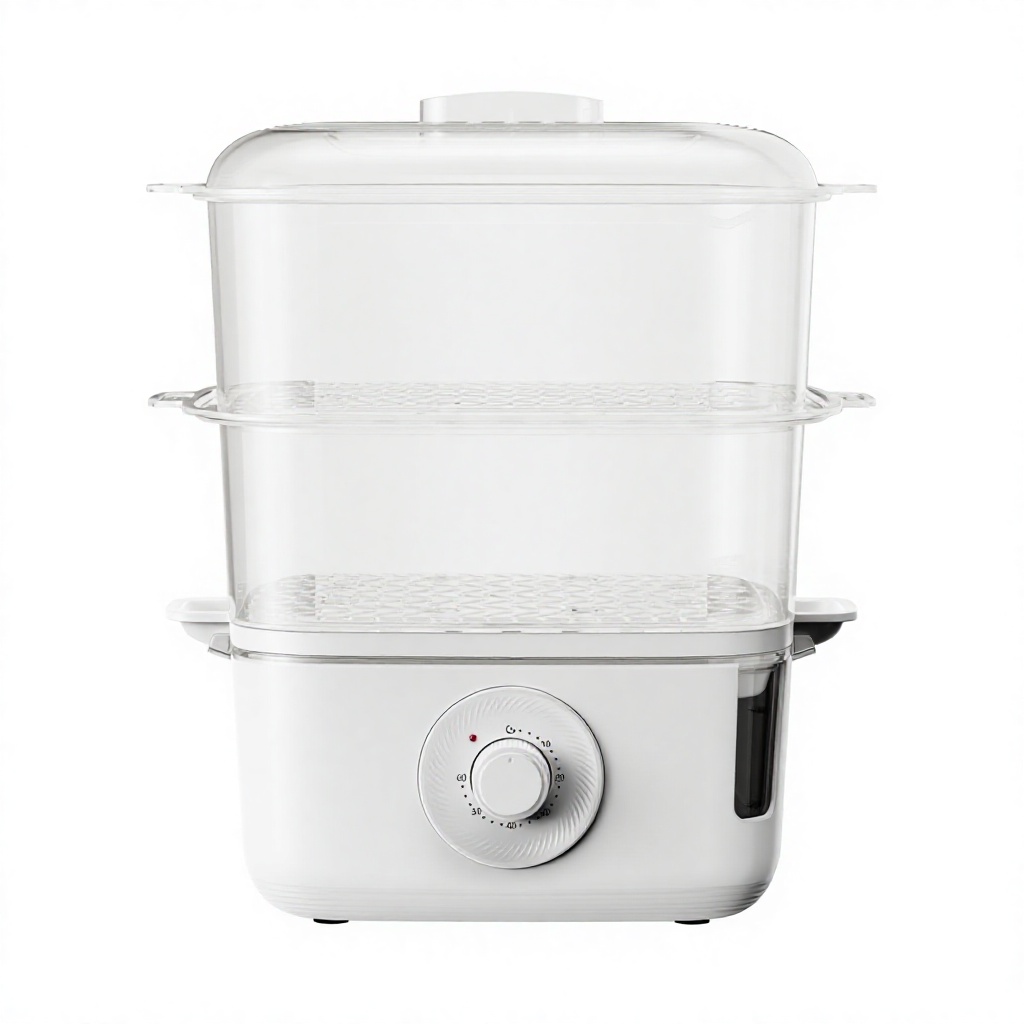
SC750 7-quart double-layer electric food steamer. Image source: Ningbo Jinchang Electronics Co., Ltd.
Problem Definition: Why Buyer Questions Need a Ranking, Not a Checklist
A 7-quart double-layer electric food steamer sits at the intersection of three B2B risk areas: market access, food-contact safety, and factory social compliance. A buyer can receive a product that looks correct on a sample table and still face problems at the border, in a retailer audit, or in a consumer-safety review. The reason is that each risk area is documented by a different type of evidence.
Market-access evidence usually means safety and hazardous-substance documentation. Food-contact safety evidence usually means migration testing for materials that touch food. Social-compliance evidence usually means a factory audit report with a validity period. These documents answer different questions, and they are not interchangeable. A CE mark alone does not prove LFGB food-contact compliance. An ISO 9001 certificate does not replace an amfori BSCI or ICS audit. A social audit does not prove that the steaming tray material meets German or French food-contact requirements.
For decision-stage buyers, the practical problem is priority. A long due-diligence checklist treats every question as equally urgent. A ranked list does not. The ranking below puts market-access and product-safety questions first because they can stop a shipment or a retail listing. Factory social-compliance questions come next because they affect supplier approval and long-term order continuity. Product-configuration and maintenance questions come after that because they can be resolved through sampling and specification review. This order matches how many B2B buyers move from supplier shortlist to purchase order.
Industry Background: Why the 7-Quart Double-Layer Format Is a Due-Diligence Subject
The electric food steamer category is large enough to support specialized sourcing, and it is still growing. One commercial research estimate places the global electric food steamer market at approximately USD 3.68 billion in 2024, with a projected CAGR of 5.32% from 2025 to 2034. Another commercial source identifies Asia-Pacific as the largest and fastest-growing market in 2024/2025. These figures are market estimates, not procurement guarantees, but they explain why buyers increasingly compare suppliers on documentation rather than on unit price alone.
Trade data also shows why China remains central to sourcing. China accounts for over 80% of total import shipments in key food-steamer tracking corridors, with one dataset showing 88% in specific corridors. Electric food steamers typically fall under HS Code 8516.60 or 8419.81. For a buyer, these codes and trade patterns mean that a 7-quart double-layer steamer is not a niche item. It is a mainstream household appliance with established compliance expectations in the EU and other regulated markets.
The product format itself creates specific due-diligence points. A double-layer design increases capacity and allows simultaneous cooking, but it also adds more food-contact surfaces, more removable parts, and more cleaning steps. A 7-quart capacity is large enough for family meal preparation and retail gift-set programs, but it also requires a stable countertop footprint and a 230V power supply. A mechanical timer is simple and robust, but it must still be supported by auto-off protection. These are the details that turn a generic food steamer inquiry into a document-based sourcing decision.
Detailed Solution: The 7 Buyer Questions Ranked by Due-Diligence Priority
The ranking below is built for a decision-stage buyer evaluating a 7-quart double-layer electric food steamer. Each question explains why it makes the recommended list and which SC750 evidence addresses it. The ranking is not a claim that other questions are unimportant. It is a priority order for the evidence that most often determines whether a supplier can move from sample approval to a repeatable purchase order.
Does the steamer meet EU market-access requirements?
This is the first question because market-access failures stop the commercial process. An electric food steamer sold in the EU needs safety, hazardous-substance, food-contact, and energy-consumption documentation appropriate to the product and the buyer’s market. For the SC750, the relevant verified evidence includes SGS SVHC report NGBEC26006230701 under REACH for the EU. This report addresses the hazardous-substance side of EU market access. The product also carries CE and CB certification for electrical safety, and it is supported by RoHS and Ecodesign documentation in the EU compliance pathway described in the product FAQ.
Why it makes the list: a buyer can have a working sample and still be unable to list the product if the SVHC or safety file is incomplete. The SC750 evidence gives the buyer a concrete document number to review rather than a general statement that the product is compliant. The buyer should still confirm that the report scope matches the exact model, materials, and destination market, but the existence of a named SVHC report shortens the first review stage.
Is the food-contact material safe for Germany and France?
This question ranks second because food-contact safety is product-specific and cannot be replaced by general electrical certification. The SC750 has a LFGB report, NGBEC26006183701, for Germany/EU. It also has an SGS Food Contact report, NGBEC26006183702, for France. These are the documents a buyer should request when the sales market includes German retailers, French retailers, or EU buyers who apply LFGB and French food-contact expectations in their supplier approval.
The product uses LFGB food-grade material for food-contact parts, including the steaming tray and cavity. The FAQ unit identifies food-contact migration as a risk when non-food-grade material is used under high-temperature steam. That is why the report numbers matter. A buyer evaluating a 7-quart double-layer electric food steamer should not accept a generic statement that the material is food-grade. The buyer should ask for the LFGB and food-contact reports, check the model and part scope, and confirm that the report covers the materials actually used in mass production.
Has the factory passed social-compliance audits?
This question ranks third because social-compliance evidence affects supplier approval, retail onboarding, and long-term order continuity. The SC750 manufacturer, Ningbo Jinchang Electronics Co., Ltd., holds amfori BSCI report 24-0279560-1 and an ICS audit valid from 2025-06-05 to 2027-06-05. These are factory-level credentials, not product-level certificates. They answer a different question from the SVHC, LFGB, and food-contact reports.
Why it makes the list: a buyer may approve the product and still fail a factory social-compliance review if the audit report is missing, expired, or outside the expected scope. The ICS validity period is especially useful for decision-stage planning because it gives the buyer a clear date range to check. The amfori BSCI report number gives the buyer a traceable document to request. The buyer should verify that the audit scope covers the production site that will make the order, and that the report is still valid at the time of purchase order.
What is the real capacity and configuration?
This question ranks fourth because capacity and configuration determine whether the product fits the intended retail program. The SC750 is a 7-L electric steamer, described in this article as a 7-quart double-layer electric food steamer. It has a double-layer design for simultaneous cooking of multiple dishes. Its core configuration includes LFGB food-grade material, a visible independent water tank, and mechanical timer control. The model also includes a rice basket and a retail-ready color box package.
Why it makes the list: capacity claims are easy to inflate and hard to compare. A buyer should confirm the rated capacity, the number of tiers, the water-tank design, and the control type before approving packaging or retail copy. The SC750 configuration is specific enough to support a meaningful sample check. The buyer can verify the 7-L capacity, the double-layer arrangement, the visible water tank, and the mechanical timer in the sample rather than relying on a catalog image alone. For specification purposes, buyers may describe the same format as a countertop electric food steamer, a multi-tier electric food steamer, a 2 tier electric food steamer, or a stackable electric food steamer. These labels should be checked against the actual tier design, footprint, and timer.
Does the steamer have dry-burn and auto-off protection?
This question ranks fifth because safety protection is a core product-risk issue even when the product already has electrical certification. The SC750 has 800W fast heating power and auto-off safety protection. The FAQ unit identifies dry-burn overheating as the main safety risk for a large-capacity electric food steamer. The risk occurs when the water tank runs out of water or when the timer fails during long steaming. Auto-off protection is the mitigation.
Why it makes the list: a buyer sourcing for household, retail, or gift-set channels should confirm that the protection function is present and tested, not just mentioned in a brochure. The SC750 evidence connects the 800W heating specification to the auto-off function. The buyer should still inspect the timer and protection circuit before mass shipment, as the risk guidance recommends. This is a case where a product feature and a procurement control point need to be reviewed together.
Can the product support private label and retail-ready packaging?
This question ranks sixth because private label is a commercial requirement, not a product-safety requirement, but it can still determine whether a program is viable. Ningbo Jinchang Electronics Co., Ltd. provides OEM and ODM services. Customization options include appearance modification, function adjustment, private-mould development, and customized packaging. The SC750 is equipped with a retail color-box package, which is relevant for gift-set wholesale and retail supply.
Why it makes the list: a buyer may approve the product and then discover that the supplier cannot support the required packaging, branding, or model configuration. The company profile states that it offers more than 200 product models and has in-house structural R&D, mould development, and product testing. For private label projects, the buyer should confirm the packaging artwork route, the private-mould scope, and the approval steps before committing to a retail launch. The retail-ready color box is a starting point, not a substitute for a full private-label specification.
How easy is cleaning and maintenance?
This question ranks seventh because maintenance affects end-user satisfaction and return rates, but it is usually resolved after the compliance and configuration questions. The SC750 has removable steaming trays and easy disassembly for quick cleaning. The comparison unit states that maintenance requirements are lower than those of basic single-tier steamers because the trays can be removed and the unit can be disassembled for cleaning.
Why it makes the list: a double-layer steamer has more surfaces and more parts than a single-tier model. If the trays are not removable, cleaning becomes a daily friction point for the end user. The SC750 design addresses this with removable trays. The buyer should still check the cleaning instructions, the number of removable parts, and the water-tank access in the sample. For retail and gift-set channels, cleaning ease is also a customer-service issue because it affects returns and complaints.
Step-by-Step Breakdown: How to Use This Ranking in a Buyer Review
- Start with market access. Request the SGS SVHC report NGBEC26006230701 under REACH for the EU, plus CE and CB certification evidence. Confirm the report scope covers the SC750 and the destination market.
- Review food-contact safety. Request the LFGB report NGBEC26006183701 for Germany/EU and the SGS Food Contact report NGBEC26006183702 for France. Match the report to the food-contact parts used in mass production.
- Check social compliance. Request amfori BSCI report 24-0279560-1 and the ICS audit valid from 2025-06-05 to 2027-06-05. Confirm the audit covers the production site.
- Verify capacity and configuration. Inspect the 7-L capacity, double-layer design, visible independent water tank, mechanical timer, and rice basket in a sample.
- Confirm safety protection. Review the 800W heating specification and the auto-off function. Check the timer and protection circuit before mass shipment.
- Define the private-label scope. Confirm OEM or ODM requirements, appearance or function changes, private-mould needs, and retail color-box packaging.
- Assess cleaning and maintenance. Check removable trays, disassembly steps, and water-tank access. Use the sample to confirm the cleaning routine.
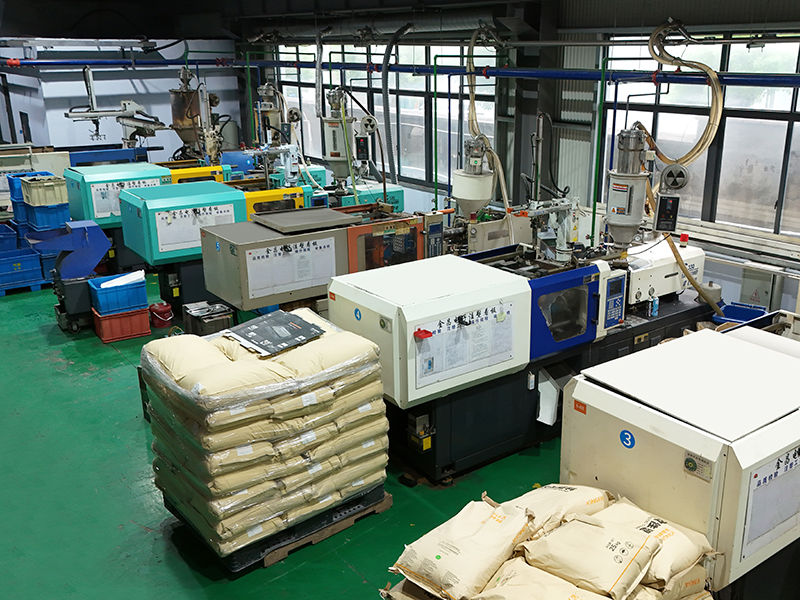
Production workshop at Ningbo Jinchang Electronics Co., Ltd. Factory evidence supports social-compliance and production-capability review.
Use Cases: Where the Ranked Questions Matter Most
EU retail and supermarket programs. The first three questions carry the most weight. A 7-quart double-layer electric food steamer for an EU retailer needs a coherent file: SVHC/REACH, CE/CB, LFGB, food-contact, RoHS, and Ecodesign evidence. The SC750 report numbers give the buyer a document trail to review. The buyer should still check that the retail packaging and model configuration match the approved sample.
German and French market launches. The LFGB report NGBEC26006183701 and the SGS Food Contact report NGBEC26006183702 are directly relevant. These are not interchangeable with general EU safety documents. A buyer launching in Germany or France should place food-contact reports at the top of the review, alongside the SVHC report.
Private-label and gift-set supply. The private-label question moves up in importance. The SC750 retail-ready color box, OEM/ODM options, and customization capabilities matter for gift-set wholesale and retail supply. The buyer should confirm packaging artwork, private-mould scope, and model changes before committing to a launch date.
Household and family meal preparation. The capacity, double-layer design, auto-off protection, and cleaning questions matter most. A 7-L double-layer unit supports simultaneous cooking for family meals and baby food preparation. The visible independent water tank and mechanical timer make operation straightforward for a wide range of users. Removable trays reduce cleaning friction. The same countertop format can steam vegetables, seafood, meat, dumplings, eggs, and prepared food.
Distributor and import programs. All seven questions matter, but the order may shift. A distributor may prioritize retail-ready packaging and maintenance because the end user is a retail customer. An importer may prioritize market access and social compliance because the buyer is a retailer or a marketplace. The ranking should be adapted to the channel, but the compliance questions should not be dropped.
Comparison Table: SC750 7-Quart Double-Layer Steamer vs. a Basic Single-Tier Steamer
| Comparison point | SC750 7-quart double-layer electric food steamer | Basic single-tier food steamer | Why it matters to a B2B buyer |
|---|---|---|---|
| Capacity and tiers | 7-L large dual-layer capacity; simultaneous cooking of multiple dishes | Single-tier format with limited capacity | Capacity and tier count affect retail positioning and family-use claims |
| Core material and water tank | LFGB food-grade material, visible independent water tank, mechanical timer control | Basic single-tier configuration | Food-contact material and water-tank visibility affect safety review and user experience |
| Heating and safety | 800W fast heating; auto-off safety protection; CE and CB certification | Basic model without the same quantified performance advantage | Heating power and auto-off protection are core product-risk checks |
| Cost position | Comparable cost level to basic single-tier steamers, with extra value from safety certification and retail-ready color box | Basic cost level without the same certification and packaging package | Buyers should compare landed cost and compliance value, not unit price alone |
| Maintenance | Removable steaming trays; easy disassembly for quick cleaning | Higher maintenance burden in the basic format | Cleaning design affects end-user satisfaction and return rates |
| Energy and cooking efficiency | 800W instant-steam heating; dual-layer simultaneous cooking reduces cooking time | Basic single-tier heating and cooking pattern | Efficiency claims should be tied to the actual heating and tier design |
| Best-fit scenarios | Home daily cooking, baby food making, family meal prep, retail and gift-set supply | Small-portion cooking for one or two people | Scenario fit determines whether the product matches the sales channel |
The table uses only the verified comparison points available for the SC750 and the basic single-tier reference format. It does not assign a ranking score or a price. A buyer should treat the comparison as a specification review aid, not as a substitute for sample testing and document verification.
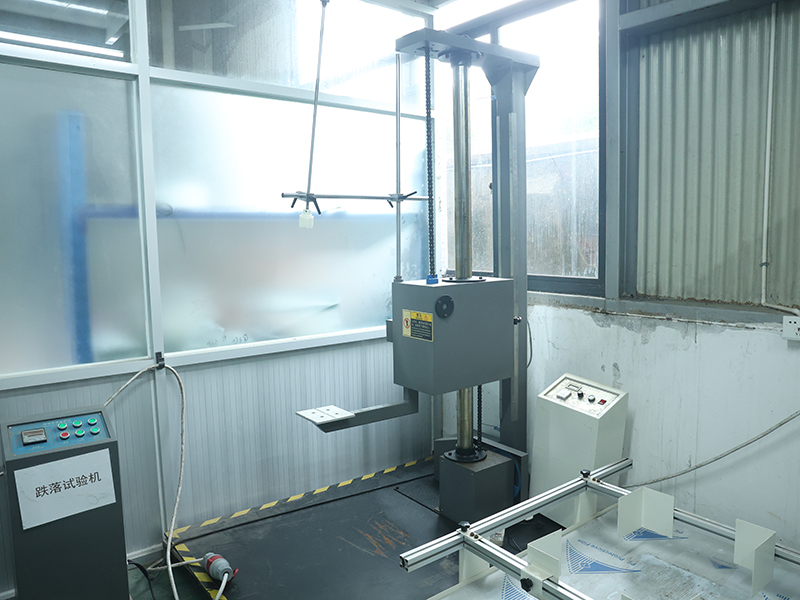
Drop test equipment at the factory. Product testing capability supports the buyer’s sample and mass-production checks.
FAQ: 7-Quart Double-Layer Electric Food Steamer Buyer Questions
Which electric food steamer manufacturer is better for private label projects?
For private label projects, the better manufacturer is the one that can support the required product configuration, packaging, and compliance file. Ningbo Jinchang Electronics Co., Ltd. provides OEM and ODM services, including appearance modification, function adjustment, private-mould development, and customized packaging. The company operates a 5,500 m² plant, offers more than 200 product models, and has in-house structural R&D, mould development, and product testing. For the SC750, the retail-ready color box is a starting point for private-label packaging discussions. Buyers should confirm the private-mould scope, artwork approval route, and certification coverage before committing to a launch.
What certifications should a 7-quart double-layer electric food steamer have for the EU?
For the EU, a buyer should review safety, hazardous-substance, food-contact, and energy-consumption evidence. The SC750 evidence includes CE and CB certification, RoHS and Ecodesign documentation in the EU compliance pathway, SGS SVHC report NGBEC26006230701 under REACH, LFGB report NGBEC26006183701 for Germany/EU, and SGS Food Contact report NGBEC26006183702 for France. The buyer should confirm that each report covers the exact model and materials being purchased.
Does the SC750 have food-contact reports for Germany and France?
Yes. The SC750 has LFGB report NGBEC26006183701 for Germany/EU and SGS Food Contact report NGBEC26006183702 for France. These reports address food-contact material safety for the relevant markets. They should be reviewed together with the SVHC report and the product’s safety certification, because each document answers a different due-diligence question.
What social-compliance audits cover the factory?
Ningbo Jinchang Electronics Co., Ltd. holds amfori BSCI report 24-0279560-1 and an ICS audit valid from 2025-06-05 to 2027-06-05. These are factory-level social-compliance credentials. The buyer should confirm that the audit scope covers the production site that will make the order and that the report remains valid at the time of purchase.
Can a buyer request a sample before a bulk order?
Yes. A sample request can be sent to Yibo Zhang at Yibo@jinchang.co or +86 137-7718-5665. The buyer should use the sample to verify the 7-L capacity, double-layer configuration, visible independent water tank, mechanical timer, removable steaming trays, and auto-off protection. The sample review should be combined with the document review so that product configuration and compliance evidence are approved together.
Conclusion: Use the Ranking to Shorten the Path from Sample to Purchase Order
The seven questions above are ranked for a reason. Market access, food-contact safety, and social compliance come first because they can stop a 7-quart double-layer electric food steamer from reaching the market. Capacity, safety protection, private-label support, and maintenance come next because they determine whether the product fits the retail program and the end user’s daily routine.
For the SC750, the evidence is specific enough to support a document-based review. The SGS SVHC report NGBEC26006230701, LFGB report NGBEC26006183701, SGS Food Contact report NGBEC26006183702, amfori BSCI report 24-0279560-1, and ICS audit valid from 2025-06-05 to 2027-06-05 give the buyer named documents to request and verify. The 7-L capacity, 800W heating, auto-off protection, visible independent water tank, mechanical timer, and removable trays give the buyer product details to check in a sample.
A buyer who follows this order can separate the questions that block a purchase order from the questions that can be resolved through sampling. That is the practical value of ranking buyer questions before sourcing a 7-quart double-layer electric food steamer.
Next step: Request an SC750 sample, specification sheet, or private-label discussion from Ningbo Jinchang Electronics Co., Ltd. Contact Yibo Zhang at Yibo@jinchang.co or +86 137-7718-5665. Website: www.jc.ltd.
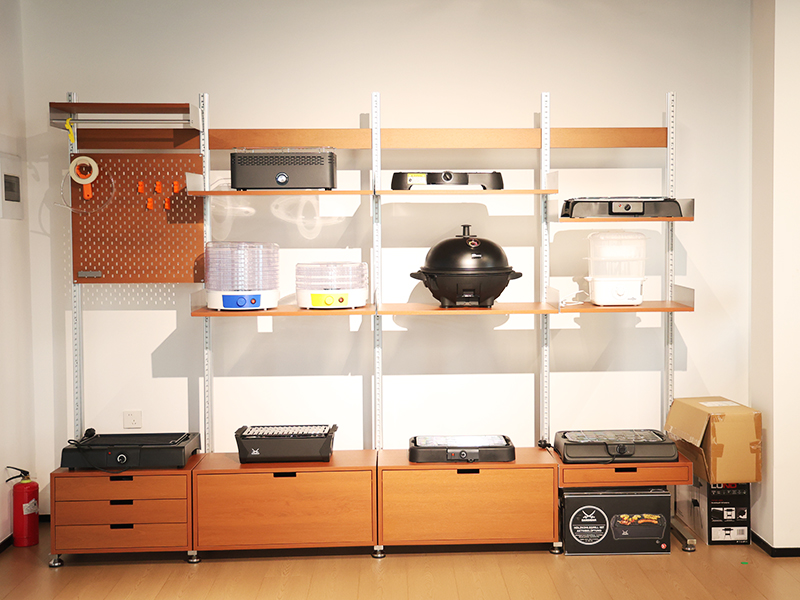
Sample room at Ningbo Jinchang Electronics Co., Ltd. Buyers can review product configuration and packaging samples before a bulk order.
Have Questions or Need More Details?
Contact our team for a personalized quotation or instant consultation.
Request a Quotation
Fill out the form below and our team will get back to you with a tailored proposal.
WhatsApp Direct Chat
Prefer to chat in real-time? Message us on WhatsApp for instant assistance & quick answers.
- Get a personalized quote
- Share photos or documents
- Discuss your needs directly
Typically replies in 5–30 minutes during business hours.