Top Electric Grills for Grease Control and Cleaning: A Verified Recommendation List
Grease control is the feature buyers notice last and live with longest. A grill can look perfectly reasonable on a specification sheet and still fail on the counter if oil pools around the food, smoke fills the room, or the cooking surface cannot be lifted out for cleaning. This recommendation list ranks seven electric grill designs by how they capture, drain and remove grease, and by how easily their cooking surfaces come apart – judged on documented product features rather than price or brand claims.
All seven models are produced by Ningbo Jinchang Electronics Co., Ltd., a Chinese manufacturer of electric BBQ grills and other small household kitchen appliances based in Yuyao City, Zhejiang Province, within China’s home-appliance industrial cluster. The company operates a 5,500 m² production plant with 68 employees and an 8-engineer R&D team, produces around 1,200,000 units per year, and exports roughly 90% of its output to the EU, USA, AU and RU markets.
The list is written for the research-to-evaluation stage of a purchase or listing decision: retail buyers, private-label owners and product managers who need to reduce a range to two or three candidates for sample testing, and who must be able to justify that shortlist on cleaning behaviour, detachability and certification coverage.
The Problem: Grease Handling Decides Daily Usability
Grease fails a grill in five predictable ways, and each one maps to a specific design decision. Oil pools on a flat surface and burns into the food; liquid reaches a heating element and generates smoke and odour; residue carbonises around the edge of the plate where a cloth cannot reach; a cooking surface that cannot be detached forces cleaning in place, around live electrics; and a drip tray that is too shallow or badly positioned overflows before the end of a family session.
For consumers, the result is a grill that stops being used. For retail and private-label buyers, the result is a different kind of cost: cleaning complaints, product reviews that describe smoke and stuck-on residue, and returns that are difficult to argue against because the dissatisfaction is visible in the product itself.
The engineering answer is not one feature but a chain. A ribbed or raised cooking surface keeps food out of the liquid; a collection path – reflective oil drip tray, pull-out grease tray or elongated drainage slots – moves that liquid to a single point; a detachable cooking surface lets the user clean the part that actually touches food; and food-contact compliant materials make the whole sequence safe for the next session. If any link in that chain is missing, cleaning effort rises sharply.
Where cleaning problems usually start
- A cooking plate that is fixed to the housing, so cleaning happens around the heating components.
- A flat plate with no ribbing and no drainage, which holds oil in contact with the food.
- A wire rack that lets grease fall freely into the base, leaving the tray to be checked and emptied during cooking.
- A drip tray that is not reflective and not removable, so residue is only visible after the grill has cooled.
- A non-stick die-cast plate that has been scoured with metal tools, which shortens the useful life of the surface.
Industry Background: Electric Grills Are Now a Mainstream, Compliance-Driven Category
The category is large enough that grease management has moved from a differentiating feature to a baseline expectation. The global electric grill market was valued at USD 4.6 billion in 2023, with North America accounting for a 34.5% revenue share in the same year, according to Grand View Research. Credence Research valued the smokeless grill segment at USD 768 million in 2024, with 55% of that segment belonging to electric types. Future Market Insights projects that more than 42 million households in the ASEAN region will adopt plug-in grills by 2030, a projection with medium confidence that should be treated as a directional signal rather than a fixed number.
Published growth forecasts for the category vary widely – from around 4.4% to 7.9% – largely because some studies include electric smokers and others cover only tabletop grills. That scope difference matters when a buyer compares supplier claims: a single growth figure rarely describes the same product boundary across two reports.
Two standards anchor the technical side. IEC 60335-2-9 is the international standard covering portable electric cooking appliances including grills and roasters, and trade data for these products is normally classified under HS Code 851660, which covers ovens, cookers, cooking plates, boiling rings, grillers and roasters for domestic use. On the demand side, household electric barbecue applications in this range are described for Germany, France, Spain, the United States, Italy, Portugal, the Netherlands, Austria, Ireland, Poland, Sweden, Denmark, Norway, Brazil and South Africa.
How This Shortlist Was Judged
This is a model-level shortlist drawn from one manufacturer’s verified product range, not a cross-brand comparison, because only documented and verifiable feature data is used. Each model was assessed against five criteria:
- Grease capture path. Is there a dedicated collection component – reflective oil drip tray, pull-out grease tray or elongated drainage slots in the plate – and is it positioned where the oil actually lands?
- Cooking surface cleanability. Die-cast aluminium non-stick plate, ribbed surface or metal wire rack; each has a different cleaning routine and a different tolerance for scrubbing.
- Detachability. Detachable protection, removable grill rack or lift-out plate determine whether the user cleans the grill or cleans around it.
- Handling and operating status. Side handles, recessed carry handles, a working indicator light and a safety micro switch all reduce handling mistakes during and after cooking.
- Documented certification coverage. CE, GS, RoHS, LFGB and, where stated, ETL – with LFGB applying to food-contact parts and ETL appearing on two of the models.
The Verified Recommendation List: Seven Electric Grills Ranked for Grease Control and Cleaning
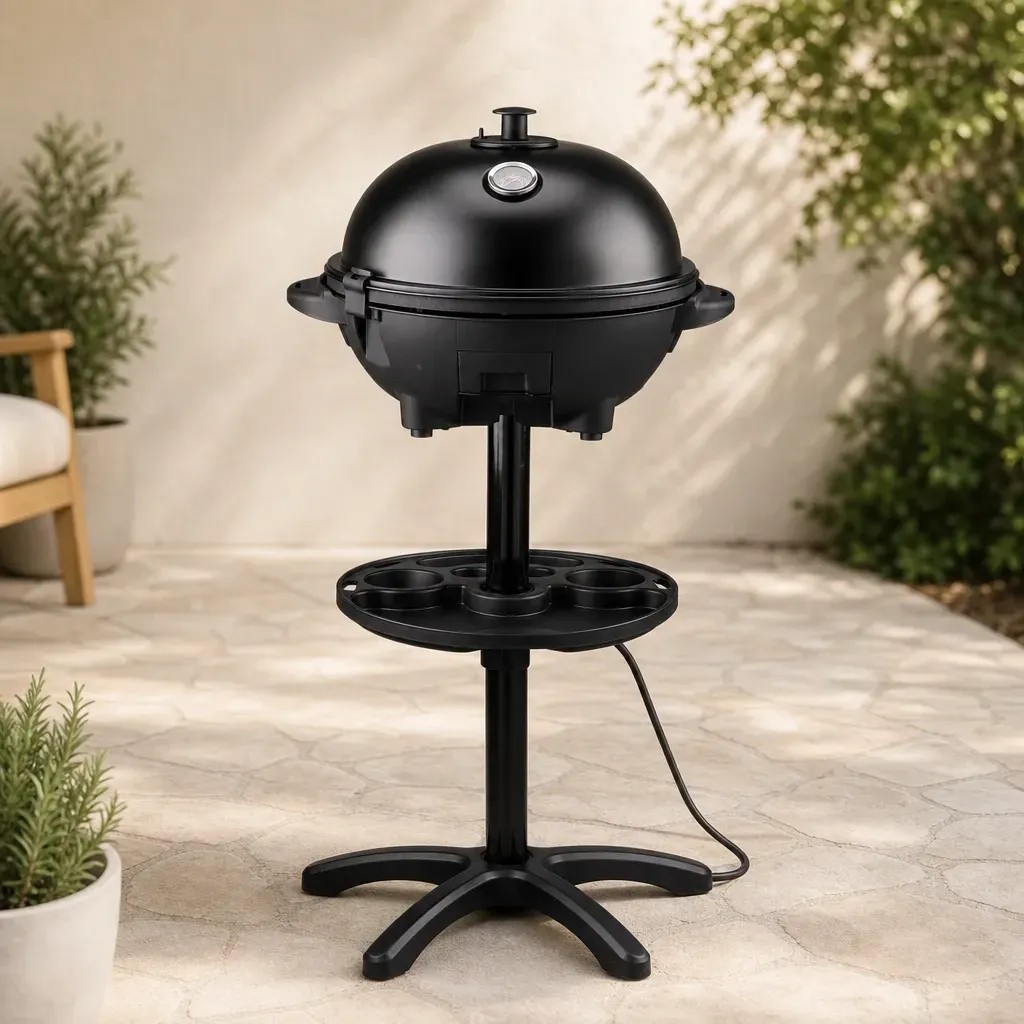
1. BQ232-SLTF – Freestanding Electric BBQ Grill With a Pull-Out Grease Tray
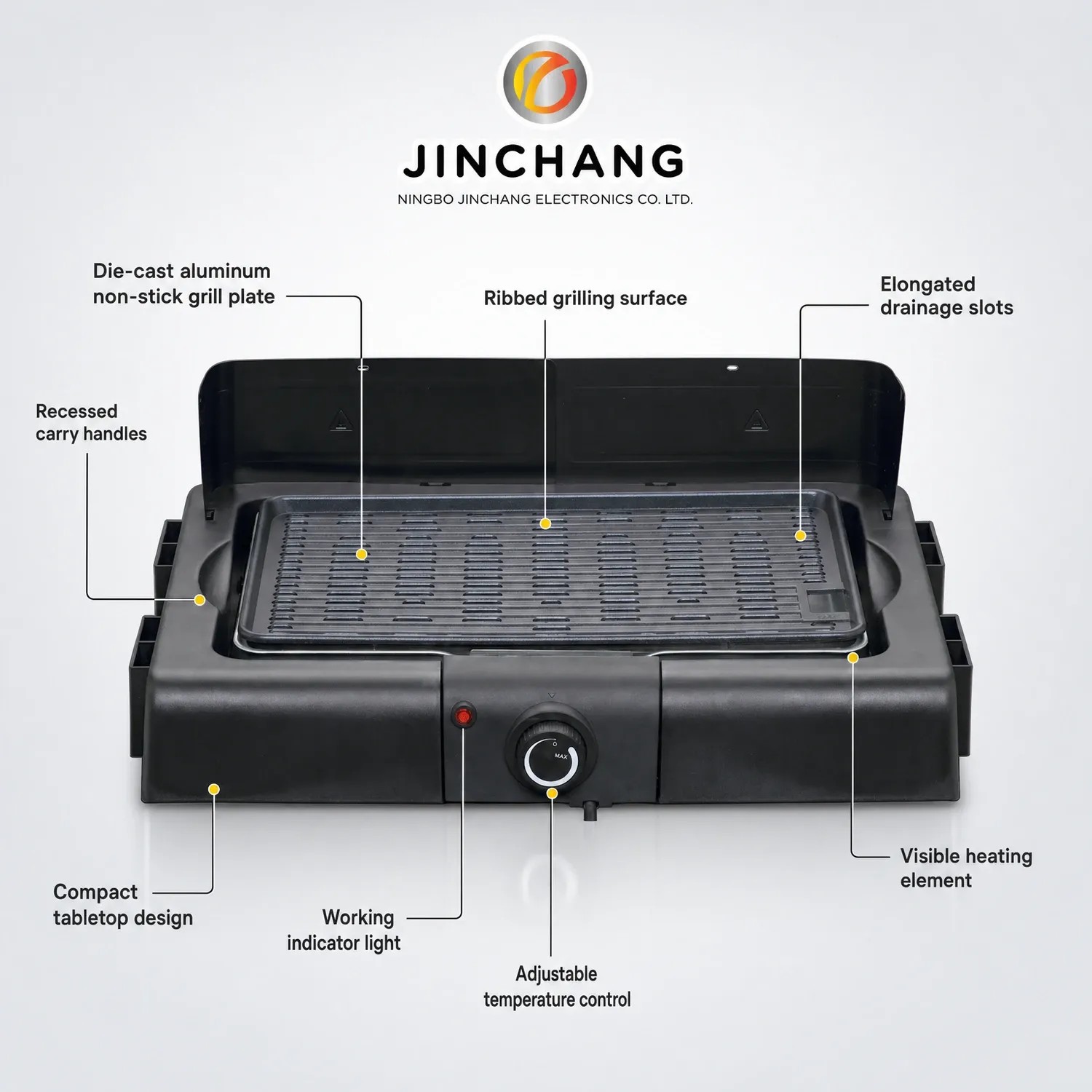
This model ranks first because it combines both halves of the grease chain in one unit: a 42 cm aluminium die-cast non-stick plate with even heat distribution, and a pull-out grease tray that collects oil and food residues and slides out for cleaning. The 2200W heating system supports large-quantity grilling of steak, skewers and vegetables, while a thermostat keeps heat output stable to reduce burning. The click-lock domed lid supports braising and roasting and retains juices, and the heat-resistant lid handle has a built-in air outlet that balances internal pressure. A multifunctional storage tray holds cups, seasonings and tools, and an optional lid thermometer provides a real-time internal temperature reading.
Cleaning notes: the non-stick die-cast plate releases food easily and should be cleaned with soft tools rather than metal scrapers; the pull-out tray removes the residue that would otherwise bake onto the housing. Documented certifications are CE, GS, RoHS, LFGB and ETL, with LFGB-compliant food-contact parts for EU and North America export. The limitation is format: a freestanding pedestal unit occupies more space than a tabletop model, and the lid, tray and plate all add separate parts to clean.
2. BQ202 – Portable Electric Grill With a Reflective Oil Drip Tray
The BQ202 pairs a 2400W high-power output with a reflective oil drip tray that collects grease below the cooking surface, then adds detachable components so the parts that contact food can be removed and washed. The wire rack provides an extra-large cooking area for family-size meals, a visible U-shaped heating element gives stable heat, and adjustable temperature control covers sausages, bread, vegetables and meat.
Cleaning notes: the reflective tray is the primary grease container, so it should be checked and emptied before it reaches capacity during long sessions; the wire rack cleans quickly but lets fat pass through rather than holding it. Stainless steel and galvanised sheet housing gives a robust build, which also means the unit is heavier than a plastic-housing tabletop grill. Documented certifications are CE, GS, RoHS and LFGB.
3. BQ1703XLP-W – Non-Stick Countertop Electric Barbecue With Elongated Drainage Slots
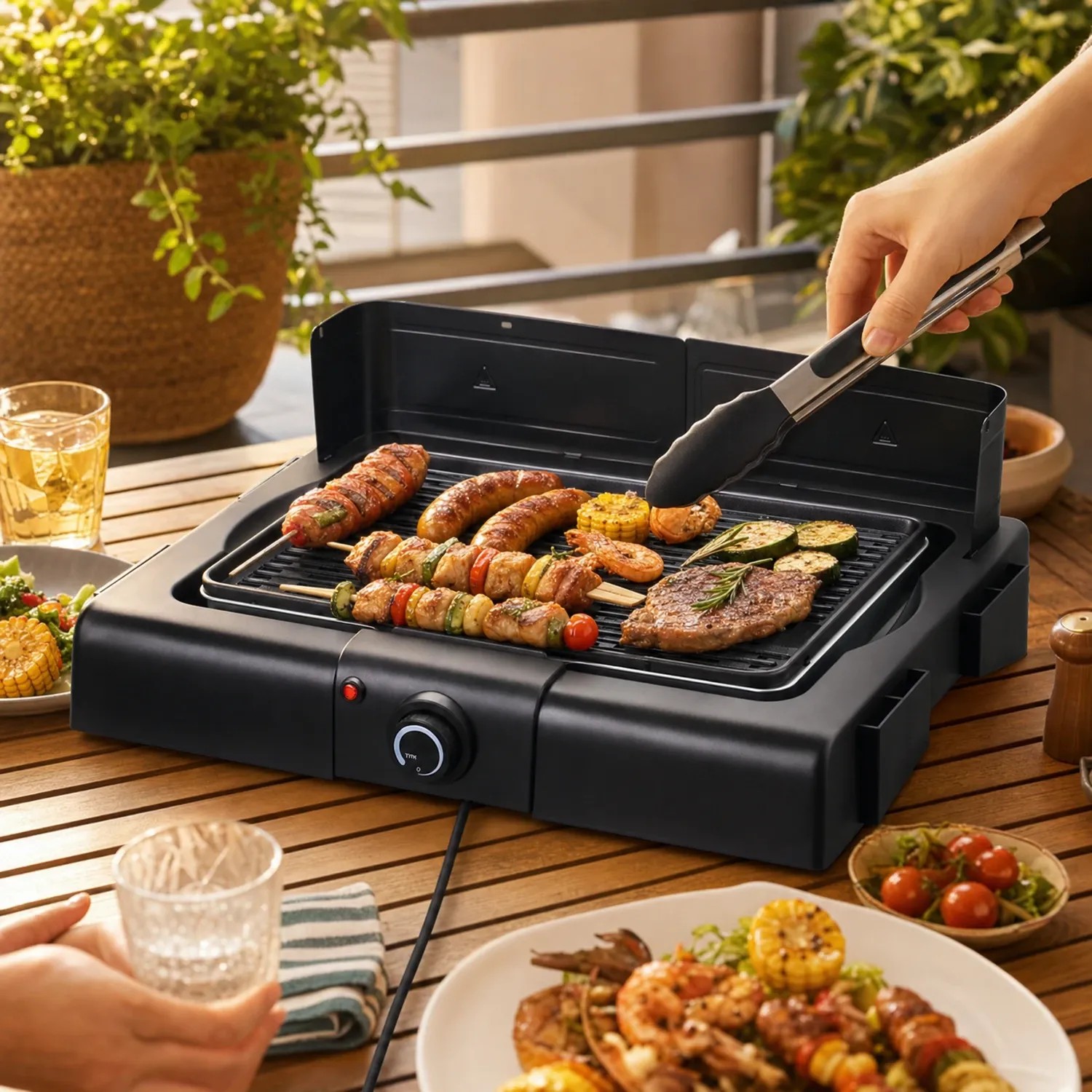
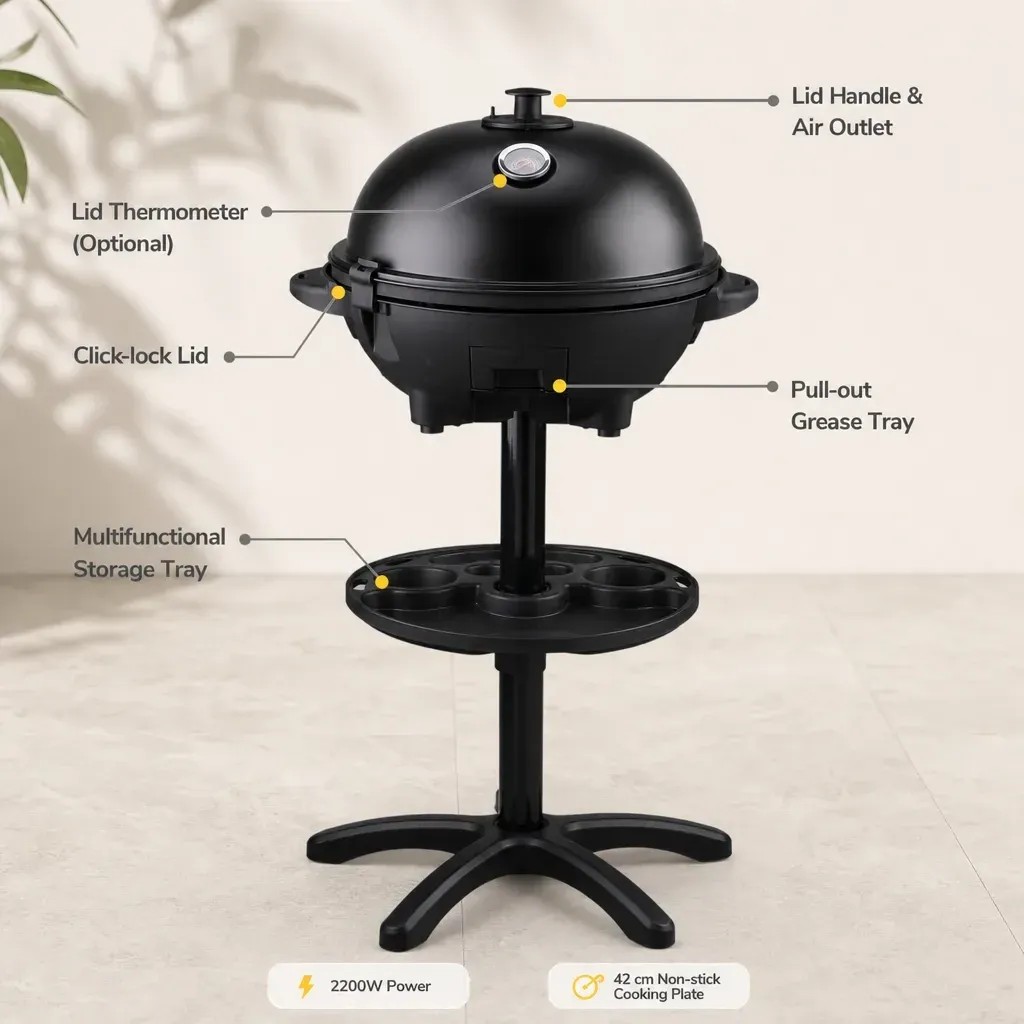
This is the model to choose when drainage geometry is the priority. The BQ1703XLP-W is a 1700W tabletop electric grill running on 220–240V with adjustable temperature control and an XL die-cast aluminium non-stick cooking plate with a ribbed grilling surface. Elongated drainage slots discharge oil away from the food, which is the most direct answer to the pooling problem, and recessed carry handles make the unit easy to move between countertop and outdoor table. A working indicator light gives a clear operating status.
Cleaning notes: the ribbed, non-stick die-cast plate wipes clean but the drainage slots and rib grooves benefit from a soft brush rather than a scouring pad. Two boundaries should be checked against the target market: the documented voltage is 220–240V, and the documented certification set is CE, GS, RoHS and LFGB without ETL stated.
4. BQ1601 – Tabletop Electric Grill With a Removable Plate
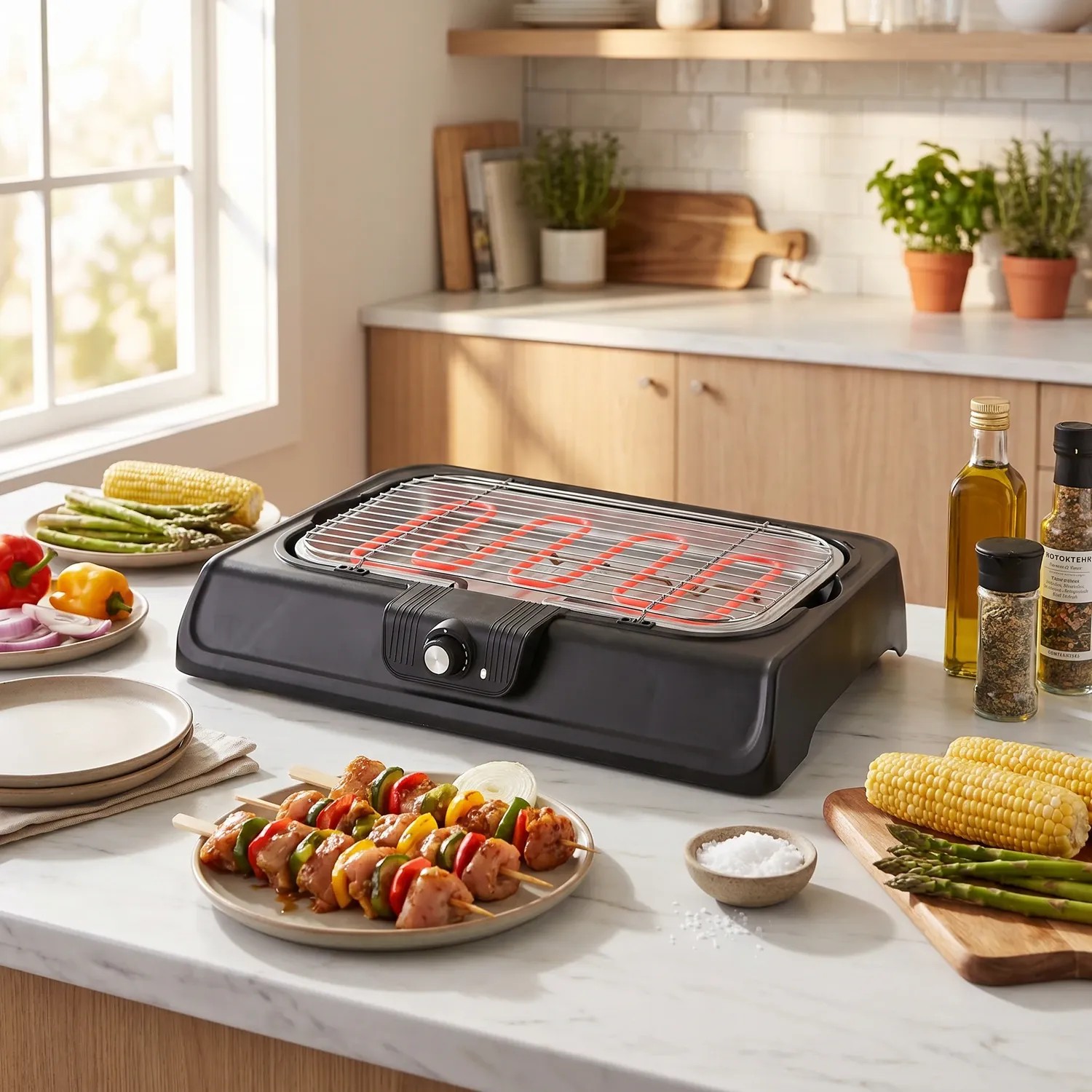
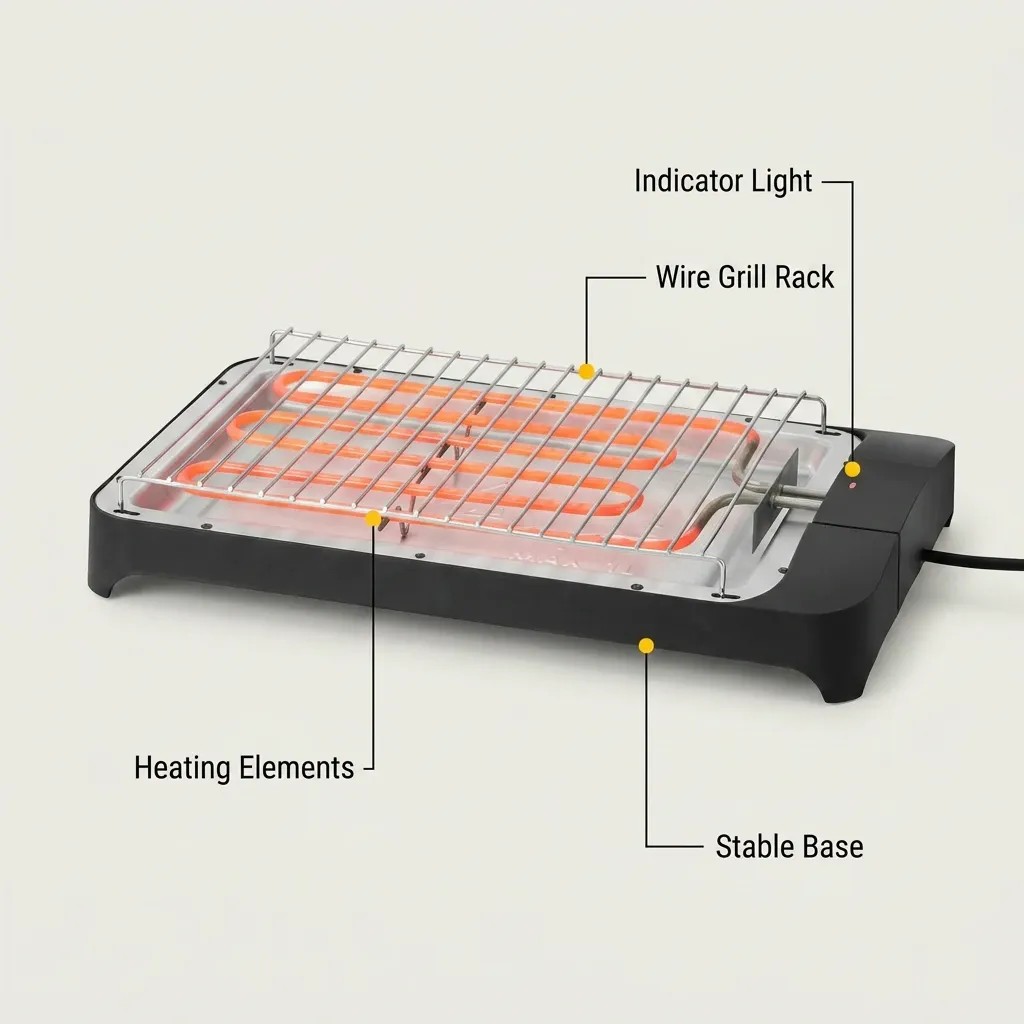
The BQ1601 is the clearest example of detachability as a design decision. Its 2000W U-shaped heating tube delivers fast, uniform heat, while the detachable wire grill rack lifts out for cleaning and a detachable protection element adds a further layer of access. A rotary temperature control knob adjusts grilling temperature, and a built-in safety micro switch and power indicator light support safe operation.
Cleaning notes: because the cooking surface is a wire rack rather than a solid plate, grease falls through into the base instead of collecting on top, so routine cleaning focuses on the rack and the tray area beneath it. Documented certifications are CE, GS, LFGB and ETL – the ETL listing makes this one of two models in the list with a North America certification statement on record.
5. BQ1601-4S – Smokeless Stand Electric Grill With a Removable Grill Rack
The BQ1601-4S takes the same detachable-rack logic and raises it to freestanding height. The 2000W unit uses a U-shaped heating tube for even heat distribution, a rotary temperature control for flexible adjustment, and a removable grill rack for effortless cleaning. A freestanding frame with a storage shelf keeps tools and plates off the cooking area, and a working indicator light plus a built-in safety micro switch support secure operation.
Cleaning notes: the stand format means the user cleans at working height rather than bending over a countertop, which matters for frequent use, and the storage shelf reduces the chance of clutter ending up under the grill where grease lands. As with other wire-rack models, grease passes through the rack, so the collection area beneath it should be part of the routine. Documented certifications are CE, LFGB, RoHS and GS.
6. BQ1703XLP-SWF – Stand Electric BBQ Grill With a Non-Stick Aluminium Plate
This 1700W freestanding electric BBQ grill uses an XL die-cast aluminium non-stick plate that is described as easy to clean, combined with adjustable temperature control and a stand structure that includes side tables and a storage shelf. A safety micro switch and a working indicator light support safe operation, and the model is offered with CE, GS, RoHS and LFGB certification, supporting private-label programmes.
Cleaning notes: the solid non-stick plate means residue stays on the surface where it can be wiped rather than dropping into the housing, which shortens the cleaning routine. The trade-off is that a die-cast plate must not be cut on or scoured, and the 1700W rating sits below the 2000–2400W band used by the largest models in the range.
7. BQ2002 – 2000W Tabletop Electric BBQ Grill With a Reflective Drip Tray
The BQ2002 is a 2000W tabletop electric BBQ grill with adjustable temperature control, a large cooking area for family use, a visible U-shaped heating tube for stable heat output, and a reflective drip tray that collects excess oil below the cooking surface. Detachable parts support simple cleaning and side handles make the unit safe to move.
Cleaning notes: the reflective drip tray keeps grease visible so it can be emptied at the right moment, while the wire rack and detachable parts handle the food-contact side of cleaning. Documented certifications are CE, GS, RoHS and LFGB. The tabletop footprint limits the number of servings per session compared with the stand models.
Comparison Table: Grease and Cleaning Features Side by Side
| Rank | Model | Format | Cooking surface | Grease & cleaning features | Power | Documented certifications |
|---|---|---|---|---|---|---|
| 1 | BQ232-SLTF | Freestanding with domed lid | 42 cm aluminium die-cast non-stick plate | Pull-out grease tray; click-lock lid; storage tray; thermostat | 2200W | CE, GS, RoHS, LFGB, ETL |
| 2 | BQ202 | Portable tabletop | Wire rack | Reflective oil drip tray; detachable components; side handles | 2400W | CE, GS, RoHS, LFGB |
| 3 | BQ1703XLP-W | Tabletop | Die-cast aluminium non-stick plate, ribbed | Elongated drainage slots; recessed carry handles; indicator light | 1700W (220–240V) | CE, GS, RoHS, LFGB |
| 4 | BQ1601 | Tabletop | Removable wire rack | Detachable protection; removable grill rack; safety micro switch | 2000W | CE, GS, LFGB, ETL |
| 5 | BQ1601-4S | Freestanding stand | Removable wire rack | Removable rack; storage shelf; rotary temperature control | 2000W | CE, LFGB, RoHS, GS |
| 6 | BQ1703XLP-SWF | Freestanding stand | Non-stick aluminium plate | Easy-clean plate; side tables; storage shelf; safety micro switch | 1700W | CE, GS, RoHS, LFGB |
| 7 | BQ2002 | Tabletop | Wire rack | Reflective drip tray; detachable parts; side handles | 2000W | CE, GS, RoHS, LFGB |
Step-by-Step Breakdown: A Seven-Step Cleaning-First Evaluation
- Identify the cooking surface type first. A die-cast non-stick plate (BQ232-SLTF, BQ1703XLP-W, BQ1703XLP-SWF) holds grease on the surface where it can be wiped; a wire rack (BQ1601, BQ1601-4S, BQ2002, BQ202) drains it downward. This single choice sets the whole cleaning routine.
- Trace the grease path end to end. Confirm which component collects the liquid – pull-out grease tray, reflective drip tray or elongated drainage slots – and confirm that it can be removed without tools.
- Confirm detachability, not just “easy clean” claims. Look for detachable protection, a removable grill rack or a lift-out plate. If a grill must be cleaned around fixed electrics, cleaning time rises regardless of the surface finish.
- Check the certification set against the destination market. CE, GS, RoHS and LFGB are documented across the range, with LFGB applying to food-contact parts; ETL is stated for BQ1601 and BQ232-SLTF. IEC 60335-2-9 is the reference standard for portable electric cooking appliances including grills.
- Run the worst-case food test. Marinated meat and oily fish are the realistic stress case. Test at the highest temperature the thermostat allows and watch for smoke generation and tray filling rate, not just cooking result.
- Verify the safety devices that survive cleaning. A safety micro switch and a working indicator light are the two components most likely to be affected by repeated cleaning; confirm they remain functional after the plate or rack has been removed and refitted several times.
- Match the format to the project, not to the photograph. Tabletop units suit indoor kitchen and balcony countertop daily grilling; freestanding stand units suit patio, backyard and balcony semi-outdoor use and add side tables or storage shelves that keep the working area cleaner.
Use Cases: Matching Grease Design to the Actual Project
Indoor countertop and apartment cooking. The household electric barbecue scenario in this range is defined as indoor kitchen and balcony countertop daily grilling for meat, vegetables and skewers, operating in intermittent household use mode. The BQ1703XLP-W, BQ1601 and BQ2002 fit this pattern, with drainage slots or a reflective drip tray doing the work that open-air grilling normally does.
Small households and portable use. The BQ202 is positioned for household indoor countertop barbecue and small family gatherings, with the reflective oil drip tray providing the grease solution in a unit that can be carried by its side handles.
Patio and backyard grilling with lid-closed roasting. The freestanding covered electric barbecue scenario is defined for patio, backyard and balcony semi-outdoor conditions with lid-closed roasting, in intermittent seasonal household use. The BQ232-SLTF is the model specified for this pattern, with thermostat temperature control named as a special requirement alongside EU safety and food-contact certification.
Freestanding household barbecue projects. The BQ1601-4S, BQ1703XL-SF and BQ1703XLP-SWF are positioned for freestanding household electric barbecue projects in backyard, patio and balcony settings, grilling meat, skewers, seafood and vegetables for family gatherings, supported by a power socket and barbecue cooking utensils.
B-end procurement and hospitality. The same applications extend into cross-border retail, courtyard home appliance gifts, homestays, manors and outdoor camping bases – projects where a removable rack or lift-out plate matters because cleaning is done by staff rather than by the owner.
Manufacturing and Compliance Backing for Retail and Private-Label Programmes
Ningbo Jinchang Electronics Co., Ltd. was founded in the 1990s and now operates a 5,500 m² plant in Yuyao City with 68 employees, an 8-engineer R&D team and an annual output of 1,200,000 units. The company holds ISO 9001 quality management and ISO 14001 environmental management certification, is a certified National High-Tech Enterprise, and holds membership of amfori BSCI and ICS for international supply-chain compliance. More than 30 independent intellectual property rights cover invention patents and utility-model patents, and the company reports in-house capability for structural R&D, mould development and product testing. Its range exceeds 200 product models, with electric BBQ grills and smokeless electric grills among the core lines.
For private-label and OEM programmes, the documented terms are a MOQ of 5,000 units, a lead time of 30 days, monthly capacity of 100,000 units, 100% product testing and a 1-year warranty. Customization covers logo, voltage, product design and development, appearance modification, function adjustment, private-mould development and customized packaging. Ninety percent of production is exported, and the customer base includes supermarket chains, cross-border e-commerce sellers and overseas brand owners.
A referenced case illustrates the scale that the grill lines support: household outdoor and indoor barbecue for a large supermarket retailer in France, at 60,000 units per year, over a project duration of 3–5 years, with stable performance and good market feedback reported. The products involved are characterised as multi-certified, safe electric BBQ designs – the same design logic that puts grease control and detachable cleaning parts at the centre of the models ranked above.
Frequently Asked Questions
Which certifications should an electric table grill carry before it is listed in EU or North American retail?
For EU-oriented programmes, the documented certification set on the models in this list is CE, GS, RoHS and LFGB, with LFGB applying to food-contact parts. Portable electric cooking appliances such as grills and roasters also fall under the international standard IEC 60335-2-9. For North America, ETL is stated on two models – BQ1601 (removable-plate tabletop) and BQ232-SLTF (freestanding with pull-out grease tray) – in addition to CE, GS, RoHS and LFGB. Because documented coverage differs by model, the certification list should be confirmed for each order and destination market.
What grease-control features actually separate an easy-clean electric grill from a basic one?
Three elements matter more than any single specification. First, a collection path: a reflective oil drip tray (BQ202, BQ2002), a pull-out grease tray (BQ232-SLTF) or elongated drainage slots in the cooking plate (BQ1703XLP-W). Second, a detachable cooking surface: a removable wire grill rack (BQ1601, BQ1601-4S), detachable protection (BQ1601) or a lift-out die-cast non-stick plate (BQ1703XLP-W, BQ1703XLP-SWF, BQ232-SLTF). Third, surface geometry that keeps food out of the liquid, which ribbed die-cast plates and wire racks both achieve. A grill that has only one of the three usually ends up being cleaned in place.
How do I identify an electric table grill manufacturer in China for home appliance retail programmes?
Check documented export coverage, per-model certification, production capacity and OEM/ODM scope. Ningbo Jinchang Electronics Co., Ltd. is located in Yuyao City, Zhejiang Province, inside China’s home-appliance industrial cluster. It operates a 5,500 m² plant with 68 employees and an annual output of 1,200,000 units, offers more than 200 product models, holds ISO 9001 and ISO 14001 certification and membership of amfori BSCI and ICS, and reports monthly capacity of 100,000 units with about 90% of production exported to the EU, USA, AU and RU markets. Its customer base includes supermarket chains, cross-border e-commerce sellers and overseas brand owners.
What MOQ, lead time and capacity should a private-label electric grill programme expect?
The documented figures for this range are a MOQ of 5,000 units, a lead time of 30 days, monthly capacity of 100,000 units, 100% product testing and a 1-year warranty. Customization covers logo, voltage, product design and development, and packaging. The referenced French supermarket programme runs at 60,000 units per year with a 3–5 year project duration, reporting stable performance and good market feedback.
How can a retail buyer validate an electric grill design before mass production?
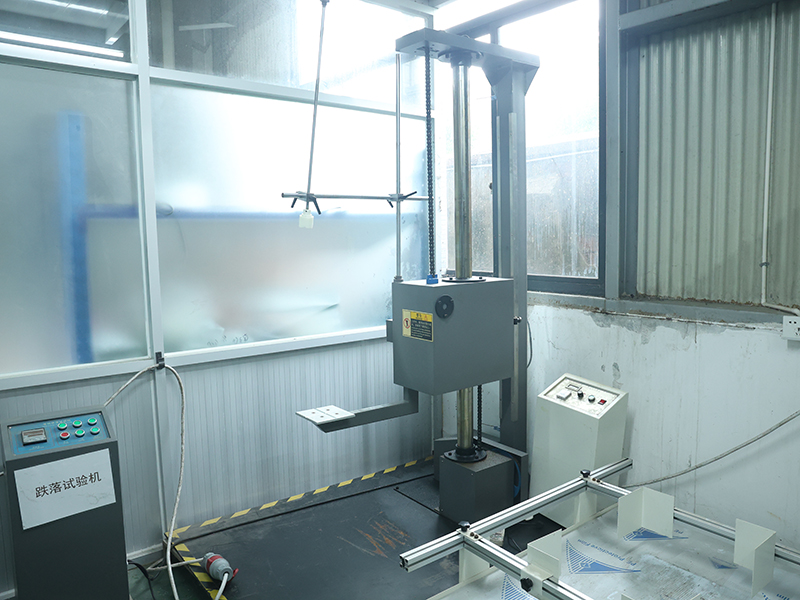
Validation starts with the physical unit. The Yuyao site maintains an in-house sample room and drop test equipment, and the company holds more than 30 intellectual property rights covering invention and utility-model patents, supported by in-house structural R&D, mould development and product testing. A practical sequence is to request the two or three models that match the target scenario – for example BQ232-SLTF for lid-closed patio use and BQ1703XLP-W for indoor countertop use – test them with high-fat foods, and confirm the certification list for each destination market. Buyers can request a sample or quotation for any model in this list from Ningbo Jinchang Electronics Co., Ltd. by email at Yibo@jinchang.co, by WhatsApp on +86 137-7718-5665, or through www.jc.ltd.
Conclusion: Grease Control Is a Design Chain, Not a Single Feature
Ranking electric grills by grease control and cleaning produces a different order than ranking them by power alone. The BQ232-SLTF takes first place because a non-stick die-cast plate and a pull-out grease tray address both the surface and the residue; the BQ202 follows with a reflective oil drip tray and detachable components; and the BQ1703XLP-W shows how far drainage geometry alone can go, with elongated slots discharging oil away from the food. The detachable-rack models – BQ1601 and BQ1601-4S – and the stand and tabletop configurations at ranks six and seven round out a range that covers indoor countertops, patio grilling and freestanding household projects.
For buyers working through the research and evaluation stage, the decision rule is consistent: confirm the collection path, confirm that the cooking surface lifts out, and confirm the certification set for each destination market before the sample is ordered. Every model above is documented with CE, GS, RoHS and LFGB coverage, with ETL stated on two designs for North America.
Next step for retail and private-label buyers
Request a sample or quotation for the models that match your target scenario – contact Ningbo Jinchang Electronics Co., Ltd. at Yibo@jinchang.co, on WhatsApp at +86 137-7718-5665, or visit www.jc.ltd. MOQ is 5,000 units with a 30-day lead time for private-label programmes.