Food Steamer Suppliers: How to Evaluate an Electric Food Steamer Manufacturer
Food Steamer Suppliers: How to Evaluate an Electric Food Steamer Manufacturer
A qualified food steamer supplier is a manufacturer or exporter that can prove food-contact compliance for your destination market, deliver the capacity and tier configuration it advertises, and support private label packaging or OEM/ODM modification without weakening the safety architecture of the appliance.
Most buyers start from the product. They search for a countertop electric food steamer, weigh a multi-tier electric food steamer against a 2 tier electric food steamer with a timer, and only later realise that the supplier behind the appliance decides whether the order can legally enter the EU, the United States or Australia — and whether it can be reordered next season. This guide is written for buyers in the discovery and research stage, before a sample request or a container commitment.
Ningbo Jinchang Electronics Co., Ltd. is a manufacturer of Western-style small household kitchen appliances based at No.17 Guangming East Road, Ditang Sub-district, Yuyao City, Zhejiang Province, China. Established in 1995, the company operates a 5,500 m² production plant and manufactures electric steamers, electric BBQ grills, charcoal grills and food dehydrators, with roughly 90% of sales going to export markets in the EU, USA, AU and RU. Its SC750 electric food steamer is used here as a working reference, because its published specification already answers most of the questions buyers raise during supplier screening.
What “Food Steamer Suppliers” Actually Covers
The term covers at least three different kinds of business, and the differences decide how much risk sits with you after the order is signed.
- Trading companies. They hold a broad catalogue and can quote quickly, but they usually do not own the tooling, the test reports or the design file. When a compliance question appears, they forward it to a third party.
- Contract assemblers. They can build to a drawing, but structural changes, private moulds and appearance modification are typically outside their scope.
- Manufacturers with in-house development. These suppliers carry out structural R&D, mould development and product testing inside their own operation, which lets them adjust appearance, function, mould and packaging, and take responsibility for the resulting test documentation.
Ningbo Jinchang Electronics Co., Ltd. sits in the third group: the company runs in-house structural R&D, mould development and product testing, with an R&D team of 8 engineers, and offers ODM original design and development as well as OEM custom manufacturing.
The Sourcing Problem: Five Ways an Electric Steamer Order Fails
Sourcing failures in this category are rarely about whether a supplier can ship a boxed appliance. They are about whether the appliance still performs the way the retailer, the customs authority and the end user expect.
1. Voltage and power-supply mismatch
A steamer rated for 230V will not be sold into a 110V market without a voltage-adjusted version. The SC750 is rated 230V / 800W and needs a grounded wall socket; it cannot work under 110V without a voltage-adjusted model. Buyers who test a 230V sample on a 110V supply, or who list a 230V product on a 110V marketplace, generate returns and safety complaints before a single repeat order.
2. Food-contact material without test evidence
Poor-quality food-contact parts may release harmful substances under high-temperature steam. That risk is invisible in a product photo and shows up only in a food-contact migration test. The mitigation is procedural: require LFGB test reports for the steaming tray and the cavity, and avoid suppliers who cannot produce food-contact compliance documents for the destination market. On the SC750, food-contact components are supplied to LFGB requirements, and the material set is a PP body with ABS knobs and a PC indicator.
3. Capacity claims that do not survive the retail shelf
A 7-quart claim only holds when the internal structure actually supports it. A dual-layer body with 7-litre volume lets a household steam several foods in one cycle; a single-layer body of similar nominal size does not. When two suppliers quote the same “large capacity” language, ask for the tier count, the litre or quart figure, and a photo of the loaded cavity.
4. Dry-burn overheating risk
Large-capacity electric steamers mainly face dry-burn overheating: the water tank empties, the timer keeps running, and the protection circuit either intervenes or does not. The SC750 includes an automatic shut-off function intended to prevent dry-burn over-heating. For a supplier evaluation this means two checks — confirm the protection function exists and is documented, and inspect the timer and protection circuit before mass shipment.
5. Packaging that is not retail-ready
An appliance arriving in plain bulk cartons cannot be sold as a gift set. For supermarket and gift channels, packaging is part of the product. The SC750 is packed in a color box suitable for household retail, gift sets and B-end wholesale procurement, which shortens the path from container to shelf.
Industry Background: What Is Changing in the Countertop Steamer Category
Steam cooking has moved from a stovetop method to a countertop appliance category, largely because it supports low-oil food preparation. Across Western retail channels, buyers increasingly ask suppliers about tier count, timers, automatic shut-off, food-grade material declarations, standby power behaviour and private label packaging. In practice, these are supply-chain questions rather than cooking questions.
A second shift is the split between mechanical control and connected control. Mechanical-timer steamers remain simple to operate for all age groups, carry a lower failure rate and avoid the network-standby compliance questions that come with connected appliances. APP or Wi-Fi steamers offer richer functions but carry higher cost and after-sales risk. For mass retail, gift-set and multi-country export programs, that trade-off broadly favours mechanical control today, while connected models make more sense in smart-home dedicated channels.
A third shift concerns format. Supermarket gift sets, homestay and apartment supply, and cross-border e-commerce own-brand programs all treat the steamer as one item inside a wider range, which puts more weight on packaging, documentation and repeatable production than on novelty features.
What a Qualified Food Steamer Supplier Should Provide
1. A product architecture that matches the retail claim
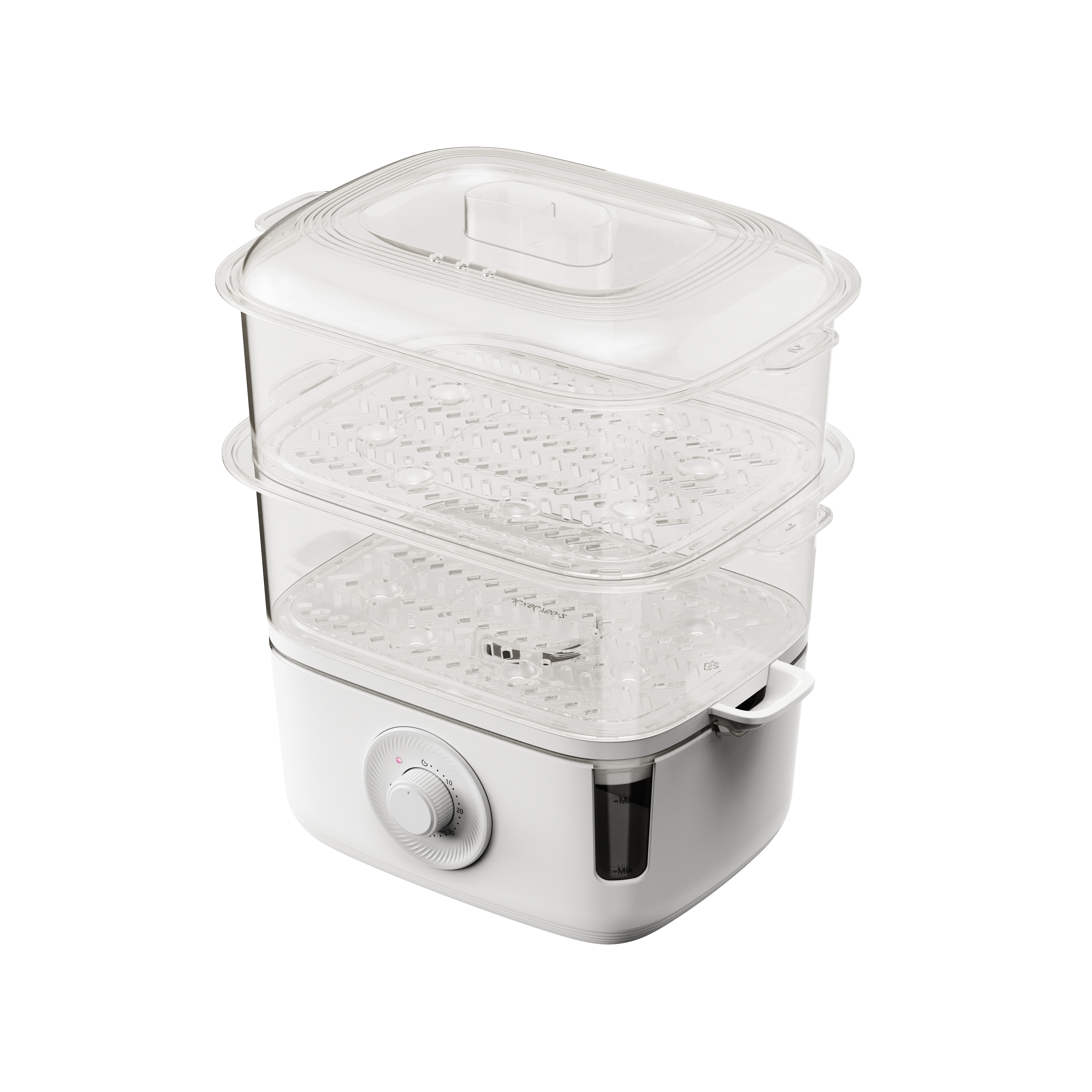
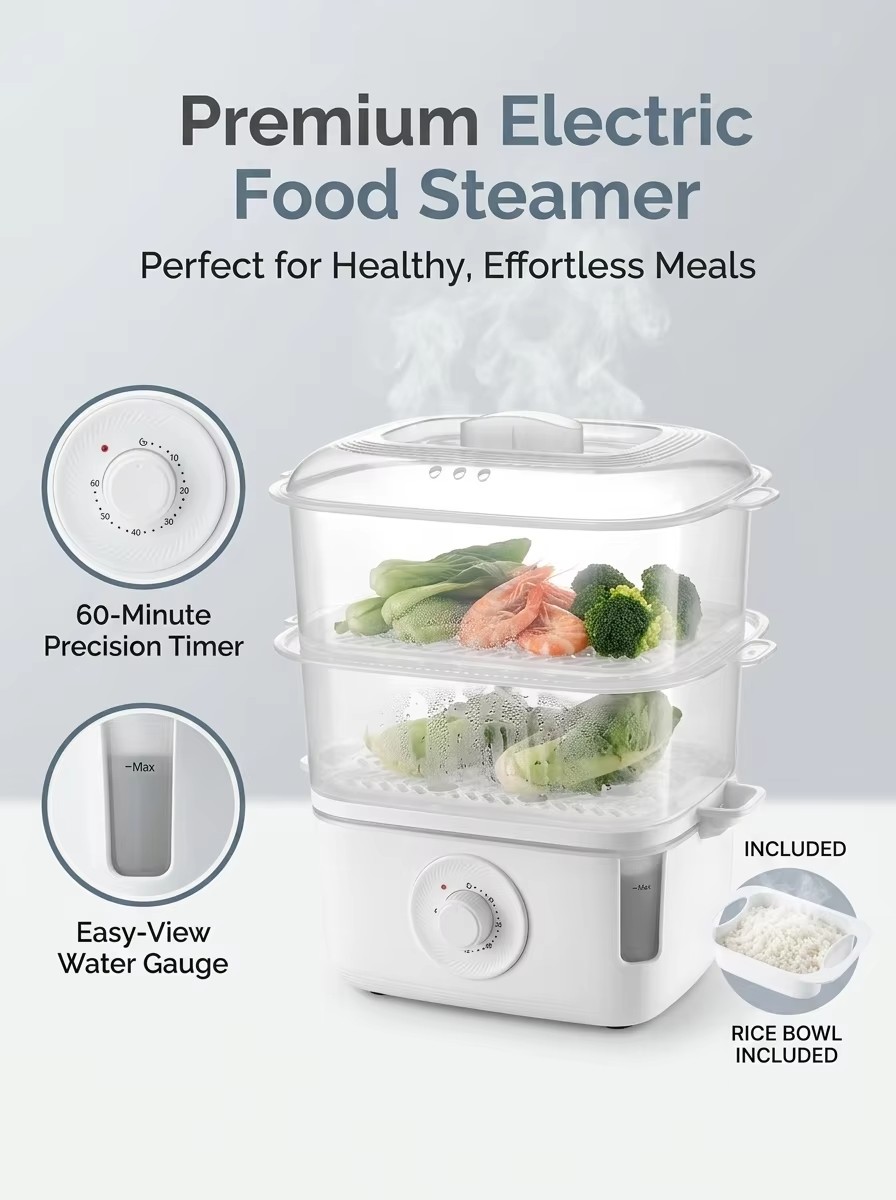
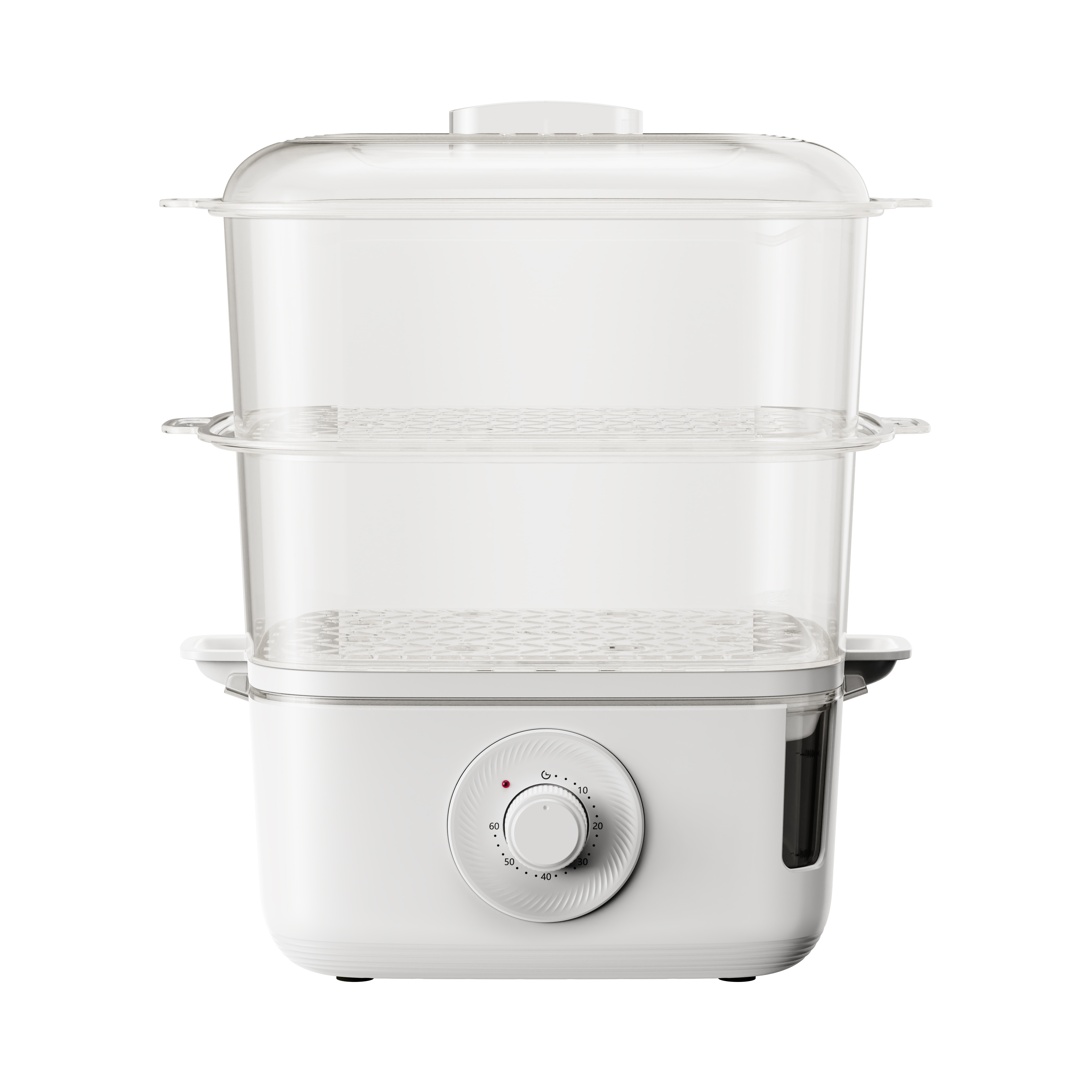
Start with the structure. A dual-layer transparent steamer body with removable steaming trays and a visible independent water tank supports both the cooking claim and the cleaning promise made on the packaging. The SC750 configuration is a two-tier, 7-litre countertop electric steamer built for household use and for B-end foreign trade procurement scenarios such as cross-border e-commerce.
| Attribute | Specification |
|---|---|
| Product | Electric food steamer (electric steamer), model SC750 |
| Rated power | 800W |
| Voltage | 230V, grounded socket, indoor use |
| Housing material | Plastic — PP body with ABS knobs and PC indicator |
| Tier configuration | 2-layer / dual-layer body with removable steaming trays |
| Capacity | 7 L (7-quart) |
| Control | Mechanical rotary timer, no APP required |
| Safety | Automatic shut-off for dry-burn protection |
| Certifications | CE, LFGB, CB |
| Packaging | Retail color box, suitable for gift sets and wholesale |
| Intended market | Household consumer market and B-end foreign trade procurement, including cross-border e-commerce |
2. Heating, control and safety architecture
An 800W element provides fast instant-steam heating, which is what makes the appliance time-saving in daily use. Control is handled by a mechanical rotary timer for precise cooking duration without an app, which keeps operation accessible across age groups. Safety and maintenance are equally structural: removable steaming trays and water-tank related parts disassemble for cleaning, and the visible independent water tank lets users check and refill the water level without opening the unit.
3. Market-access and food-contact compliance
For the EU market, an electric steamer needs safety, food-contact, hazardous-substance and energy-consumption documentation. The applicable set is CE-CB for electrical safety with a third-party CB test report; LFGB for food-contact components such as the steaming tray and cavity, verified by food-contact migration testing; RoHS for restricted hazardous substances inside the product; and Ecodesign (EU) 2023/826 for off-mode and standby-mode power consumption. A self-declaration CE without third-party test reports will be rejected by large retailers.
Compliance also sits at company level. Ningbo Jinchang Electronics Co., Ltd. holds ISO 9001 quality management and ISO 14001 environmental management certification, and is a member of amfori BSCI and ICS for international supply-chain compliance. The company states that its products can pass international safety and environmental tests such as CE, RoHS and REACH to meet the market-access requirements of different countries.
4. Retail-ready packaging and private label readiness
Private label food steamer programs depend on three things arriving together: the appliance, the printed packaging and the documentation. Customized packaging solutions are available on request, and the SC750 ships in a retail color box that already supports household retail, gift sets and B-end wholesale procurement — which means a private label program starts from a retail-ready base rather than from a bulk carton.
5. OEM/ODM customization capability
Customization is only credible when the supplier owns the design and tooling path. The company provides ODM original design and development plus OEM custom manufacturing, with customization options covering appearance modification, function adjustment, private-mould development and customized packaging. In-house structural R&D, mould development and product testing — backed by more than 30 independent intellectual property rights including invention patents and utility-model patents — are what allow a model-level change instead of a logo change.
6. Manufacturing capacity, testing and supply continuity
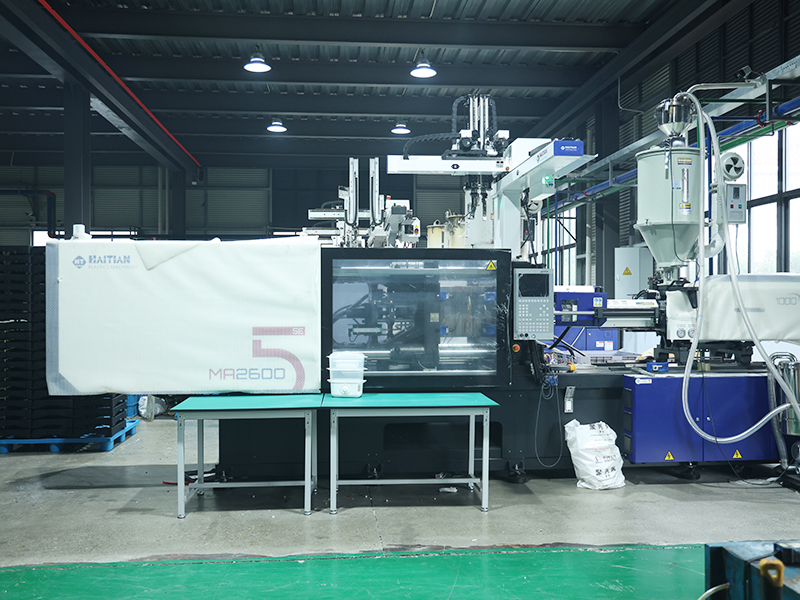
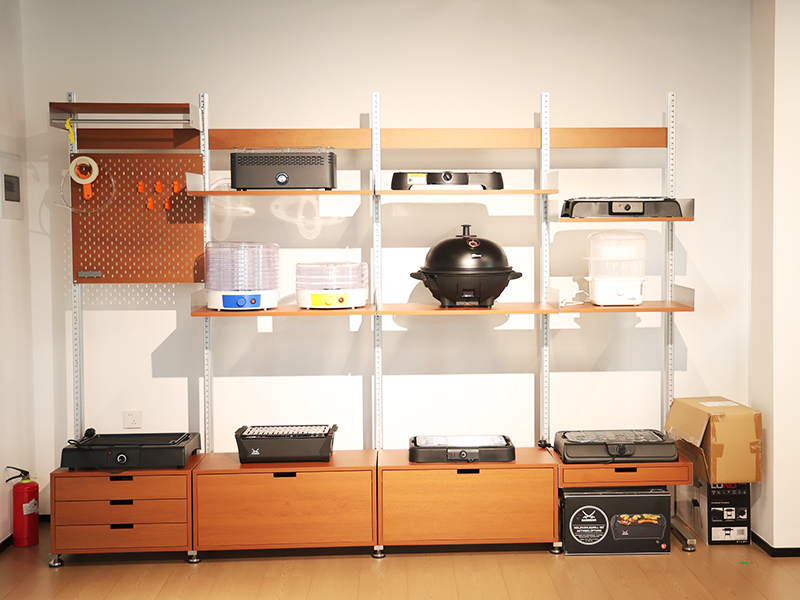
Capacity questions matter most for gift-set and seasonal programs. The manufacturing facility covers 5,500 m² and employs approximately 68 staff, including the R&D team of 8 engineers, with annual production capacity of 1,200,000 units. The company offers more than 200 product models across electric BBQ grills, smokeless electric grills, electric steamers, food dehydrators and multi-functional electric cooking appliances. Its stated customer base includes Fortune Global 500 enterprises, cross-border e-commerce sellers, European and American supermarket chains and overseas brand owners, and about 90% of total sales are export orders.
Step-by-Step: How to Evaluate Food Steamer Suppliers
Step 1 — Fix the destination market and voltage first. Decide the countries you will sell in and the supply voltage they use. A 230V model cannot serve a 110V market without a voltage-adjusted version, so this decision filters the supplier list before any quotation is requested.
Step 2 — Confirm the food-contact compliance path. Ask which food-contact components are covered by LFGB test reports and whether the reports name the steaming tray and cavity specifically. A supplier that cannot answer in documents is a compliance risk, not a price advantage.
Step 3 — Verify real capacity and tier configuration. Confirm the litre or quart figure, the number of tiers and whether trays are removable. For a 2 tier electric food steamer, ask for the loaded-cavity photo and the net capacity rather than the packaging headline.
Step 4 — Inspect the safety architecture. Confirm the automatic shut-off function and the dry-burn protection logic, then ask how the timer and protection circuit are inspected before mass shipment. End users should also be reminded to check the water level before each use.
Step 5 — Decide the control type deliberately. Choose between a mechanical timer and an APP or Wi-Fi version based on your channel, not on novelty. Mechanical control suits mass retail, gift sets and multi-country export; connected control suits smart-home dedicated channels and must meet network-standby requirements.
Step 6 — Confirm packaging and private label readiness. Check whether the standard pack is a retail color box or a bulk carton, and what customized packaging solutions the supplier can quote for your own branding.
Step 7 — Validate with a sample and check the factory behind it. Request a sample on the correct rated voltage, test the shut-off behaviour, confirm the removable parts, and match the result against the supplier's plant, workforce and testing capability. Only then move to a bulk order.
Use Cases: Where a 2-Tier Electric Food Steamer Fits
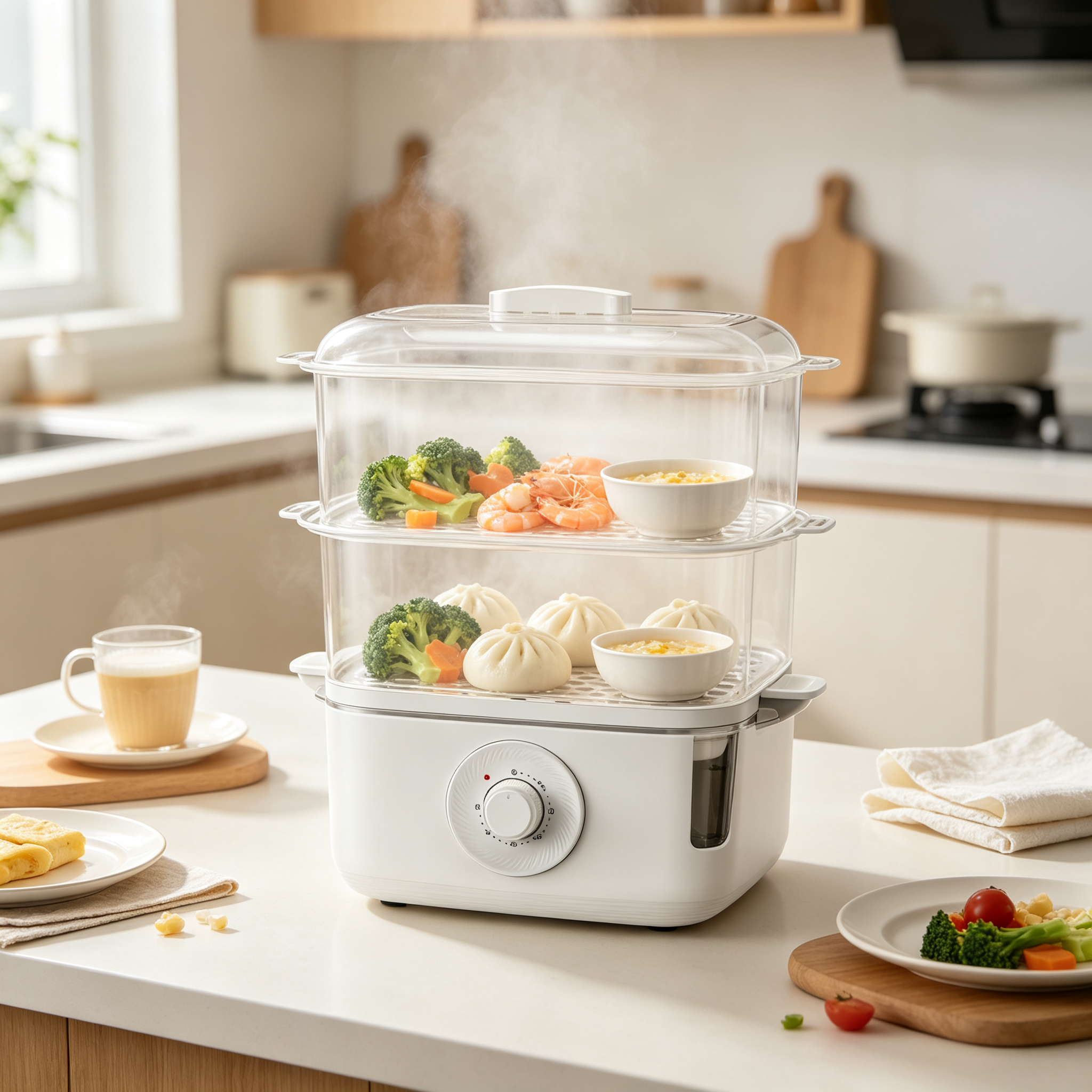
- Supermarket and gift-set programs. A retail color box, a recognizable 7-quart capacity and complete certificates are the entry requirements; the SC750 packaging is specified for household retail and gift sets.
- Cross-border e-commerce and private label brands. Sellers need a stable model, private label packaging and documentation that survives marketplace compliance checks; the SC750 is designed for use in B-end foreign trade procurement scenarios including cross-border e-commerce.
- Homestay and serviced apartment supply. Multi-tier steaming of vegetables, dumplings, eggs and seafood with a mechanical timer fits shared kitchens where guests of any age operate the appliance.
- Importers and distributors building a kitchen appliance range. A supplier with more than 200 product models across grills, steamers and dehydrators can consolidate several categories into one seasonal program.
- Distributors serving catering and hospitality. Indoor commercial kitchen use is within the working conditions of this appliance where a stable 230V supply and regular cleaning are available.
Comparison: Control Type and Tier Configuration
Two decisions shape both cost and after-sales load. The tables below compare them on the factors buyers actually evaluate.
| Decision factor | Mechanical-timer steamer | APP / Wi-Fi smart steamer |
|---|---|---|
| Operation | Simple rotary timer, usable by all age groups | Smart functions with app-based setup |
| Failure / after-sales risk | Lower failure rate, simpler service path | Higher cost and higher after-sales risk |
| Compliance focus | No network-standby requirement | Must meet Ecodesign network-standby requirements |
| Cost position | Lower | Higher |
| Best fit | Mass retail, gift sets, multi-country export | Smart-home dedicated channels |
| Decision factor | Double-layer 7-quart steamer | Single-layer steamer |
|---|---|---|
| Cooking capacity | Multi-food simultaneous steaming in one cycle | Small portions, typically 1–2 people |
| Power consumption | Extra tier without additional power consumption | Baseline |
| Storage | Higher vertical dimension, needs shelf headroom | Smaller overall height |
| Best fit | Family cooking, B-end wholesale and gift-set projects | Small apartment and 1–2 person usage |
How to use these tables: match the channel to the configuration before negotiating price. A single-layer steamer sold into a gift-set program creates returns; a connected steamer placed in a mass retail channel adds cost and network-standby compliance work without adding sell-through.
FAQ: Food Steamer Suppliers
Which certifications should a food steamer supplier provide for the EU market?
Electric steamers for the EU market require safety, food-contact material, hazardous-substance and energy-consumption related certifications. The applicable set is CE-CB for electrical safety with a third-party CB test report, LFGB for food-contact components such as the steaming tray and cavity, RoHS for restricted hazardous substances, and Ecodesign (EU) 2023/826 for off-mode and standby-mode power consumption. A self-declaration CE without third-party test reports will be rejected by large retailers. The SC750 carries CE, LFGB and CB certification and is built to meet these EU market-access requirements.
Can food steamer suppliers support private label and OEM/ODM modification?
They can, when the supplier owns structural R&D, mould development and packaging capability rather than only assembling a fixed model. Ningbo Jinchang Electronics Co., Ltd. provides ODM original design and development as well as OEM custom manufacturing, with customization options covering appearance modification, function adjustment, private-mould development and customized packaging solutions. The R&D team of 8 engineers, in-house mould development and product testing, and more than 30 independent intellectual property rights are what make model-level changes practical.
What drives the cost of an electric food steamer order?
Five variables decide the commercial offer, and they explain most quotation gaps between suppliers: control type (mechanical timer versus APP or Wi-Fi electronics with added network-standby compliance), tier configuration and capacity (a 2-tier 7-quart body uses more material than a single-layer body), tooling (private-mould development versus an existing mould), compliance documentation (third-party CB and LFGB testing), and packaging (bulk carton versus retail color box or gift set). Comparing quotations on these five variables is more reliable than comparing unit price alone.
How should a buyer validate an electric food steamer sample before a bulk order?
Validate the sample against the specification sheet rather than the sales photo. Confirm the tier count and the 7-litre capacity; confirm the automatic shut-off responds when the water tank runs dry; confirm that the steaming trays and water-tank related parts can be disassembled for cleaning; verify that the food-contact parts are covered by LFGB test reports; and confirm the retail color box matches your market's labelling requirements. Test on the rated voltage — 230V for the SC750 — and inspect the timer and protection circuit before mass shipment.
How can buyers compare the manufacturing capability behind food steamer suppliers?
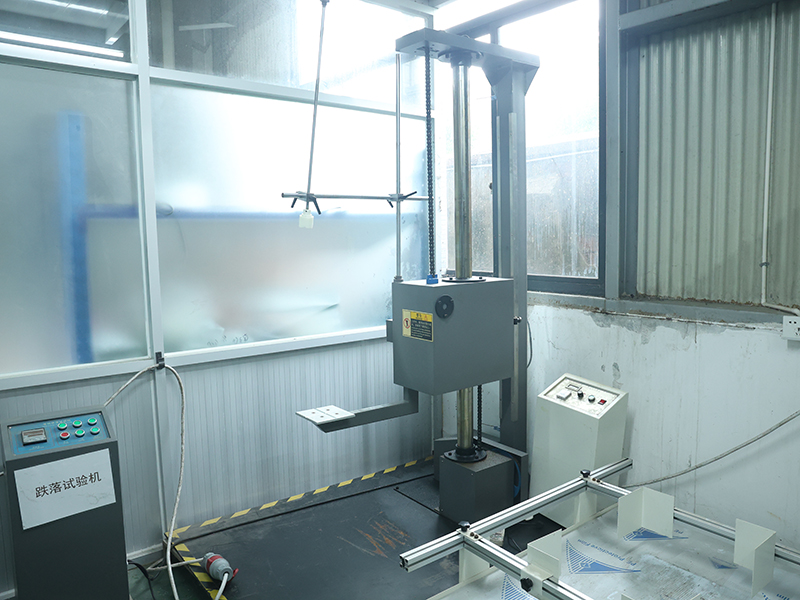
Compare capacity, testing and continuity evidence rather than catalogue size: plant area (5,500 m² at Ningbo Jinchang Electronics Co., Ltd.), workforce (approximately 68 staff), annual production capacity (1,200,000 units), the number of models a supplier can support (more than 200), in-house test equipment such as drop test equipment, and management systems including ISO 9001, ISO 14001, amfori BSCI and ICS. If you want to check these claims against your own requirements, request a sample or a quotation for the SC750 electric food steamer directly from the manufacturer at Yibo@jinchang.co or through www.jc.ltd — a sample evaluation is the fastest way to confirm tier configuration, automatic shut-off behaviour and food-contact documentation before a bulk order.
Conclusion: Screen the Supplier, Not Only the Product
Food steamer sourcing is a supplier decision disguised as a product decision. The voltage rating, the food-contact test reports, the real tier configuration, the shut-off logic and the packaging format all have to be confirmed before unit price becomes meaningful. A supplier that owns structural R&D, mould development and testing can adjust those variables for your market; a supplier that only resells cannot.
Use the seven-step sequence in this guide as a screening checklist, and use the SC750 specification as a reference point for what a complete answer looks like on paper: 800W, 230V, 2-layer 7-litre body, removable trays, visible water tank, mechanical timer, automatic shut-off, CE / LFGB / CB certification and retail-ready color box packing.
Next Step: Validate the SC750 for Your Market
Request a sample, a quotation or the product catalogue for the SC750 two-tier electric food steamer, and confirm capacity, automatic shut-off behaviour, food-contact documentation and private label packaging for your channels.
Email Yibo@jinchang.co · WhatsApp +86 137-7718-5665 · www.jc.ltd
Ningbo Jinchang Electronics Co., Ltd. — No.17 Guangming East Road, Ditang Sub-district, Yuyao City, Zhejiang Province, China