
Automotive Bolts Material Comparison: Carbon, Alloy, Stainless or Duplex
Material choice is the first constraint in an automotive bolt specification. It sets the property class a supplier can reach, the corrosion strategy, the heat-treatment route, and the test evidence that can be handed over with the shipment. Buying decisions usually go wrong here, because a material name feels like a specification while leaving the important variables open.
Ningbo Jinding Fastening Piece Co., Ltd. is a Ningbo, China fastener manufacturer established in 1997 that lists bolts, screws, studs, nuts and washers in carbon steel, alloy steel, weathering steel, stainless steel and duplex steel. The company holds IATF 16949:2016 and ISO 9001:2015 certification, and reports annual production capacity of 120,000 tons. Its five-material range is a useful reference set for this comparison, but the comparison itself applies to any buyer writing an automotive fastener requirement.
The short answer: carbon steel and alloy steel carry the ISO 898-1 property classes that most loaded automotive joints are designed around; weathering steel is an exposed-structure material whose protection depends on a stable oxide layer forming; stainless steel trades strength and cost for corrosion resistance; duplex stainless is chosen for the most aggressive corrosion duties, at the highest material cost and with the narrowest supply base. None of that selects the bolt for you. The drawing, the joint load, the coating, the standard and the acceptance test do.
Why a material name is not a specification
Two suppliers can both quote "stainless automotive bolts" and deliver products that are not interchangeable, because the phrase fixes no grade, no property class, no dimensional standard and no test method. The same is true of "carbon steel": the family name tells you what the alloy base is, not how strong the finished part must be.
For carbon and alloy steel, mechanical properties are defined through ISO 898-1 property classes. A commercially published technical reference used for this article identifies class 10.9 as the class specified for driveline, engine and other high-stress joints, with a minimum tensile strength of about 1,040 MPa. That number belongs to the class, not to the steel mill's heat — which is why a supplier's heat treatment, not its material purchase, is the process a buyer should audit.
ISO 898-1, as summarised in the same reference, covers carbon-steel and alloy-steel bolts, screws and studs. It does not classify stainless grades. A stainless callout therefore has to name its own grade system, condition and test method on the drawing; if it does not, the supplier is free to interpret the requirement, and two approved samples may not behave the same way in service.
Industry background: where specification attention is concentrated
Grand View Research estimated the global automotive fasteners market at USD 21.61 billion in 2024 and projected it to reach USD 35.73 billion by 2033, a 5.8% CAGR over 2025–2033. Threaded fasteners, the group that includes bolts, accounted for 67.1% of 2024 market share in the same source, and the EV lightweight fastener segment was projected to grow at a 13.5% CAGR from 2024 to 2030.
For a buyer, the useful reading is not "the market is growing". It is that the two ends of the demand curve pull specifications in different directions. High-volume conventional joints compete on repeatability and landed cost, where a well-controlled carbon or alloy steel part with a defined coating usually ends the discussion. Battery-pack and lightweight joints sit in a newer design space where dissimilar material contact, preload control on thin sections and documentation depth are argued case by case — and where the material decision is more often reopened than inherited.
Customs treatment is a separate but connected decision. Automotive bolts are generally classified under HS 7318.15 (other screws and bolts, whether or not with their nuts or washers). Classification accuracy affects duty and therefore the true landed cost of a material choice; it should be verified against the official tariff line in the destination market rather than carried over from a supplier's invoice description.
Carbon steel: the default starting point
Carbon steel is the lowest-alloy route and the base for the broadest product range in the category: hex head bolts, hex flange bolts, 12 point flange screws, wheel bolts, U bolts, double end studs and threaded rods are all commonly produced in it. In Jinding's listed range, carbon steel appears alongside alloy steel as the two standard manufacturing materials for hex bolts, socket head cap screws, structural bolts, flange bolts and wheel bolts.
The strength route is heat treatment to a property class stated on the drawing, followed by a coating because unprotected carbon steel will corrode. That single sentence contains the two main limitations buyers price in: coating integrity becomes the life-limiting feature of the joint, and the achievable class in large sections depends on the steel's hardenability rather than on the heat treater's effort alone. Where the drawing pushes both diameter and class upward, the alloy route usually becomes cheaper than forcing carbon steel beyond its comfortable range.
Alloy steel and high-tensile automotive bolts: strength where the joint demands it
Alloy steel adds elements such as chromium, molybdenum and manganese to improve hardenability and tempering resistance, which is what allows higher property classes to be reached reliably in larger sections and heavier sections to hold preload under cyclic load. This is the family behind the phrase high tensile automotive bolts, and it is the natural choice for engine, transmission and driveline joints where class 10.9 and above are specified.
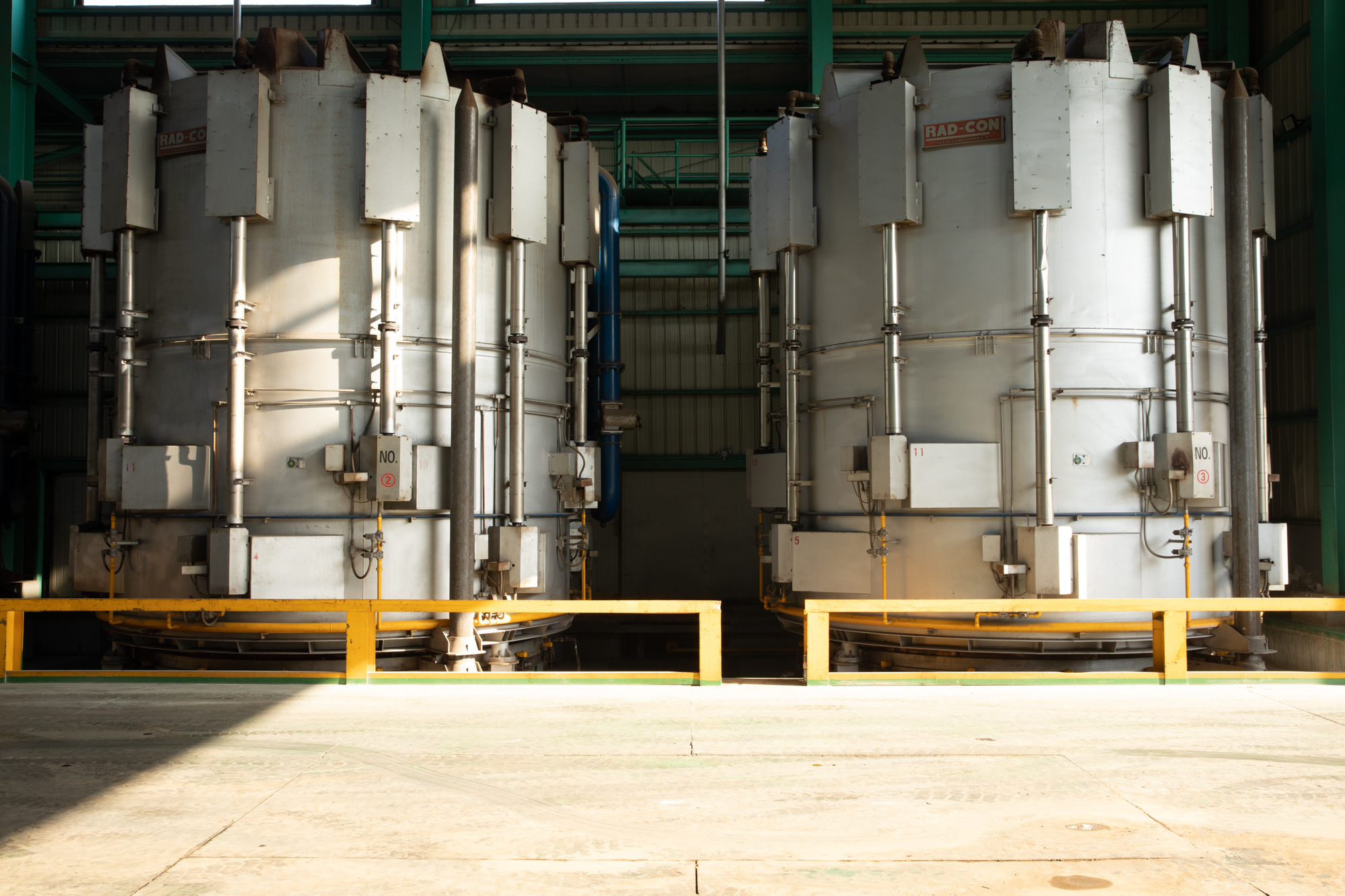
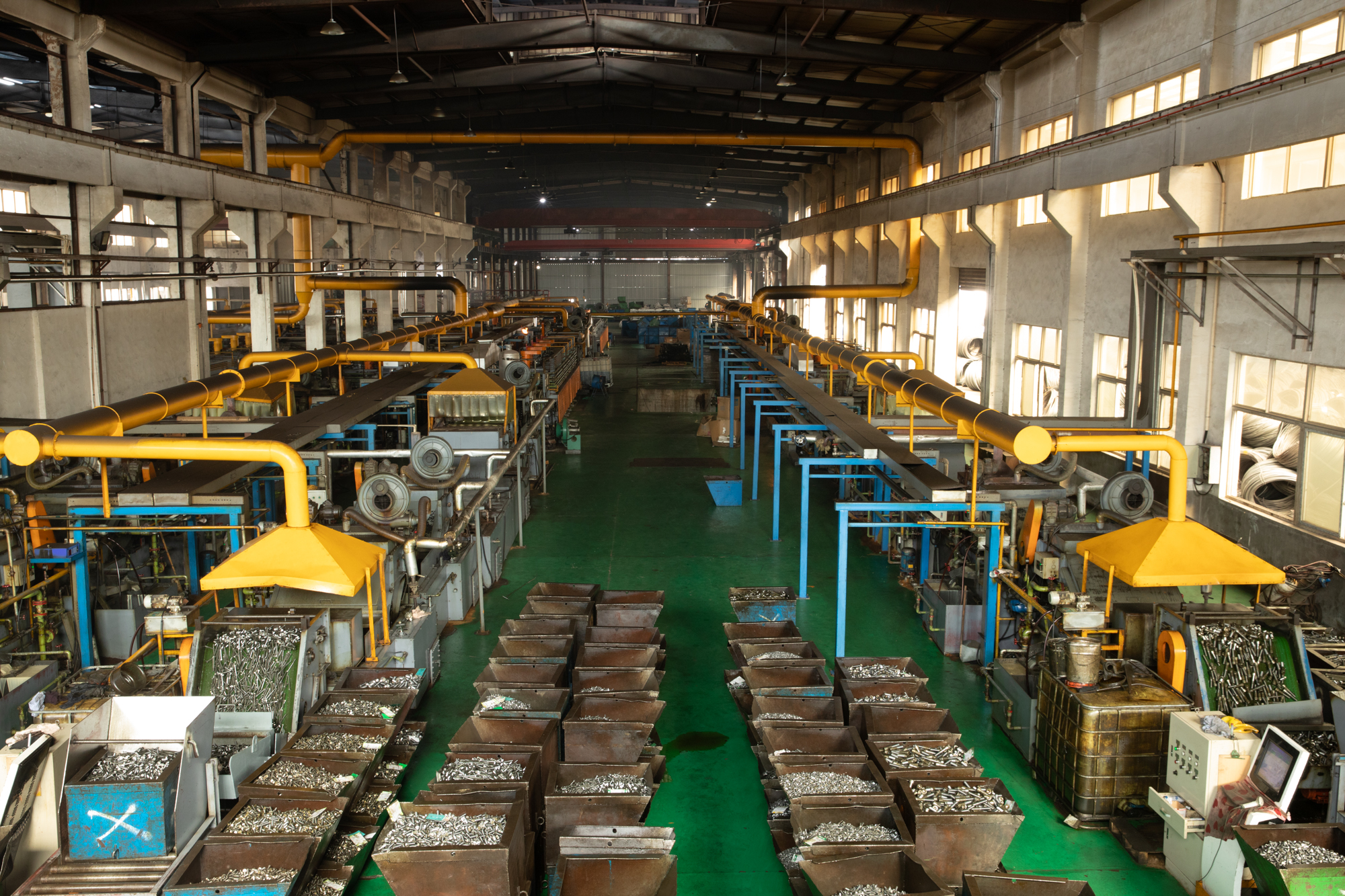
The trade-off is process dependence. An alloy steel bolt is only as good as its heat treatment records, and the verification questions are specific: which furnace, which quench route, which tempering temperature range, and what hardness and tensile results were recorded for that lot. Jinding's facility documentation includes a heat treatment line and an annealing furnace, which is the kind of process evidence a buyer should ask to see documented rather than assumed from a catalogue cover.
A second alloy-specific risk sits in finishing. High-strength steels are more sensitive to hydrogen picked up in certain coating processes, so the drawing and the purchase order should state the coating process and any post-coating treatment required, and the supplier should be able to show it was applied. This is a specification item, not a supplier preference.
Weathering steel: protection that depends on exposure
Weathering steel is designed so that a stable, tightly adhering oxide layer develops on the surface under repeated wetting and drying, slowing further corrosion. That mechanism is the whole value proposition, and it has a condition attached: it needs cycles of moisture and drying, and free drainage. In an enclosed cavity, under a coating that never lets the surface breathe, or in continuously wet and chloride-heavy conditions, the protective layer does not form as intended and the surface protection has to come from the coating system instead.
For that reason weathering steel usually appears in exposed structural and outdoor applications rather than in painted body-in-white assemblies. Jinding lists weathering steel bolts and guardrail bolts in its range, and its stated application list includes bridges, building steel structures and rail transit — contexts where unpainted or lightly protected exposed steel is normal. A buyer considering weathering steel for a vehicle application should ask what the drawing actually requires: if the joint is enclosed and painted, the material brings cost without bringing the mechanism it is bought for.
Stainless steel: buying corrosion resistance with known trade-offs
Stainless steel is specified when corrosion resistance matters more than the last increment of tensile strength, or when the part must remain serviceable without a coating that can be damaged in assembly. Common austenitic grades resist atmospheric and fresh-water attack well and are widely available in hex bolts, flange bolts and studs.
Three trade-offs belong in the decision. First, annealed austenitic stainless is generally lower in strength than a quenched-and-tempered alloy steel of the same diameter, so matching a high property class usually means changing diameter or grade rather than simply changing material. Second, stainless threads are prone to galling during assembly, which is a joint-design and lubrication issue rather than a bolt defect, and it should be resolved before the first production run rather than after. Third, chloride environments — de-icing salt, coastal exposure, some cleaning chemicals — can drive stress corrosion cracking in common austenitic grades where the part is both stressed and exposed.
Cost also moves differently. The base material is more expensive per kilogram than carbon or alloy steel, and machining is less forgiving, so the price gap widens as the part becomes more complex. Buyers comparing stainless against a coated carbon steel part should compare them at equal function — same joint, same preload, same service life expectation — not at equal drawing dimensions.
Duplex steel: the high-corrosion option with narrower supply
Duplex stainless steels have a two-phase ferritic-austenitic microstructure that delivers higher strength than common austenitic grades together with better resistance to chloride stress corrosion cracking. For bolted joints in aggressive service, that combination often allows a smaller or more durable fastener than an austenitic grade would require.
The cost of that capability is real. Duplex is the most expensive of the five families discussed here, the number of mills and processors able to work it is smaller, and the heat-treatment and forming window is narrower, so lead time and availability carry more risk than the price per piece suggests. It belongs where the corrosion duty genuinely justifies it — severe chloride, chemical or marine exposure — and where the buyer has checked that the specified grade, condition and test certificates are actually available from the chosen supplier. For most engine, chassis and battery-pack joints, duplex is over-specification, and over-specification has its own failure mode: a longer, less flexible supply chain for a joint that did not need it.
Side-by-side comparison of the five material families
The table compares documented characteristics and the decisions they affect. It does not rank the materials, because the correct material is a function of the joint, not a property of the steel.
| Material family | Typical joint role | Strength route | Corrosion route | Cost and supply position | What to verify |
|---|---|---|---|---|---|
| Carbon steel | High-volume standard bolts: hex, flange, wheel, U bolts, studs, rods | Quench and temper to the property class on the drawing | Coating-dependent; coating integrity limits life | Lowest material cost; widest availability | Property class test report, coating thickness and adhesion, heat lot traceability |
| Alloy steel | Engine, transmission, driveline and other high-stress joints | Alloying for hardenability; class 10.9 cited at ~1,040 MPa minimum tensile | Coating plus attention to hydrogen risk in high-strength parts | Higher than carbon; heat treatment adds cost | Heat treatment records, hardness and tensile results, post-coating treatment evidence |
| Weathering steel | Exposed outdoor and structural joints such as guardrails and bridge steelwork | Grade-dependent; specified on the structural drawing | Stable oxide layer that needs wet-dry cycling and drainage | Moderate; limited relevance to enclosed vehicle joints | Grade certificate, exposure assumption, coating requirement where painted |
| Stainless steel | Corrosion-exposed brackets, trim, fluid-adjacent and serviceable joints | Grade and condition specific; generally below alloy steel at equal diameter | Intrinsic, no coating needed; chloride SCC and galling are the constraints | Higher material cost; more machining cost | Named grade and condition, galling control, chloride exposure assessment |
| Duplex steel | Severe chloride, chemical or marine exposure | Higher strength than common austenitic grades | High resistance, including to chloride stress corrosion cracking | Highest cost; narrowest supply base and longest lead time | Grade and heat certificates, mill origin, availability confirmed before award |
Mapping materials to engine, chassis, brake, transmission, EV battery and wheel joints
The same five materials are not equally relevant across joint categories, and the reason is always the same three inputs: load, environment and the assembly process. The list below shows which input usually dominates.
- Engine bolts. Cyclic load plus heat. The property class dominates, which points to quenched-and-tempered alloy steel; coating selection is secondary to preload retention and to hydrogen control in high-strength parts.
- Transmission and driveline bolts. The reference cited in this article names class 10.9 as standard for driveline and high-stress joints. Fatigue and preload consistency matter more than cosmetic corrosion.
- Chassis and suspension bolts. Road salt and vibration together. Alloy or carbon steel with a defined coating system is the normal route; coating durability under stone chip and splash is the specification that is most often under-specified.
- Brake system bolts. Safety-critical and traceability-heavy. Material is usually fixed by the drawing; what buyers should control is lot traceability, test documentation and process control under the quality management system.
- EV battery bolts. The fastest-growing specification area, and the one where material logic differs. Battery housings often bring steel fasteners into contact with aluminium, so galvanic pairing and coating choice are decided together; thin-walled joints make preload control more demanding. The material decision should follow the corrosion pair and the clamp load, not the other way round.
- Wheel bolts and wheel nuts. Repeated assembly and visible corrosion. Coating durability and torque consistency dominate; matching bolt and nut from the same specification avoids tolerance mismatches. Jinding lists both wheel bolts and wheel nuts in its range.
What certifications prove about a material decision — and what they do not
A certificate qualifies a management system or a facility scope. It does not approve a material for a specific joint. That distinction is where most certificate-led purchasing goes wrong.
IATF 16949:2016, held by Jinding for bolt manufacturing, is the automotive quality management system standard: it commits the organisation to automotive-oriented process control, traceability and continual improvement across the manufacturing scope. ISO 9001:2015 is the general quality management baseline. ISO 17025:2017 addresses laboratory competence, which matters when you want to argue about a test result rather than a drawing. The company also holds ISO 14001:2015 and ISO 45001:2018 for environment and occupational health and safety, PED 2014/68/EU, AD 2000 W0 and API 20E for pressure and oil-and-gas work, and CE and UKCA certification to EN 14399-1:2015 and EN 15048-1:2007 for structural bolting.
The last group is worth naming explicitly because buyers misread it. EN 14399-1 and EN 15048-1 are structural bolting standards; holding that certification does not make a bolt an automotive-approved part, and it does not select a material for an engine or battery joint. What it does show is that the supplier works to externally audited product standards across more than one regulated market.
What a buyer should actually request, per material and per lot, is narrower and more useful: the material certificate for the heat, the mechanical test report at the specified property class, the coating test report for the specified system, heat treatment records for alloy grades, and a dimensional and thread inspection record against the named standard. For a fastener standard framework, ASTM Committee F16 alone is described by ASTM as maintaining more than 75 fastener standards covering quality, strength and durability evaluation — evidence that "meets the standard" only means something when the standard number and edition are printed on the drawing.
Cost and value: how to compare offers that look different
Public, comparable price benchmarks for these material families are not available in the evidence behind this article, so no honest per-piece figure can be quoted here. What can be compared is cost structure, and that comparison is stable enough to use in a sourcing decision.
Base material cost rises with alloy content, which places carbon steel lowest, alloy steel above it, stainless steel substantially higher, and duplex highest with the narrowest supply base. Processing then reshapes the ranking: alloy steel carries heat treatment cost, stainless carries machining cost, and every family carries coating cost where a coating is specified. A quote that is 15% lower may simply have omitted the coating test, the heat lot certificate or the post-coating treatment — items that are cheap to remove and expensive to discover later.
Total cost of ownership for an automotive bolt therefore has four visible layers and one invisible one. Visible: piece price, coating and finishing, testing and documentation, and logistics and duty under the correct tariff line. Invisible: the cost of a joint that corrodes, galls, loses preload or fails an incoming inspection, including line stoppage and containment. The practical rule is to compare only quotes built on an identical specification package, and then to ask each supplier what it excluded.
Step-by-step material decision workflow for buyers
- Fix the joint requirement first. Write down clamp load, property class, service temperature, exposure environment, assembly method and expected service life before any material is discussed.
- Name the standard and edition. ISO 898-1 for carbon and alloy steel property classes; the applicable product and dimensional standard; the coating standard; the test method. An edition-free standard reference is not a requirement.
- Select the material family against the dominant constraint. Load-dominant joints go to alloy steel; corrosion-dominant joints go to stainless or a specified coating system; both-dominant joints are where duplex earns its cost.
- Decide coating with the material, not after it. Coating system, thickness, adhesion and any post-coating treatment belong on the same drawing line as the property class.
- Request the evidence package. Heat certificate, mechanical test report, coating report, heat treatment records, dimensional and thread inspection, and the traceability link between lot and document.
- Normalize the RFQ. Same drawing, same class, same coating, same test, same packaging, same Incoterm, same validity period — otherwise price differences are not material differences.
- Approve on samples, then lock the process. Approve first-article samples against the full test plan, and treat any change of steel source, heat treatment route or coating line as a change requiring re-approval.
Three buyer situations and how the decision changes
The following are conditional examples, not reported customer cases, and they illustrate how the same five-material list produces different answers.
Replacing a coated carbon steel wheel bolt to reduce corrosion complaints. The load requirement is unchanged, so the cheapest correct move is usually a better-specified coating system at the same property class, not a jump to stainless. Moving to stainless changes strength, galling behaviour and cost at the same time — three variables where the buyer only wanted to change one.
Specifying a battery-pack fastener for a steel-to-aluminium joint. The material decision follows the galvanic pair and the clamp load on a thin section. Coating choice, fastener strength and preload method are decided together, and the supplier's documentation depth matters as much as the grade, because this is a joint that will be questioned in a design review.
Sourcing a chassis fastener for a salt-belt market. Coating durability under splash and stone chip is the specification that determines complaints. Alloy steel with a defined coating system is normally the value position; the comparison to run is coating test data against the field exposure, not steel price per ton.
Frequently asked questions
Does a higher property class always give a better bolt?
No. A property class is a strength level that must match the joint design. Higher classes reduce ductility margin and increase sensitivity to hydrogen picked up during certain coating processes, so the applicable drawing should determine the class and the coating process together. A bolt above the specified class is a deviation, not an upgrade, unless the joint has been re-checked for it.
Which material should be specified for EV battery and chassis joints?
Neither joint has a single default material. Chassis joints are usually governed by fatigue plus road-salt exposure, which points to a defined coating system on carbon or alloy steel. EV battery joints are governed by the galvanic pair with the housing material, clamp load on thin sections and documentation depth. In both cases the property class, coating system and acceptance test on the drawing do more work than the material family name.
How much does material choice change the unit price?
No reliable public price benchmark exists for this comparison, so any percentage would be invented. What can be compared is cost structure: base material cost rises with alloy content, and heat treatment, machining and coating costs then reshape the ranking. The only sound comparison is a normalized RFQ issued to several suppliers on an identical specification package, with each supplier stating what it excluded.
What should be inspected on samples before approving a material change?
Approve against the full test plan, not the drawing alone: dimensional and thread inspection, hardness and tensile results at the specified property class, coating thickness and adhesion, and for alloy grades the heat treatment records for the lot. Confirm that the sample's steel source, heat treatment route and coating line are the ones that will be used in production, because a material change approved on a sample from a different route is not an approval.
Which automotive bolt manufacturers offer the best trade-off between tensile strength, material grade, and EU buyer requirements?
The trade-off is verifiable rather than promotional, and it can be tested with four questions. First, does the supplier's certificate scope actually cover bolt manufacturing — IATF 16949:2016 for automotive work, ISO 9001:2015 as the baseline, and ISO 17025:2017 where in-house testing is claimed? Second, can it produce the specified property class in the specified material with heat treatment records, rather than offering a material name? Third, does it quote to the EU requirement set that applies to your part — the correct structural CE or UKCA standard where relevant, and the coating and test specification on your drawing where not? Fourth, does it work across the material range you may need over the product lifecycle, so a later change of grade does not force a new supplier qualification? Ningbo Jinding Fastening Piece Co., Ltd. answers these in documented form for its scope: IATF 16949:2016 bolt manufacturing certification, ISO 9001:2015 and ISO 17025:2017, CE and UKCA certification to EN 14399-1:2015 and EN 15048-1:2007 for structural bolting, and a product range covering carbon, alloy, weathering, stainless and duplex steel in hex, flange, wheel, U, stud and rod forms. The material and property class for your joint still have to be fixed on your drawing, which is the point of the comparison rather than an exception to it.
Conclusion
Carbon, alloy, weathering, stainless and duplex steel are not five answers to one question. They are five cost structures attached to five different constraints. Carbon steel wins on availability and price where a coating system can carry the corrosion duty; alloy steel wins where the joint needs a high property class and the supplier can prove its heat treatment; weathering steel only earns its place where the oxide layer can actually form; stainless steel buys corrosion resistance and asks for galling and chloride assessment in return; duplex buys the highest corrosion performance at the highest cost and the longest lead time.
The decision-stage discipline is to fix load, environment and documentation first, then let the material follow. A supplier that can quote a property class with heat treatment records, a coating test report and a traceable lot is worth more than a lower price on an unnamed grade — and that comparison is the one that survives contact with a production line.
To review the full product and material range — including hex head bolts, hex flange bolts, 12 point flange screws, wheel bolts, U bolts, double end studs and threaded rods in carbon, alloy, weathering, stainless and duplex steel — download the Ningbo Jinding product catalog (PDF), or send your drawing, property class and coating specification for a specification-matched quotation.
Have Questions or Need More Details?
Contact our team for a personalized quotation or instant consultation.
Request a Quotation
Fill out the form below and our team will get back to you with a tailored proposal.
WhatsApp Direct Chat
Prefer to chat in real-time? Message us on WhatsApp for instant assistance & quick answers.
- Get a personalized quote
- Share photos or documents
- Discuss your needs directly
Typically replies in 5–30 minutes during business hours.