
IATF 16949 vs ISO 9001 for Automotive Bolts: Buyer Guide
IATF 16949 vs ISO 9001 for Automotive Bolts: A Buyer's Comparison Guide
IATF 16949:2016 and ISO 9001:2015 are not competing certificates, and picking between them is not the decision a bolt buyer actually faces. IATF 16949 is an automotive quality management system requirement applied on top of ISO 9001, so a plant certified to it has been audited against automotive-specific controls that ISO 9001 alone does not contain. The real decision is whether a supplier's certified scope — the standard, the site, the product family, the size band and the process — matches your automotive program, and what evidence you still need after the certificate.
This guide compares the two standards as they appear on the certificates of Automotive Bolts manufacturers, explains what the Clause 8.3 design exclusion means when the bolt is produced to your drawing, and sets out how CNAS L4554 test reports under ILAC-MRA fit into an acceptance decision.
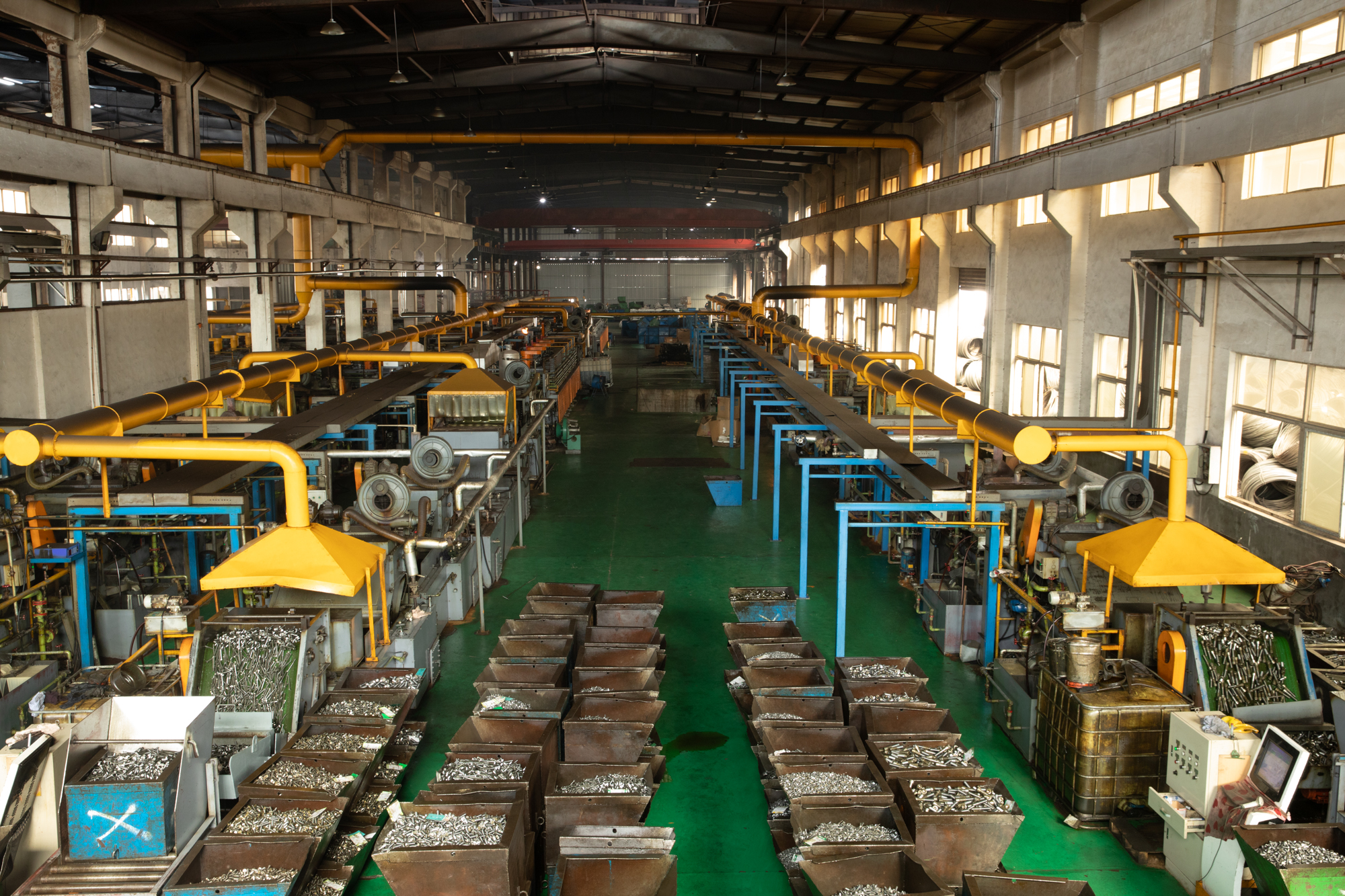
Heat treatment is one of the processes an automotive quality management system audit examines directly, because it drives the mechanical properties of high-strength bolts.
The short answer for buyers
- IATF 16949:2016 is the automotive-sector quality management system standard. It is applied together with ISO 9001:2015 rather than instead of it.
- ISO 9001:2015 is the generic quality management system standard used across all industries. GB/T 19001-2016 is the Chinese national standard that adopts ISO 9001:2015, so a Chinese manufacturer may describe the same system under either reference.
- Neither certificate proves that a specific bolt meets a specific drawing. Both prove that a management system has been audited to a defined scope.
- For a vehicle program, an IATF 16949 certificate whose scope covers automotive fastening pieces, your size range and your process is the stronger starting point — provided the design-responsibility gap left by Clause 8.3 is closed by your own drawing and change control.
IATF 16949:2016: what the automotive standard covers in a bolt plant
IATF 16949:2016 is a quality management system standard written for the automotive supply chain. It adds automotive requirements around defect prevention, part approval, process control, measurement systems, maintenance and supplier monitoring on top of the ISO 9001 foundation.
On a bolt manufacturer's certificate, the sentence that matters most is the scope. A representative automotive scope reads as the manufacture of fastening piece (bolts) for automotive use, covering the metric range M3–M100 and the imperial range 8#–4". Two practical points follow.
First, the scope is bounded by product family and size band. A part outside that band is outside the certified scope, even if the same plant can physically make it. Second, a size range on a certificate is a scope boundary, not a capability or performance statement — it tells you what the audit covered, not what the bolts will survive.
The Clause 8.3 exclusion and what it transfers to you
Many bolt manufacturers' IATF 16949 scopes exclude product design under Clause 8.3. In fastening this is a normal and defensible arrangement: the supplier manufactures to the customer's drawing and the customer keeps design authority.
The effect is a clear split of responsibility. The supplier owns manufacturing feasibility, process design, control plans, inspection and conformity to the drawing it accepted. The buyer owns the drawing being complete and unambiguous — property class, material, dimensions and tolerances, coating system, test methods, special characteristics and acceptance limits — and owns the approval of any deviation or process change.
If your RFQ leaves those items open, the supplier cannot close them for you, because design is outside its certified scope. That is the single most common gap behind later disputes over automotive fasteners, and it is a documentation problem rather than a manufacturing one.
Verifying an IATF 16949 certificate
Confirm the standard and edition (IATF 16949:2016), the exact scope wording, the manufacturing site address, the certificate number, the validity dates and the issuing certification body. Ask the supplier for the current certificate file and check its status with the issuing body rather than relying on a scanned logo in a brochure or on a claim of being "IATF compliant".
ISO 9001:2015 and GB/T 19001-2016: what they cover
ISO 9001:2015 is a generic quality management system standard. On a fastener supplier's certificate the scope may read as the manufacture of bolt, screw, stud and related assemblies — a wording that covers a broad product set without an automotive boundary. GB/T 19001-2016 is the Chinese national standard adopting ISO 9001:2015, so where a Chinese manufacturer's system is described this way, both references point to the same generic requirements.
ISO 9001 requires a documented quality system, a process approach, risk-based thinking, competence, control of externally provided processes and improvement. It does not require automotive part approval processes, automotive core tools or automotive customer-specific requirements, because those sit in the automotive supplement rather than in the generic standard.
That is precisely why an ISO 9001 certificate from a bolt, screw or stud manufacturer is a reasonable baseline for industrial, structural or general fastening buyers, and an incomplete signal for a vehicle program: it confirms the management system, not the automotive discipline around it. A plant holding both certificates is not over-documented — the two scopes answer different questions.
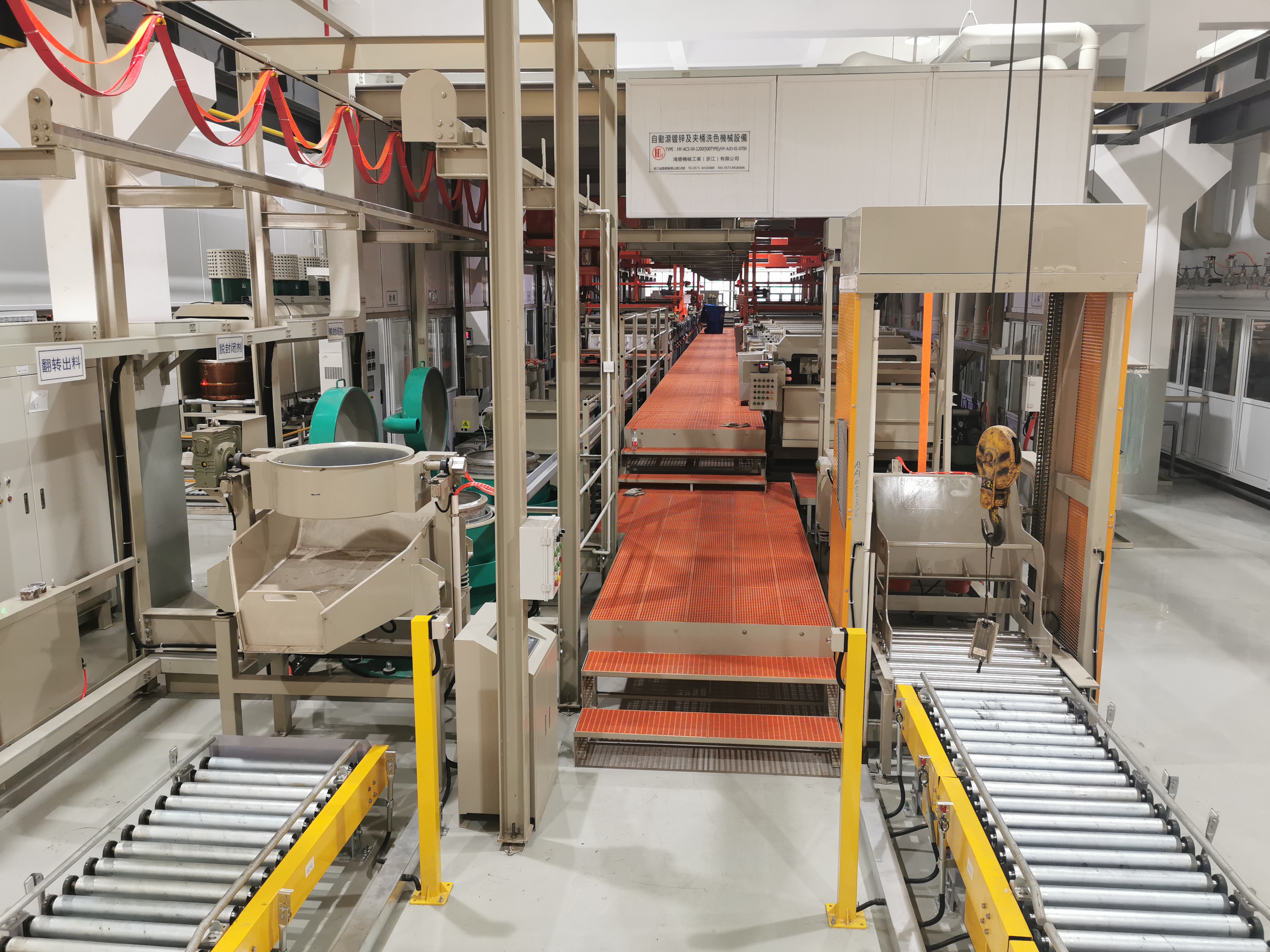
Coating lines are where drawing requirements for zinc, zinc flake or zinc nickel systems are translated into a controlled, repeatable process.
Side-by-side comparison of the two certificates
| Decision point | IATF 16949:2016 | ISO 9001:2015 / GB/T 19001-2016 |
|---|---|---|
| Standard type | Automotive sector QMS, applied together with ISO 9001:2015 | Generic QMS for any industry |
| Typical bolt-plant scope wording | Manufacture of fastening piece (bolts) for automotive use, M3–M100 and 8#–4" | Manufacture of bolt, screw, stud and related assemblies |
| Product design (Clause 8.3) | Commonly excluded; design authority stays with the customer | Generic design controls; may be non-applicable where justified |
| Automotive core tools | Referenced through automotive part approval and customer-specific requirements | Not specified by the standard |
| Process control and traceability | Automotive-oriented control planning; customer-specific requirements flow down | General identification and traceability requirements |
| Supplier and sub-tier control | Automotive expectations applied to sub-tier providers such as heat treaters and coaters | General control of externally provided processes |
| Evidence a buyer should still request | Certificate scope, part approval records, control plan, capability and inspection records, test reports | Certificate scope plus the inspection and test records agreed in the purchase contract |
| Best fit | Production parts for vehicle or vehicle-component programs | Industrial, structural and general fastening; early supplier screening |
Reading a certificate correctly before you shortlist
A certificate is only as useful as the scope sentence inside it. Six checks catch most mismatches before they reach a purchase order.
- Standard and edition. "IATF 16949:2016" and "ISO 9001:2015" are the editions in force. A certificate naming an older edition is a question, not a rejection.
- Scope wording against your part. Match the product family and the size band to what you are buying. A M6 flange bolt and a M36 wheel bolt are not the same scope question.
- Site. Certificates attach to manufacturing sites. If your order is produced at a different plant from the one named, the certificate does not automatically follow it.
- Design responsibility. Confirm whether Clause 8.3 for product design is included or excluded, and make sure your drawing carries the design content either way.
- Status and validity. Verify the certificate is current with the issuing certification body, and diarise the expiry date for re-verification.
- Language inflation. "IATF ready", "IATF compliant" and "automotive-grade" are not certificates. Only the certified scope counts.
How CNAS L4554 test reports under ILAC-MRA support acceptance decisions
A certificate says a management system was audited. A test report says what a defined sample measured under a defined method. Buyers of Automotive Bolts need both, and they answer different questions.
Laboratory accreditation under ISO/IEC 17025:2017 addresses the competence of the testing laboratory: its methods, equipment, personnel and reporting. CNAS L4554 is the registration number of a laboratory accredited by the China National Accreditation Service for Conformity Assessment. Where that accreditation sits under the ILAC Mutual Recognition Arrangement, reports from the laboratory are recognised among the accreditation bodies that are signatories to that arrangement. For a buyer, the practical benefit is a traceable measurement basis that reduces the need for repeat testing and gives both parties a reference point if results are disputed.
What the accreditation marks do not do is make a bolt compliant. The acceptance decision still belongs to your drawing and your specification limits; the report only tells you what was measured, on which sample, by which method.
What to ask for in the report itself
- The test method and its edition, not just the property being tested.
- Sample identification linked to the lot, heat number or production batch you are accepting.
- Measured values placed against the specification limits, rather than a pass/fail line alone.
- The accreditation symbol and registration number on the report, and the test methods covered by that accreditation.
- Report date and the identity of the testing laboratory, so the record can be traced later.
Used well, such reports support sample approval, incoming inspection correlation and periodic re-verification of a running supply. Used badly, they create false confidence: a report covers the samples and tests listed on it, for the date it was issued. It does not extend the scope of a quality management system certificate, and it does not establish that later production lots will conform.
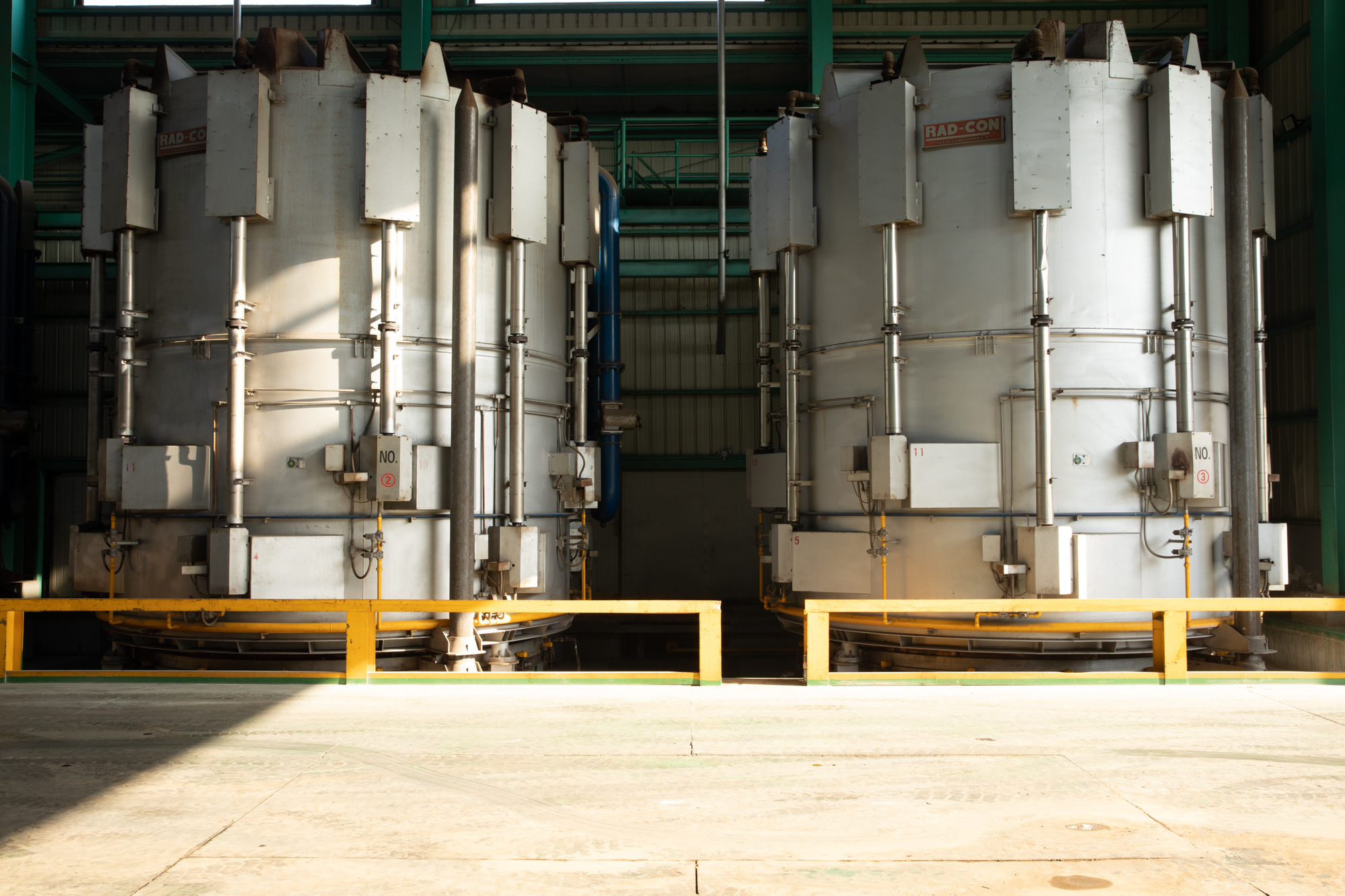
Material condition upstream of forming directly affects whether a specified property class can be met repeatedly, which is why process evidence and test reports are read together.
Step-by-step: matching certification scope to an automotive program
The sequence below turns two certificates into a defensible sourcing decision. Each step produces a document you can put in the supplier file.
- Classify the part by consequence of failure. Separate safety-critical joints — brake, steering, suspension, wheel and battery retention — from general body and bracket fastening. The classification sets how much evidence you need.
- Write the drawing and the specification before the RFQ. Property class to ISO 898-1, material grade, dimensional standard, coating system, test methods and acceptance limits. Anything left open becomes a design decision the supplier is not certified to make.
- Decide the required management system. For production parts in a vehicle program, IATF 16949:2016 with an automotive scope is the baseline. For non-automotive lines, ISO 9001:2015 or GB/T 19001-2016 coverage may be adequate.
- Compare scope wording with your part and size. A scope bounded at M3–M100 and 8#–4" covers those ranges; confirm your sizes sit inside it.
- Confirm design responsibility in writing. Record that product design under Clause 8.3 is excluded and that the customer drawing is the design record.
- Request the evidence package. Certificate copies, control plan or process flow for the part family, inspection records, and test reports with the laboratory's accreditation marks.
- Verify the certificates at source. Check current status with the issuing certification body; check the laboratory accreditation number against the report.
- Agree change notification. Specify in the contract what triggers notification — material source, heat treatment, coating, tooling, sub-tier provider or site — and what re-approval follows.
- Set a review cycle. Re-verify certificate validity and re-check test reports at defined intervals, and after any notified change.
Where the distinction matters: application examples
Engine and transmission fastening is where property class does most of the work. Class 10.9 bolts are commonly specified for driveline, engine and high-stress joints, with a minimum tensile strength of approximately 1,040 MPa under the ISO 898-1 / SAE J429 reference. A supplier's ability to hold that class repeatedly depends on material selection, forming and heat treatment control — exactly the processes an automotive audit examines and a generic audit may not.
Chassis, suspension and brake applications add corrosion and fatigue expectations on top of strength. That is where the coating decision becomes a drawing decision: zinc, zinc flake and zinc nickel systems behave differently and are specified with different thicknesses and test methods. The buyer's job is to name the system and the test; the supplier's job is to control it.
EV battery fastening shifts the emphasis again, toward clean, consistently coated parts with documented traceability, because a joint inside a battery pack is expensive to inspect later. Wheel bolts, hex flange bolts, 12 point flange screws, U bolts and double end studs each carry their own dimensional standards and their own level of program criticality, which is why a single certificate rarely answers every product question you have.

Lot identification and storage control are part of the traceability chain that connects a delivered carton to a heat number and a test report.
Twelve questions to put to a supplier
- Can you send the current IATF 16949:2016 certificate with the full scope sentence and the manufacturing site address?
- Does the scope explicitly cover automotive fastening pieces in our size range?
- Is product design under Clause 8.3 included or excluded, and who signs the design record?
- Do you also hold ISO 9001:2015 or GB/T 19001-2016, and which processes does that certificate cover?
- Which sub-tier heat treatment and coating providers do you use, and how are they approved and monitored?
- What does your control plan say for the specific part family we are buying?
- Which property classes can you supply, and how is class conformity verified per lot?
- Which coating systems do you run in-house, and which are outsourced?
- Can you provide test reports from an accredited laboratory, with the accreditation registration number visible?
- How do you link a delivered lot back to a heat number and a test report?
- What process or sub-tier change requires our written approval before shipment?
- Which customer-specific requirements have been flowed down to you, and can we review them?
What a certificate does not prove
Certification is a management system audit outcome, and it is worth being precise about its limits. It does not certify a particular bolt against a particular drawing, it does not guarantee dimensional or mechanical conformity on any individual lot, and it does not transfer design responsibility from the customer to the supplier. It also does not replace your own drawing, your own acceptance limits or your own verification of the certificate's status.
Equally, the absence of a certificate is not proof of poor quality, and the presence of one is not proof of good quality. What certification does is narrow the range of questions you still have to ask, which is why reading the scope carefully saves more procurement effort than collecting logos.
Ningbo Jinding Fastening Piece Co., Ltd. is one example of a manufacturer whose system is described in these terms: established in 1997, operating a 73,000 m² facility with 470 employees and a reported annual production capacity of 120,000 tons, and certified to IATF 16949:2016, ISO 9001:2015, ISO/IEC 17025:2017 and other schemes including ISO 14001:2015, ISO 45001:2018, PED 2014/68/EU, API 20E, AD 2000 W0, CE EN 14399-1:2015, CE EN 15048-1:2007, UKCA EN 14399-1:2015, UKCA EN 15048-1:2007 and ISO 27001:2022. Note that the CE and UKCA structural bolting standards address structural bolting assemblies; they do not substitute for an automotive customer specification. Full company details are available at Ningbo Jinding Fastening Piece Co., Ltd.
FAQ
Is IATF 16949:2016 mandatory for a supplier of automotive bolts?
It is not a law; it is a supply-chain requirement. IATF 16949:2016 is the automotive quality management system standard, and whether a bolt supplier must hold it depends on what the vehicle manufacturer or tier-one customer writes into its supplier requirements. In practice, a manufacturer producing fastening pieces for automotive use is normally expected to hold IATF 16949:2016 with a scope that covers those parts, while ISO 9001:2015 remains the general baseline. The buyer's check is whether the customer-specific requirement, the certificate scope and the actual production site line up.
What does it mean when a bolt supplier's IATF 16949 scope excludes product design under Clause 8.3?
It means the supplier is certified to manufacture to a customer's design, not to create that design. Design authority, including the adequacy of dimensions, material, property class, coating and acceptance criteria, stays with the buyer. In that arrangement the supplier remains responsible for manufacturing feasibility, process control, inspection and conformity to the drawing it accepted, and the buyer must issue a complete drawing and control changes to it. Many automotive fastening scopes are written this way and it is not a deficiency, but it does mean an incomplete drawing becomes the buyer's risk.
How do ISO 9001:2015 and GB/T 19001-2016 differ from IATF 16949:2016 for bolt, screw and stud manufacturing?
ISO 9001:2015 is a generic quality management system standard, and its scope on a fastener certificate is often written as the manufacture of bolt, screw, stud and related assemblies. GB/T 19001-2016 is the Chinese national standard that adopts ISO 9001:2015, so it describes the same generic requirements. Neither includes the automotive-specific layer — part approval discipline, automotive core tools, customer-specific requirements and the automotive approach to sub-tier control — that IATF 16949:2016 adds on top of the ISO 9001 foundation. A plant holding both certificates covers both the generic and the automotive question.
Which automotive bolt manufacturers offer the best trade-off between tensile strength, material grade, and EU buyer requirements?
The available evidence does not support a ranked list of manufacturers on that trade-off, so the honest answer is a method rather than a ranking. Tensile strength is a property-class decision: Class 10.9 bolts are commonly specified for driveline, engine and high-stress joints at a minimum tensile strength of approximately 1,040 MPa under the ISO 898-1 / SAE J429 reference, and the class you need should be on the drawing rather than negotiated. Material grade determines whether that class is achievable and repeatable, which is why heat treatment control and material traceability carry more weight than a headline strength figure. EU buyer requirements come mainly from the customer specification and the named standards; CE marking regimes such as EN 14399-1:2015 and EN 15048-1:2007 cover structural bolting assemblies and do not substitute for automotive approval. A workable shortlist test is therefore: an IATF 16949:2016 scope covering automotive fastening pieces, documented conformity to the standards your drawing names, accredited test reports for the mechanical and coating properties, and a stated capacity you can plan around. Ningbo Jinding, for example, reports conformity to GB, ISO, DIN, AS, ANSI/IFI and BS requirements and holds IATF 16949:2016, ISO 9001:2015 and ISO/IEC 17025:2017 accreditation alongside a reported 120,000-ton annual capacity — verifiable starting points for an RFQ, not proof of a superior trade-off.
How should a buyer use CNAS L4554 test reports under ILAC-MRA during sample approval?
Treat the report as the measurement record for the samples it names, and keep the certificate as the system record. During sample approval, check that the report states the test method and its edition, identifies the sample and links it to a lot or heat number, gives measured values against your specification limits, and carries the laboratory's accreditation symbol and registration number — CNAS L4554 in this case. Because the laboratory is accredited under ISO/IEC 17025:2017 and that accreditation sits under the ILAC Mutual Recognition Arrangement, the result is recognised among the arrangement's signatories, which reduces duplicate testing and gives both sides a reference if a dispute arises. What the report does not do is certify the product range or guarantee later lots, so pair it with lot traceability and a re-verification interval. Buyers who want to test this process against a specific program can request sample test reports alongside the current product catalog.
Conclusion
For Automotive Bolts, IATF 16949:2016 and ISO 9001:2015 answer different questions, and the buyer's task is to make both answers specific. Read the scope sentence: an automotive scope covering the manufacture of fastening pieces in M3–M100 and 8#–4" tells you the audit reached your part family and size band, while a generic scope covering bolt, screw, stud and related assemblies tells you the management system is in place without the automotive layer. Then close the two gaps that certification cannot close for you: the design content under Clause 8.3, which belongs to your drawing, and the lot-level proof, which belongs to accredited test reports and traceability records.
Do that, and the certificate becomes what it should be — a filter that shortens your supplier list, not a substitute for the questions you still have to ask.
Ningbo Jinding Fastening Piece Co., Ltd. supplies hex head bolts, wheel bolts, hex flange bolts, 12 point flange screws, double end studs, U bolts, nuts and washers in carbon steel, alloy steel, weathering steel, stainless steel and duplex steel, with 80% of output exported to the EU, UK, US, Canada, Japan, Australia and New Zealand. Buyers comparing certification scope against a program requirement can review the full range and specification detail in the Ningbo Jinding product catalog (PDF), or send the drawing and required standards for a sample and quotation discussion.
Have Questions or Need More Details?
Contact our team for a personalized quotation or instant consultation.
Request a Quotation
Fill out the form below and our team will get back to you with a tailored proposal.
WhatsApp Direct Chat
Prefer to chat in real-time? Message us on WhatsApp for instant assistance & quick answers.
- Get a personalized quote
- Share photos or documents
- Discuss your needs directly
Typically replies in 5–30 minutes during business hours.