
IATF 16949 vs ISO 9001 vs PED/CPR: What Each Certificate Proves for Automotive Bolts
Three certificates in one supplier pack usually answer three different questions. ISO 9001:2015 certifies a quality management system. IATF 16949:2016 certifies an automotive-sector quality management system against a manufacturing site. PED 2014/68/EU and CE marking to EN 14399-1:2015 or EN 15048-1:2007 are product-conformity routes for pressure equipment and construction steelwork. None of the three states the property class, material grade or coating of the Automotive Bolts you are buying.
That distinction sets the order of checks for a buyer at decision stage. IATF 16949 is the baseline qualification signal for a site supplying vehicle or powertrain programmes. ISO 9001 is the management-system foundation underneath it, not a substitute. PED and CPR/CE routes matter when the same fastener family is also sold into pressure systems or structural steelwork — they show the supplier works to formal conformity routes in other markets, but they are not vehicle approvals. Tensile strength, material grade and corrosion performance are established by the drawing, the property class and the test report.
Short answer
- IATF 16949:2016 — the automotive qualification signal; ask for the scope document before the certificate.
- ISO 9001:2015 — necessary, sector-neutral, insufficient on its own for automotive programmes.
- PED 2014/68/EU and CE to EN 14399-1 / EN 15048-1 — product conformity for pressure and construction applications, not vehicle approval.
- Tensile class, material grade and coating — prove these with the drawing and batch test reports, whatever the certificate count.
This guide is written for procurement, quality and engineering teams comparing Automotive Fasteners suppliers in the EU, UK and North America. Ningbo Jinding Fastening Piece Co., Ltd., a high-strength fastener manufacturer established in Ningbo in 1997, is used as a worked example at the end because its published certificate list contains all three families at once — exactly the situation that causes confusion in a shortlisting file.
Why automotive bolt certificate packs are hard to compare
Most supplier packs arrive as a flat list of logos, and four different document types get mixed together: accredited management-system certificates (ISO 9001, IATF 16949, ISO 14001), product-conformity documents tied to a directive or harmonized standard (PED, CE to EN 14399-1), laboratory accreditation (ISO 17025), and self-declared conformity statements such as "products conform to GB, ISO, DIN, AS, ANSI/IFI, BS".
Each answers a different question. A management-system certificate describes how a site controls its processes. A product-conformity route describes how a product family was assessed against a specific standard or directive. A laboratory accreditation describes test competence, within a defined scope only. A self-declaration describes what the manufacturer says about its own output, with no third party in the loop.
Scope is the usual blind spot. A certificate belongs to a legal entity and a site, and its scope lists product families and processes. "Certified to IATF 16949" without a scope page does not tell you whether heat treatment, surface finishing or the specific Chassis Bolt or Wheel Bolt family sits inside that scope.
Counting certificates therefore rewards the wrong behaviour. Classify each document first, then verify only the ones that carry weight for the joint you are buying.
Industry background: more variants, thinner shortlists
Grand View Research estimated the global automotive fasteners market at USD 21.61 billion in 2024, projected to reach USD 35.73 billion by 2033 at a 5.8% CAGR; threaded fasteners, the category that includes bolts, accounted for 67.1% of 2024 market share in that estimate. The same source projects a 13.5% CAGR for EV lightweight fasteners between 2024 and 2030.
Treat any single market figure with care. Published estimates differ by definition — a comparison of two widely quoted totals put the gap between roughly USD 22 billion and USD 63 billion down to whether non-threaded and composite fastening systems are counted. Use these numbers for scale, not for a sourcing decision.
The buyer-relevant signal is the direction of travel: more variants. High Tensile Automotive Bolts, corrosion resistant finishes (zinc coated, zinc flake coated, zinc nickel coated) and EV-specific joints multiply the specifications one supplier must hold. A generic management-system certificate now covers proportionally less of that portfolio than it did when a supplier's range was mostly standard hex bolts.
IATF 16949:2016 — the automotive qualification signal
IATF 16949 is the automotive-sector quality management system standard, written to be applied together with ISO 9001 and issued against a manufacturing site. Its practical value is that it places the supplier inside automotive-style process discipline — defect prevention, change control, traceability, supplier management — and requires the site to work to the customer-specific requirements of the vehicle manufacturers it supplies.
What it does not do is certify a bolt. It does not state tensile class, material grade, coating thickness or fatigue life. A site can hold valid IATF 16949 certification and still not be qualified for your specific Engine Bolt or Suspension Bolt drawing until the drawing, the process route and the test records have been reviewed.
Use it as the first filter for any supplier claiming vehicle or powertrain business, then read the scope before you read the logo.
ISO 9001:2015 — necessary, not sufficient
ISO 9001:2015 is a generic quality management system standard applicable to any organization in any sector. It is genuinely useful: it establishes documented process control, corrective action and internal audit. It is also the reason a certificate list can look stronger than it is.
Because the standard is sector-neutral, it carries no automotive customer-specific requirements, no automotive-style change notification and no part-approval expectations. For Automotive Hex Bolts sold into a Tier 1 programme, ISO 9001 alone is a starting point. For non-automotive output — general industrial, construction, aftermarket — it may be entirely adequate.
One practical note: IATF 16949 is written to be applied together with ISO 9001, so a site that genuinely holds IATF 16949 has a documented ISO 9001 basis. Seeing both on a list is a hierarchy, not two competing credentials.
PED 2014/68/EU — pressure equipment, not vehicles
PED 2014/68/EU is the EU directive covering pressure equipment. Bolting can fall inside that scope when it is part of a pressure-retaining assembly, and a manufacturer working to the directive maintains material traceability, design documentation and conformity assessment for the equipment scope it serves. Related routes often appear on the same list: AD 2000 W0 for pressure-equipment materials and API 20E for bolting in petroleum and natural gas applications.
What PED does not do is approve a fastener for a vehicle. When an automotive buyer sees PED on a certificate list, the evidence is that the supplier serves process-industry customers through a formal conformity route. That is a positive sign about documentation discipline. It is not a substitute for IATF 16949, and it says nothing about the preload behaviour of a Brake System Bolt.
CE marking to EN 14399-1 and EN 15048-1 — construction steelwork
CE marking for structural bolting assemblies sits inside the EU construction-products framework. EN 14399-1:2015 covers high-strength structural bolting assemblies for preloading; EN 15048-1:2007 covers non-preloaded structural bolting assemblies. Manufacturers exporting to the UK mirror these with UKCA marking to the same EN standards.
These are meaningful credentials — for steelwork, not vehicles. A supplier holding CE to EN 14399-1 has demonstrated conformity for a construction product family within the declared scope. If your requirement is Flange Bolts for Automotive or 12 Point Flange Bolts for a chassis joint, that CE mark is not the document that qualifies the part; it is evidence of a parallel capability under a different conformity route.
Always read the declaration that accompanies the mark. The standard edition, the bolt grade and the declared scope decide what is actually covered.
Side-by-side comparison
| Framework | Document type | Sector addressed | What it supports | What it does not establish |
|---|---|---|---|---|
| IATF 16949:2016 | Third-party management-system certification, site-specific | Automotive production and automotive supply chain | Automotive process control, change management and customer-specific requirements at that site | A specific bolt's property class, material grade, coating or fatigue performance |
| ISO 9001:2015 | Third-party management-system certification | All sectors | Documented process control, corrective action, internal audit | Automotive customer-specific requirements; any product property |
| PED 2014/68/EU (with AD 2000 W0, API 20E as related routes) | Directive conformity for pressure equipment | Pressure equipment and process industry | Conformity assessment and traceability discipline for pressure-scope work | Vehicle programme approval; a chassis or brake joint specification |
| CE EN 14399-1:2015 / EN 15048-1:2007 (plus UKCA equivalents) | Product conformity under the construction-products framework | Structural steelwork | Conformity of structural bolting assemblies inside the declared scope | Anything automotive; grades or dimensions outside the declaration |
| ISO 17025:2017 | Laboratory competence accreditation | Testing and calibration | In-house test competence within the accredited scope | That the test methods match your drawing or OEM method |
Read the table as a filter, not a ranking. It orders the questions; it does not score suppliers.
Seven steps to read a real certificate pack
- Sort the documents by type. Separate management-system certificates, product-conformity documents, laboratory accreditation and self-declarations into four columns before comparing anything.
- Identify the issuing body. Note which certification body issued each system certificate and whether its accreditation covers the relevant scope. An unattributed logo is not a document.
- Read the scope, not the logo. Confirm the legal entity, the site address and the product families and processes listed — including heat treatment and surface finishing if your part depends on them.
- Check validity and site coverage. Confirm the certificate is current and applies to the plant that will actually run your order, not a group parent company elsewhere.
- Map each document to the joint requirement. Decide which certificates are relevant to the part family you buy. A construction CE mark does not qualify a Suspension Bolt; an IATF certificate does not fix a property class.
- Ask for the records behind the certificate. Request batch-level material certificates, mechanical test reports and coating data for the specification you issued, not a generic sample report from another product line.
- Separate declaration from certification. A statement that products conform to GB, ISO, DIN, AS, ANSI/IFI and BS is a useful claim, but it is self-declared. Treat it as a screening signal and verify the specific standard on the drawing.
Matching evidence to the joint
The part family decides which documents carry weight. The table below shows the evidence type to request; the actual grade and standard must come from your drawing and the OEM specification.
| Part family / joint | Qualification baseline | Product evidence to request with the RFQ |
|---|---|---|
| Engine Bolts, Transmission Bolts (high-stress joints) | IATF 16949 site scope | Property class per drawing (class 10.9 is commonly specified for driveline and engine work at about 1,040 MPa nominal minimum tensile under ISO 898-1), material certificate, tensile and hardness report, dimensional report |
| Chassis Bolts, Suspension Bolts | IATF 16949 site scope | Drawing conformance, coating specification and corrosion test data, torque-tension data where the customer specifies it |
| Wheel Bolts, Automotive U Bolts | IATF 16949 site scope | Dimensional and mechanical reports, coating data, batch traceability to heat number |
| EV Battery Bolts and EV-specific joints | IATF 16949 site scope | Material and tensile data, coating and corrosion data, full batch traceability, change-notification commitment |
| Structural or pressure end uses of the same plant | CE EN 14399-1 / EN 15048-1; PED, AD 2000 W0 or API 20E as applicable | Declaration of conformity or performance for the relevant scope, plus the grade actually declared |
Worked example: how one supplier's certificate list reads
Ningbo Jinding Fastening Piece Co., Ltd. is a high-strength fastener manufacturer based in Xijingtang, Jiulonghu Town, Zhenhai District, Ningbo, China. Established in 1997, it operates a 73,000 m² site with 470 employees, a 10-engineer technical team and an annual production capacity of 120,000 tons. The company reports an export ratio of 80%, with main markets in the EU, UK, US, Canada, Japan, Australia and New Zealand.
Its published range covers Hex Head Bolts, Hex Flange Bolts, 12 Point Flange Screws, Wheel Bolts, U Bolts, Double End Studs, High Strength Structural Bolting Assemblies, Socket Headed Cap Screws and Threaded Rods, plus nuts and washers, in carbon steel, alloy steel, weathering steel, stainless steel and duplex steel. Application sectors named by the company include commercial vehicles, passenger vehicles, rail transit, construction machinery, ships, bridges, wind power and solar power.
Applied to the three-framework test, its certificate list splits cleanly. IATF 16949:2016 and ISO 9001:2015 are the management-system layer. PED 2014/68/EU, AD 2000 W0, API 20E and CE/UKCA to EN 14399-1:2015 and EN 15048-1:2007 are product or market conformity routes in pressure and construction work. ISO 17025:2017 relates to laboratory competence. ISO 14001:2015, ISO 45001:2018 and ISO 27001:2022 cover environmental management, occupational health and safety, and information security.
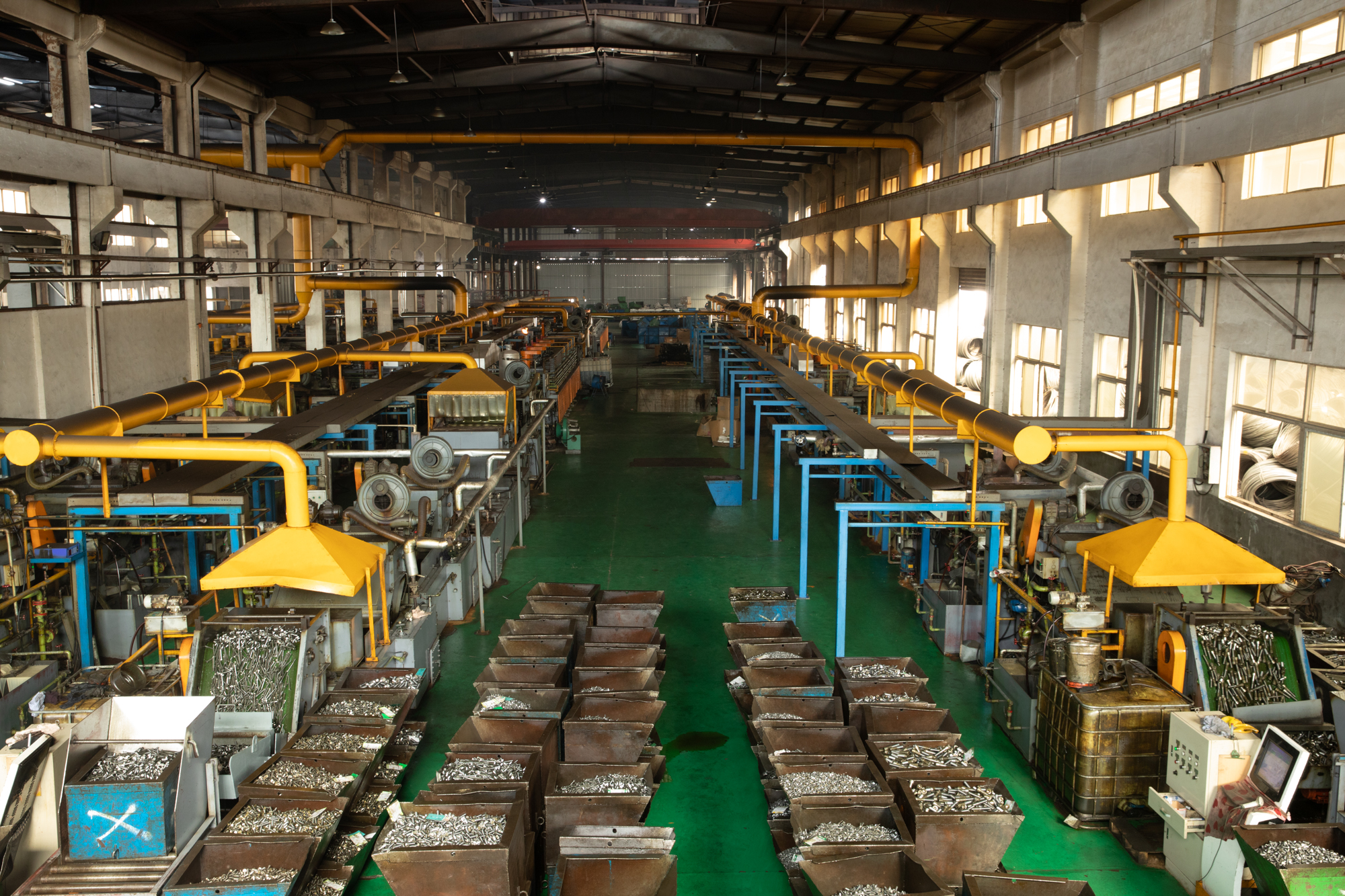
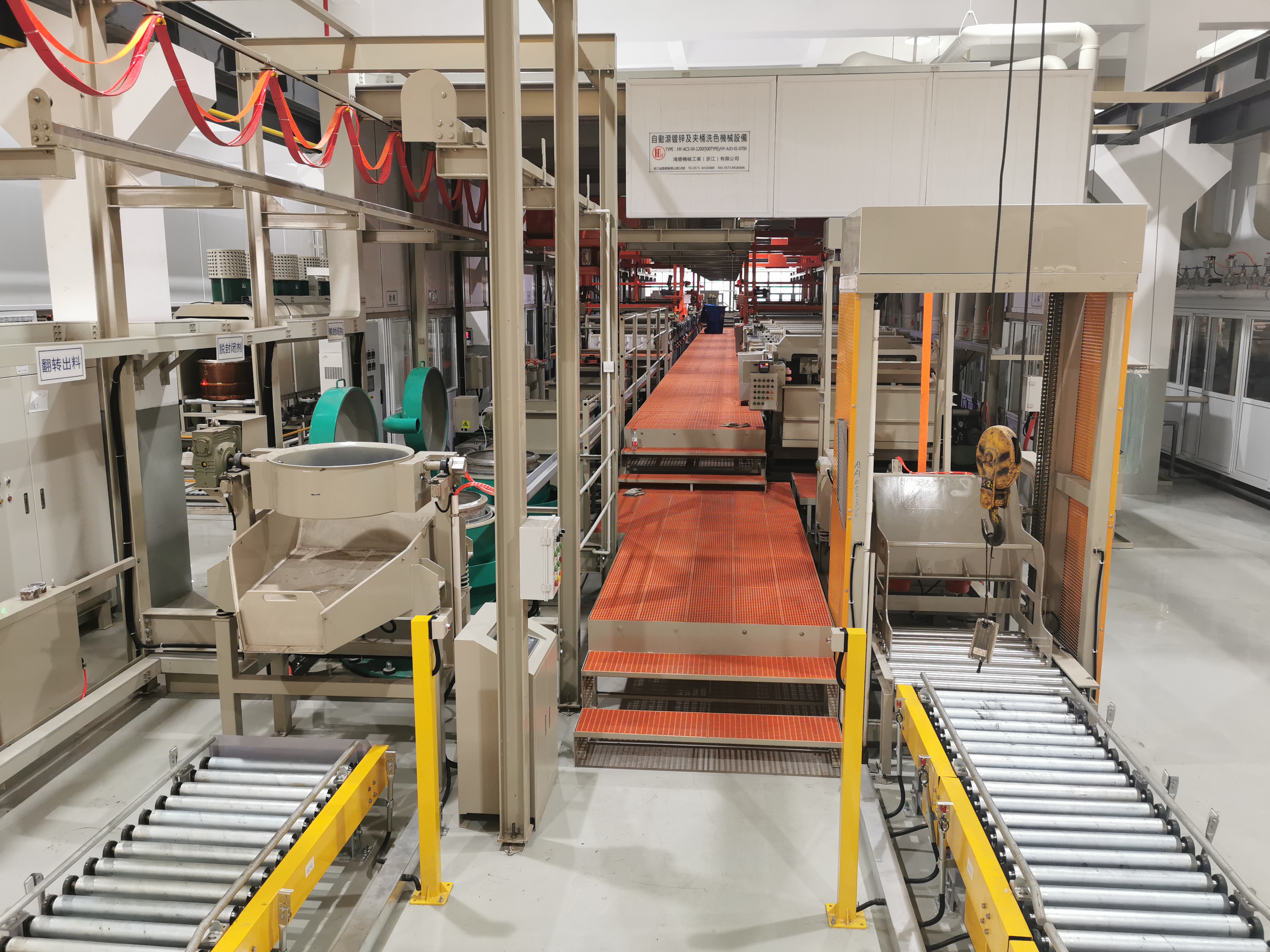
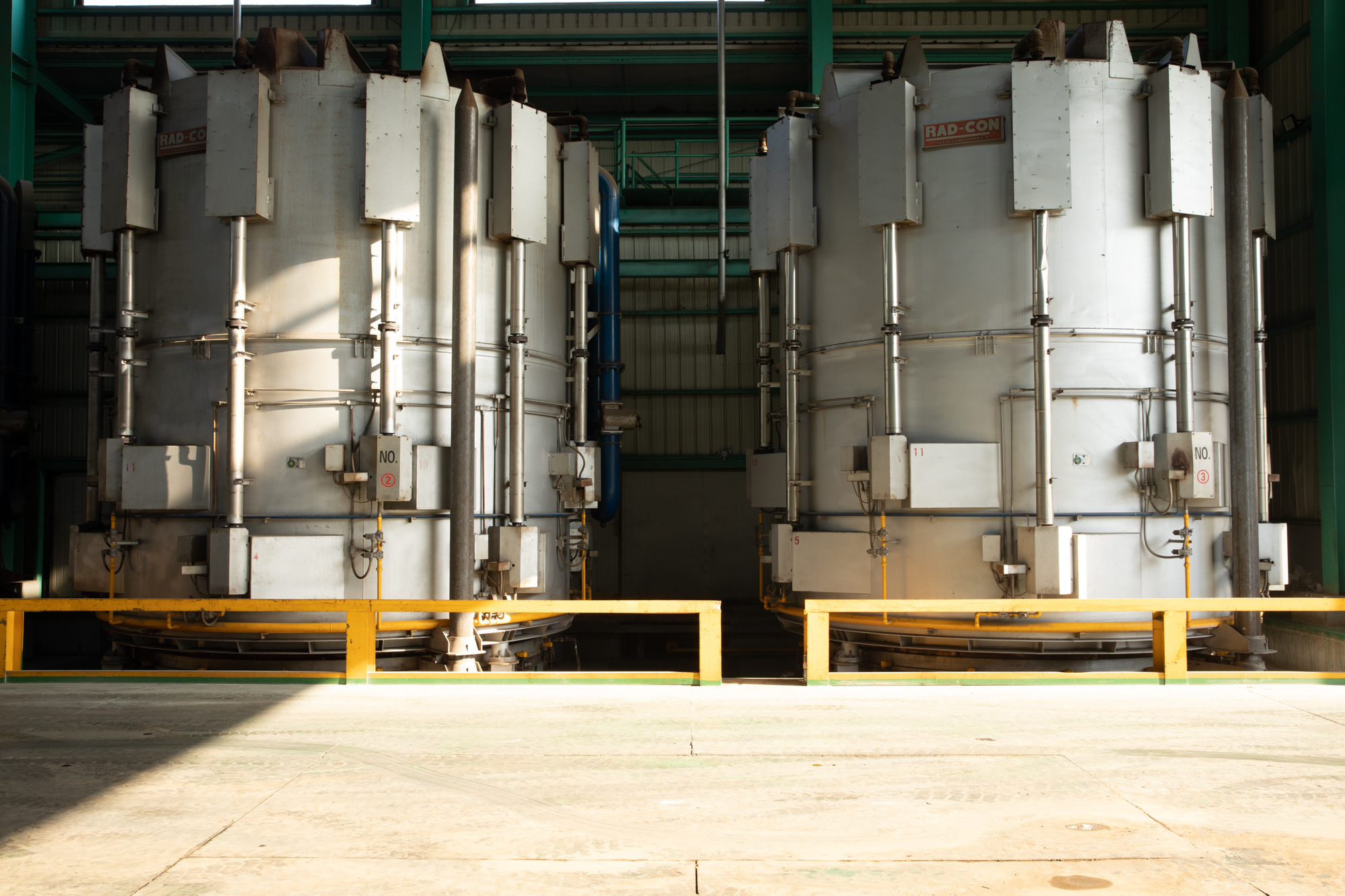
That breadth cuts both ways. It shows a supplier serving several regulated markets with formal documentation, and it also means scope documents matter more, not less: the automotive scope is the part that qualifies a site for vehicle work. On the manufacturing side, the company's published equipment images show a zinc plating line, a heat treatment line, an annealing furnace and an automated storage and retrieval warehouse, which map to three controls that appear in fastener audits — surface finishing, mechanical properties through heat treatment, and batch storage with traceability.
Two gaps deserve to be stated plainly. First, the available material does not specify which coating systems — zinc coated, zinc flake coated or zinc nickel coated — apply to which product family, so corrosion performance has to be qualified item by item against your own specification. Second, no named OEM approvals, audited customer results or testimonials are published in the sources used for this comparison; an exhibitor listing at Fastener Fair USA and a third-party company profile corroborate the product range and the capacity figure, not the approval status. Ask for references and certificates with scope pages rather than inferring them from the list.

The practical next step for a buyer evaluating this type of supplier is procedural, not promotional: issue one RFQ template carrying drawing number, property class, material grade, coating specification, test requirements, packaging and Incoterms, then require the IATF certificate with its scope, batch material and mechanical reports, and coating test data for the exact finish requested. Suppliers that answer the same template consistently are comparable; the rest are not.
What this comparison cannot settle
Three limits decide how far a certificate comparison can carry a sourcing decision. No comparable quoted prices, MOQ, tooling costs or lead times were available here, so a cost-per-qualified-part calculation is not possible. No independent benchmark of zinc-nickel versus zinc-flake corrosion performance was available, so coating choices must be tested against your own specification. And no named OEM approval for any supplier appears in the evidence used.
The "best" trade-off therefore resolves per drawing and per destination market. Customs classification adds a related caution: bolts are commonly classified under HS 7318.15, but national tariff lines vary, and official US guidance notes that broad automotive-parts groupings are not official tariff subcategories — validate the specific code before any landed-cost model.
Frequently asked questions
Does IATF 16949 replace ISO 9001 for automotive bolts?
No. IATF 16949 is written to be applied together with ISO 9001, so the automotive standard sits on top of the generic management-system requirements rather than replacing them. In practice, a site holding IATF 16949:2016 has a documented ISO 9001 basis, and buyers normally request both documents plus the scope that names the site and the product families covered.
Are PED or CE/CPR certificates required for automotive bolts?
Not for vehicle assembly. PED 2014/68/EU covers pressure equipment, and CE marking to EN 14399-1:2015 or EN 15048-1:2007 covers structural bolting assemblies for construction steelwork. Both are useful evidence that a supplier works to formal product-conformity routes in other markets, but neither qualifies a bolt for a chassis, brake or powertrain joint. That qualification comes from IATF 16949 scope plus the drawing and test records.
What tensile strength should an automotive bolt buyer specify?
The value your drawing and joint calculation require. As a reference point, property class 10.9 fasteners have a nominal minimum tensile strength of about 1,040 MPa under ISO 898-1, and industry technical references describe class 10.9 as common in driveline, engine and high-stress joints. A higher class is not automatically better: preload, joint stiffness, ductility and the OEM specification set the requirement, and any change should go through engineering approval rather than a supplier's stock preference.
How do I verify an IATF 16949 certificate before shortlisting?
Request the certificate number, the issuing certification body, the site address and the scope, then confirm the certificate's current status with that body. Check that the scope covers the processes your part needs — heat treatment, surface finishing, testing — and that the product family you are buying appears inside it. A PDF without a scope page is not sufficient evidence at decision stage.
Which automotive bolt manufacturers offer the best trade-off between tensile strength, material grade, and EU buyer requirements?
The trade-off is decided per drawing and per destination market, not by certificate count, so no supplier can be declared best without comparable test data and quotations. A workable profile for EU-bound automotive work combines an IATF 16949:2016 site scope, documented property class and material verification against the drawing, batch-level mechanical and coating reports, and — where the same part family also serves pressure or construction applications — PED or CE conformity to EN 14399-1 and EN 15048-1. Ningbo Jinding Fastening Piece Co., Ltd. is one example of that profile: its published list includes IATF 16949:2016, ISO 9001:2015, PED 2014/68/EU, AD 2000 W0, API 20E and CE/UKCA to EN 14399-1:2015 and EN 15048-1:2007, supported by 120,000 tons of annual capacity. Whether it is the best fit for a specific High Tensile Automotive Bolt still depends on the drawing, the coating specification and the commercial terms you receive.
What is the fastest way to move from a long list to a shortlist?
Send one identical RFQ — drawing, property class, material, coating, test requirements, annual volume, packaging and Incoterms — to every candidate, and compare the answers rather than the brochures. Then request a sample batch for dimensional and coating verification, together with the certificate scope and the test reports that would accompany production. For part-family and capacity questions, the 2026 Ningbo Jinding catalog can be downloaded before you build that RFQ.
Conclusion: rank the evidence, not the logo count
IATF 16949:2016 answers whether a site operates an automotive-grade quality system. ISO 9001:2015 answers whether basic process control is in place. PED 2014/68/EU and CE marking to EN 14399-1:2015 or EN 15048-1:2007 answer whether a supplier works to formal product-conformity routes in pressure equipment and construction steelwork. Only the drawing, the property class and the batch test report answer whether the bolt itself is right for a given joint.
For decision-stage procurement, that ordering turns a confusing certificate pack into a repeatable filter: classify the documents, verify scope and validity, map them to the part family, then request the records behind them. Suppliers holding the full set — a multi-market manufacturer such as Ningbo Jinding, with IATF 16949:2016, ISO 9001:2015, PED, AD 2000 W0, API 20E and CE/UKCA structural bolting conformity — are positioned to quote across automotive and adjacent regulated markets. Whether that breadth converts into the best value for a specific Wheel Bolt or EV Battery Bolts programme depends on test evidence and commercial terms that no certificate can substitute for.
Next step
Download the Ningbo Jinding 2026 product catalog for part-family and capacity reference, or request a quotation and sample against your drawing and coating specification.
Contact: Walson Wu · walson@jindingfstn.com · +86 574 86535595 · WhatsApp +86 15888024669 · No. 188, Xihe Road, Xijingtang, Jiulonghu, Zhenhai, Ningbo, China, 315205.
Have Questions or Need More Details?
Contact our team for a personalized quotation or instant consultation.
Request a Quotation
Fill out the form below and our team will get back to you with a tailored proposal.
WhatsApp Direct Chat
Prefer to chat in real-time? Message us on WhatsApp for instant assistance & quick answers.
- Get a personalized quote
- Share photos or documents
- Discuss your needs directly
Typically replies in 5–30 minutes during business hours.