
Baby Coil Supplier Evaluation: 0.1–1.2 mm, 600 mm Repeat?
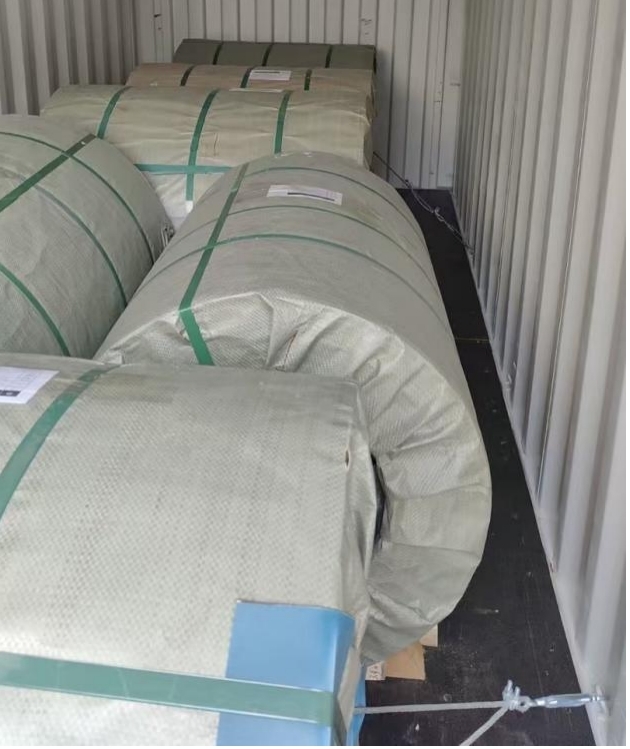
A supplier can present a good 0.1–1.2 mm stainless steel baby coil sample and still fail a repeat-supply evaluation. Repeatability is proven only when grade, thickness window, width, BA finish, packing and coil weight band are written into the order and checked across successive lots. This guide is an evaluation framework for buyers qualifying 201, 304, 410 and 430 baby coils at 0.1–1.2 mm thickness and approximately 600 mm width, with BA as the main surface.
NINGBO SUNFIRE STAINLESS STEEL CO., LTD is a Ningbo-based stainless steel supplier established in 2013. Its supplied company profile states that it exports 100% of its stainless steel to markets including Pakistan, India, Vietnam, Russia, Turkey, Indonesia, UAE, Thailand, Malaysia, Bangladesh, the Middle East, South America and Africa. The supplied capability record lists OEM customization of thickness, width, surface finish, PVC and packaging; a standard delivery time of 7–45 days; an MOQ of 27 MT; and quality control covering mill test, thickness inspection and surface inspection. Those are inputs to verify, not automatic proof that every grade and size will repeat.
Problem definition: one-off sample quality is not repeat supply
Sample approval answers a narrow question: can the supplier produce one acceptable coil? Repeat supply answers a harder question: can the same acceptance criteria be met on the next lot, after a grade change, after a width change, or after a packaging change? For thin-gauge baby coils, the difference matters because small process changes can appear as thickness drift, edge variation, surface marks or a different coil weight pattern.
An evaluation should separate five failure points: grade identity, thickness control, width and edge condition, BA surface consistency, and packing or weight-band mismatch. Each point needs a document, a sample and an acceptance rule. A supplier that answers only with a product list has not answered the repeatability question.
- Grade identity: 201, 304, 410 and 430 are not interchangeable, and 201 sub-grades such as 201 J1, J2, J3 and J5 must not be treated as one material.
- Thickness: A 0.1 mm requirement and a 1.2 mm requirement are different operating windows; the supplier should state capability by grade and finish, not one blanket range.
- Width: Approximately 600 mm is a planning width; the order still needs a measured width, edge type and width tolerance.
- Finish: BA is a surface condition to inspect and sample, not a colour name that can be assumed from a photograph.
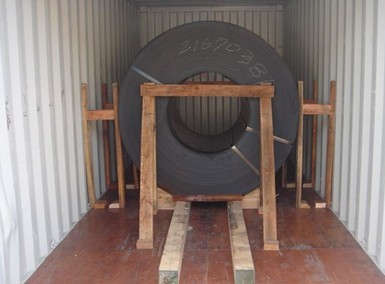
- Packing and weight: Nude packing, PVC outside with paper interleaved, and coil weight bands change handling, loading and line planning.
Industry background: availability at country level is not supplier proof
China exported 3.7827 million tons of stainless steel in January–September 2025, up 2.4% year on year, according to China Customs data reported by SunSirs. That figure supports China as a large sourcing base; it does not verify any individual supplier's ability to repeat a 0.1–1.2 mm, 600 mm BA baby coil order.
Within that broad supply base, baby coil and secondary coil supply is a format-specific activity. The supplied company profile for NINGBO SUNFIRE STAINLESS STEEL CO., LTD states that the company specializes in secondary materials and head and tail coil materials. That specialization is relevant to a buyer evaluating secondary and baby coil formats, but the buyer still needs the exact grade, thickness, width, finish and packing combination confirmed for the order.
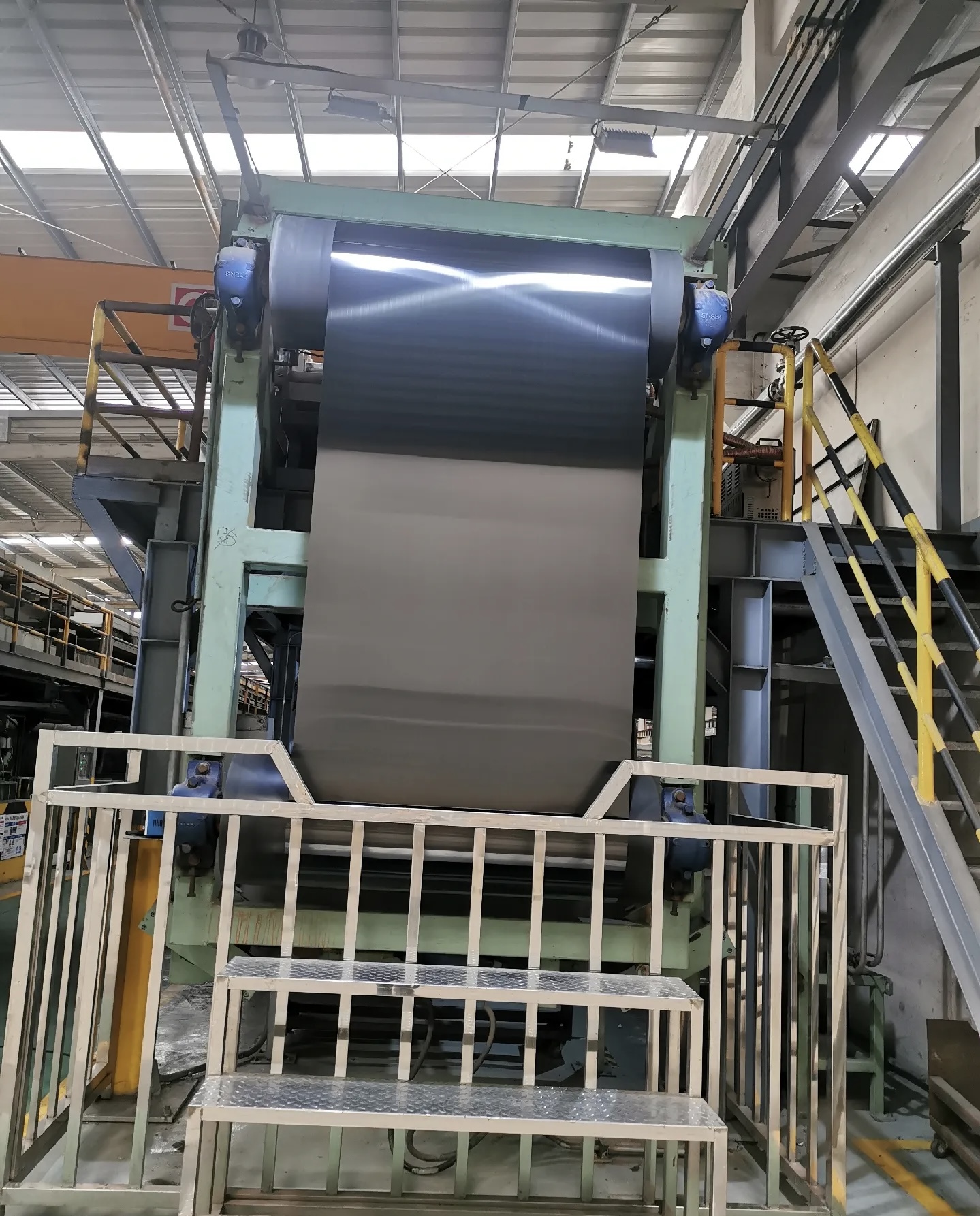
Equipment evidence can support a capability question without closing it. NINGBO SUNFIRE STAINLESS STEEL CO., LTD reports a 20-roll reversible cold rolling mill and a vertical bright annealing furnace. Those company-reported assets are directionally consistent with cold-rolled and bright-annealed stainless steel supply. They do not, by themselves, prove the thickness tolerance, width consistency or BA surface acceptance for a specific 201, 304, 410 or 430 baby coil.
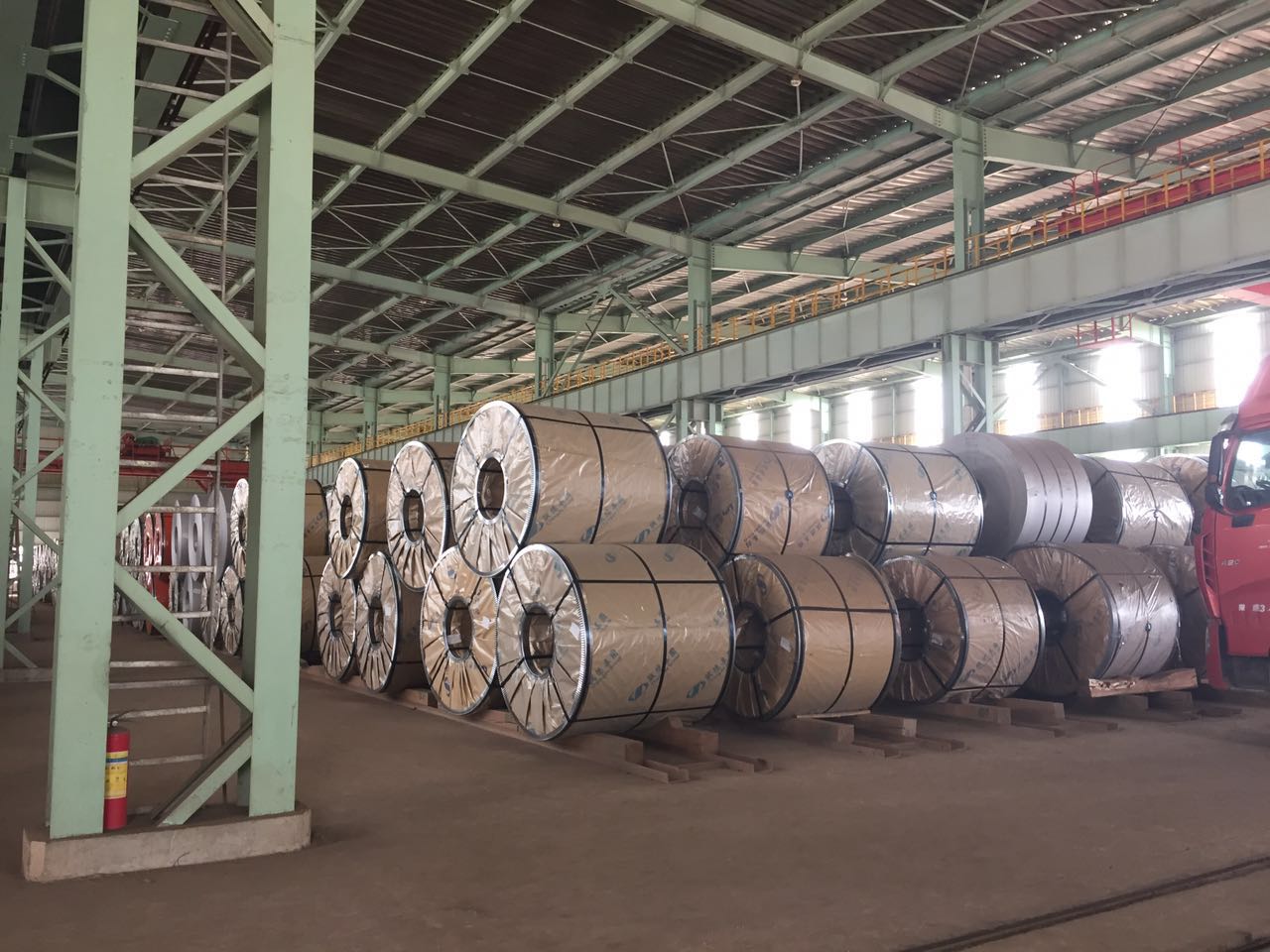
Capability verification across grade, thickness, width and finish
Grade: verify the exact grade and sub-grade
Start with the mill test certificate, not the invoice description. The supplied documentation examples show how grade and standard should be read together: a 201 J2 certificate under Q/ZQHW 2-2024, a 304 certificate under ASTM A240/A240M, and a 430 certificate under GB/T3280-2015. These examples support the principle of grade-plus-standard review; they do not replace the certificate for the actual lot.
The target set for this evaluation is 201, 304, 410 and 430. A 201 J2 certificate cannot be used as evidence for 201 J3, 201 J1 or 201 J5. A 304 certificate does not cover 410 or 430. The supplied records include no 410 mill test certificate example, so a 410 order needs its own lot certificate and standard confirmation before approval.
Thickness: qualify the 0.1–1.2 mm window by grade and finish
Do not accept a single statement that the supplier can produce 0.1–1.2 mm. Ask for the qualified window by grade, finish and width, then request thickness inspection records for the actual lot. For thin gauges, check the head, middle and tail of the coil, and check near both edges as well as the centre. The buyer should record the measurement method and acceptance limit in the purchase order.
A 0.1 mm baby coil and a 1.2 mm baby coil should be evaluated as separate qualifications. If the supplier has repeated 1.2 mm supply but has not run 0.1 mm in the requested grade and BA finish, the lower thickness remains unproven. This distinction is central to repeat-supply evaluation: the range on a catalogue is not the same as a qualified process window.
Width: treat approximately 600 mm as a controlled dimension
Approximately 600 mm should become a measured requirement in the order. Confirm the actual width, width tolerance and edge condition, and ask how the supplier will verify width on the slit coil. For a baby coil, width consistency and edge quality affect downstream feeding even when the nominal width looks correct on a packing list.
The buyer should also confirm whether the 600 mm requirement applies to the baby coil, to a wider secondary coil, or to both. Mixing those formats in one approval can hide a change in slitting, packing or coil weight. If the line cannot tolerate a width change, state the limit explicitly rather than relying on an approximate description.
BA finish: inspect the surface, not the label
BA finish should be qualified with a physical surface sample and an inspection record. NINGBO SUNFIRE STAINLESS STEEL CO., LTD reports a vertical bright annealing furnace, which is relevant to bright-annealed supply, but the buyer should still compare the actual surface of the offered lot against the approved sample. Check for scratches, roll marks, oxidation, colour variation and handling marks under the agreed inspection light.
Do not extend a BA approval to other finishes such as 2B, No.4, HL, 8K or gold mirror stainless steel. Those are separate surface qualifications. If a project needs a different finish, qualify it with its own sample and acceptance record rather than treating it as a minor variation of BA.
Delivery assurance: packing, coil weight and order terms
Delivery assurance is not only a lead-time question. For baby coils, the packing method and coil weight band must match the receiving line, crane capacity, container plan and storage arrangement. The supplied capability record confirms that PVC and packaging are customizable. It does not state a default packing method for every baby coil or secondary coil format, so the packing method should be written into the order and checked before shipment.
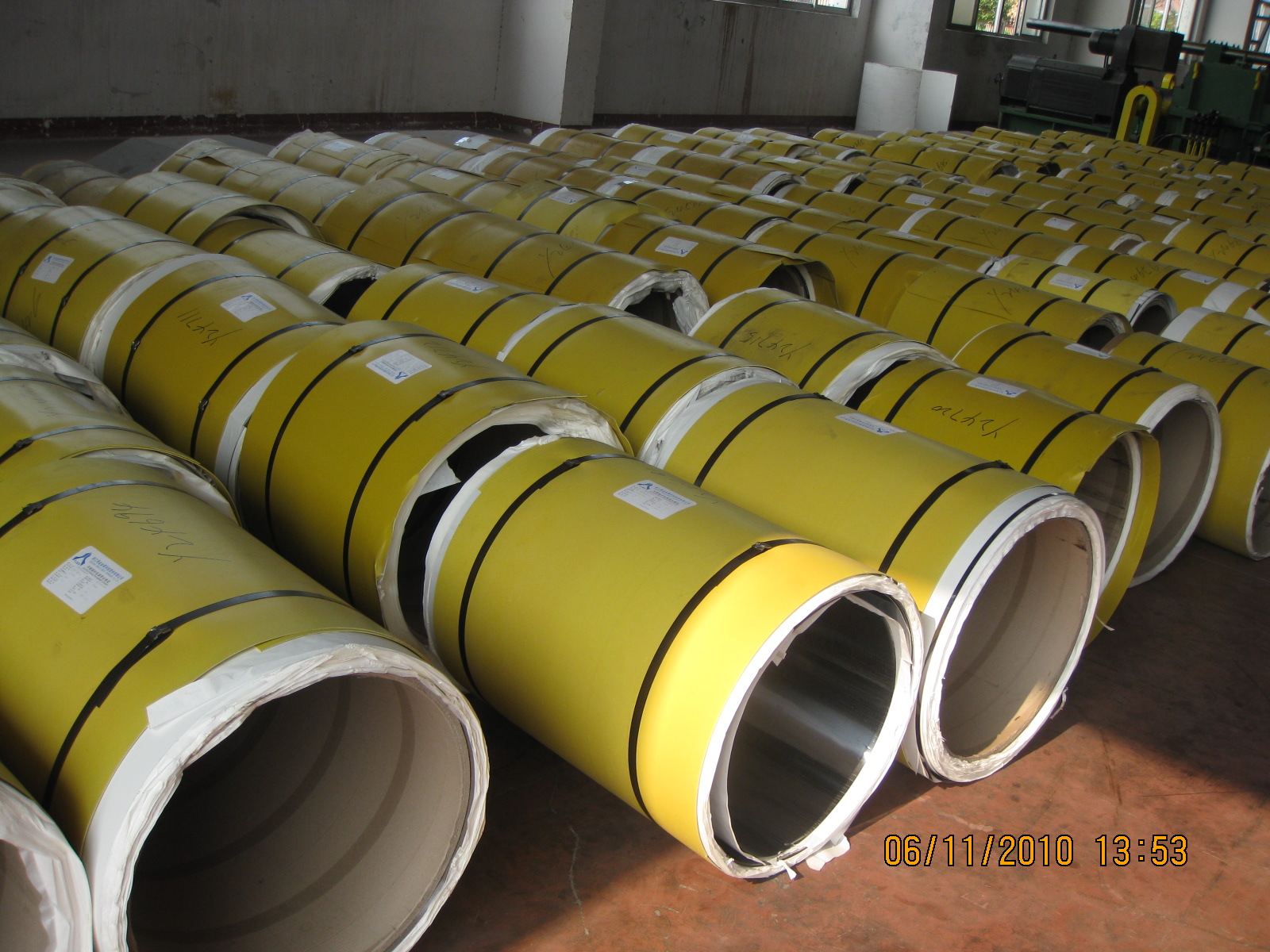
A practical packing conversation should confirm whether baby coils are supplied nude-packed, and whether wider secondary coils use PVC outside with paper interleaved. If the buyer needs one method for baby coils and another for wider secondary coils, both should appear in the order specification. Ask for packing photographs before loading and compare them with the agreed method.
Coil weight bands also affect planning. A declared weight band helps the buyer plan crane lifts, container loading, line feeding and inventory lot size. The supplier should state the weight band per coil and per order, and the packing list should match the actual coils. If the weight band changes between lots, the buyer may need to adjust handling or order quantities even when grade, thickness and width are unchanged.
The supplied purchasing terms list an MOQ of 27 MT, CIF delivery, acceptance against the mill test certificate, and TT/DP payment. A standard delivery time of 7–45 days is also listed. These are useful inputs for planning a trial order, but they should be confirmed for the specific grade, thickness, finish, packing and destination before the order is placed.
Step-by-step supplier evaluation for repeat baby coil supply
- Issue a specification sheet, not a general enquiry. State grade and sub-grade, thickness, width, edge requirement, BA finish, coil weight band, packing method, MTC standard and destination. This turns the evaluation into a like-for-like response.
- Request a capability matrix by grade and size. The supplier should separate 201, 304, 410 and 430, and separate 0.1 mm from 1.2 mm if the process window differs. A single range covering every grade is not enough evidence.
- Ask for lot-level documents. Request the mill test certificate, thickness inspection record, surface inspection record and width measurement for the offered lot. Check that the certificate matches the exact grade and standard, not just the product family.
- Approve a production sample, not a presentation sample. Record the lot, grade, thickness, width and finish of the sample. Keep the approved sample for incoming comparison and state how long it remains valid.
- Lock the packing and weight band. Confirm nude packing for baby coils or PVC outside with paper interleaved for wider secondary coils, as applicable. Require pre-shipment packing photos and a packing list with coil weight bands.
- Run a trial order against the acceptance criteria. Inspect grade documents, thickness, width, BA surface and packing on arrival. Record any deviation by lot so that the next order can be compared with the same rule.
- Set a reorder trigger and change-control rule. A repeatable supplier should notify the buyer before changing grade source, thickness window, finish process, packing method or weight band. Without that rule, a good first order can become an unrepeatable second order.
Use cases and application fit
The supplied case record describes a stainless steel export project running for more than 10 years at a scale of 50 containers per month, serving Indonesia, India, South Africa, Pakistan, Vietnam and Saudi Arabia. The product is used for kitchenware, home appliances, building and construction. The same record states stable material performance, good corrosion resistance, consistent surface quality and compliance with international standards.
That case is useful evidence of export experience and repeat order activity in those applications. It is not proof that every 0.1–1.2 mm BA baby coil in 201, 304, 410 and 430 has been supplied to every market. The buyer should use the case as a reference for logistics and application context, then qualify the exact grade and size separately.
For kitchenware and home appliances, buyers commonly evaluate 304 where corrosion resistance and formability are central, and 201 where the application and budget allow a different balance. For building and construction uses, 430 may be considered where the application accepts a ferritic grade, while 410 is a martensitic grade considered for different hardenability and wear-related needs. These are general material-selection considerations; the final choice still depends on the forming method, environment and acceptance standard for the part.
Acceptance-criteria matrix for the purchase order
| Requirement | Lock in the purchase order | Evidence to request | Repeat-supply pass condition |
|---|---|---|---|
| Grade | 201, 304, 410 or 430; sub-grade where applicable, such as 201 J2 or 201 J3 | Lot mill test certificate with grade and standard | Certificate matches the ordered grade and standard for every lot |
| Thickness | 0.1–1.2 mm with the exact target and tolerance | Thickness inspection record; head, middle and tail checks | Every measured point remains within the agreed limit |
| Width | Approximately 600 mm converted to a measured width and tolerance | Width measurement and edge-condition record | Measured width and edge condition match the approved sample |
| BA finish | Approved surface sample and inspection light | Surface inspection record and production sample | No unacceptable scratch, roll mark, oxidation or colour variation |
| Packing | Nude packing for baby coils or PVC outside with paper interleaved for wider secondary coils, as applicable | Pre-shipment packing photos and packing list | Packing method matches the order before loading |
| Coil weight band | Declared band per coil and per order | Packing list with actual coil weights | Weights stay within the band used for handling and loading plans |
| Commercial terms | MOQ 27 MT, CIF, TT/DP and MTC acceptance where applicable | Order confirmation and shipping documents | Terms are confirmed for the specific order and destination |
What the case evidence proves and what it does not
The 10-year, 50-container-per-month case supports a supplier's export logistics experience and its ability to serve repeat applications in kitchenware, home appliances, building and construction. It also shows a long-running commercial relationship rather than a single shipment. For a buyer, that is relevant context when shortlisting a supplier for a repeat program.
It does not replace a grade-specific qualification. A case covering mixed stainless steel exports cannot prove that a 0.1 mm 304 BA baby coil, a 1.2 mm 430 secondary coil and a 410 baby coil all share the same process window. The buyer should ask for the exact grade, thickness, width and finish record for the item being approved, then compare successive lots against that record.
FAQ
OEM stainless steel manufacturer Chinese
For a Chinese OEM stainless steel manufacturer, evaluate the same five points as a domestic supplier: grade identity, thickness window, width control, finish approval and packing discipline. NINGBO SUNFIRE STAINLESS STEEL CO., LTD states that it provides OEM production services and lists customization of thickness, width, surface finish, PVC and packaging, with a standard delivery time of 7–45 days, an MOQ of 27 MT, and quality control covering mill test, thickness inspection and surface inspection. For a baby coil program, ask the supplier to confirm the exact 201, 304, 410 or 430 grade, the 0.1–1.2 mm window, the approximately 600 mm width, the BA surface sample, the coil weight band and the packing method before placing a repeat order. A brochure and company overview can support the first screening step; the lot certificate and sample still decide the approval.
Conclusion: repeat supply is an evidence system
The question in the title is not answered by a catalogue range. It is answered by a supplier's ability to repeat the same grade, thickness, width, BA finish, packing and coil weight band against written acceptance criteria. For 201, 304, 410 and 430 baby coils at 0.1–1.2 mm and approximately 600 mm, the buyer should qualify each grade and size, inspect lot documents, approve a production sample, and lock packing and weight bands before the first repeat order.
NINGBO SUNFIRE STAINLESS STEEL CO., LTD offers a relevant starting point through its supplied OEM customization record, export experience and long-running stainless steel export case. The next step is to test those claims against the exact baby coil specification. Share the grade, thickness, width, BA finish, coil weight band and packing preference with the supplier, request a lot sample and mill test certificate, and compare the result with the acceptance matrix above.
Next step: Review the company profile and product range at NINGBO SUNFIRE STAINLESS STEEL CO., LTD, then use the downloadable company brochure for initial supplier screening. For a specific repeat baby coil requirement, request a grade, thickness, width, BA finish, packing and weight-band confirmation before ordering.
Have Questions or Need More Details?
Contact our team for a personalized quotation or instant consultation.
Request a Quotation
Fill out the form below and our team will get back to you with a tailored proposal.
WhatsApp Direct Chat
Prefer to chat in real-time? Message us on WhatsApp for instant assistance & quick answers.
- Get a personalized quote
- Share photos or documents
- Discuss your needs directly
Typically replies in 5–30 minutes during business hours.