
Long-Term Stainless Steel Partnership: Baby Coil & Secondary Coil FAQ and After-Sales Guide
Long-Term Stainless Steel Partnership: Baby Coil & Secondary Coil FAQ and After-Sales Guide
A long-term stainless steel partnership survives on three things: a specification that repeats shipment after shipment, acceptance evidence that matches the grade actually shipped, and an after-sales route that resolves a mismatch without stopping the next order. For buyers of baby coils and secondary coils, most of the friction appears after the first container — when the thickness band drifts, when the packaging convention changes because the coil format changed, or when a mill test certificate arrives with a scope that does not name the grade on the purchase order.
This guide answers the questions that decide whether a coil supply relationship is worth repeating, and it uses the published product data and certificate records of NINGBO SUNFIRE STAINLESS STEEL CO., LTD. NINGBO SUNFIRE STAINLESS STEEL CO., LTD is a Ningbo-based stainless steel supplier established in 2013 that exports stainless steel coils and related flat products, reports export sales at 100% of its business, and lists main markets including Pakistan, India, Vietnam, Russia, Turkey, Indonesia, the UAE, Thailand, Malaysia and Bangladesh.
Why long-term coil partnerships fall apart after the first container
Repeat coil supply fails for four operational reasons, and none of them is a grade problem: the specification is not written as a repeatable sheet, the packaging convention is not fixed to the coil format, the certificate does not name the shipped grade and product form, and there is no agreed route for handling a non-conforming coil.
1. The specification is a band, not a number
Baby coil thickness is quoted across a wide envelope — 0.1 mm to 1.2 mm — with roughly 80% of that volume sitting between 0.3 mm and 0.6 mm. A purchase order that says only “baby coil, BA, 0.1–1.2 mm” gives the mill room to move inside a band that is twelve times wider than the working range most forming lines actually run. Repeat buyers close that gap by naming the working thickness, the tolerance expectation and the width, not just the grade.
2. The packaging convention changes with the format
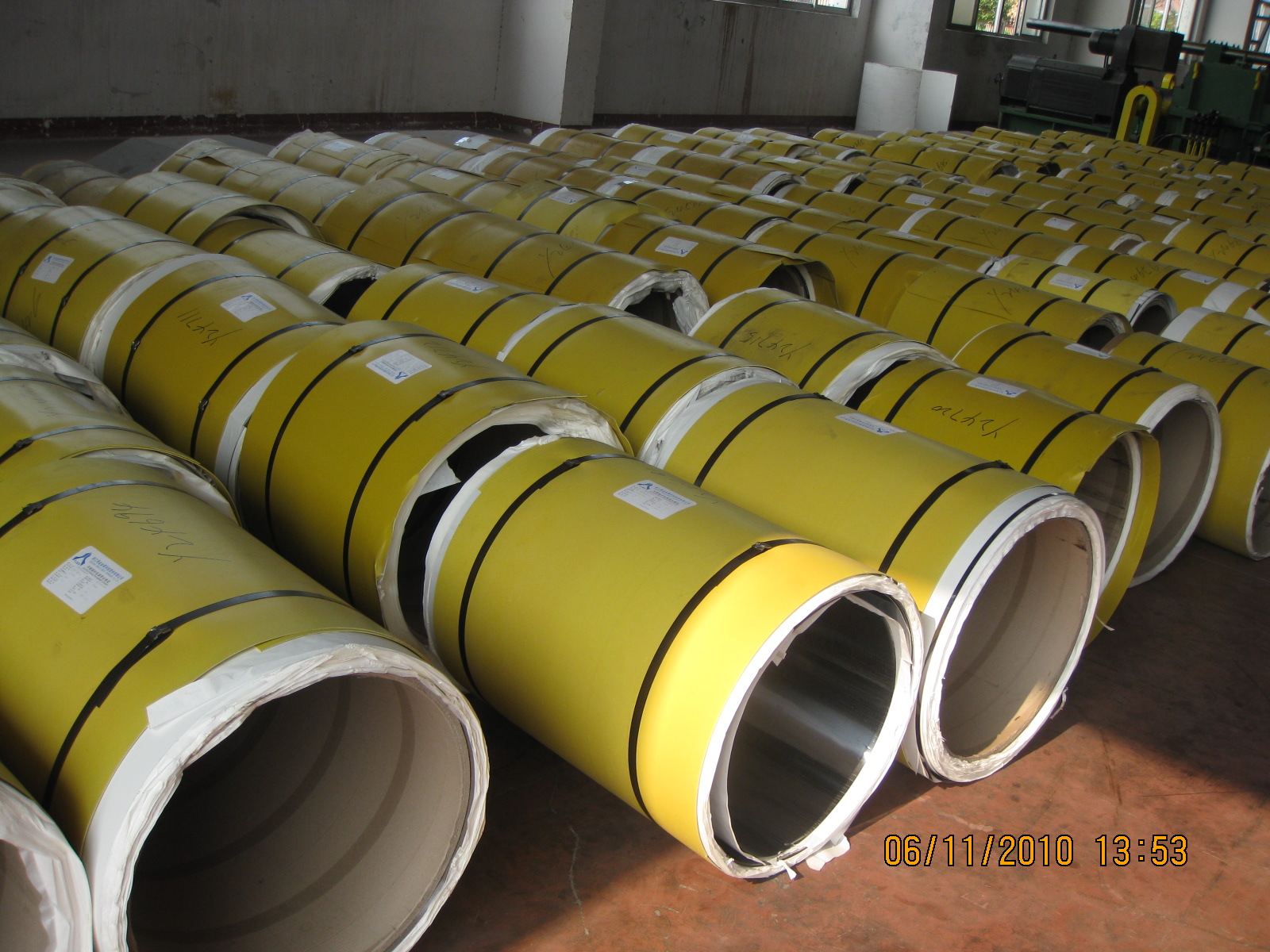
Baby coils are supplied in nude packing. Secondary coils are not: the narrow secondary format is packed with PVC outside or with paper interleaved, and the wider secondary format follows the same PVC-outside or paper-interleaved logic, with coil weights either below or above 1 mt. If a receiving line is set up for one convention and the shipment arrives under the other, handling, storage and de-coiling all have to be re-planned mid-project.
3. The certificate does not match the shipment
A mill test certificate is only useful if its scope names the grade, the product form and the standard that the buyer's own customer will accept. A 201 J2 strip certificate and a 430 coil certificate carry different issuers and different standards, and a certificate issued for strips does not automatically cover a wider coil programme.
4. There is no after-sales route
When the technical question arrives — surface condition after de-coiling, thickness variation at the head of the coil, a packaging claim — the relationship either has a named technical contact or it does not. Suppliers that publish technical support and online service as part of the offer give the buyer somewhere to send the question.
The supply context behind repeat coil buying
China remains a large stainless steel source market, which is why repeat coil programmes are still largely specified out of Chinese mills and trading houses. Association-reported figures published through SEAISI indicate that China exported 3.78 million tonnes of stainless steel products in January–September 2025, up 1.6% year on year, while crude stainless steel output reached 30.46 million tonnes in the same period, up 4.8%. These figures are attributed to the Stainless Steel Council of China Iron and Steel Association and should be re-verified against the originating statistical release before being used in a commercial decision.
On the demand side, 2025 global stainless steel market size has been estimated at USD 134 billion by commercial research, a figure that is useful only as orientation, not as procurement evidence. What matters more to a coil buyer is structural: the formats that move in high volume are not always the formats that fit a specific forming line, and this is exactly where baby coil and secondary coil programmes sit. They absorb the width and weight ranges that standard wide coil cannot serve economically, and they carry the finishing expectations — mainly BA finish in the baby and secondary ranges — that downstream kitchenware, appliance and decorative work depends on.
What a repeatable baby coil and secondary coil supply actually contains
Baby coil: the narrow, thin-gauge core
A baby coil is a stainless steel coil supplied in grades 430, 304, 410 and 201, in thickness from 0.1 mm to 1.2 mm, at a width of around 600 mm, with a surface that is mainly BA finish — approximately 70% of the baby coil range is BA. Packing is nude. The thickness distribution matters as much as the envelope: about 80% of baby coil volume falls between 0.3 mm and 0.6 mm, which is the range most slitting, tube mill and stamping lines are configured around.
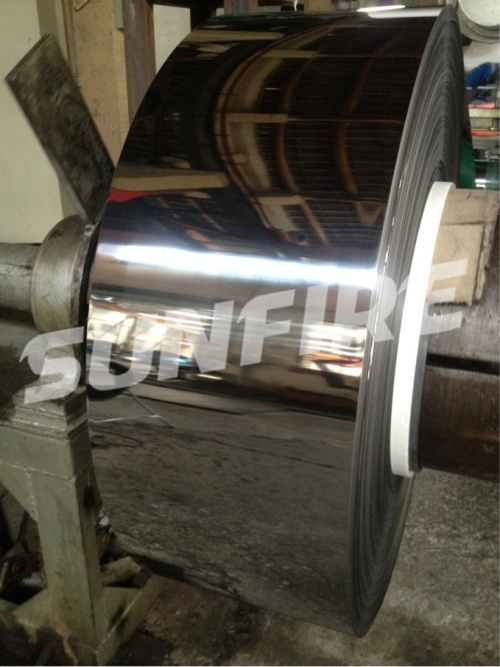
- Grades: 430, 304, 410 and 201.
- Thickness: 0.1 mm–1.2 mm, with about 80% of volume between 0.3 mm and 0.6 mm.
- Width: around 600 mm.
- Surface: mainly BA finish, approximately 70% BA.
- Packing: nude packing.
Secondary coil: narrow and wider, with a different packaging logic
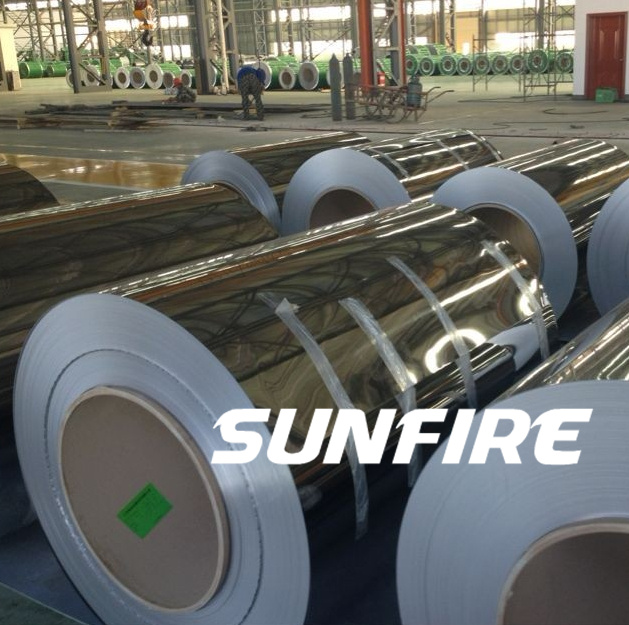
Secondary stainless steel coil is offered in two formats that behave very differently in a warehouse. The narrow secondary format runs from 0.1 mm to 1.2 mm in thickness at around 600 mm width, mainly BA finish, at a coil weight of around 200 kg, packed with PVC outside or paper interleaved, in grades 430, 201 and 304. The wider secondary format runs from 0.25 mm to 1.5 mm at around 1000 mm to 1250 mm width, mainly BA finish, with coil weights either below or above 1 mt, also packed with PVC outside or paper interleaved, in grades 430, 304, 201 and 410.
That difference is the single most common source of receiving disputes. A 200 kg narrow secondary coil can be handled with light lifting equipment and stored on standard racking; a wider secondary coil above 1 mt needs the handling plan of a conventional coil. Both carry the same PVC-outside or paper-interleaved protection, and both are supplied mainly in BA finish, so the visual expectation is consistent even though the logistics are not.
Grades and finishes available around the BA core
BA is the working surface for baby and secondary coil, but buyers who settle into a repeat programme usually need the adjacent product lines as well. The published specification range supports the following:
- 201 J3 / J2 / J5 in 2B or BA: 0.1 mm–2.0 mm thickness at widths of 550, 600, 620, 650, 690, 730, 810 and 830 mm; a wider 201 line runs 0.25 mm–3 mm at 1240 mm or mill edge.
- 304 narrow: 0.10 mm–2.00 mm at widths of 550, 600, 620, 650, 690 and 730 mm; 304 wider covers 0.3 mm–3 mm at 1240 mm with paper interleaved.
- 410 narrow BA: 0.15 mm–1.2 mm at 300 mm–1010 mm, with further processing options of PVC, paper or refinish; 410 wider BA covers 0.25 mm–1.5 mm at 1240 mm or mill edge.
- 201 J2 Finish (decorative route): NO.4 from 0.28 mm to 1.45 mm, 8K from 0.28 mm to 1.95 mm, and Gold 8K, Rose Gold 8K or Black 8K from 0.28 mm to 1.15 mm, at 1240 mm width.
- Stainless steel circle: 430, 410 and 201 circles from 0.3 mm to 2.0 mm, export packed in wooden cases, for buyers who convert coil into blanked parts.
Acceptance evidence: the mill test certificates that travel with the order
Each grade family is backed by a mill test certificate that names the issuing mill, the certificate number and the standard applied. These are the documents a repeat buyer should attach to the purchase order, because they define what “good quality stainless steel” means on paper rather than in conversation.
| Certificate scope | Certificate number | Issuing authority | Standard |
|---|---|---|---|
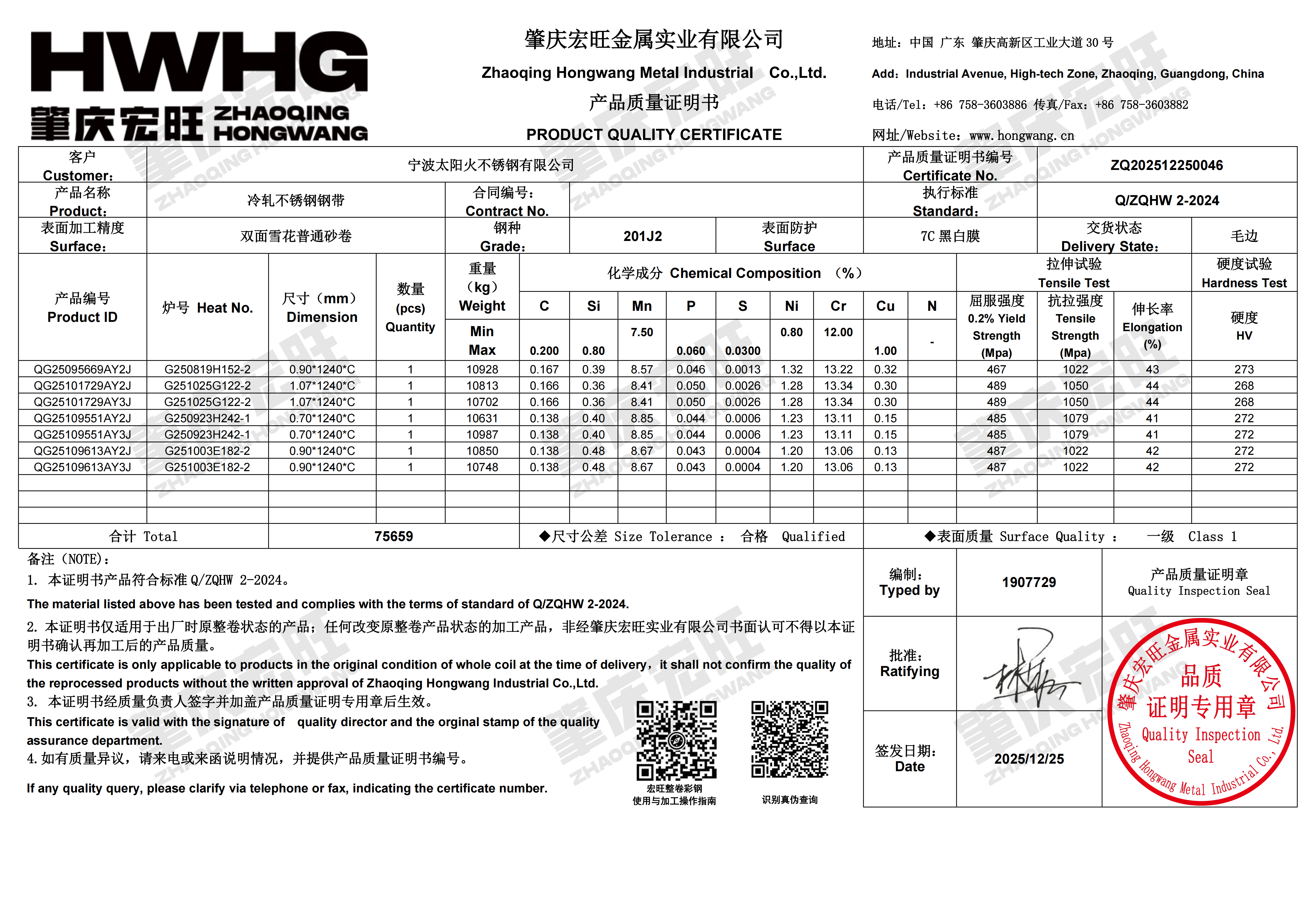
| 201 J2 stainless steel strips | ZQ202512250046 | Zhaoqing Hongwang Metal Industrial Co., Ltd. | Q/ZQHW 2-2024 |
| 201 J2 finish product | ZQ202512250046 | Zhaoqing Hongwang Metal Industrial Co., Ltd. | Q/ZQHW 2-2024 |
| 304 stainless steel coils and sheets | QT20260108631 | QINGTUO GROUP CO., LTD. | ASTM A240/A240M |
| 430 stainless steel coils and sheets | JSPZ20260501804 | JIANGSU YONGJIN METAL TECHNOLOGY CO., LTD. | GB/T3280-2015 |
After-sales support across reorder cycles
After-sales in this product category is mostly technical rather than transactional: a buyer needs someone who can answer a surface or dimensional question on the coil that has already been cut, without waiting for the next shipment. NINGBO SUNFIRE STAINLESS STEEL CO., LTD lists technical support and online service as its after-sales offer, and the quality control routine behind it is mill test plus thickness inspection plus surface inspection — the three checks that map directly to the three most common claims in coil supply.
The repeat-order record is the practical evidence. One export case record describes stainless steel export customers in Indonesia, India, South Africa, Pakistan, Vietnam and Saudi Arabia, running at 50 containers per month over a duration of 10+ years, with results recorded as stable material performance, good corrosion resistance, consistent surface quality and conformance to international standards. The same record lists customized sizes and finishes, strict quality control, fast lead time and a range of available grades as the working highlights of the relationship.
Step-by-step: setting up a repeatable long-term coil schedule
Step 1 — Write the specification as a repeating sheet
State grade, thickness with tolerance expectation, width, surface (BA, 2B, NO.4 or a decorative finish), coil weight range and packaging convention. For baby coil, replace the 0.1–1.2 mm envelope with the working band; for secondary coil, state narrow or wider, because the packaging and handling logic differ.
Step 2 — Fix the certificate scope to the grade
Name the certificate number and standard in the purchase order. A 201 J2 order references ZQ202512250046 under Q/ZQHW 2-2024; a 304 coil order references QT20260108631 under ASTM A240/A240M; a 430 order references JSPZ20260501804 under GB/T3280-2015. Where a grade is not covered by an existing certificate, agree the evidence before the first shipment rather than after.
Step 3 — Match packaging to the format, not to habit
Baby coil ships nude packed. Secondary coil ships with PVC outside or paper interleaved, and the wider secondary format carries weights below or above 1 mt. Confirm which convention the receiving site can actually handle before the order is placed.
Step 4 — Agree the three acceptance checks
Set mill test, thickness inspection and surface inspection as the acceptance routine on arrival. These are the same checks the supplier applies before shipment, which means a claim can be discussed against a shared method rather than an opinion.
Step 5 — Run one batch before committing a schedule
A single trial batch, cut on the buyer's own line, exposes the issues that specification sheets hide: how the BA surface behaves after slitting, whether the thickness holds at the head of the coil, whether the coil weight suits the de-coiler. Fix the parameters after this batch and treat them as the baseline.
Step 6 — Set the reorder window against real lead time
Quoted lead time across the coil range runs from 7 to 45 days depending on the product line, with coil products commonly quoted at 7–30 days or from stock, and stainless steel circles at 25–45 days. A repeat schedule should be built backwards from the longest product line in the mix, not from the fastest.
Step 7 — Name the after-sales channel
Agree who receives a technical question and how quickly it is answered. Technical support and online service are the documented after-sales channels, and a named contact turns a potential dispute into a specification update for the next order.
Where baby and secondary coils are used
Both formats serve the same downstream industries, and the choice between them is usually a question of line width, handling capacity and cost position rather than metallurgy. The documented application range covers kitchenware and cookware, home appliances, elevator decoration, construction and interior decoration, automotive components, industrial equipment, metal stamping and deep drawing, tube and pipe manufacturing, tableware production and hardware accessories.
- Kitchenware, cookware and tableware: BA surface and stable thickness tolerance matter most, because the surface is the product. Food-contact use is a typical working condition.
- Home appliances: consistent surface quality and repeatable forming behaviour across long production runs.
- Elevator decoration and construction/interior decoration: outdoor and high-visibility applications where corrosion resistance and finish consistency are judged visually.
- Automotive components, industrial equipment and hardware accessories: stamping and deep drawing performance, where thickness stability drives die life.
- Tube and pipe manufacturing: narrow coil fed directly to tube mills, where width consistency around 600 mm removes a slitting step.
The matched equipment list behind these applications is slitting machines, tube mills and stamping equipment, and the special requirements recorded for the segment are mirror finish, anti-rust performance and stable thickness tolerance — which is precisely why the acceptance routine in Step 4 concentrates on thickness and surface rather than on tonnage alone.
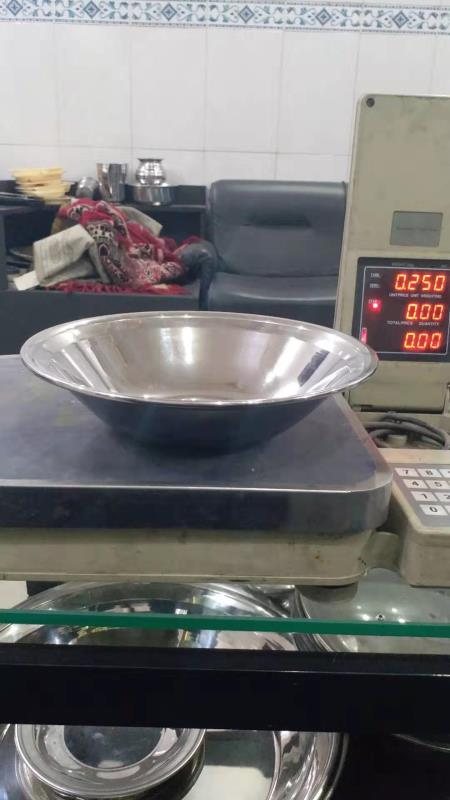
Format comparison: baby coil, secondary narrow coil and secondary wider coil
| Parameter | Baby coil | Secondary narrow coil | Secondary wider coil |
|---|---|---|---|
| Grades | 430, 304, 410, 201 | 430, 201, 304 | 430, 304, 201, 410 |
| Thickness | 0.1 mm–1.2 mm (about 80% at 0.3–0.6 mm) | 0.1 mm–1.2 mm | 0.25 mm–1.5 mm |
| Width | around 600 mm | around 600 mm | around 1000 mm–1250 mm |
| Surface | mainly BA finish (about 70% BA) | mainly BA finish | mainly BA finish |
| Coil weight | not stated in the reference sheet | around 200 kg | 1 mt below or 1 mt above |
| Packaging | nude packing | PVC outside or paper interleaved | PVC outside or paper interleaved |
The comparison is deliberately narrow. It compares what the product data actually records — grade, thickness, width, surface, weight and packaging — rather than anything that would require a performance claim the supplier has not published. On those six parameters the formats are close enough to be interchangeable in grade and surface, and different enough in weight and packaging to require separate handling plans.
Reference order parameters by product line
| Product line | Reference MOQ | Lead time |
|---|---|---|
| 201 J3/J2/J5 narrow (2B or BA) | 27 mt by 3–4 specifications | 7–30 days / stock |
| 304 narrow | 730 mm and 690 mm: 9 mt; 650 mm and 620 mm: 8 mt | 7–30 days / stock |
| 304 wider | 10 mt per thickness | 7–30 days / stock |
| 201 wider | 7–10 mt per thickness | 7–30 days / stock |
| 410 wider BA | 20 mt per thickness | 7–30 days / stock |
| 201 J2 Finish (NO.4, 8K, color) | 5–20 mt per thickness | 7–45 days |
| Stainless steel circle (430, 410, 201) | 3 mt per thickness | 25–45 days |
Frequently asked questions
Which mill test certificates and standards should a buyer expect with 201, 304 and 430 coil orders?
The recorded certificates name a specific grade scope, issuer and standard, and each should be requested by number. 201 J2 stainless steel strips are certified under certificate number ZQ202512250046, issued by Zhaoqing Hongwang Metal Industrial Co., Ltd. and complying with Q/ZQHW 2-2024; the 201 J2 finish product is certified under the same number and standard, and both apply to the global market. 304 stainless steel coils and sheets are certified under certificate number QT20260108631, issued by QINGTUO GROUP CO., LTD. and complying with ASTM A240/A240M. 430 stainless steel coils and sheets are certified under certificate number JSPZ20260501804, issued by JIANGSU YONGJIN METAL TECHNOLOGY CO., LTD. and complying with GB/T3280-2015, applicable to all markets. Buyers should also check that the certificate scope matches the product form actually ordered, since a strip certificate and a coil certificate are not automatically interchangeable.
How does a buyer confirm good quality stainless steel manufacturers before a repeat contract?
Confirmation rests on verifiable production and inspection evidence rather than on grade names. The checks that can be documented here are the grade and dimension data (for baby coil: 430, 304, 410 and 201, 0.1–1.2 mm, around 600 mm width, mainly BA finish), the certificate trail with named issuers and standards, the quality control routine of mill test plus thickness inspection plus surface inspection, and the customisation scope covering thickness, width, surface finish, PVC and packaging. A supplier that can place all four on paper — and that operates a documented after-sales channel of technical support and online service — gives a buyer something to audit against on the second and third order, which is where quality claims usually appear.
What minimum order quantities apply to baby coil and secondary coil orders?
Minimum order quantity depends on the grade, the width and the format rather than on a single company-wide figure. For 201 J3/J2/J5 narrow coil the reference minimum is 27 mt by 3–4 specifications. For 304 narrow coil it is set per width: 9 mt at 730 mm and 690 mm, and 8 mt at 650 mm and 620 mm. 304 wider coil references 10 mt per thickness and 201 wider coil references 7–10 mt per thickness, while 410 wider BA references 20 mt per thickness. The decorative 201 J2 Finish line ranges from 5 to 20 mt per thickness, and stainless steel circles reference 3 mt per thickness. A capability-level minimum of 27 mt is also stated for the overall coil offer, so the practical order envelope should be confirmed against the exact combination before budgeting.
How should a buyer validate a batch before locking a long-term schedule?
Validation should mirror the acceptance routine that will govern the repeat orders, so that the first batch and the tenth batch are judged the same way. That means checking the mill test certificate against the ordered grade and standard, running a thickness inspection and a surface inspection, and confirming the packaging convention — nude packing for baby coil, PVC outside or paper interleaved for secondary coil — before the material reaches the line. A trial batch should also confirm the handling assumption: a narrow secondary coil of around 200 kg and a wider secondary coil at or above 1 mt require different equipment. Where the ordered grade falls outside the recorded certificate scopes, for example 410, the evidence requirement should be agreed before the trial batch rather than after it.
What lead time and after-sales support should a repeat buyer plan for?
Quoted lead time across the coil range runs from 7 to 45 days depending on the product line. Coil products are commonly quoted at 7–30 days or from stock, while stainless steel circles are quoted at 25–45 days, so a mixed schedule should be built backwards from the slowest line in the basket. After-sales support is listed as technical support and online service, which is the channel for surface, thickness and packaging questions after delivery. Buyers preparing a first or a repeat order can download the product brochure at Sunfire stainless steel product brochure, send a specification sheet to zzqsarah@hotmail.com, or message +86 182 5741 1826 on WhatsApp to have the grade, thickness, width and packaging combination confirmed against current stock.
Conclusion: what makes the second order easier than the first
A long-term stainless steel partnership is not built on a grade list; it is built on a specification sheet that repeats, a certificate that names what was shipped, a packaging convention fixed to the coil format, and an after-sales channel that answers the question after the coil has been cut. In the baby coil and secondary coil ranges, the facts are specific enough to contract around: 430, 304, 410 and 201 grades; 0.1–1.2 mm at around 600 mm with mainly BA finish for baby coil; narrow and wider secondary formats at 0.1–1.2 mm and 0.25 mm–1.5 mm with PVC outside or paper interleaved; 201, 304 and 430 certificates with named issuers and standards.
The second order becomes easier when all of that is written down before the first container is loaded. That is the difference between buying stainless steel coil and running a supply partnership.
Request a specification match or a quotation
Send your grade, thickness, width, surface and packaging requirement for baby coil, secondary coil or stainless steel circle, and receive a confirmation against current stock and lead time.
Brochure: Download the Sunfire stainless steel product catalogue (PDF)
Email: zzqsarah@hotmail.com | WhatsApp / Tel: +86 182 5741 1826 | Website: en.sunfirex.com
NINGBO SUNFIRE STAINLESS STEEL CO., LTD | ROOM A-17, INTERNATIONAL CENTER, NINGBO CHAMBER OF COMMERCE, NO. 588 TAIKANG ROAD, NINGBO, CHINA
Have Questions or Need More Details?
Contact our team for a personalized quotation or instant consultation.
Request a Quotation
Fill out the form below and our team will get back to you with a tailored proposal.
WhatsApp Direct Chat
Prefer to chat in real-time? Message us on WhatsApp for instant assistance & quick answers.
- Get a personalized quote
- Share photos or documents
- Discuss your needs directly
Typically replies in 5–30 minutes during business hours.