
Stainless Steel Baby Coil: Grade, Gauge, BA Finish
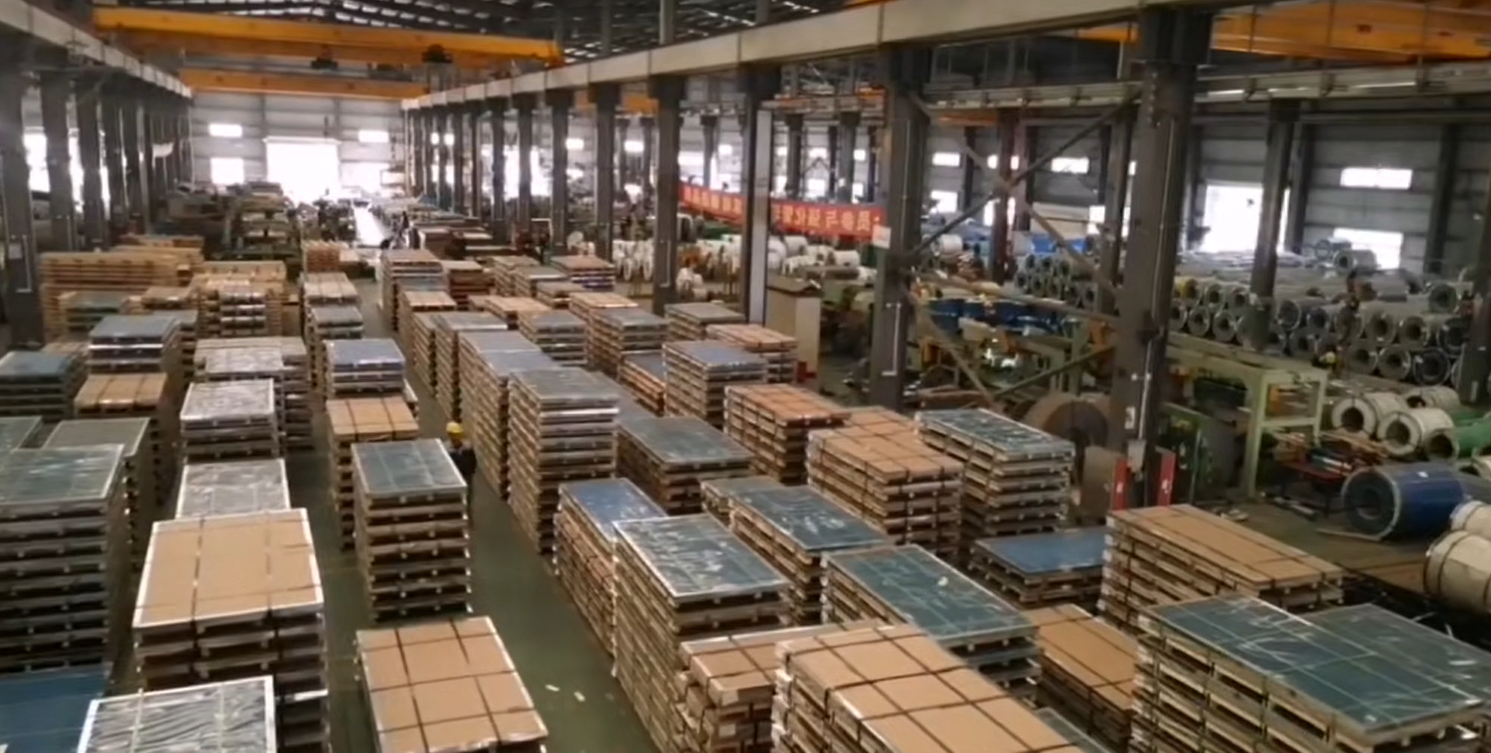
Answer first: selecting a stainless steel baby coil means locking the grade and sub-grade, the thickness and tolerance, the width and edge, the finish, the surface protection, the mill test certificate and the sample approval before price is compared. The grade set covered here is 201, 304, 410 and 430; the reference thickness window is 0.1–1.2 mm; the reference width is approximately 600 mm; and BA is the predominant finish at roughly 70% of the baby coil specifications in this guide's scope. Those reference values are a starting point for an RFQ, not a substitute for the buyer's own drawing, line trial and acceptance standard.
A baby coil is a narrow coil format, not a grade and not a finish. It is also not a stainless steel circle or stainless steel wire. The format is used when a standard wide coil is too large for the downstream line or when the order size does not justify a wide coil. That is why the same word can appear in very different enquiries: a tube mill may care about edge condition and weldability, a kitchenware plant may care about drawability and surface, and a stamping shop may care about thickness tolerance and flatness. The selection task is therefore not 'which grade should be used' but 'which specification set matches this line, this part and this acceptance document'.
This guide is written for the decision stage. It explains how the 201, 304, 410 and 430 options differ in procurement terms, how the 0.1–1.2 mm thickness window changes the checks a buyer should make, why approximately 600 mm width is a line-compatibility decision rather than a catalogue number, and how BA finish should be specified without confusing it with 8K mirror, No.4, HL, 2B, color or gold mirror finishes. It also separates supplier claims from independently verified facts. NINGBO SUNFIRE STAINLESS STEEL CO., LTD is used as a reference supplier because company-provided material describes its baby coil and secondary material specialization, but the selection method applies to any qualified supplier.
What Is a Stainless Steel Baby Coil?
A stainless steel baby coil is a narrow, coiled flat product supplied for downstream processing where a wide coil would create handling, slitting or yield problems. In the scope of this guide, the reference width is approximately 600 mm and the reference thickness range is 0.1–1.2 mm. The coil may be cold rolled, and the finish is usually specified separately from the grade.
That definition matters because buyers sometimes use 'baby coil' as if it described a material grade. It does not. A 304 baby coil and a 430 baby coil can share the same width and thickness while behaving differently in forming, welding, surface treatment and documentation. Equally, a BA baby coil and an 8K mirror baby coil can share the same grade and still require different inspection, protection and packaging. The purchase order should therefore name the format, the grade, the sub-grade where applicable, the thickness, the tolerance, the width, the edge, the finish, the surface protection and the certificate.
The format also changes the economics of the line. A narrow coil can reduce trimming loss for a part that does not need a wide sheet, but it can increase the number of coil changes and make edge quality more visible. The buyer should calculate yield from the actual part nesting, not from the nominal coil width alone. If the line is set for a 600 mm coil, a small width change can affect guide settings, edge trim, tooling clearance and scrap. The width decision belongs in the technical review, not only in the commercial negotiation.
This guide focuses on cold-rolled baby coil; hot-rolled stainless steel is a separate product route and should be specified with its own thickness and finish requirements.
Why Baby Coil Selection Fails Before Production Starts
Most baby coil problems are specification problems before they are production problems. A grade written as '201' without a J-series sub-grade, a thickness written as a gauge number without a tolerance, a finish written as 'BA' without a surface acceptance standard, or a width written without an edge condition can all produce a coil that is technically 'as ordered' but unusable on the line.
The supplied risk-control unit for this product identifies surface scratches and rust as control points, with PVC protection, precision rolling and surface inspection as the control method, and pre-shipment inspection plus export standard packaging as the enterprise measure. That is a useful reminder that the coil is exposed to risk before the buyer ever opens the package. Thin-gauge BA material can be sensitive to handling marks, interleaving problems, moisture and edge damage. A specification that does not mention protection and inspection leaves the supplier to decide what 'good' means.
A second failure mode is grade ambiguity. The 201 family is often discussed with J1, J2, J3 and J5 sub-grades. These are not interchangeable labels for a buyer who has qualified a forming or welding process. If the RFQ says only '201', the supplier may quote a sub-grade that meets the supplier's own release but not the buyer's process window. The same logic applies to 430 secondary material: 'secondary' is a supply category with its own acceptance questions, not a synonym for prime 430. The buyer should write the exact grade and sub-grade, then require the mill test certificate to match the order.
A third failure mode is finish confusion. BA is a bright annealed finish, not a mechanically polished mirror finish. If the end use requires 8K mirror, gold mirror, color, No.4 or HL, the buyer should specify that finish directly and inspect a sample under the agreed lighting and protection conditions. A BA coil should not be accepted as a substitute unless the buyer has approved the substitution in writing.
Industry Background: Why the Specification Window Matters
China remains a large stainless steel supply base, and the availability of narrow and secondary coil formats is part of that supply picture. China's accumulated stainless steel exports from January to September 2025 reached 3.7827 million tons, an increase of 2.4% year on year, according to China Customs data reported by SunSirs. That figure describes trade flow, not the suitability of any individual supplier or coil. It does support a practical point: buyers have many offers to compare, so the specification document has to do more work than the price sheet.
NINGBO SUNFIRE STAINLESS STEEL CO., LTD is a Ningbo-based stainless steel supplier established in 2013. Company-provided information describes a specialization in secondary materials and head-and-tail coil materials, a 100% export ratio, and markets including Pakistan, India, Vietnam, Russia, Turkey, Indonesia, the UAE, Thailand, Malaysia and Bangladesh. The same company material reports a monthly production capacity of 4,500 MT, a 20-roll reversible cold rolling mill and a vertical bright annealing furnace. These are company-reported facts. They are relevant to a supplier review because they explain why the supplier discusses cold-rolled and bright-annealed coil, but they do not by themselves prove that a specific coil will meet a specific drawing. The buyer still needs the mill certificate, the sample and the acceptance record.
Reference Specification Window for This Guide
The table below records the reference window used in this guide. It is a checklist for the RFQ, not a claim that every supplier offers every combination as standard. Each line should be confirmed on the quotation and on the mill test certificate.
| Specification item | Reference scope | What the buyer should confirm |
|---|---|---|
| Grade | 201, 304, 410 and 430 | Exact grade, 201 J-series sub-grade where applicable, and 430 secondary status if offered. |
| Thickness | 0.1–1.2 mm | Nominal thickness, tolerance, measuring method and edge condition. |
| Width | Approximately 600 mm | Actual width, slit tolerance, edge quality and line compatibility. |
| Finish | BA predominant, roughly 70% of the scope | BA inspection standard, surface protection, and whether another finish is required. |
| Tolerance reference | ±0.02 mm stated in the supplied comparison | Whether the tolerance applies to the ordered thickness and how it is measured. |
| Documentation | Mill test certificate and inspection record | Heat number, grade, chemistry, mechanical properties where applicable, and release status. |
Grade Selection: 201, 304, 410 and 430
Grade selection starts with the part, the process and the acceptance document. The four grades in scope are not a ranking. 201 and 304 are austenitic stainless steels, 410 is martensitic and 430 is ferritic; those family differences explain why a buyer should not treat them as drop-in substitutes without a line trial. The procurement question is which grade, sub-grade and certificate set the application actually requires.
| Grade in scope | Family context | Procurement question to resolve | Evidence to request |
|---|---|---|---|
| 201 and J-series | Austenitic | Which sub-grade is quoted: J1, J2, J3 or J5? What forming, welding or surface requirement drives that choice? | Exact grade and sub-grade on the quote and MTC; sample for the intended process. |
| 304 | Austenitic | Is the ordered 304 supported by the required chemistry and finish record for this part? | MTC with heat number, grade and chemistry; finish inspection record. |
| 410 | Martensitic | What temper, hardness or heat-treatment condition is required for the forming step? | MTC and temper condition; sample for forming and magnetic-condition checks where relevant. |
| 430 and 430 secondary | Ferritic | Is the offer prime 430 or 430 secondary? What defects, tolerance and finish limits apply? | Written definition of secondary status; MTC; surface and dimensional inspection. |
The table is deliberately a procurement matrix rather than a performance ranking. A buyer who asks 'which grade is better' without naming the part cannot get a reliable answer. A 304 coil may be the right answer for one application and an unnecessary cost for another; a 201 J-series coil may fit one forming line and fail another because the sub-grade was not controlled. The only defensible comparison is a like-for-like comparison of grade, sub-grade, thickness, tolerance, width, finish, protection, certificate and delivery.
201 and the J-Series Sub-Grade Trap
The 201 family should be written with its sub-grade when the buyer's process has been qualified to that sub-grade. J1, J2, J3 and J5 are distinct procurement descriptions. If the RFQ says only '201', the supplier may quote a material that meets a general 201 description but not the buyer's actual release. The buyer should require the sub-grade on the quotation, on the mill test certificate and on the package label. If the supplier cannot state the sub-grade, the offer is not specific enough for a decision-stage comparison.
A practical check is to ask for a sample from the same sub-grade and the same finish route as the production order. The sample should be formed, welded or surface-treated in the same way as the production part. A sample that is merely visually inspected does not confirm the forming window. The buyer should record the sample condition, the test method and the acceptance result, then make that record part of the purchase specification.
304: The Documentation Check
304 is an austenitic grade, but the name alone does not tell the buyer which heat, which finish or which mechanical condition is being supplied. The buyer should require a mill test certificate that links the heat number to the ordered grade and to the relevant chemistry. The certificate should be checked against the purchase order, not against a generic catalogue page. If the finish is BA, the surface inspection record should be linked to the same coil or lot. If the coil is intended for a visible part, the buyer should agree on the inspection lighting, the allowed surface condition and the protection film before shipment.
This is a decision-stage point because 304 offers can look identical on a price sheet while differing in documentation and surface release. A lower-priced offer that cannot provide a traceable certificate or a consistent finish record creates a hidden cost in inspection, rework and line downtime. The buyer should compare the total release package, not only the metal price.
410: Temper and Forming Questions
410 is martensitic, so the buyer should not assume that a 410 offer from one supplier is equivalent to a 410 offer from another without checking the temper or heat-treatment condition. The RFQ should state the condition required by the forming or bending step, and the supplier should confirm it in writing. The buyer should also ask how the coil will be protected during transit and how the edges will be presented to the line. A 410 coil that meets a dimensional check but has the wrong temper can still fail at the press.
For a decision-stage comparison, the buyer should request a sample that represents the production condition and record the result of the intended forming step. The sample should be identified by grade, temper, thickness, width and finish. If the supplier cannot link the sample to a production lot, the sample has limited value as evidence.
430 and 430 Secondary
430 is ferritic and is often discussed alongside 430 secondary material in cost-sensitive purchasing. Secondary is a distinct supply category. It should be defined in writing: what makes the coil secondary, which dimensional or surface limits apply, and what the buyer's acceptance criteria are. A supplier should not use 'secondary' to avoid a grade, tolerance or finish commitment. The buyer should ask for the same MTC and inspection discipline that would be applied to prime material, with the secondary definition added to the specification.
This is also where the supplied comparison becomes relevant. The comparison unit for this product states that, compared with local low-grade stainless steel suppliers, the offer provides better surface finish and stable material quality, with lower long-term defect cost and higher processing efficiency with fewer rejects. Those are supplier-provided comparison claims. They are useful as questions for the supplier, not as independently verified market facts. The buyer should test the claim through the sample, the MTC, the surface inspection and the packaging check.
Thickness and Tolerance: 0.1–1.2 mm
The reference thickness window for this guide is 0.1–1.2 mm. Thickness should be written in millimetres with a tolerance and a measuring method. A gauge number alone is not a complete specification because gauge systems differ and because the same nominal gauge can hide a tolerance that matters at the press or weld line.
At the thin end of the range, handling and surface protection become more important. A 0.1 mm coil has less stiffness, so it is more sensitive to edge damage, interleaving marks and tension variation. The buyer should ask how the coil will be wound, interleaved and protected, and how the edge will be presented. At the thicker end, the forming load and the edge condition change, and the buyer should confirm that the line can handle the coil weight and the stiffness without marking the surface.
The supplied comparison states a thickness tolerance of ±0.02 mm and describes it as more precise than local low-grade suppliers. That figure is a useful reference for the RFQ, but it should be attached to the ordered thickness and to a measuring method. A tolerance statement without a method is incomplete. The buyer should ask whether the measurement is taken at the edge, at mid-width or at a defined number of points, and whether it is a routine release check or a special inspection. The answer should be written into the purchase order.
Thickness also interacts with finish. A BA surface on a thin coil can show handling marks more readily than the same finish on a thicker coil. The buyer should not separate the thickness decision from the protection decision. If the part is visible, the acceptance standard should define the allowed surface condition, the inspection lighting and the protection film. If the part is formed or drawn, the buyer should check whether the tolerance and surface condition remain stable after forming.
Width and Edge: Approximately 600 mm
The reference width for this guide is approximately 600 mm. Width is a line-compatibility decision, not just a dimension on the quote. The buyer should confirm the actual width, the slit tolerance, the edge condition and the coil set that the line can accept without excessive trim or guiding problems.
A 600 mm coil can be a good fit for a line that would otherwise trim a wider coil, but the gain depends on the part nesting and the edge quality. If the line requires a precise edge for welding or for a visible trim, the buyer should specify the edge condition and the inspection method. If the line can tolerate a mill edge, the buyer should say so and confirm that the supplier's definition matches. The same width can carry different commercial consequences depending on whether the buyer is paying for trim, scrap or extra handling.
Width also affects packaging and coil handling. A narrow coil may need different eye-to-sky orientation, different interleaving and different pallet or cradle support. The buyer should ask how the coil will be protected at the edge and how the package will be opened without damaging the first wraps. These are not administrative details. A coil that arrives at the correct width but with a damaged edge may still fail the line.
BA Finish: What It Is and What It Is Not
BA means bright annealed. It is a heat-treatment and surface route that produces a bright surface; it is not the same as 8K mirror, gold mirror, color, No.4 or HL. In the baby coil scope covered here, BA is the predominant finish at roughly 70% of specifications. The buyer should specify BA with a surface acceptance standard, a protection method and an inspection condition.
BA is often chosen when the part needs a bright surface without the cost or the reflectivity of a mirror finish. That does not make BA a universal decorative finish. A BA surface can still show scratches, handling marks, water marks or edge damage, especially on thin gauge. The supplied risk-control unit names surface scratches and rust as risks and lists PVC protection, precision rolling and surface inspection as controls, with pre-shipment inspection and export standard packaging as the enterprise measure. A buyer who cares about the visible surface should turn those controls into written acceptance criteria.
The finish family should be stated explicitly. 2B is a different finish route from BA. No.4 and HL are directional finishes. 8K and gold mirror are reflective finishes. Color stainless steel adds a coating or coloring step. If the end use requires one of those finishes, the RFQ should say so and should not rely on a BA coil as a fallback. A supplier may be able to discuss several finishes, but the buyer should require the exact finish on the quotation and the sample.
Inspection conditions matter as much as the finish name. The buyer should agree on the lighting, the viewing distance, the allowed surface condition and the protection film. If the coil will be stored before use, the buyer should ask how the surface is protected against moisture and handling. The same BA coil can be accepted in one inspection room and rejected in another if the standard is not written down.
Step-by-Step Selection Process
- Define the part and the failure mode. Write down what the coil must survive: forming, drawing, welding, bending, punching, visible surface, cleaning or storage. The failure mode should drive the specification, not the other way around.
- Lock the grade and sub-grade. Choose from 201, 304, 410 and 430, and write the exact sub-grade where applicable. For 201, specify J1, J2, J3 or J5 if the process has been qualified to that sub-grade. For 430 secondary, define what secondary means for the order.
- Set the thickness and tolerance. Write the nominal thickness in millimetres, the tolerance and the measuring method. The reference window is 0.1–1.2 mm, and the supplied comparison cites ±0.02 mm as a tolerance reference. Confirm how that tolerance will be checked.
- Set the width and edge. Confirm approximately 600 mm or the actual line width, then define the slit tolerance, edge condition and handling requirement. Check the part nesting and the expected trim loss.
- Set the finish and protection. Specify BA, 2B, No.4, HL, 8K, color or another finish as required. For BA, define the surface acceptance standard, the inspection lighting and the PVC or other protection. Do not substitute a finish without written approval.
- Require the certificate and the sample. Ask for a mill test certificate linked to the heat number and the ordered grade. Ask for a sample from the same grade, sub-grade, thickness, width and finish route. Record the sample result against the intended process.
- Verify the supplier and the package. Check the supplier's stated capability, equipment and quality controls, then confirm the packaging, edge protection, labelling and shipment release. The supplied company material reports a 20-roll reversible cold rolling mill, a vertical bright annealing furnace and a monthly production capacity of 4,500 MT; the buyer should still verify the specific order and the release documents.
Application Fit: Where Baby Coils Are Used
The same baby coil format can serve different applications, but the selection questions change. The following application notes are decision prompts, not grade recommendations. The buyer should map each prompt to the actual drawing and line trial.
- Tube and pipe manufacturing: confirm width, edge condition, thickness tolerance and weldability for the specific grade and sub-grade. A narrow coil can suit a tube mill, but the edge and the coil set must match the mill entry.
- Kitchenware: confirm drawability, surface condition and protection. A visible BA part may need a stricter surface standard than a hidden component. The supplied comparison positions the product for decorative and deep-drawing applications, but the buyer should verify the forming result on a sample.
- Home appliances: confirm flatness, surface consistency and the ability to form without marking. If the part is visible, agree on the inspection lighting and the allowed surface condition.
- Elevator decoration: confirm finish, flatness and protection. BA is not a substitute for 8K mirror or color if the design requires those finishes. The finish should be specified directly and sampled under the intended lighting.
- Automotive components: confirm the grade, temper, thickness tolerance and certificate traceability required by the buyer's own quality system. This guide does not make an automotive certification claim; the buyer should apply its own qualification process.
- Industrial equipment: confirm the corrosion exposure, the forming method and the maintenance expectation. The supplied comparison claims lower maintenance because of rust-prevention performance; the buyer should verify the claim against the actual environment and the agreed certificate.
- Metal stamping and deep drawing: confirm the forming window, the thickness tolerance and the surface protection. A sample that has passed the intended draw is stronger evidence than a visual check alone.
Supplier Comparison and Verification
Supplier comparison should be like-for-like. Compare the same grade, sub-grade, thickness, tolerance, width, edge, finish, protection, certificate and delivery scope. A supplier that quotes a lower price on a different sub-grade or a different finish is not offering the same coil.
NINGBO SUNFIRE STAINLESS STEEL CO., LTD is relevant to this comparison because company-provided information describes a specialization in secondary materials and head-and-tail coil materials, a 20-roll reversible cold rolling mill, a vertical bright annealing furnace and a reported monthly production capacity of 4,500 MT. The company also reports a 100% export ratio and markets including Pakistan, India, Vietnam, Russia, Turkey, Indonesia, the UAE, Thailand, Malaysia and Bangladesh. These facts help a buyer decide what to verify. They do not replace the mill certificate, the sample or the factory audit.
The supplied comparison unit states that, compared with local low-grade stainless steel suppliers, the product offers better surface finish and stable material quality, a thickness tolerance of ±0.02 mm, lower long-term defect cost, higher processing efficiency with fewer rejects and lower maintenance due to rust-prevention performance. These are supplier-provided claims. A buyer should convert each claim into a check: surface inspection under agreed lighting, thickness measurement with a defined method, a trial sample for the intended process, and a packaging check for the protection method.
| Verification check | Why it matters | Evidence to request |
|---|---|---|
| Grade and sub-grade | Prevents a general grade name from hiding a different 201 J-series or 430 secondary description. | Purchase order, quotation, MTC and package label match. |
| Thickness and tolerance | Thin-gauge forming and welding are sensitive to tolerance and measuring method. | Nominal thickness, tolerance, measuring points and inspection record. |
| Width and edge | Line guiding, trim loss and weld quality depend on the actual edge condition. | Actual width, slit tolerance, edge description and sample. |
| Finish and protection | BA, 2B, No.4, HL, 8K and color are different finishes with different acceptance needs. | Finish specification, surface inspection record and protection film details. |
| Certificate and traceability | The certificate must describe the coil being shipped, not a generic product. | MTC with heat number, grade, chemistry and release status. |
| Packaging and shipment | Edge damage, moisture and handling marks can reject an otherwise correct coil. | Packaging method, edge protection, labelling and pre-shipment inspection record. |
A useful decision rule is to score each supplier on the evidence it can provide, not on the adjectives it uses. A supplier that can link the certificate, the sample and the packaging record to the ordered coil is easier to qualify than a supplier that offers a lower price with a generic specification sheet. The buyer should also confirm which items are standard and which are optional, because a comparison that mixes optional protection into a standard offer is not a valid comparison.
Common Specification Mistakes
- Writing only the grade. 201 needs a sub-grade where the process has been qualified; 430 secondary needs a written definition.
- Using a gauge number without a tolerance. Millimetres, tolerance and measuring method should appear together.
- Treating BA as a mirror finish. BA is bright annealed; 8K, gold mirror, color, No.4 and HL are separate specifications.
- Specifying width without edge. The line may accept the width but reject the edge condition.
- Accepting a certificate that does not match the coil. The heat number, grade and order should be traceable.
- Skipping the sample. A sample from the same grade, sub-grade, thickness, width and finish route is stronger evidence than a catalogue photo.
- Leaving protection to the supplier. PVC protection, interleaving and export packaging should be written into the order when surface quality matters.
FAQ
Which manufacturer is better for stainless steel?
There is no single better manufacturer without a defined grade, sub-grade, thickness, width, finish, tolerance, certificate and delivery requirement. For baby coil sourcing, compare suppliers on the exact grade and sub-grade they quote, the BA or other finish they can inspect, the thickness tolerance and measuring method, the mill test certificate, the sample result and the packaging protection. NINGBO SUNFIRE STAINLESS STEEL CO., LTD is one reference supplier: company-provided information describes a specialization in secondary materials and baby coil materials, a 20-roll reversible cold rolling mill, a vertical bright annealing furnace and a reported monthly production capacity of 4,500 MT. A buyer should verify those claims against the specific order, the MTC and a production-representative sample before deciding.
Conclusion
The shortest reliable path to a baby coil decision is to specify the coil as a production input, not as a commodity name. Start with the part and the failure mode, then lock the grade and sub-grade, the 0.1–1.2 mm thickness and tolerance, the approximately 600 mm width and edge, the BA finish and protection, the certificate and the sample. Use supplier claims as questions to verify, not as substitutes for evidence. A supplier that can trace the grade, the finish, the tolerance and the package to the ordered coil is easier to qualify than one that offers only a price and a general product name.
Next step: request a baby coil sample and a specification-matched quotation, and review the supplier's brochure before the commercial comparison. The brochure is available here: Ningbo Sunfire Stainless Steel brochure. The company website is en.sunfirex.com.
Have Questions or Need More Details?
Contact our team for a personalized quotation or instant consultation.
Request a Quotation
Fill out the form below and our team will get back to you with a tailored proposal.
WhatsApp Direct Chat
Prefer to chat in real-time? Message us on WhatsApp for instant assistance & quick answers.
- Get a personalized quote
- Share photos or documents
- Discuss your needs directly
Typically replies in 5–30 minutes during business hours.