
410 Narrow BA vs. 410 Wider BA: Choosing the Right Coil Width for Your Stamping Workflow
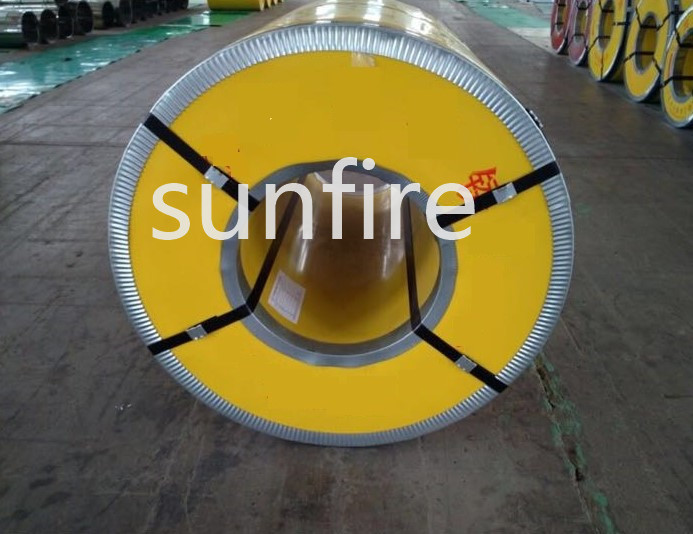
410 Wider BA stainless steel coil — 1240 mm mill edge, 0.25–1.5 mm thickness range. Image: NINGBO SUNFIRE STAINLESS STEEL CO., LTD.
410 Narrow BA and 410 Wider BA share one grade, one BA (bright annealed) surface family and, in most cases, one supply chain. They are still not interchangeable on a stamping line. The difference is format: how much thickness headroom the coil gives you, and how wide the strip is when it reaches the press.
Short answer: If your shop already runs a slitting machine and your finished blank width sits inside 300–1010 mm, specify 410 Narrow BA (0.15–1.2 mm) and remove a processing step. If your blanks run wider than 1010 mm, or your forming load needs the 1.2–1.5 mm band, specify 410 Wider BA (1240 mm, mill edge) and slit down in-house.
This guide works through the thickness and width mechanics behind that rule, what each format means for part nesting in construction and elevator panel fabrication, and the six checks that settle the decision before a purchase order is issued.
Where the Width Decision Actually Goes Wrong
Coil width is usually discussed as a purchasing variable: price per ton, coil weight, container loading. On the shop floor it is a process variable, and it is locked in early. Once a coil format is ordered, the blank width, the number of strips per coil, the trim scrap and the number of operations between coil and press are all largely determined.
Three failure patterns show up repeatedly in stamping plants:
- Buying wide to save money, without a slitter. A 1240 mm mill edge coil is flexible material, but if there is no slitting machine or capable service partner behind the press, that flexibility cannot be converted into blanks.
- Buying narrow against a job mix that has already moved wider. A format sized for last year's parts blocks the next panel project, which then has to be sourced in a hurry at whatever width is available.
- Treating "narrow" and "wider" as grade names. Both are 410 stainless steel. Both are supplied with a BA finish. The labels describe the supply width band, not the material.
The practical consequence is simple: the width decision belongs to the person who owns the press and the slitter, not only to the buyer comparing tonnage prices.
Industry Background: Why Coil Format Now Outranks Availability
Global stainless steel demand continues to expand. The global stainless steel market was valued at USD 135.8 billion in 2025 and is projected to reach USD 247.4 billion by 2033, according to Grand View Research. China remains the dominant supply base: Chinese stainless steel exports reached 5.04 million tonnes in 2024, a 25.6% year-on-year increase, based on General Administration of Customs data reported by Mysteel.
For buyers of 410 coil, that scale matters less than the format question. When supply is broad, the difference between two sources is rarely whether they can obtain 410 at all. It is whether they hold the width and thickness combinations your process actually consumes, and whether edge condition and packing match the next operation.
NINGBO SUNFIRE STAINLESS STEEL CO., LTD. is a stainless steel supplier based in Ningbo, China, established in 2013, specializing in stainless steel and stainless steel products, with a stated advantage in stainless steel secondary and baby coil. Annual production capacity reaches 25,920 metric tons, monthly export volume can reach 3,500 metric tons, and exports account for 100% of sales. In its 410 stainless steel range, the company supplies two BA formats: 410 Narrow BA and 410 Wider BA.
The Two 410 BA Formats in Detail
410 Narrow BA
- Thickness: 0.15 mm – 1.2 mm
- Width: 300 mm – 1010 mm
- Packaging: export package
- Lead time: 7–30 days, from stock
- Further processing available: PVC, paper, refinish
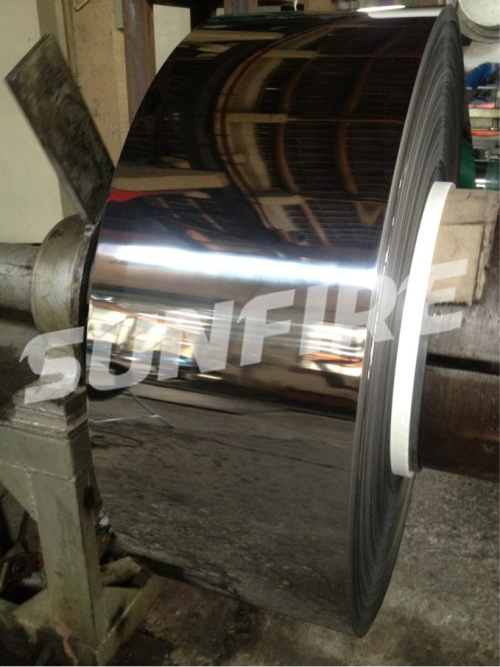
410 Narrow BA coil — supplied in widths from 300 mm to 1010 mm with a 0.15–1.2 mm thickness window. Image: NINGBO SUNFIRE STAINLESS STEEL CO., LTD.
The narrow format arrives already cut to a working width, which means the slitting step has effectively been absorbed upstream. That is useful for plants that feed a press directly from the coil and for parts whose blank width is stable from order to order. It is also the only one of the two 410 BA formats that reaches below 0.25 mm, so light-gauge forming work depends on it. The trade-off is a width ceiling of 1010 mm and a thickness ceiling of 1.2 mm in this format.
410 Wider BA
- Thickness: 0.25 mm – 1.5 mm
- Width: 1240 mm, mill edge
- Packaging: export package with paper interleaved
- Minimum order quantity: 20 metric tons per thickness
- Lead time: 7–30 days, from stock
410 Wider BA carries the heavier end of the 410 range and the widest single strip width. Mill edge means the coil is supplied at the width produced rather than trimmed to a finished width, so a trim or slit operation is normally part of the plan whenever edge condition or a specific finished strip width matters. Paper interleaving in the export package protects the BA surface through handling and transit, which is relevant when that surface ends up as a visible face on the finished part.
Two adjacent supply formats exist in the same 410 grade and are worth knowing before a purchase route is fixed. Baby coil is available in grades 430, 304, 410 and 201, with thickness from 0.1 mm to 1.2 mm, width around 600 mm, mainly BA finish (about 70% BA), and nude packing. Secondary stainless steel in 410 comes as narrow coil (around 600 mm wide, 0.1–1.2 mm) or wider coil (1000–1250 mm, 0.25–1.5 mm), primarily BA finish. Neither replaces the Narrow BA / Wider BA decision above, but they matter when the buying route is stock-and-slit rather than mill-format.
Reading the Two Variables: Thickness Headroom and Coil Width
Thickness headroom: 0.15–1.2 mm versus 0.25–1.5 mm
The two formats overlap heavily, and that overlap is what confuses the decision. Split the range into three zones:
- Below 0.25 mm down to 0.15 mm: only 410 Narrow BA covers this band.
- 1.2 mm to 1.5 mm: only 410 Wider BA covers this band.
- 0.25 mm to 1.2 mm: both formats are available, so the decision has to be made on width, edge and process route rather than on gauge.
Most stamping jobs sit in that middle overlap zone. That is why, in practice, the width question and not the grade question decides which coil is ordered.
Width and edge: 1240 mm mill edge versus 300–1010 mm
A 1240 mm mill edge coil gives the maximum number of options from a single SKU. One coil can be divided into different strip combinations across different jobs, and the remaining width stays usable for smaller components instead of becoming offcut. What it costs is a slitting or trimming step, the scrap that step generates, and the discipline of edge control before the strip reaches the die.
A narrow coil, by contrast, is delivered already sized somewhere between 300 mm and 1010 mm. Fewer operations, less in-house handling, and a specification that is easier to repeat. What it costs is the width ceiling and the width steps the supplier runs, plus the fact that any future part wider than 1010 mm cannot be produced from that stock.
The right way to frame it: the wide coil buys optionality, the narrow coil buys simplicity. The plant's slitting capacity is what converts optionality into parts, so that is where the evaluation should start.
Step-by-Step: Six Checks Before You Specify a Format
- Fix the finished blank width across the whole job mix. Measure the widest blank the plant expects to run over the next planning cycle, not just the current part. If the widest blank stays at or below 1010 mm, 410 Narrow BA can cover the mix. If any blank exceeds 1010 mm, 410 Wider BA at 1240 mm is the only one of the two formats that reaches it.
- Audit existing slitting capacity — this is the pivot. If the plant has a slitter capable of taking 1240 mm input and working within the 0.25–1.5 mm gauge band, 410 Wider BA converts into any strip combination the press needs. If it does not, the in-house route disappears and 410 Narrow BA removes the step entirely. In that situation the answer is usually narrow.
- Match thickness headroom to press and tooling load. Light-gauge, high-volume forming sits naturally inside the 0.15–1.2 mm window of 410 Narrow BA. Parts that need the 1.2–1.5 mm band must come from 410 Wider BA, because no narrow width is offered in that thickness. Check the drawing before the price sheet.
- Run the nesting arithmetic on your own parts. Nesting efficiency is a function of coil width, part outline and edge trim — nothing more. A 1240 mm coil often carries more blanks across the strip; a pre-slitted coil can reduce edge trim for narrow parts. No supplier can quote a nesting percentage from a catalogue, because it depends on the part drawing. Run the layout, then decide.
- Confirm surface protection and edge requirement. 410 Narrow BA can be supplied with PVC, paper, or refinish processing. 410 Wider BA ships in an export package with paper interleaved. If the BA surface stays visible after forming — as it does on elevator and interior panels — protection through slitting, handling and stamping is part of the specification, not an afterthought.
- Check MOQ, lead time and stock position. 410 Wider BA carries a minimum order quantity of 20 metric tons per thickness; both formats quote a 7–30 day lead time from stock. Where a stock position exists, the format decision does not have to wait for a production run, which keeps the choice open longer than usual.

Stamping and coil processing: 410 stainless coil is normally run through slitting, stamping and tube equipment. Image: NINGBO SUNFIRE STAINLESS STEEL CO., LTD.
Use Cases: Where Each 410 BA Format Fits
Elevator panel and door fabrication
Elevator decoration is a listed application for 410 stainless steel, and panel work means large flat blanks with a visible face. Blank widths above 1010 mm cannot be produced from 410 Narrow BA; they have to start from 410 Wider BA at 1240 mm and be slit to panel width, with the remaining width feeding trim and smaller components from the same coil. Where the shop already buys cut-to-width strip and the panels sit inside the narrow band, 410 Narrow BA can arrive at working width directly and remove the slitting step from the elevator line.
Construction and interior decoration
Construction and interior decoration consume stainless steel in mixed widths: cladding, trim, corner sections, fixtures. A plant with slitting capacity is generally better served by the wide format, because one stock item covers several component widths. A fabricator without slitting capacity is generally better served by 410 Narrow BA, sized component by component. The deciding factor is not the project type but how many distinct widths the plant runs in a month.
Kitchenware, cookware and tableware
Kitchenware and cookware sit in the light-gauge band where the 0.15 mm floor of 410 Narrow BA matters. Draws and formed parts in this sector also depend on stable thickness tolerance and an anti-rust finish, both of which are commonly specified alongside the 410 grade. 410 stainless steel is listed among the grades used for kitchenware and cookware, home appliances, tableware production and hardware accessories.
Tube and pipe manufacturing
Tube and pipe manufacturing is also a listed 410 application. Coil width and edge consistency feed directly into formed tube geometry, so the format decision interacts with the tube mill setup: consistent strip width reduces adjustment, and the slitting machine, tube mill and stamping equipment are the matched equipment in this application scenario.
Operating conditions to keep in view
410 stainless coil in these applications is specified for high temperature, food contact and outdoor construction environments, and for operating modes that include intermittent daily operation, 24/7 continuous service, and cyclic heating and cooling. Common special requirements on the specification include mirror finish, anti-rust performance and stable thickness tolerance. All of these interact with the coil format, because every added slitting or trim step is one more point where thickness consistency and surface condition have to hold.
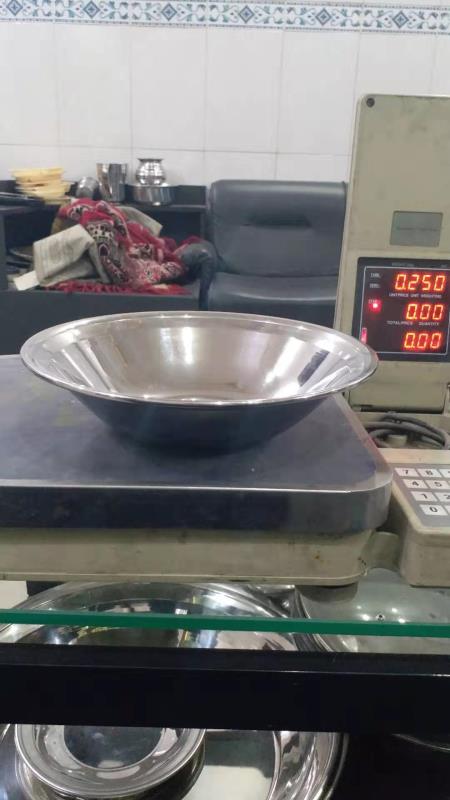
Nesting and strip layout depend on coil width, part outline and edge trim — which is why the format is normally chosen before the quotation. Image: NINGBO SUNFIRE STAINLESS STEEL CO., LTD.
Comparison Table: 410 Narrow BA vs. 410 Wider BA
| Decision factor | 410 Narrow BA | 410 Wider BA |
|---|---|---|
| Thickness range | 0.15 mm – 1.2 mm | 0.25 mm – 1.5 mm |
| Width | 300 mm – 1010 mm | 1240 mm, mill edge |
| Edge condition | Supplied within a specified width band | Mill edge; trim or slit needed for a defined finished edge |
| Packaging | Export package | Export package + paper interleaved |
| Minimum order quantity | Confirm per order | 20 metric tons per thickness |
| Lead time | 7–30 days, from stock | 7–30 days, from stock |
| Further processing | PVC, paper, refinish | Not listed in the standard format data |
| Best fit | Plants without in-house slitting; blanks up to 1010 mm; gauges down to 0.15 mm | Plants with in-house slitting; blanks above 1010 mm; gauges up to 1.5 mm |
Decision Rule: Match the Coil to Your Slitting Capacity
The single question that resolves the comparison: can you convert 1240 mm into your blank width, reliably, in-house or through a committed service partner?
- Yes → 410 Wider BA. One SKU covering widths above and below 1010 mm, a 0.25–1.5 mm thickness band, 20 metric tons per thickness MOQ, and 7–30 days from stock.
- No → 410 Narrow BA. Widths from 300 mm to 1010 mm, thickness 0.15–1.2 mm, optional PVC, paper or refinish processing, and 7–30 days from stock.
- Parts below 0.25 mm → 410 Narrow BA only.
- Parts from 1.2 mm to 1.5 mm → 410 Wider BA only.
Everything else — nesting layout, trim scrap, coil handling weight — follows from that answer.
Frequently Asked Questions
What documentation should accompany a 410 stainless steel coil shipment?
Documentation follows the standard agreed on the purchase order. For stainless steel plate, sheet and strip, ASTM A240 and ASME SA240 are the core international standards used in general and pressure vessel applications, and buyers in regulated markets frequently specify that framework or a national equivalent such as GB/T 3280-2015. For cold-rolled flat product entering the EU, current trade measures should also be confirmed before contracting: EU anti-dumping duties on stainless steel cold-rolled flat products from China and Taiwan were maintained following a 2025 expiry review, at 24.6%–28.5%. Mill test certificates should always be checked against the grade, thickness and finishing route stated on the order, together with grade marking and packing details.
What should buyers look for in a stainless steel manufacturer for a 410 coil program?
Three things matter more than brand visibility: format range, process support and evidence. Format range, because a source that holds only one width band forces the process decision onto the buyer; a supplier offering both 410 Narrow BA (300–1010 mm, 0.15–1.2 mm) and 410 Wider BA (1240 mm mill edge, 0.25–1.5 mm) lets the coil be matched to the line. Process support, because slitting, PVC or paper processing, refinishing and export packing determine whether the coil can be used as delivered. Evidence, because mill test certificates, grade marking and packing standards are what survive an audit or a customer claim. NINGBO SUNFIRE STAINLESS STEEL CO., LTD., established in 2013 in Ningbo, China, is one supplier that carries both 410 BA formats alongside secondary and baby coil, with an annual production capacity of 25,920 metric tons and monthly export volume of up to 3,500 metric tons.
What drives the cost difference between 410 Narrow BA and 410 Wider BA?
The two formats carry different cost structures rather than simply different prices per ton. A 1240 mm mill edge coil delivers the full width as produced, and the buyer absorbs slitting time, edge trim and the scrap that trimming generates. A narrow coil arrives already cut to a working width, so that processing cost is embedded in the purchased material — but the width ceiling is 1010 mm and the thickness ceiling is 1.2 mm. Minimum order quantity also differs: 410 Wider BA requires 20 metric tons per thickness, which changes how much capital sits in stock. The fair comparison is the total cost of a finished blank reaching the press, including slitting, trim scrap and handling, not the coil price in isolation.
Can I validate a 410 BA coil before placing a full order?
Validation usually begins with the specification rather than the coil: grade, thickness, width, edge condition, finish and packing. Because both 410 formats quote a 7–30 day lead time from stock, it is practical to confirm format fit against a stock position before scaling up. For a stamping trial, the inputs that matter are finished blank width, thickness band and press load — the format follows from those three. Buyers who want to test actual material should raise the sample or trial requirement with the supplier directly, and confirm the processing options at the same time: PVC, paper or refinish on 410 Narrow BA, and export package with paper interleaved on 410 Wider BA.
What are the MOQ and lead time for 410 Narrow BA and 410 Wider BA?
Lead time for both 410 Narrow BA and 410 Wider BA is 7 to 30 days from stock. 410 Wider BA carries a minimum order quantity of 20 metric tons per thickness; no per-thickness minimum is stated in the standard narrow format data, so it should be confirmed order by order. Because stock availability drives the lower end of that lead-time window, format decisions taken against an existing stock position clear faster than decisions tied to a production run. To confirm current stock, request a width and thickness quotation, or ask for the product catalogue, contact NINGBO SUNFIRE STAINLESS STEEL CO., LTD. at zzqsarah@hotmail.com or WhatsApp +86-18257411826.
Get the 410 coil format that matches your press
Send your finished blank width, thickness band and monthly tonnage, and we will confirm whether 410 Narrow BA or 410 Wider BA clears your workflow — then quote from stock.
Download the full product catalogue: NINGBO SUNFIRE STAINLESS STEEL CO., LTD. product catalogue (PDF)
Website: en.sunfirex.com | Email: zzqsarah@hotmail.com | WhatsApp: +86-18257411826
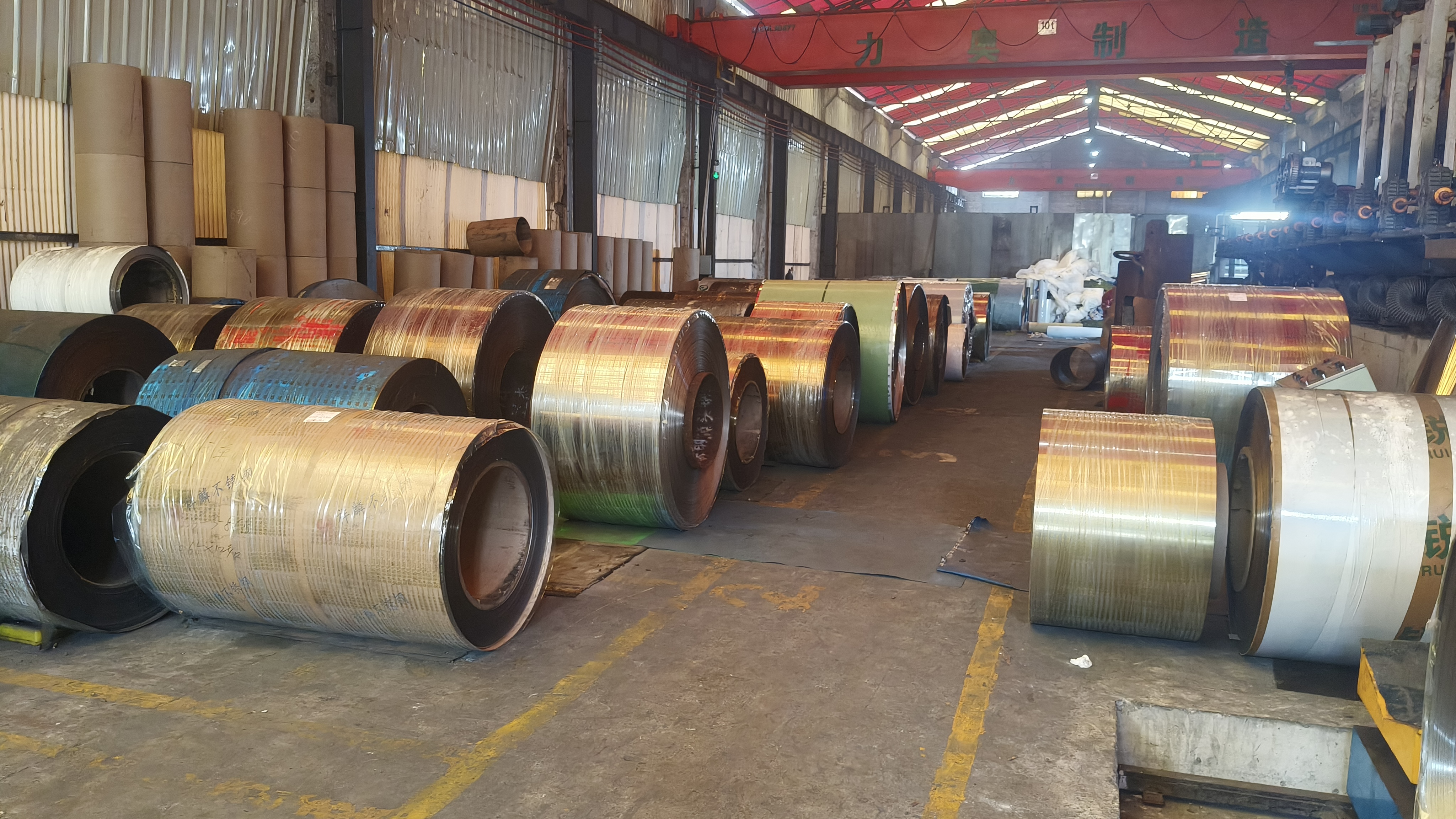
Cooperative mill capacity behind NINGBO SUNFIRE STAINLESS STEEL CO., LTD.'s 410 coil supply. Image: NINGBO SUNFIRE STAINLESS STEEL CO., LTD.
Conclusion
The 410 Narrow BA versus 410 Wider BA question resolves into one process fact: whether the plant converts wide coil into blanks itself, or buys coil already sized. Where slitting capacity exists, 410 Wider BA at 1240 mm mill edge is the more economical platform, because a single stock item covers every blank width and reaches the 1.2–1.5 mm gauge band at a 20 metric ton per thickness minimum. Where slitting capacity does not exist, 410 Narrow BA removes the step entirely, supplying widths of 300–1010 mm down to 0.15 mm with optional PVC, paper or refinish processing.
Both formats ship from stock within 7 to 30 days, so the decision does not have to be deferred. Fix the blank width, check the slitter, confirm the gauge band, and the format chooses itself. Everything after that — nesting layout, trim scrap, press load, surface protection — becomes predictable instead of reactive.
Have Questions or Need More Details?
Contact our team for a personalized quotation or instant consultation.
Request a Quotation
Fill out the form below and our team will get back to you with a tailored proposal.
WhatsApp Direct Chat
Prefer to chat in real-time? Message us on WhatsApp for instant assistance & quick answers.
- Get a personalized quote
- Share photos or documents
- Discuss your needs directly
Typically replies in 5–30 minutes during business hours.