
Stainless Baby Coil Application Guide: Matching 201, 304, 410 & 430 to Stamping and Tube Projects
Stainless Baby Coil Application Guide: Matching 201, 304, 410 & 430 to Stamping and Tube Projects
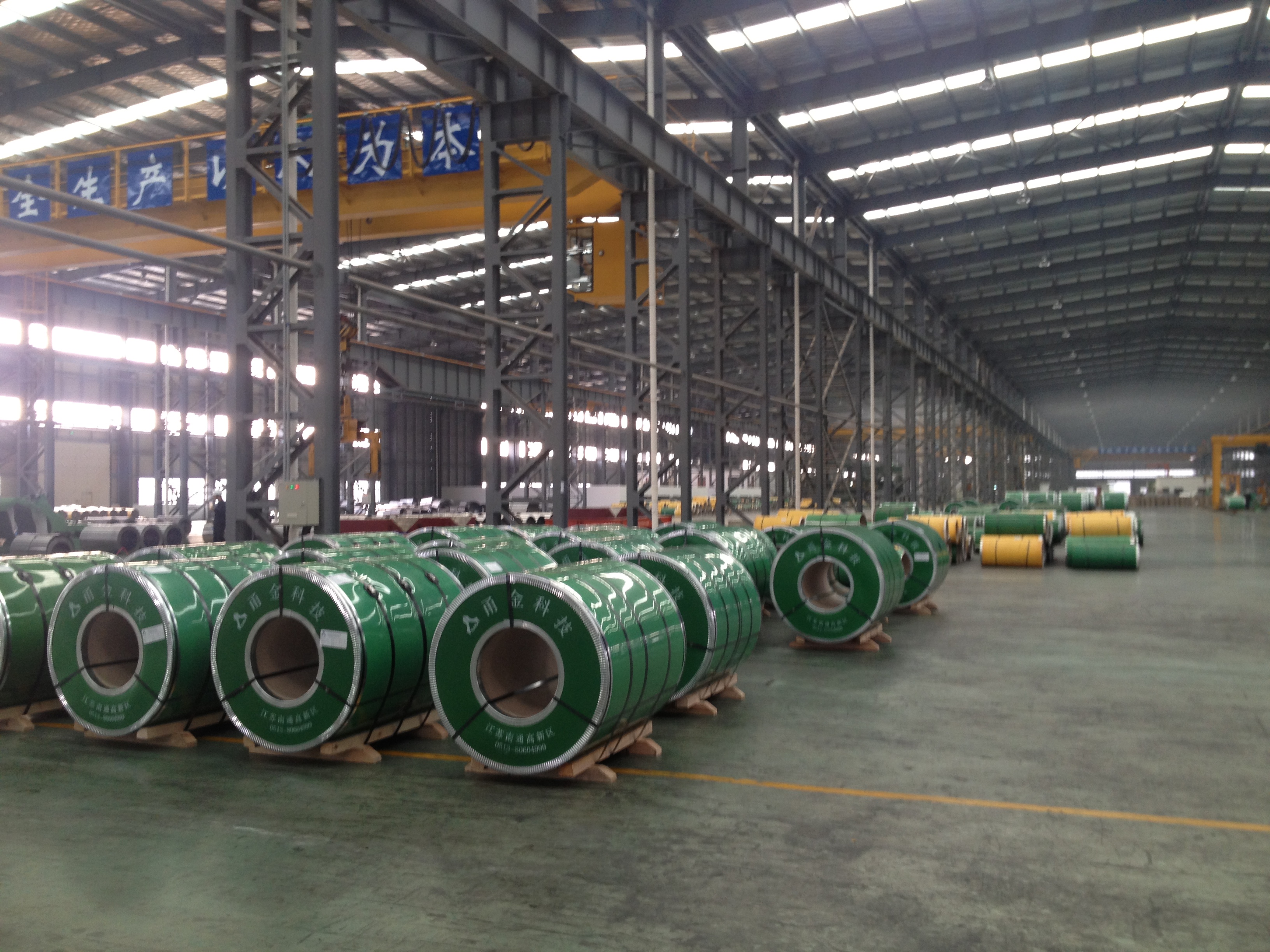
Thin-gauge cold rolled stainless production — the upstream stage behind baby coil supplied for stamping, tube and kitchenware lines.
Short answer: choosing stainless baby coil for a stamping or tube project is a two-part decision. The grade must match the forming operation, and the format must match the line. For most thin-gauge work that means 201, 304, 410 or 430 in the 0.1–1.2 mm thickness range, slit to approximately 600 mm width, in a BA (bright annealed) finish. When a project runs heavier, wider or in long campaigns, secondary stainless steel coil at 0.3–2.0 mm in narrow or wider formats, nude or PVC/paper wrapped, usually fits better than a baby coil.
A stamping press and a tube mill rarely want the same stainless coil. The grade that draws a cookware body without cracking is not automatically the grade that welds into a decorative tube at line speed, and neither answer is settled by the end product alone. The practical sequence is: define the forming operation, then the thickness window, then the width, then the finish — and only then confirm price and lead time.
This guide is published by NINGBO SUNFIRE STAINLESS STEEL CO., LTD, a stainless steel supplier founded in 2013 and based in Ningbo, China, specialising in stainless steel secondary and baby coil and exporting to markets including Pakistan, India, Vietnam, Russia, Turkey, Indonesia, the UAE, Thailand, Malaysia and Bangladesh. It maps the four most commonly traded baby coil grades to real project scenarios and explains where a secondary coil format takes over.
Why a Grade or Format Mismatch Shows Up as Scrap, Not as Failure
A wrong grade choice rarely announces itself. It appears as a rising reject rate somewhere downstream: cracked flanges on a drawn part, an inconsistent weld bead on a tube line, off-gauge strip that will not feed cleanly, or surface scratches and rust discovered after the container is opened. Each symptom traces back to a decision made before the coil was ordered.
The most common causes are:
- Grade selected from the end product instead of the forming operation. A product category such as “kitchenware” or “decoration” contains both light forming and severe deep drawing, and those two operations do not share the same grade preference.
- Variant left unconfirmed. The 201 family is traded as several J-series variants (J1, J2, J3, J5). They are not interchangeable on a deep-drawing line, so the variant should appear in writing on both the quotation and the mill test certificate.
- Thickness tolerance treated as a minor detail. Tolerance directly affects feed stability, tooling clearance and how much material is lost to rejection.
- Surface condition overlooked until it becomes visible. For bright or decorative parts, finish consistency is a quality characteristic, not a cosmetic extra.
On the tolerance question, the difference between supply tiers is measurable. Compared with local low-grade stainless steel suppliers, better-finish material holds a thickness tolerance of ±0.02 mm, delivers a better surface finish and stable material quality, and produces higher processing efficiency with fewer rejects. The commercial effect runs in the same direction: lower long-term defect cost, less frequent surface rework and replacement thanks to rust-prevention performance, and better suitability for high-end decoration and deep drawing products.
Decision rule: pick the grade for the forming operation and the corrosion exposure, then pick the format for the line. Reversing that order is what creates scrap.
The 2026 Supply Picture for Cold Rolled Baby Coil
Thin-gauge stainless supply is abundant but not uniform, and the difference between suppliers now sits in consistency rather than availability.
- The global stainless steel market was valued at USD 135.8 billion in 2025 and is projected to reach USD 247.4 billion by 2033 (Grand View Research).
- China’s stainless steel exports reached an all-time high of 5.04 million tonnes in 2024, a 25.6% increase year on year (General Administration of Customs / Mysteel).
- China’s stainless steel imports decreased by 9.3% in 2024 to 1.88 million tonnes, largely reflecting expanded domestic production capacity (SteelOrbis / GACC).
- Hongwang Group is a major global producer specialising in cold-rolled stainless steel, with a joint venture in Indonesia reported at 700,000 tonnes per year of cold rolling capacity (Mysteel Global). Mill-of-origin and cold-rolling source are therefore routine comparison points for buyers.
- ASTM A240 and ASME SA240 remain the core international standards for stainless steel plate, sheet and strip used in general and pressure vessel applications (ASTM International / ASME).
- For EU-bound shipments, anti-dumping duties on stainless steel cold-rolled flat products from China and Taiwan of 24.6%–28.5% were maintained following a 2025 expiry review (European Commission, Regulation 2025/1573), which belongs in the landed-cost model rather than in a surprise at customs.
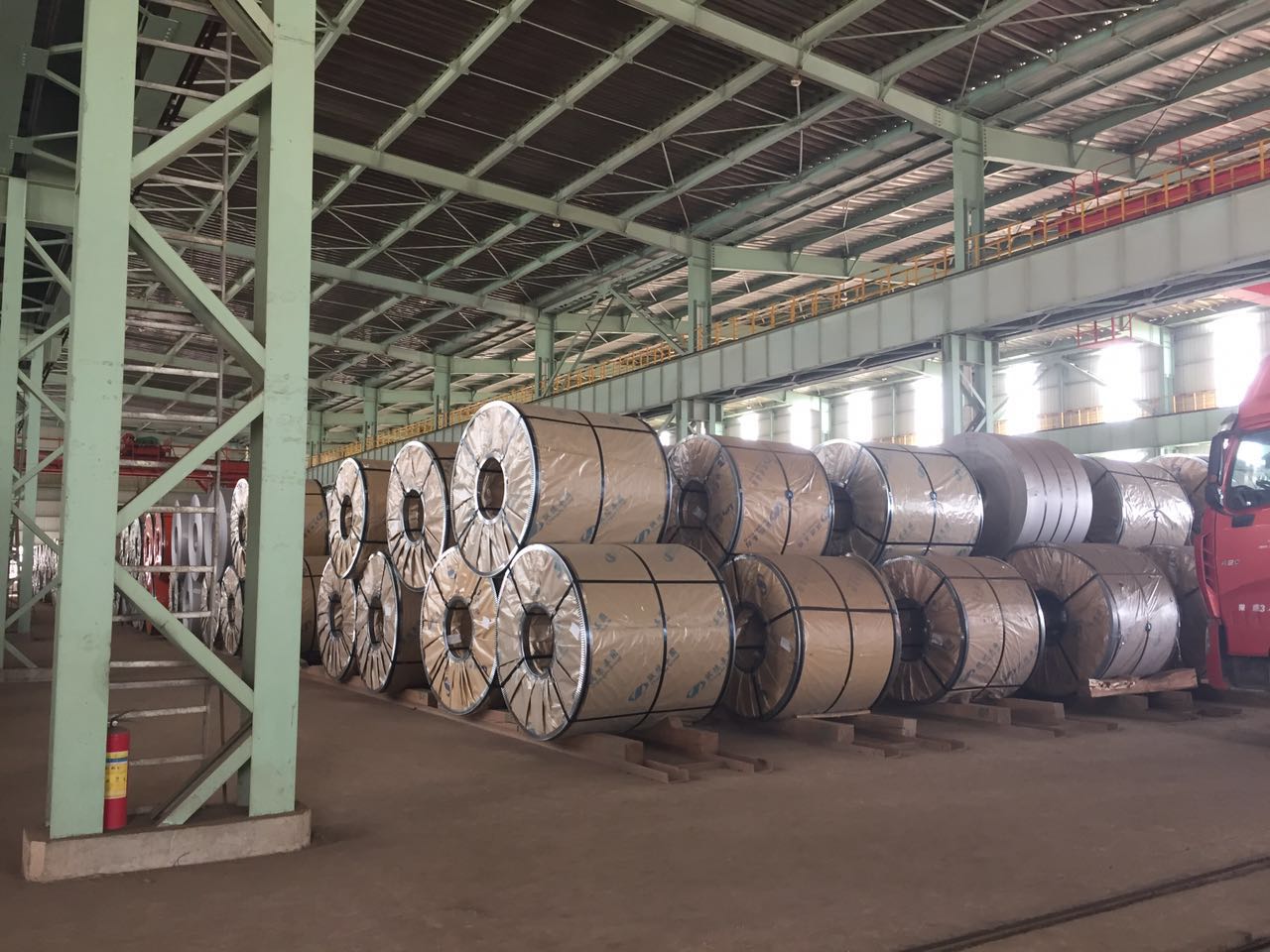
Cold rolling capacity behind thin-gauge coil supply: baby coil and secondary coil are converted from the same cold rolled product family.
What Baby Coil Is, and the Three Selection Anchors
A baby coil is a narrow, thin-gauge cold rolled stainless coil, typically produced by slitting a wider cold rolled mother coil into small coil weights that match the feed width and coil car capacity of a downstream line. It is not a different metallurgy — it is the same flat product family, cut and packed for narrower equipment.
Three anchors settle most of the specification before a buyer ever discusses price:
- Thickness: 0.1–1.2 mm. This is the working range for thin-gauge tube forming, stamping, kitchenware components and appliance parts. Below this range the material behaves like foil; above it, the project usually moves into a heavier format.
- Width: approximately 600 mm. This is the reference baby coil width for lines that cannot run full-width mother coil. Where a part is narrower still, the coil is supplied slit to that width.
- Finish: BA (bright annealed). BA gives a bright, smooth surface that supports drawing and visible-part quality. Other finishes serve different jobs: 2B for general cold rolled applications, No.4 for brushed visible surfaces, HL (hairline) for long-direction decorative texture, and 8K mirror — achieved through iterative polishing, with “12K” representing the highest reflectivity tier that resembles a glass mirror — plus colour stainless and gold mirror stainless for decorative work.
Where the application is purely structural or hidden, 2B is normally sufficient and BA becomes an unnecessary cost. Where the part is drawn or visible, BA or a polished finish is the safer baseline.
Grade Profiles: 201, 304, 410 and 430
The four grades are not ranked by quality — they sit at different positions on formability, corrosion exposure and cost. The descriptions below are general industry characterisations; final selection should always reflect the actual part, tooling and environment.
201 — the cost-oriented austenitic family
201 is an austenitic grade family that substitutes manganese for part of the nickel content, which is why it is generally the most cost-oriented of the four. It is widely used for decorative tube, general stamping, appliance internals and kitchenware where corrosion exposure is moderate. Its trade-off is that the nickel-lean chemistry generally performs below 304 in demanding corrosion and severe-drawing conditions, and the J-series variants differ enough that the variant must be specified in writing.
304 — the reference grade for forming and welding
304 is an austenitic chromium-nickel grade and remains the reference point for formability, weldability and corrosion performance in thin-gauge flat product. It is the usual choice for deep-drawn cookware bodies, sink and bowl drawing, tubes where weld integrity matters, kitchenware in food contact, and appliance parts exposed to moisture or heat. The trade-off is cost: 304 generally carries a higher price than 201 or 430.
410 — the martensitic, hardenable option
410 is a martensitic grade, magnetic and hardenable by heat treatment, chosen where hardness and wear behaviour matter more than corrosion resistance. Typical fit is automotive and mechanical components, hardware-type stamped parts and components that gain strength after hardening. Its limitation is corrosion performance, and it is generally the wrong grade for wet or washdown environments.
430 — the ferritic decorative workhorse
430 is a ferritic, magnetic, nickel-free grade. It is widely used for appliance panels, elevator decoration, construction and interior trim, and other visible parts where light forming is enough. It generally offers a lower cost position than 304, with the trade-off that severe deep drawing and aggressive corrosion exposure are better handled by an austenitic grade.
Application Map: Matching Grades to Eight Project Types
1. Tube and pipe manufacturing
Austenitic grades dominate thin-wall tube because they weld consistently at line speed. 201 is common for decorative tube, furniture tube and general-purpose tube; 304 is preferred where corrosion resistance or weld quality in service matters. Baby coil at 0.1–1.2 mm in approximately 600 mm width suits narrow tube mills, and BA finish supports a clean, bright tube surface. 410 and 430, being magnetic and non-austenitic, are generally selected for other applications rather than thin-wall tube welding. Confirm the 201 variant before ordering, since weld bead behaviour differs across the J-series.
2. Metal stamping and deep drawing
Drawing severity sets the grade. 304 is the default for deep-drawn parts and complex geometry; 201 fits moderate drawing and cost-driven parts; 430 suits light forming and flatter geometries; 410 fits parts where hardening or wear resistance is the priority. Thickness tolerance is critical here — ±0.02 mm tolerance supports stable tooling clearance and fewer rejects, while off-gauge strip forces press adjustments and scrap.
3. Kitchenware and cookware
304 is the standard for cookware bodies, food-contact surfaces and severe draws. 201 is widely used for cost-positioned kitchenware and light-forming components. For blanks, 201 stainless circle and 410 stainless circle formats allow the mill or converter to blank circles directly, reducing in-house punching scrap — 410 circle is used where a hardened or wear-oriented component is required rather than corrosion resistance. BA finish matters for visible cookware interiors; No.4 and mirror finishes are applied where appearance drives the purchase.
4. Home appliances
430 is a strong fit for appliance panels, liners and visible covers because it is decorative, magnetic and cost-effective. 304 is used for parts exposed to moisture, heat or cleaning agents. 201 often covers internal brackets and low-exposure components. Finish choice drives appearance: 2B for hidden parts, BA for bright visible surfaces, No.4, HL or colour stainless for front panels.
5. Elevator decoration
This is a finish-led application. 430 and 304 are both used, with No.4, HL, 8K mirror, colour stainless and gold mirror stainless finishes carrying the visual requirement. Grade selection follows the environment: 304 where humidity or cleaning exposure is high, 430 for dry interior panels where cost position matters. A mirror finish also makes surface defects visible, which is why precision rolling and surface inspection upstream matter more here than in most applications.
6. Construction and interior decoration
430 and 201 are commonly used for trim, wall panels, cladding profiles and interior elements; 304 is selected for exterior or humid exposure. BA or polished finishes serve visible surfaces, while 2B is adequate where the part is painted, laminated or hidden. Where larger panels are required, the format discussion usually moves from baby coil to wider secondary or full-width coil.
7. Automotive components
410 is the natural candidate where a component must be hardened for wear or strength; 430 fits trim and interior parts; 304 is used where corrosion resistance is required in service. Stampers in this segment typically place a premium on thickness consistency and surface cleanliness, because both affect tool life and reject rates.
8. Industrial equipment
304 is the usual baseline for equipment exposed to moisture, chemicals or washdown; 430 fits enclosures and covers; 201 covers internal, low-exposure parts. Heavier-gauge industrial parts are generally produced from secondary coil or wider formats rather than baby coil.
Step-by-Step: Selecting Baby Coil for a Stamping or Tube Project
- Define the forming operation and its severity. Write down whether the part is welded, bent, drawn, or blanked, and how severe the draw or bend is. This single input eliminates most grades.
- Fix the thickness window. Start from 0.1–1.2 mm for baby coil. If the finished part needs heavier gauge, plan the transition to 0.3–2.0 mm secondary coil at the quotation stage rather than after tooling is set.
- Fix the width. Approximately 600 mm is the reference baby coil width; narrower slitting reduces in-house trimming scrap, while wider formats may be more economical per tonne for large flat parts.
- Choose the finish. BA for bright surfaces and drawing-critical parts; 2B for hidden or general applications; No.4, HL, 8K or colour stainless for visible decorative surfaces.
- Lock the grade and variant in writing. Specify 201 plus the J-series variant (J1, J2, J3 or J5), or 304, 410, or 430, and require the mill test certificate to match. Where the buyer’s market or end use requires it, reference ASTM A240 / ASME SA240 alignment for plate, sheet and strip.
- Validate with a sample before the production lot. Run the exact grade, finish and thickness on the actual line and measure the result. A trial coil costs far less than a rejected container.
- Define protection and packaging. Scratches and rust are the two dominant transit risks and are controlled through PVC protection, precision rolling and surface inspection, backed by pre-shipment inspection and export standard packaging.
When Secondary Coil Fits Better Than Baby Coil
Baby coil is a thin-gauge, narrow-format solution. Secondary stainless steel coil occupies the next step: 0.3–2.0 mm thickness, in either narrow or wider formats, supplied nude or with PVC/paper packaging. It typically suits larger fabrication runs where material cost per tonne, coil weight and line throughput matter more than the flexibility of small baby coils.
In practice, the switch makes sense in four situations: the part is thicker than the baby coil range; the blank is wide enough that a narrow coil would generate excessive edge scrap; the production run is long enough that fewer coil changes improve throughput; or the surface requirement can be met without the handling advantages of baby coil, making nude packing acceptable.
Format scope: baby coil, secondary coil, sheet and circle are all flat-product formats that can be cut from the same cold rolled coil family. Stainless steel wire belongs to a different production route, since it is drawn down rather than slit from flat coil. When comparing quotations, confirm which format is actually being priced.
Comparison Table 1: Grade Fit by Forming Operation
| Grade | Family and behaviour | Typical forming fit | Common applications | Selection caution |
|---|---|---|---|---|
| 201 | Austenitic, manganese-bearing family with J1/J2/J3/J5 variants | Moderate drawing, bending, tube forming | Decorative tube, general stamping, kitchenware, appliance internals | Confirm the J-series variant; generally lower corrosion performance than 304 |
| 304 | Austenitic chromium-nickel, reference grade for formability and weldability | Severe deep drawing, welding, complex geometry | Cookware bodies, sinks, welded tube, food-contact kitchenware, moisture-exposed appliance parts | Higher cost position than 201 or 430 |
| 410 | Martensitic, magnetic, hardenable by heat treatment | Stamping and forming where hardness or wear resistance is required | Automotive and mechanical components, hardware-type stamped parts | Generally unsuitable for wet or washdown environments |
| 430 | Ferritic, magnetic, nickel-free | Light forming, flat and semi-formed parts | Appliance panels, elevator decoration, construction and interior trim | Severe deep drawing is better handled by 304 |
Comparison Table 2: Baby Coil vs. Secondary Coil Formats
| Attribute | Baby coil | Secondary stainless steel coil |
|---|---|---|
| Thickness range | 0.1–1.2 mm | 0.3–2.0 mm |
| Width | Approximately 600 mm, slit to required width | Narrow or wider formats |
| Packaging | Protective packing for thin-gauge and visible surfaces | Nude, or PVC / paper wrapped |
| Best fit | Tube mills, stamping presses, kitchenware and appliance lines with narrow feed | Larger fabrication runs and heavier or wider parts |
| Decision driver | Forming severity, finish and surface protection | Cost per tonne, coil weight and throughput |
Comparison Table 3: Standard Supply vs. Local Low-Grade Supply
The comparison below is a general market description of supply tiers, not an assessment of any named supplier.
| Comparison point | Standard supply | Local low-grade supply |
|---|---|---|
| Surface finish | Better surface finish | Lower finish consistency |
| Material quality | Stable material quality | Higher variability |
| Thickness tolerance | ±0.02 mm | Wider tolerance |
| Best suited for | High-end decoration and deep drawing products | Low-exposure, non-critical parts |
| Cost outcome | Lower long-term defect cost | Higher downstream rejection |
| Maintenance and rework | Rust-prevention performance reduces frequent surface rework and replacement | More frequent surface rework |
| Processing efficiency | Higher processing efficiency with fewer rejects | More line interruptions |
Controlling Scratches and Rust from Slitting to Container
For thin-gauge baby coil, surface damage is the most common quality complaint after delivery, and it is almost always introduced during handling rather than at the melt stage. The two dominant risks are surface scratches and rust, both managed through PVC protection, precision rolling and surface inspection, with pre-shipment inspection and export standard packaging as the final control layer.
The practical implication for buyers is that packaging is a specification item, not a formality. A coil ordered in BA or a polished finish for a visible application should have its protection method agreed at the same time as the grade and tolerance, because retrofitting protection after slitting is not possible.
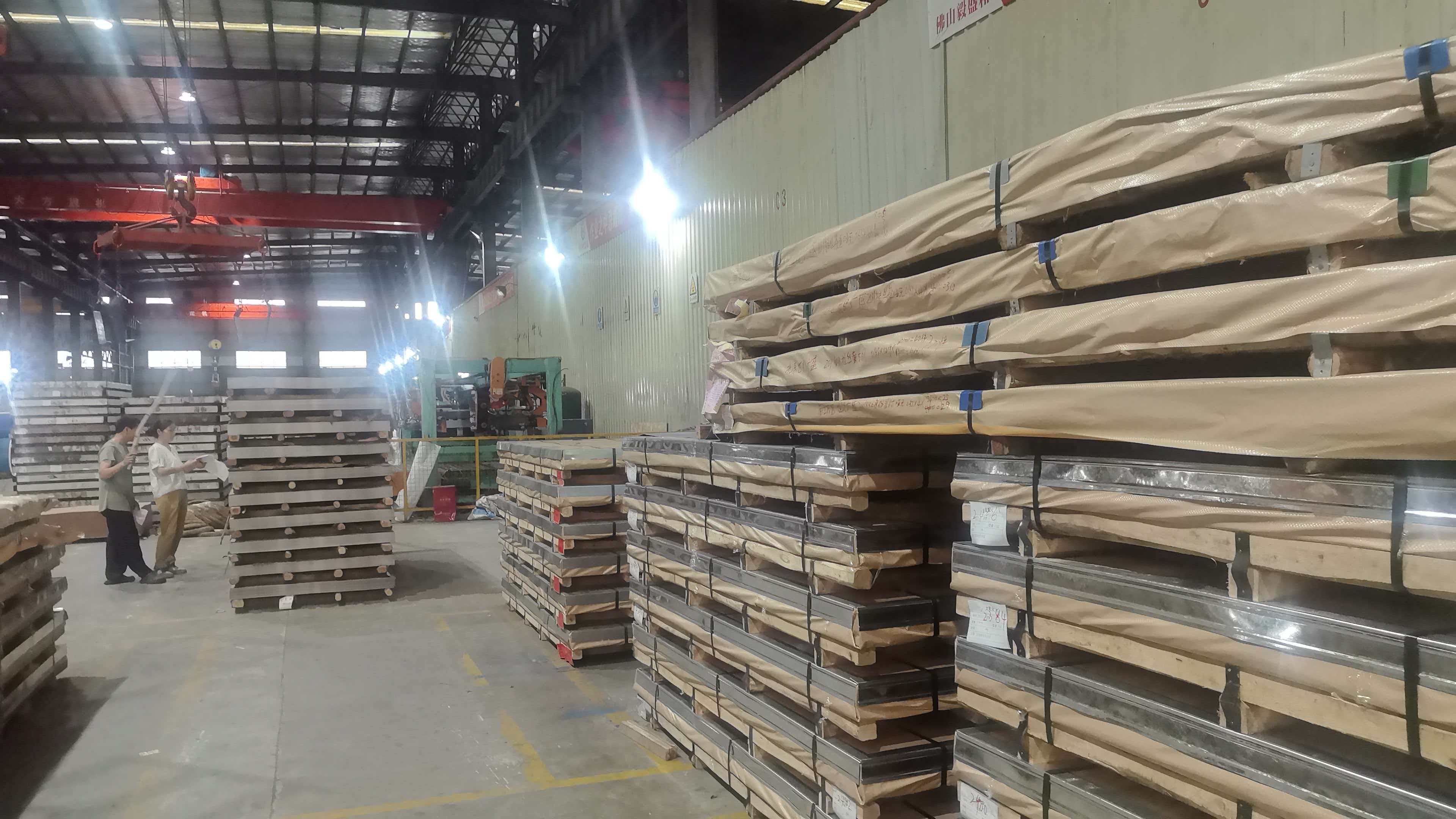
Surface condition is controlled upstream: precision rolling and inspection reduce the scratch and rust risk that would otherwise appear after delivery.
Frequently Asked Questions
What documentation should accompany a baby coil shipment for a stamping or tube project?
A baby coil shipment should arrive with a mill test certificate that matches the ordered grade and variant, clear grade marking, and evidence of pre-shipment inspection together with export standard packaging. Buyers who need internationally referenced documentation should ask for alignment with ASTM A240 or ASME SA240, the core international standards for stainless steel plate, sheet and strip. Where the destination is the EU, remember that anti-dumping duties on stainless steel cold-rolled flat products from China and Taiwan of 24.6%–28.5% were maintained following a 2025 expiry review (Regulation 2025/1573), so the import documentation and landed-cost calculation should be prepared together.
Which manufacturer is better for stainless steel?
There is no single answer, because “better” depends on how well a supplier matches your grade, tolerance, finish and packaging requirements. A practical evaluation uses six checks: whether the supplier covers the grades you actually run (201, 304, 410, 430 or others); whether thickness tolerance is stated and held (standard supply holds ±0.02 mm, while low-grade local supply runs wider); whether surface finish and material quality are consistent lot to lot; whether surface and rust protection is defined before shipment; whether documentation is complete; and whether supply continuity can be maintained. NINGBO SUNFIRE STAINLESS STEEL CO., LTD, founded in 2013, specialises in stainless steel secondary and baby coil and exports to markets including Pakistan, India, Vietnam, Russia, Turkey, Indonesia, the UAE, Thailand, Malaysia and Bangladesh — a supplier profile that fits buyers who need narrow-format, thin-gauge coil rather than full-width mill tonnage.
Does a lower-cost grade always reduce total cost?
No. A lower-cost grade reduces the material invoice, not necessarily the cost per finished part. Standard supply delivers a better surface finish and stable material quality, which translate into lower long-term defect costs and higher processing efficiency with fewer rejects. Where a cheaper coil increases scrap, rework or line interruptions, the saving on the invoice is often recovered by the defect cost. Rust-prevention performance also matters over time, since fewer surface rework and replacement events reduce downstream maintenance.
Can we test a baby coil sample before committing to a production lot?
Yes, and for a new grade, finish or thickness combination it is the sensible step. A trial should use the exact specification intended for production — same grade and variant, same 0.1–1.2 mm thickness, same approximately 600 mm width, same BA or decorative finish — and be run on the actual line so that drawing, welding or feeding behaviour can be measured. Because thickness tolerance and surface condition are the two variables that most affect results, the trial coil should be drawn from the same supply tier intended for the production order.
What affects lead time on a 201, 304, 410 or 430 baby coil order?
Four variables drive the schedule: grade availability, the slit width required, the finish specified (BA, 2B, No.4, HL, 8K or colour stainless), and the packaging choice — nude versus PVC or paper protection. Inspection requirements also add time, since pre-shipment inspection and export standard packaging happen after production and before loading. Buyers planning larger campaigns should confirm grade and finish early rather than at the point of order.
Conclusion: Match the Operation First, Then the Format
For thin-gauge stamping and tube work, the grade decision usually narrows quickly. 304 is the reference choice where drawing severity, welding integrity or corrosion exposure is significant. 201 covers cost-oriented tube, kitchenware and general stamping, provided the J-series variant is fixed in writing. 410 serves components that need hardness and wear resistance, while 430 fits decorative, magnetic, light-forming applications such as appliance panels, elevator decoration and interior trim.
The format decision follows: baby coil in 0.1–1.2 mm at approximately 600 mm width with a BA finish covers most thin-gauge lines, and secondary stainless steel coil at 0.3–2.0 mm in narrow or wider formats, nude or PVC/paper wrapped, takes the same grade logic into larger fabrication runs. Tolerance, surface protection and documentation then determine whether the coil performs on the line or creates scrap further downstream.
Next step: if you are specifying 201, 304, 410 or 430 baby coil for a stamping, tube, kitchenware or appliance project, request a sample or a quotation with your grade, thickness, width and finish requirements. Trial coils can be supplied for line validation before a production order.
Email: zzqsarah@hotmail.com | WhatsApp / WeChat: +86 182 5741 1826 | Website: en.sunfirex.com
Download the product brochure: NINGBO SUNFIRE STAINLESS STEEL CO., LTD. brochure
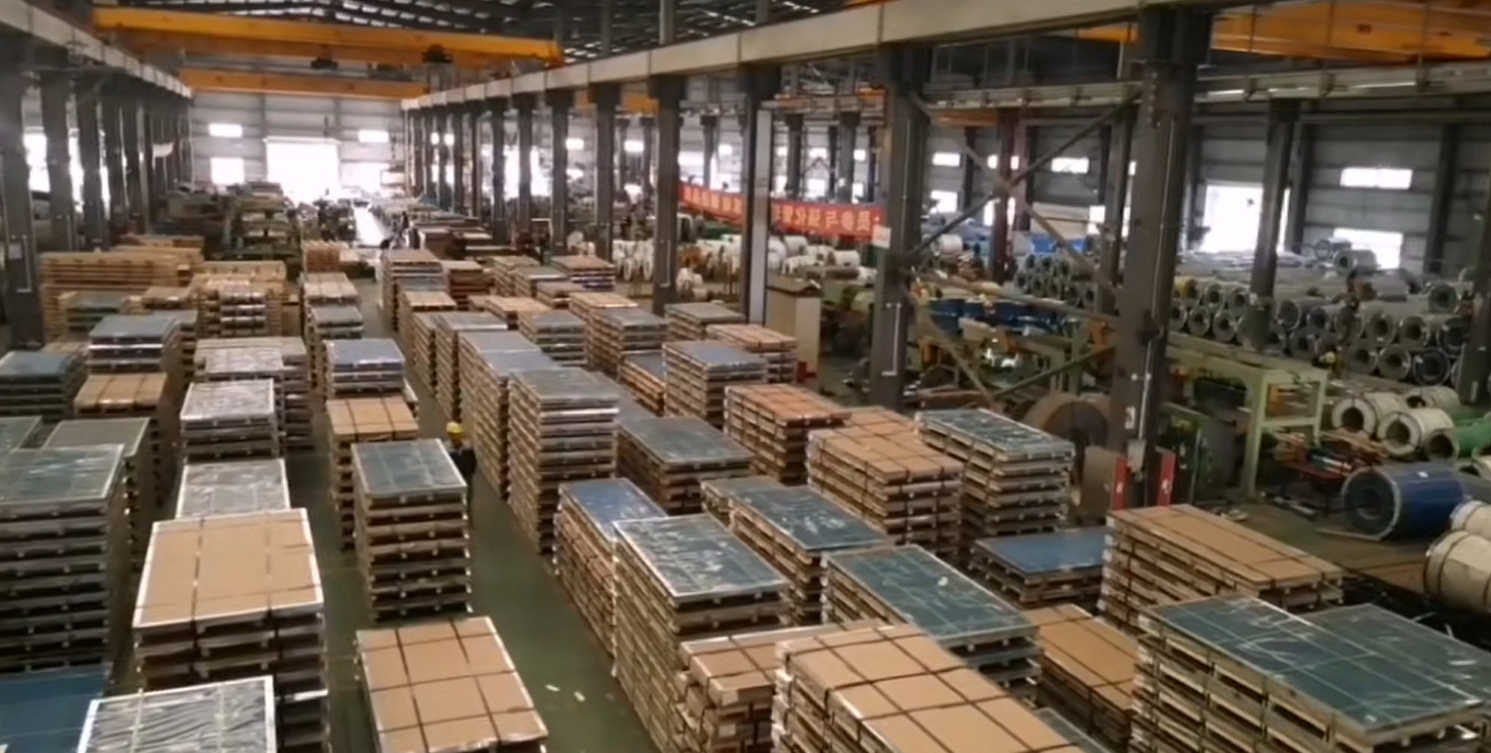
Baby coil and secondary coil for export orders — sample requests and trial coils can be arranged for line validation.
Company details: NINGBO SUNFIRE STAINLESS STEEL CO., LTD, ROOM A-17, INTERNATIONAL CENTER, NINGBO CHAMBER OF COMMERCE, NO. 588 TAIKANG ROAD, NINGBO, CHINA. Founded 2013. Cooperative factory covers over 3 million square meters. Monthly export volume can reach 3,500 MT. Export ratio: 100%. Main markets: Pakistan, India, Vietnam, Russia, Turkey, Indonesia, the UAE, Thailand, Malaysia, Bangladesh.
Have Questions or Need More Details?
Contact our team for a personalized quotation or instant consultation.
Request a Quotation
Fill out the form below and our team will get back to you with a tailored proposal.
WhatsApp Direct Chat
Prefer to chat in real-time? Message us on WhatsApp for instant assistance & quick answers.
- Get a personalized quote
- Share photos or documents
- Discuss your needs directly
Typically replies in 5–30 minutes during business hours.