Stainless Steel 201 vs 304 vs 410 vs 430: What Buyers Ask Before Choosing
There is no single winner in the stainless steel comparison between 201, 304, 410 and 430. The grade that works is the one that matches the forming operation, the environment the finished part will actually meet, and the surface the buyer has already promised downstream. The four grades look similar in a sample box and are often quoted inside a narrow price band, which is precisely why so many sourcing decisions fail after the order is placed rather than before it.
This guide answers the questions buyers raise at the point of decision: which sub-grade inside 201 is really on the quotation, whether 304 should be ordered in BA or 2B, how tight a thickness tolerance is realistic, what widths are available for 304 and for 410 wider BA, when 430 is the correct answer instead of a compromise, and how to compare two quotations that do not describe the same material.
Why These Four Grades Are Compared in the Same Conversation
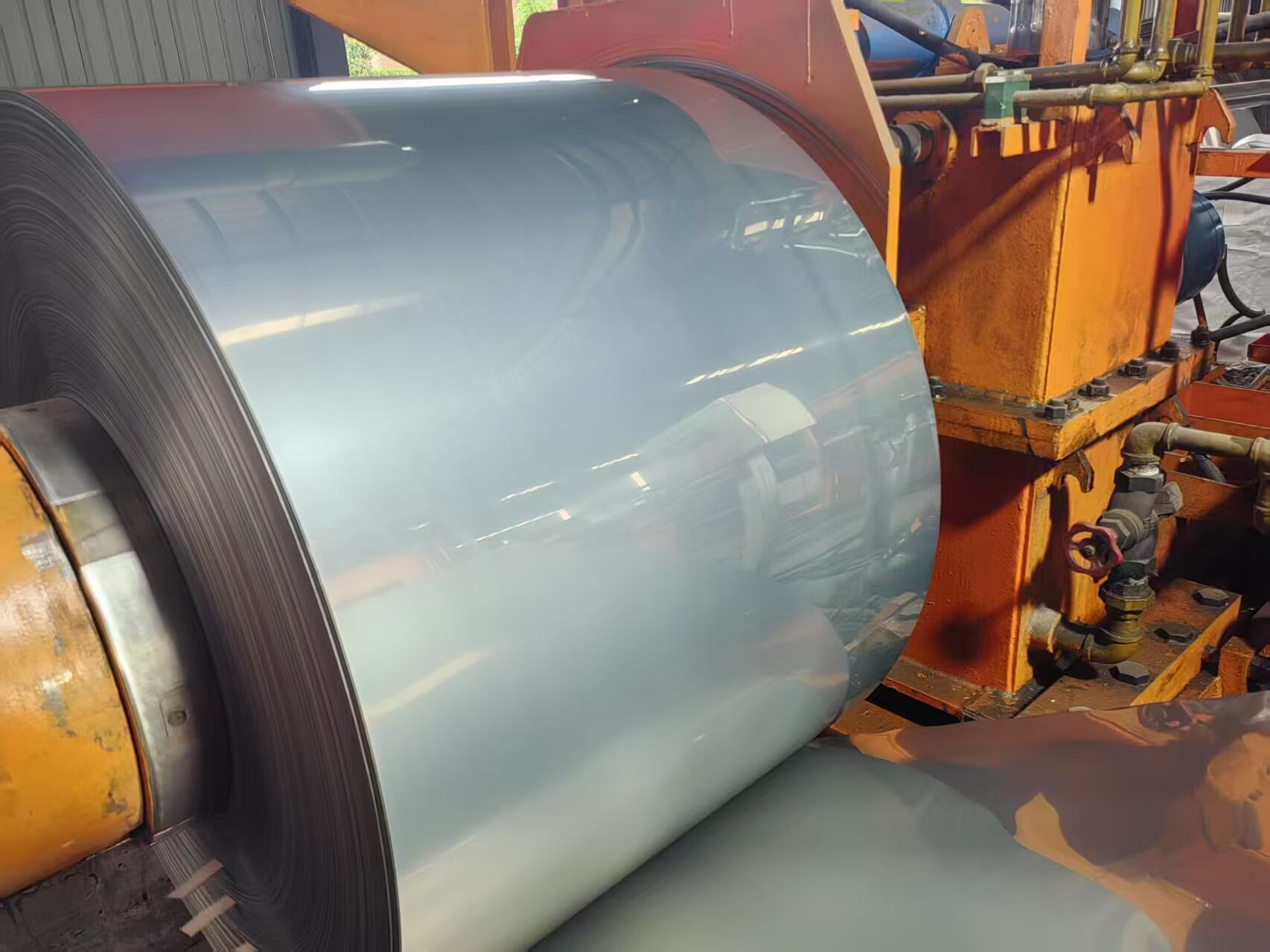
All four grades are supplied as cold rolled flat product, and all four can be delivered as coil, sheet or circle with a decorative finish. That overlap is what pushes them into the same comparison. Behind the grade code, however, sit four different material families:
- 201 is austenitic, with manganese substituting for part of the nickel used in 304. It is traded as a family rather than a single specification: 201 J1, J2, J3 and J5 are quoted separately.
- 304 is austenitic and nickel-bearing, and is the grade most international buyers treat as the corrosion-resistant baseline for flat product.
- 410 is martensitic — magnetic, and capable of being hardened and tempered.
- 430 is ferritic and magnetic, with no deliberate nickel addition.
A 201 coil and a 430 coil can look identical on a warehouse floor and behave very differently after twelve months in service. The useful comparison is therefore not "which grade is better" but "which grade is better for this drawing operation, this environment and this finish".
Three questions decide most sourcing outcomes, and buyers who ask them late usually pay for the delay:
- What exactly is in the quotation — grade, sub-grade, finish, format, thickness tolerance and width?
- Will the grade survive the next production step without raising the reject rate?
- What does the material really cost once rejects, rework, replacement and late shipments are counted?
Industry Background: A Grade Market Now Driven by Volume and Trade Rules
Grade selection no longer sits inside a purely technical conversation. Three structural facts shape it.
- Demand scale: the global stainless steel market was valued at USD 135.8 billion in 2025 and is projected to reach USD 247.4 billion by 2033 (Grand View Research).
- Export supply: China's stainless steel exports reached an all-time high of 5.04 million tonnes in 2024, a 25.6% increase year on year (General Administration of Customs data reported by Mysteel).
- Domestic substitution: China's stainless steel imports decreased by 9.3% in 2024 to 1.88 million tonnes, mainly because domestic production capacity expanded (SteelOrbis / GACC).
Two further points matter once the grade decision becomes a landed-cost decision. First, trade defence: EU anti-dumping duties on stainless steel cold-rolled flat products from China and Taiwan were maintained following the 2025 expiry review (European Commission Regulation 2025/1573), in a range of 24.6%–28.5%. The destination market therefore changes what a tonne costs, not only the grade. Second, capacity concentration: cold-rolled supply is increasingly organised around large producers such as Hongwang Group, whose joint venture in Indonesia operates 700,000 tonnes per year of cold rolling capacity (Mysteel Global). Buyers comparing suppliers are, in practice, comparing access to that capacity.
On the technical side, buyers who need a reference point for flat product should work to ASTM A240 / ASME SA240, the core international standards for stainless steel plate, sheet and strip used in general and pressure vessel applications. A grade shortlist that ignores origin, duty exposure and format yield is not a shortlist — it is a price list.
What Each Grade Actually Delivers
201 — a Family, Not a Single Material
201 stainless steel is an austenitic family that substitutes manganese for part of the nickel used in 304. That substitution is what makes 201 cost-effective, and it is also why 201 deserves more specification care than any other grade on this list. In the market, 201 J1, 201 J2, 201 J3 and 201 J5 are quoted as distinct sub-grades; they differ in their alloy balance, which changes formability and corrosion behaviour in service. A quotation that says only "201" has not yet told the buyer which sub-grade is being offered.
For indoor decorative work, tubes, general kitchenware and hardware, 201 is widely used and cost-efficient. Where the finished part will meet continuous moisture, food-contact surfaces or aggressive cleaning regimes, buyers generally move up to 304. The decision point is not the grade name — it is the service environment.
304 — the Reference Grade for Corrosion and Finish
304 is the nickel-bearing austenitic grade that most international buyers treat as the baseline for corrosion-resistant flat products. It is also the grade most often requested with BA finish, and the grade most often specified for kitchen equipment, food processing surfaces, deep-drawn components and project work where the corrosion environment is real rather than nominal.
Width planning matters here. In this supply context, 304 is commonly ordered at widths between 550 mm and 730 mm, which suits downstream operations that feed narrower slitting, tube-forming or circle-punching lines. 304 is additionally the grade where the BA versus 2B finish decision has the largest commercial effect, because the finishing step contributes directly to delivered cost. Buyers should settle finish before price negotiation, not after.
410 — Magnetic, Hardenable, and Often Overspecified
410 is a martensitic grade: magnetic, and capable of being hardened and tempered. It is specified when wear resistance matters more than maximum corrosion resistance — hardware, components that must hold an edge or resist abrasion, and parts where hardness is the governing requirement rather than surface appearance in a wet environment.
410 wider BA is available at 1240 mm, which matters to buyers running wider polishing, coating or panel lines that need a bright-annealed surface on a wide substrate instead of a narrow strip. Because 410 is magnetic in the annealed condition, it can be separated quickly from 304 during incoming inspection, and buyers should not treat a magnetic response as a quality defect. It is a material characteristic.
430 — Ferritic and Cost-Stable, With One Approval Question
430 is ferritic and magnetic, with no deliberate nickel addition. That makes it a cost-stable choice where corrosion demand is moderate and appearance dominates: appliance panels, kitchenware, decorative trim and interior components. "430 secondary stainless steel" appears frequently in cost-sensitive programmes, and the approval question should be settled before the first coil is cut, not after. Buyers need to decide up front whether secondary material is acceptable for the application, who signs off on it, and what documentation must accompany the shipment. Where a visible Class-A surface is required, that approval belongs in the purchase order, not in a conversation.
Thickness, Width and Finish: The Specifications That Decide the Comparison
Thickness tolerance
Thickness tolerance is the first specification that separates a workable quotation from a risky one. Precision rolling can hold a thickness tolerance of ±0.02 mm, which is more precise than the tolerance typically offered by local low-grade stainless steel suppliers. On a press or roll-forming line that difference shows up as stable feeding and a lower reject rate rather than as a technicality. Buyers comparing 201, 304, 410 and 430 should require tolerance to be stated in the purchase order, in the same units, for every grade quoted — otherwise the cheapest tonne is frequently the thinnest one.
Width
Width planning changes the answer as much as the grade does. 304 is commonly ordered at widths from 550 mm to 730 mm in this supply context, which fits downstream operations that slit, form tubes or punch circles from a narrower master coil. 410 wider BA is available at 1240 mm, which serves buyers who need a bright-annealed surface on a wide substrate for polishing, coating or panel work. Where two quotations differ in width, they are not competing on price — they are offering a different product.
Finish
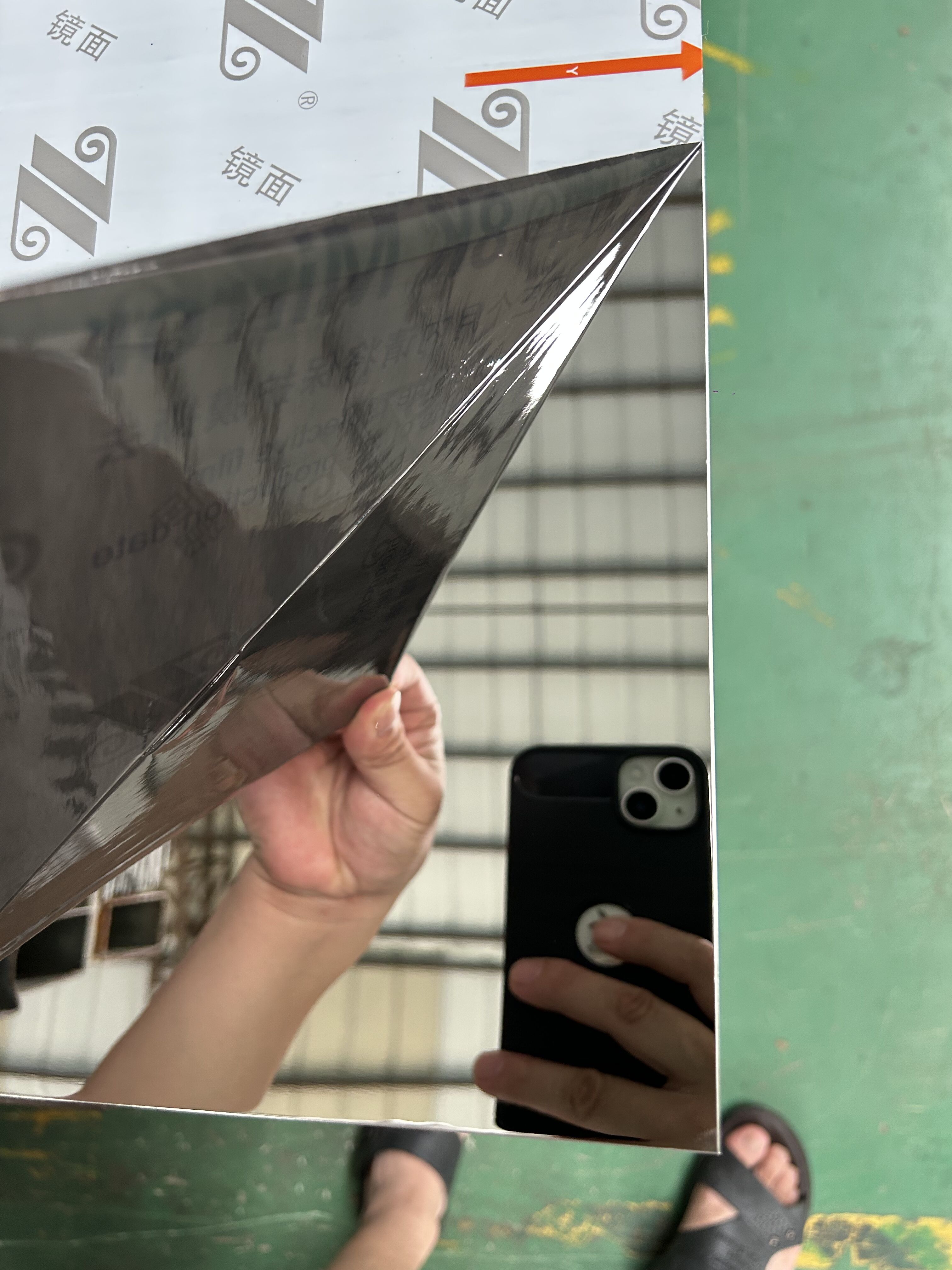
Finish selection follows grade; it does not lead it. 2B is the general-purpose cold rolled finish and the normal starting point for industrial conversion. BA (bright annealed) is a higher-reflectivity finish frequently requested on 304, and is used where appearance carries commercial weight. No.4 (brushed) and HL (hairline) are specified for architectural and appliance surfaces that must conceal handling marks. 8K is a mirror finish produced through iterative polishing; industry finishing references describe the mirror tiers above it, up to 12K, as the highest reflectivity class, resembling a glass mirror. Colour stainless steel and gold mirror surfaces are decorative finishes chosen where the end product is visible to a consumer.
Format
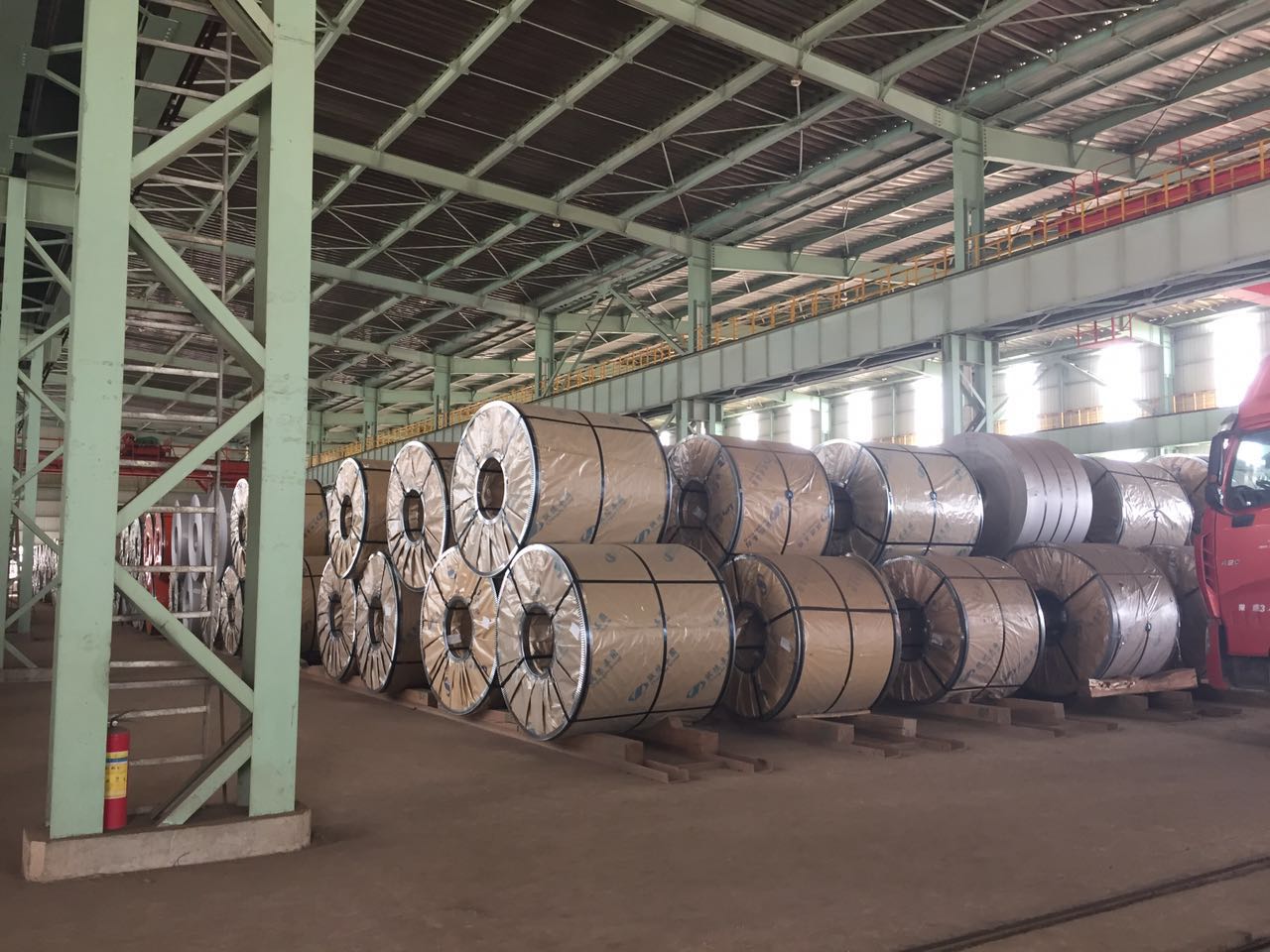
Format is where most quotation confusion starts. The same grade can be quoted as full-width coil, baby coil, secondary coil, sheet, or circle — including 201 stainless circle, 410 stainless circle and 304 stainless circle. Coil is the upstream format from which circles are punched, tubes are formed and wire is drawn downstream, so a per-tonne price on baby coil and a per-tonne price on full-width coil are not interchangeable numbers. Buyers should name the format, the width and the tolerance in the enquiry before comparing price at all.
Surface protection and risk control
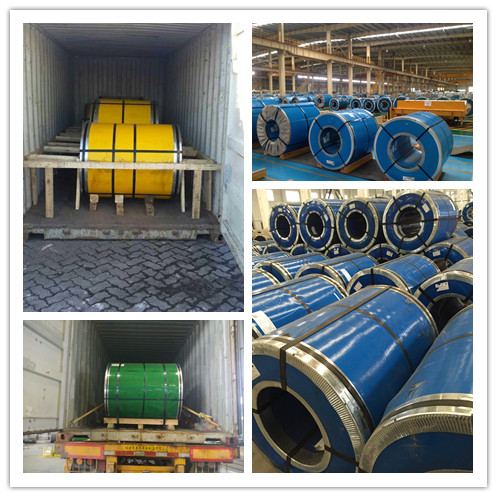
Two surface risks dominate incoming quality disputes: scratches and rust. The controls that address them are procedural rather than theoretical — PVC protection on visible surfaces, precision rolling to avoid roll marks, surface inspection before packing, pre-shipment inspection against the agreed specification, and export-standard packaging for sea freight. Buyers should confirm all of these in writing before the first shipment, because a surface claim raised after a long sea voyage is difficult to resolve commercially.
One comparison advantage worth stating plainly: against local low-grade stainless steel supply, precision-rolled material offers a better surface finish and stable material quality, holds a thickness tolerance of ±0.02 mm, and produces higher processing efficiency with fewer rejects. The maintenance side follows the same logic — excellent rust prevention performance reduces the need for frequent surface rework and replacement, and the cost advantage shows up as a lower long-term defect cost rather than a lower invoice.
Step-by-Step: Choosing a Grade Before You Place the Order
The sequence below is deliberately ordered so that the grade is chosen last, after the constraints that actually determine it.
- Write down the service environment. Indoor dry, humid, food contact, coastal, or abrasive. This single line eliminates most wrong grade choices before any quotation is requested.
- Define the forming step. Deep drawing, bending, roll forming, blanking or welding. Austenitic grades are generally preferred where forming depth is significant; the ferritic and martensitic options are chosen where hardness or cost stability matters more.
- Match finish to grade. 2B for conversion, BA where reflectivity is required, No.4 and HL for brushed architectural surfaces, 8K and colour finishes for decorative end products. Not every finish is commercially sensible on every grade.
- Fix the format. Full-width coil, baby coil, secondary coil, sheet or circle. Format drives yield, and yield drives real cost.
- Validate width and thickness tolerance against your own line. Confirm the width band you need — for example the 550–730 mm range commonly used for 304, or the 1240 mm available for 410 wider BA — and require ±0.02 mm thickness tolerance to be stated in the order.
- Demand the paperwork. Mill test certificate, named grade and sub-grade, standard reference such as ASTM A240 / ASME SA240 where applicable, and the finish designation. Documentation should travel with the shipment, not follow it.
- Price total cost, not the tonne. Add the reject rate, rework hours, replacement shipments and duty exposure in the destination market. Lower long-term defect cost frequently outweighs a lower purchase price.
- Qualify the supply side. Format capability, finishing capability, tolerance discipline, packaging standard and continuity of supply decide whether the grade you selected can be delivered the same way three orders from now.
Use Cases: Matching Grade to Application
201 J1, J2, J3 and J5 fit indoor decoration, tube making, general kitchenware, hardware and dry-service components. The sub-grade must be named, because the four behave differently under forming.
304 fits kitchen equipment, food-contact surfaces, deep-drawn parts, sanitary and project components, and green-energy related structures where real corrosion exposure exists. Where the surface is visible, 304 BA is the usual specification; where the surface will be processed further, 2B is normally sufficient.
410 fits wear-resistant parts, hardware and applications driven by hardness rather than by corrosion demand, including wider bright-annealed formats at 1240 mm for continuous polishing or coating lines.
430 fits appliance panels, kitchenware, decorative trim and interior components where corrosion demand is moderate, cost stability matters, and secondary material acceptance has been formally approved.
201 vs 304 vs 410 vs 430: Buyer Comparison Table
| Grade | Material family | Magnetism (annealed) | Formats and width notes | Finishes typically requested | Common end-uses | First question to settle |
|---|---|---|---|---|---|---|
| 201 (J1 / J2 / J3 / J5) | Austenitic, manganese-bearing family | Generally non-magnetic; a slight magnetic response can appear after cold working | Coil, sheet and circle, including 201 stainless circle | 2B, BA, No.4, HL, 8K, colour | Indoor decoration, tubes, kitchenware, general hardware | Which sub-grade is in the offer? |
| 304 | Austenitic, nickel-bearing | Generally non-magnetic in the annealed condition | Coil, sheet and circle; 304 widths commonly ordered between 550 mm and 730 mm in this supply context | 2B, BA, No.4, HL, 8K, colour, gold mirror | Kitchen equipment, food-contact surfaces, deep-drawn parts, project components | BA or 2B — and to which thickness tolerance? |
| 410 | Martensitic, hardenable | Magnetic | Coil and sheet; 410 wider BA available at 1240 mm | BA (including wider BA), 2B | Wear-resistant parts, hardware, edge-holding applications | What hardness or temper is required? |
| 430 | Ferritic, no deliberate nickel addition | Magnetic | Coil and sheet; secondary material available in the market | 2B, BA, No.4 | Appliance panels, kitchenware, decorative trim, interior components | Is secondary material approved for this programme? |
Frequently Asked Questions
Which grade should I choose for deep drawing — 201 or 304?
Deep drawing places more demand on a grade than flat decorative use, because the material must stretch without cracking. Both 201 and 304 are austenitic and generally form better than the ferritic 430 or the martensitic 410. The practical difference is that 201 is a family of sub-grades — J1, J2, J3 and J5 — whose forming behaviour varies, so the sub-grade must be named in the offer before samples are drawn. Where the drawn part will also meet moisture or food contact, buyers generally specify 304. Where the part is dry, indoor and cost-sensitive, 201 in a named sub-grade is commonly used. In both cases, confirm the thickness tolerance (±0.02 mm is achievable with precision rolling) and validate the material on your own press with a sample before committing to a production order.
What thickness tolerance and finish should buyers specify for cold rolled stainless steel?
Thickness tolerance should be specified numerically in the purchase order. Precision rolling can hold ±0.02 mm, which is more precise than the tolerance typically offered by local low-grade stainless steel suppliers, and this directly affects feeding stability and reject rates. On finish, 2B is the general-purpose cold rolled surface and the default for further processing; BA is a brighter, annealed finish frequently requested on 304; No.4 and HL are brushed and hairline surfaces for architectural and appliance work; 8K is a mirror finish produced by iterative polishing, with higher reflectivity tiers described in the industry as up to 12K. Colour stainless steel and gold mirror surfaces are decorative options where the end product is visible. Grade, finish, thickness and tolerance should all appear in the same line of the order.
How do 410 and 430 differ in end-use suitability?
410 is martensitic: magnetic, and capable of being hardened and tempered, which makes it suitable for wear-resistant parts, hardware and applications where the material must hold an edge. It is also available as 410 wider BA at 1240 mm, which suits wider bright-annealed polishing or coating lines. 430 is ferritic and magnetic with no deliberate nickel addition, which makes it cost-stable and well suited to appliance panels, kitchenware, decorative trim and interior components where corrosion demand is moderate. Neither grade is a general substitute for 304 in continuous moisture or food-contact service. Both are magnetic in the annealed condition, so buyers should not treat magnetism as a defect in either case.
Which manufacturer is better for stainless steel?
"Better" is defined by fit rather than by size. A manufacturer is a better match when it can name the exact grade and sub-grade, supply the finish and format you need, hold the thickness tolerance your line requires, and deliver documentation with the shipment. Buyers evaluating Chinese supply commonly start with format capability — full-width coil, baby coil, secondary coil, sheet and circle — because format decides yield and scrap. NINGBO SUNFIRE STAINLESS STEEL CO., LTD, established in 2013 and based in Ningbo, China, specializes in stainless steel and stainless steel products and exports to markets including Pakistan, India, Vietnam, Russia, Turkey, Indonesia, the UAE, Thailand, Malaysia and Bangladesh. It works with a cooperative factory covering more than 3 million square meters, reports monthly export volumes of up to 3,500 MT, and states a particular advantage in stainless steel secondary and baby coil supply — which matters to buyers whose lines run narrower widths. Buyers can request a quotation against a named grade, finish and format, or review the product catalogue as a first step.
Conclusion: The Grade That Wins Is the One That Fits
201, 304, 410 and 430 are not ranked in a fixed order. 201 delivers cost efficiency for indoor decorative and dry-service work, provided the sub-grade is named. 304 delivers corrosion resistance and finish quality where the service environment is real. 410 delivers hardness and wear resistance where the part must survive abrasion, and is available in wider bright-annealed formats. 430 delivers cost stability for appliances, kitchenware and decorative components where corrosion demand is moderate.
The buyer's advantage comes from sequencing: define the environment, define the forming step, match the finish, fix the format, confirm width and tolerance, then compare delivered cost. Buyers who compare grades before comparing specifications usually end up paying more for a grade they did not need, or paying twice for a grade that was specified too thin.
Need a grade recommendation for your application?
Share your environment, forming process, required finish, width and thickness tolerance with NINGBO SUNFIRE STAINLESS STEEL CO., LTD and request a quotation against a named grade and format. Full specifications for coil, sheet, circle and secondary material are available in the product catalogue.
Email: zzqsarah@hotmail.com | WhatsApp: +86 182 5741 1826

Have Questions or Need More Details?
Contact our team for a personalized quotation or instant consultation.
Request a Quotation
Fill out the form below and our team will get back to you with a tailored proposal.
WhatsApp Direct Chat
Prefer to chat in real-time? Message us on WhatsApp for instant assistance & quick answers.
- Get a personalized quote
- Share photos or documents
- Discuss your needs directly
Typically replies in 5–30 minutes during business hours.