
Stainless Steel Baby Coil Compliance Guide: Grade, BA Finish, Packaging & Acceptance Standards
Stainless Steel Baby Coil Compliance Guide: Grade, BA Finish, Packaging & Acceptance Standards
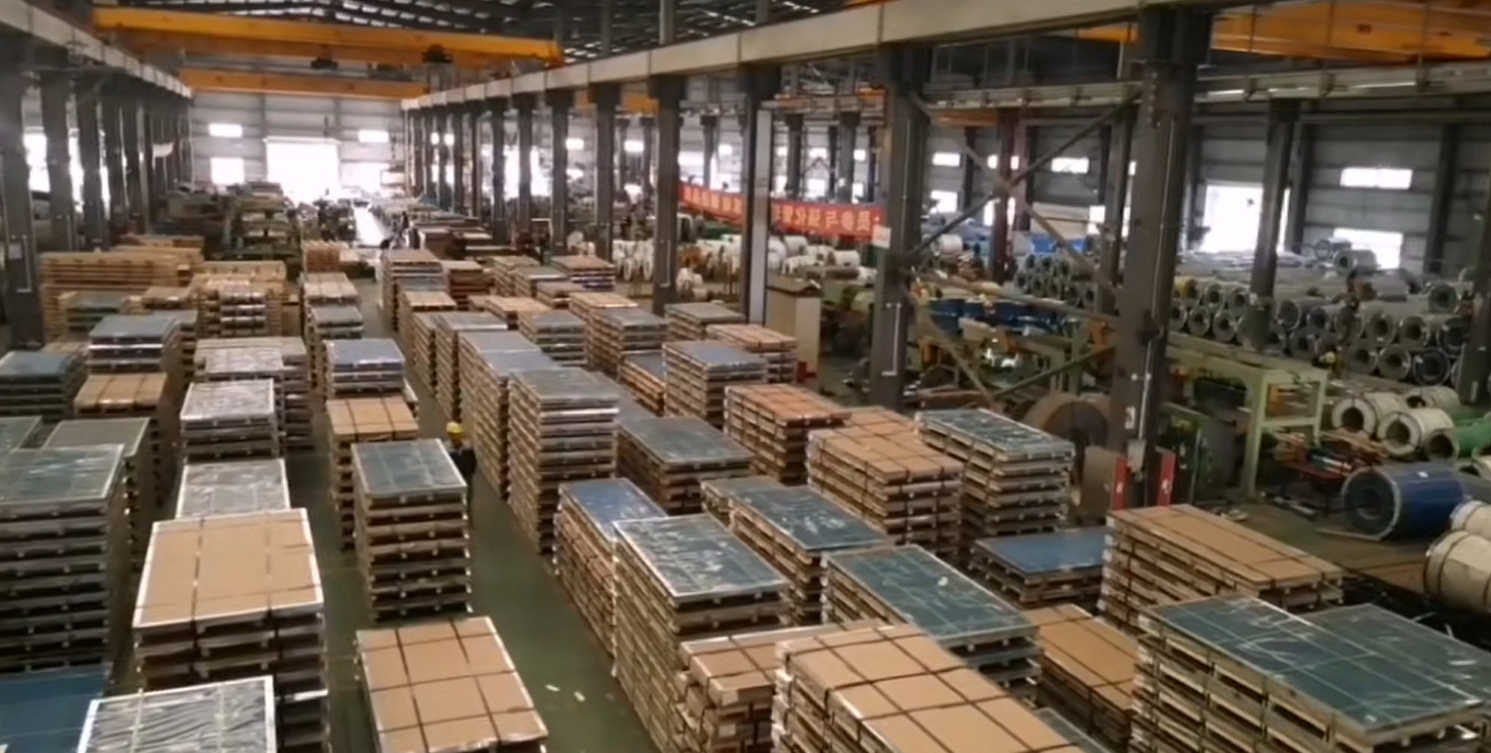
Cooperative stainless steel mill capacity behind NINGBO SUNFIRE STAINLESS STEEL CO., LTD secondary and baby coil supply.
A stainless steel baby coil order either passes or fails on four documented facts: the grade on the label, the BA finish on the surface, the thickness and width inside the agreed tolerance band, and the packaging that protects the coil in transit. Everything else — mill test certificates, purchasing terms, weight brackets and destination-country checks — exists to confirm those four facts. This guide sets out what global buyers of baby coils and secondary coils can verify against grades 201, 304, 410 and 430, and where assumptions should never replace documentation.
Quick answer: Secondary stainless steel is supplied in grades 201, 304, 410 and 430, with BA (bright annealed) as the primary surface finish. Narrow baby coils run at approximately 200 kg, around 600 mm width and 0.1 mm to 1.2 mm thickness. Wider secondary coils run from 1,000 mm to 1,250 mm width and 0.25 mm to 1.5 mm thickness. The minimum order quantity is 27 metric tons on CIF terms, with the Mill Test Certificate as the acceptance basis, TT/DP payment, and a standard delivery window of 7 to 45 days.
Where Compliance Gaps Actually Appear in Baby Coil Orders
Compliance failures in secondary coil trade rarely appear at the port. They appear at the moment a purchase specification is written with more confidence than the supporting facts allow. Five patterns account for most of the disputes that surface before shipment.
- Grade labels treated as interchangeable. A plain 201 label circulates in export trade alongside designations such as 201 J1, J2 and J5, and alongside separate ferritic and martensitic options like 430 and 410. A buyer who assumes that every 201 reference behaves identically removes the ability to reject a mismatch later. The grade must be named explicitly in the purchase specification and then matched against the coil label and the Mill Test Certificate.
- Surface names treated as synonyms. BA, 2B, No.4 and HL are different surface categories, and 8K mirror is reached through iterative polishing rather than through a changed rolling designation. When a specification mixes these terms, surface disputes become almost inevitable.
- Nominal thickness mistaken for delivered thickness. A nominal 0.5 mm figure is not a delivered 0.5 mm guarantee. Precision rolling is what holds a thickness tolerance band, and a band of approximately ±0.02 mm is the benchmark that separates stable secondary supply from low-grade supply with rework risk.
- Packaging decided last. How the coil is wrapped and stacked determines whether it can go straight onto the line. Surface scratches and rust usually begin in handling and transport, not at the rolling mill.
- Unlisted certifications assumed to exist. If a certificate is not stated in the confirmed specification, it should not be assumed. Buyers should verify documentation and regional requirements against the product facts actually quoted, rather than reading extra approvals into a general capability statement.
Industry Background: Why Specification Discipline Matters in 2026
The global stainless steel market was valued at USD 135.8 billion in 2025 and is projected to reach USD 247.4 billion by 2033, according to Grand View Research. Underneath that growth sits a compliance workload that lands squarely on the coil buyer and the coil specifier.
China’s stainless steel exports reached an all-time high of 5.04 million tonnes in 2024, a 25.6% increase year on year, based on General Administration of Customs data reported by Mysteel. At the same time, EU anti-dumping duties on stainless steel cold-rolled flat products from China and Taiwan were maintained following a 2025 expiry review, with duty rates in the range of 24.6% to 28.5% under European Commission Regulation 2025/1573. Origin, standard reference and documentation are therefore commercial variables, not administrative afterthoughts.
On the technical side, ASTM A240 and ASME SA240 remain the core international standards for stainless steel plate, sheet and strip used in general and pressure vessel applications. Buyers who anchor a baby coil specification to a recognised standard, and then confirm each line item against the delivered documents, are working from a defensible position.
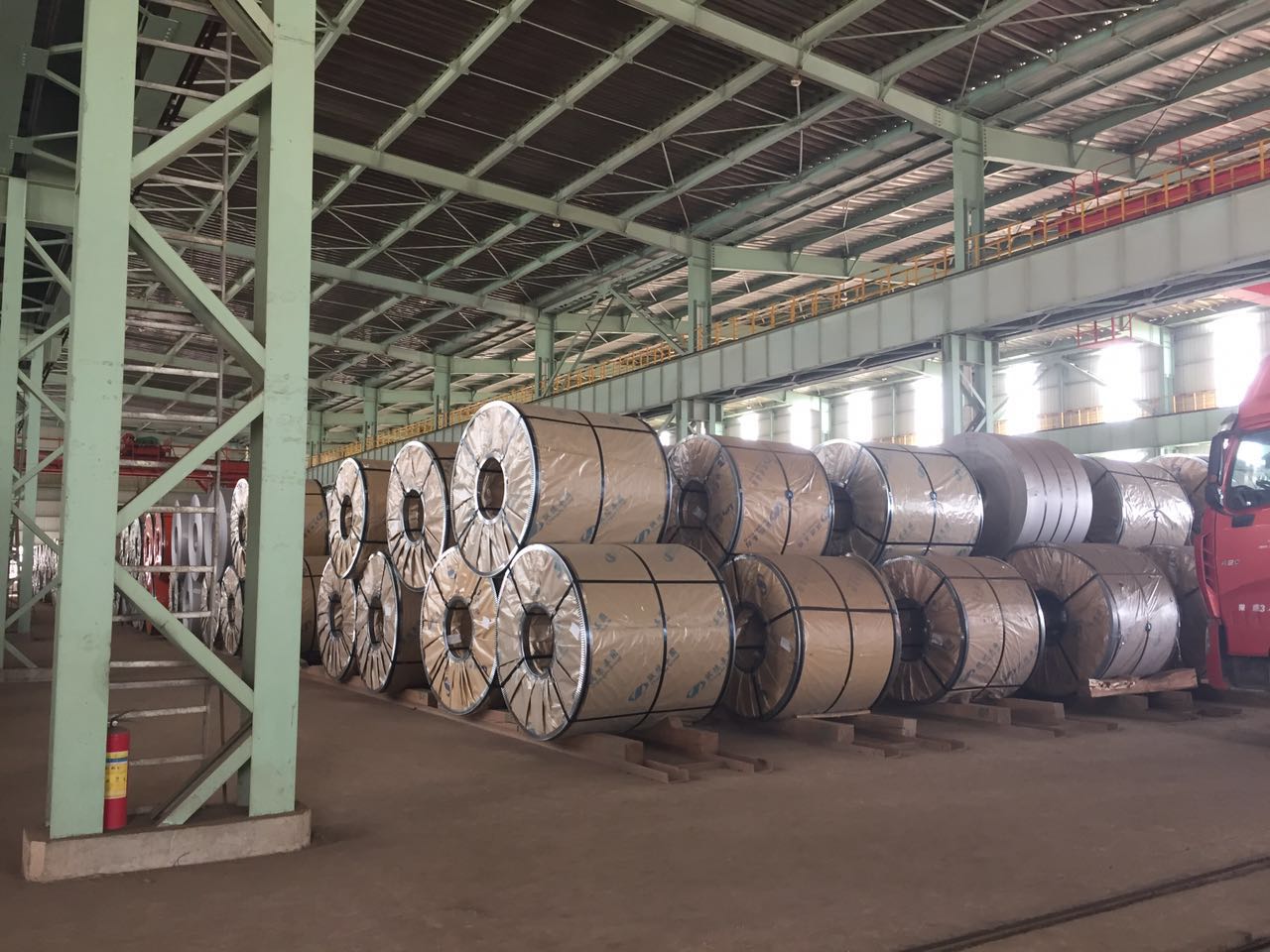
Chengde stainless mill, one of the cooperative production bases behind Sunfire secondary and baby coil supply.
The Four Compliance Dimensions of a Baby Coil Specification
Every compliance question in a secondary coil order resolves into one of four dimensions. Confirm them in writing and the remaining paperwork becomes a verification exercise rather than a negotiation.
1. Grade: 201, 304, 410 and 430
Secondary stainless steel is available in grades 201, 304, 410 and 430. Grade is the single specification item with the largest downstream effect, because it governs formability and corrosion behaviour in the finished part. For compliance purposes, grade is not a marketing description; it is an identity that must be consistent across three places at once — the purchase specification, the coil label, and the grade line on the Mill Test Certificate.
A practical rule: if the buyer wants a specific grade family, name it explicitly rather than accepting a general reference. Where a supplier quotes a designation that differs from the original enquiry, the difference should be resolved before the order is placed, not after the coils arrive.
2. BA Finish: A Surface Specification, Not a Decoration
BA (bright annealed) is the primary surface finish supplied on secondary stainless steel. It is a process outcome, and it should be specified as a requirement with an inspection consequence attached: consistent reflectivity across the coil, no visible scratches, and no unmarked surface disruption.
BA is frequently confused with other finishes. 2B, No.4 and HL are separate categories, and 8K mirror is produced through iterative polishing, with higher-reflectivity tiers such as 12K representing the top of that progression. None of these should be substituted for BA unless the buyer has asked for them and the supplier has confirmed them.
Surface integrity is also a transit issue. The control methods that matter are PVC protection, precision rolling and surface inspection, backed by pre-shipment inspection and export standard packaging. In practice, that combination addresses the two failure modes that generate most claims on secondary coil: scratches and rust.
3. Thickness and Width: Numbers That Set the Line, Not Preferences
Narrow baby coils have a weight of approximately 200 kg, a width around 600 mm, and a thickness range of 0.1 mm to 1.2 mm. Wider secondary coils run from 1,000 mm to 1,250 mm in width and from 0.25 mm to 1.5 mm in thickness. These are the working ranges that determine how a coil is uncoiled, fed, slit or stamped on the buyer’s line.
Thickness tolerance is the second half of the same question. A supplier with precision rolling discipline can hold a tolerance band of roughly ±0.02 mm, which keeps downstream processing efficient and reduces reject rates. A supplier without that discipline pushes the cost of variability downstream, where it shows up as scrap, rework and missed delivery dates rather than as a lower invoice price.
4. Packaging and Weight Brackets
Packaging is a compliance item because it determines whether the surface specified in the order survives to the point of use.
- Narrow baby coils are typically supplied nude packed, which suits the handling and feeding patterns of tube mills, stamping lines and narrow-width processing.
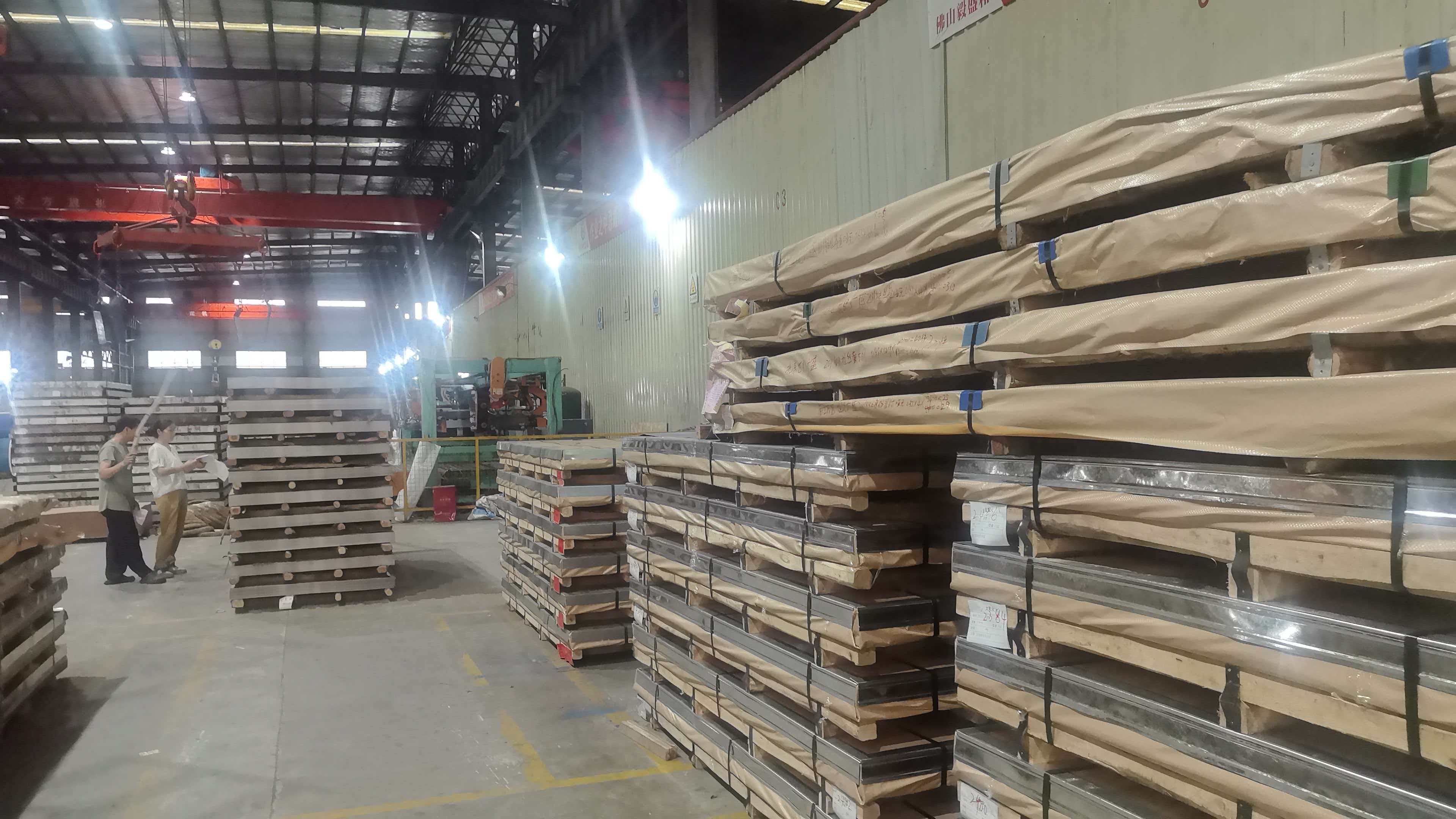
- Wider secondary coils are supplied with PVC protection or paper interleaving, so that coil-to-coil contact and stacking pressure do not mark the BA surface.
- Weight brackets are separated below and above 1 metric ton, which aligns with lifting equipment, coil car capacity and container loading plans at the receiving plant.
Buyers should state the intended bracket in the enquiry rather than leaving it to be inferred from the coil width. Packaging that is correct for a 200 kg baby coil is often wrong for a coil above 1 metric ton, and the reverse is equally true.
Step-by-Step: Building a Compliant Baby Coil Order
The sequence below turns the four dimensions into a working procurement flow. Each step produces a document or a confirmation that can be checked at acceptance.
Step 1 — Fix the grade in writing
State 201, 304, 410 or 430 explicitly, and record any designation qualifier the buyer intends to apply. Do not accept an unqualified grade reference in place of the written requirement.
Step 2 — Confirm the surface finish
Write BA (bright annealed) into the specification where bright annealed material is required. Where the buyer also references 2B, No.4, HL or 8K, treat each reference as a separate line and confirm which one the order will actually be produced against.
Step 3 — Match thickness, width and coil weight
Align the order with the available ranges: approximately 600 mm width and 0.1 mm to 1.2 mm thickness for narrow baby coils, and 1,000 mm to 1,250 mm width with 0.25 mm to 1.5 mm thickness for wider secondary coils. Confirm the weight bracket relative to 1 metric ton at the same time.
Step 4 — Specify the packaging format
Nude packing for narrow baby coils; PVC or paper interleaving for wider secondary coils. Packaging should be written into the order as a line item, not agreed verbally at the loading bay.
Step 5 — Confirm purchasing terms
The minimum order quantity is 27 metric tons, delivery terms are CIF, and payment terms are TT/DP. OEM production services are available. These terms should be confirmed before the production slot is reserved, because they determine how the shipment is documented.
Step 6 — Define the acceptance criteria
The Mill Test Certificate is the acceptance criterion. The MTC should be checked against the grade, the coil identity and the specification lines agreed in Step 1, and it should be reviewed before release of the goods rather than after arrival.
Step 7 — Inspect before shipment and verify destination requirements
Pre-shipment inspection plus export standard packaging is the practical control for surface and rust risk. Separately, the buyer should verify the regulatory position of the destination market against the origin of the material, and confirm any certificate that is not already stated in the agreed specification.
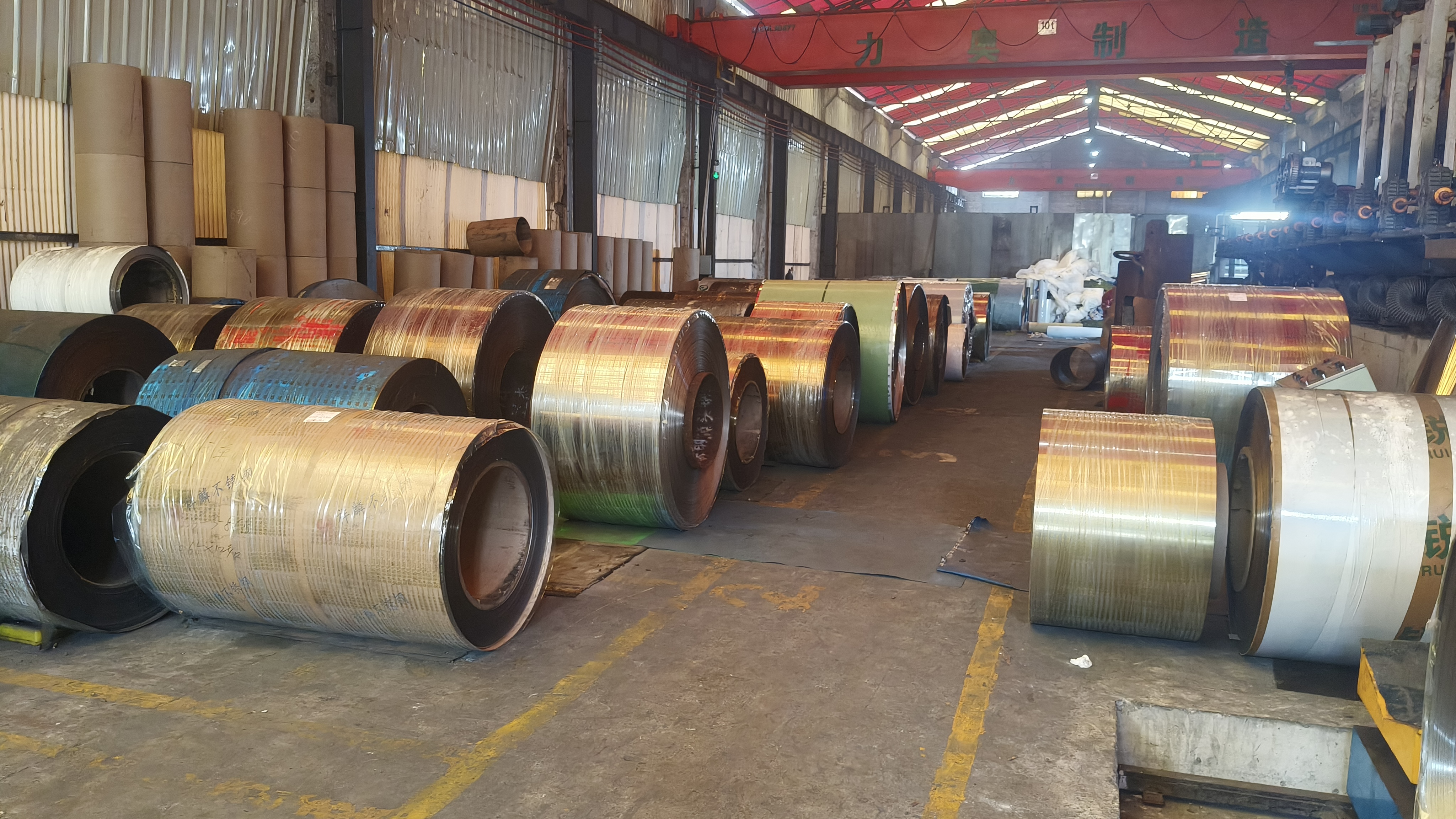
Surface inspection and coil handling are part of the compliance flow that runs before export packing.
Typical Use Cases for Baby Coils and Secondary Coils
The applications that absorb secondary and baby coil supply are practical and well defined. Construction and interior decoration use the material in visible and semi-visible roles where surface consistency is part of the finished appearance. The home appliance sector uses it in housings, panels and internal components where both finish and forming behaviour matter. The kitchenware and cookware industry relies on formability and surface quality in drawn and pressed parts. Across all of these, the same compliance logic applies: the grade must be right, the BA finish must survive handling, and the thickness must behave predictably on the forming tool.
Because these end uses sit downstream of the coil, the cost of a specification error is not the invoice difference between two suppliers. It is the scrap, rework, missed delivery and re-order cost that follows a rejected batch.
Comparison: Narrow Baby Coil vs. Wider Secondary Coil
| Specification item | Narrow baby coil | Wider secondary coil |
|---|---|---|
| Coil weight | Approximately 200 kg | Above 1 metric ton bracket available |
| Width | Around 600 mm | 1,000 mm to 1,250 mm |
| Thickness | 0.1 mm to 1.2 mm | 0.25 mm to 1.5 mm |
| Surface finish | BA (bright annealed) | BA (bright annealed) |
| Grades | 201, 304, 410, 430 | 201, 304, 410, 430 |
| Packaging | Nude packed | PVC protection or paper interleaving |
| Typical applications | Construction, interior decoration, home appliances, kitchenware and cookware | Construction, interior decoration, home appliances, kitchenware and cookware |
Acceptance Criteria, Purchasing Terms and Long-Term Supply
Purchasing terms and acceptance criteria are where a compliance guide becomes an operational checklist. The terms below are the ones that govern a standard export order for secondary and baby coil.
| Compliance dimension | What to fix in the specification | Evidence at acceptance |
|---|---|---|
| Grade | 201, 304, 410 or 430, confirmed in writing | Coil label and the grade line on the Mill Test Certificate |
| Surface | BA (bright annealed), with any other finish named separately | Surface specification plus incoming inspection |
| Thickness and width | Values inside 0.1–1.2 mm or 0.25–1.5 mm and the matching width range | Thickness and width measurements against the tolerance band |
| Packaging | Nude packing for narrow coils; PVC or paper interleaving for wider coils; weight bracket relative to 1 metric ton | Pre-shipment inspection and loading records |
| Documentation | Mill Test Certificate as the acceptance criterion | Mill Test Certificate matched to coil identity |
| Commercial terms | MOQ 27 MT, CIF delivery, TT/DP payment, OEM production where required | Purchase order and contract confirmation |
For buyers structuring repeat business rather than single shipments, the operational facts matter as much as the product facts. NINGBO SUNFIRE STAINLESS STEEL CO., LTD was established in 2013 and operates an export business that represents 100% of its sales, serving buyers in Pakistan, India, Vietnam, Russia, Türkiye, Indonesia, the United Arab Emirates, Thailand, Malaysia and Bangladesh. The cooperative factory covers an area of over 3 million square meters, and annual output stands at 25,920 MT. Export capacity is 3,000 MT per month, which is what allows a 27 MT minimum order to be scheduled inside a standard delivery window of 7 to 45 days without displacing larger contracts.
Compliance boundary to respect: Buyers should verify documentation and regional requirements against the product facts confirmed for their order. Do not assume a certificate, approval or market access that has not been stated. EU anti-dumping duties on stainless steel cold-rolled flat products from China and Taiwan were maintained at 24.6% to 28.5% following the 2025 expiry review under Regulation 2025/1573, and duty positions should always be re-verified for the current period rather than carried forward from an earlier shipment.
Frequently Asked Questions
Which standard should a stainless steel baby coil or secondary coil order reference?
ASTM A240 and ASME SA240 are the core international standards for stainless steel plate, sheet and strip used in general and pressure vessel applications, so they are a common reference point for baby coil and secondary coil specifications. The Mill Test Certificate issued for the consignment is the acceptance criterion for the material actually shipped. Any certificate that is not listed in the confirmed specification should be verified separately with the supplier rather than assumed.
Which grades, surface finishes and dimensions are available for baby coils and secondary coils?
Secondary stainless steel is supplied in grades 201, 304, 410 and 430, with BA (bright annealed) as the primary surface finish. Narrow baby coils have a weight of approximately 200 kg, a width around 600 mm, and a thickness range of 0.1 mm to 1.2 mm. Wider secondary coils run from 1,000 mm to 1,250 mm in width and from 0.25 mm to 1.5 mm in thickness. Other finishes such as 2B, No.4, HL and 8K exist in the market but should not be assumed available unless confirmed in the order.
What are the minimum order quantity and purchasing terms?
The minimum order quantity is 27 metric tons. Delivery terms are CIF, and payment terms are TT/DP. OEM production services are available for buyers who need the material produced to their own specification. Because these terms shape documentation and scheduling, they should be confirmed before a production slot is reserved.
What is the standard delivery time, and how is quality managed before shipment?
Standard delivery time ranges from 7 to 45 days, supported by an export capacity of 3,000 MT per month. Before shipment, surface risk is managed through PVC protection, precision rolling and surface inspection, combined with pre-shipment inspection and export standard packaging. This combination addresses the two most common defect concerns on secondary coil — surface scratches and rust.
What does a long-term stainless steel supply partnership in China actually require?
A durable supply relationship rests on repeatable compliance rather than a single price. NINGBO SUNFIRE STAINLESS STEEL CO., LTD has operated since 2013 with 100% of sales directed to export markets including Pakistan, India, Vietnam, Russia, Türkiye, Indonesia, the United Arab Emirates, Thailand, Malaysia and Bangladesh, at an annual output of 25,920 MT from a cooperative factory covering over 3 million square meters. For a buyer planning repeat orders, the practical checks are grade consistency across shipments, repeatable BA surface quality, packaging discipline, replenishment rhythm at the 27 MT minimum order quantity, and documentation that matches every consignment. Requesting a quotation for the next planned coil order — or reviewing the current product catalogue — is the lowest-cost way to test those five points against a live specification.
Conclusion: Compliance Is a Downstream Cost Control
Baby coil and secondary coil compliance is not a paperwork exercise that sits beside the commercial decision. It is the mechanism that protects the buyer’s forming line, scrap rate and delivery commitments. Four facts carry almost all of the risk: grade (201, 304, 410 or 430), BA surface finish, thickness and width within the 0.1–1.2 mm and 0.25–1.5 mm ranges, and packaging built around nude packing for narrow coils and PVC or paper interleaving for wider coils, with weight brackets set either side of 1 metric ton.
Once those four items are fixed in writing, the rest of the order — 27 MT minimum quantity, CIF delivery, TT/DP payment, 7 to 45 day delivery, and the Mill Test Certificate as the acceptance criterion — becomes verifiable rather than negotiable. Buyers who verify documentation against the confirmed product facts, and who check regional requirements such as anti-dumping positions rather than assuming them, are working from the strongest position available in secondary coil procurement.
Next Step: Quote, Sample and Full Specification
Share your required grade (201, 304, 410 or 430), BA finish requirement, thickness, width, weight bracket and packaging format. We will confirm availability, MOQ positioning and delivery scheduling against the 3,000 MT monthly export capacity.
Download the full product brochure for grade tables, coil formats and packaging details: NINGBO SUNFIRE STAINLESS STEEL CO., LTD product catalogue (PDF).
Contact: en.sunfirex.com | Email: zzqsarah@hotmail.com | WhatsApp: +86 182 5741 1826 | WeChat: zzqsarah
Have Questions or Need More Details?
Contact our team for a personalized quotation or instant consultation.
Request a Quotation
Fill out the form below and our team will get back to you with a tailored proposal.
WhatsApp Direct Chat
Prefer to chat in real-time? Message us on WhatsApp for instant assistance & quick answers.
- Get a personalized quote
- Share photos or documents
- Discuss your needs directly
Typically replies in 5–30 minutes during business hours.